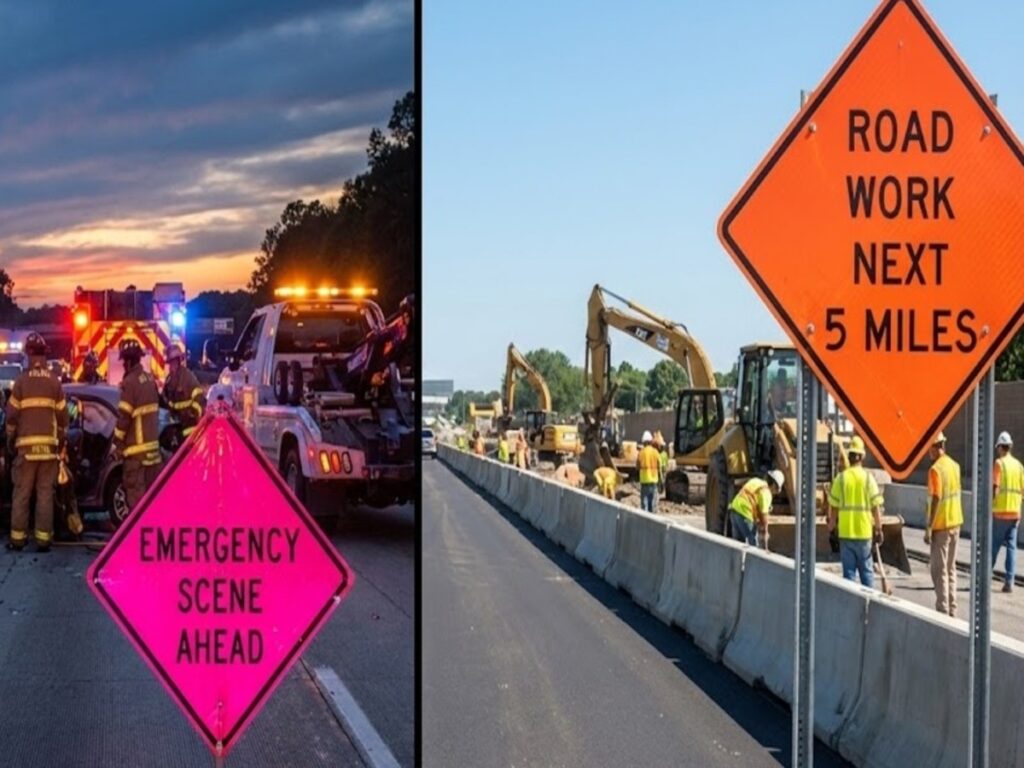
مقدمة: لون الطوارئ
حادث سيارة ليس موقع بناء. إنه غير مخطط له, فوضوي, ومؤقتة. حتى الآن, لا يزال العديد من مشغلي شاحنات السحب والمستجيبين الأوائل ينشرون علامات البناء البرتقالية القياسية في مواقع الحوادث.
وهذا خطأ فادح.
علامات إدارة الحوادث يجب أن تكون متميزة عن مناطق العمل على الطرق. يرى السائقون مخاريط ولافتات برتقالية كل يوم. غالبًا ما يقومون بضبطها أو يفترضون أن طاقم البناء في المقدمة.
للتخلص من هذه العادة البصرية, MUTCD (دليل على أجهزة مراقبة حركة المرور الموحدة) يفرض لونًا محددًا للأحداث غير المخطط لها: الوردي الفلورسنت.
يشرح هذا الدليل اللوائح الصارمة الخاصة بـ الفصل 6I. نحن نقارن لون القرنفل (حادثة) مقابل. البرتقالي (بناء) وتحديد بالضبط ما علامات إدارة الحوادث يجب أن يظل أسطولك متوافقًا وآمنًا.
نصيحة السلامة: بينما اللون الوردي للاستجابة السريعة, أوبترافيك تصنع رؤية عالية علامات البناء البرتقالية. هذه هي المعايير الإلزامية لأي منطقة لإدارة الحوادث تمتد إلى أبعد من ذلك 24 ساعات, تحويل المشهد إلى منطقة عمل طويلة المدى.
الوردي مقابل. البرتقالي: معيار MUTCD الفصل 6I
والتمييز بين هذين اللونين ليس اقتراحا. إنه معيار فيدرالي مصمم لتغيير سيكولوجية السائق.
1. البرتقالي: لون “المخطط لها” عمل
علامات البناء هي البرتقالي الفلورسنت.
- معنى: “أعمال الطريق المقبلة.”
- سياق: يتوقع السائق إغلاق المسار على المدى الطويل, الآلات الثقيلة, أو طريق منحرف.
- رد فعل السائق: حذر, ولكن في كثير من الأحيان مع تأخير في التباطؤ بسبب “علامة التعب.”
2. لون القرنفل: لون “غير مخطط لها” الحوادث
علامات إدارة الحوادث هي الفلورسنت الوردي (وتسمى أيضا المرجان).
- معنى: “مشهد الطوارئ أمامنا.”
- سياق: حادث, مركبة متوقفة, واللعب, أو كارثة طبيعية.
- رد فعل السائق: تنبيه فوري. اللون الوردي هو لون نادر على الطريق. إنه يشير إلى طازجة, خطر نشط يتطلب اهتمامًا فوريًا.
القاعدة: وفقًا للقسم 6I من MUTCD.01, اللون الوردي الفلوريسنت هو لون الخلفية الموصى به لجميع إشارات التحكم في حركة المرور المستخدمة في إدارة الحوادث المناطق.
لماذا استخدام علامات إدارة الحوادث? (العلم)
لماذا الإدارة الفيدرالية للطرق السريعة (الهيئة الفيدرالية للطرق السريعة (FHWA).) اختر اللون الوردي? يتعلق الأمر بالتباين والإلحاح.
1. الانفصال البصري عن البناء
الطرق مليئة بالبراميل البرتقالية ومناطق العمل. إذا وضعت برتقالة “مشهد الطوارئ أمامنا” علامة بالقرب من منطقة العمل القائمة, سوف يفتقدها السائقون.
- ميزة الوردي: تقطع لافتات إدارة الحوادث ذات اللون الوردي الفلوريسنت الفوضى البصرية لمناطق البناء البرتقالية. يقولون للسائق: “هذا خطر جديد, منفصلة عن أعمال الطريق.”
2. حساسية الطيف اللوني
يقع اللون الوردي الفلوريسنت على جزء مختلف من طيف الألوان.
- خلال النهار: يمتص الأشعة فوق البنفسجية ويصدر توهجًا عالي الكثافة, يشبه اللون البرتقالي الفلوريسنت ولكن بلون مميز.
- الليل/المطر: يحافظ اللون الوردي على التباين العالي ضد الرصيف الرطب والمصابيح الأمامية, التأكد من أن منطقة إدارة الحوادث مرئية من 1,000 القدمين على بعد.
السلسلة الأساسية: ما هي علامات إدارة الحوادث التي تفضلها؟ يحتاج?
على عكس منطقة البناء التي قد يكون لها 20 أنواع مختلفة من الإشارات, تعتمد منطقة الحادث على السرعة والبساطة. أنت بحاجة إلى مجموعة أساسية من علامات إدارة الحوادث لإنشاء “منطقة التحذير المسبق” بسرعة.
1. “مشهد الطوارئ أمامنا” (W20-13)
هذا هو التحذير الأول العالمي.
- الاستخدام: انشر هذا علامة إدارة الحوادث الوردية 500 ل 1,000 قدم المنبع من الحادث.
- غاية: أنه يعطي السائقين ما يكفي من PRT (وقت رد الفعل الإدراكي) لإدراك أن تدفق حركة المرور على وشك التغيير بشكل جذري, من المحتمل أن تصل إلى التوقف التام.
2. “سحب الشاحنة أمامك” (W21-19)
لمشغلي الاسترداد, توفر هذه الأسطورة المحددة الغطاء القانوني.
- الاستخدام: ضع هذه العلامة إذا كان الحطام الخاص بك يسد الممر أو الكتف.
- مسئولية قانونية: يحذر السائقين بشكل صريح من دخول مركبة ثقيلة إلى الطريق أو خروجها منه, تقليل مسؤوليتك في حالة حدوث تصادم ثانوي أثناء عملية الاسترداد.
3. “كن مستعدًا للوقوف” (W3-4)
- الاستخدام: في كثير من الأحيان العلامة الثانية في السلسلة.
- غاية: يمنع الاصطدامات الخلفية - #1 قاتل المستجيبين الأوائل. تعمل النسخة الوردية الفلورية من هذه اللافتة على قطع الضوضاء المرئية بشكل أفضل من النسخة البرتقالية القياسية في ظروف الإضاءة المنخفضة.
سرعة النشر: لماذا قاعدة علامات إدارة الحوادث المجمعة
في مشروع البناء, لديك ساعات لإعداد لافتات الألومنيوم الصلبة. في حالة الطوارئ, لديك دقائق. هذا هو لماذا تعد لافتات إدارة التجميع هي المعيار الصناعي لـ TIM (إدارة الحوادث المرورية).
1. ال “60-ثانية” يثبت
- قابلية النقل: يمكن للمستجيب أن يحمل لافتة مطوية وحاملًا صغيرًا في يد واحدة.
- تخزين: ينهارون في أنبوب ضيق, يمكن وضعها بسهولة في خزائن تخزين سيارات الإطفاء, سيارات دورية, أو المخربين.
- استقرار: تستخدم المدرجات الحديثة نوابض مزدوجة لمقاومة الرياح الناتجة عن مرور نصف الشاحنات, ضمان بقاء اللافتة في وضع مستقيم حتى في العاصفة.
2. التوحيد البصري (المحيط الوردي)
الهدف هو إنشاء “ينظف” منطقة. باستخدام علامات إدارة الحوادث ذات اللون الوردي الفلورسنت, تقوم بإنشاء حدود بصرية متميزة عن أعمال البناء. للحصول على أقصى قدر من الفعالية, يقوم العديد من المستجيبين بتعزيز هذا المحيط من خلال نشر المطابقة مخاريط المرور الوردية بجانب العلامات, خلق سلس, تفتق عالي التباين يخبر السائقين: “هذه حالة طوارئ نشطة, ليس موقع عمل الطريق.”
3. متطلبات الانعكاس
- الوردي الفلورسنت: هذا ليس مجرد اختيار الصباغ; إنه معيار الأداء.
- الليل: يجب أن تكون الأغطية عاكس (عادة النوع السادس أو أعلى) لتكون مرئية تحت المصابيح الأمامية. تعتبر شبكة الفينيل غير العاكسة خطرة وغير قانونية للعمليات الليلية.
قواعد وضع علامة إدارة الحوادث: إعداد “منطقة تيم”
على عكس مناطق البناء, والتي يتم قياسها بدقة هندسية قبل أيام, مشهد الحادث فوضوي. لكن, لا يزال الفصل 6I من MUTCD يتطلب بنية منظمة “إدارة الحوادث المرورية (تيم) منطقة.”
لا يمكنك مجرد رمي علامة إدارة الحوادث الوردية بجانب المصد من شاحنة الإطفاء الخاصة بك. يجب وضعه في أعلى النهر لمنح السائقين الوقت للرد.
1. منطقة التحذير المسبق
هذه هي المسافة بين الأول علامة إدارة الحوادث وبداية الاستدقاق (المخاريط).
- الشوارع الحضرية (سرعة منخفضة): ضع العلامة 100 ل 200 قدم المنبع. في مدينة, الكتل قصيرة. إن وضعه بعيدًا جدًا في الخلف قد يضعه قبل تقاطع منعطف, مما تسبب في تفويت السائقين لها.
- الطرق السريعة (سرعة عالية): ضع العلامة 1,000 ل 2,500 قدم المنبع. في 65 ميل في الساعة, تغطي السيارة 100 قدم في الثانية. أنت بحاجة إلى مسافة كبيرة لمنع الاصطدامات الخلفية الثانوية.
2. المنطقة الانتقالية (تفتق)
هذا هو المكان الذي تقوم فيه بنقل حركة المرور خارج المسار المحظور.
- الجهاز: استخدم الخاص بك مخاريط المرور الوردية أو المخاريط البرتقالية القياسية هنا لتشكيل خط قطري.
- الزاوية: على الطرق عالية السرعة, يجب أن يكون الاستدقاق طويلًا وتدريجيًا. قصير, الاستدقاق الحاد يجبر السائقين على الضغط على الفرامل, تسبب الفوضى.
للنصيحة: نشر دائما علامات إدارة الحوادث قبل قمت بإعداد تفتق المخروط. تحذير أولا, العمل ثانيا.
قواعد المدة: عندما يتحول اللون الوردي إلى اللون البرتقالي
واحدة من القواعد الصارمة علامات إدارة الحوادث هو أن لديهم حد زمني.
1. ال “24-ساعة” المبدأ التوجيهي
اللون الوردي الفلوريسنت محجوز قانونًا لـ مؤقت التحكم في حركة المرور.
- على المدى القصير (< 2 ساعات): العلامات الوردية إلزامية.
- متوسط (2-24 ساعات): العلامات الوردية مقبولة.
- على المدى الطويل (> 24 ساعات): إذا حادثة (مثل ضربة الجسر أو التسرب الهائل) يتطلب إغلاق المسار لمدة أكثر من 24 ساعات, يصبح من الناحية الفنية أ “منطقة العمل.” يجب عليك التبديل من لافتات إدارة الحوادث الوردية إلى علامات البناء البرتقالية.
2. لماذا يهم التبديل
- علامة التعب: الوردي هو “إنذار” لون. إذا رأى السائقون علامات التحذير الوردية الوقوف لعدة أيام دون أي نشاط طوارئ نشط, يصبحون حساسين. يفقد اللون قوته.
- تتلاشى الانعكاسية: أصباغ الفلورسنت الوردية أقل ثباتًا للأشعة فوق البنفسجية من اللون البرتقالي. وهي مصممة لفترات قصيرة من الرؤية المكثفة, وليس أشهر من التعرض لأشعة الشمس.
الإنهاء: مسح المشهد
ال “نهاية الحادث” المرحلة لا تقل خطورة عن البداية. مغادرة علامات إدارة الحوادث بعد مغادرة المدمرين يعد انتهاكًا كبيرًا للسلامة (ال “صرخة الذئب” تأثير).
- القاعدة: بمجرد آخر مركبة (سحب الشاحنة أو سيارة الإسعاف) يترك الطريق, ال علامات إدارة الحوادث يجب إزالتها على الفور.
- التسلسل: قم بإزالة الأجهزة بترتيب عكسي.
- التقط المخاريط (تفتق) أولاً, حماية نفسك مع مركبة الحجب.
- إزالة المنبع علامات إدارة الحوادث آخر. وهذا يضمن لك الحماية من خلال علامات التحذير حتى اللحظة الأخيرة التي تغادر فيها الموقع.
اختيار الأجهزة: لماذا تعتبر علامات البناء الصلبة مهمة؟
للحوادث قصيرة المدى, يستخدم المستجيبون اللون الوردي. ولكن بالنسبة لعمليات الاسترداد الكبرى - مثل إصلاح الجسر بعد التعطل أو التنظيف لعدة أيام - تتغير القواعد. قمت بإدخال مجال Orange Construction Signs.
1. قاعدة الـ 24 ساعة: التحول إلى البرتقالي
إذا كان مكان الحادث الخاص بك سيكون نشطًا لأكثر من 24 ساعات, MUTCD الفصل 6I يتطلب منك الانتقال من اللون الوردي “حادثة” علامات على البرتقال القياسي “أعمال الطرق” علامات.
- لماذا? يربط السائقون اللون البرتقالي بالمخاطر طويلة المدى.
- الحل: لافتات البناء البرتقالية الخاصة بـ Optraffic تم تصميمها خصيصًا لهذا التحول.
للحصول على تفاصيل كاملة لمتطلبات الإعداد على المدى الطويل, الرجوع إلى الدليل الشامل لافتات البناء: تعزيز السلامة, كفاءة, والامتثال في مواقع العمل.
2. استقرار & متانة (الألومنيوم الصلب)
سواء كان ذلك لحادث طويل الأمد أو لمشروع بناء قياسي, علامات خفيفة الوزن تفشل في الرياح العاتية.
- مقاومة الرياح: تستخدم شركة Optraffic ركائز الألمنيوم الصلبة ذات الوزن الثقيل. على عكس علامات اللف التي يمكن أن ترفرف, تظل علاماتنا الصلبة ثابتة وقابلة للقراءة.
- الانعكاسية: نحن نطبق المنشورية عالية الكثافة من الدرجة الصناعية (خاصرة) أو أغطية برتقالية من الدرجة الماسية لضمان رؤية منطقتك منها 1,000+ قدم, ليلا أو نهارا.
خاتمة: الامتثال لكل مدة
تتطلب إدارة أي حادث معرفة متى تستخدم اللون الوردي ومتى تتحول إلى اللون البرتقالي. قد يؤدي استخدام اللون الخاطئ إلى إرباك السائقين وزيادة المسؤولية.
بينما يتعامل المستجيبون الأوائل مع الحالة الأولية “لون القرنفل” مرحلة, أوبترافيك هو شريكك للخدمة الشاقة “البرتقالي” مرحلة.
- تحتاج إلى علامات جامدة متوافقة مع MASH?
- ابحث عن ركائز الألمنيوم المتينة?
- تتطلب انعكاسًا رجعيًا برتقاليًا متوافقًا مع MUTCD?
تأكد من أن أسطولك جاهز للمدى الطويل. اتصل بـ Optraffic اليوم للحصول على المصدر الأكثر ديمومة في هذه الصناعة علامات البناء البرتقالية.
التعليمات: الأسئلة الشائعة حول لافتات إدارة الحوادث
لا. MUTCD الفصل 6I يعين على وجه التحديد اللون الوردي الفلوريسنت لإدارة الحوادث. اللون البرتقالي محجوز لأعمال البناء المخطط لها. قد يؤدي استخدام اللون البرتقالي إلى إرباك السائقين وتقليل إلحاحهم على إبطاء السرعة
لمناطق الطوارئ المؤقتة, يجب أن يكون الجزء السفلي من العلامة على الأقل 1 القدم فوق الطريق. إذا استمرت الحادثة لفترة أطول من 3 أيام (ليصبح مشروعا طويل الأجل), ارتفاعات التركيب القياسية (7 قدم الحضرية / 5 أقدام ريفية) يتقدم.
نعم. تماما مثل العلامات البرتقالية, يجب أن تكون علامات إدارة الحوادث عاكسة للضوء حتى يمكن رؤيتها ليلاً. تستخدم Optraffic أغطية وردية فلورسنت عالية الجودة تعكس المصابيح الأمامية 1,000+ القدمين على بعد.