Traffic safety relies on the absolute prevention of wrong-way movements. The do not enter road sign serves as the primary regulatory barrier, stopping vehicles from entering restricted lanes, one-way streets, or exit ramps. This guide examines the engineering logic, legal weight, and deployment standards for these critical markers within the United States.
The Engineering Logic of the Do Not Enter Road Sign
Traffic planners prioritize the do not enter road sign to eliminate head-on collision risks. This sign communicates a prohibitive command rather than a mere suggestion. By placing this sign at the point where a driver might incorrectly enter a restricted area, engineers establish a clear boundary for traffic flow.
The Psychology of Red Regulatory Signs
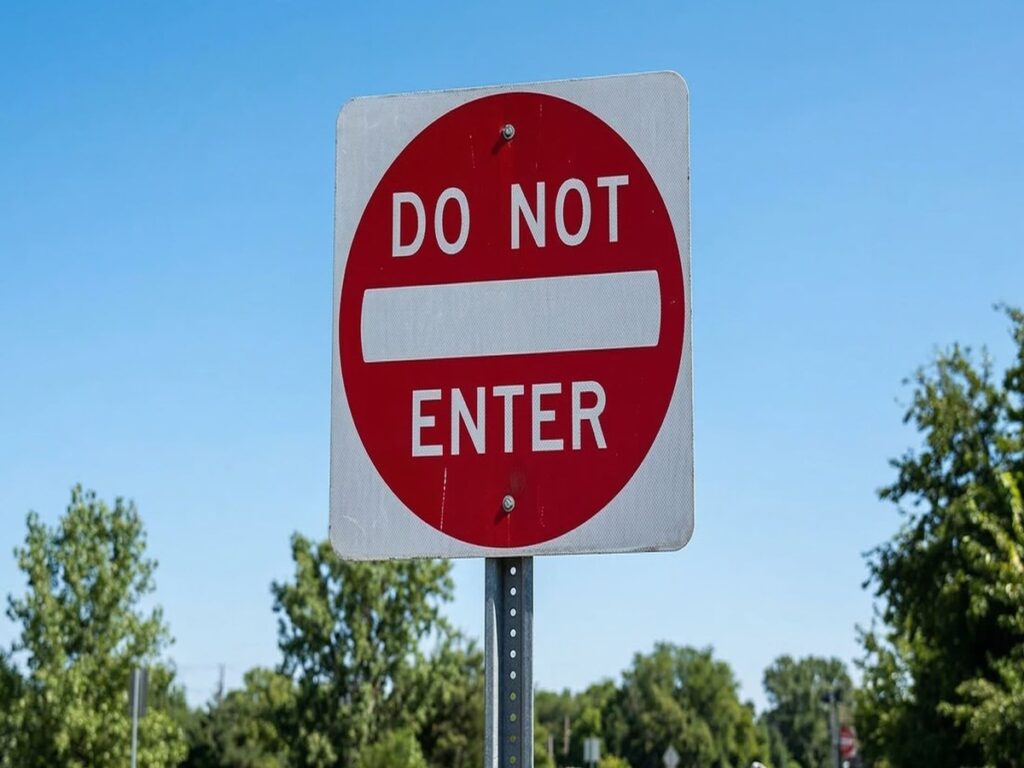
Human factors engineering dictates the design of the do not enter road sign. The white horizontal bar set against a vibrant red circle creates an immediate “stop” reflex in the driver’s mind. This specific color contrast ensures that even if a driver cannot read the text, they recognize the prohibitive symbol from a distance. The white square background further stabilizes the icon, making it identifiable under varying light conditions.
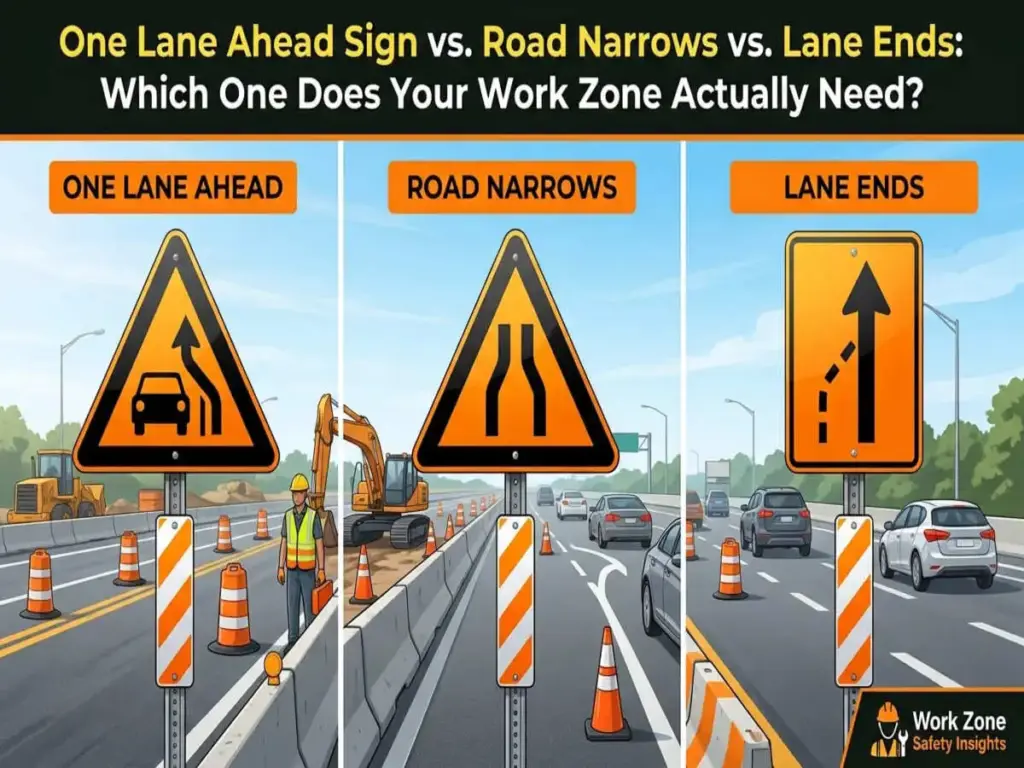
While a do not enter road sign establishes a firm regulatory boundary, engineers also utilize specific markers to manage transitions where the pavement physically restricts. Understanding how the road narrows sign serves as a critical communication tool can help planners create a more cohesive safety strategy for complex interchanges.
Regulatory Comparison: MUTCD Permanent vs. FHWA Work Zone Standards
To ensure high technical accuracy, engineers must distinguish between the deployment of permanent signs and those used in temporary traffic control zones.
Permanent MUTCD Standards (Standard 30″ x 30″)
The Manual on Uniform Traffic Control Devices (MUTCD) mandates that every permanent do not enter sign installation use high-intensity retroreflective sheeting. These signs typically sit at a height of 7 feet in urban areas to remain visible above parked cars. Engineers often double-up these signs—placing one on each side of the road—to ensure motorists do not miss the command when turning from a cross-street.
FHWA Work Zone and Temporary Variations
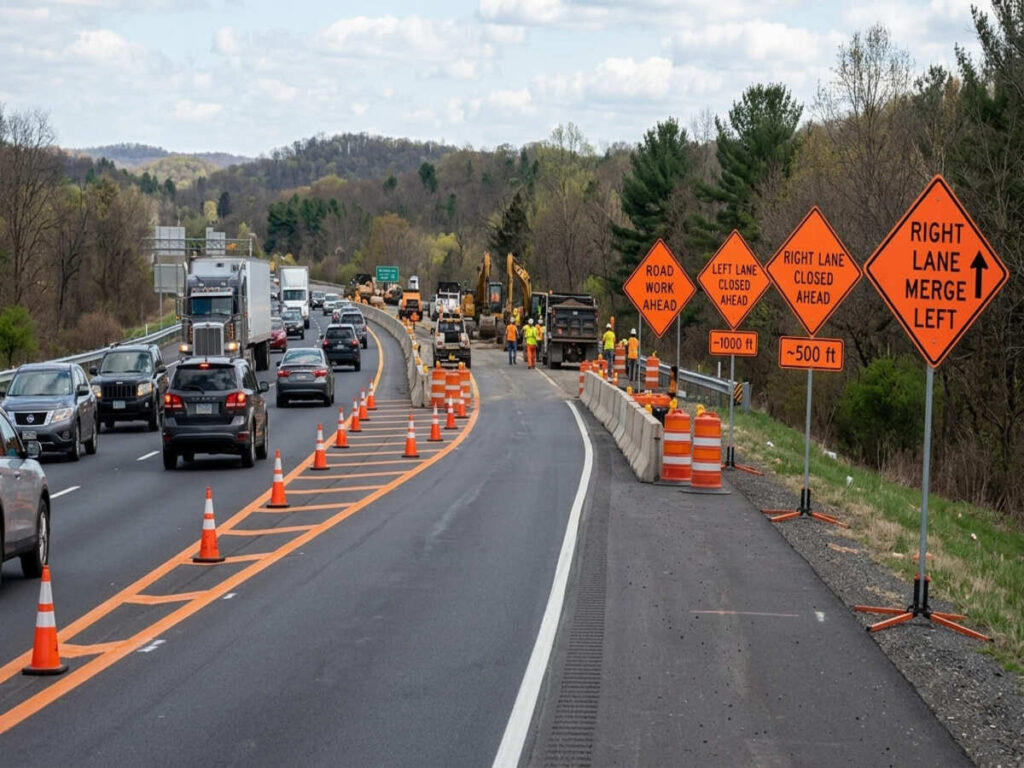
When contractors manage short-term construction sites, the Federal Highway Administration (FHWA) allows for specific variations. In these scenarios, the do not enter road sign often appears on portable stands. Unlike permanent fixtures, these temporary signs must meet strict “crashworthiness” standards (NCHRP 350 or MASH). If a vehicle strikes a portable stand, the sign must break away safely without penetrating the windshield. Furthermore, while permanent signs are yellow or red, temporary variants in work zones may occasionally be paired with orange warning flags to draw extra attention to shifting lane configurations.
Decoding the Do Not Enter Road Sign Meaning
Motorists and planners alike must respect the do not enter road sign meaning to maintain order on the grid. This sign marks the exact transition where a roadway becomes one-way or strictly off-limits.
Protecting One-Way Transitions
On one-way streets, the do not enter road sign faces the opposite direction of legal traffic flow. This placement prevents drivers from turning the wrong way into a high-volume stream of vehicles. The presence of this sign often works in tandem with directional arrows, providing a redundant safety layer. Engineers frequently deploy these markers together to maximize one-way traffic signs’ road safety and traffic flow benefits, ensuring that motorists clearly understand the permitted direction of travel before reaching the intersection.
Addressing the Do Not Enter Rough Road Sign Context
In some rural or developmental jurisdictions, agencies deploy the do not enter rough road sign. While the standard regulatory sign prevents entry for traffic flow reasons, this specific variation warns that the terrain ahead is impassable for standard passenger vehicles. Entering these zones risks vehicle damage or stranding. This variation demonstrates the sign’s flexibility in protecting both driver safety and vehicle integrity.
Strategic Placement for Maximum Visibility
A do not enter road sign only works if the driver can see and process it before making a terminal error. Engineering teams follow strict longitudinal and lateral placement rules.
Lateral Clearance and Mounting Heights
- Urban Areas: Signs stand 7 feet from the ground to the bottom of the sign to avoid obstruction by pedestrians or vehicles.
- Rural Areas: A 5-foot mounting height suffices where pedestrian traffic is minimal.
- Lateral Offset: Signs sit between 6 and 12 feet from the edge of the pavement to ensure they remain within the driver’s cone of vision without creating a roadside hazard.
The Sequential Warning System
On high-speed highway exit ramps, the do not enter road sign serves as the first warning. If a driver bypasses this, they immediately encounter “Wrong Way” signs. This tiered approach provides a second chance for the driver to realize their mistake before they enter the main travel lanes of the freeway.
Merging Technical Compliance with Public Safety
When a driver ignores a do not enter road sign, the consequences usually involve severe legal penalties and significant physical risk.
Legal Implications of Violation
Because the do not enter road sign meaning is regulatory, law enforcement treats violations as moving infractions. In many states, entering a “Do Not Enter” zone results in heavy fines and points on a driver’s license. If the violation occurs in a construction zone (as defined by the FHWA standards), the fines often double.
Enhancing Safety with LED Integration
Modern infrastructure projects now integrate solar-powered LEDs into the border of the do not enter road sign. These flashing lights activate when sensors detect a vehicle moving the wrong way. This proactive technology dramatically increases the effectiveness of the do not enter sign road in dark or rainy conditions where standard reflectivity might fall short.
Procurement Quality: Choosing the Right Road Sign
Agencies and contractors must evaluate material longevity when procuring a do not enter road sign. A sign that fades under UV exposure loses its regulatory authority and becomes a liability.
Material Grade and Reflectivity
- Aluminum Substrate: High-quality signs utilize .080-gauge alodized aluminum to prevent rust and bending.
- Sheeting Type: For permanent installations, engineers specify ASTM D4956 Type IV (High-Intensity Prismatic) or Type XI (Diamond Grade) sheeting. These materials ensure the red background maintains its “pop” even under the glare of modern LED headlights.
- Ink Quality: Specialized UV-cured inks prevent the red circle from turning pink over time, which would diminish the urgent do not enter road sign meaning.
Conclusion: The Foundation of Wrong-Way Prevention
The do not enter road sign remains an indispensable component of American transport infrastructure. By clearly marking prohibited entry points, these signs allow for the safe operation of one-way systems and complex interchanges. Whether adhering to permanent MUTCD standards or temporary FHWA work zone rules, the goal remains the same: zero wrong-way fatalities.
Reliable road safety begins with compliant, high-visibility signage. By understanding the strict engineering requirements for the do not enter sign road, planners can build more resilient and forgiving traffic systems.
Future Trend Insight: “As Level 2+ autonomous driving gains traction, physical signage is transitioning from ‘human-visible’ to ‘machine-readable.’ The retroreflective performance of a sign now directly impacts the character recognition accuracy of ADAS cameras like Mobileye. Future-proof infrastructure must prioritize high-grade fluorescent coatings to eliminate AI processing errors at complex intersections.”
To ensure your project meets federal and state safety benchmarks, you must source equipment that exceeds standard durability tests. Selecting high-performance materials prevents fading and ensures your signs remain legally enforceable for years to come. For those managing road upgrades or new construction, exploring professional-grade signage is the final step in securing your infrastructure. Browse our extensive inventory of high-performance traffic safety signage to find the right solutions for your traffic management needs.
FAQ
The do not enter road sign meaning conveys a strict regulatory prohibition against vehicular entry. It marks the boundary of one-way streets, freeway exit ramps, and restricted-access zones. When a driver encounters this sign, they must immediately stop and choose an alternative route, as continuing forward would place them in the path of oncoming traffic.
A standard do not enter road sign features a bold red circle with a white horizontal bar across the center, set against a white square background. Engineers utilize this high-contrast red-and-white palette because red light has the longest wavelength in the visible spectrum, allowing it to penetrate rain and fog more effectively than other colors. This ensures the sign remains visible to drivers and ADAS cameras in adverse conditions.
While both signs prevent incorrect movements, they function as a sequential safety system. The do not enter sign serves as the primary warning at the transition point of a restricted area. If a motorist bypasses this initial barrier, they encounter “Wrong Way” signs further down the path. The “Wrong Way” sign acts as a secondary, urgent signal that a collision is imminent. Because of these distinct roles, engineers must follow specific criteria when selecting the right wrong-way signs to supplement their primary “Do Not Enter” deployments and ensure a fail-safe traffic environment.