Most crews think of winter signs as an ice problem. This year, many roads will see rain instead. NOAA’s 2026-27 winter outlook points to a strong El Niño. That pattern leans wet across the southern U.S. and up the East Coast, while the northern tier leans warm. In plain terms, more roads will be slick from rain than from snow.
That changes which road weather warning signs a fleet or road agency needs. A slippery when wet road sign matters on a rain-soaked ramp as much as an icy bridge sign matters in January. Our team has reviewed sign inventories where every ice sign was in stock and no wet-road sign was. The gap only showed up after the first storm.
This guide covers three things. First, what each weather warning sign means and when the MUTCD says to use it. Second, why static signs alone fall short on the worst spots. Third, how to stock the right mix before the first freeze.
Key Takeaways
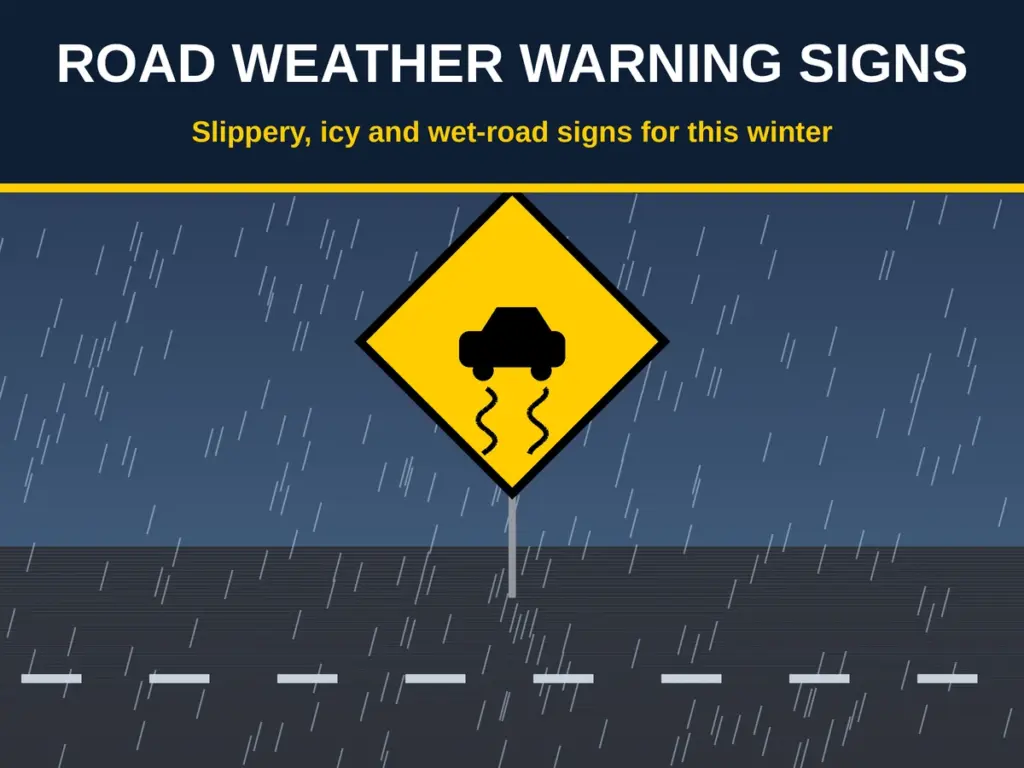
- Slippery When Wet (W8-5): Covers rain-slick curves and ramps, so crews can warn drivers without waiting for ice.
- Bridge Ices Before Road (W8-13): Marks bridge decks that freeze first, and crews can cover it when the season ends.
- Dynamic Warnings: Flashing and message signs cut speeds more than static signs, so repeat crash spots need more than one panel.
- Radar Speed Signs: Show drivers their real speed on slick approaches, so the warning turns into a measurable slowdown.
- Pre-Season Stocking: Ordering a full weather sign set before the first storm avoids rush replacements.
What Each Road Weather Warning Sign Means
The MUTCD groups pavement-condition warnings under Section 2C.30 of the 11th Edition. These signs are yellow and diamond-shaped. They warn drivers that the surface ahead may reduce traction. Each one targets a different condition.
| Sign | What It Warns Of | Typical Use | Seasonal Rule |
|---|---|---|---|
| Slippery When Wet (W8-5) | Surface that loses traction when wet | Curves, ramps, polished or worn pavement | Optional supplemental plaques such as ICE or WHEN WET |
| Bridge Ices Before Road (W8-13) | Bridge decks that freeze before the road | Approaches to bridges and overpasses | May be removed or covered when the message is not relevant |
| Slippery When Wet with plaque | A specific cause, such as ice or oil | Spots with a known cause | Plaque changes with the condition |
The MUTCD treats these signs as optional. That does not mean they are unnecessary. It means agencies must use engineering judgment. A curve with repeated wet-weather crashes clearly justifies one. The full text is in FHWA MUTCD 11th Edition, Chapter 2C.
Placement Rules That Crews Often Miss
Three rules from Chapter 2C shape how crews place these signs:
- Place the sign in advance of the affected section. The sign should come before the slick surface begins, not at it.
- Repeat the sign where the condition continues. Additional signs should appear at appropriate intervals along a long section.
- Remove or cover seasonal signs. A sign for a condition that does not exist teaches drivers to ignore it.
The last rule matters most. A W8-13 left up through July loses credibility. Drivers learn that the warning means nothing. Then they ignore it in January, when it counts.
Why Static Signs Alone Fall Short
A yellow diamond works at most locations. It works less well at the locations where crashes keep happening. Drivers see the same sign every day. They stop reading it.
The Michigan DOT tested this directly. Its study, Evaluation of Bridge Deck Winter Weather Warning Systems, compared warning types at three freeway bridges. The results were clear:
- A flashing LED border reduced vehicle speeds compared with the standard W8-13 sign.
- Pairing it with a dynamic speed feedback sign produced the strongest effect.
- A full-size dynamic message sign also reduced speeds.
- Winter crash frequency dropped at 16 of the 20 sites reviewed after installation.
The lesson applies to wet roads too. A static panel names the hazard. A dynamic sign tells the driver to act on it.
Where Optraffic Products Fit
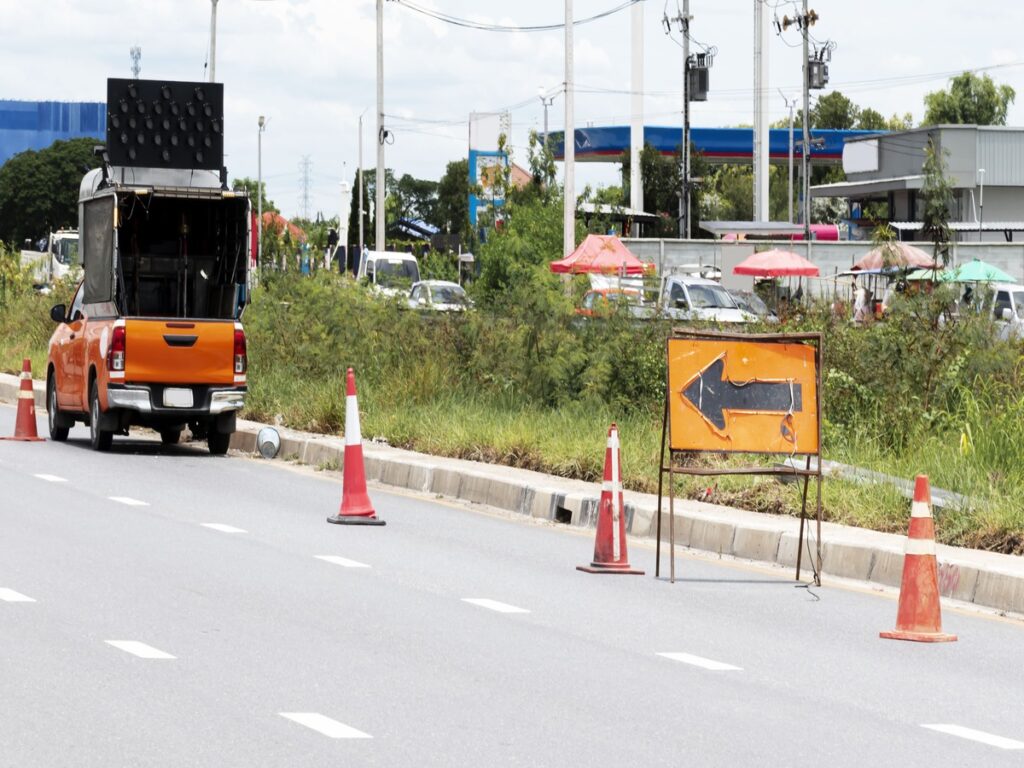
The Optraffic team builds two products that match this finding. Radar speed signs for slick-road approaches show drivers their own speed. That gives a crew a direct way to slow traffic where a W8-5 sign alone does not. Portable variable message signs for weather warnings carry messages such as “SLIPPERY ROAD CONDITIONS / REDUCE SPEEDS” and change as the weather does. A crew can switch the message on for a storm and off afterward, which also keeps the seasonal-removal rule easy to follow.
Work Zones Make Slick Surfaces Worse
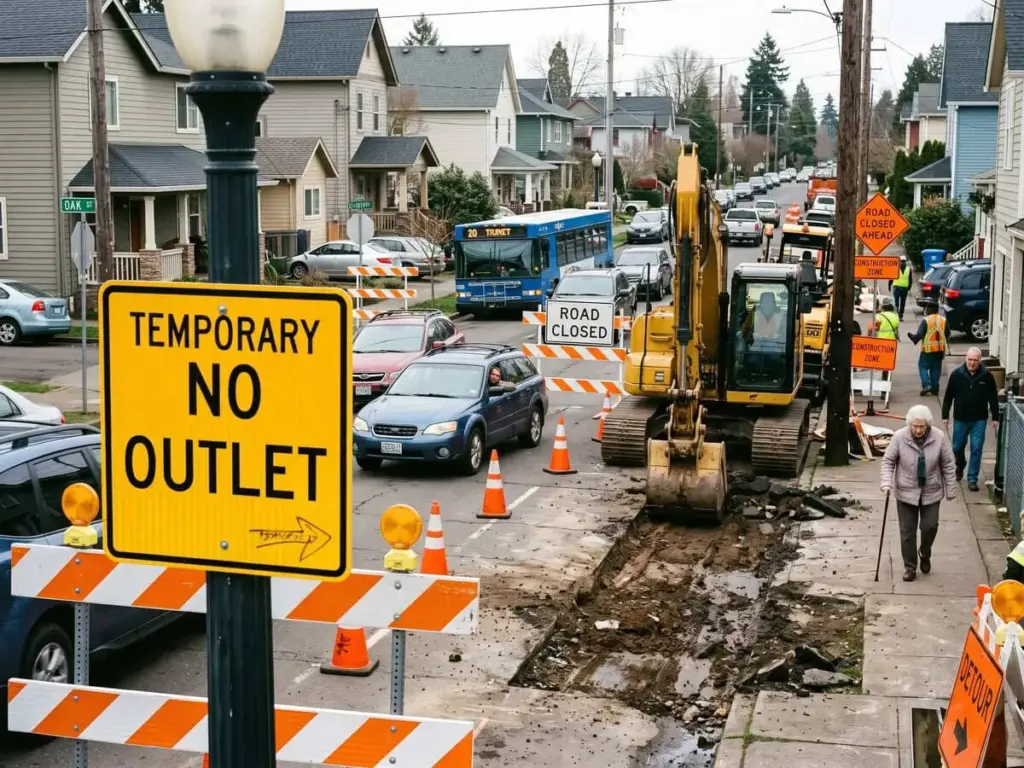
Work zones create slick surfaces that a permanent sign map never anticipated. Milled pavement, temporary patches, and wet detour routes all change traction. Crews often have no weather sign on hand for them.
- Milled or patched sections may need a W8-5 with a plaque for the cause.
- Detours onto older roads may cross bridge decks that freeze early.
- Night crews work in the same wet conditions with less visibility.
Wet and freezing nights are also when crews work longest. Portable light towers for winter night maintenance crews let workers see the surface they are signing.
A Pre-Season Stocking Checklist
Fleets and agencies that order early avoid the post-storm scramble. Use this list before the first freeze:
- Count current weather signs by type, and note faded or peeling faces.
- Review last winter’s crash and complaint locations, then match each one to a sign.
- Add plaques for specific causes, such as ICE or WHEN WET.
- Set aside covers or a removal plan for seasonal signs.
- Reserve a dynamic sign for the one or two spots with repeat crashes.
Retroreflective faces also matter more in winter, when dusk comes early and wet pavement scatters light. The reflective grade guide in Related Reading explains what to specify.
Related Reading
- Work Zone Safety Signs in Extreme Weather: How Rain, Snow, and Wind Cause Equipment Failure — and How to Respond
- Seasonal Traffic Control Equipment: Essential Solutions for Winter and Summer Roadwork
- Why Flashing LED Traffic Warning Lights Are Essential for Hazardous Road Conditions
- What Reflective Grade Should You Use for Construction Site Signs in Night, Rain, and Fog?
FAQ
What does a slippery when wet road sign mean?
It warns drivers that the surface ahead loses traction when wet. It is common on curves, ramps, and worn pavement.
What is the difference between a slippery road sign and an icy bridge sign?
A slippery when wet sign (W8-5) covers general loss of traction. An icy bridge sign (W8-13) warns that bridge decks freeze before the road around them.
Are weather warning signs required by the MUTCD?
Both W8-5 and W8-13 are optional under Section 2C.30. Agencies decide using engineering judgment, based on conditions and crash history.
Can a seasonal weather sign be left up all year?
The MUTCD says seasonal signs may be removed or covered when their message is not relevant. Leaving them up all year weakens the warning.
When should a static sign be replaced with a dynamic one?
Consider it where crashes repeat despite the standard sign. Michigan’s study found flashing and message signs lowered speeds more than the standard sign.
Conclusion
Winter weather does not mean only ice this year. In many regions, it means wet roads for months. The right road weather warning signs are the ones that match the surface drivers will actually meet. Static signs name the hazard. Radar speed signs and message boards make drivers respond to it. That is why the Optraffic team builds weather sign sets with dynamic options alongside the yellow diamonds, so every spot gets the right road weather warning signs before the first storm.