_1794883978_WNo_1600d900.jpg)
Speed limit signs use different colors to communicate important information to drivers. Nos Estados Unidos, a standard white Speed Limit sign with black lettering displays a legally established speed limit, while a yellow advisory speed plaque usually recommends a safer speed for a specific road condition, such as a sharp curve or highway ramp. Understanding the difference helps drivers recognize traffic rules and respond to potential hazards.
Although both signs display a speed in miles per hour or kilometers per hour, they do not serve the same purpose or have the same legal meaning. White regulatory signs communicate enforceable speed limits, while yellow warning signs and advisory plaques provide additional guidance. Knowing how to interpret each sign can help you adjust your driving, avoid unsafe situations, and make better decisions on the road.
Quick Navigation
- Sinais e cores de limite de velocidade
- Sinais de limite de velocidade brancos
- Yellow Speed and Advisory Signs
- How Drivers Should Respond
- Por que a diferença é importante
- Perguntas frequentes
- Conclusão
Sinais e cores de limite de velocidade
O papel da cor
Traffic sign colors help drivers identify the type of information being communicated. Each color has a recognized purpose under the Manual sobre Dispositivos Uniformes de Controle de Tráfego (MUTCD), the federal standard used for traffic control devices on roads open to public travel in the United States. Por exemplo, red is commonly used for stop and prohibition messages, yellow indicates warnings, and white is widely used for regulatory signs.
The following table summarizes several common traffic sign colors and their meanings:
| Cor | Common Usage | Mensagem transmitida | Exemplos |
|---|---|---|---|
| Branco | Sinais regulatórios | Traffic laws and requirements | limite de velocidade, Sem inversão de marcha |
| Preto | Texto, símbolos, and contrast | Clear and readable information | Numbers on a Speed Limit sign |
| Vermelho | Stop and prohibition signs | Parar, restrição, or prohibition | Parar, Não entre |
| Amarelo | Sinais de aviso | Caution and potential hazards | Curva à frente, Velocidade consultiva |
| Laranja | Controle de tráfego temporário | Construction and work-zone warnings | Trabalho na estrada pela frente, Mudança de pista |
| Verde-amarelo fluorescente | Special warning signs | Increased attention for specific road users | School and pedestrian warnings |
These colors are part of a standardized traffic sign system. They help drivers recognize the type of message before reading every word or number on a sign. No entanto, color alone does not determine whether a speed instruction is legally enforceable. Drivers should also consider the sign's wording, projeto, colocação, and applicable local traffic laws.
Why Sign Colors Matter to Drivers
Sign colors make road information easier to recognize, especially when drivers have limited time to react. A red sign attracts attention to a stop or restriction, while a yellow warning sign signals that a road condition may require extra care. A white regulatory sign presents a rule that drivers are expected to follow.
Por exemplo, a driver approaching a curve may see a yellow warning sign with an advisory speed plaque. The warning helps the driver anticipate the curve, while the number suggests a speed suitable for navigating that section under normal conditions. A white Speed Limit sign, por contraste, displays the applicable legal speed limit for the road or zone.
Sinais de limite de velocidade brancos
Significado e uso
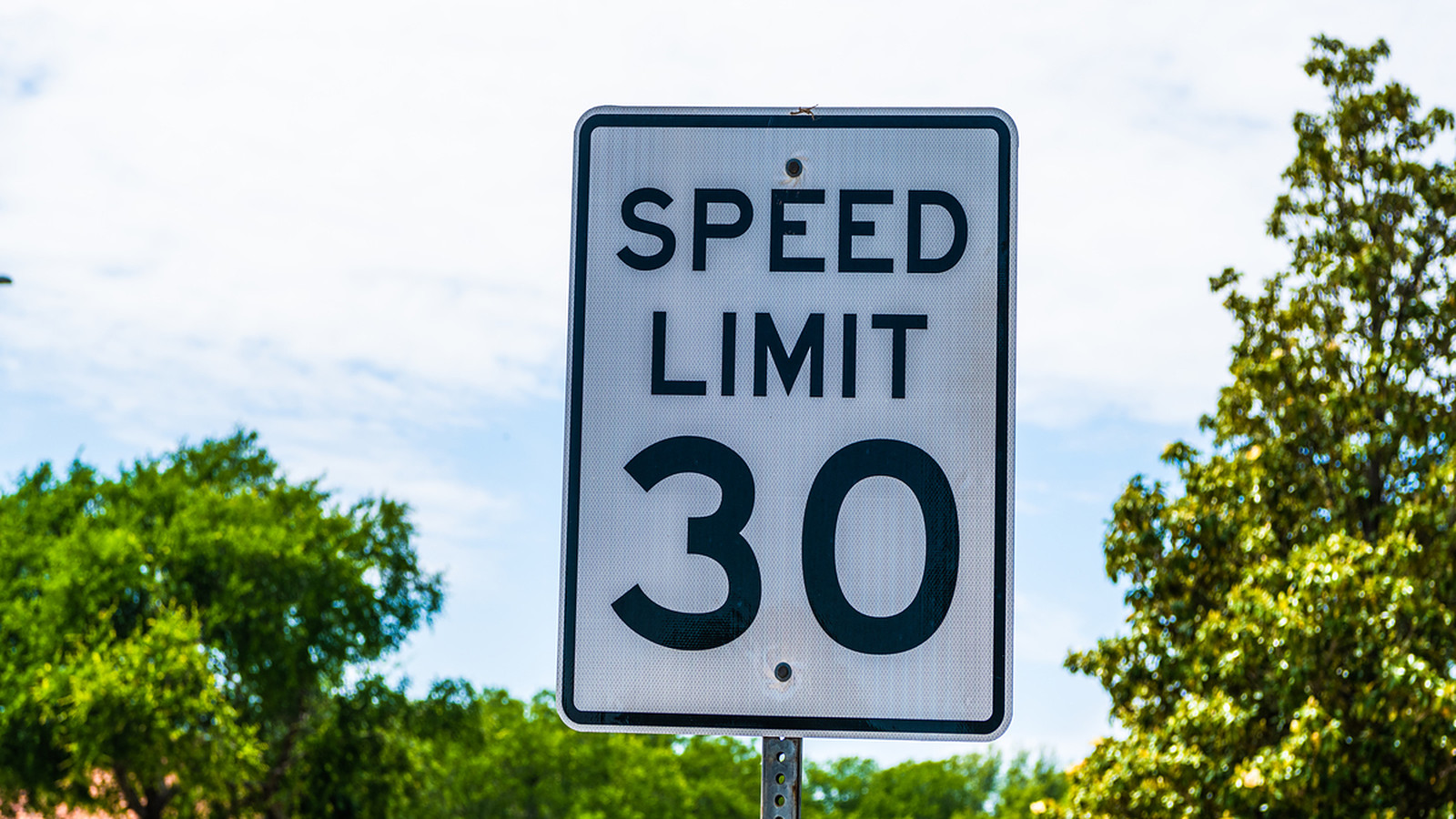
White Speed Limit signs are among the most recognizable regulatory signs on U.S. estradas. The standard sign has a white background, borda preta, and black lettering or numbers. It displays the maximum legal speed established by the responsible road authority, unless another applicable rule or sign provides otherwise.
You may encounter white Speed Limit signs in many driving environments, incluindo:
- Rodovias e rodovias
- City streets and major roads
- Bairros residenciais
- School areas and other designated speed zones
- Road sections where the posted speed changes
A sign may display a speed such as 25, 35, 55, ou 65 km/h. These numbers are established by the relevant authority under applicable laws and traffic-engineering procedures. Factors considered may include road geometry, visibilidade, condições de trânsito, nearby pedestrian activity, surrounding land use, e história do acidente.
Driving tip: When you enter a new road or speed zone, look for the white Speed Limit sign and check whether the posted limit has changed.
Status legal
A standard white Speed Limit sign is a regulatory traffic control device. It communicates a speed limit established by law, portaria, regulamento, or an authorized road agency. Drivers are required to comply with the applicable posted limit.
Nos Estados Unidos, the MUTCD provides national standards for the design and use of traffic control devices. The standard Speed Limit sign is identified as R2-1. Its displayed speed must reflect the limit established by the authorized authority, following applicable procedures.
Important points about regulatory speed limits include:
- The posted limit represents a legal speed restriction for the applicable road or zone.
- Speed limits are established by the relevant state or local authority under applicable law.
- Traffic engineers and road agencies may consider road conditions, alinhamento, distância de visão, padrões de tráfego, and safety records when setting limits.
- Some roads display separate limits for particular vehicle types, such as trucks.
- Electronic or variable speed limit signs may display changing legal limits when authorized and operated under applicable requirements.
Driving above a legally posted speed limit may result in a citation or other penalties, depending on the jurisdiction and circumstances. Drivers should also remember that a posted limit is not always a safe target in every situation. Chuva, neve, tráfego, visibilidade, and road conditions may require a lower speed.
Yellow Speed and Advisory Signs
Finalidade Consultiva
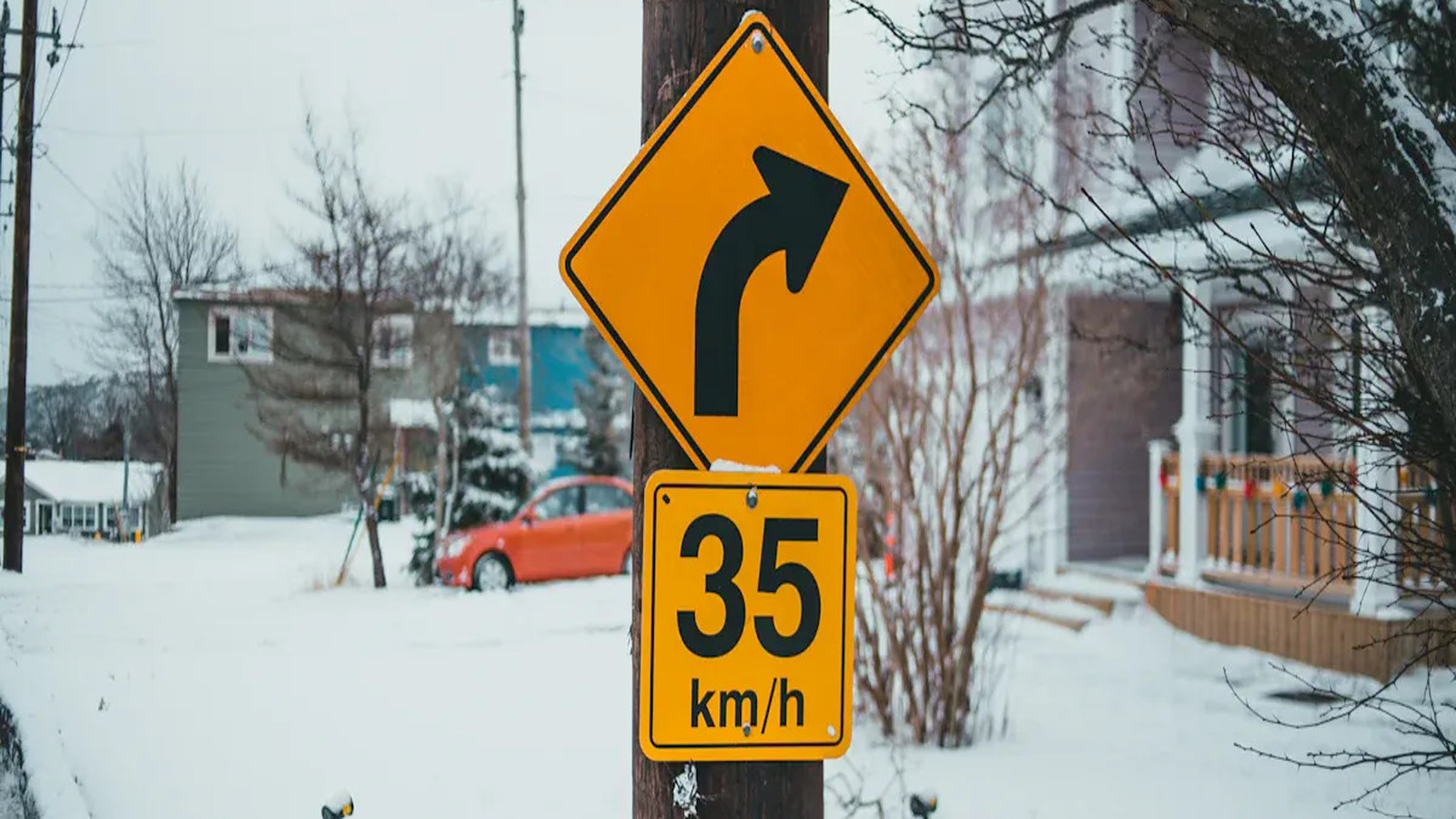
Yellow traffic signs are generally used to warn drivers about road conditions that may require extra attention. When a yellow warning sign is accompanied by an advisory speed plaque, the number indicates a recommended speed for the specific condition ahead. It is guidance rather than a separate regulatory speed limit.
These signs are commonly placed before sharp curves, estradas sinuosas, highway ramps, and other locations where the road layout may require drivers to reduce speed. The yellow background makes the warning easy to recognize, while the advisory number helps drivers judge an appropriate approach speed.
An advisory speed does not replace the legal speed limit. Drivers must still obey the applicable regulatory speed limit and choose a speed that is safe for current road, tráfego, e condições climáticas. Driving above an advisory speed number does not automatically mean a speeding violation, but it may still be unsafe. A driver can face consequences for driving too fast for conditions under applicable state or local laws.
Observação: Treat an advisory speed as a warning to assess the road ahead and adjust your speed. It is not permission to ignore the posted legal speed limit or other safety requirements.
Locais típicos
Yellow warning signs with advisory speed information are often installed where drivers need advance notice of a road feature or potential hazard. Locais comuns incluem:
- Sharp turns and curves
- Winding roads with multiple bends
- Highway entrance and exit ramps
- Road sections with limited sight distance
- Locations with unusual alignment or changing road conditions
Road agencies use engineering judgment and established traffic-engineering practices to determine whether an advisory speed is appropriate. They may consider the curve's geometry, available sight distance, road surface, and the time drivers need to respond to the warning.
In temporary work zones, orange signs are commonly used to communicate construction-related warnings. The MUTCD also allows advisory speed plaques to be used with warning signs in temporary traffic control areas. Nessas situações, the plaque's background may be orange to match the work-zone sign assembly.
The table below summarizes typical applications of yellow warning signs and advisory speed information:
| Tipo de localização | Typical Sign Application |
|---|---|
| Curvas e curvas | Warning sign with advisory speed information where appropriate |
| Estradas sinuosas | Curve or winding-road warning signs |
| Colinas íngremes | Grade warning signs, with additional information when needed |
| Rampas rodoviárias | Ramp or curve warning signs, sometimes with an advisory speed plaque |
| Zonas de construção | Temporary orange warning signs and work-zone advisory information |
| School Areas | Fluorescent yellow-green school warning signs and applicable regulatory speed signs |
Yellow warning signs help drivers prepare for conditions ahead. Their purpose is to provide advance notice and encourage a suitable response, not to establish a different legal speed limit by themselves.
How Drivers Should Respond
Respondendo aos sinais brancos
When you see a white Speed Limit sign, check the displayed number and follow the legal speed limit for that section of road. Pay attention to changes in the posted limit, especially when entering a new speed zone or approaching a different road environment.
Good driving practices include:
- Watch for speed limit signs when entering a new road or area.
- Follow the applicable posted speed limit.
- Maintain a safe following distance and avoid sudden acceleration.
- Avoid distractions such as mobile phones while driving.
- Adjust your speed when traffic, clima, or visibility makes conditions less safe.
- Stay alert for pedestrians, ciclistas, and other road users.
Following regulatory speed limits and driving according to road conditions helps reduce risks for you and other road users.
Respondendo aos sinais amarelos
When you see a yellow warning sign, pay attention to the road feature or hazard it identifies. If an advisory speed plaque is displayed, use the recommended speed as guidance when approaching the indicated location.
Slow down early rather than braking suddenly at the curve or hazard. Consider the road surface, visibilidade, clima, tráfego, and the handling characteristics of your vehicle. Even when your speed is below the posted legal limit, you may need to drive more slowly to maintain control.
An advisory speed is not a substitute for safe driving judgment. The safest speed depends on the actual conditions, and drivers remain responsible for operating their vehicles safely.
Driving tip: Use yellow warning signs as an early reminder to check your speed, scan the road ahead, and prepare for changing conditions.
Whether a sign is white or yellow, the right response is to understand its message and drive at a speed appropriate for the situation.
Por que a diferença é importante
Segurança
Understanding the difference between regulatory speed limit signs and yellow warning signs helps drivers respond appropriately. White signs communicate the legal speed limit, while yellow signs alert drivers to potential hazards or road conditions that may require additional caution.
Clear and properly placed traffic signs also help drivers recognize information in time to react. Road agencies consider factors such as visibility, colocação de sinalização, road design, and traffic conditions when selecting and installing traffic control devices.
Effective sign design and placement can improve road communication in several ways:
- Consistent sign designs make traffic information easier to recognize.
- Visible placement gives drivers more time to respond.
- Clear warning messages help reduce confusion near road hazards.
- Reflective materials improve sign visibility in low-light conditions.
- Supplementary warning devices, incluindo Luzes de aviso de LED, can provide additional attention where appropriate.
When signs are easy to see and understand, drivers can make more informed decisions and better prepare for changes in road conditions.
Consequências legais
Driving above a posted regulatory speed limit may result in a traffic citation, multar, or other penalties under the laws of the relevant jurisdiction. The consequences vary by state or locality and may depend on how far above the limit a vehicle is traveling and the circumstances of the violation.
An advisory speed plaque has a different purpose. It recommends a speed for a particular road condition and does not independently establish a regulatory speed limit. No entanto, drivers must still operate at a speed that is reasonable and safe for the conditions. Driving too fast for a curve, mau tempo, or limited visibility may lead to legal consequences even if the vehicle is traveling below the posted speed limit.
The key distinction is straightforward: white Speed Limit signs communicate regulatory speed limits, while yellow warning signs and advisory speed plaques communicate caution and recommended speeds. Recognizing both types helps drivers understand the road and respond responsibly.
Perguntas frequentes
What happens if you ignore a yellow advisory speed sign?
An advisory speed plaque does not independently establish a legal speed limit. No entanto, driving too fast for a curve, road surface, or other conditions may still be considered unsafe under applicable traffic laws. Drivers should use the advisory speed as guidance and adjust to actual conditions.
Você pode conseguir uma multa por ultrapassar a velocidade em uma placa branca?
Sim. A standard white Speed Limit sign displays a regulatory speed limit. Driving above the applicable limit may result in a citation or other penalties, depending on local law and the circumstances.
Why do some speed-related signs have different colors?
Sign colors help drivers identify different types of traffic information. White is commonly used for regulatory signs, while yellow is used for warnings. A yellow warning sign with an advisory speed plaque provides guidance about a specific road condition rather than establishing a separate legal speed limit.
Where should you look for yellow advisory speed signs?
You may see yellow warning signs with advisory speed plaques before sharp curves, estradas sinuosas, highway ramps, or other locations where drivers may need to reduce speed. They are generally placed in advance of the condition so drivers have time to react.
Are yellow advisory speeds the same as posted speed limits?
Não. A regulatory Speed Limit sign displays a legally established speed limit. An advisory speed plaque recommends a speed for a particular road condition. Drivers must obey the applicable legal limit while also choosing a safe speed for the conditions.
Conclusão
White and yellow speed-related signs serve different but complementary purposes. White Speed Limit signs show the legal speed limit, enquanto yellow warning signs and advisory speed plaques alert drivers to potential hazards and recommend a suitable speed. Understanding this distinction helps drivers recognize traffic instructions, anticipate road conditions, and make safer decisions.
Claro, visível, and properly designed traffic signs are essential for effective road communication. For traffic sign products and road safety solutions, explore the range available from OptSigns. Choosing suitable signs and warning devices can help road managers communicate important information and support safer driving environments.