>

블로그

>

교통 볼라드 소싱 & 조달안내: 가격, 규정 준수 & 공급망 전략

교통 볼라드 소싱 & 조달안내: 가격, 규정 준수 & 공급망 전략

Traffic bollard procurement sits at the intersection of capital budgeting, 규제 준수, 공급망 물류. For enterprise procurement officers, commercial general contractors, and municipal engineers, getting it wrong carries real consequences — cost overruns, compliance violations, and project delays that compound quickly across multi-site programs.

This guide delivers a structured procurement framework covering 2026 pricing baselines, 총 소유 비용 (TCO) 모델링, MUTCD 11th Edition compliance requirements, supplier evaluation criteria, and lead time management strategies. Physical installation methodology and material-science comparisons fall outside the scope of this resource and are addressed in dedicated technical guides.

Why Traffic Bollard Procurement Is More Complex Than a Standard Purchase Order

OPTSIGNS | The Traffic Bollard Sourcing & Procurement Guide: Pricing, Compliance & Supply Chain Strategy

Hidden Variables That Inflate Project Budgets

Initial unit pricing represents only 40–60% of the true project cost in a typical bollard installation program. Underground utility conflict resolution — requiring ground-penetrating radar (GPR) site assessments before any embedded bollard installation — adds cost that most procurement models exclude entirely. Single mobilization vs. batch installation pricing differentials compound the gap further; contractors who batch installations across a site reduce per-unit labor cost significantly compared to one-off call-outs.

The correct analytical lens for any bollard procurement program is total cost of ownership (TCO) — not unit price. Procurement officers who anchor RFQ evaluations to unit cost alone routinely face budget deficits at project closeout.

Regulatory Exposure and the Cost of Non-Compliance

Compliance failures carry quantifiable financial and liability consequences. The MUTCD 11th Edition — the federal standard governing traffic control device placement and retroreflectivity — applies to any bollard application on or adjacent to a public roadway. ADA regulations mandate a minimum 36-inch clear pedestrian passage width at any bollard installation adjacent to accessible routes. Non-compliant installations on federally funded projects risk federal aid ineligibility under 23 CFR 부분 655.

Crash-rated bollard specifications require matching the rated performance classification to the site’s documented threat level. Misquoting ASTM F2656 M30 vs. M50 in an RFQ document creates specification disputes that are expensive to resolve post-award. Before issuing any RFQ, procurement officers should work through critical buyer evaluation questions to confirm specification accuracy upfront.

How Sourcing Channel Strategy Affects Supply Chain Reliability

The factory-direct vs. distributor sourcing decision shapes lead time predictability, warranty chain integrity, and compliance documentation availability across the entire project lifecycle. Procurement programs that treat this as a purely transactional choice — defaulting to the lowest quote — routinely experience documentation gaps and warranty disputes that create downstream liability exposure. This strategic decision is examined in full in Direct Factory vs. Local Distributor: Which Bollard Sourcing Strategy Saves More?

Traffic Bollard Price Benchmarks for 2026: What Enterprise Buyers Should Expect

Unit Price Ranges by Bollard Category

The following table presents 2026 market baseline pricing across the four primary bollard procurement categories. These figures represent planning-level benchmarks; actual quoted prices vary by order volume, supplier tier, 재료 사양, and geographic delivery zone.

Bollard CategoryUnit Price RangeInstalled Cost Estimate
Standard Steel Pipe & Concrete-Fill$75 - $300$500 - $1,200 단위당
장식 / 건축$200 - $800Varies by mount type
충돌 등급 / High-Security (ASTM F2656 M30/M50)$1,000 - $5,000+Site-dependent engineering
태양광 / Illuminated$200 - $400+$50–$150/linear ft (hardwired)

원천: FHWA Traffic Control Device Handbook, 2024 판

Solar and illuminated bollards carry a secondary electrical infrastructure cost that must appear as an independent budget line. Hardwired installations require trenching and conduit work priced at $50–$150 per linear foot — a figure that can dwarf the unit cost on long perimeter applications.

Volume Pricing Thresholds and Bulk Order Economics

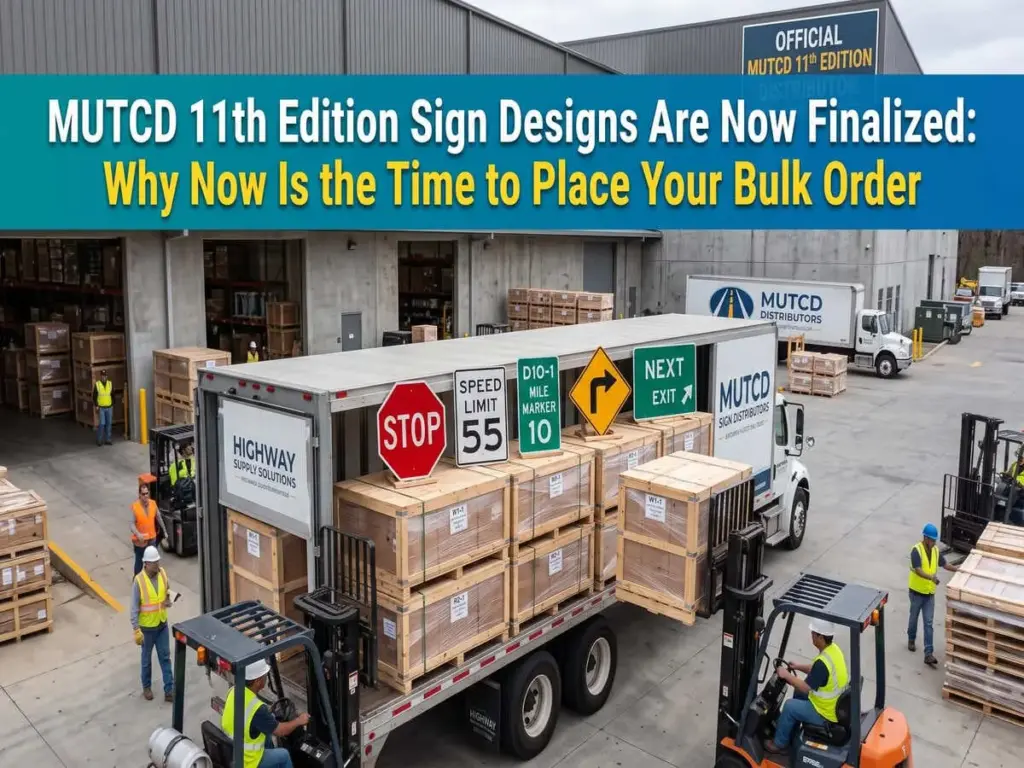
Wholesale traffic bollards and bulk traffic bollards procurement unlocks tiered pricing at standard volume breaks: typically 10-unit, 50-단위, and 100-unit thresholds. Orders above 50 units commonly yield 15–30% reductions from list price. Blanket purchase orders with staggered release schedules lock in volume pricing while deferring carrying cost — a structurally superior approach for multi-site programs compared to sequential spot orders.

Stackable flexible bollard models (T-top designs) deliver a compounding logistics advantage: reduced storage footprint, lower freight cube utilization, and lower per-pallet shipping cost. On space-constrained urban job sites, this difference directly affects contractor P&엘.

Crash-Rated Bollard Premium Pricing Explained

The $1,000–$5,000+ price range for crash-rated bollards reflects engineered foundation requirements, third-party ASTM F2656 testing and certification costs, and a constrained supplier base for certified products. The M30 and M50 designations represent distinct performance levels — M30 stops a 15,000 lb vehicle traveling at 30 MPH; M50 stops the same vehicle at 50 mph — and carry different foundation engineering requirements that add to total installed cost. K4 and K12 are legacy U.S. Department of State designations that parallel M30/M50 but are not interchangeable in specification documents without explicit cross-reference. Misapplying these ratings in a procurement specification document exposes buyers to rejection, cost escalation, or post-installation remediation.

Building a Total Cost of Ownership (TCO) Model for Bollard Procurement

The Five Cost Layers Every Procurement Model Must Include

A structurally complete bollard TCO model carries five discrete cost layers, each requiring its own budget line:

  • Unit procurement cost — base product price at negotiated volume tier
  • Inbound freight and logistics — bollard shipping costs including LTL freight class, dimensional weight, liftgate, and fuel surcharges
  • Site preparation and hidden installation costs — GPR utility surveys, 허락하다, and foundation engineering
  • Ongoing maintenance and replacement cycle costs — driven by impact frequency, UV 저하, and retroreflectivity decline
  • End-of-life removal and disposal — often excluded from initial project budgets entirely

미국에 따르면. Bureau of Labor Statistics Occupational Injury data, struck-by incidents involving fixed objects account for a significant share of construction-related injuries annually, reinforcing the financial case for specifying and maintaining bollards to full compliance standards rather than treating replacement as a discretionary cost.

Shipping Cost Variables for Bulk Bollard Orders

Bollard shipping costs carry more variables than most procurement models anticipate. Standard fixed bollards typically ship as LTL freight class 70–85, with dimensional weight billing applying when pallet cube exceeds actual weight thresholds. Additional cost drivers include liftgate requirements (common for commercial delivery addresses without dock access), inside delivery surcharges, and fuel surcharge indices that fluctuate quarterly. Procurement RFQs should always request DDP (관세 지불 인도됨) pricing to standardize cost comparisons across competing suppliers. Stackable bollard formats reduce per-unit shipping cost through superior pallet cube utilization — a meaningful savings on orders above 50 단위.

Warranty Terms, 교체 주기, and Lifecycle Cost Modeling

Traffic safety equipment warranty terms represent one of the most overlooked variables in bollard TCO modeling. Manufacturer defect warranties typically run 1–5 years, covering materials and workmanship. Performance warranties covering retroreflectivity, UV 저항, and structural integrity under repeated impact vary significantly by product tier and supplier.

Flexible delineator bollards carry predictable replacement cycles driven by vehicle impact frequency and UV degradation — factors that should directly inform procurement volume planning and safety stock levels. Contractors managing long-term facility agreements must verify that warranty assignment language survives contract transfer to end clients.

For a deeper breakdown of shipping, 설치, 유지 보수 비용, 보다 The Real Cost of Traffic Bollards: Factoring in Shipping, 설치 & 유지.

Compliance Framework for MUTCD-Aligned Bollard Procurement

MUTCD 11th Edition Requirements That Affect Bollard Specification

The MUTCD 11th Edition — published by the Federal Highway Administration — establishes the governing federal standard for traffic control device retroreflectivity, color-coding, and placement on public roadways. Bollards used as channelizing devices must meet Type III or Type IV retroreflective sheeting requirements for nighttime conspicuity. The 11th Edition updated retroreflectivity maintenance requirements, creating new long-term procurement implications: retroreflective performance must be sustained across the bollard’s service life, not just at installation. Agencies on federal-aid road networks face compliance audits against these standards.

ADA Clearance, 충돌 등급, and Material Certification Requirements

Three regulatory domains demand explicit confirmation at the specification stage:

  • 아다: Minimum 36-inch clear pedestrian passage width at any bollard installation adjacent to accessible routes. Procurement managers must confirm that layout plans achieve this before finalizing product selection.
  • 충돌 등급: ASTM F2656 M30 or M50 must match the threat assessment documented in the security site plan. Test standard and performance rating must appear verbatim in specification documents.
  • 자재 규정 준수: ASTM B209 governs aluminum alloy verification for decorative and architectural bollards — alloy composition affects corrosion resistance, structural performance, and long-term warranty validity.

ISO 9001 Supplier Certification and Procurement Risk Management

ISO 9001 manufacturer certification functions as a minimum vetting criterion for enterprise bollard procurement — particularly for crash-rated products where manufacturing process consistency directly affects life-safety performance. Certified suppliers provide documented quality management systems, including material traceability, process control records, and nonconformance procedures. For guidance on evaluating manufacturer credentials in depth, 보다 sourcing traffic bollards from a factory.

Supplier Evaluation and Sourcing Channel Strategy

Factory-Direct Procurement: 장점, 위험, and Qualification Criteria

Factory-direct traffic bollard procurement delivers lower per-unit pricing at volume thresholds, direct access to custom specification capability, stronger compliance documentation chains (Certificates of Conformance, ASTM test reports, and material certifications issued at source), and a direct warranty relationship.

The trade-offs are real: longer standard lead times vs. distributor-stocked inventory, higher minimum order quantities that increase carrying cost exposure, and limited geographic delivery infrastructure for time-sensitive schedules. ISO 9001 certification and audit access capability are non-negotiable qualification criteria for any factory-direct relationship involving crash-rated or life-safety products.

Distributor Sourcing: When Speed and Flexibility Outweigh Unit Cost

Regional distributor sourcing delivers strategic value in four scenarios: projects with variable-quantity releases, urgent fill-in orders against existing specifications, mixed-SKU fulfillment requirements across multiple bollard types, and contract situations requiring single-source accountability for delivery and installation support. Distributor pricing premiums are partially offset by reduced carrying cost — distributors hold the inventory risk — and lower inbound freight on regionally stocked products. Warranty pass-through language requires verification: distributor-tier limited warranties sometimes displace the full manufacturer warranty rather than passing it through in full.

Comparative Table

Evaluation MetricFactory-Direct ProcurementRegional Distributor Sourcing
Financial Focus & 단가Maximum Unit Cost Reduction: Offers the lowest baseline per-unit cost by eliminating middleman markups; ideal for protective wholesale bollard margins.Total Cost Mitigation: Higher initial unit price, but partially offset by lower inbound domestic freight and zero local warehousing overhead.
Minimum Order Quantities (MOQs)Rigid High-Volume Thresholds: Typically requires substantial commitments (예를 들어, 300–500 units) per production run, tying up upfront capital.Highly Flexible / Low MOQs: Accommodates small batches, phased project releases, and urgent fill-in orders with zero volume penalties.
공급망 & 리드타임Extended Pipeline (30–90 Days): Requires precise lead time management to account for manufacturing queues, port delays, and ocean freight.Just-in-Time Delivery (1–7 Days): Relies on regionally stocked safety stock, eliminating site downtime and protecting project timelines.
기호 논리학 & Inventory RiskBuyer-Absorbed Friction: The buyer manages international freight, customs clearance, drayage, and bears the carrying cost of bulk storage.Vendor-Managed Logistics: The distributor absorbs transit damage risks, handles warehousing, and provides localized delivery/pickup options.
Cash Flow & Capital VelocityHigh Capital Intensity: Demands significant upfront deposits or strict Letters of Credit, restricting working capital liquidity.Flexible Working Capital: Frequently extends favorable commercial credit terms (예를 들어, Net-30 or Net-60 agreements) to qualified contractors.
사용자 정의 & 공학Bespoke Capability: Direct access to original engineering teams for custom castings, specialized dimensions, or proprietary finishes.Standardized SKU Catalog: Limited to industry-standard, off-the-shelf security and decorative models matching existing specifications.
규정 준수 & 추적성Source-Level Verification: Flawless chain of custody with direct access to Certificates of Conformance, ISO 9001 감사, and raw material mill reports.Downstream Validation: Relies on certified pass-through documentation; critical to manually verify Buy America Act (BAA) or local zoning alignment.
보증 & Support ClaimsDirect Manufacturer Warranty: Comprehensive structural coverage, though cross-border defect resolution or parts exchange can face logistical delays.Local Warranty Administration: Immediate troubleshooting and rapid swap-outs from local stock, but requires checking fordistributor-tier limits.

Building a Supplier Scorecard for Bollard Procurement Qualification

A structured supplier scorecard should evaluate six dimensions in every bollard supplier qualification review:

  • Compliance documentation depth — CoC, ASTM test reports, MUTCD retroreflectivity data
  • ISO 9001 certification status and audit availability
  • Pricing structure transparency — published tiers vs. negotiated volume schedules
  • Lead time reliability — standard, expedited, and emergency order capabilities
  • Warranty scope and assignment provisions
  • Dedicated account management and after-order support capability

Lead Time Management and Supply Chain Risk Mitigation

Lead Time Benchmarks by Bollard Product Category

Realistic lead time ranges by category support project schedule planning:

Bollard CategoryStandard Lead Time
Standard flexible / 묘사자 (from stock)3–영업일 기준 10일
Standard fixed steel (stocked sizes)2-4주
Standard fixed steel (custom color/height)6–10 weeks
Crash-rated ASTM F2656 M30/M5010–20+ weeks
Decorative/architectural cast8-16주

All large-volume procurement timelines should build in a minimum 20% buffer above stated lead times. Purchase order acknowledgments must confirm production slot allocation — not merely a quoted lead time — as a condition of order confirmation.

Supply Chain Risk Factors That Threaten On-Time Delivery

Four categories of supply chain risk drive bollard delivery failures: raw material supply constraints (강철, HDPE polymer resin, aluminum alloy — ASTM B209 verification functions as a safeguard against substitution risk); manufacturing capacity constraints at certified crash-rated producers; freight and carrier disruption, including LTL capacity tightening and fuel surcharge volatility; and permitting or site-readiness delays that push delivery windows past initial supplier allocation. Staged delivery agreements and staggered release purchase orders provide structural protection against all four. For a comprehensive playbook on calculating safety buffers and managing vendor timelines, consult our detailed guide on managing supply chain risks in commercial projects.

Procurement Strategies to Protect Project Schedules

Five tactical measures protect bollard procurement timelines on large-scale programs:

  1. Issue RFQs with delivery window ranges rather than fixed delivery dates to preserve supplier scheduling flexibility
  2. Negotiate 30–60 day delivery window shift provisions without penalty in procurement contracts
  3. Establish safety stock levels for high-turnover standard bollard SKUs using historical consumption data
  4. Use blanket purchase orders with scheduled releases to lock in pricing while managing carrying cost
  5. Require confirmed production slot allocation in the PO acknowledgment — not just a quoted lead time

The Bollard Procurement Compliance Checklist: From RFQ to Delivery Acceptance

Pre-RFQ Specification Requirements

Six inputs must be confirmed before a valid bollard RFQ is issued:

  1. Site threat classification and applicable crash rating standard (ASTM F2656 M30/M50 or none required)
  2. ADA pedestrian clearance plan confirming 36-inch minimum spacing within the proposed layout
  3. MUTCD retroreflectivity requirement applicable to the installation location
  4. Mounting type confirmed — surface-mount, embedded-cast, or removable/locking
  5. 색상, 키, and any custom specification requirements affecting lead times
  6. 용량, delivery location, and phased release schedule requirements

Supplier Documentation Requirements for Compliant Procurement

Procurement officers must require the following compliance documents as conditions of PO placement:

  • Certificate of Conformance (COC) for stated material specifications
  • ASTM test report (F2656 or B209 as applicable)
  • ISO 9001 인증 문서
  • Retroreflectivity compliance data per the MUTCD current edition
  • Warranty terms in writing with assignment provisions
  • Country of origin documentation for Buy America/BABA compliance on federally funded projects

Collecting these documents at the PO stage — not post-delivery — eliminates the most common source of post-installation compliance disputes.

Delivery Acceptance as a Compliance Event

Delivery acceptance is a compliance checkpoint, not a logistics formality. The receiving protocol should confirm: quantity received vs. 포; product markings against specification; transit damage noted on the bill of lading before signing (preserving freight claim rights); CoC cross-reference against physical product before final payment release; and retroreflective sheeting quality verified under daylight or controlled-light conditions — not warehouse fluorescent lighting.

Strategic Procurement Planning for High-Volume and Multi-Site Programs

Program-Level Procurement vs. Project-by-Project Buying

Enterprise buyers and national contractors with recurring bollard demand carry high cost and risk exposure from project-by-project spot buying. Repeated supplier re-qualification overhead, pricing inconsistency across purchase cycles, and compliance documentation gaps accumulate into a structural cost disadvantage. Master supply agreements (MSAs) with tiered pricing schedules and rolling compliance documentation obligations eliminate this exposure for programs above a critical volume threshold.

Contractor-Specific Procurement Considerations for Large-Scale Installations

General contractors and specialty contractors managing large bollard installation scopes face procurement complexities beyond unit pricing: material take-off accuracy for competitive bidding, phased delivery scheduling against construction milestones, lien waiver documentation for supplier payments, and retainage management for warranty hold-back provisions. Stackable T-top bollard models reduce job-site storage footprint on space-constrained urban projects — a direct contractor cost reduction that compounds across multi-site programs.

Dive deep: The Contractor’s Guide to High-Volume Bollard Procurement for Large-Scale Projects.

Municipal and Government Procurement: Compliance Layers and Approved Products Lists

Municipal engineers and government procurement officers navigate additional compliance and process layers: formal bid/RFP process requirements, Buy America/BABA provisions on federally funded infrastructure, approved products list (APL) qualification timelines, and prevailing wage requirements on public works contracts. Municipalities should require MUTCD compliance documentation and retroreflectivity test data as mandatory bid response requirements — not post-award submissions. APL qualification timelines require a minimum 30-day planning buffer for any bollard product not already on an existing approved list.

원천: FHWA Buy America Policy

Building a Procurement Strategy That Delivers on Time, on Budget, and in Compliance

Traffic bollard procurement rewards structured buyers. Organizations that anchor procurement decisions in TCO modeling, verify compliance before specification, qualify suppliers against documented criteria, and build lead time buffers into project schedules consistently outperform peers who default to lowest-unit-cost sourcing. The five-point framework in this guide — TCO modeling, compliance verification, 공급자 자격, lead time management, and delivery acceptance protocol — applies to a single site order or a national multi-year program with equal precision.

Procurement officers and contractors who need complete product specifications, bollard type comparisons, and material options to support RFQ development should consult the comprehensive traffic bollard guide as the authoritative product reference for the full bollard portfolio.

자주 묻는 질문: Traffic Bollard Procurement

1분기: What is a realistic budget for bulk traffic bollard procurement in 2026, including installation?

Standard steel pipe bollards run $75–$300 per unit with installed costs of $500–$1,200 per unit depending on site conditions and whether installation batches are across a site. Crash-rated bollards range from $1,000–$5,000+ per unit before engineering and foundation costs. Bulk orders above 50 units typically reduce per-unit cost by 15–30% vs. spot pricing. TCO — not unit price — is the correct budget metric.

Q2: What compliance certifications should procurement officers require from a bollard supplier before issuing a purchase order?

Four mandatory document types: Certificate of Conformance for material specifications; ASTM test report (F2656 or B209 as applicable); ISO 9001 manufacturer certification; and MUTCD retroreflectivity compliance data. Federally funded projects add country of origin documentation for Buy America/BABA compliance.

3분기: How long does it typically take to receive a custom or crash-rated bollard order?

Standard flexible bollards ship in 3–10 business days from stock. Standard fixed steel bollards require 2–4 weeks for stocked sizes; 6–10 weeks for custom specs. Crash-rated ASTM F2656 M30/M50 bollards carry lead times of 10–20+ weeks. Build a minimum 20% buffer above stated lead times and require confirmed production slot allocation in the PO acknowledgment.

4분기: When does it make financial sense to buy bollards factory-direct vs. through a distributor?

Factory-direct advantages apply when order volumes exceed manufacturer MOQ thresholds, custom specification is required, and project schedules accommodate extended lead times. Distributor sourcing wins when speed-to-delivery is critical, volumes fall below factory MOQs, or mixed-SKU single-source fulfillment is required. Total cost comparison must include freight, carrying cost, and warranty chain integrity — not unit price alone.

Q5: What are the ADA and MUTCD requirements that affect bollard placement and spacing?

ADA requires a minimum 36-inch clear pedestrian passage width adjacent to accessible routes. MUTCD 11th Edition governs retroreflectivity standards for channelizing devices on public roadways — non-compliant retroreflectivity constitutes a traffic control deficiency. ASTM F2656 M30 and M50 represent distinct performance levels and are not interchangeable in procurement specifications.

Q6: What hidden costs should enterprise procurement officers include in a bollard project budget?

Five most common hidden cost drivers: underground utility GPR surveys; batch vs. single mobilization installation pricing differential; LTL freight surcharges and liftgate fees; electrical trenching and conduit costs for hardwired illuminated bollards ($50–$150 per linear foot); and jurisdiction-specific permit and inspection fees.

참조

연방 고속도로 관리. MUTCD 11th Edition — 균일 한 교통 통제 장치 매뉴얼.

우리를. Department of Justice. 접근 가능한 디자인을 위한 ADA 표준.

ASTM 인터내셔널. ASTM F2656 Standard Test Method for Crash Testing of Vehicle Security Barriers.

ASTM 인터내셔널. ASTM B209 Standard Specification for Aluminum and Aluminum-Alloy Sheet and Plate.

국제 표준화기구. ISO 9001:2015 품질 관리 시스템.
목차

공유하다: