
NFPA ダイヤモンドサイン give clear hazard details that help people act fast in emergencies. In a hotel, workers and emergency teams see these signs and know quickly if something can catch fire or is poisonous. The NFPA 704 diamond makes hard chemical facts simple to read, so helpers do not lose time guessing. This quick hazard check keeps workers and emergency teams safe.
For high-quality safety signs that provide clear, reliable information in any environment, オプトラフィック offers a range of durable, weather-resistant signs designed to keep workers, 訪問者, and emergency teams informed and safe. 必要かどうか NFPA signs, construction site warnings, or traffic control signs, OPTRAFFIC’s solutions are built for safety and ease of use.
NFPA ダイヤモンドサイン: Purpose and Standard
What Is the NFPA Diamond Signs?
The NFPA diamond is easy to spot. It uses a diamond shape with four colored parts. Each color means a different risk. Blue shows health risk. Red shows flammability risk. Yellow shows reactivity risk. White shows special hazards. Each part has a number from 0 に 4. Bigger numbers mean more danger. This system helps workers and emergency teams see risks fast. The fire diamond helps people find hazards quickly, even when things are stressful.
The main reason for NFPA diamond signs is to help firefighters and first responders know what dangers are there in emergencies. These signs give quick facts about chemical hazards. They are important when chemicals react with water or heat. You can see these signs on tanks, ドア, and places where chemicals are stored.
NFPA 704 Sign and Hazard Communication
The NFPA 704 standard tells people how to use the NFPA diamond. This rule makes sure everyone uses the same way to show hazards. It helps workers and emergency teams understand risks fast, 彼らがどこにいても. The NFPA 704 サイン gives a quick look at chemical dangers. This helps people act fast and stay safe.
NFPA diamond signs are used in places with dangerous materials. 工場, 化学プラント, and storage sites use these signs. 標識は見やすくなければなりません. They are put on outside walls, ドア, and near storage areas. This helps emergency teams find hazard details quickly.
| 特徴 | NFPA ダイヤモンドサイン | GHS Labels |
|---|---|---|
| 目的 | Quick recognition for emergency responders | Detailed information for chemical handlers |
| コンプライアンス要件 | Required in many facilities for safety | Required for chemical handling and transport |
| 効果 | Instant hazard assessment for emergencies | Comprehensive hazard information for safety |
The NFPA 704 standard makes hazard communication the same everywhere. It uses the diamond system in many jobs. This helps everyone understand risks. こちらです, workers and emergency teams stay safe during emergencies.
Decoding the NFPA 704 Sign Color System
The NFPA 704 サイン uses four colors. Each color stands for a different hazard. Every color has a number from 0 に 4. These numbers show how dangerous something is. A bigger number means more danger. This helps workers and emergency teams decide what to do fast.
| 色 | ハザードタイプ | Rating Scale Description |
|---|---|---|
| 青 | 健康ハザード | 0: No significant risk, 4: Severe health hazard |
| 赤 | Flammability | 0: 燃えません, 4: Highly flammable |
| 黄色 | 反応性 | 0: 安定した, 4: Highly unstable, may explode |
| 白 | Special Hazards | Reserved for specific hazards not covered by other types |
Blue – Health Hazard
The blue part shows health hazard levels. If it says 0, there is no health risk. If it says 4, it is very dangerous for health. 例えば, carbon dioxide gets a 3. This means it can hurt you if you do not use it safely.
| Health Hazard Level | 説明 | Example Substance |
|---|---|---|
| 0 | No significant health risk | 水 |
| 1 | Slightly hazardous | Ethanol |
| 2 | 危険 | Ammonia |
| 3 | Serious health hazard | Carbon dioxide |
| 4 | Severe health hazard | アスベスト |
Red – Flammability
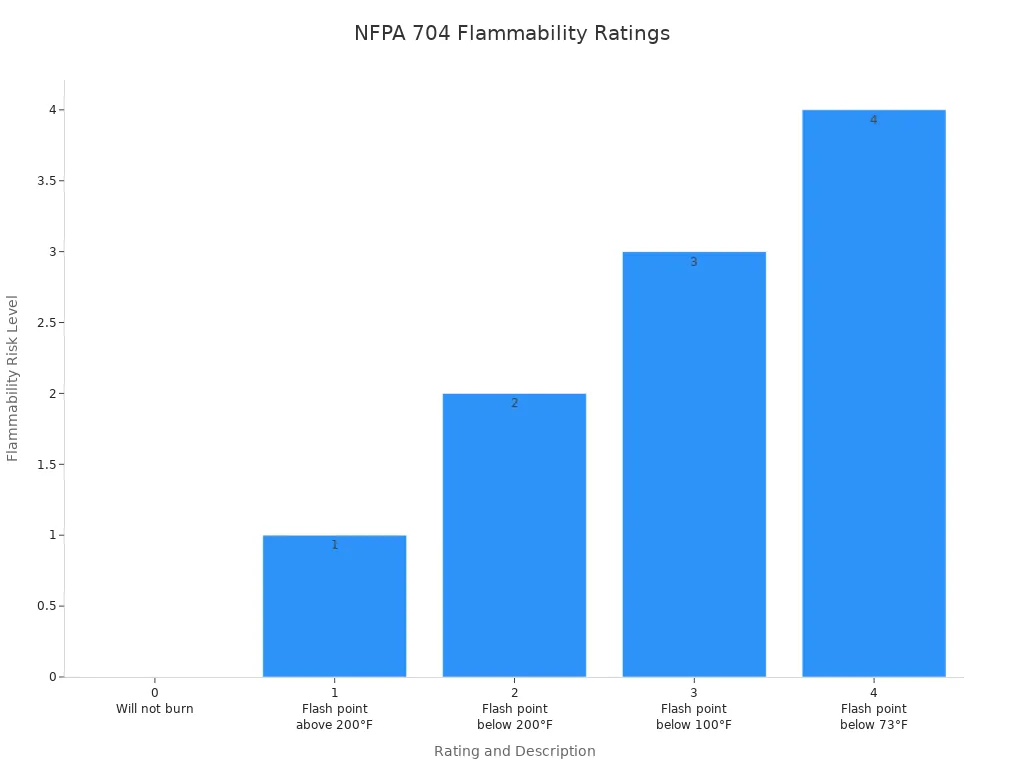
The red part shows if something can catch fire. a 0 means it will not burn. a 4 means it can catch fire very easily. Gasoline often gets a 3 または 4.
| 評価 | 説明 |
|---|---|
| 0 | Will not burn under normal conditions. |
| 1 | Flash point above 200° F; needs preheating to burn. |
| 2 | Flash point below 200° F; burns with moderate heating. |
| 3 | Flash point below 100° F; flammable. |
| 4 | Flash point below 73° F; highly flammable. |
Yellow – Reactivity
The yellow part shows reactivity. a 0 means the material is stable. a 4 means it is very unstable and could explode. Sodium is a good example of something with high reactivity.
| Reactivity Rating | 説明 |
|---|---|
| 0 | Stable substances that do not react under normal conditions. |
| 4 | Highly unstable substances that may explode under normal conditions. |
White – Special Hazards
The white part shows special hazards. This part uses symbols or letters for risks not shown in the other colors. Some common symbols are:
- OX for oxidizers
- ACID for acids
- Radiation symbol for radioactive materials
- SA for simple asphyxiants like carbon dioxide
The white section helps emergency teams see special dangers fast. These symbols tell helpers what safety steps to take.
NFPA Fire Signs in Emergencies
Rapid Assessment for Responders
Emergency responders must act quickly at dangerous scenes. The NFPA diamond gives them fast details about risks. Each color and number tells what dangers are there. The NFPA 704 system has four main hazard types. These types help responders know what to do next.
| セクション | 色 | Represents | 説明 |
|---|---|---|---|
| 赤 | 赤 | Flammability | Shows fire risk. Helps responders pick the right way to fight fires. |
| 青 | 青 | Health Considerations | Tells about health risks. Guides responders on what gear to wear. |
| 黄色 | 黄色 | 反応性 | Warns about reactions. Helps responders avoid dangerous chemical reactions. |
| 白 | 白 | Special Precautions | Lists extra hazards. Tells responders about special steps or equipment needed. |
The NFPA diamond signs give simple facts for quick choices. Responders see if they should evacuate or start emergency steps. The fire diamond helps responders choose the best tools and clothing. This fast check can save lives and stop more harm.
In a real emergency, like a chemical spill, responders look at the nfpa diamond. If the red part has a high number, fire is a big risk. If the blue part is high, they wear extra protection for safety. The yellow part warns if chemicals might explode or react with water. The white part shows special dangers, like radiation or acids.
Employee Safety and Protocols
Employees who work with dangerous materials use NFPA diamond signs 毎日. These signs help them know the risks before starting work. The NFPA 704 サイン shows if a chemical is unsafe to touch, breathe, or store near heat. Workers use this to follow safety rules and wear the right gear.
- Employees look at the nfpa diamond before using chemicals.
- They use the colors and numbers to decide if they need gloves, マスク, or special suits.
- The signs remind them to keep chemicals away from things that could start a fire or explosion.
- Workers check for special warnings in the white part, のように “OX” for oxidizers or the radiation symbol.
A real example shows why these signs matter. In a lab, a worker sees a chemical with a high blue number and a special symbol in the white part. The worker uses a fume hood and wears gloves. This stops them from breathing toxic fumes.
Another example is a warehouse fire. Emergency responders see the NFPA diamond on the door. The high yellow number warns about unstable chemicals inside. They use this to plan and avoid things that could cause an explosion.
The NFPA Diamond and NFPA 704 system help responders and workers stay safe. 彼らは明確にします, fast facts about chemical dangers. This helps people make smart choices during emergencies.
NFPA ダイヤモンドサイン: 配置と可視性
Best Practices for Display
パッティング NFPA diamond signs in the right spots helps everyone see dangers. These signs should go at main doors, chemical rooms, and on big containers. The NFPA diamond must be easy to see from far away. The numbers need to be bigger if people read them from far. 例えば, if you read it from 10 足先, the numbers should be 1 身長インチ. Signs should be put up tightly so they do not fall off.
ヒント: Put signs where emergency teams and workers will see them first. This helps them know about health, 火, and chemical dangers fast.
The NFPA 704 diamond gives quick facts. Emergency teams use the fire diamond to check for danger before going in. Clear signs help everyone act faster in emergencies.
コンプライアンスと規制
Rules tell companies how to use NFPA diamond signs. The NFPA 704 rule and fire codes say how big, what color, そして、どこに標識を置くか. 標識は少なくとも 6 inches on each side. Each colored part should be at least 3 幅がインチ. Numbers must be 1 inch tall and in the middle. The lines between colors should be at least 1/8 inch thick. Signs must stand out and be easy to read.
| 要件タイプ | 詳細 |
|---|---|
| サインの寸法 | Minimum diamond size is 6 inches per side, with each colored quadrant at least 3 幅インチ. |
| Numeric Size | Hazard ratings (0–4) 少なくとも 1 inch tall and centered within each quadrant. |
| Border Thickness | Lines separating quadrants should be a minimum of 1⁄8 inch wide. |
| 配置ガイドライン | Signs must be “readily noticeable” and installed as close as practical to the hazard. |
| Legibility Requirements | Lettering must be sized for readability from the intended viewing distance. |
| カラーコーディング | Background and letter colors must contrast sharply. |
Companies should check signs every three months with a look-over. They should do a full check once a year. This keeps nfpa diamond signs correct and keeps everyone safe.
NFPA diamond signs help keep workers safe. They have four colored parts. Each part shows a different danger. The colors tell about health, 火, reactivity, and special hazards. This helps emergency teams know what to do fast. They can make a good plan for emergencies.
- The signs use the same way to show risks.
- Responders can spot dangers quickly.
- Using these signs helps prevent accidents over time.
Training teaches workers what the signs mean. It helps them follow safety rules. Companies that use these signs have safer workplaces. Workers also follow safety rules better.
よくある質問
What does each color on the NFPA Diamond mean?
Every color stands for a different danger. Blue is for health risks. Red is for fire risks. Yellow means something can react. White is for special dangers like acids or radiation.
Who uses NFPA Diamond Signs?
Firefighters use these signs. Safety officers use them too. Workers also use them. These signs help people know about dangers. They are used where chemicals or hazardous materials are found.
Where should NFPA Diamond Signs be placed?
Put signs on doors with hazardous materials. Put them on tanks and storage areas too. Signs must be easy for workers to see. Emergency responders need to see them easily as well.
How often should NFPA Diamond Signs be checked?
Companies need to check signs every three months. They should do a full check once a year. This keeps the signs correct. みんなの安全を守るのに役立ちます.