Gli ingegneri stradali utilizzano geometrie specifiche per controllare in sicurezza le intersezioni pericolose. IL segnali stradali triangolari indicate immediate right-of-way rules. Questo articolo esplora l'Amministrazione federale delle autostrade (FHWA) requisiti in modo completo. Optraffic produce questi strumenti di sicurezza essenziali per i dipartimenti comunali dei lavori pubblici.
Questa geometria unica fissa il più ampio sistema di controllo visivo MUTCD. Scopri il quadro federale completo all'interno IL 8 Forme di base dei segnali stradali: Come le forme migliorano la comunicazione e la sicurezza. Understanding the strict triangle signs meaning prevents fatal intersection collisions.
Deciphering the Triangle Road Sign Meaning in America
US traffic authorities deploy this specific geometry for two critical applications. Planners reserve this shape strictly for yield commands and no-passing zones. This federal exclusivity completely prevents driver confusion at high-risk locations. Motorists associate these triangle road signs directly with immediate physical hazards.
The Inverted Red Triangle Road Sign for Yielding
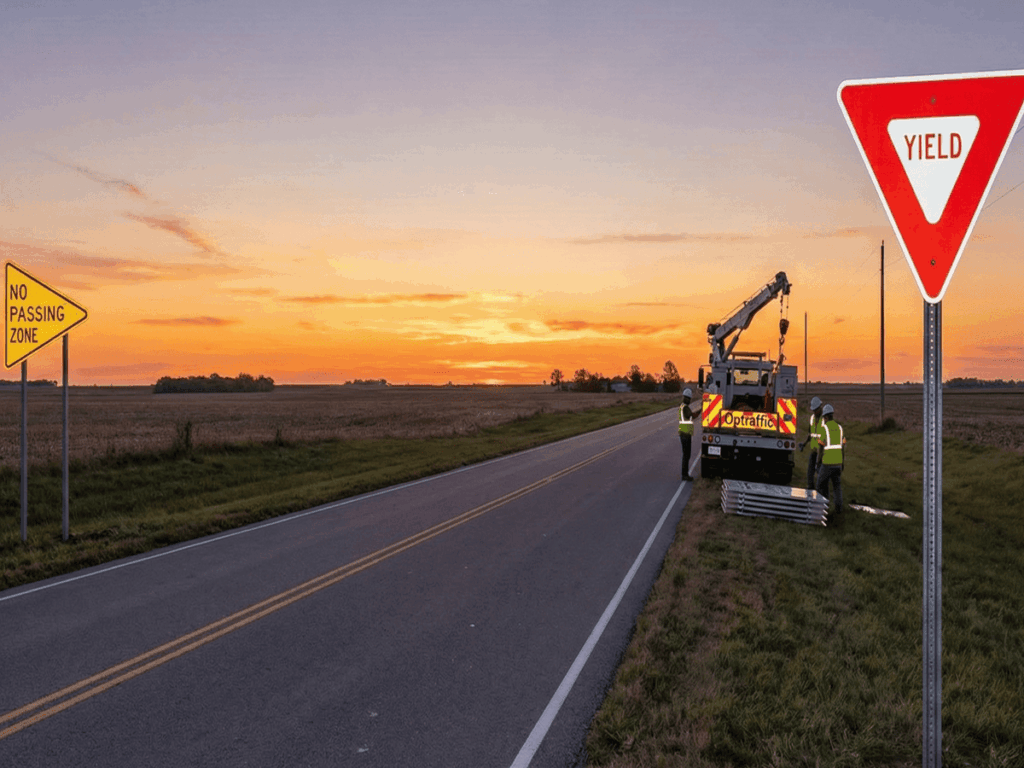
IL FHWA defines the R1-2 yield panel strictly within MUTCD Section 2B.08. Questo specifico red triangle traffic sign features a downward-pointing vertex. A wide red border surrounds a prominent white interior triangle.
This exact triangle shape sign commands motorists to assign right-of-way. I conducenti devono decelerare immediatamente dopo aver interpretato questo triangle road sign meaning. The FHWA designed this unique yield sign shape for instant driver recognition. Questo red triangle road sign prevents devastating side-impact crashes at minor intersections.
The Road Sign Yellow Triangle for No Passing Zones
The MUTCD W14-3 warning panel utilizes a unique horizontal pennant shape. This specific road sign yellow triangle points horizontally toward the left. Engineers deploy this yellow triangle sign exclusively on two-lane rural highways.
The solid yellow background provides maximum daytime and nighttime visibility. These yellow triangle street signs indicate the exact beginning of no-passing zones. Motorists must abandon overtaking maneuvers immediately upon spotting this warning. Highway planners review Comprendere il segnale a forma di stendardo e il suo ruolo nelle zone di divieto di sorpasso to master these specific applications.
Meeting Federal Standards for Triangle Signs on the Road
The Federal Highway Administration monitors intersection safety statistics constantly nationwide. Unsignaled intersections pose extreme dangers to advancing commercial vehicles. I dipartimenti statali dei trasporti applicano rigorosamente le norme federali sul posizionamento del MUTCD. Corretto triangle signs on the road protect both the driving public and local pedestrians.
Dimensionamento esatto secondo le linee guida MUTCD
Procurement managers must follow MUTCD Table 2B-1 strictly to pass federal safety inspections. Queste normative federali standardizzano i sistemi di allarme visivo in tutti i cinquanta stati:
- Standard single-lane roads utilize 36-inch inverted triangle road sign pannelli.
- Multi-lane expressways demand oversized 48-inch yield panels for maximum visibility.
- Rural highways require 40-by-40-by-48-inch dimensions for the pennant traffic sign.
Overcoming Torsional Stress on Asymmetric Panels
The MUTCD mandates left-side placement exclusively for W14-3 pennant warning panels. This asymmetric horizontal shape creates severe torsional wind stress. The extended road sign yellow triangle acts like a physical lever against mounting hardware. Standard square posts twist easily under heavy rural crosswinds.
AASHTO structural guidelines require specialized anti-twist mounting brackets for these deployments. Optraffic engineers recommend reinforced breakaway U-channel posts for these specific cantilevered installations. Proper hardware prevents these horizontal triangle signs on the road from rotating away from advancing traffic.
Managing Wind Loads on Top-Heavy Yield Geometries
The R1-2 yield panel features a uniquely top-heavy geometric design. This inverted structure catches significant wind gusts across open highway intersections. Procurement managers must order thicker 0.080-gauge aluminum blanks for these specific panels.
This upgraded material thickness actively prevents top-edge bending during severe storm events. Rigid metal construction ensures the red triangle traffic sign maintains its critical flat retroreflective surface permanently.
Strategic Placement on Urban Traffic Islands
City planners frequently install yield commands on raised intersection islands. MUTCD Section 2B.10 dictates exact positioning rules for these channelized right-turn lanes. Engineers must mount these triangle road signs at lower heights to accommodate pedestrian sightlines.
These lowered installations expose the panels to increased splash back from passing heavy vehicles. Premium anti-graffiti overlay films protect the reflective sheeting from this constant road debris degradation.
Conclusione: Upgrading Yield and Warning Infrastructure
Intersection safety relies completely on immediate right-of-way communication. L'unico triangle signs meaning commands instant driver compliance nationwide. Upgrading your municipal inventory prevents fatal crashes at dangerous highway slip lanes.
State DOTs trust these premium manufacturing capabilities to survive extreme physical installation stresses. Contatta Optraffic oggi stesso per realizzare i tuoi progetti di ammodernamento di intersezioni su larga scala. Il team logistico spedisce alla rinfusa Segnali stradali and specialized anti-twist hardware nationwide.
Domande frequenti: US Rules and the Triangle Road Sign Meaning
The MUTCD reserves this geometry exclusively for yield commands and no-passing zones. These unique shapes alert drivers to immediate right-of-way rules.
The FHWA utilizes downward-pointing red triangles exclusively for R1-2 yield signs. This shape commands drivers to assign right-of-way to intersecting traffic.
Procurement managers must order 36-inch standard panels for regular single-lane roads. High-speed multi-lane expressways require oversized 48-inch yield signs.
SÌ, European nations utilize upward-pointing red-bordered triangles for general highway warnings. The US MUTCD utilizes yellow diamond shapes for these general warnings instead.