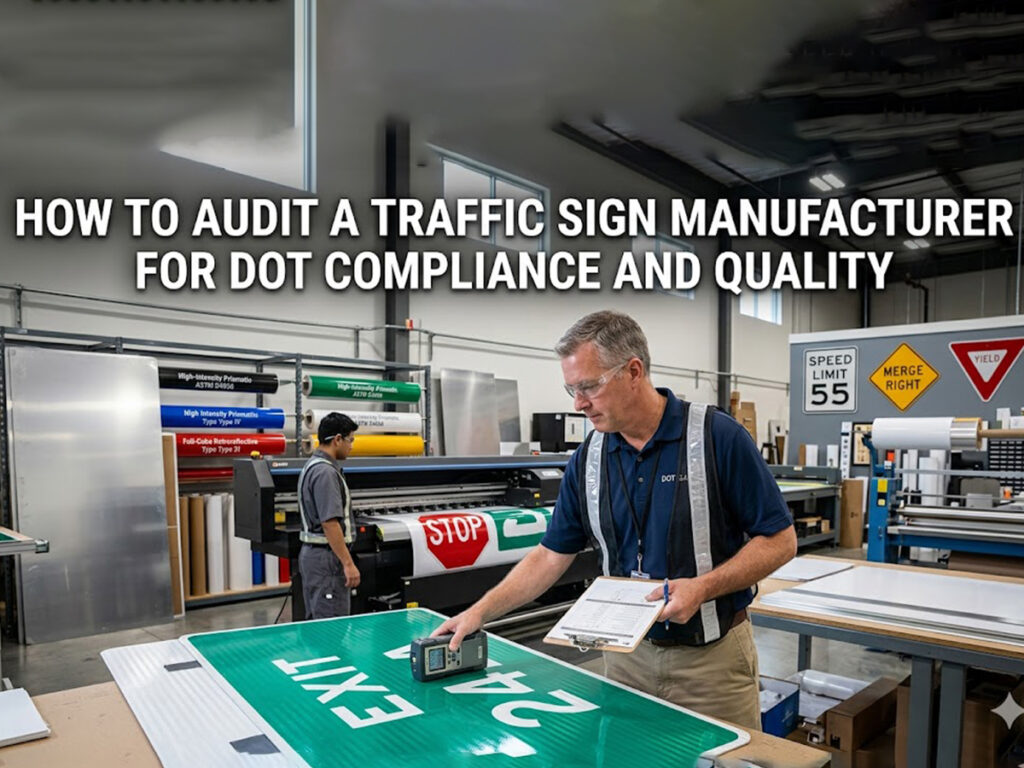

Il più comune spessore del segnale stradale per segnali stradali in alluminio personalizzati è .080 pollici. Molti DOT statali, come MaineDOT, aderire a questo standard. Opzioni più spesse come .100″ o .125″ forniscono maggiore resistenza e sono generalmente utilizzati per segnali più grandi o in aree con forti venti. Ad esempio, un 24″ utilizza il segnale di stop .080″ materiale, mentre un 48″ il segnale di stop richiede .100″ o .125″ per resistere alle condizioni atmosferiche avverse. I DOT determinano spessore del segnale stradale in base alla dimensione o all'area del cartello. Verifica sempre le normative locali prima di effettuare un ordine.
| Dimensione del segno | Opzioni di spessore |
|---|---|
| 48″ Segno di stop | .100″ o .125″ |
| 24″ Segno di stop | .080″ |
A OPTRAFFICO, offriamo personalizzato Segnali stradali in alluminio in varie dimensioni e spessori, compreso lo spessore standard di 0,080 pollici per segnali come il segnale stradale da 24 pollici e 0,100 pollici o 0,125 pollici per segnali più grandi come il segnale stradale da 48 pollici. Se hai bisogno di un segnale stradale da 24 pollici per aree residenziali o di un segnale stradale da 48 pollici per autostrade o luoghi esposti a condizioni meteorologiche avverse, OPTRAFFIC garantisce che tutti i tuoi segnali siano realizzati per soddisfare le normative locali e siano costruiti per funzionare in condizioni difficili.
Opzioni comuni di spessore dei segnali stradali
Cartelli in alluminio: Spessori standard
Cartelli in alluminio grezzi sono la base per la maggior parte dei segnali stradali e stradali negli Stati Uniti. Questi spazi vuoti sono disponibili in diversi spessori. Ogni spessore funziona meglio per determinati luoghi e usi. Gli spazi vuoti più spessi sono più resistenti e durano più a lungo.
- .040 Gli spazi vuoti per cartelli in alluminio da pollici sono adatti per i cartelli utilizzati per un breve periodo. Questi sono i migliori per i luoghi con poco vento.
- .063 Gli spazi vuoti per cartelli in alluminio da pollici sono più resistenti di .040 pollice. Le persone li usano nei quartieri per segnali meno importanti.
- .080 Gli spazi vuoti per cartelli in alluminio da pollici sono la scelta principale per cartelli importanti. Le città e gli stati utilizzano questo spessore per i segnali di stop e di precedenza.
- .100 I pannelli in alluminio da pollici sono ancora più resistenti. Segnaletica più grande o segnaletica in luoghi trafficati necessita di questo spessore.
- .125 Gli spazi vuoti per cartelli in alluminio da pollici sono i più resistenti. Questi sono utilizzati sulle autostrade e nelle zone di costruzione, soprattutto dove il tempo è brutto.
Mancia: Scegli gli spazi vuoti giusti per il cartello in alluminio pensando a dove andrà il cartello, quanto tempo deve durare, e se potrebbe affrontare vento o danni.
Tabella di confronto degli spessori
La tabella seguente mostra quanto sono diversi spazi vuoti per cartelli in alluminio confrontare. Elenca lo spessore, a cosa servono, buoni punti, punti negativi, e come montarli. Questo ti aiuta a scegliere quello giusto per le tue esigenze.
| Spessore (In) | Spessore (mil) | Spessore (mm) | Tipo di servizio | Casi d'uso tipici | Professionisti | Contro | Note di montaggio |
|---|---|---|---|---|---|---|---|
| 0.040 | 40 | 1.02 | Servizio leggero | Segni temporanei, parcheggio per eventi, avvisi a breve termine | Leggero, facile da gestire | Non adatto a zone ventose o ad alto traffico | Utilizzare con montanti o telai leggeri |
| 0.063 | 63 | 1.60 | Servizio leggero | Segnaletica stradale residenziale, segnaletica di proprietà privata | Più durevole di 0.040 | Meno rigide rispetto alle opzioni più spesse | Funziona con hardware di montaggio standard |
| 0.080 | 80 | 2.03 | Dazio standard | Segnali di stop, Segni di rendimento, segnaletica stradale regolamentare | Standard del settore, bilancia forza/peso | Può flettersi su segnali molto grandi | Compatibile con la maggior parte dei segnali stradali |
| 0.100 | 100 | 2.54 | Servizio medio | Segni di grandi dimensioni, Incrocio ad alto traffico | Maggiore rigidità, resiste a piegare | Più pesante, potrebbe richiedere supporti più forti | Utilizzare con sistemi di montaggio rinforzati |
| 0.125 | 125 | 3.18 | Servizio pesante | Segnali autostradali, zone di costruzione, luoghi ventosi | Massima durata, resiste alle intemperie | Più pesante, Costo più elevato | Necessita di montaggio e supporti robusti |
La maggior parte dei segnali normativi utilizza .080 spazi vuoti per cartelli in alluminio da pollici. Spazi più spessi come .100 O .125 pollici sono migliori per cartelli più grandi o cartelli in luoghi ventosi.
Terminologia dello spessore: Pollici, Mil, Millimetri
Sapere come viene misurato lo spessore ti aiuta a scegliere quello giusto spazi vuoti per cartelli in alluminio. I produttori usano i pollici, mils, e millimetri per mostrare quanto è spesso un pezzo grezzo.
- Pollici mostra lo spessore come frazione o decimale, Piace 0.080 pollice.
- Mil significa millesimi di pollice, COSÌ 80 mil è 0.080 pollice.
- Millimetri sono il modo metrico per misurare, Piace 2.03 mm per 0.080 pollice.
Ecco una tabella con le consuete conversioni per i pannelli grezzi in alluminio:
| Spessore (In) | Spessore (mil) | Spessore (mm) |
|---|---|---|
| 0.040 | 40 | 1.02 |
| 0.063 | 63 | 1.60 |
| 0.080 | 80 | 2.03 |
| 0.100 | 100 | 2.54 |
| 0.125 | 125 | 3.18 |
Nota: 1 mil è 0.001 pollice, E 1 il millimetro è 0.0394 pollice. La maggior parte dei pannelli grezzi per insegne in alluminio utilizzano queste unità nei dettagli del prodotto.
Scegliere il giusto spessore del segnale stradale aiuta il segnale a funzionare bene nel punto in cui è posizionato. I pannelli grezzi in alluminio sono disponibili in diversi spessori per tutti i tipi di segnaletica, dagli avvisi a breve termine alla segnaletica autostradale permanente.
Segnali stradali piatti o estrusi
Pannelli piatti e rigidità
Come è noto, i pannelli piani in alluminio sono il materiale più comunemente utilizzato per la segnaletica stradale. Lo spessore aiuta il cartello a rimanere forte e a non piegarsi. I pannelli più spessi fanno sì che il cartello rimanga piatto in caso di maltempo. Un cartello spesso trattiene meglio gli strati riflettenti. Ciò rende più facile vedere di notte o durante i temporali. Le città scelgono pannelli più spessi per luoghi ventosi o affollati. Questi segni durano più a lungo e necessitano di meno correzioni.
La tabella seguente mostra come lo spessore cambia la resistenza e l'uso dei segnali stradali piatti:
| Spessore (pollici) | Benefici |
|---|---|
| 0.080 | Abbastanza forte per l'uso quotidiano. Aiuta il cartello a rimanere piatto e facile da leggere. |
| 0.125 | Impedisce la flessione e i danni causati da forti venti e strade trafficate. Fa durare più a lungo il segno. |
| Segni più spessi | Trattengono meglio gli strati riflettenti. Durano più a lungo e forniscono una solida base per la sicurezza. |
Scegliere lo spessore giusto aiuta il segnale a seguire le norme di sicurezza. I pannelli più spessi rendono il segno più forte. Ciò significa meno piegamenti e migliore visibilità.
Pannelli estrusi e rigidità dei bordi
I segnali stradali estrusi hanno un design diverso. Questi segni hanno bordi speciali che aggiungono più forza. I bordi funzionano come una cornice e rendono il cartello più rigido. Questo design impedisce al cartello di piegarsi, anche se il centro non è spesso. Le città utilizzano pannelli estrusi per segnaletiche di grandi dimensioni o luoghi ventosi. I bordi robusti aiutano il cartello a gestire carichi pesanti e a rimanere fermo.
I pannelli estrusi sono resistenti in due modi. La forma del bordo aiuta a fermare la flessione. I bordi spessi proteggono il cartello da eventuali danni se installato o colpito dalle auto. Ciò rende i segnali estrusi adatti ai luoghi difficili.
Nota: I pannelli piatti utilizzano lo spessore per la resistenza. I pannelli estrusi utilizzano sia lo spessore che il design dei bordi per la massima rigidità.
Requisiti e linee guida sullo spessore DOT degli Stati Uniti
Il Dipartimento dei trasporti degli Stati Uniti (PUNTO) e le agenzie statali hanno regole per scegliere il giusto spessore del segnale stradale per le strade. Queste regole aiutano i segnali a seguire gli standard MUTCD per la sicurezza e per essere facili da vedere. Ogni stato può stabilire le proprie regole, ma la maggior parte degli stati utilizza idee simili in base alla grandezza del segnale. Ecco tre esempi dall’Iowa, Georgia, e Texas. Per ulteriori informazioni su come spessore del segnale stradale in alluminio garantisce la conformità al MUTCD, Dai un'occhiata al nostro blog, Segni di traffico in alluminio Spessore e il suo ruolo nell'incontro con la conformità MUTCD.
Soglie basate sulle dimensioni (Iowa DOT)
Iowa DOT esamina il lato più lungo di un cartello per scegliere lo spessore minimo dell'alluminio. Questo rende le cose semplici e facili da ricordare. Se il lato più lungo lo è 36 pollici o meno, Il segno deve essere almeno 0.080 pollici di spessore. Se il lato più lungo è maggiore di 36 pollici, Il segno deve essere almeno 0.125 pollici di spessore. Iowa DOT utilizza anche ASTM B209 per verificare che lo spessore sia corretto e soddisfi gli standard nazionali.
| Lato più lungo del segno | Spessore minimo (pollici) | Applicazione tipica |
|---|---|---|
| ≤ 36″ | 0.080 | Segnali di stop/precedenza standard |
| > 36″ | 0.125 | Grandi segnali di guida o di avvertimento |
Il metodo del DOT dell'Iowa aiuta le città e le contee a scegliere la soluzione giusta spessore del segnale stradale per piccole e grandi insegne. Questo metodo segue gli standard mutcd e mantiene la segnaletica sicura in qualsiasi condizione atmosferica.
Soglie basate sull'area (Georgia DOT)
Georgia DOT utilizza l'area totale del cartello per scegliere lo spessore dell'alluminio. Funziona bene per segnali con forme strane o grandi superfici. Se il segno è 9 piedi quadrati o meno, Deve essere almeno 0.08 pollici di spessore (più o meno 0.005 pollici). Se il segno è più grande di 9 piedi quadrati, Deve essere almeno 0.10 pollici di spessore (più o meno 0.006 pollici). Georgia DOT afferma inoltre che i segnali devono utilizzare alluminio 6061-T6 o 5052-H38 e soddisfare gli standard ASTM B209.
| Area segnaletica (sq ft) | Spessore minimo (pollici) | Requisiti di lega |
|---|---|---|
| ≤ 9 | 0.08 | 6061-T6 o 5052-H38 |
| > 9 | 0.10 | 6061-T6 o 5052-H38 |
Il metodo dell'area della Georgia DOT garantisce che i grandi segnali rimangano forti e facili da vedere. In questo modo segue gli standard mucd e aiuta i segnali a durare più a lungo all'esterno.
Classificazione delle aree (TxDOT)
Il DOT del Texas (TxDOT) utilizza un sistema che basa lo spessore dell’alluminio sulla zona del cartello per garantire una migliore resistenza. Per i segni più piccoli di 7.5 piedi quadrati, lo spessore deve essere almeno 0.080 pollici. Per i segni tra 7.5 E 15 piedi quadrati, uno spessore minimo di 0.100 sono necessari pollici. Segni più grandi di 15 i piedi quadrati devono avere uno spessore di almeno 0.125 pollici.
| Area segnaletica (sq ft) | Spessore minimo (pollici) |
|---|---|
| < 7.5 | 0.080 |
| 7.5 - 15 | 0.100 |
| > 15 | 0.125 |
Il sistema di passaggi di TxDOT aiuta ingegneri e produttori di segnaletica a scegliere quello giusto spessore del segnale stradale per ogni lavoro. In questo modo mantiene la segnaletica sicura e segue gli standard mutati.
Nota: Le regole DOT possono cambiare in base allo stato o al progetto. Controlla sempre le norme locali prima di ordinare la segnaletica stradale in alluminio.
Indipendentemente dalle esigenze regionali, OPTRAFFICO, come produttore esperto di segnaletica stradale, è in grado di fornire segnaletica a norma per gli enti lavori pubblici, società di gestione del traffico, e servizi di noleggio di attrezzature per la sicurezza stradale. Garantiamo che tutti i segnali soddisfino gli standard necessari per la durabilità, visibilità, e conformità normativa.
Leghe di alluminio e preparazione delle superfici
6061-Leghe T6 e 5052-H38
Il tipo di lega di alluminio influisce sulla durata dei segnali stradali. Gli ingegneri solitamente scelgono tra 6061-T6 e 5052-H38 per i segnali stradali. Ognuno funziona meglio in luoghi diversi.
- 6061-Il T6 è robusto e si adatta alla maggior parte dei segnali stradali e urbani. Non si piega facilmente e può sopportare l'uso quotidiano.
- 5052-H38 è chiamato alluminio marino. Combatte la ruggine meglio del 6061-T6. Le città vicine all'oceano o con maltempo utilizzano maggiormente questa lega. Resiste all'aria salmastra e al clima umido, Quindi dura più a lungo.
- Entrambe le leghe formano uno scudo all'esterno. Questo scudo impedisce al metallo di arrugginirsi e aiuta il cartello a durare.
- Alcuni segnali vengono verniciati a polvere per una maggiore protezione. Questo rivestimento rende il cartello più resistente e lo protegge dal sole, piovere, e sporcizia.
Ecco una tabella che mostra le differenze:
| Lega | Forza | Resistenza alla corrosione | Casi d'uso tipici |
|---|---|---|---|
| 6061-T6 | Alto | Moderare | Urbano, autostrada, standard |
| 5052-H38 | Moderare | Alto | Costiero, industriale, duro |
Per saperne di più sui vantaggi dell'utilizzo dell'alluminio 5052-H38 per la segnaletica di controllo del traffico, assicurati di controllare il nostro blog, “Scopri i vantaggi dell'alluminio 5052-H38 per i segni di controllo del traffico”, dove esploriamo la sua durabilità, Resistenza alla corrosione, e idoneità per vari ambienti.
Rivestimento di conversione e adesione
Preparare la superficie è importante per i segnali stradali in alluminio resistenti. Il rivestimento di conversione è un passaggio prima di applicare il rivestimento riflettente. Questo passaggio aiuta il telo ad aderire meglio e mantiene l'insegna luminosa per lungo tempo.
Una buona preparazione della superficie significa pulire e levigare l'alluminio. L'alluminio pulito fa sì che il rivestimento aderisca bene. L'alluminio liscio aiuta i lavoratori a posizionare il telo in modo uniforme, che fa durare più a lungo il segno. I cartelli con una buona preparazione possono combattere lo sporco e la luce solare, quindi rimangono lucidi.
Il rivestimento di conversione aiuta il rivestimento riflettente ad aderire bene. Questo è importante affinché il cartello duri e sia facile da vedere.
Le città e gli stati utilizzano questi passaggi per realizzare segnali che funzionino bene e durino con tutti i tipi di tempo.
Carico del vento, Vibrazione, e Supporti
Carico del vento e prestazioni sul campo
I segnali stradali possono essere spinti forte dal vento, soprattutto in zone aperte o ventose. Secondo il DOT dell'Iowa, i segnali stradali devono essere in grado di resistere 30 libbre per piede quadrato di pressione del vento. Questo requisito garantisce che i segnali rimangano sicuri durante le tempeste e i forti venti.
La vibrazione del vento è diversa in ogni sito. È difficile indovinare quando accadrà. Venti costanti e raffiche improvvise possono scuotere un palo in molti modi. Se questo accade spesso, può danneggiare il palo. Se lo scuotimento è forte, può indebolire il metallo o le saldature. Potrebbero rompersi anche se il palo fosse robusto.
Le vibrazioni del vento non sempre rompono immediatamente i segnali. Ma se continua a succedere, può rendere deboli i segnali o i supporti. Gli ingegneri verificano la presenza di problemi come piccole crepe o bulloni allentati. Lo fanno durante i controlli regolari. Scegliere lo spessore e il supporto giusti aiuta a risolvere questi problemi. Mantiene la segnaletica sicura per le persone che guidano o camminano.
Per saperne di più su come scegliere lo spessore di alluminio corretto per i tuoi segnali stradali in base al carico e alle dimensioni del vento, Dai un'occhiata al nostro blog, “Come scegliere lo spessore dell'alluminio per i segnali stradali in base al carico e alle dimensioni del vento”, dove approfondiamo i fattori da considerare per segnali duraturi e durevoli.
Metodi di montaggio e sistemi di supporto
Un buon montaggio e supporto sono importanti per i segnali stradali in alluminio. I grandi segnali o i segnali in luoghi ventosi richiedono più dell'alluminio spesso. Hanno bisogno di un forte sostegno in modo che non si pieghino o si rompano.
- Piastre di alluminio spesse come 2.0 mm o 3.0 mm rendono più forti i grandi segni.
- Un rinforzo extra o una struttura robusta mantengono i segnali stabili nel vento.
- I canali in acciaio o altri supporti aiutano le piastre sottili a rimanere dritte.
- Più post forniscono un supporto migliore per i grandi segnali.
- Speciali sistemi di supporto della segnaletica aiutano con segnaletica molto grande o pesante.
- Controlla sempre le regole del produttore per scegliere il palo o il supporto giusto.
In luoghi ventosi, i sistemi di supporto spesso utilizzano l'isolamento dalle vibrazioni. Ciò significa utilizzare supporti o parti flessibili che assorbono le vibrazioni. Questi non fermano tutte le vibrazioni, ma lo rendono meno forte. Funziona come un sedile che assorbe gli urti su un treno. Utilizzando il giusto spessore e buoni supporti, le città aiutano i segnali stradali a rimanere facili da vedere e sicuri, Anche in caso di maltempo.
Tipi di fogli riflettenti e segnaletica
Tipi di fogli ASTM D4956
La FHWA stabilisce regole per i segnali stradali riflettenti. Queste regole utilizzano tipi di fogli ASTM D4956. Questi tipi aiutano i conducenti a vedere i segnali di notte o in caso di maltempo. La tabella seguente mostra i tipi di fogli più comuni per i pannelli grezzi in alluminio:
| Tipo di rivestimento riflettente | Visibilità | Descrizione | Durabilità | Applicazioni |
|---|---|---|---|---|
| Grado ingegnere (Tipo I.) | ~500 piedi | Utilizza perle di vetro o tecnologia prismatica; per segnali non critici | 5–7 anni | Segnali stradali non critici, Segni di parcheggio |
| Prismatico ad alta intensità (Tipo III & IV) | ~1000 piedi | Lente microprismatica; altamente riflettente | ~10 anni | Segnali stradali, barricate, dispositivi per zone di costruzione |
| Grado di diamanti (Tipo XI) | ~1500 piedi | Cubo completo prismatico; ritorna circa 60% di luce | Di lunga durata | Segnali critici di controllo del traffico come segnali di stop e limiti di velocità |
I fogli di qualità diamante sono molto luminosi. Riflette molta più luce rispetto al rivestimento prismatico ad alta intensità. Questo aiuta le persone a vedere i segnali stradali da molto lontano. La qualità del diamante dura più a lungo e combatte le intemperie, sporco, e ruggine. Le città utilizzano la qualità del diamante per segnali importanti per seguire le regole di sicurezza e mantenere le strade sicure.
L'utilizzo di coperture resistenti come ASTM D4956 Tipo XI rende le strade più sicure di notte. I segnali con una migliore riflessione aiutano i conducenti a vedere e seguire le regole.
Identificazione del rivestimento riflettente
Scegliere il rivestimento giusto per la segnaletica stradale è importante per la sicurezza e i costi. La FHWA ne consente diverse tipologie, come il grado di ingegneria, Grado di superingegneria, e rivestimento con perline ad alta intensità. Le agenzie dovrebbero pensare a qualcosa di più del semplice prezzo. Devono verificare per quanto tempo il telo rimane luminoso e quanto bene riflette la luce.
Per scoprire quale foglio c'è su un cartello, cerca queste cose:
- Etichette o segni sul retro del cartello vuoto
- Motivi o trame speciali sulla superficie del cartello
- Colore e luminosità quando i fari lo illuminano di notte
Alcune regole dicono che alcuni tipi di fogli non possono essere utilizzati per lettere bianche sui segnali di guida sopraelevati o per sfondi gialli sui segnali di pericolo. Controlla sempre le norme locali e federali prima di scegliere i materiali per la segnaletica stradale.
Mancia: Quando si sceglie il rivestimento, pensa a dove andrà il cartello, quanto dovrebbe durare, e quanto dovrebbe essere facile da vedere. Una buona segnaletica stradale riflettente aiuta i conducenti a reagire rapidamente e a garantire la sicurezza di tutti.
Scegliere il giusto spessore del segnale stradale
Lista di controllo pratica per la selezione
Scegliere lo spessore giusto per un segnale stradale in alluminio garantisce la sicurezza delle persone. Inoltre fa sì che il cartello duri più a lungo e rispetti le regole. Una semplice lista di controllo aiuta i lavoratori a scegliere lo spessore migliore per ciascun lavoro. La tabella seguente mostra gli spessori comuni, a cosa servono, e quanto vento possono sopportare:
| Misura | Caso d'uso comune | Tolleranza al carico del vento |
|---|---|---|
| 0.040″ | Lotti leggeri, garage interni | Fino a 30 mph |
| 0.063″ | Parcheggio esterno di serie, strade suburbane | 30–50 mph |
| 0.080″ | Percorsi dei camion, zone costiere o ventose | 50 mph+ |
Quando si fa un segno, pensa a queste cose:
- Quanto è grande il cartello e la sua area
- Quanto vento colpirà il cartello
- Come verrà montata la segnaletica
- Quanto è alto il palo, soprattutto se è finita 7 piedi
- Se il segno verrà utilizzato per un breve periodo o sempre
- Se spostare o trasportare il cartello potrebbe danneggiarlo
- Quanto tempo dovrebbe durare il segno e quanto spesso deve essere riparato
Per i segnali stradali all'esterno, 16Calibro –18 (1.2–1,5 mm) di solito è la cosa migliore. Se usi un palo alto con canale a U, un segno più spesso aiuta a smettere di piegarsi.
Mancia: Scegli sempre lo spessore dell'alluminio adatto alla posizione in cui verrà posizionata la segnaletica e al modo in cui verrà montata.
Errori comuni da evitare
Scegliere lo spessore sbagliato per la segnaletica stradale può causare problemi di sicurezza o costare di più. Gli errori più comuni sono:
- Utilizzo di alluminio sottile per insegne grandi o ventose, che possono farli piegare o cadere
- Non rendere il segno più spesso .040″ A .063″ O .080″ per luoghi all'aperto o affollati
- Dimenticando di utilizzare alluminio più spesso per segnali più grandi che necessitano di maggiore supporto
- Non controllare lo spessore giusto per la dimensione del cartello e dove verrà posizionato
- Scegliere uno spessore che non si adatta alle esigenze del cartello
Nota: Scegliere lo spessore giusto fin dall'inizio aiuta a evitare problemi e garantisce che il cartello funzioni bene per lungo tempo.
La maggior parte dei segnali stradali utilizza .080″ alluminio perché è resistente. Questo spessore aiuta la targa a durare a lungo. I segnali più grandi o quelli posizionati in luoghi ventosi necessitano di alluminio più spesso. Questi segni utilizzano .100″ o .125″ per stare al sicuro. La tabella seguente mostra quale spessore funziona meglio per ciascun luogo:
| Tipo di applicazione | Spessore consigliato |
|---|---|
| Autostrade, incroci impegnati | 0.080″ o 0.125″ |
| Zone di costruzione | Più spesso, segni estrusi |
| Strade residenziali, parcheggi | 0.040″ o 0,063″ |
| Segni temporanei o di eventi | Opzioni più sottili |
Guarda sempre le regole DOT locali. Queste regole aiutano a mantenere la segnaletica sicura e facile da vedere. Utilizza la lista di controllo e le tabelle qui sopra per scegliere lo spessore giusto per il tuo progetto.
Domande frequenti
Qual è lo spessore standard dei segnali stradali??
La maggior parte dei segnali stradali utilizza alluminio da 0,080 pollici. Questo spessore fornisce un equilibrio tra resistenza e peso. Le città e gli stati scelgono questa dimensione per la sosta, prodotto, e segnali normativi.
È 80 mil uguale a 0.080 pollice?
SÌ, 80 mil è uguale a 0.080 pollice. I produttori usano spesso “mil” per descrivere lo spessore. Un mil significa un millesimo di pollice.
Qualcuno dovrebbe scegliere 0.063 O 0.080 per la segnaletica dei parcheggi?
Per i parcheggi, 0.080-l'alluminio da pollici funziona meglio. Resiste alla flessione e dura più a lungo all'aperto. Utilizzare 0,063 pollici solo per segnaletica a basso traffico o temporanea.
Quando i segnali necessitano di alluminio da 0,125 pollici?
Segni più grandi di 36 pollici o esposti a forti venti necessitano di alluminio da 0,125 pollici. Questo spessore impedisce la flessione e aumenta la durata.
Stati diversi richiedono regole di spessore diverse?
Ogni stato stabilisce le proprie regole per lo spessore dei segnali stradali. Controlla sempre il DOT locale o i requisiti del progetto prima di ordinare i segnali.