Introduzione: L'importanza dei segnali di chiusura della corsia
Forzare l'unione del traffico ad alta velocità è pericoloso. Gli automobilisti spesso reagiscono tardi alle riduzioni di corsia. Per prevenire il caos, i gestori del sito devono implementare una sequenza precisa di segnali di chiusura corsia. Questi avvisi statici creano un file “imbuto visivo.” Guidano gli automobilisti fuori dalla corsia chiusa molto prima che raggiungano i coni.
Questa configurazione si basa sullo standard “Quattro aree componenti” di una zona temporanea di controllo del traffico.
Padroneggia le nozioni di base: Prima di pianificare una chiusura specifica, rivedere le quattro zone principali nel nostro Configurazione della zona di lavoro 101 Guida.
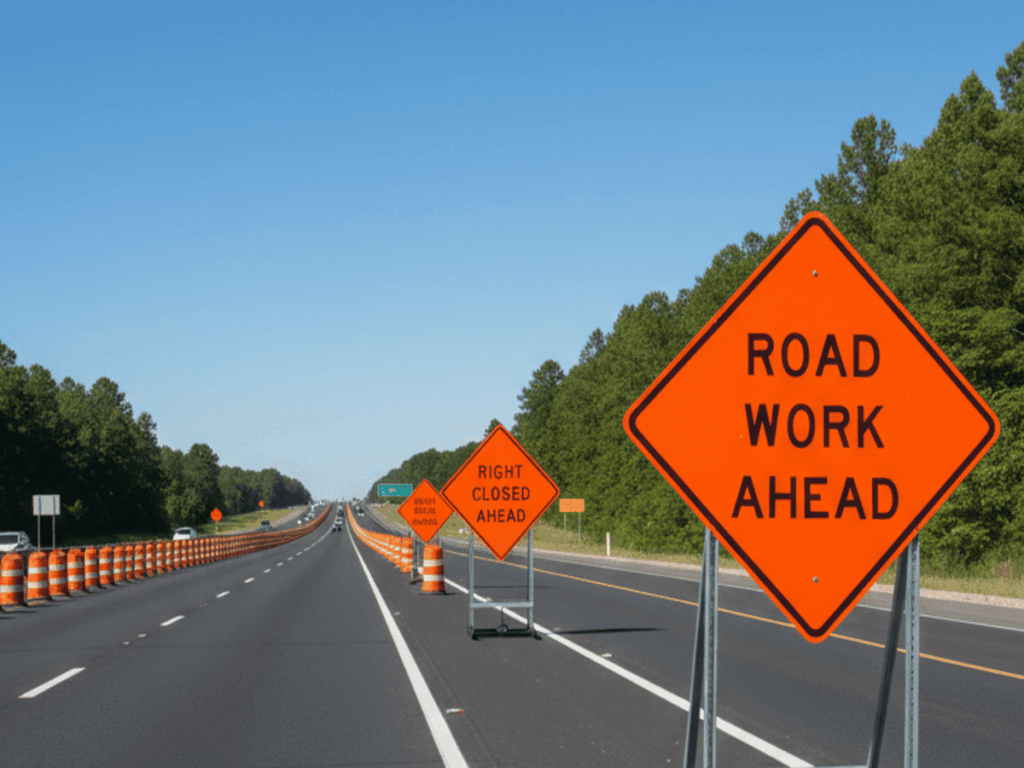
Tuttavia, se devi bloccare una corsia di viaggio, ti serve il pieno “Area di allerta anticipata” impostare. Ciò richiede specifiche corsia chiusa davanti alla segnaletica disposti a intervalli precisi.
Selezione del segnale di corsia chiusa più corretto
In chiusura a corsia unica, la specificità salva vite umane. Non è possibile utilizzare un messaggio generico. È necessario comunicare ai conducenti esattamente quale lato è bloccato utilizzando l'apposito cartello corsia chiusa.
Posizionamento del segnale di chiusura della corsia di destra
La maggior parte degli incidenti di fusione avvengono qui. I conducenti sulla corsia di destra devono immettersi a sinistra nel traffico più veloce.
- Cartello: Usare il Segnale di corsia di destra chiusa (W20-5R).
- Posizionamento: Posiziona questo segno come “B” avviso nella sequenza di tre passaggi.
- Azione: Ciò costringe il traffico a confluire presto a sinistra. Impedisce il taglio dell'ultimo minuto.
Posizionamento del segnale di chiusura della corsia di sinistra
IL “corsia veloce” presenta rischi ad alta velocità. Gli automobilisti si aspettano un percorso chiaro.
- Cartello: Usare il Segnale di corsia di sinistra chiusa (W20-5L).
- Flusso di traffico: Ciò costringe il traffico veloce a confluire a destra.
- Visibilità: Assicurati che il tuo segnali di chiusura corsia sono visibili da una distanza maggiore. I conducenti ad alta velocità necessitano di più tempi di reazione.
Non scambiare mai questi segni. UN “Sinistra Chiusa” firmare su a “Giusto chiuso” progetto provoca una confusione catastrofica.
Segnali di chiusura corsia & Formula conica
Devi posizionare il tuo segnali di chiusura corsia per sostenere il “Unione del cono.” Questa è la differenza fondamentale rispetto al lavoro sulle spalle. Stai forzando il traffico ad uscire da una corsia attiva.
- La regola L completa: Usa la formula L = Larghezza x Velocità.
- Esempio: Su un 60 mph strada con corsie di 12 piedi, la conicità deve essere 720 piedi lunghi.
- Supporto per firmare: Posiziona il tuo finale cartello corsia chiusa ben prima che inizi il tapering.
Questo crea un lungo, percorso graduale. Guida i conducenti lontano dalla corsia chiusa in sicurezza.
Segnali di chiusura corsia & IL “Pieno L” Formula conica
Il posizionamento del tuo segnali di chiusura corsia determina il successo della fusione. Tuttavia, i segnali avvertono solo il conducente. Il fisico “Unione del cono” effettivamente sposta il traffico.
Differenza cruciale: A differenza di una chiusura sulle spalle che utilizza solo un corto “1/3 L” conicità, una chiusura di corsia richiede la lunghezza completa della rastremazione (L).
Serve il “1/3 L” Regola? Se stai solo chiudendo il bordo, non utilizzare questa formula. Leggi il nostro Guida all'impostazione del lavoro sulla spalla Invece.
Per la chiusura della corsia, una breve rastremazione impone una fusione aggressiva. Ciò provoca incidenti dovuti allo scorrimento laterale. È necessario utilizzare l'intera lunghezza.
Calcolo “L” Basato sulla velocità
MUTCD definisce formule specifiche per “L” a seconda del limite di velocità (S) e larghezza della corsia (W).
- Ad alta velocità (45 MPH o più): Usa la formula L = L x S.
- Esempio: Per una corsia di 12 piedi a 60 mph: 12 X 60 = 720 piedi.
- Bassa velocità (40 mph o meno): Usa la formula L = (L x M²) / 60.
- Esempio: Per una corsia di 10 piedi a 30 mph: (10 X 900) / 60 = 150 piedi.
Allineamento dei segnali con il cono
Tuo corsia chiusa davanti alla segnaletica deve allinearsi con questa distanza calcolata.
- Spazio tampone: Non avviare l'area di lavoro immediatamente dopo la rastremazione. Lasciare uno spazio cuscinetto longitudinale.
- Spaziatura dei segni: Garantire la finale cartello corsia chiusa (Simbolo W4-2) è posizionato molto prima dell'inizio del tapering.
Posizionamento dei segnali di chiusura corsia (Area di allerta anticipata)
È necessario concedere ai conducenti il tempo sufficiente per leggere il segnaletica di corsia chiusa e reagire. La spaziatura dipende strettamente dal limite di velocità. La Tabella 6C-1 del MUTCD li definisce “Avvertimento anticipato” intervalli.
Strade urbane a bassa velocità (UN, B, Spaziatura C)
Nelle strade della città (35 mph o meno), distanzia i tuoi segni più vicini tra loro. I lunghi spazi vuoti confondono gli automobilisti qui a causa degli incroci e dei vialetti.
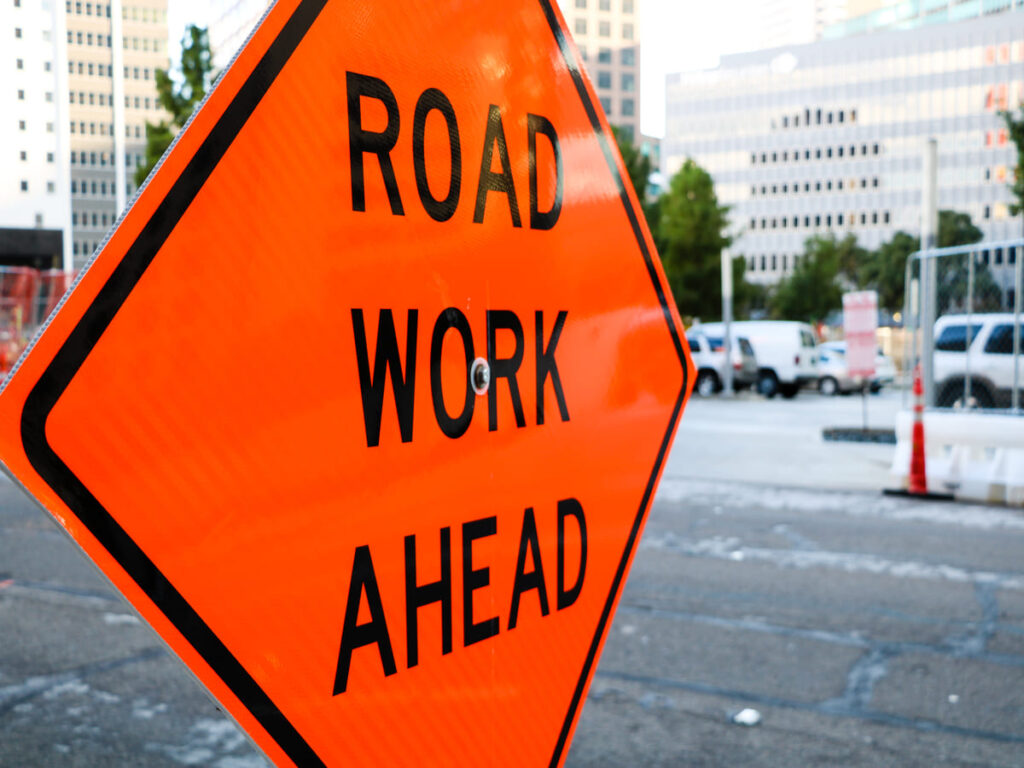
- Primo segno: Posiziona il Segno di lavori stradali avanti 100 piedi dal prossimo cartello.
- Secondo segno: Posiziona lo specifico Segnale di corsia chiusa 100 piedi dal cono.
- Obiettivo: Mantieni il messaggio immediato e chiaro.
Autostrada & Distanziamento autostradale
Le alte velocità richiedono intervalli molto più lunghi. Gli autisti hanno bisogno di secondi, non i piedi, prendere decisioni.
- Spaziatura: Aumentare la distanza tra ciascuno cartello di chiusura corsia A 1,000 piedi, 1,500 piedi, o anche 2,640 piedi (0.5 miglia) sulle autostrade.
- Visibilità: Garantire il Segnale di corsia sinistra/destra chiusa non sia bloccato da camion o vegetazione.
- Tempo di reazione: Questa zona estesa consente ai conducenti di immettersi in sicurezza senza frenare in caso di panico.
Spaziatura del channelizzatore (IL “1-a-1” Regola)
Segnali di chiusura corsia hanno fatto il loro lavoro. Hanno avvertito l'autista dell'imminente fusione. Ora, i dispositivi fisici devono prendere il sopravvento. Mentre il pilota passa la finale cartello corsia chiusa, entrano nel “Zona di transizione.”
Qui, è necessario passare dall'informazione all'orientamento. Hai bisogno di una linea continua di canalizzatori (coni o fusti) per spingere fisicamente il traffico fuori dalla corsia chiusa.
Costruire il “Muro visivo” (Spaziatura conica)
Nel cono, la spaziatura è fondamentale. Se gli spazi sono troppo ampi, gli automobilisti potrebbero pensare che la corsia sia ancora aperta. Potrebbero provare a ridursi. È necessario creare un file “Muro visivo” che da lontano sembra una solida barriera.
- La regola: La distanza massima tra i dispositivi (in piedi) equivale al limite di velocità (in mph).
- La formula: Spaziatura = 1.0 x Limite di velocità.
- Esempio: Su un 60 autostrada all'ora, posizionare un cono stradale ogni 60 piedi.
- Contesto urbano: Su un 25 mph strada, distanziateli ogni 25 piedi.
Mantenere il confine (Spaziatura tangente)
Una volta terminato il cono, IL “Tangente” inizia. Questa è la linea retta lungo l'area di lavoro attiva. Gli automobilisti sono già nella corsia aperta, così puoi rilassare la spaziatura.
- La regola: Puoi raddoppiare la distanza di spaziatura qui.
- La formula: Spaziatura = 2.0 x Limite di velocità.
- Esempio: Su quello stesso 60 autostrada all'ora, puoi distanziare i coni ogni 120 piedi oltre il cono.
Per la punta: Sulle autostrade ad alta velocità, I coni stradali standard da 28 pollici spesso non riescono a suscitare rispetto. Utilizzare canalizzatori o tamburi da 42 pollici. Il loro profilo più ampio rafforza il tuo messaggio segnali di chiusura corsia e protegge lo spazio di lavoro in modo più efficace.
Conclusione: La conformità inizia con la segnaletica corretta
La chiusura di una sola corsia è un’operazione ad alto rischio. Richiede un calcolo preciso, non supposizioni. Devi calcolare il “Pieno L” conicità in base alla velocità. È necessario selezionare lo specifico Segnale di corsia chiusa a destra o a sinistra. Finalmente, è necessario distanziare correttamente questi avvisi per dare ai conducenti il tempo di reagire.
La sicurezza dipende dalla visibilità. Utilizzando un generico cartello di lavori stradali in vista o una spaziatura errata crea responsabilità. Mette a rischio il tuo equipaggio e il pubblico.
Equipaggia la tua flotta con Optraffic
Assicurati che il tuo team abbia gli strumenti giusti per il lavoro. Optraffic fornisce conformità MUTCD Segni di costruzione e supporti per carichi pesanti. Progettiamo il nostro segnali di chiusura corsia per prestazioni ad alta visibilità sia in ambienti urbani che autostradali.
Contattaci oggi per garantire il tuo ordine in grandi quantità di attrezzature di sicurezza conformi.
Domande frequenti: Segnali di chiusura corsia & Impostare
Su strade ad alta velocità (45+ mph), hai bisogno di lacune rigorosamente definite. Posizionare il cartello "Lavori stradali in vista". 1,000 piedi a 1 miglio a monte. Posizionare il cartello specifico Corsia Chiusa 1,500 piedi oltre. Questo dà ai conducenti approssimativamente 1 minuto di tempo di reazione a velocità autostradale.
NO. Devi essere specifico. Un segnale di corsia di sinistra chiusa avanti obbliga il traffico a destra. Usarlo per una chiusura della corsia di destra dirige il traffico nella zona di lavoro. Ciò provoca incidenti immediati. Abbina sempre il testo (Sinistra/destra) al blocco vero e proprio.
Per velocità di 45 mph o superiore, usa la formula L = Larghezza x Velocità. Per una corsia standard di 12 piedi a 60 mph, il tuo cono deve essere 720 piedi lunghi. Non ridurre questa distanza.
SÌ. Non hai bisogno di più fornitori. Optraffic funge da produttore unico per l'intera configurazione. Forniamo segnali di chiusura corsia conformi al MUTCD, supporti per segnaletica resistenti, e canalizzatori ad alta visibilità (fusti e coni). Ciò garantisce che l'intera zona di lavoro mantenga livelli costanti di qualità e riflettività.