Introduzione: La responsabilità di bloccare i pedoni
Chiudere un marciapiede è giuridicamente più pericoloso che chiudere una strada. Quando blocchi un veicolo, l'autista preme semplicemente i freni. Quando blocchi un pedone, soprattutto uno con problemi di vista o mobilità, crei un rischio immediato di causa legale.
Non puoi semplicemente appendere il nastro giallo di avvertenza. The Americans with Disabilities Act (Ada) impone un insieme specifico di segnali stradali di costruzione progettato per “accessibilità.” È necessario fornire una cassaforte, percorso rilevabile per tutti.
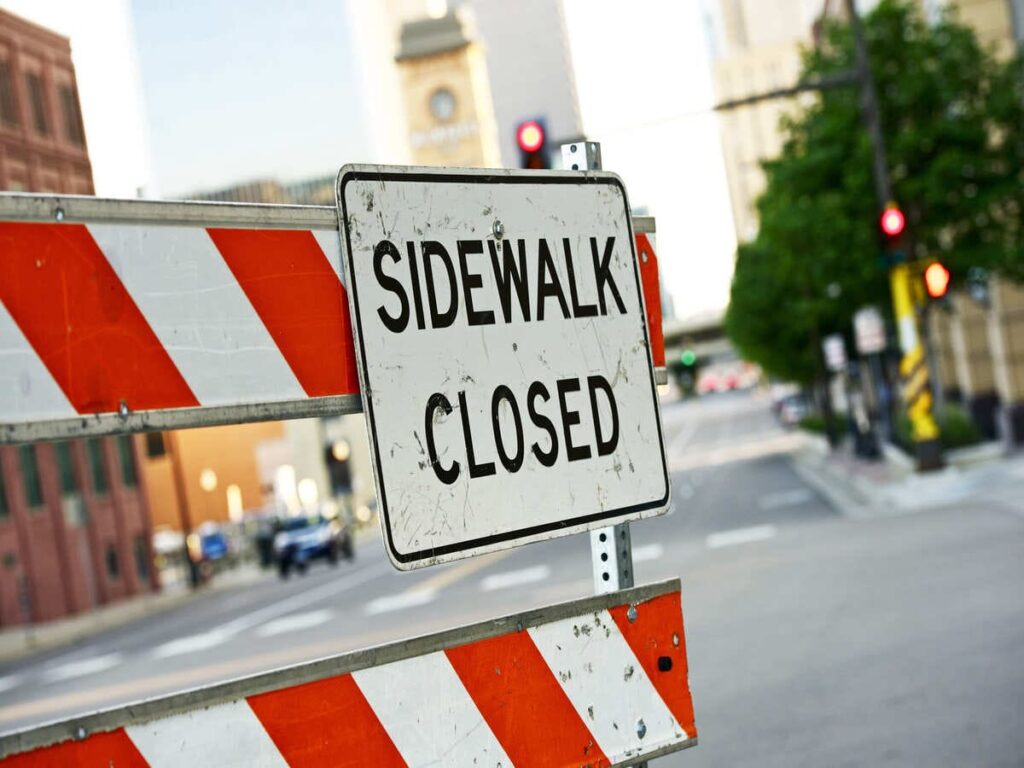
Ciò significa che ogni Segnale di marciapiede chiuso deve essere abbinato ad una barriera udibile e tattile. Se il bastone di un cieco non riesce a rilevare la tua barricata, la tua configurazione non è conforme.
Veicolo contro. Distanziamento pedonale: Le zone pedonali richiedono brevi, distanziamento immediato. Tuttavia, se il tuo progetto ha impatto anche sulla strada adiacente, è necessario seguire le regole di distanziamento più rigide per i veicoli. Rivedi il nostro La guida essenziale al posizionamento della segnaletica stradale di costruzione & Spaziatura MUTCD per coordinare entrambe le zone.
Avvertimento anticipato: Il Marciapiede Chiuso In Avanti
I pedoni odiano fare marcia indietro. Se viaggia una persona su sedia a rotelle 300 piedi lungo un isolato solo per trovare a “Vicolo cieco,” potrebbero essere costretti a entrare nella carreggiata attiva per aggirarla. Si tratta di un guasto fatale alla sicurezza.
È necessario posizionare il Segnale di marciapiede chiuso in avanti (Serie W21-5) al incrocio sicuro più vicino, non solo al punto di chiusura.
Logica dell'intersezione (Cartello chiuso per le strisce pedonali)
È necessario deviare i pedoni prima che si impegnino nel blocco.
- Il punto decisionale: Posizionare a Segnale di marciapiede chiuso in avanti all'angolo Prima il pedone attraversa la strada.
- L'azione: Abbinalo a a Segno di attraversamento pedonale chiuso (R9-3a) se l'attraversamento stesso è bloccato.
- L'obiettivo: Obbligare il pedone ad attraversare il lato sicuro della strada Presto, mentre hanno ancora un passaggio pedonale protetto.
Altezza di posizionamento del cartello
A differenza dell'autostrada segnali stradali di costruzione, la segnaletica pedonale è posizionata all'altezza degli occhi.
- Montaggio: Montare i cartelli 7 piedi da terra fino alla base del cartello.
- Sicurezza: Questa altezza garantisce che il segnale non diventi un pericolo di lesioni alla testa per i camminatori distratti o per le persone con problemi di vista.
La dura chiusura: Barricate conformi ADA & Segni
Non è possibile bloccare semplicemente un passaggio pedonale con coni o nastro giallo di avvertenza. Secondo il Act Americans with Disabilities Act (Ada), deve esserci una chiusura “rilevabile” da una persona con disabilità visiva utilizzando un bastone bianco.
Se il bastone di un pedone cieco finisce sotto la barriera stradale (come un cono stradale o un nastro), cammineranno direttamente nel pericolo. Questa è una violazione della legge federale.
IL “Bordo inferiore continuo” Regola (MUTCD 6F.63)
Per chiudere completamente un marciapiede, devi usare un Barricata conforme ADA. La sezione 6F.63 del MUTCD impone una geometria specifica per garantire il rilevamento dei bastoncini:
- Guida inferiore: La barricata deve avere un solido, guida inferiore continua. Il suo bordo inferiore deve essere non superiore a 2 pollici sopra il suolo. Ciò garantisce che il bastone colpisca il muro, non l'aria.
- Guida superiore: La superficie superiore deve essere almeno 32 pollici alto per fungere da guida per il trascinamento della mano.
- Stabilità: Il muro deve essere sufficientemente solido da consentire ad una persona di appoggiarsi senza che cada.
La selezione dell'hardware corretto è fondamentale in questo caso. Per un confronto più approfondito delle classi di apparecchiature, rivedi la nostra guida su Barricate di traffico in vendita: Quale tipo è meglio per le chiusure stradali. Si noti che mentre le barricate di Tipo I e II sono standard per la chiusura delle corsie autostradali, la maggior parte non soddisfa la specifica "rilevabilità della canna".’ standard richiesto per le chiusure dei marciapiedi.
Posizionamento del cartello di marciapiede chiuso (R9-9)
La barriera fisica del traffico ferma il corpo; il segno informa la mente.
- Il segno: Montare il Segnale di marciapiede chiuso (R9-9) direttamente sulla barricata, fronte al flusso pedonale.
- L'istruzione: Se la deviazione richiede l'attraversamento della strada, utilizzare lo specifico Marciapiede chiuso Usa altro segno laterale (R9-10) O Croce qui segno (R9-11).
- Visibilità: A differenza dell'autostrada segnali stradali di costruzione, questi devono essere retroriflettenti E ad alto contrasto (Stile regolamentare Nero su Bianco) comandare l’immediata ottemperanza.
Avvertimento: Non usare mai “Nastro di attenzione” solo. Il nastro non è una barricata. Fornisce protezione fisica pari a zero ed è invisibile a un bastone bianco.
Il percorso della deviazione: Creazione di un passaggio sicuro (OROLOGIO PRO)
Una volta bloccato il marciapiede, è necessario fornire un percorso alternativo. Questo “Deviazione pedonale” deve soddisfare i rigorosi standard di OROLOGIO PRO (Linee guida per l'accessibilità al diritto di passaggio pubblico).
Non è possibile forzare un utente su sedia a rotelle sull'erba, ghiaia, o una spalla fangosa.
Requisiti di superficie
Il percorso della deviazione deve essere:
- Ditta: Non si deforma sotto il peso della sedia a rotelle.
- Stabile: Non scivola né si muove.
- Resistente allo scivolamento: Fornisce trazione anche sul bagnato.
Larghezza minima (48 Pollici)
La larghezza libera continua della deviazione deve essere almeno 48 pollici (4 piedi).
- Girare lo spazio: Se la deviazione richiede un'inversione di marcia o una curva stretta, devi fornire un 60-pollici x 60 pollici spazio di passaggio.
- Grado: La pendenza trasversale (inclinare) del percorso temporaneo non può superare 2%. Qualunque cosa più ripida crea un pericolo di ribaltamento per le sedie a rotelle.
Guida al percorso: Segnale di deviazione pedonale (M4-9a)
Proprio come i veicoli, i pedoni hanno bisogno di rassicurazione.
- Cartello: Usare il Segnale di deviazione pedonale (M4-9a) ad ogni turno.
- Continuità: Posizionare ogni segno di conferma 100 piedi se la deviazione è lunga o complessa. Se un pedone si perde, cammineranno istintivamente sulla strada per orientarsi.
Proprio come i veicoli, i pedoni hanno bisogno di rassicurazione. I principi dell’”orientamento positivo”.’ qui sono identici a quelli dettagliati nel ns Guida alla strada chiusa: Segnali di deviazione per la costruzione & Installazione della barricata. Tuttavia, a differenza delle deviazioni stradali ad alta velocità che utilizzano grandi segnali distanziati 500 piedi di distanza, i percorsi pedonali richiedono segnali più piccoli distanziati ogni pochi metri per evitare confusione.
Oltre i segni: Dispositivi acustici & Rampe temporanee
I segnali visivi sono inutili per un pedone cieco. Sotto il MUTCD 11a edizione (2023), la segnaletica esclusivamente visiva non è più sufficiente per chiusure complesse.
Dispositivi di informazione sonora (AIUTO)
- Il mandato (MUTCD 6P-29): Quando usi a “MARCIAPIEDE CHIUSO CROCE QUI” cartello (R9-11a), gli standard federali ti stabiliscono deve includere un dispositivo di informazione sonora.
- Perché? Un pedone cieco non può vedere la freccia che punta verso l’altro lato della strada. Senza messaggio vocale, potrebbero presumere che il percorso sia aperto o rimanere intrappolati sul marciapiede.
- La tecnologia: Si tratta di altoparlanti attivati dal movimento montati sulla barricata che trasmettono un messaggio personalizzato: “Marciapiede chiuso. Attraversare qui per la deviazione.”
Rampe per marciapiedi temporanee (IL 1:12 Regola)
Se la deviazione costringe i pedoni a scendere dal marciapiede e a immettersi in strada (diversione), non puoi aspettarti che lo faccia un utente su sedia a rotelle “salto” il cordolo.
- L'hardware: È necessario installare un Rampa temporanea per cordoli.
- La pendenza: La rampa deve avere un rapporto di pendenza pari a 1:12 (1 pollice di aumento per ogni 12 centimetri di corsa).
- Il bordo: Deve avere i lati rialzati (protezione dei bordi) per evitare che la ruota della sedia a rotelle scivoli via.
Conclusione: La conformità è la tua migliore assicurazione
Nell'edilizia urbana, un segnale di marciapiede chiuso non è solo uno strumento di traffico; è uno scudo legale. L'ADA non accetta “non lo sapevamo” come difesa. Se un pedone cieco viene ferito perché la tua barricata era priva di binario inferiore, la responsabilità ricade sulla gestione del tuo sito.
Optraffic produce l'intera gamma di Segnaletica di controllo pedonale conforme al MUTCDS. Non rischiare la tempistica del tuo progetto con apparecchiature non conformi.
Domande frequenti: Norme per la chiusura dei marciapiedi
La posizione è fondamentale.
Marciapiede chiuso (R9-9): Posizionato sul marciapiede per impedire ai pedoni di camminare lungo l'isolato.
Attraversamento pedonale chiuso (R9-3a): Posizionato al marciapiede per impedire ai pedoni di entrare in uno specifico incrocio di intersezioni.
SÌ, in casi specifici. Sotto l'undicesima edizione del MUTCD, se la tua configurazione richiede che i pedoni attraversino la strada (usando un “Attraversa qui” cartello), un dispositivo di informazione sonora (AIUTO) è obbligatorio (“Deve”) per guidare gli utenti non vedenti.
7 piedi. Per evitare lesioni ai pedoni che potrebbero entrare nel segnale, il bordo inferiore del cartello deve essere almeno 7 piedi sopra la superficie di calpestio.