Introduzione: The Unprecedented Logistics of a Decentralized Winter Games
IL 2026 Olimpiadi invernali, hosted by Milan and Cortina d’Ampezzo, introduces a “Regional Games” model. Spanning over 22,000 square kilometers across the Lombardy and Veneto regions, the success of the event hinges on a 400km transport corridor. For civil engineers and transit planners, the primary challenge is not just volume, but navigation under extreme stress.
In this environment, segnaletica stradale riflettente perform the “heavy lifting” of infrastructure. They are the primary interface between the complex transit plan and driver behavior. When routes shift due to weather or security, these signs must provide instantaneous, unambiguous communication.
OPTRAFFICO understands these high-stakes challenges. Having served as a traffic equipment supplier for the Qatar World Cup, Optraffic has the proven experience of managing safety and visibility for global-scale infrastructure. This background gives OPTRAFFICO the full confidence to provide comprehensive traffic management solutions, ensuring reliability where it matters most.
Piercing the Whiteout: The Science of High-intensity Reflective Road Signs for Winter
In Alpine regions, standard signage logic fails due to Atmospheric Luminance. When the environment is dominated by snow, the background brightness creates a “washout” effetto.
Overcoming the “Glow” of the Alpine Landscape
High-intensity reflective road signs for winter are engineered to provide a specific contrast ratio. Unlike standard materials, high-intensity microprismatic sheeting returns light in a concentrated cone. This is measured by the Coefficient of Retroreflection, expressed in candelas per lux per square meter.
- The Physics of Contrast: In a snowstorm, fog droplets scatter light. Using Type IV or Type XI sheeting ensures that the “Return Beam” is powerful enough to pierce through moisture particles, allowing a shuttle driver to see a “Venue Ahead” cartello 300 meters earlier than with standard grade materials.
Mitigating Snow Glare and Ocular Fatigue
Winter driving induces faster cognitive fatigue. By utilizing high-intensity reflective road signs for winter, planners reduce the “skim time” required for a driver to process information. This extra 3-5 seconds of recognition time is the margin of safety required to prevent hard braking on icy mountain descents.
Engineering for Resilience: Durable Reflective Traffic Signs for Alpine Conditions
The Dolomites and the Valtellina valley present a “Corrosion Trifecta”: extreme UV, heavy de-icing salts, and constant freeze-thaw cycles.
Chemical Resistance Against De-icing Agents
The Italian road authorities use aggressive magnesium chloride and salt brines to keep Olympic routes clear. Durevole Segnali stradali riflessivi for Alpine conditions must feature protective topcoats. Senza questi, the salt spray creates a “clouding” effect on the sign face, permanently reducing its reflective performance within a single season.
Thermal Stability and UV Protection
At high altitudes, UV radiation is significantly stronger. Cheap inks fade, turning “Prohibition Red” into an unrecognizable pink.
- La soluzione tecnica: True durable reflective traffic signs for Alpine conditions utilize fluoropolymer films or specialized UV-stabilized overlays. These ensure that the colorimetric coordinates (as defined in EN 12899-1) remain within the legal “safety box” for the duration of the Games and the subsequent decade of legacy use.
Managing the “Last Mile”: Temporary Event Signage for International Sporting Events
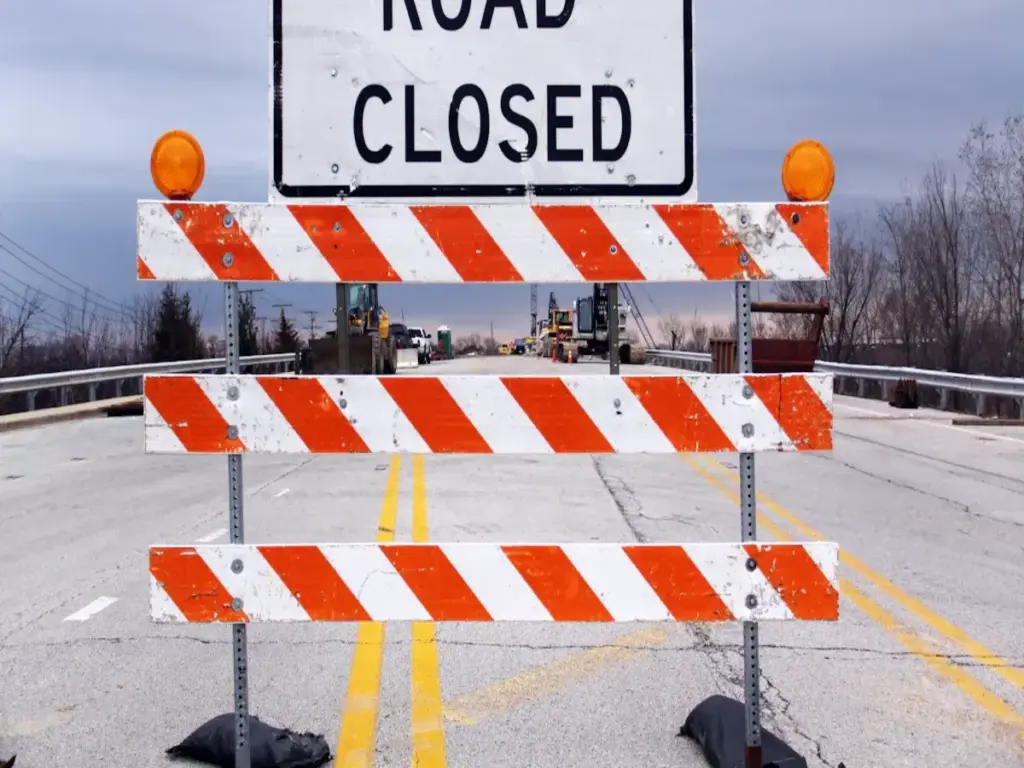
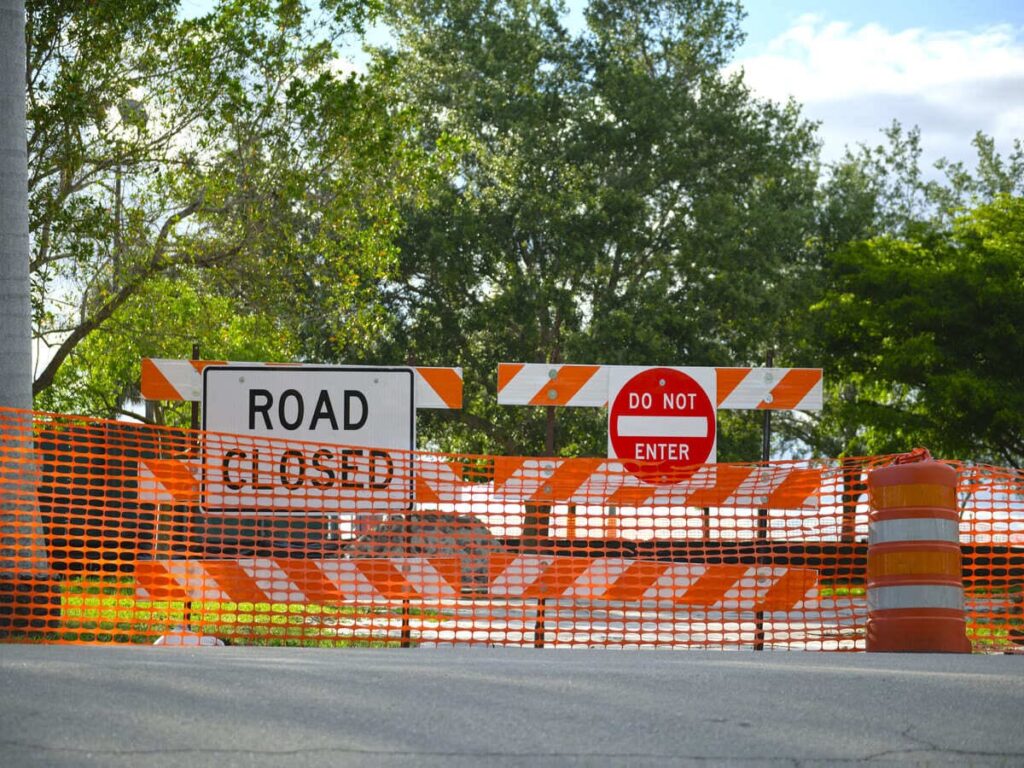
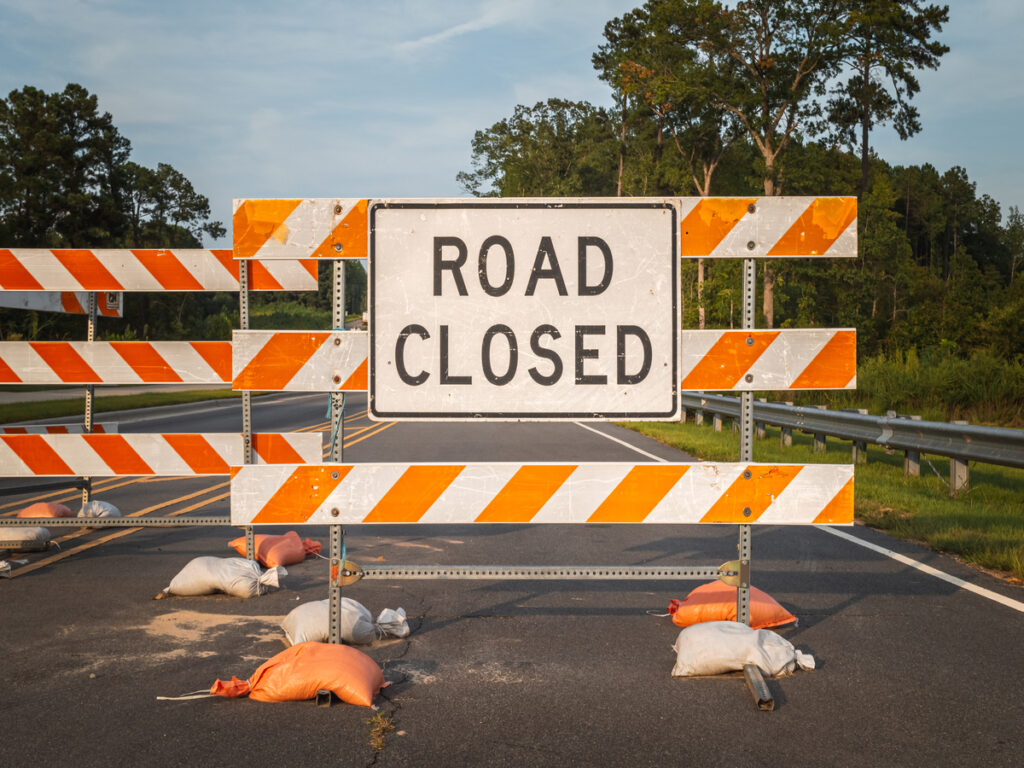
While permanent highways handle the approach, the complexity peaks at the venue gates. Questo è dove temporary event signage for international sporting events becomes a critical operational tool.
The Modular Logic of Event Wayfinding
International spectators, many of whom are driving in Italy for the first time, require a “Breadcrumb” trail of information. Temporary event signage for international sporting events must be deployed in three distinct layers:
- Macro-Layer: Regional highway diversions.
- Meso-Layer: Cluster-specific routing (PER ESEMPIO., “Media Shuttle Only”).
- Micro-Layer: Pedestrian flow and security checkpoints.
Portability Meets Performance
For Milano Cortina 2026, many routes will be “dinamico”—changing direction based on the day’s competition schedule. This requires signage that is:
- Rapidly Deployable: Lightweight enough for 2-person teams.
- Alta visibilità: Even though it is “temporaneo,” it must meet permanent-grade reflectivity standards to handle late-night spectator egress.
Substrate Integrity: Why Durable Aluminum Road Signs Win the Lifecycle War
The reflective sheeting is the “brain” del segno, but the substrate is the “skeleton.” In the high-vibration environment of mountain passes, material choice is a matter of structural safety.
Aluminum 5052-H38: The Industry Standard
Durevole segnali stradali in alluminio are preferred for Olympic infrastructure because they do not suffer from the “Red Rust” associated with steel. When a sign post is hit by a snowplow’s salt-spray, aluminum forms a protective oxide layer.
- Wind Load Management: Alpine gusts can exceed 100 km/h. Durevole segnali stradali in alluminio offer the necessary flexural strength to withstand these loads without permanent deformation, ensuring the sign stays at the correct angle for retroreflectivity.
To ensure your installations meet safety standards under extreme weather pressure, learn how to calculate the correct specifications in our technical breakdown: Come scegliere lo spessore dell'alluminio per i segni di controllo del traffico in base al carico e alle dimensioni del vento.
Sustaining the Olympic Legacy
Sustainability is a core pillar of Milano Cortina 2026. L'alluminio è 100% riciclabile. Scegliendo durable aluminum road signs, the Italian government ensures that the infrastructure investment has a high residual value and a lower carbon footprint compared to heavy steel or composite alternatives.
The decision between different substrates often determines the long-term success of a project’s environmental goals. To see how this material holds up in high-exposure site conditions and why it remains the industry standard, read our full technical guide: Segni di alluminio: A Comprehensive Guide to Durability, Applicazioni, e benefici.
The European Regulatory Framework: IN 12899-1 and Beyond
For professionals, compliance is not optional. Every safety sign installed for the 2026 Games must meet the EN 12899-1 standard for fixed vertical road traffic signs.
Retroreflective Classes (Ref)
Planners must specify whether they require Class RA1, RA2, o RA3. For the high-speed corridors between Milan and Cortina, RA3 (Micropismatico) is the recommended standard. It provides the highest level of luminance, essential for the “blue hour” (twilight) in the mountains when visibility is at its lowest.
Visual Precision and Color Constancy
Color is a compliance variable. If a sign’s color shifts, it loses its legal status. High-performance signs ensure that the “Daytime Color” E “Nighttime Color” are perceived identically by the human eye, preventing confusion during the transition from sunlit snow to shadowed valleys.
Strategic Implementation: Best Practices for Transport Authorities
To achieve a “Gold Standard” in wayfinding, procurement and installation teams should follow a rigorous four-pillar logic:
- Maintained Retroreflectivity: Establish a minimum retroreflectivity threshold that must be maintained throughout the 17-day event window, accounting for grime accumulation and environmental film.
- Vibration-Dampening Hardware: Use stainless steel fasteners with nylon washers to prevent galvanic corrosion between the cartello stradale in alluminio and its support post.
- Specular Reflection Tilt: Install signs at a slight 3-degree angle away from the road to prevent “mirror glare” from high-beam headlamps.
- Cleaning Protocols: Deploy specialized “Sign Wash” crews during the Games to remove the de-icing film that accumulates on high-intensity segnaletica stradale riflettente.
Conclusione: Security Through Visibility
As Milano Cortina 2026 approaches, the world’s focus will be on the athletes. Tuttavia, the silent enablers of their success are the engineers managing the roads. By investing in high-intensity segnaletica stradale riflettente for winter, durable aluminum road signs, and specialized temporary event signage for international sporting events, Italy is setting a new global benchmark for winter event safety.
Clarity in communication reduces congestion, minimizes accidents, and ensures that the logistical “backbone” of the Games remains unbreakable, even in the harshest Alpine whiteout.
Domande frequenti
In winter conditions, traditional glass-bead signs lose effectiveness due to light scattering in fog and snow. High-intensity reflective road signs for winter utilizing microprismatic technology (such as ASTM Type IV or XI) use man-made truncated pyramids to return nearly 80% of light back to the driver. This is a significant increase over the 30% efficiency of glass beads. For Alpine corridors, this translates to a 200% increase in recognition distance, providing heavy Olympic shuttles the necessary reaction time on icy, low-traction descents.
Standard sign faces can suffer from “clouding” or delamination when exposed to the harsh chemical brines used in the Italian Alps. Durable reflective traffic signs for Alpine conditions incorporate an integrated UV-stabilized protective overlay. This non-porous top layer acts as a chemical barrier, preventing salt ions from penetrating the microprismatic cells. This ensures the sign maintains its retroreflective performance and color constancy throughout the 2026 Games and the subsequent legacy period.
Leghe di alluminio, specifically 5052-H38, are chosen for durable aluminum road signs because of their superior strength-to-weight ratio and natural resistance to “red rust.” Unlike galvanized steel, which can corrode at mounting points when the coating is scratched, aluminum forms a self-healing oxide layer. This is critical for the 2026 Olimpiadi invernali, where signs are subjected to high-vibration from heavy transport and intense wind loads in valley corridors.