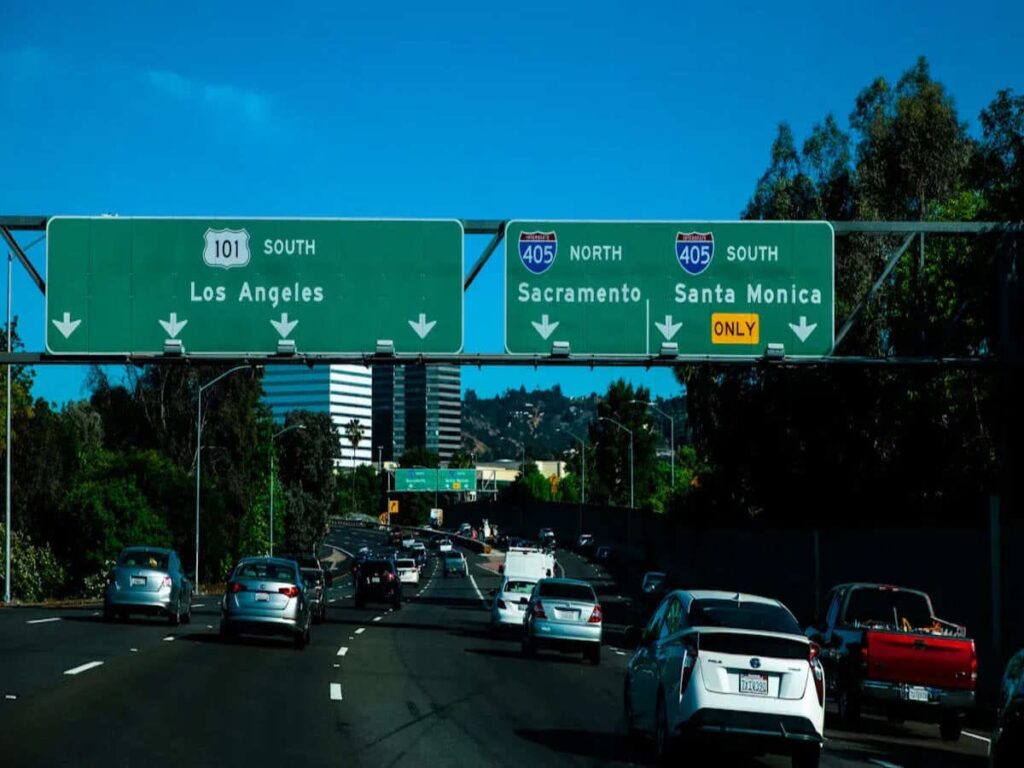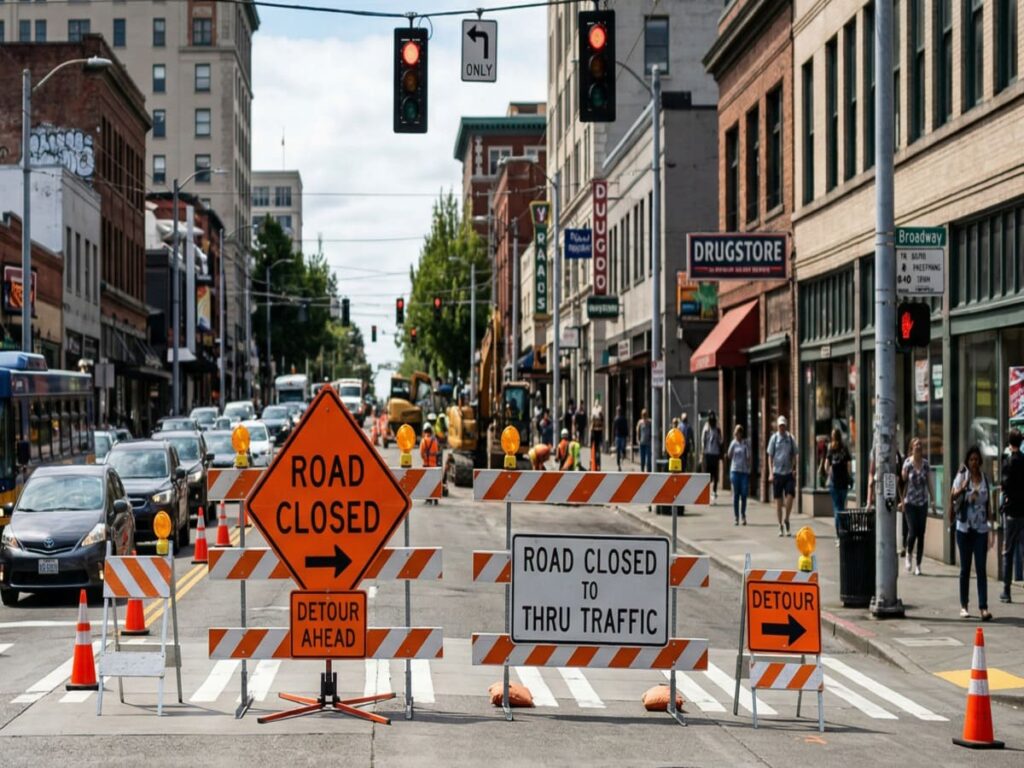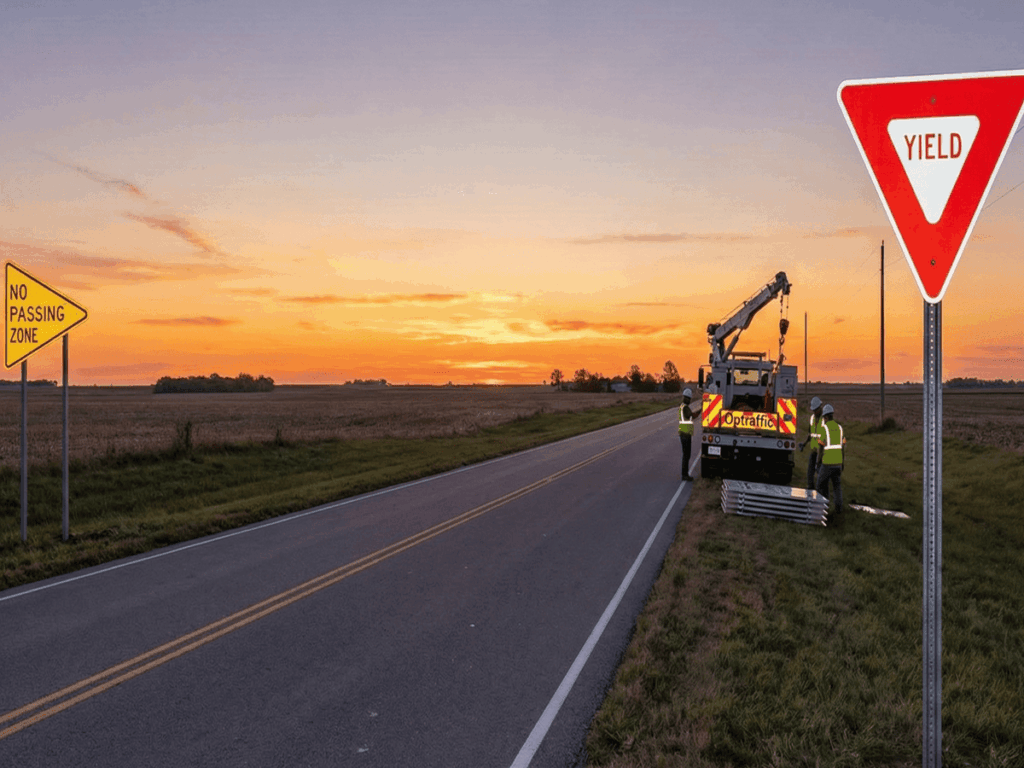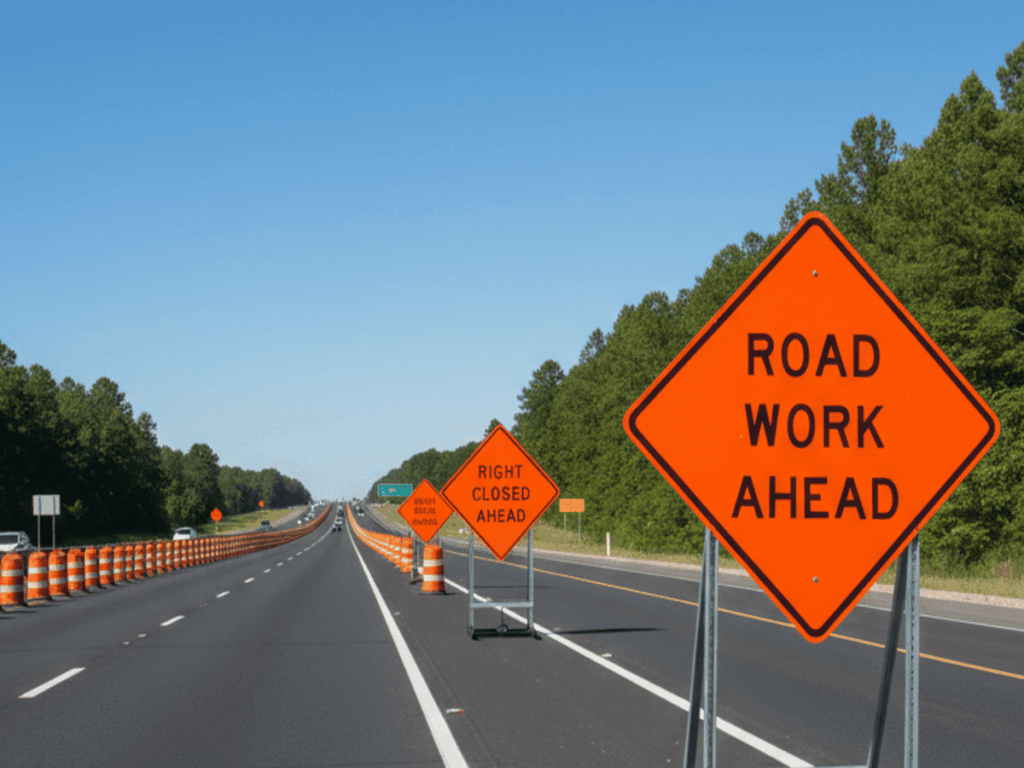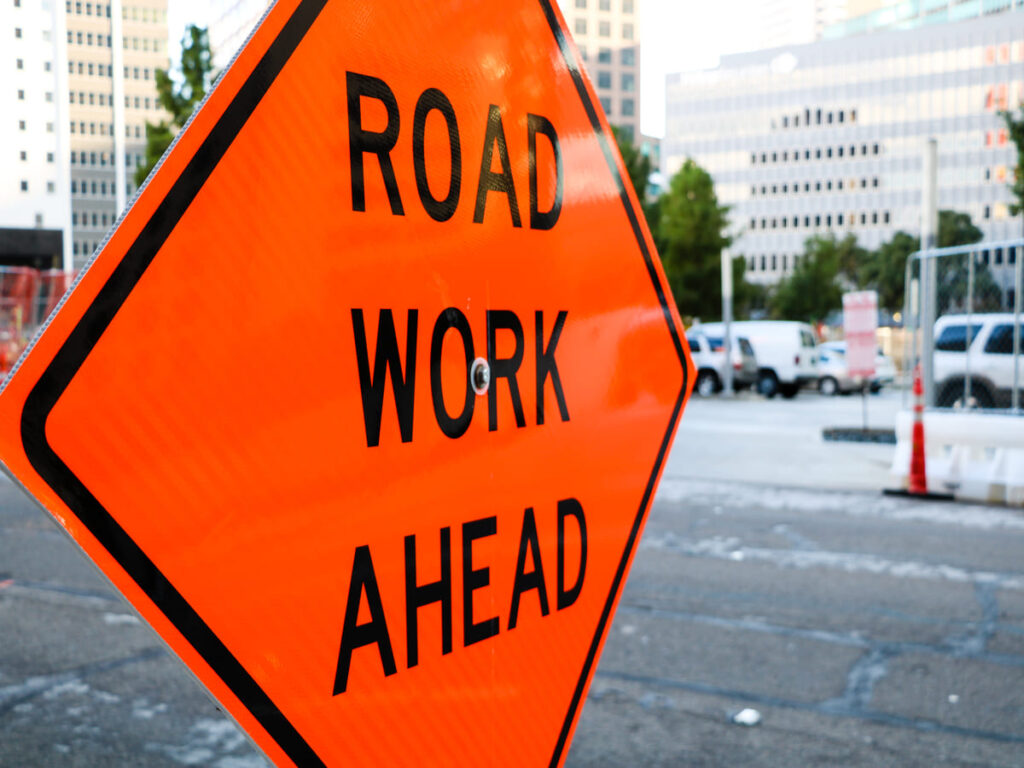
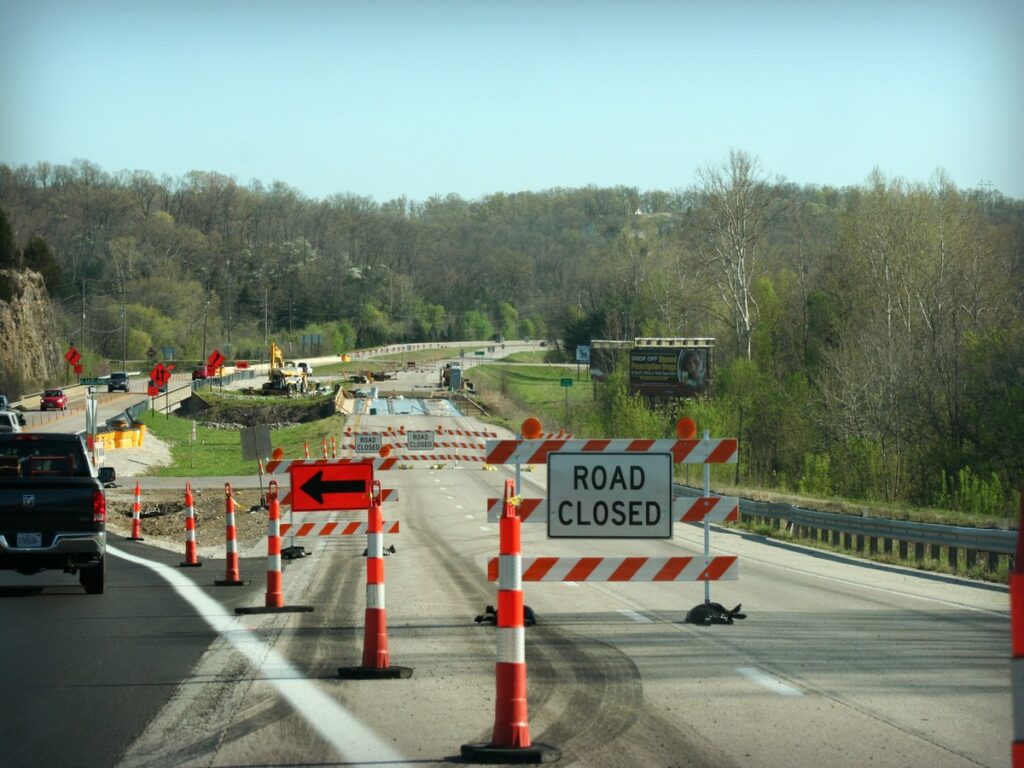
Motorway closures should be routine operations. The network is designed with redundancy, and most detour routes are planned well in theory. Yet the driver experience often feels chaotic. People describe the same pattern repeatedly: a detour sign appears, then the trail goes cold; detour sign placement arrives too late to support a safe decision; cones and barriers are abundant, but detour route signs are scarce; and the detour sign route sometimes feels so illogical that drivers assume they missed the correct turn.
Per le società di gestione del traffico, this is not just a perception issue. When detour signs perform poorly during a road closure, risk concentrates quickly. Confused drivers brake late, change lanes abruptly, attempt unsafe U-turns, and spill into local streets that were never meant to absorb motorway volumes or heavy vehicles. The outcome is avoidable exposure for the project team and avoidable frustration for the public.
The underlying problem is usually not that “there were no detour signs.” It is that detour sign guidance was treated as a set of isolated placements rather than a continuous wayfinding system. If the detour is a story, the detour sign sequence is the narrative. A few instructions at the beginning do not help if the middle chapters are missing.
How to interpret a detour sign on the road?
A detour sign means the normal route ahead is temporarily disrupted and drivers should follow a marked alternate route. Sulle autostrade, it typically appears when an exit, rampa, or mainline segment is closed, and it should be read as the start of a signed route—not a one-time warning. When detour signing works, the route remains continuous through to re-entry, with follow detour signs confirming each key decision point.
Per un approfondimento, driver-focused explanation of detour road sign meaning—what it tells road users, what it does not, and how to follow it safely—this section can link to Mezzi di segnaletica di deviazione: Cosa ti dice, Cosa non funziona, e come seguirlo in sicurezza.
Why drivers say detour signs are “never posted properly”
When drivers complain that detour signs are not posted properly, they are rarely asking for more signage overall. They are describing gaps in continuity and timing within the detour sign system.
The sign gap that triggers uncertainty
A detour sign directs a movement, then no follow detour signs appear for a long stretch. Su un'autostrada, detour sign spacing feels more consequential because speeds are higher and decisions commit earlier. Without repeated confirmation, even competent drivers begin to doubt whether they are still on the correct detour route. That doubt triggers scanning behavior, unnecessary speed changes, and last-second maneuvers when the next detour sign finally appears.
Detour sign placement that arrives too late
If the first meaningful detour sign for road closure appears after the last convenient exit, drivers feel trapped. Operativamente, late detour sign placement also forces more traffic into the closure funnel, increasing congestion at the taper and increasing risky merges. The detour may be technically available, but the decision window was not.
Cones everywhere, guidance nowhere
Many worksites execute channelization aggressively. Drivers see extensive traffic cones, corsie chiuse, and reduced shoulders. That communicates “you cannot go there.” It does not communicate “this is where you should go instead.” When a road detour sign system is weak, the site still looks busy and expensive, which makes missing detour sign guidance feel like a basic failure.
Route logic that feels arbitrary or looping
Drivers accept indirect routing when it is legible. They reject it when the detour sign route feels arbitrary, looping, or inconsistent with the hierarchy of roads. A detour sign sequence that repeatedly pushes traffic toward ramps and then denies access creates the impression of incompetence even when constraints are legitimate.
Detour signs are a wayfinding system, not a sign-count problem
Detour signs succeed when they maintain continuity through three phases: decisione, commitment, and reassurance.
Decision starts upstream, before drivers are forced to commit
Detour sign ahead messaging is where drivers decide whether to stay on the motorway, exit early, or take an alternate corridor. If detour sign ahead guidance arrives too late, drivers lose agency. They interpret the detour as something done to them rather than something designed for them. That is why advance-warning detour signs reduce risky behavior: they expand the decision window.
Commitment happens at ramps, uscite, and surface-road transitions
Commitment happens at the movement: exiting, girando, shifting lanes, or transitioning from motorway to arterial. In questi punti, detour sign placement must be unambiguous, early enough to be read, and consistent with what drivers are already seeing. If the detour sign message conflicts with expectations, drivers hesitate—and hesitation at motorway speeds is dangerous.
Reassurance is what keeps drivers from feeling lost
Reassurance is what keeps drivers calm after they commit. It does not need to be verbose. It needs to be predictable. When temporary detour signs confirm the route consistently, drivers stop hunting for the next clue and return attention to safe driving. Many detours fail because the first two phases get attention while reassurance through follow-up detour signs is treated as optional.
Why motorways amplify detour sign failures
Motorways are unforgiving environments for navigation. The same detour approach that works on a low-speed grid can fail on a high-speed limited-access facility.
Speed compresses the reading and reaction window
Drivers must detect the detour sign, interpret it, decidere, and execute within a short time. This reduces tolerance for late detour sign placement and increases the importance of early, consistent cues.
Interchanges create dense sequences of decisions
A motorway detour sign route often involves multiple sequential commitments: exit choice, ramp choice, surface-road turns, and re-entry decisions. When detour route signs miss any link in that chain, drivers feel abandoned. Many continue straight because it feels safer than turning on uncertain information, then attempt corrective actions later under worse conditions.
Mixed traffic makes the “directionally challenged” driver the baseline
Heavy vehicles, unfamiliar drivers, fatigued night drivers, and local commuters share the same lanes. The “directionally challenged” driver is not a niche user; it is the default design target. If detour signs only work for confident locals who already know the network, the detour sign route will fail for the broader population that must be served safely.
The “missing detour sign” problem is usually sequence integrity failure
Drivers often claim they “must have missed a detour sign.” In many cases, they did not miss it. The detour sign sequence broke.
A detour sign route is only as strong as its weakest link
Sequence integrity means every detour sign instruction connects to the next one in a way drivers can predict. When the sequence breaks, the driver’s mental model collapses. They start improvising, and improvisation is where incidents and complaints multiply.
Real-world conditions break sequences even when the plan was correct
A temporary detour sign can be knocked over, removed, blocked by large vehicles, or visually buried by competing stimuli. Sometimes the detour sign set was correct at installation, but conditions changed: ramp status changed, the worksite shifted, or congestion blocked a turn movement and crews adjusted cones without updating detour sign guidance. From the driver’s perspective, causes do not matter. The system promised direction, then stopped delivering.
Detour signs at night fail for different reasons than detour signs in daylight
Many detour complaints surface after-hours because that is when closures commonly occur and when visual performance issues are most severe.
Night-time legibility is a detour sign meaning issue, not a driver attitude issue
Di notte, drivers depend on the visibility of detour signs: prestazione retroriflettente, sign angle, placement relative to headlight approach, and resistance to glare. Wet pavement reduces contrast and creates reflections that change how arrows and symbols read. A detour sign arrow can be visible but not legible, which is functionally the same as being absent.
Fatigue increases reliance on consistent cues
Night also changes driver behavior. Fatigue reduces attention span and increases reliance on predictable confirmation. When detour signs are discontinuous at night, drivers do not compensate with extra focus. Stress increases, and error rates rise.
Multi-route detours require consistent detour sign symbols and identities
A frequent source of confusion is simultaneous detours. When more than one closure is active, multiple detour sign routes can overlap, attraverso, or run parallel.
Drivers can follow a detour sign symbol, but only if it stays stable
Drivers can follow detour sign symbols, lettere, or route identities, but only if they stay consistent. If the detour sign symbol changes mid-route, drivers assume they made an error. If two detour routes look similar at a junction, drivers merge into the wrong stream and only realize it later.
Field changes can silently destroy route identity
This is not merely a sign design issue. It is an execution discipline. When field teams adjust a detour, the detour sign route identity must remain consistent from the first detour sign ahead through to the end detour sign (or the clear point of re-entry). When identity breaks, drivers experience bait-and-switch navigation: they were told to follow one detour sign route, then guided into another.
Detour sign routes must match driver expectations and network hierarchy
Drivers complain about detours that feel “bizarre” or “indirect” because the detour sign route violates intuitive network logic.
A good detour sign route feels like a reasonable substitute corridor
Motorway detour sign routes typically work best when they transition to suitable arterials, maintain movement on roads that can handle volume, and return traffic to controlled-access flow as soon as practical. When detour signs push motorway volumes into streets that feel too small for the task—or require frequent turns without strong reassurance—drivers interpret it as poor planning rather than necessary constraint.
Loops are the most damaging failure mode
Loops often arise when paired interchanges and ramp closures interact. A detour sign route can inadvertently send drivers toward an on-ramp that is closed, forcing them to continue to the next interchange where detour sign guidance directs them back. From the driver seat, this feels like an infinite cycle caused by bad detour signs, even if the plan looked coherent in isolation.
Operational discipline is what turns detour signs from improvisation into reliability
High-performing traffic management teams treat detour signs as an operational deliverable with ongoing integrity, not a one-time installation task.
Detour sign systems degrade in real environments
A sign can shift, a cone line can be adjusted, or a temporary barrier can change the reading path. Each change can break the detour sign sequence without anyone realizing it. Reliability comes from keeping the detour route legible from the driver’s perspective throughout the closure window, including when conditions change.
Consistency is what drivers interpret as competence
When operational discipline is strong, the detour sign route feels effortless. Drivers may not praise it, but they will not feel lost. When discipline is weak, the detour becomes a public story of incompetence, regardless of how competent the underlying roadwork is.
Conclusione: the detour sign standard drivers judge is straightforward
Drivers do not evaluate detours the way engineers do. They do not care whether the detour sign plan is theoretically correct if the experience is uncertain.
From the public’s perspective, detour signs are “properly marked” when three things are true: the detour sign ahead message arrives early enough to support safe decisions, the follow detour signs keep the route continuous so drivers never wonder if they missed something, and the detour sign route makes sense as a reasonable alternative for the network and traffic mix.
That is the practical bar for detour signs on a motorway. It is not achieved by adding random signs or increasing cone density. It is achieved by designing detour sign routes as complete wayfinding systems and operating them with the same rigor used to control the closure itself.
That is why detour performance ultimately comes down to execution in the field, not just planning on paper. OPTRAFFICO supporta le società di gestione del traffico, appaltatori stradali, and government agencies with durable Segno stradale solutions—including detour signs—so crews can deploy clear, consistent guidance throughout a closure and maintain route continuity when conditions change.
Domande frequenti
Why do detour signs fail on motorways more than on local roads?
Motorway speeds shorten reading time and interchanges stack decisions closely, so late detour sign placement, poor detour sign spacing, or missing follow detour signs create immediate confusion and unsafe last-second maneuvers.
What is the most common detour sign problem during road closures?
The most common issue is a broken detour sign sequence—drivers see one detour sign, then no follow detour signs for a long distance, so they assume they missed the route.
How should detour sign placement work near exits and ramps?
Detour signs should appear early enough for drivers to decide before the last convenient exit, then repeat at the exact decision point so detour sign guidance stays unambiguous at motorway speeds.
What does a detour sign mean if there are traffic cones but no clear detour route signs?
It usually means the site has strong channelization but weak wayfinding—traffic cones indicate where drivers cannot go, but detour route signs are not providing continuous guidance to where drivers should go.
Why do drivers report detour routes that feel illogical or like a loop?
Loops often happen when the detour sign route conflicts with ramp closures or paired interchanges, causing drivers to be directed toward an unavailable entry and then forced to circle back.