Responsabili dell'approvvigionamento della flotta negli Stati Uniti, Regno Unito, e l’Australia affrontano quotidianamente decisioni critiche sull’hardware. L'illuminazione moderna dei veicoli deve bilanciare l'ingombro fisico con gli standard di visibilità a lungo raggio. UN faro a basso profilo offre uno spazio indispensabile nelle zone urbane con limiti di altezza. Al contrario, standard Fari di segnalazione a LED fornire il punch ottico verticale necessario per la manutenzione interstatale ad alta velocità. Questo 2026 La guida fornisce un approfondimento sui compromessi tecnici di questi due fattori di forma. Analizziamo la fisica visiva, stabilità termica, e il costo totale di proprietà (TCO).
Confronto rapido: Profilo ottico vs. Ambiente applicativo
| Caratteristica | Faro a basso profilo | Segnalatori luminosi a LED Optraffic |
| Caso d'uso primario | Parcheggio sotterraneo / Tunnel bassi | Manutenzione dell'autostrada / Costruzione pesante |
| Diffusione del fascio verticale | Compresso (Messa a fuoco orizzontale) | Alto angolo (Raggiungere la cresta) |
| Buffer termico | Limitato (Cavità compatta) | Superiore (Ampio spazio di convezione) |
| Smorzamento delle vibrazioni | Rigido (Trasferimento diretto di energia) | Rinforzato (Base per l'assorbimento degli urti) |
| Spazio massimo | Eccezionale (70mm – 90mm) | Standard (120mm – 150mm) |
Valutazione della diffusione del fascio verticale nei sistemi di illuminazione con faro a basso profilo
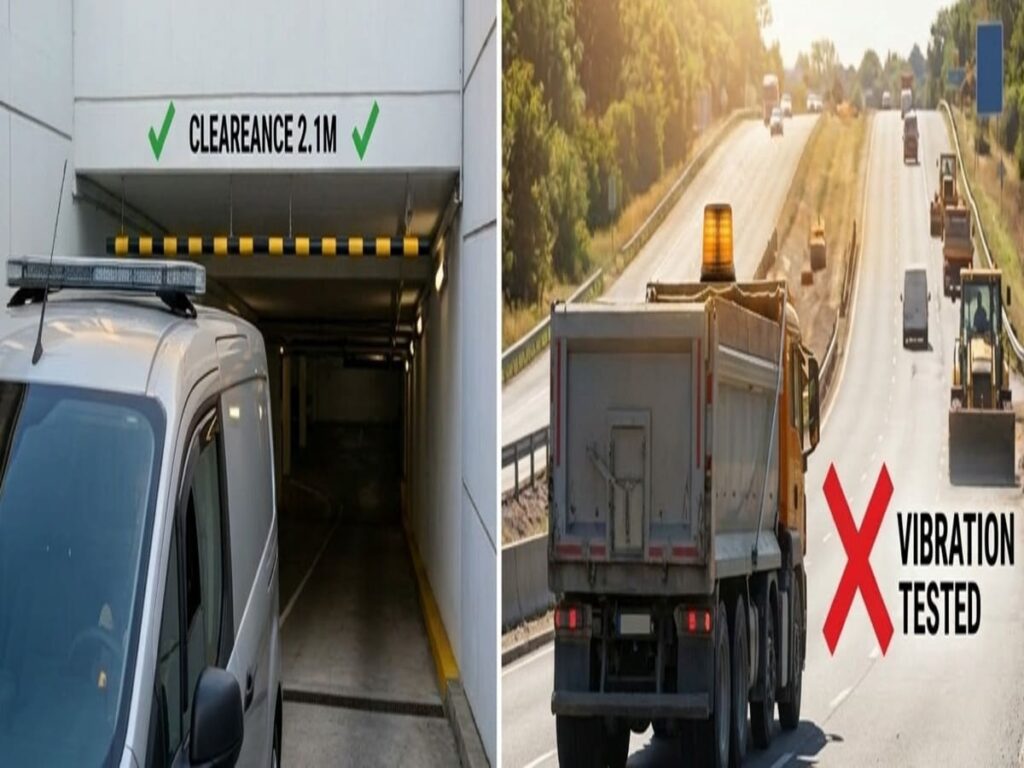
L'altezza fisica di una lente determina direttamente il “lancio verticale” del segnale di avvertimento. Nella manutenzione sotterranea urbana, come parcheggi sotterranei o tunnel di servizio, a faro a basso profilo è la scelta strategica. Si trova molto più vicino alla linea del tetto, prevenire impatti costosi con limitatori di altezza 2,1 metri comuni nei centri urbani. Tuttavia, una volta che un veicolo si sposta sull'autostrada aperta, le limitazioni di una lente compressa diventano una responsabilità per la sicurezza del flusso di traffico ad alta velocità.
IL “Cresta” Vantaggio dei beacon standard
La topografia dell'autostrada è raramente un piano perfettamente piatto. Quando un veicolo di sicurezza si trova in un avvallamento stradale o dietro una barriera di cemento, UN faro a basso profilo può essere oscurato dalla curva del marciapiede o dai detriti lungo la strada. Standard Fari di segnalazione a LED utilizzare un TIR più alto (Riflessione interna totale) lente. Questa altezza aggiuntiva consente alla serie di 36 LED di proiettare la luce su piccole colline e ostacoli. Gli ingegneri di Optraffic progettano questi fari più alti per massimizzare la “lancio verticale,” garantire che i conducenti dei camion nelle cabine con i sedili alti vedano il segnale 500 metri prima di raggiungere la zona di cambio.
Gestione dell’abbagliamento negli spazi urbani confinati
Al buio, tunnel stretti, luci eccessivamente alte e luminose possono causare il “effetto falena,” dove i guidatori sterzano inavvertitamente verso l'abbagliamento. L'obiettivo compatto di a faro a basso profilo fornisce un più controllato, modello di emissione orizzontale. Ciò riduce i riflessi accecanti sulle pareti del tunnel mantenendo standard di alta intensità per i lavoratori nelle immediate vicinanze. Optraffic riconosce che l'agilità urbana richiede hardware che rimanga al di sotto della linea di pericolo proteggendo al tempo stesso la visione periferica degli automobilisti circostanti.
Analisi della stabilità termica nei segnalatori luminosi a LED ad alta intensità
I progetti di costruzione pesanti spesso richiedono 24/7 funzionamento per settimane durante l'alta stagione. In questi cicli ad alto carico, l'accumulo di calore diventa il nemico principale della longevità dei LED e della precisione del colore. Mentre a faro a basso profilo offre un aspetto elegante, estetica aerodinamica per compiti di breve durata, il suo volume d'aria interno limitato può portare a guasti termici critici durante i turni estivi prolungati.
Prevenire lo spostamento del colore e il deprezzamento dei lumen
I LED ad alta intensità generano una notevole energia termica. In un compatto faro a basso profilo alloggiamento, questa energia ha vie di fuga limitate, causare “cambiamento di colore”-dove il segnale color ambra si affievolisce, giallo brunastro. Standard Fari di segnalazione a LED fornire una cavità interna molto più grande. Optraffic specifica dissipatori di calore in alluminio di alta qualità all'interno di questi alloggiamenti più alti per facilitare la dissipazione del calore. Questa gestione termica garantisce che l'array da 36 LED mantenga la sua efficienza Classe ECE R65 1 luminosità per l'intero ciclo di vita del progetto di 5 anni senza sbiadire.
La luminosità costante è un requisito legale rigoroso per la conformità della flotta. Per garantire che l'hardware soddisfi le norme essenziali sull'intensità e sulle interferenze, esplora la nostra guida tecnica: Decodifica ECE R65 & R10 EMC: Lo standard per i lampeggianti a LED.
Garantire l'integrità strutturale contro le vibrazioni a bassa frequenza
Motori diesel sugli escavatori, rulli, e gli autocarri con cassone ribaltabile generano intensi, vibrazioni costanti a bassa frequenza. UN faro a basso profilo presenta una struttura rigida che gestisce bene la forza del vento ma non ha le proprietà di smorzamento meccanico delle unità più grandi. Optraffic Fari di segnalazione a LED utilizzare un rinforzo, base in policarbonato ad alto impatto. Questa base funge da ammortizzatore, prevenzione interna 10-30V l'elettronica multitensione da vibrazioni, allentamenti o crepe. Standardizzare le vostre attrezzature pesanti con quelle robuste, l'ottica a profilo standard riduce la frequenza di “tempi di inattività non programmati” causato dall'affaticamento dell'hardware strutturale.
Valutazione della resilienza dei materiali nei segnalatori luminosi a LED rispetto a. Disegni di luci faro a basso profilo
In ambienti autostradali corrosivi, la stabilità chimica del materiale dell'alloggiamento è fondamentale quanto l'uscita ottica. Entrambi a faro a basso profilo e norma Fari di segnalazione a LED affrontare un'esposizione costante al sale stradale e a intense radiazioni UV. Tuttavia, la geometria strutturale di questi dispositivi influenza il modo in cui resistono a questi fattori di stress ambientale nelle implementazioni a lungo termine.
Sconfiggere la degradazione UV e l'ingiallimento delle lenti
Ultravioletto (UV) i raggi rappresentano la causa principale del cristallino “ingiallimento” nell'hardware di sicurezza. Questo processo trasforma il policarbonato trasparente in un opaco, guscio fragile che disperde la luce in modo imprevedibile. Una compatta faro a basso profilo ha una superficie minore, che può portare a uno stress termico localizzato più elevato. Norma Optraffic Segnalatori luminosi a LED integrano stabilizzatori UV di alta qualità in tutto il polimero della lente. Questa fortificazione chimica impedisce alle catene molecolari di rompersi sotto l'esposizione solare diretta. L'ottica di livello professionale previene la perdita di visibilità associata all'invecchiamento, lenti nuvolose nelle regioni con raggi UV elevati come l'Australia e gli Stati Uniti meridionali.
Sopravvivere alla corrosione chimica degli agenti antigelo stradali
La manutenzione invernale prevede l'applicazione pesante di salamoia e cloruro di magnesio. Questi agenti corrosivi spesso si accumulano nelle fessure dell'hardware del veicolo durante i turni di 24 ore. Mentre a faro a basso profilo presenta un esterno elegante, la sua guarnizione di montaggio è più vicina al tetto del veicolo dove si accumula l'umidità. Optraffic Segnalatori luminosi a LED utilizzare un impatto elevato, base chimicamente resistente che solleva i componenti elettrici sopra la zona di schizzi primaria. Questo design previene la corrosione galvanica sul circuito interno, estendendo la vita operativa dell’hardware nelle regioni costiere o invernali ad alta salinità.
Valutazione della disponibilità delle risorse & Cicli di manutenzione
Per un assistente alle operazioni della flotta, selezionando a faro a basso profilo rispetto allo standard Fari di segnalazione a LED comporta un calcolo strategico di “Orario di servizio attivo.” In ambienti gravosi, i guasti hardware portano a manutenzioni non programmate, che interrompe le tempistiche del progetto e aumenta i costi del lavoro. I gestori di flotte professionisti valutano il Continuità operativa delle loro risorse di illuminazione nel corso di un ciclo di vita del progetto pluriennale.
Impatto operativo: Alloggiamento compatto vs. Ottica di livello industriale
| Metrica delle prestazioni | Faro compatto di livello economico | Segnalatori luminosi a LED Optraffic |
| Ciclo di lavoro operativo | Ottimizzato per l'uso intermittente | Progettato per il continuo 24/7 Turni |
| Capacità del buffer termico | Limitato (Cavità interna compatta) | Alto (Spazio di convezione migliorato) |
| Frequenza di manutenzione | Moderare (Sensibile all'ambiente) | Basso (Progettato per durare nel tempo) |
| Tolleranza alle vibrazioni | Standard (Urbano/Comunale) | Ad alto impatto (Edilizia/Estrazione) |
| Affidabilità del ciclo di vita | Variabile (Stress termico/UV) | Stabile (Consistenza ottica TIR) |
Standardizzare la tua flotta con Optraffic Fari di segnalazione a LED migliora la disponibilità complessiva delle risorse. L'hardware di alta qualità riduce al minimo la necessità di frequenti visite in loco per sostituire le unità guaste. Scegliendo il professionista 10-30V sistemi con rinforzato Policarbonato componenti, ti assicuri che i tuoi segnali di allarme rimangano attivi durante l'alta stagione di costruzione. Questa affidabilità riduce l'onere amministrativo derivante dal monitoraggio dei guasti delle apparecchiature. Mantiene uno standard di sicurezza più elevato per il personale stradale durante i turni notturni ad alto rischio.
Matrice decisionale sull'appalto finale: Quale profilo si adatta alla tua flotta?
Per garantire 100% conformità del sito, utilizzare questa lista di controllo per determinare se a faro a basso profilo o una norma Faro di segnalazione a LED è l'investimento corretto.
La lista di controllo della selezione
- Il veicolo circola in garage sotterranei o in tunnel a bassa altezza?
- Raccomandazione: Investi in a faro a basso profilo per prevenire danni strutturali da impatto in spazi ristretti.
- È il veicolo primario per l'alta velocità (100km/h+) zone cuscinetto autostradali?
- Raccomandazione: Usa la norma Segnalatori luminosi a LED per la massima diffusione verticale del fascio e visibilità oltre la cresta.
- L'hardware sarà montato su apparecchiature per vibrazioni pesanti (Rulli/Escavatori)?
- Raccomandazione: I fari Optraffic standard forniscono un assorbimento degli urti e un buffer termico superiori 24/7 cicli di progetto.
- L'ambiente operativo è soggetto a sale stradale invernale estremo o ad un elevato indice UV?
- Raccomandazione: Gli alloggiamenti in policarbonato stabilizzato ai raggi UV di Optraffic prevengono l'ingiallimento e le crepe chimiche in condizioni esterne difficili.
Conclusione
Selezionando tra a faro a basso profilo e ad alta intensità Segnalatori luminosi a LED richiede una valutazione onesta del proprio ambiente operativo. Mentre elegante, i progetti a profilo sottile risolvono specifici problemi di bonifica urbana, spesso non hanno la portata ottica necessaria per i lavori interstatali pesanti. Optraffic fornisce l'eccellenza ingegneristica necessaria per la manutenzione Classe ECE R65 1 conformità dell'intera flotta. Nostro 10-30V i sistemi multitensione offrono una compatibilità perfetta, assicurando che i segnali di allarme rimangano vividi, chiaro, ed affidabile per anni.
Massimizza la visibilità su strada e proteggi la continuità operativa a lungo termine con hardware che sopravvive ai cantieri più difficili del mondo. Non scendere a compromessi sulla resa ottica o sulla durabilità dei materiali quando sono in gioco delle vite.
Assicurati che la tua flotta sia pronta per il prossimo futuro 24/7 spostamento del progetto. Esplora le specifiche tecniche e le opzioni di ordinazione in grandi quantità per la nostra gamma ad alte prestazioni: Segnali di segnalazione a LED Optraffic tipo Premium.
Domande frequenti: Selezione dell'illuminazione della flotta
Mentre è fisicamente possibile, un faro a basso profilo è ottimizzato per l'autorizzazione urbana. Per le zone autostradali ad alta velocità (100km/h+), consigliamo i segnalatori luminosi a LED standard. L'altezza aggiuntiva di un faro standard fornisce una diffusione del fascio verticale superiore, assicurando che il segnale sia visibile oltre i crinali stradali e le grandi barriere edili, dando agli automobilisti più tempo per reagire.
:Compatto o “sottile” gli alloggiamenti hanno un volume d'aria interno inferiore per la dissipazione del calore. Durante 24/7 funzionamento continuo, l'accumulo di calore può causare uno spostamento del colore del LED e un deprezzamento più rapido del flusso luminoso. I segnalatori luminosi a LED Optraffic sono dotati di un buffer termico interno più ampio e di dissipatori di calore in alluminio integrati. Questo design garantisce che l'array da 36 LED mantenga la classe ECE R65 coerente 1 luminosità per tutta la sua durata.
No, se l'unità è progettata per un uso intensivo. I segnalatori Optraffic utilizzano un rinforzo Base in policarbonato ad alto impatto specificatamente progettato per assorbire la risonanza meccanica a bassa frequenza. Questa costruzione robusta impedisce l'interno 10-30V i circuiti vibrano allentati, un punto di guasto comune nelle luci di segnalazione di livello economico.
SÌ. Tutti i beacon Optraffic di livello professionale sono dotati di un ingresso multitensione ad ampio raggio da 10-30 V. Ciò consente una standardizzazione continua dell’intera flotta, dai furgoni leggeri alle macchine movimento terra pesanti da 24 V, semplificando il vostro inventario dei pezzi di ricambio.