परिचय: Controlling One-Lane Traffic
Closing one lane of a two-lane road is complex. You cannot simply merge traffic. You must stop it. यह एक बनाता है “One-Lane, Two-Way” traffic control zone. यहाँ, drivers must obey a human flagger rather than just following cones.
This setup requires specific road construction signs. You cannot rely on general warnings. Safety depends entirely on advance notice. A driver traveling at 55 mph needs time to perceive the आगे का चिह्न ध्वजांकित करें and come to a complete halt.
Back to Basics: Review the fundamental zones of traffic control in our कार्य क्षेत्र सेटअप 101 मार्गदर्शक.
To protect your crew, you must deploy the strict “Three-Sign Sequence” mandated by the MUTCD.
The Mandatory Sequence for Road Construction Signs
For a flagging operation, एमयूटीसीडी (विशिष्ट अनुप्रयोग 10) requires a specific series of warnings. You must place these road construction signs in a strict order.
कदम 1: General Warning (The “ए” संकेत)
ड्राइवर को सचेत करें कि वे कार्य क्षेत्र में प्रवेश कर रहे हैं.
- संकेत: सड़क कार्य आगे का संकेत (W20-1).
- कार्रवाई: यह ध्यान खींचता है. यह ड्राइवर को बदली हुई परिस्थितियों के लिए तैयार करता है.
कदम 2: विशिष्ट शर्त (The “बी” संकेत)
ड्राइवर को बताएं कि सड़क की ज्यामिति बदल गई है.
- संकेत: आगे एक लेन सड़क का चिन्ह (W20-4).
- भेद: ए का प्रयोग न करें “लिंग बंद” यहाँ हस्ताक्षर कीजिए. इसका तात्पर्य विलय से है. “एक लेन सड़क” इसका तात्पर्य एक ही लेन को साझा करते हुए दो-तरफा यातायात से है.
कदम 3: कार्रवाई आवश्यक है (The “सी” संकेत)
यह सबसे गंभीर चेतावनी है. यह रोक की मांग करता है.
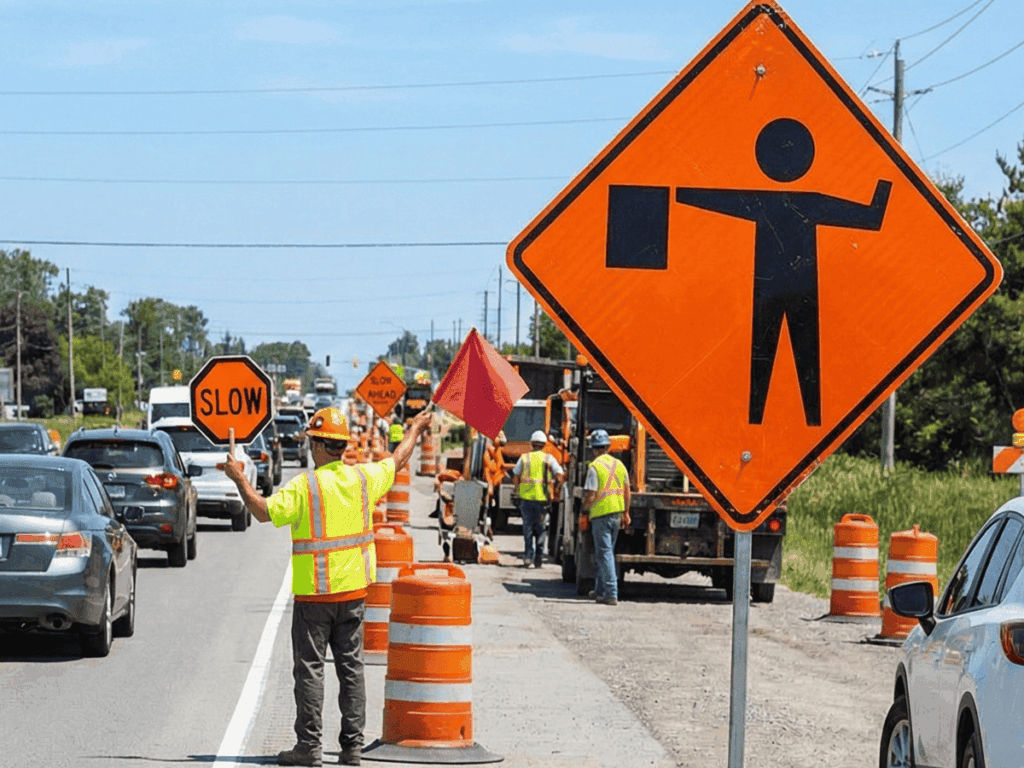
- संकेत: आगे का चिह्न ध्वजांकित करें (प्रतीक W20-7).
- प्लेसमेंट: इस चिन्ह को फ़्लैगर स्टेशन के सबसे नजदीक लगाएं.
- हाई-स्पीड एडिशन: तेज़ रफ़्तार वाली सड़कों पर 45 मील प्रति घंटा, ए डालें साइन रोकने के लिए तैयार रहें (W3-4) बीच “एक लेन सड़क” और “झंडे” लक्षण. यह सुरक्षा की एक महत्वपूर्ण परत जोड़ता है.
फ़्लैगर स्टेशन की स्थिति निर्धारित करना (MUTCD 6E.02)
आपका फ़्लैगर सड़क पर सबसे कमज़ोर संपत्ति है. के अनुसार एमयूटीसीडी अध्याय 6ई, उनकी स्थिति पूरे क्षेत्र की सुरक्षा तय करती है. आपको स्टेशन ऐसे स्थान पर रखना चाहिए जहां से ड्राइवर इसे स्पष्ट रूप से देख सकें “निर्णय दृष्टि दूरी.”
दृश्यता और फ़्लैगर अहेड रोड साइन
ड्राइवर को स्टेशन पहुँचने से बहुत पहले फ़्लैगर देखना होगा. यह दृश्य संपर्क द्वारा दी गई चेतावनी की पुष्टि करता है ध्वजवाहक आगे सड़क चिह्न (W20-7).
- The “बचाव का रास्ता” नियम: फ़्लैगर के पास चलने के लिए हमेशा एक स्पष्ट पथ होना चाहिए.
- उदाहरण: यदि कोई सेमी-ट्रक अपना ब्रेक खो देता है, ध्वजवाहक को समतल कंधे या खाई पर तत्काल निकास की आवश्यकता होती है. कभी नहीं फ़्लैगर को रेलिंग या पुल की दीवार के सामने रखें. उनके पास जाने के लिए कहीं नहीं होगा.
- सही ढंग से खड़े हो जाओ: झंडा फहराने वाले को कंधे के बल या बंद लेन में खड़ा होना चाहिए. कभी नहीं खुली ट्रैफिक लेन में खड़े हो जाओ.
- रात्रि संचालन: अगर रात में काम कर रहे हैं, ध्वजवाहक स्टेशन रोशन होना चाहिए (MUTCD 6E.05). अकेले रेट्रोरिफ्लेक्टिव गियर पर्याप्त नहीं है. आपको ओवरहेड लाइटिंग की आवश्यकता है.
सामान्य गलती: The “छाया जाल”
जब आने वाली सड़क तेज धूप में हो तो अपने ध्वजवाहक को गहरी छाया में न रखें.
- जोखिम: ड्राइवर की आँखें पर्याप्त तेज़ी से समायोजित नहीं हो पातीं. ध्वजवाहक अदृश्य हो जाता है.
- ठीक: स्टेशन को सूर्य के प्रकाश में ले जाएँ या सहायक प्रकाश व्यवस्था जोड़ें.
बफ़र स्पेस (अनुदैर्ध्य बफर)
संकेत ड्राइवर को चेतावनी देते हैं, लेकिन अंतरिक्ष दल की रक्षा करता है. आपको एक छोड़ना होगा “बफर स्पेस” फ़्लैगर स्टेशन और वास्तविक कार्य क्षेत्र के बीच.
यह खाली क्षेत्र भागते हुए वाहन को सोख लेता है. उच्च दृश्यता के साथ भी निर्माण फ़्लैगर आगे का चिह्न, ड्राइवर ग़लतियाँ करते हैं. यदि कोई कार स्टेशन से होकर गुजरती है, बफ़र चालक दल को प्रतिक्रिया करने का समय देता है.
बफ़र दूरी की गणना
बफ़र की लंबाई पूरी तरह से गति सीमा पर निर्भर करती है.
- नियम: पर 55 मील प्रति घंटा, आपको कम से कम रुकने की दूरी चाहिए 495 पैर.
- अन्तर: इस क्षेत्र को बिल्कुल खाली रखें. यहां औजार या ट्रक न रखें.
विलय बनाम. रोक: यह बफ़र रिक्त स्थान है. अगर आपको ट्रैफिक को रोकने की बजाय मर्ज करने की जरूरत है, हमारा विशेष पढ़ें सिंगल लेन क्लोजर गाइड.
संचार: आमने-सामने की टक्करों को रोकना
लगाना ध्वजवाहक आगे सड़क चिह्न केवल पहला कदम है. कार्य क्षेत्र के विपरीत छोर पर स्थित दो ध्वजवाहकों को पूर्णतः समन्वयित होना चाहिए. यदि वे असफल होते हैं, दोनों दिशाओं से वाहन एक साथ सिंगल लेन में प्रवेश करते हैं. यह आमने-सामने की टक्कर की गारंटी देता है.
तरीका 1: दृश्य संपर्क
इसका उपयोग केवल छोटे क्षेत्रों के लिए करें.
- स्थिति: फ़्लैगर ए को फ़्लैगर बी स्पष्ट रूप से दिखाई देना चाहिए.
- परिसीमन: धूल, कोहरा, या बड़े ट्रक इस दृष्टि रेखा को तुरंत तोड़ सकते हैं.
तरीका 2: दोतरफा रेडियो (ब्लाइंड स्पॉट के लिए अनिवार्य)
यदि कार्य क्षेत्र में कोई मोड़ या पहाड़ी शामिल है, दृश्य संकेत विफल हो जाते हैं. आपको रेडियो का प्रयोग अवश्य करना चाहिए.
- शिष्टाचार: फ़्लैगर A को पुष्टि करनी होगी “यातायात रोकें” अपनी लेन जारी करने से पहले फ़्लैगर बी के साथ.
- फालतूपन: हमेशा अतिरिक्त बैटरियां अपने साथ रखें. अगर रेडियो मर जाए, यातायात रुक जाता है.
तरीका 3: पायलट कार
लंबे क्षेत्रों के लिए (ऊपर 1 मील), रेडियो जोखिम भरे हैं. ड्राइवर कार्य क्षेत्र में रुक सकते हैं या घूम सकते हैं.
- समाधान: का उपयोग करो “पायलट कार” के साथ “पायलट कार मेरे पीछे आओ” संकेत (जी20-4).
- नियंत्रण: पायलट कार भौतिक रूप से क्षेत्र के माध्यम से कतार का नेतृत्व करती है. यह तेज गति और अनधिकृत रोक को रोकता है.
The “लघु टेपर” नियम (50 को 100 पैर)
यह एक महत्वपूर्ण तकनीकी अंतर है. फ़्लैगिंग ऑपरेशन को लेन क्लोजर मर्ज के साथ भ्रमित न करें.
एक मर्ज में, आप एक लंबा टेपर चाहते हैं (एल) कारों को सुचारू रूप से निर्देशित करने के लिए. फ़्लैगिंग ऑपरेशन में, आप चाहते हैं कि ड्राइवर धीमी गति से चलें और रुकें. एक लंबा टेपर गति को प्रोत्साहित करता है. आपको ए का उपयोग करना चाहिए “लघु टेपर” बजाय.
- लंबाई: MUTCD के लिए अधिकतम टेपर लंबाई की आवश्यकता होती है 50 को 100 पैर.
- लक्ष्य: यह लघु, तीखा कोण ड्राइवर को पहचानने के लिए मजबूर करता है आगे एक लेन सड़क का चिन्ह और ध्वजवाहक की तलाश करें.
- डिवाइस रिक्ति: प्रत्येक पर शंकु रखें 20 पैर. यह तंग दूरी एक स्पष्टता पैदा करती है “दरवाज़ा” खुली लेन की ओर ले जाना.
चेतावनी: कभी भी हाई-स्पीड का प्रयोग न करें “एल = डब्ल्यू एक्स एस” सूत्र यहाँ. यह बहुत लंबा है. यह ड्राइवरों को यह सोचने में भ्रमित करता है कि वे राजमार्ग की गति बनाए रख सकते हैं.
देयता जोखिम: सड़क निर्माण चिन्हों को हटाना
कार्य शिफ्ट समाप्त होने के बाद निर्माण चिह्नों को छोड़ना आलस्य नहीं है. यह लापरवाही है. यह आपकी कंपनी के लिए कानूनी जाल बनाता है.
The “रोता हुआ भेड़िया” प्रभाव
यदि कोई ड्राइवर देखता है निर्माण फ़्लैगर आगे का चिह्न लेकिन कोई ध्वजवाहक नहीं दिखता, वे भरोसा खो देते हैं. वे मान लेते हैं कि अगला संकेत भी झूठ है.
- परिणाम: जब आपका दल अगली सुबह वापस आएगा, वह असंवेदनशील ड्राइवर धीमा नहीं होगा. वे आपके स्टेशन से टकरा जायेंगे.
- मुक़दमा: यदि कोई दुर्घटना होती है और आपके लॉग में गैर-कार्य घंटों के दौरान छोड़े गए संकेत दिखाई देते हैं, आप दायित्व का मामला हार गए. आप क्षेत्र को बनाए रखने में विफल रहे.
ढकें या हटाएँ
यहां एमयूटीसीडी सख्त है. जब ध्वजवाहक घर जाता है, संकेत गायब हो जाने चाहिए.
- उन्हें पलटें: को पलटें ध्वजवाहक आगे सड़क चिह्न यातायात से दूर.
- उन्हें ढकें: साइन कवर या बैग का प्रयोग करें.
- उन्हें मोड़ो: एक विशेष रोल-अप साइन स्टैंड का उपयोग करें. This allows you to collapse the sign face instantly without removing the base.
निष्कर्ष: Compliance Saves Lives
A flagging operation is dynamic. It relies on human reaction time. You must give drivers every possible second to stop. You must use the correct 3-sign sequence, calculate the buffer space, and enforce the “Short Taper.”
Do not cut corners. A missing Be Prepared to Stop sign or a hidden flagger station invites disaster.
Equip Your Flaggers with Optraffic
Protect your most valuable asset—your crew. Optraffic manufactures high-visibility सड़क निर्माण संकेत, roll-up stands, and stop/slow paddles. We ensure your setup meets every MUTCD reflectivity standard.
आज हमसे संपर्क करें to upgrade your flagging equipment.
अक्सर पूछे जाने वाले प्रश्न: Flagging Operations Setup
एक पर 55 मील प्रति घंटे सड़क, place the Flagger Ahead sign at least 500 feet from the flagger station. This gives the driver roughly 6 को 10 seconds to react and stop safely.
You must use a Be Prepared to Stop sign on high-speed roads (45 मील प्रति घंटे या इससे अधिक) or wherever the queue might extend beyond the driver’s line of sight (उदा।, over a hill).
A Lane Closed sign tells drivers to merge. A One Lane Road Ahead sign tells drivers to expect two-way traffic in a single lane. Using the wrong sign causes confusion and head-on collisions.
हाँ. Flagging stations are often on gravel shoulders or ditches. Optraffic supplies heavy-duty, adjustable tripod stands and spring-loaded stands designed to remain stable on uneven terrain and in high winds.