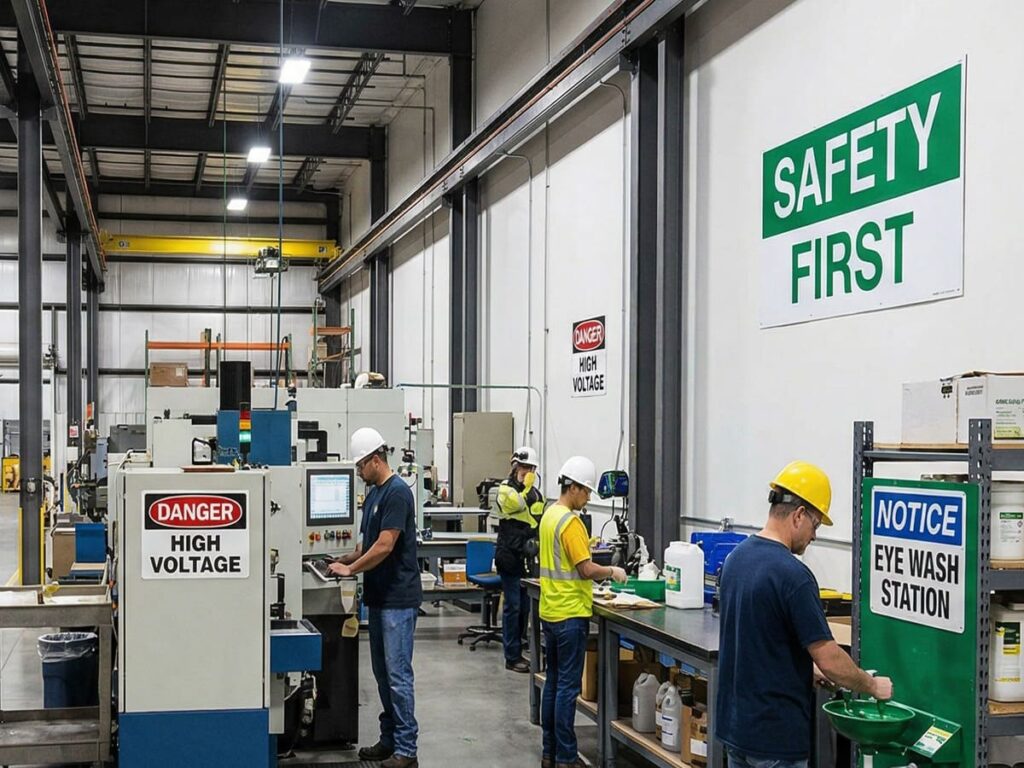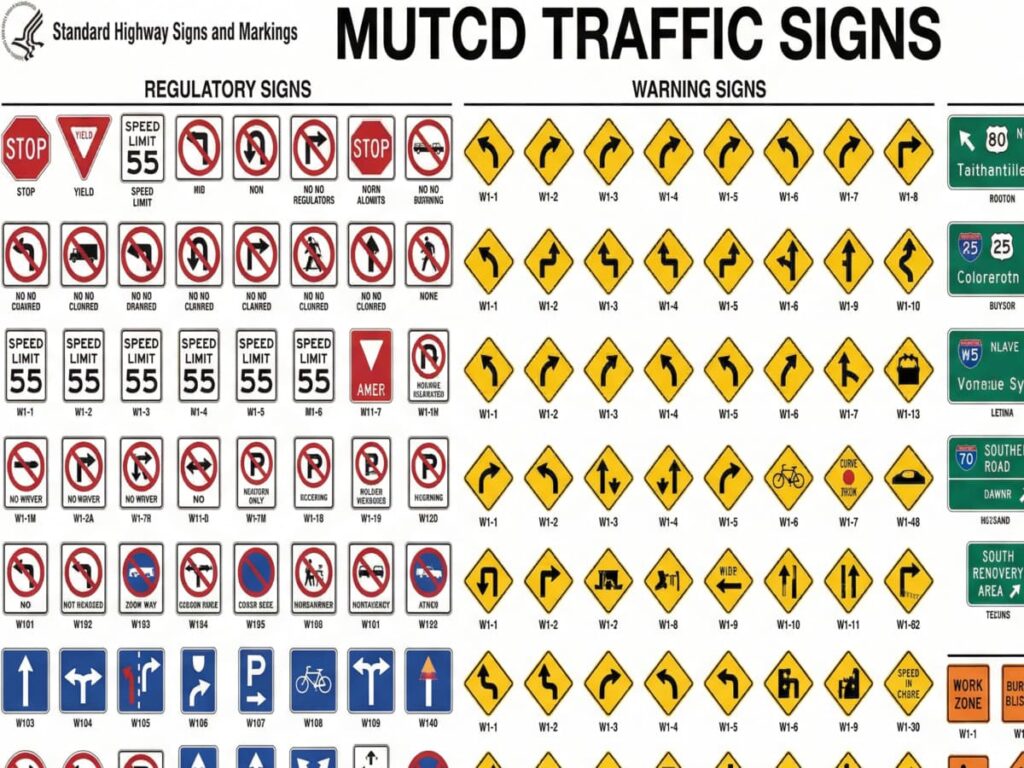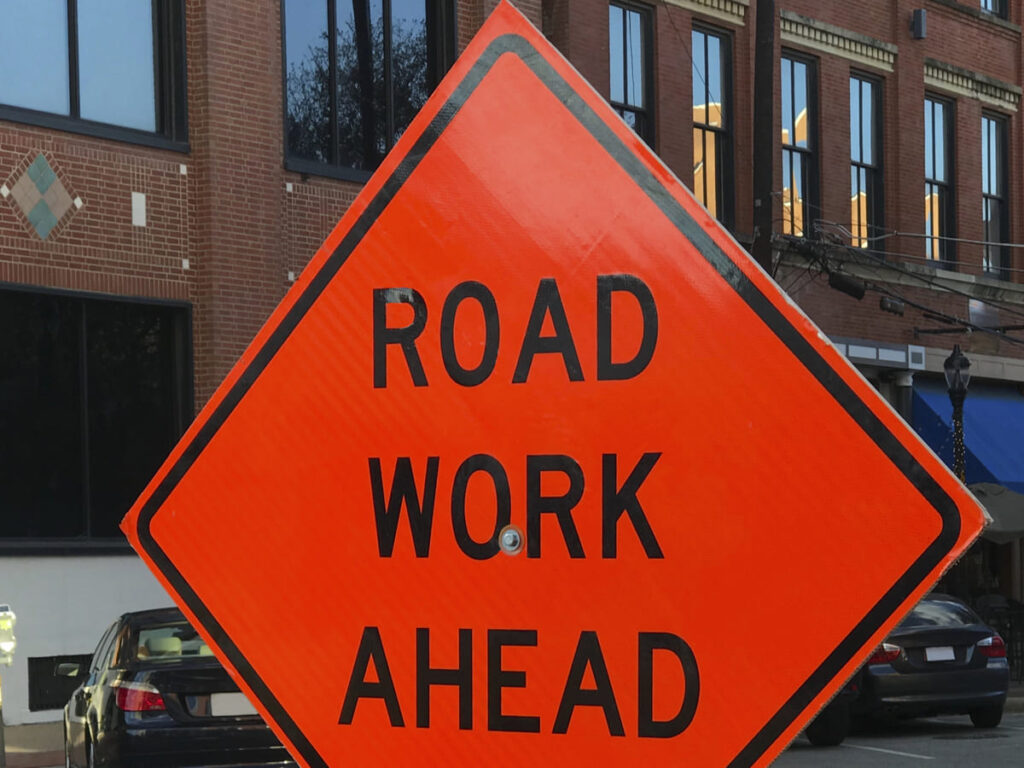
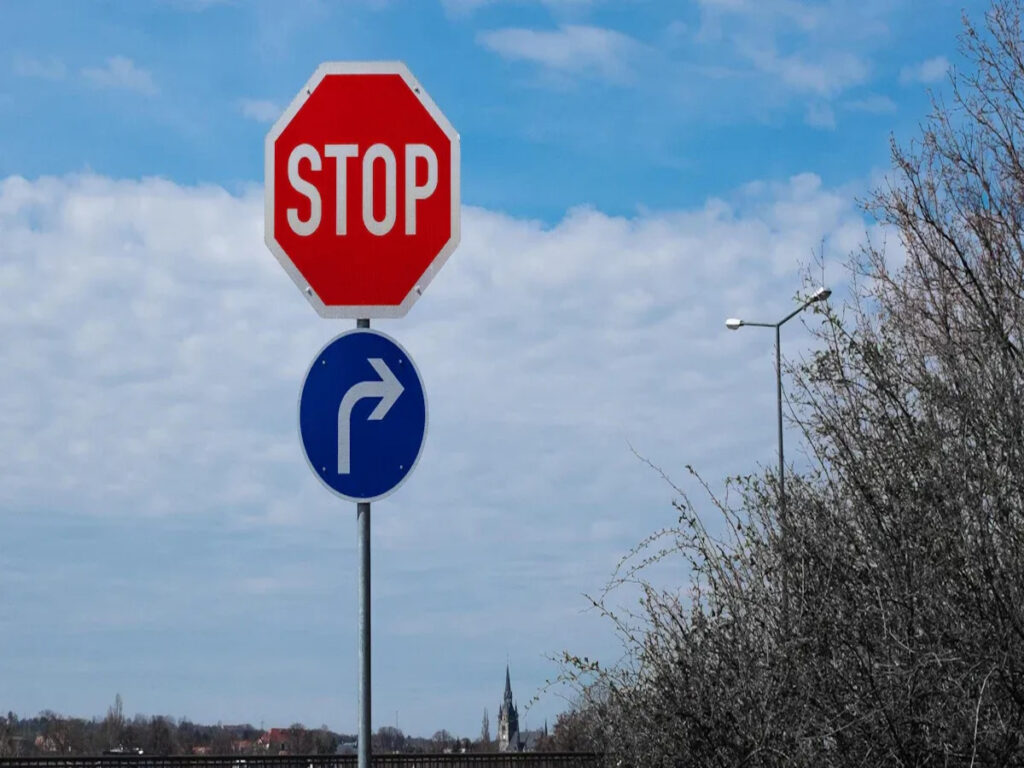
Chaque année, US state DOTs and municipal public works departments replace thousands of faded, endommagé, or non-compliant road signs. The single most effective way to reduce that replacement cycle is to specify laminated aluminum sheet dès le début. The laminate coating protects the retroreflective face from UV degradation, impact, et graffiti. Signs stay MUTCD-compliant longer. Replacement budgets stretch further. At Optraffic, we have supplied traffic safety signage materials to DOT contractors, city governments, and construction firms across the United States for over ten years. This guide gives US procurement teams the technical data, compliance references, and buying criteria needed to specify the right sheet on every project.
For a full comparison of aluminum surface finishes, lire notre guide: Guide complet des feuilles d'aluminium transformées: Feuilleté, Liné, Brossé, Et plus.
Principaux à retenir
- Laminated aluminum sheet meets MUTCD retroreflectivity requirements for all US highway and street sign categories.
- The laminate film extends sign service life to 10-15 années, reducing DOT replacement frequency and capital spend.
- ASTM B117 salt spray and ASTM D4956 retroreflectivity testing confirm compliance before shipment.
- Maintenance requires only warm water and a soft cloth — no specialist chemicals or repainting.
- Thickness selection must follow FHWA guidelines: match gauge to wind-load zone and sign category.
What Is a Laminated Aluminum Sheet?
Structure and Composition
A laminated aluminum sheet combines a structural aluminum alloy core with a factory-applied protective film. The core uses either 6063-T5 or 5052-H38 alloy. Both alloys meet the strength and corrosion resistance requirements that US sign fabricators and AASHTO specifications demand. Manufacturers bond the laminate film to the aluminum surface under heat and controlled pressure. This creates a permanent seal that outlasts field-applied coatings by a significant margin.
Standard laminate films use polyethylene (PE) or polyester (ANIMAL DE COMPAGNIE). Premium grades use polyvinylidene fluoride (PVDF) or polyvinyl fluoride (PVF). These fluoropolymer coatings are the same chemistry used in architectural cladding on major US federal buildings. They provide the longest UV and chemical resistance available in sheet-format signage substrates.
Industry context: The US Federal Highway Administration (Fhwa) mandates retroreflective sheeting on all roadway signs under 23 Partie CFR 655. Laminated aluminum substrate protects that sheeting from delamination and UV degradation — directly extending MUTCD compliance periods.
Laminated Aluminum Sheet — Component Summary
| Composant | Matériel | Fonction |
| Aluminium de base | 6063-T5 or 5052-H38 alloy | Structural strength, résistance à la corrosion |
| Film stratifié | PE, ANIMAL DE COMPAGNIE, PVDF, or PVF | UV block, scratch resistance, moisture barrier |
| Adhesive Bond Layer | Thermosetting resin | Permanent adhesion, delamination prevention |
Available Finishes
| Finition | Apparence | US Application | MUTCD Relevant? |
| Brillant | High-shine, vivid color | Vente au détail, publicité | Non |
| Mat | Non-glare, aspect épuré | Indoor directories | Non |
| Métal brossé | Steel-like texture | Architectural signage | Non |
| Réfléchissant (Type I–IV) | Rétroréflectivité élevée | All roadway signs | YES — required |
Technical Specification Table: US-Grade Laminated Aluminum Sheets
The table below provides the specifications Optrafic supplies for US municipal, POINT, and highway construction orders. All test standards reference US and ASTM norms.
| Paramètre | Standard Grade (Urban/Local) | Autoroute / DOT Grade |
| Alliage | 6063-T5 | 5052-H38 |
| Épaisseur | 0.063″ – 0.125″ (1.6–3.2mm) | 0.125″ – 0.250″ (3.2–6.4mm) |
| Laminate Coating | PE or PET film | PVDF or PVF fluoropolymer |
| Torsion rétroréflective | ASTM D4956 Type I or III | ASTM D4956 Type III or IV |
| Résistance aux UV | 7–10 ans (direct sun) | 10–15 ans (fluoropolymer) |
| Operating Temp Range | -22°F to 176°F (-30°C à +80°C) | -40°F à 194°F (-40°C to +90°C) |
| Résistance à la corrosion | 500 hours — ASTM B117 | 1,000+ hours — ASTM B117 |
| Conformité MUTCD | 23 CFR 655 / Mutcd 2009 R2+ | Mutcd 11e édition (2023) |
| Standard Sheet Size | 48″ × 96″ (1,220 × 2,440mm) | 48″ × 96″ or custom cut |
| Min.. Quantité de commande | Project-based — contact Optraffic | Project-based — contact Optraffic |
Performance Properties: Why US Sign Fabricators Specify Laminated Aluminum
Scratch and Impact Resistance
Urban street signs face daily contact from maintenance crews, passing vehicles, et piétons. The laminate film absorbs surface scratches before they reach the retroreflective sheeting. Damaged sheeting loses retroreflectivity and fails MUTCD compliance inspections. A laminated aluminum sheet keeps the reflective face intact and the sign compliant between inspection cycles.
UV Stability in US Climate Zones
The US presents a wider range of UV exposure than most markets. Signs in Phoenix, AZ or Miami, FL receive UV doses that degrade unprotected sheeting within two to three years. The Pacific Northwest and Upper Midwest present freeze-thaw cycling and moisture challenges instead. Laminate formulations address both failure modes. Standard PE laminate protects signs in northern states. PVDF-coated sheets handle the high-UV South and Southwest. Both maintain retroreflectivity within MUTCD minimums for their rated service life.
Weatherproof Performance Across US Regions
Coastal installations from Maine to the Gulf Coast face corrosive salt air. Inland highway signs in the Mountain West face UV, temperature extremes, and wind-driven debris. Heavy-duty grade sheets pass 1,000-hour salt spray testing to ASTM B117. This performance rating satisfies the corrosion resistance requirements specified by most US state DOTs in their standard sign material specifications. For the full technical breakdown, read our analysis of the weatherproof performance of aluminum traffic signs.
Easy Maintenance — Critical for Municipal Budgets
Municipal public works departments operate on fixed maintenance budgets. Laminated aluminum signs require no repainting, no chemical treatment, and no specialist labor for cleaning. Crews remove road grime, graffiti, and winter road salt residue with warm soapy water and a soft brush. A quarterly wipe-down keeps signs within MUTCD retroreflectivity thresholds and passes state DOT inspection.
Conseil d'entretien: Include a simple quarterly sign inspection log in your municipal maintenance program. Document retroreflectivity readings with a handheld retroreflectometer. This creates a compliance record and identifies replacement candidates before they fail inspection.
For a complete overview of performance advantages, voir laminate durability and performance benefits for road safety signs.
US Signage Applications: Where Laminated Aluminum Sheets Perform Best
For a full breakdown of use cases, read our guide to applications of laminated aluminum sheets in road and traffic signage.
MUTCD-Compliant Road and Highway Signs
Le Mutcd (Manuel sur les dispositifs de contrôle de la circulation uniformes) governs every roadway sign in the United States. Le 2023 11th Edition updated retroreflectivity minimums and sheeting type requirements for regulatory, avertissement, et guide des panneaux. Laminated aluminum sheet provides the stable, flat substrate that retroreflective sheeting manufacturers require for proper adhesion and long-term performance. Villes, counties, and state DOTs across the US specify aluminum because it does not rust, does not warp under thermal cycling, and maintains sign flatness for the full compliance period.
MUTCD Compliance Note: La 11ème édition (efficace 2023) requires Type III or Type IV sheeting on overhead and highway guide signs, and Type I or higher on all other roadway signs. Specify the correct retroreflective laminated grade to ensure compliance at your next DOT inspection.
Construction Zone Temporary Signage (OSHA / Partie MUTCD 6)
Partie MUTCD 6 et Osha 29 CFR 1926.201 both require retroreflective signs in temporary traffic control zones. Laminated aluminum sheets rated for temporary use (0.080″ to 0.125″ jauge) withstand the frequent installation, suppression, and redeployment that construction zone signage demands. The laminate surface resists abrasion from straps, storage contact, and field handling. Signs reuse across multiple projects without losing retroreflectivity compliance.
Advertising Boards and Commercial Signage
Property developers and retailers across the US choose laminated aluminum composite panels for outdoor advertising. The composite core prevents warping under the thermal expansion cycles common in continental US climates. UV-stable laminate protects printed graphics from fading across summer-to-winter temperature swings from -20°F to 110°F. Panels stay flat, sharp, and professionally presented for years without repainting.
Indoor and Outdoor Corporate and Campus Signage
| Environnement | Example US Applications | Épaisseur (pouces) | Avantage clé |
| Intérieur | Federal buildings, hospital wayfinding, campus directories | 0.020″–0.040″ | ADA-compliant finish, léger |
| Outdoor Urban | Panneaux de rue City, park signs, business districts | 0.063″–0.125″ | Wind-rated, imperméabiliser, graffiti-resistant |
| Autoroute / POINT | Interstate guide signs, portes aériennes, zones de construction | 0.125″–0.250″ | Conforme MUTCD, FHWA wind-load rated |
How to Evaluate Any Laminated Aluminum Sheet Supplier for US DOT Projects
US state DOT contracts and federal-aid highway projects require documented, verifiable material compliance. The supplier you choose must meet a specific set of technical and regulatory thresholds — not just claim to. Use the criteria below to qualify any laminated aluminum sheet supplier before placing a bulk order.
Criterion 1 — ASTM Material Testing Documentation
Any credible supplier ships laminated aluminum sheet with third-party or in-house test reports attached. Request two documents before ordering. D'abord, an ASTM B117 salt spray test report confirming the substrate withstands a minimum of 500 hours without corrosion for standard grade, ou 1,000 hours for highway-grade applications. Deuxième, an ASTM D4956 retroreflectivity test report confirming the sheeting type (Type I, III, or IV) meets the minimum candela values required by MUTCD for your sign category. A supplier that cannot produce these reports on request does not meet the baseline for US DOT procurement.
What to ask: ‘Can you provide the ASTM B117 and ASTM D4956 test reports for this specific product batch?’ A reputable supplier answers yes within 24 heures.
Criterion 2 — MUTCD Sheeting Type Traceability
The MUTCD requires specific retroreflective sheeting types for each sign category and road class. Your supplier must identify the exact ASTM D4956 sheeting type bonded to each sheet they sell. Verify the sheeting type against the table below before specifying for any US roadway project.
| Type ASTM D4956 | MUTCD Category | Required US Application | Minimum RA (CD / LX / M²) |
| Type I | Grade d'ingénieur | Rues résidentielles, parking, routes à basse vitesse | 70 (blanc) |
| Type III | Haute intensité | Urban arterials, collector roads, state highways | 250 (blanc) |
| Type IV | Grade de diamant | Autoroutes, US highways, portes aériennes | 380 (blanc) |
Criterion 3 — Alloy Grade and Gauge Verification
Sign substrate performance depends on both alloy selection and gauge. Ask your supplier to confirm the alloy designation (6063-T5 for standard urban applications, 5052-H38 for highway and high-wind-load installations) and the gauge in decimal inches on their packing documentation. Gauge tolerance should not exceed ±0.005″ from the specified dimension. Suppliers who list only millimeter measurements without alloy designation are typically not supplying to US DOT-grade specifications.
Criterion 4 — Laminate Film Type and Adhesion Method
The laminate film chemistry determines UV resistance and service life. PE or PET films suit moderate-UV environments (USDA Plant Hardiness Zones 3–7, roughly the northern half of the US). PVDF or PVF fluoropolymer films are required for high-UV and coastal environments (Zones 8–13, covering the Sun Belt, Côte du Golfe, and Hawaii). Ask the supplier to confirm the film chemistry in writing and specify whether the laminate is factory-applied under heat and pressure or field-applied. Only factory-applied lamination provides the consistent adhesion required for 10+ year service life under MUTCD inspection cycles.
For a side-by-side comparison of laminated and non-laminated options, lire: Laminated vs. Non-Laminated Aluminum Sheets for Signage.
Criterion 5 — Total Cost of Ownership, Not Unit Price
US municipal procurement teams frequently select sign substrates based on unit price alone, then absorb higher replacement and maintenance costs over the contract period. The correct evaluation metric is cost per sign-year, not cost per sheet. Le price factors and cost-value analysis for aluminum sheets provides a full framework for calculating lifecycle cost across substrate types.
| Substrat | Avg. Durée de vie | Exigence d'entretien | 10-Year Cost Assessment |
| Feuille d'aluminium laminée | 10–15 ans | Quarterly wipe only | Lowest lifecycle cost |
| Métal peint traditionnel | 3–5 ans | Annual repainting required | 2–3× replacement cycles |
| Plastique / Polycarbonate | 2–4 years | UV yellowing, frequent swap | Highest replacement cost |
Criterion 6 — Urban Sign Program Maintenance Compatibility
For city and county public works departments, supplier compatibility with ongoing maintenance programs matters as much as initial product quality. Confirm that the supplier’s laminated aluminum sheets are compatible with your city’s existing sign maintenance workflow — specifically, that the laminate surface accepts standard retroreflectivity measurement by handheld retroreflectometer without surface preparation. Read how laminate coating supports urban traffic sign maintenance programs for a detailed operational breakdown.
| Supplier Evaluation Checklist — Quick Reference ✔ ASTM B117 salt spray test report available (500 hrs standard / 1,000 hrs highway) ✔ ASTM D4956 sheeting type confirmed in writing (Type I / III / Iv) ✔ Alloy grade (6063-T5 or 5052-H38) and gauge in decimal inches on documentation ✔ Laminate film chemistry confirmed (PE/PET for north; PVDF/PVF for Sun Belt/coastal) ✔ Factory-applied lamination (not field-applied) ✔ Total lifecycle cost calculated per sign-year, not per sheet unit price |
US Bulk Buying Guide: How to Specify Laminated Aluminum Sheet Correctly
Étape 1 — Select the Right Gauge (Épaisseur) per FHWA Guidelines
Gauge selection determines structural performance and FHWA wind-load compliance. Le FHWA thickness guidelines for highway and urban aluminum traffic signs provide the authoritative reference for US procurement specs.
| Jauge (pouces) | Metric Equiv. | US Application | Mount / Support Requirement |
| 0.020″–0.040″ | 0.5–1,0 mm | Intérieur, sheltered facility signs | Composite back plate required |
| 0.063″–0.125″ | 1.6–3.2 mm | Rues urbaines, routes locales, zones de construction | Standard square or round post |
| 0.125″–0.188″ | 3.2–4.8 mm | Arterial roads, state highways | U-channel or breakaway post |
| 0.188″–0.250″ | 4.8–6.4 mm | Interstate overhead gantries, zones à vent | Structural steel support — FHWA mandated |
For a full pros-and-cons breakdown for each gauge category, voir notre guide: pros and cons of aluminum road sign thickness options.
Étape 2 — Specify the Correct Laminate Grade for Your Climate Zone
Standard PE or PET laminate suits the northern and Pacific Northwest states where UV exposure is moderate. Specify PVDF or PVF fluoropolymer film for installations in the Sun Belt, Côte du Golfe, desert Southwest, and coastal regions. The fluoropolymer grade costs more upfront but reduces replacement cycles significantly over a 15-year DOT contract period.
Étape 3 — Select Retroreflective Sheeting Grade per MUTCD
| Type de feuille | ASTM D4956 Grade | US Road Application | Niveau de coût |
| Non réfléchi | N / A | Intérieur, off-road, décoratif | Le plus bas |
| Grade d'ingénieur | Type I | Rues résidentielles, parkings | Faible |
| Haute intensité | Type III | Urban arterials, county roads | Modéré |
| Grade de diamant | Type IV | Autoroutes, US highways, portes aériennes | Prime |
Étape 4 — Verify Supplier Credentials for US DOT Procurement
US state DOT contracts and federal-aid highway projects require documented material compliance. Avant de passer une commande groupée, request: ASTM B117 salt spray test reports, ASTM D4956 retroreflectivity certifications, ISO 9001 quality management certificate, and country-of-origin documentation for Buy America compliance reviews. Use our aluminum sheet supplier evaluation checklist for traffic sign procurement to structure your vendor qualification process.
Foire aux questions
What are the benefits of laminated aluminum sheets for US road signs?
Laminated aluminum sheets deliver five measurable benefits for US road sign programs. D'abord, the laminate coating protects ASTM D4956 retroreflective sheeting from UV degradation, extending MUTCD compliance periods by 3-5 years beyond uncoated alternatives. Deuxième, the film resists physical damage from road debris, maintenance contact, et le vandalisme. Troisième, le 5052 ou 6063 alloy core resists corrosion without painting or chemical treatment. Fourth, the smooth laminate surface repels graffiti and road salt residue, cleaning easily without specialist labor. Fifth, the material satisfies FHWA structural requirements for sign substrates across all US climate zones.
How long do laminated aluminum sheets last in US outdoor conditions?
Standard PE or PET laminated aluminum sheets deliver 7-10 years of outdoor service life with quarterly cleaning in most US climate zones. Fluoropolymer-coated sheets (PVDF or PVF) extend service life to 10-15 années, including in high-UV environments like Arizona, Floride, et le Texas, and high-corrosion zones along the Gulf and Atlantic coasts.
Does laminated aluminum sheet meet MUTCD requirements?
Oui. Laminated aluminum sheet serves as the substrate for ASTM D4956 retroreflective sheeting, which is the material that directly satisfies MUTCD retroreflectivity requirements under 23 Partie CFR 655. Specify the correct retroreflective sheeting type (Type I through Type IV) for your sign category and road classification. The laminate layer protects that sheeting and extends its compliant service life. Optraffic supplies documentation confirming sheeting type and substrate compliance for US DOT procurement records.
What gauge should US municipalities specify for street signs?
The FHWA recommends 0.080″ (2.0mm) gauge as the standard for urban and suburban street signs on local and collector roads. Use 0.100″ to 0.125″ (2.5–3.2mm) for arterial roads and higher-speed environments. Overhead and interstate signs require 0.188″ to 0.250″ (4.8–6.4mm) with structural support. Always cross-reference your local DOT standard specifications before finalizing gauge. Optraffic’s technical team provides free gauge recommendation support for US municipal procurement inquiries.
Can laminated aluminum signs handle US winter conditions?
Oui. Standard grade sheets perform reliably from -22°F to 176°F (-30°C à +80°C). The heavy-duty fluoropolymer grade extends that range to -40°F to 194°F (-40°C to +90°C). The laminate film does not crack, délaminer, or lose adhesion through freeze-thaw cycles. The aluminum substrate resists corrosion from road deicing salts. Northern US state DOTs in Minnesota, Michigan, and New England regularly specify laminated aluminum for year-round sign performance.
Are laminated aluminum sheets safe for indoor use in US public buildings?
Oui. Laminated aluminum panels emit no volatile organic compounds (COV) under normal indoor conditions. They meet standard ADA sign substrate requirements when finished with appropriate tactile elements. Hôpitaux, federal buildings, transit hubs, and university campuses across the US use laminated aluminum panels for interior directories, façon d'orientation, and room identification signage without health or safety concerns.
Conclusion: Specify Laminated Aluminum Sheets with Confidence
For US municipal buyers, DOT contractors, and construction procurement teams, laminated aluminum sheet is the clear choice for road and traffic signage that must perform across a decade or more. The combination of a proven alloy core, factory-bonded laminate film, and ASTM-tested retroreflective sheeting delivers MUTCD compliance, résistance à la corrosion, and minimal maintenance cost in a single specified material.
Optrafic supplies ASTM-documented, MUTCD-compliant laminated aluminum sheets — backed by ISO 9001 quality assurance and over ten years of service to contractors.
Ready to specify for your next project? Browse our full range of safety signage products — including laminated aluminum sheets in standard and heavy-duty grades — on our Safety Signage Products page. Our technical team is available to support gauge selection, laminate grade specification, and bulk order documentation for any US DOT or municipal project.