Introduction: La norme mondiale pour la signalisation des travaux routiers de construction
Pour les entrepreneurs internationaux et les responsables des achats, approvisionnement panneaux de travaux routiers de construction n'est pas un “taille unique” processus. Un panneau qui assure votre sécurité à New York pourrait entraîner la fermeture de votre site à Londres.
La différence réside dans deux bibles réglementaires distinctes: le MUTCD AMÉRICAIN (Manuel sur les dispositifs de contrôle de la circulation uniformes) et le Chapitre britannique 8 (Manuel des panneaux de circulation). Alors que les deux visent à protéger les travailleurs et à guider les conducteurs, ils utilisent des langages visuels complètement différents : les formes, couleurs, et la terminologie.
Mélanger ces normes est dangereux. Un conducteur formé à rechercher un losange orange peut réagir trop lentement à un triangle rouge. Cet article détaille les différences essentielles dans panneaux de travaux routiers de construction entre les marchés américain et britannique, garantir que votre projet reste conforme des deux côtés de l’Atlantique.
Fabrication mondiale: Optrafic produit les deux Signes conformes à MUTCD (Amérique du Nord) et Panneaux conformes au chapitre 8 (Royaume-Uni/Europe). Contactez-nous pour préciser vos besoins régionaux.
Normes visuelles pour les panneaux de signalisation des travaux routiers de construction: Orange contre. Rouge
La différence la plus immédiate en comparant panneaux de travaux routiers de construction est la palette de couleurs et la géométrie.
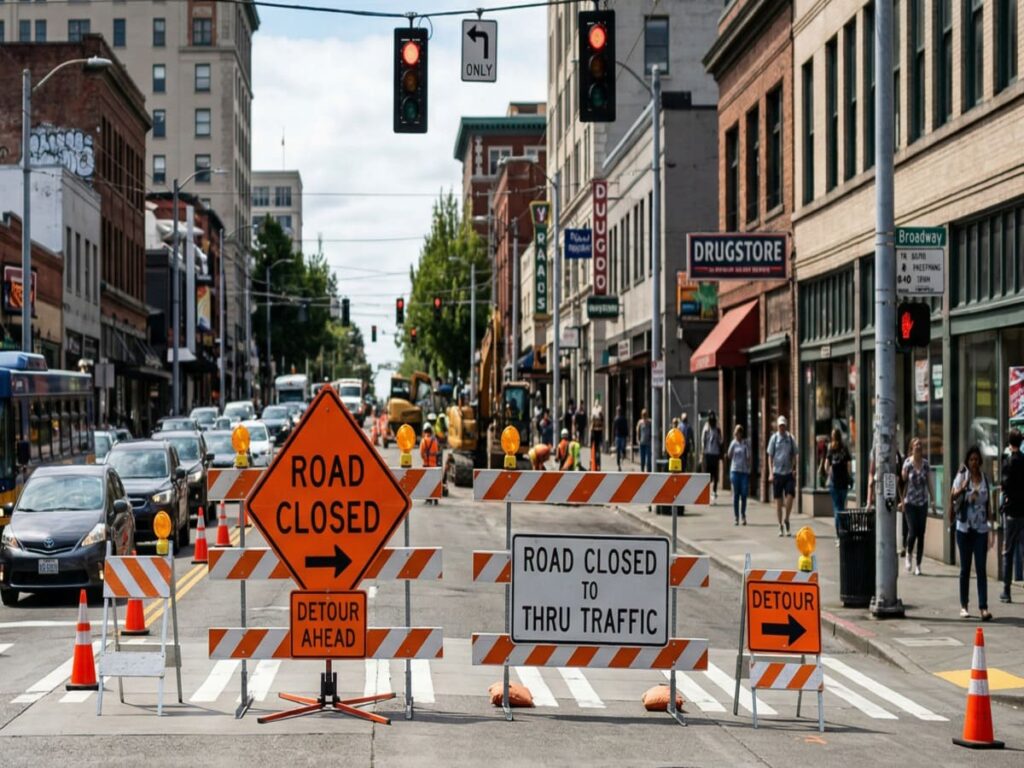
1. Norme américaine (Mutcd): Le diamant orange
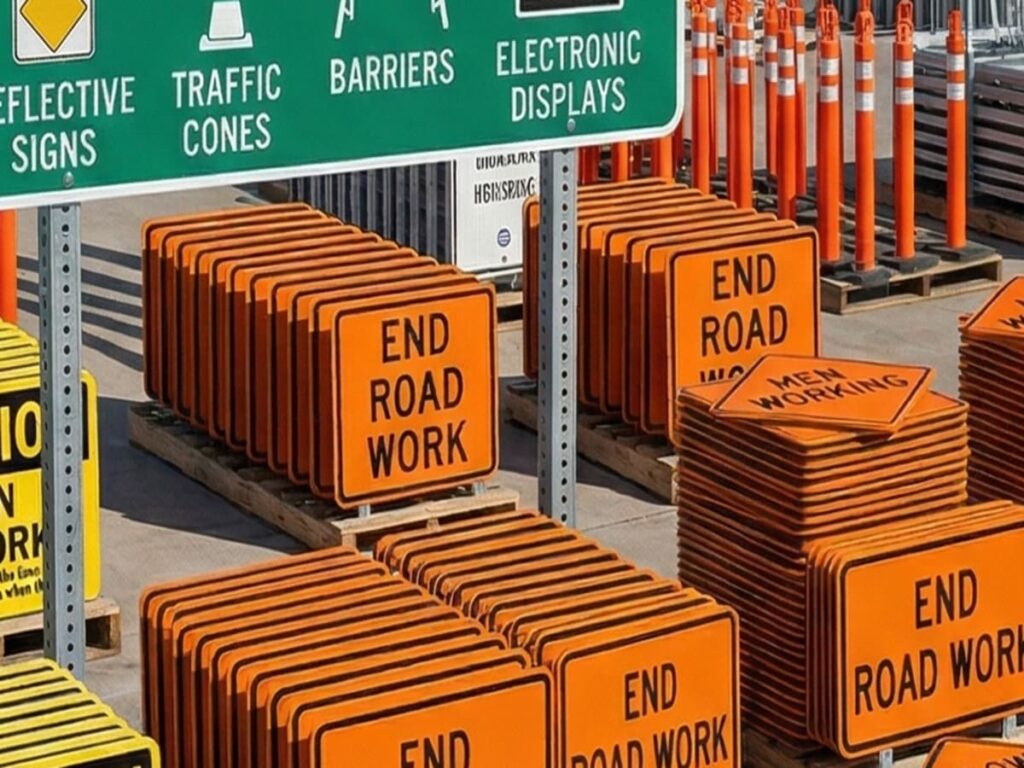
Aux États-Unis, panneaux de travaux routiers de construction sont définis par l'orange fluorescent à haute visibilité.
- Forme: Diamant (Rhombe).
- Couleur: Fond orange avec légendes/symboles noirs.
- Philosophie: Le texte est fortement utilisé (Par exemple, “Travail sur la route à venir,” “Soyez prêt pour vous arrêter”).
- Matériel: Doit répondre à la norme ASTM D4956 Type IV (Prismatique à haute intensité) ou Type XI (Grade de diamant) rétro -flectivité.
Pour les bases de la réflectivité et du placement, voir le complet Guide des panneaux de signalisation des travaux routiers à venir.
2. Norme britannique (Chapitre 8): Le Triangle Rouge
Au Royaume-Uni, panneaux de travaux routiers de construction suivre la convention européenne.
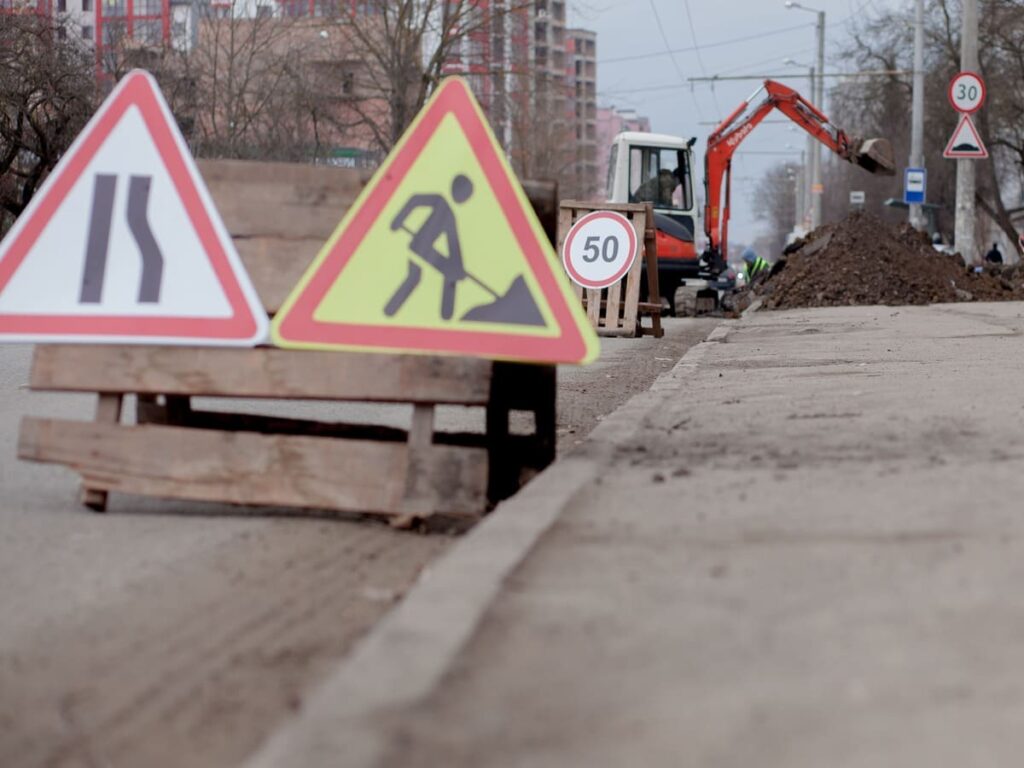
- Forme: Triangle équilatéral (pointer vers le haut).
- Couleur: Fond blanc avec une large bordure rouge et des symboles noirs.
- Philosophie: Les symboles sont prioritaires pour surmonter les barrières linguistiques. Plaques de texte supplémentaires (rectangulaire) sont ajoutés ci-dessous le triangle si besoin.
- Matériel: Doit répondre à BS EN 12899-1:2007 Normes classe RA1 ou RA2.
Terminologie sur les panneaux de signalisation des travaux routiers: “Travail” contre. “Travaux”
L'un des aspects les plus déroutants de la commande panneaux de travaux routiers de construction est la terminologie. La différence d'une seule lettre—”s”— peut rendre un panneau non conforme dans sa région respective.
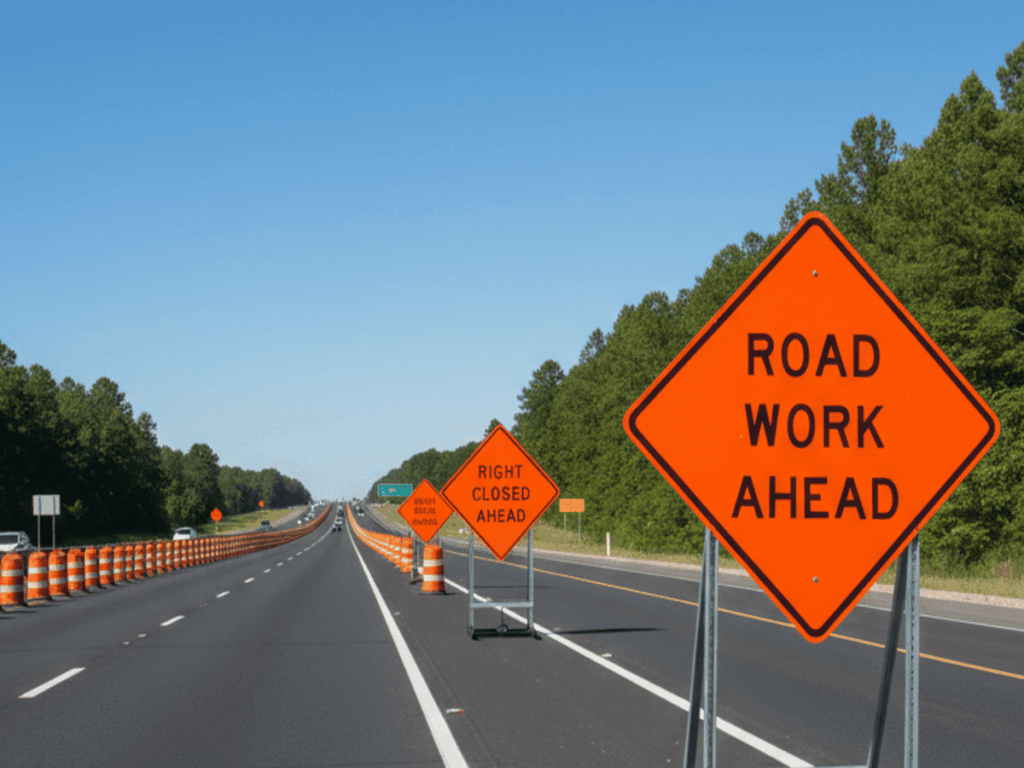
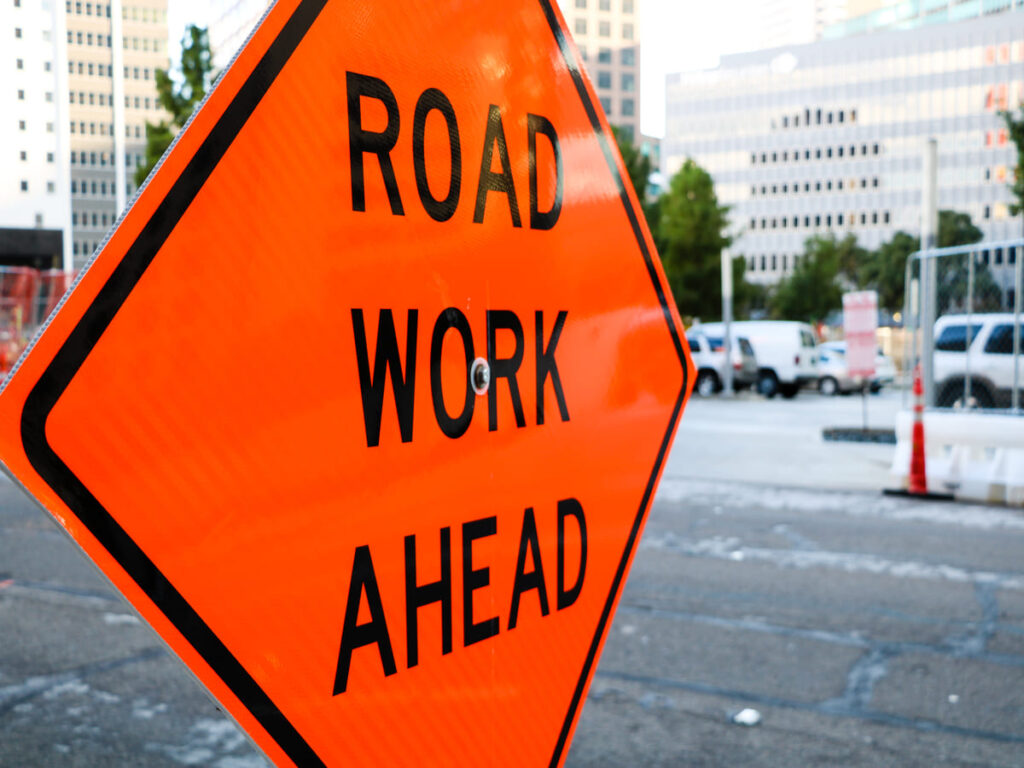
1. NOUS: Travail sur la route à venir (W20-1)
La primaire signe de travaux routiers de construction aux États-Unis, c'est le Panneau de travaux routiers à venir.
- Singulier: Les États-Unis utilisent “Travail” (singulier) pour décrire le condition de la chaussée.
- Conception: Un diamant orange avec texte uniquement.
- Usage: Mis 100 à 1,000 pieds devant l'espace de travail.
2. ROYAUME-UNI: Travaux routiers à venir (Diagramme 7001)
La primaire signe de travaux routiers de construction au Royaume-Uni est le symbole des travaux routiers.
- Pluriel: Le Royaume-Uni utilise “Travaux” (pluriel) pour décrire le activités d'ingénierie ayant lieu.
- Conception: Un triangle rouge comportant un “Homme creusant” symbole.
- Plaque de texte: Souvent accompagné d'une plaque rectangulaire jaune ou blanche “Travaux routiers” ou “Fin des travaux routiers.”
À retenir: Si vous recherchez panneaux de travaux routiers de construction avec le texte “Travaux routiers à venir” aux États-Unis, vous utilisez la terminologie britannique. Si vous commandez “Travail sur la route à venir” pour un site britannique, il sera rejeté par l'inspecteur de sécurité.
Panneaux de navigation pour travaux routiers: Détour vs. Dérivation
Quand une route est fermée, vous devez fournir un itinéraire alternatif. Cependant, le panneaux de travaux routiers de construction utilisés pour guider le trafic diffèrent radicalement en termes de couleur et de logique entre les États-Unis et le Royaume-Uni..
1. Norme américaine: Signes de détour
Aux États-Unis, navigation panneaux routiers de construction sont presque exclusivement basés sur du texte et codés par couleur Orange.
- Le terme: “DEVIATION”.
- Visuels: Un rectangle orange avec une flèche noire et le mot “DEVIATION” (M4-9).
- Logique: Les conducteurs suivent une piste de panneaux textuels (Par exemple, “Détourner,” “Fin du détour”).
- Matériel: Ceux-ci sont souvent montés sur des poteaux en bois ou sur des patins temporaires.
2. Norme britannique: Panneaux de détournement (Symboles géométriques)
Au Royaume-Uni, le terme est “Dérivation,” et le système s'appuie sur des symboles géométriques plutôt que sur du texte pour réduire l'encombrement visuel.
- Le terme: “Dérivation”.
- Visuels: UN Jaune panneau rectangulaire avec un symbole noir (Cercle plein, Diamant creux, Triangle, ou Carré).
- Logique: Au lieu de lire “Tourner à gauche,” on dit aux conducteurs de “Suivez le cercle solide.” Cela évite toute confusion lorsque plusieurs déroutements se chevauchent dans une ville dense comme Londres..
- Piège de conformité: Si vous commandez de l'orange panneaux de travaux routiers de construction pour une route de déviation au Royaume-Uni, ils seront rejetés. Vous devez utiliser les panneaux à symboles spécifiques à dos jaune définis au chapitre 8.
Panneaux de contrôle du trafic de construction: Drapeaux contre. S'arrêter / aller
Les panneaux avertissant du contrôle de la circulation humaine sont essentiels pour la sécurité des travailleurs. La terminologie et le matériel pour ceux-ci panneaux de travaux routiers de construction sont complètement distincts.
1. Norme américaine: Flags à venir
- Le signe: Le Signe de drapeau à venir est un diamant orange comportant le symbole d'une personne tenant un drapeau ou une pagaie.
- L'appareil: Le contrôleur humain est appelé un “Drapeaux.” Ils utilisent une pagaie Stop/Slow.
- Placement: Le signe est placé dans le “Zone d'avertissement à l'avance,” typiquement 500 pieds devant la station de signalement.
2. Norme britannique: Contrôle de la circulation à venir (Diagramme 7010.1)
- Le signe: Le Royaume-Uni utilise un triangle rouge avec un “Homme avec panneau d'arrêt” symbole. La plaque supplémentaire indique “Contrôle de la circulation à venir” ou “Tableaux Stop/Go.”
- L'appareil: Le contrôleur humain est souvent appelé un “Maréchal” ou “Opératoire.” Ils utilisent un Tableau Stop/Go—un disque rotatif sur un poteau (Vert “Aller” d'un côté, Rouge “Arrêt” de l'autre).
- La différence: Vous ne pouvez pas vendre une pagaie Stop/Slow de style américain à un entrepreneur britannique; ils nécessitent le mécanisme de carte Stop/Go rotatif.
Dispositifs de canalisation pour la signalisation des travaux routiers de construction: Barricades contre. Cônes
Au-delà des signes avant-coureurs eux-mêmes, le matériel utilisé pour bloquer physiquement les voies diffère considérablement. Si vous essayez de vendre des fûts en plastique de style américain à un site britannique, ils seront rejetés.
1. Norme américaine: Barricades de type III & Batterie
Aux États-Unis, panneaux de travaux routiers de construction sont souvent montés sur ou accompagnés de dispositifs de canalisation massifs.
- Le “Type III” Barricade: Un grand cadre avec trois rails horizontaux rayés orange et blanc (8-12 pieds de large). C'est la norme pour fermer physiquement une route.
- Fûts en plastique: Les États-Unis utilisent massivement de grandes, fûts en plastique orange (barils) pour cônes d'autoroute.
- Montage: Panneaux de travaux routiers de construction (comme “ROUTE BARRÉE”) sont fréquemment boulonnés directement sur ces barricades de type III.
Comprendre pourquoi les équipages s'appuient sur les systèmes de type III pour la visibilité et le contrôle des voies., lire Pourquoi les entrepreneurs choisissent les barricades de type III pour des besoins de construction complexes.
2. Norme britannique: Cônes de signalisation & Cylindres
Au Royaume-Uni, la philosophie est “moins de volume, plus de fréquence.”
- Le Cône de circulation: Le Royaume-Uni s'appuie presque exclusivement sur des cônes de signalisation de 750 mm ou 1 000 mm équipés de manchons rétroréfléchissants. (BS One 13422).
- Pas de batterie: Vous verrez rarement des fûts en plastique de type américain. Plutôt, le Royaume-Uni utilise des Cylindres de circulation (Délinateurs) pour séparer les voies dans les systèmes à contre-courant.
- Clôture de barrière: Pour la sécurité des piétons, le Royaume-Uni utilise des clôtures continues interconnectées plutôt que des barricades autonomes de type I ou II.
Terminaison: Panneaux de fin de travaux routiers
Chaque zone doit avoir une fin. Cependant, le libellé spécifique et la couleur du panneaux de travaux routiers de construction utilisés pour terminer la zone sont distincts.
1. Norme américaine: Mettre fin aux travaux routiers (G20-2)
- Le signe: Un panneau orange rectangulaire avec lecture de texte noir “FIN DES TRAVAUX ROUTIERS.”
- Placement: Mis 500 pieds au-delà de l'extrémité de l'espace de travail.
- Fonction: Il rétablit légalement la limitation de vitesse et signale la fin de la zone de double amende.
2. Norme britannique: Fin des travaux routiers
- Le signe: Une enseigne rectangulaire, mais souvent avec un fond Blanc (ni jaune ni orange) et lecture de texte noir “Fin des travaux routiers” (ou juste “Fin”).
- Plaque supplémentaire: Il est souvent fixé sous la forme d'une petite plaque au-dessous d'un “Route dégagée” ou “La limite de vitesse nationale s'applique” signe.
- Le “Travaux routiers” Pluriel: Encore, le Royaume-Uni adhère strictement au pluriel “Travaux” s'applique même en fin de zone.
Conclusion: Approvisionnement mondial en panneaux de signalisation pour travaux routiers
Que vous soumissionniez pour un projet d'autoroute en Californie ou un contrat d'entretien d'autoroute à Manchester, l'exigence est la même: conformité absolue.
Utilisation non conforme panneaux de travaux routiers de construction n'est pas seulement un risque réglementaire; c'est un piège à responsabilité. Un diamant orange de style américain déployé sur une route de dérivation au Royaume-Uni pourrait entraîner la fermeture du site, amendes massives, et polices d'assurance annulées en cas d'accident.
Optrafic est l'un des rares fabricants mondiaux capables de produire panneaux de travaux routiers de construction aux deux normes simultanément:
- Pour l'Amérique du Nord: Nous fournissons MUTCD signes de diamant orange fluorescent.
- Pour le Royaume-Uni/Europe: Nous fournissons Conforme au chapitre 8 signes du triangle rouge, cadres à montage rapide, et bs un 12899 matériaux réfléchissants.
FAQ: Questions courantes sur les panneaux de travaux routiers
Non. Ils font référence à différentes normes industrielles.
NOUS (Mutcd): Nécessite les normes ASTM D4956. La plupart des panneaux de construction sur les autoroutes doivent utiliser le type IV (Prismatique à haute intensité) ou Type XI (Grade de diamant) tasserie.
ROYAUME-UNI (Chapitre 8): Nécessite BS EN 12899-1 normes. Les classes équivalentes sont la classe RA1 (Grade d'ingénierie) pour routes à faible vitesse et classe RA2 (Haute intensité) pour autoroutes à grande vitesse. Vous ne pouvez pas mélanger ces certifications.
C'est la plus grande différence visuelle en dehors de la couleur.
NOUS: Les limites de vitesse de construction sont des panneaux rectangulaires avec un fond blanc et un texte noir (Par exemple, “LIMITE DE VITESSE ZONE DE TRAVAIL 45”).
ROYAUME-UNI: Les limites de vitesse obligatoires sont des panneaux circulaires (Cocardes) avec un fond blanc et une bordure rouge (Par exemple, un numéro “30” à l'intérieur d'un cercle rouge). Un panneau rectangulaire au Royaume-Uni est uniquement à titre d'information, pas d'application.
NOUS: Le bas du panneau doit être 1 pied (rural) ou 7 pieds (urbain) au-dessus du sol pour dégager les piétons.
ROYAUME-UNI: Les panneaux sont généralement montés sur “Cadres en A” ou “Cadres à montage rapide” plus près du sol (450mm jeu), mais doivent s'assurer qu'ils ne gênent pas les piétons “trottoirs” (trottoirs).
En général, Non.
NOUS: Utilise des feux d'avertissement clignotants de type A/B (Jaune) attaché aux panneaux de travaux routiers de construction.
ROYAUME-UNI: Utilise des lampes de travaux routiers (ambre fixe) pour la délimitation. Les feux clignotants sont réservés à des dangers spécifiques ou à des cônes d'entrée.