Préparer le terrain: Pourquoi l'aluminium définit la communication routière moderne
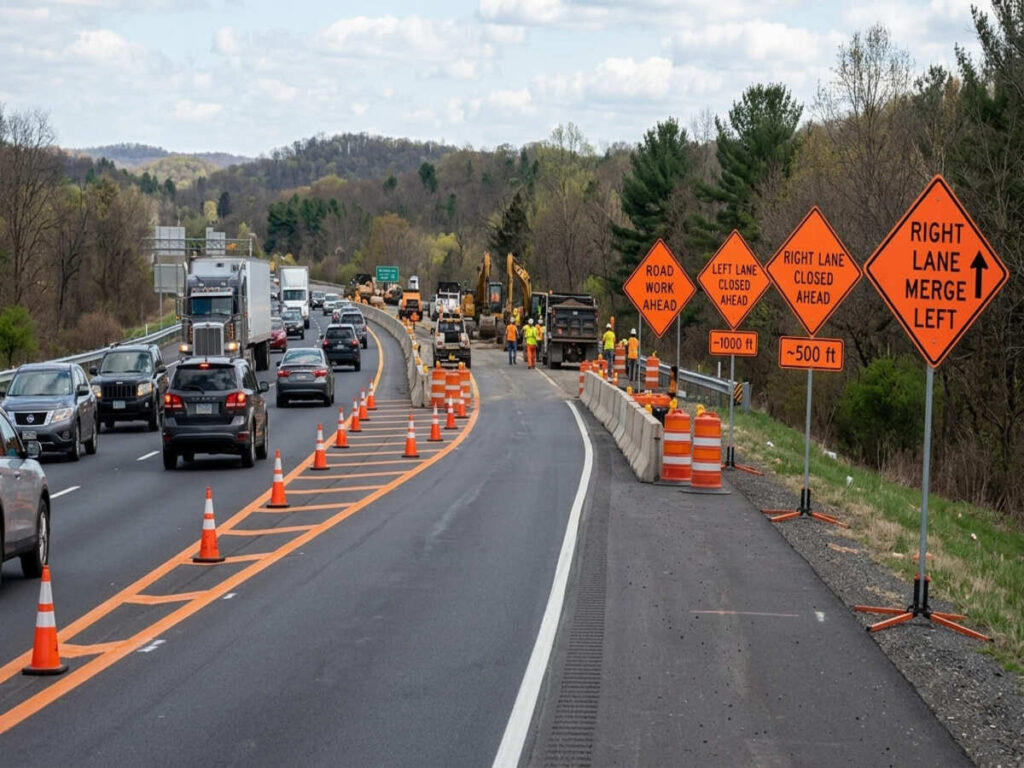
La signalisation routière a un poids de sécurité énorme. La FHWA rapporte que les taux de mortalité nocturne sont trois fois plus élevés que les taux diurnes., et 76 pour cent des décès de piétons surviennent la nuit tombée (Source: https://www.fhwa.dot.gov/innovation/everydaycounts/edc_7/nighttime_visibility.cfm). La visibilité des panneaux joue un rôle direct dans la réduction de cet écart.
La signalisation routière en aluminium occupe la position dominante dans les spécifications du DOT depuis les années 1980.. Le substrat combine une faible densité (2.7 g/cm³ par rapport à l'acier 7.85 g / cm³), forte résistance à la corrosion, et une recyclabilité presque parfaite. Ces trois propriétés déterminent les choix de spécifications pour les responsables des achats et les ingénieurs civils..
Ce guide sert aux ingénieurs qui rédigent des appels d'offres, capacité de dimensionnement des fabricants, et les gestionnaires d'actifs planifient les cycles de remplacement. Il passe par la sélection des alliages, épaisseur du panneau, fabrication, performance de la feuille, et conformité réglementaire dans le cadre de la 11e édition du MUTCD.
Science des matériaux des substrats en aluminium – Au-delà de la surface
La sélection du substrat détermine la durabilité, comportement de fixation, et le coût total. Comprendre l'intégralité transformation d'une bobine d'aluminium brut en panneaux routiers finis définit le contexte avant d'explorer les spécifications individuelles.
Sélection d'alliages - L'épine dorsale mécanique
Deux combinaisons d'alliage et de trempe dominent la fabrication de signalisation routière en aluminium: 5052-H38 pour les panneaux plats et 6061-T6 pour les extrusions structurelles.
Selon ASTM B209, 5052-H38 offre une résistance à la traction minimale de 270 MPa et une limite d'élasticité de 220 MPa à des jauges comprises entre 1,2 et 3,2 mm. L'alliage contient nominalement 2.5% magnésium et 0.25% chrome. Cette composition produit d'excellentes performances en fatigue et une excellente résistance à la corrosion marine..
6061-T6 atteint une résistance à la traction d'environ 310 MPa. Il gère également mieux l'usinage et le soudage que 5052. Les fabricants recherchent 6061 quand signer des cadres, structures à portique, ou les points de fixation sont soumis à des charges mécaniques importantes.
| Propriété | 5052-H38 | 6061-T6 |
| Résistance à la traction (min) | 270 MPA | 310 MPA |
| Limite d'élasticité (min) | 220 MPA | 276 MPA |
| Teneur en magnésium | 0.025 | 0.01 |
| Utilisation principale | Panneaux de signalisation plats | Cadres, publications, profilés |
| Classe de corrosion | Excellent (de qualité marine) | Très bien |
| Soudabilité | Excellent | Bien |
Source: Spécification standard ASTM B209-21a pour les tôles en alliage d'aluminium —https://store.astm.org/b0209_b0209m-21a.html
Résistance à la corrosion et performance environnementale
L'aluminium forme une couche d'oxyde auto-réparatrice qui résiste à la plupart des intempéries extérieures. Le 5052 l'alliage surpasse 5005 dans les ambiances marines, ce qui explique sa domination dans les spécifications côtières du DOT.
Les tests au brouillard salin selon ASTM B117 confirment la durabilité à long terme en extérieur. Les ingénieurs doivent toujours signaler un risque galvanique lorsque les panneaux en aluminium rencontrent des poteaux ou des fixations en acier.. Quincaillerie en acier inoxydable, rondelles en nylon, ou des isolateurs diélectriques résolvent le problème.
Finitions de surface et préparation du substrat
La finition usinée reste la valeur par défaut pour les applications rétroréfléchissantes. L'anodisation épaissit la couche d'oxyde pour une protection supplémentaire. Le revêtement en poudre et les finitions brossées sont utilisés dans les environnements d'orientation et de stationnement où les panneaux de signalisation en aluminium nécessitent des normes esthétiques plus élevées.. Avant l'application du revêtement, les fabricants convertissent chimiquement la surface selon ASTM B449 ou B921 pour garantir l'adhérence.
Sélection de l’épaisseur et du calibre du panneau de signalisation
L’épaisseur du panneau de signalisation favorise la planéité, résistance au vent, et durée de vie. Le spécifier correctement évite à la fois une défaillance prématurée et des coûts inutiles.
Jauges standard aux États-Unis. Pratique
Cinq épaisseurs couvrent la plupart des projets de signalisation routière en aluminium: 0.040″, 0.063″, 0.080″, 0.100″, et 0,125″. Le 0,080″ la jauge sert de norme de facto pour les panneaux de réglementation et d'avertissement des stocks.
Sélection de l'épaisseur du panneau de signalisation pour l'autoroute par rapport à. Utilisation urbaine
Panneaux routiers ci-dessus 30 les pieds carrés nécessitent généralement 0,100″ ou 0,125″ action. Signalisation réglementaire urbaine à 24h″×24″ ou 30″×30″ fonctionne bien à 0,080″. Les ingénieurs doivent exécuter des calculs de charge de vent AASHTO LTS-6 pour n'importe quel panneau ci-dessus. 24 pieds carrés. Pour une analyse plus approfondie, revoir le relation entre l'épaisseur du panneau de signalisation et l'environnement de déploiement.
Quand plus épais devient contre-productif
La surspécification augmente les coûts, poids, et charge de montage. La meilleure épaisseur pour les panneaux en aluminium équilibre les besoins structurels par rapport au budget et à la capacité des postes.. Un 4’×8′ panneau à 0,125″ pèse environ 56 livres. Le même panneau à 0,080″ pèse environ 36 livres. Cette différence de 20 livres façonne les exigences de l’équipe d’installation et la compatibilité des séparations. Les équipes d'approvisionnement examinent les compromis entre des panneaux plus épais et des panneaux plus minces découvre souvent que 0,100″ atteint le point idéal pour les enseignes de taille moyenne.
Poids des panneaux de signalisation en aluminium et planification structurelle
Calcul du poids des panneaux de signalisation en aluminium par pied carré
Le poids des panneaux de signalisation en aluminium suit une formule de densité simple. À la norme 5052-H38, le poids par pied carré est égal:
- 0.063″ panneau: 0.89 lb / sq ft
- 0.080″ panneau: 1.13 lb / sq ft
- 0.100″ panneau: 1.41 lb / sq ft
- 0.125″ panneau: 1.76 lb / sq ft
Un 30″×30″ Panneau STOP à 0,080″ pèse donc environ 7.1 livres avant de mettre les draps.
Ingénierie de la signalisation grand format
Les grands panneaux génèrent d'importantes charges de vent. Un 6’×12′ panneau de guidage exposé à 90 Le vent de conception en mph peut transmettre plusieurs milliers de livres de force au poteau.. Les ingénieurs civils doivent dimensionner les poteaux et les fondations en conséquence. Voir planification du poids pour la signalisation surdimensionnée dans les grands projets de circulation pour la méthodologie de calcul complète.
Logistique & Sécurité des chantiers: Protéger l'actif et l'équipage
La transition de l'usine au site d'installation est une phase critique où l'intégrité des matériaux et la sécurité du personnel doivent être prioritaires..
- Santé au travail & Sécurité (OH&S): Conformément aux normes de sécurité industrielle, tout panneau en aluminium dépassant 50 lbs (environ. 22.7 kg)-comme un 48″×48″ feuille à 0,125″ épaisseur – impose strictement un levage à deux personnes ou une assistance mécanique. Cela évite à la fois les blessures musculo-squelettiques de l'équipage et la chute accidentelle du substrat..
- Prévenir “Marbrures de pression” et abrasion superficielle: Alors que l'aluminium est robuste, la feuille réfléchissante appliquée sur le visage est sensible. Pendant le transport, les vibrations peuvent provoquer “marbrures de pression” (taches brunes) si les panneaux frottent les uns contre les autres. Nous vous recommandons d'utiliser du papier intercalaire non abrasif ou des espaceurs en mousse entre chaque face de panneau finie..
- Protection des bords & Sécurisation: Les bords en aluminium brut peuvent être suffisamment tranchants pour trancher l'emballage de protection. Des protections d'angle renforcées doivent être utilisées pendant la palettisation. Lors de l'arrimage des charges, assurez-vous que les cliquets ou les sangles robustes n'entrent pas en contact direct avec la face du panneau; utiliser des barres d'écartement ou des protecteurs de bords pour répartir la pression sur les bords structurels du substrat plutôt que sur la surface réfléchissante.
- Meilleures pratiques de stockage vertical: Dans la mesure du possible, transporter et stocker les panneaux finis verticalement (sur le bord) en rayonnage sur mesure. Empilage horizontal, spécialement pour les panneaux grand format, peut conduire à “gauchissement” ou déformation permanente des panneaux inférieurs due au poids cumulé.
Fabrication de panneaux de signalisation — De la bobine au panneau fini
La fabrication de panneaux de signalisation transforme la bobine d'aluminium en signalisation routière en aluminium prête à être conforme. Chaque étape affecte la qualité finale.
Découpage et préparation de surface
Les fabricants cisaillent ou bobines vierges à la taille nette, puis dégraisser et appliquer un revêtement de conversion chimique selon ASTM B449. Cette étape de préparation contrôle l’adhérence des feuilles. Le sauter provoque une argentée et un soulèvement des bords en quelques mois.
Coupe, Routage, et finition des bords
Routage CNC, jet d'eau, et la découpe au laser produisent tous des résultats acceptables. Chaque méthode comporte des compromis en termes de qualité des bords, tolérance, et débit. Ingénieurs examinant comment les méthodes de découpe influencent la qualité du panneau fini peut adapter le processus aux spécifications.
Application des feuilles et contrôle qualité
Les plastifieuses en rouleaux appliquent des feuilles rétroréfléchissantes sous pression contrôlée. Les inspecteurs vérifient les bulles, argenture, et précision dimensionnelle. Les tests d'adhérence selon ASTM D3359 confirment l'intégrité de la liaison avant l'emballage.
Personnalisation pour les exigences spécifiques au projet
La signalisation routière en aluminium couvre la plupart des besoins. De nombreux projets nécessitent encore une géométrie personnalisée, modèles de trous, ou finitions.
Travailler avec des fabricants de panneaux de signalisation en aluminium personnalisés
Les fabricants de panneaux de signalisation en aluminium personnalisés ont besoin de spécifications claires au stade de la demande de prix. Les équipes d'approvisionnement doivent fournir des alliages, jauge, dimensions, modèle de trou, type de feuille, et les exigences de certification. Les délais de livraison varient de deux semaines pour les ébauches découpées en stock à huit semaines pour les assemblages entièrement personnalisés.
Conformité réglementaire dans la conception visuelle: Couleurs & Légendes
La personnalisation ne signifie pas une dérogation aux normes. Même les panneaux les plus uniques doivent respecter des protocoles visuels stricts:
- Police & Symboles: Les légendes doivent suivre strictement le manuel de signalisation routière standard de la FHWA ou ses équivalents régionaux..
- Normes de chromaticité: Les couleurs doivent correspondre aux fenêtres de valeur Munsell définies par MUTCD ou aux coordonnées RAL/Pantone spécifiques pour l'image de marque institutionnelle..
- Méthodes d'application: En fonction du volume de production, les fabricants utilisent l’impression UV numérique, sérigraphie traditionnelle, ou coupe électronique durable (CE) superpositions translucides pour une lisibilité nocturne optimale.
L'ingénierie au-delà du rectangle: Géométrie de feuille sur mesure
Dans de nombreux projets d'infrastructures modernes, les tôles d'aluminium peuvent être adaptées pour répondre à des exigences géométriques non standard qui vont au-delà de simples carrés ou cercles. Cette flexibilité est essentielle pour:
- Panneaux directionnels surdimensionnés: Joindre facilement plusieurs feuilles pour les portiques routiers à grande portée.
- Dispositions de montage complexes: Pré-percé, Modèles de trous alignés avec précision qui correspondent aux systèmes de supports exclusifs ou aux structures de pont existantes.
- Contours esthétiques: Formes routées CNC pour l'orientation urbaine qui préservent l'intégrité structurelle tout en soutenant des visions architecturales uniques.
Conformité réglementaire et normes de l'industrie
La conformité protège les agences de toute responsabilité et qualifie les projets pour un financement fédéral. La signalisation routière en aluminium doit répondre à des normes réglementaires spécifiques.
Spécifications des panneaux en aluminium conformes à la norme MUTCD
La 11e édition du MUTCD est entrée en vigueur en janvier 18, 2024. Les États doivent l’adopter pleinement d’ici janvier 18, 2026. L'édition présente plus 900 des changements par rapport au 2009 manuel.
Les spécifications des panneaux en aluminium conformes au MUTCD exigent une rétroréflectivité minimale selon le tableau 2A-3., tailles standard selon le tableau 2A-1, et combinaisons couleur/forme approuvées. Les fonds rouges des panneaux STOP doivent conserver un coefficient de rétroréflexion minimum (RA) de 7 cd/lx/m² et légendes blanches 35 cd/lx/m² lors de l'utilisation de feuilles de type III.
AS / NZS 1365 Exigences en matière de signalisation en aluminium
AS / NZS 1365 les exigences en matière de signalisation en aluminium régissent la tolérance des feuilles pour l'Australie et la Nouvelle-Zélande. Combiné avec AS 1742, les normes définissent la précision dimensionnelle, finition, et traçabilité. Les contrats d'approvisionnement d'ANZ exigent généralement des rapports d'essais d'usine liés à chaque lot.. Voir le rôle de l'AS/NZS 1365 dans la qualité de signalisation ANZ pour plus de détails juridictionnels.
Documentation, Traçabilité, et certification
Les appels d’offres gouvernementaux exigent des documents. Les agents d'approvisionnement doivent demander des rapports d'essais d'usine (MTR), certifications des fabricants de feuilles, et déclarations de conformité ASTM D4956. Les résultats des laboratoires accrédités NTPEP et NATA ont le plus de poids.
Stratégie d’approvisionnement et économie du cycle de vie
Liste de contrôle des spécifications pour la signalisation routière en aluminium
Les équipes d'approvisionnement doivent préciser:
- Alliage et trempe (généralement 5052-H38)
- Épaisseur de la feuille en pouces ou en millimètres
- Dimensions et forme du panneau
- Rayon d'angle (généralement 1,5″)
- Modèle et diamètre des trous pré-percés
- Type de feuille selon ASTM D4956
- Couleur par MUTCD
- Revêtement de conversion chimique selon ASTM B449
- Certifications requises et rapports d'essais en usine
Coût total de possession
Le substrat de signalisation routière en aluminium dure 20+ années. Les feuilles limitent généralement la durée de vie entre 7 et 12 ans, selon le type. Le coût initial du substrat représente environ 25% du coût total du programme sur une période de 15 ans. La mise à niveau du type I vers le type IV au moment de l'approvisionnement est souvent rentable grâce à une main-d'œuvre de remplacement différée..
Développement durable et reporting ESG
L'aluminium peut être recyclé indéfiniment avec 95% économies d'énergie par rapport à la production vierge. La signalisation routière en aluminium est admissible aux programmes d'approvisionnement écologique et prend en charge les rapports ESG sur les projets d'infrastructure. De nombreux DOT d'État exigent désormais la divulgation du contenu recyclé post-consommation.
Rassembler tout cela: Traduire les spécifications en programmes fiables
Cascade de décisions en matière de signalisation routière en aluminium. Le choix de l'alliage affecte les options de fabrication. La jauge affecte le poids et la taille des poteaux. Le revêtement détermine la durée de vie et la conformité. La documentation soutient la qualification des offres. Ignorer n'importe quelle couche, et le coût en aval augmente.
Les responsables des achats doivent ancrer chaque appel d'offres dans la 11e édition du MUTCD, ASTM B209, et ASTM D4956. Les ingénieurs civils doivent cartographier la charge de vent par rapport à la jauge avant de finaliser l'épaisseur du panneau de signalisation.. Les gestionnaires d'actifs doivent planifier les cycles de remplacement en fonction du type de tôle, pas de substrat.
Foire aux questions
Quel est le meilleur alliage d'aluminium pour les panneaux de signalisation?
5052-Le H38 est le choix dominant pour les panneaux de signalisation plats. Il offre le meilleur équilibre de force, formabilité, et résistance à la corrosion de qualité marine. 6061-T6 convient aux cadres et poteaux structurels.
Quelle est la meilleure épaisseur pour les panneaux en aluminium?
Pour les panneaux réglementaires et d'avertissement à 24h″–30″, 0.080″ fonctionne bien. Pour les panneaux de guidage ci-dessus 30 pieds carrés, 0.100″ ou 0,125″ offre la rigidité nécessaire. La charge de vent et la surface des panneaux déterminent la décision finale.
Combien pèse un panneau de signalisation en aluminium?
Un 30″×30″ Panneau STOP à 0,080″ la jauge pèse environ 7.1 livres sans drap. Un 4’×8′ signe de guidage à 0,125″ la jauge pèse environ 56 livres. Utiliser 1.13 lb/pied carré pour 0,080″ et 1.76 lb/pied carré pour 0,125″ comme estimations rapides.
Combien de temps durent les panneaux de signalisation en aluminium?
Le substrat de signalisation routière en aluminium dure généralement 20+ années. La feuille détermine les cycles de remplacement, allant de 7 années (Type I) à 12+ années (Type XI). La feuille régit presque toujours le moment du remplacement.
Les panneaux de signalisation en aluminium peuvent-ils être personnalisés?
Oui. Les fabricants de panneaux de signalisation en aluminium sur mesure produisent des tailles non standard, formes, et modèles de trous. Les demandes de prix doivent spécifier l'alliage, jauge, dimensions, tasserie, et les exigences de certification.
Les panneaux de signalisation en aluminium sont-ils recyclables?
Oui. L'aluminium peut être recyclé indéfiniment avec 95% économies d'énergie par rapport aux matériaux vierges. Cela rend la signalisation routière en aluminium favorable aux programmes d'approvisionnement axés sur l'ESG..
Références
Administration des routes fédérales. “EDC-7: Visibilité nocturne pour la sécurité.“
Site d'informations MUTCD. “MUTCD 11e édition — Changements clés.“
Bureau des opérations de la FHWA. “2026 Fiche d'information sur la Semaine nationale de sensibilisation aux zones de travail.“