Más allá del asfalto: El papel fundamental de la supresión adaptativa del tráfico en entornos industriales
Los contratistas civiles y los oficiales de seguridad del sitio que operan en zonas industriales de transición enfrentan un riesgo operativo continuo: Manejo de velocidades de vehículos de alto tonelaje en condiciones inestables., superficies sin pavimentar. Cuando los camiones comerciales pesados viajan por caminos de tierra sueltos y vías de construcción activas, La falta de tracción entre los neumáticos y la superficie aumenta las distancias de frenado al tiempo que acelera la rápida degradación del suelo.. Los métodos tradicionales para calmar el tráfico fallan en estas condiciones.; Verter infraestructura de concreto permanente o colocar mezcla asfáltica en caliente es completamente inviable cuando el corredor del proyecto se desplaza 50 metros cada pocas semanas debido a las fases de excavación o cambios en los perímetros del sitio. Además, Las estructuras rígidas se agrietan y se desprenden en cuestión de días cuando se someten a la flexión estructural de suelos no compactados bajo maquinaria de múltiples ejes..
La gestión de estas zonas dinámicas requiere una infraestructura modular que se adapte a los diseños espaciales cambiantes sin sacrificar la integridad de los activos estructurales.. Al elegir equipos temporales para estos entornos cambiantes, Los equipos de adquisiciones deben analizar en qué se diferencian los materiales de supresión permanente de velocidad de alta resistencia en las superficies de estacionamientos comerciales., ya que las instalaciones permanentes dependen de subrasantes estables e infraestructura anclada químicamente que no pueden sobrevivir en tierra suelta.
Los sitios industriales no pueden darse el lujo de esperar a que la pavimentación permanente establezca la seguridad básica del sitio. Según la Administración Federal de Carreteras (FHWA) Actualizaciones de cumplimiento de seguridad en la zona de trabajo, La implementación de medidas proactivas para calmar el tráfico en zonas de transición reduce los riesgos de colisión en sitios no pavimentados hasta en un 35%, una métrica altamente correlacionada con los sitios que imponen una velocidad máxima de entrada estricta de 25 km/h y utilizando alta visibilidad (Clase 1 Cinta) limitadores fisicos.
Los perfiles principales de los activos implementables para calmar el tráfico
El control del tráfico industrial exige equipos altamente especializados adaptados a los cronogramas específicos del proyecto y a las condiciones de la superficie.. Implementar el activo de seguridad vial incorrecto puede provocar la destrucción del equipo, tiempo de inactividad del sitio, o seguridad de los trabajadores comprometida. Los contratistas civiles suelen utilizar tres categorías distintas de badenes temporales para hacer cumplir los límites de velocidad del sitio en entornos operativos volátiles.
Secciones modulares entrelazadas de alta resistencia
Para fases de construcción a medio y largo plazo., Las secciones modulares entrelazadas de alta resistencia brindan la opción de tope de velocidad temporal más estable.. Estos sistemas constan de segmentos de caucho vulcanizado o polímero de alta densidad diseñados con conectores en T macho a hembra robustos..
El mecanismo de unión entrelazada distribuye las fuertes fuerzas de corte generadas al frenar los camiones por todo el conjunto.. Enlazando mecánicamente los módulos, el sistema convierte vectores de corte de carga puntual aislada (T) en una carga superficial distribuida, reduciendo efectivamente la fuerza horizontal máxima localizada hasta 40% y evitando que el agregado se desplace debajo del chasis. Este diseño de soporte de carga compartido minimiza el desplazamiento lateral y evita que los herrajes se suelten cuando se colocan a lo ancho., canales de implementación sin pavimentar o subrasantes granulares.
Sistemas de rieles desplegables portátiles
Cuando se requiere un despliegue rápido y una eliminación inmediata, Los sistemas de rieles desplegables portátiles ofrecen una alternativa ultraligera.. Construido a partir de flexible, formulaciones de poliuretano de alta resistencia, estos badenes temporales Puede ser desenrollado a través de una carretera por un solo trabajador del sitio en menos de 60 artículos de segunda clase. Diseñado principalmente para aplicaciones de muy corto plazo, como zonas activas de reparación de servicios públicos., desvíos de emergencia, o puertas de control de entrada de eventos temporales: la pista se adapta naturalmente a una topografía irregular. Cuando concluye el turno, El sistema se enrolla hasta adoptar una forma cilíndrica compacta para un transporte cómodo en vehículos utilitarios estándar..
Franjas de velocidad temporales de gran tonelaje
Las franjas de velocidad temporales de gran tonelaje están diseñadas explícitamente para entornos industriales extremos donde opera maquinaria pesada de múltiples ejes.. Estos de bajo perfil, Las tiras de caucho vulcanizado de alta densidad presentan una estructura molecular ultradensa diseñada para absorber repetidas, Impactos de alta frecuencia sin fracturarse ni deformarse bajo cargas útiles de 40 toneladas.. A diferencia de las alternativas comerciales estándar, estos especializados badenes temporales utilizar placas de acero internas reforzadas o compuestos de alto durómetro para mantener su perfil de sección transversal, Garantizar un tráfico fiable en la obra. Calmar el tráfico incluso en caso de tráfico continuo de vehículos pesados..
Mecánica de sustrato sin pavimentar: Navegando por la física del suelo y la grava
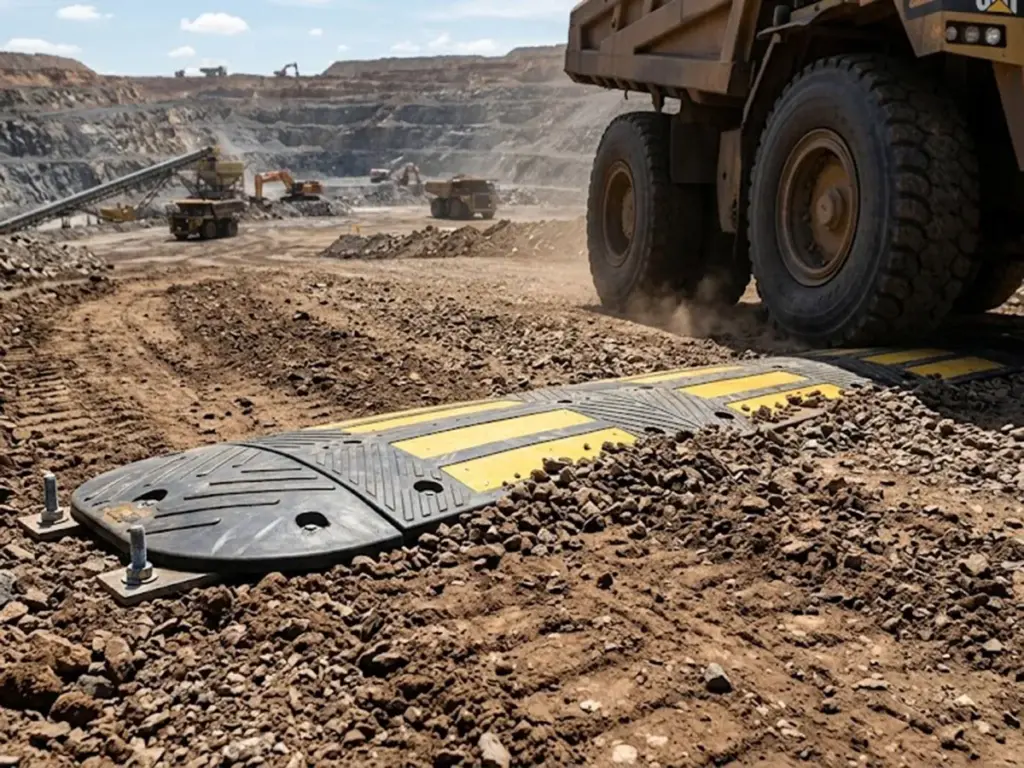
Operar vehículos pesados en superficies no cohesivas requiere una comprensión de la mecánica del suelo y el esfuerzo cortante de la superficie.. A diferencia de los pavimentos rígidos, La tierra suelta y los agregados no compactados reaccionan dinámicamente a la energía cinética de los vehículos.. Sin controles de velocidad respaldados por ingeniería, Los corredores de acceso sin pavimentar se degradan rápidamente., Aumento de los costos de mantenimiento y riesgos de seguridad..
Gestión del lavado de superficies y la erosión del suelo
Washboarding: la formación de ritmos, ondulaciones corrugadas a través de la superficie de una carretera: es impulsada por el desplazamiento mecánico del agregado suelto. Cuando los camiones comerciales pesados aceleran o aplican frenos en terreno suelto, sus neumáticos ejercen fuerzas de corte horizontales cíclicas que empujan la grava suelta hacia crestas muy espaciadas. Esta ondulación provoca fuertes vibraciones axiales en los vehículos., aflojar sujetadores y dañar sistemas de suspensión.
Implementando badenes temporales en caminos de grava rompe estos patrones armónicos de vehículos. Al obligar a los conductores a mantener un nivel bajo, velocidad uniforme, Estos módulos eliminan los ciclos erráticos de frenado y aceleración que impulsan el desplazamiento agregado.. Según evaluaciones de ingeniería civil realizadas por la Organización Nacional de Investigación del Transporte (NTRO, anteriormente ARRB) en redes de carreteras granulares no asfaltadas, controlar las velocidades del vehículo por debajo 20 km/h reduce la velocidad de ondulación mecánica de la grava hasta 45%. Este coeficiente reductor se aplica directamente a vías de acceso estándar no pavimentadas con Índice de Plasticidad. (PI) entre 4 y 10.
Mitigar la generación de partículas y polvo
El transporte pesado a alta velocidad por caminos de tierra plantea un grave riesgo para la salud laboral al generar polvo peligroso en el aire. Cuando un vehículo de varios ejes viaja rápidamente sobre suelo seco, Los neumáticos pulverizan la tierra en finas partículas. (PM_10 y PM_2.5), creando densas columnas que contienen sílice cristalina respirable. Los marcos regulatorios de Safe Work Australia establecen que la exposición prolongada a estas partículas finas puede causar daño pulmonar irreversible., incluyendo silicosis.
Porque las tasas de emisión de polvo aumentan exponencialmente con la velocidad del vehículo, La gestión de las velocidades de desplazamiento funciona como un control de supresión de polvo altamente eficaz.. La instalación de badenes portátiles obliga a respetar los límites de baja velocidad, suprimir la sustentación aerodinámica que eleva las partículas finas del suelo al aire.
Los datos de las auditorías ambientales de sitios civiles australianos confirman que reducir las velocidades del transporte pesado desde 40 km/h a 15 km/h produce un 60% Reducción de la generación de polvo respirable en el ambiente. (PM_10). Esta reducción de velocidad específica garantiza que las operaciones de primera línea se mantengan seguras por debajo del Estándar de exposición en el lugar de trabajo de Safe Work Australia. (WES) promedio ponderado en el tiempo (TWA) límite de 0.05 mg/m^3 para sílice cristalina respirable.
Cómo adaptarse al celo y al asentamiento del terreno
Los caminos de acceso sin pavimentar sufren naturalmente continuos surcos y asentamientos del suelo bajo cargas pesadas por eje.. Mientras miles de toneladas de equipos pasan por estos corredores, el suelo subyacente se corta lateralmente, formando profundamente, depresiones paralelas a lo largo de las trayectorias de las ruedas. Estándar, Las estructuras rígidas de control de tráfico se agrietan o cortan bajo este movimiento estructural porque no pueden adaptarse a las líneas de base cambiantes..
Mitigar este problema requiere recursos de tráfico flexibles. Los topes de goma de alta calidad para caminos de tierra están diseñados con un diseño modular., Perfil segmentado que se flexiona y se adapta a la topografía cambiante sin fallas estructurales.. Esta adaptabilidad mantiene la unidad alineada con el perfil de superficie en evolución., Garantizar que las puntas de anclaje accionadas permanezcan seguras incluso cuando la tierra circundante se comprime y se asienta bajo cargas industriales pesadas..
Especificaciones del hardware de anclaje: Asegurar activos en tierra suelta
Asegurar los activos de control de tráfico sueltos, El terreno no pavimentado requiere principios de ingeniería mecánica fundamentalmente diferentes a los del anclaje a hormigón sólido o asfalto curado.. Cuando maquinaria pesada de alto tonelaje impacta un dispositivo para calmar el tráfico, La fuerza de corte lateral debe transferirse limpiamente a la subrasante sin desplazar la tierra subyacente..
La mecánica de falla de los pernos de expansión de concreto en la tierra
Anclajes de manga mecánicos estándar, anclajes de mampostería empotrables, y los pernos de expansión de concreto fallan inmediatamente cuando se usan en suelos no cohesivos o caminos de grava. Estos sujetadores dependen completamente de la fricción y la tensión circular generada contra el rígido., paredes que no ceden de un agujero de hormigón previamente perforado. En tierra suelta o agregado granular, hay cero agarre a la tracción o resistencia lateral. Cuando un vehículo pesado de 40 toneladas cruza el activo, Las intensas vibraciones axiales resultantes y las fuerzas de corte hacia arriba hacen que las partículas del suelo circundantes se desplacen y se licúen., sacando los pernos de concreto limpiamente del suelo y dejando el badenes temporales completamente desenganchado.
Picos de puesta a tierra de barras de refuerzo de servicio pesado (Picos de anclaje)
Para contrarrestar estas fuerzas de corte laterales, Los contratistas civiles deben utilizar puntas de puesta a tierra de barras de refuerzo de acero de alta resistencia. (picos de anclaje). Estos sujetadores especializados cuentan con una estructura acanalada., perfil de acero de alta resistencia que maximiza la fricción del área de superficie contra materiales sueltos de subrasante.
Las especificaciones técnicas exigen un diámetro mínimo de 12mm a 16mm., con longitudes totales que varían de 300 mm a 500 mm dependiendo de la densidad del suelo. Impulsado directamente a través de los orificios de montaje premoldeados del badenes temporales, Estos pesados picos penetran profundamente en el establo., capa de subrasante compactada. Las nervaduras mecánicas se bloquean en el agregado móvil., Proporcionar la resistencia de extracción necesaria para evitar el desplazamiento lateral durante los cruces de camiones con mucha frecuencia..
Preparación de subrasante y protocolos de perforación previa
Lograr la estabilidad estructural requiere un estricto cumplimiento de los flujos de trabajo de campo estándar en sitios civiles antes de clavar cualquier hardware de anclaje en la tierra.. Se debe seguir el siguiente flujo de trabajo de 4 pasos:
- Limpiar y nivelar la huella: Quitar todo lo suelto, piedras superficiales no compactadas, desechos organicos, y rocas de gran superficie de la zona de instalación prevista.
- Compactar la subrasante: Utilice un compactador de placa vibratoria mecánico para lograr un mínimo 95% Compactador estándar Densidad de esfuerzo a lo largo de la huella del camino, verificado mediante pruebas de medidor de densidad nuclear de acuerdo con AS 1289.5.8.1 para asegurar la relación de densidad seca (I+D) cumple con los umbrales de cumplimiento antes de la inserción del hardware.
- Colocar y alinear: Coloque los módulos de badenes temporales a lo largo del camino compactado., utilizando las juntas entrelazadas integradas para alinear las secciones perfectamente rectas.
- Ejecutar preperforación: Introduzca un pasador de acero especializado o un taladro percutor rotativo de alta resistencia con una broca de mampostería extra larga a través de los orificios de fijación premoldeados para crear un canal piloto.. Este canal piloto evita obstrucciones rocosas ocultas bajo la superficie., evitando que las puntas de puesta a tierra de las barras de refuerzo se doblen o desvíen durante la instalación final.
Reutilización y retorno de la inversión de activos para operaciones móviles
Para oficiales de adquisiciones de infraestructura, Los activos de seguridad vial representan una inversión de capital que debe generar rendimientos financieros mensurables a lo largo de múltiples períodos fiscales.. A diferencia de la infraestructura civil permanente, que se cancela como un costo fijo hundido al momento de la instalación, El equipo de seguridad temporal del sitio debe gestionarse como un dispositivo móvil., clase de activo de alto rendimiento.
Calcular el ciclo de vida de los activos en múltiples sitios de trabajo
Desde una perspectiva de adquisiciones B2B, evaluando badenes temporales requiere calcular el costo total de propiedad (TCO) a lo largo de la vida útil del campo del activo. Los montículos de asfalto tradicionales requieren costos de demolición y eliminación al final de cada fase del proyecto., que desperdicia capital. En cambio, Las unidades de caucho modulares de alta calidad ofrecen una excepcional reutilización de activos..
Una flota estándar de módulos modulares de alta resistencia se puede desinstalar completamente en menos de 15 minutos por un equipo de dos hombres, embalado en un vehículo utilitario comercial estándar, y redistribuido en más de 5 sitios de construcción civil posteriores. Los análisis de gestión de activos australianos indican que, si bien el precio de compra inicial de los módulos de caucho industriales es más alto que el del vertido de asfalto crudo mezclado en frío,, La arquitectura de reutilización multisitio ofrece una 140% retorno de la inversión (ROI) por el tercer despliegue del proyecto. Esto elimina los costos recurrentes de adquisición de materiales y las tarifas de eliminación de vertederos..
Regímenes de mantenimiento e inspección para topes temporales de servicio pesado
Maximizar la vida útil de los activos y garantizar el estricto cumplimiento de la seguridad en el sitio requiere que los oficiales de seguridad del sitio establezcan un régimen diario de inspección de mantenimiento preventivo.. Tema de entornos industriales pesados badenes temporales a tensiones mecánicas extremas que pueden comprometer su integridad estructural. La lista de verificación de la inspección de seguridad matutina debe priorizar tres áreas críticas:
- Integridad de la punta de anclaje: Verifique que las púas de anclaje del camino de grava conducido permanezcan al ras con la parte superior del módulo. Cualquier desplazamiento hacia arriba indica un cambio de subrasante y requiere una nueva conducción mecánica inmediata..
- Alineación y desplazamiento del módulo: Inspeccione las uniones entrelazadas macho-hembra para ver si están separadas.. Los espacios entre módulos indican cambios laterales causados por vectores de frenado de camiones pesados.
- Evaluación de desgarro estructural: Escanee el chasis de polímero o caucho en busca de cortes estructurales severos o desgarros en la superficie., que generalmente son causados por excavadoras de orugas pesadas o bordes afilados del cucharón que cruzan los módulos.
Optimización del almacenamiento y la logística para la gestión de flotas civiles
Las configuraciones adecuadas de almacenamiento fuera del sitio dictan directamente si un activo de seguridad móvil sobrevive a su ciclo de vida de servicio designado o sufre una degradación prematura del material.. Entre contratos de proyecto, Los segmentos de caucho modulares deben protegerse de factores ambientales que causan la degradación del polímero..
Los administradores de flotas civiles deben evitar arrojar módulos al azar en contenedores de patio descubiertos., donde la presión desigual deforma los conectores entrelazados. Los módulos deben apilarse completamente planos sobre tarimas de madera de alta resistencia en un entorno de almacén bien ventilado.. Para prevenir la pudrición seca y el agrietamiento estructural., Guarde las unidades lejos de la exposición directa a los rayos UV y del agua estancada.. Además, Todas las placas de alineación de acero integradas y los componentes internos de los canales de cables deben rociarse con un inhibidor de óxido ligero que desplace el agua antes del almacenamiento estacional para garantizar un ensamblaje mecánico perfecto durante el siguiente despliegue para calmar el tráfico en el sitio de construcción..
Zonas de aplicación primaria para la gestión temporal de la velocidad
La implementación de limitadores de velocidad modulares es esencial en un amplio espectro de situaciones temporales., industrial, y entornos de transición. La identificación de los parámetros operativos específicos de su zona garantiza la correcta selección de badenes temporales para maximizar la seguridad y la longevidad del equipo.
Sitios de infraestructura activa y construcción civil
Los proyectos de ingeniería civil activos presentan una combinación altamente peligrosa de maquinaria pesada y personal de tierra.. Dentro de estos entornos dinámicos, badenes temporales están desplegados estratégicamente a lo largo de carriles de acceso perimetrales temporales, equipo pesado cruzando intersecciones, y zonas de amortiguamiento de peatones a máquinas.
Hacer cumplir límites de velocidad estrictos en estos espacios compartidos es una prioridad de seguridad crítica. Los datos de Safe Work Australia indican que los trabajadores en huelga con equipos de planta en movimiento representan aproximadamente 16% de todas las muertes en obras de construcción. Instalación muy visible, Los dispositivos modulares para calmar el tráfico en el sitio de construcción limitan físicamente la velocidad de los vehículos a umbrales operativos seguros. (normalmente bajo 15 km/h), Dar a los operadores y trabajadores del sitio suficiente tiempo de reacción para evitar colisiones catastróficas..
Canteras industriales, minas, y carriles de acceso de extracción
Los sitios de extracción industrial operan bajo condiciones logísticas exigentes, utilizando largo, Caminos de acarreo sin pavimentar para mover miles de toneladas de material diariamente. En estos entornos de alto tonelaje, Controlar la velocidad de los vehículos es vital para la estabilidad de los vehículos pesados y el cumplimiento estricto de las regulaciones ambientales estatales..
En caminos de grava suelta y caminos de tierra, Las velocidades excesivas aceleran el desgaste de los neumáticos., aumentar el consumo de combustible, y generar enormes columnas de polvo en el aire. Los oficiales de adquisiciones de infraestructura en el sector de recursos despliegan tareas pesadas badenes temporales Equipado con clavos de anclaje especializados en caminos de grava para hacer cumplir los límites de velocidad en pendientes cuesta abajo.. Esta supresión de velocidad específica evita que los camiones volquete pesados experimenten un desgaste de los frenos o pierdan tracción en curvas cerradas., al mismo tiempo que sirve como control primario de mitigación de polvo para proteger la calidad del aire regional..
Eventos públicos temporales, festivales, y corredores de desvío
La gestión de eventos municipales y las intervenciones de servicios públicos de emergencia requieren una rápida, Sistemas de gestión del tráfico a corto plazo que protegen al público sin dañar las superficies del suelo existentes.. Estas aplicaciones incluyen festivales comunitarios temporales., eventos deportivos, ferias agrícolas regionales, y desvíos de reparación de servicios públicos.
Para estos proyectos a corto plazo, Los contratistas frecuentemente colocan reductores de velocidad portátiles sobre superficies no pavimentadas, como parques con césped., zonas de estacionamiento con césped, y caminos de acceso de tierra suelta. Estos accesorios temporales reducen la velocidad de los vehículos entrantes a límites seguros para los peatones sin requerir obras civiles disruptivas.. Una vez que concluya el evento o se resuelva la emergencia de servicios públicos, las unidades se desanclan y retiran rápidamente, dejando el entorno natural intacto y completamente libre de infraestructura permanente.
Lista de verificación de adquisiciones: Elegir su supresor de tráfico a corto plazo
Seleccionando el apropiado badenes temporales Requiere un análisis objetivo de la combinación de vehículos de su sitio y del cronograma operativo.. La adquisición de un activo con especificaciones de ingeniería inadecuadas conduce a una falla estructural, mientras que especificar demasiado proyectos a corto plazo crea gastos logísticos innecesarios.
Clasificaciones de velocidad y tonelaje objetivo
Los criterios de selección principales deben coincidir con la masa bruta máxima esperada del vehículo. (GVM) con la densidad estructural y la clasificación de durómetro del activo de seguridad del tráfico. Los vehículos utilitarios ligeros y las furgonetas comerciales ejercen una fuerza de corte dinámica significativamente menor que los camiones de transporte pesado de varios ejes o los camiones volquete articulados de 40 toneladas que operan en vías de acceso industriales..
Para sitios dominados por el transporte comercial pesado, Los oficiales de adquisiciones deben seleccionar alta densidad., Módulos de caucho vulcanizado reforzados con acero capaces de absorber fuerzas de compresión masivas sin fracturarse.. En cambio, Las zonas de pasajeros de servicio liviano o los corredores de servicios públicos de baja velocidad pueden utilizar polietileno de alta densidad más liviano. (HDPE) o compuestos de poliuretano. Estos materiales más livianos calman adecuadamente el tráfico en el sitio de construcción para vehículos utilitarios estándar y, al mismo tiempo, reducen significativamente el peso de envío y los costos de transporte del activo..
Plazo de implementación y requisitos laborales
La duración del proyecto determina directamente si el plan de seguridad de su sitio debe especificar segmentos modulares entrelazados o vías de despliegue flexibles.. Cada sistema lleva mano de obra de implementación de campo distinta., requisitos de la herramienta, y cronogramas de anclaje que impactan los costos laborales totales del proyecto.
La siguiente tabla compara las unidades modulares entrelazadas y los rieles desplegables portátiles en términos de velocidad de instalación., asignación de mano de obra requerida, y límites óptimos del ciclo de vida del proyecto.
| Perfil de activo | Velocidad de instalación | Asignación de mano de obra requerida | Ciclo de vida óptimo del proyecto |
| Secciones modulares de enclavamiento | 15–20 minutos por carril | 2 Trabajadores del sitio + Herramientas rotativas | Mediano y largo plazo (1 a 12+ Meses) |
| Pistas de despliegue portátiles | Menos que 1 Minuto por carril | 1 Trabajador del sitio (Sin herramientas) | Plazo ultracorto (1 a 7 Días) |
Al gestionar proyectos civiles dinámicos donde la ruta del tráfico cambia diariamente, Las vías de despliegue minimizan el tiempo de inactividad de la mano de obra.. Para caminos de acarreo estáticos o proyectos de extracción a largo plazo, invertir la mano de obra inicial para asegurar unidades modulares pesadas con clavos de anclaje para caminos de grava garantiza la estabilidad de los activos a largo plazo. Para proyectos que regresan a superficies pavimentadas comerciales, asegúrese de que su equipo de adquisiciones haga referencias cruzadas de nuestra inmersión profunda en la información integral guía de herramientas de gestión del tráfico comercial y diseños de badenes para alinear los activos de sus instalaciones permanentes con los estándares de cumplimiento regionales.
Preguntas frecuentes
¿Se pueden instalar topes de velocidad temporales en caminos de acarreo de grava con pendientes pronunciadas??
Sí, pero requieren modificaciones de ingeniería específicas. En pendientes, Los vehículos pesados ejercen fuerzas de frenado y de corte hacia abajo significativamente mayores., que aceleran el desplazamiento del ancla. Los responsables de adquisiciones de infraestructura deben especificar púas de anclaje de acero extralargas de 500 mm clavadas en estantes de agregados muy compactados para evitar que los módulos se deslicen cuesta abajo con el tiempo..
¿Cómo se evita que los badenes portátiles se deslicen sobre mojado?, barro suelto?
Los baches se deslizarán si el suelo subyacente se licua bajo una fuerte lluvia.. Para mantener la estabilidad estructural, Los oficiales de seguridad del sitio deben excavar una zanja poco profunda., rellénelo con grueso, agregados triturados para base de carretera, compactarlo al mínimo 95% Esfuerzo del compactador estándar, y luego fijar los módulos a través de la capa agregada estable.
¿Se requieren topes de velocidad temporales para cumplir con los estándares de estacionamiento AS2890.1 en sitios civiles??
No. El estándar AS2890.1 rige explícitamente las instalaciones de estacionamiento público y comercial permanentes fuera de la vía pública.. Zonas temporales de construcción y sitios de extracción operan bajo el régimen estatal de Seguridad y Salud en el Trabajo (WHS) marcos de gestión, permitiendo a los oficiales de seguridad desplegar vehículos pesados, alto perfil badenes temporales adaptados a las autorizaciones de maquinaria pesada en lugar de a los vehículos de pasajeros nacionales.
¿Cuál es la vida útil esperada de un badén de goma modular en múltiples implementaciones??
Caucho vulcanizado de alta calidad. badenes temporales normalmente alcanzan una vida útil de 5 a 7 años a lo largo de más de 5 distintos sitios de trabajo. Esta longevidad depende de inspecciones de seguridad periódicas para ajustar los picos de anclaje de los caminos de grava y hacer cumplir estrictas prohibiciones operativas sobre las excavadoras con orugas de acero., que puede cortar el compuesto de caucho.
¿Los reductores de velocidad portátiles causarán daños permanentes a los parques de césped durante eventos de corta duración??
No. A diferencia de las instalaciones civiles permanentes, Las orugas de despliegue de poliuretano flexible distribuyen el peso del vehículo de manera uniforme a lo largo de la topología de la superficie sin cortar el césped.. Porque no requieren púas de anclaje ni adhesivos químicos, se pueden acumular inmediatamente después de un evento, dejando el césped subyacente completamente intacto y libre de escombros de infraestructura.
Referencias
Organización Nacional de Investigación del Transporte (NTRO)
COMO 1289.5.1.1:2017 Métodos de pruebas de suelos con fines de ingeniería – Ensayos de compactación y densidad del suelo.
Guía para la parte de gestión del tráfico 5: Gestión Vial (AGTM05-19)