Materiales de señales de carretera son muy importantes para la seguridad vial. Estos materiales deciden cuánto durará un letrero.. También afectan la capacidad de los conductores para ver la señal.. Materiales de señales de carretera debe soportar el mal tiempo y la luz solar intensa. También necesitan sobrevivir a muchos coches y camiones.. Los ingenieros eligen materiales para señales de carretera para mantener los mensajes claros todo el tiempo. Eligiendo la derecha materiales de señales de carretera ahorra dinero en reparaciones y nuevos letreros. Materiales de señales de carretera ayudar a las personas a ver señales durante el día y la noche. Esto hace que las carreteras sean más seguras para todos.
En OPTRAFICO, Nos especializamos en brindar alta calidad. letreros de tráfico hecho de materiales duraderos. Nuestras señales están diseñadas para soportar condiciones climáticas adversas y garantizar la máxima visibilidad para los conductores., día y noche. Ya sea que esté buscando materiales duraderos o soluciones personalizadas, Nuestra fábrica puede satisfacer sus necesidades de manera eficiente..
Materiales clave para señales de carretera
Letreros de aluminio
El aluminio es el material de señalización de carreteras más común en América del Norte y Europa.. Este metal es muy fuerte y no se oxida fácilmente.. Es ideal para señales al aire libre.. Los signos de aluminio son ligeros, para que sean fáciles de colocar. No hacen doblar las señales. Estos signos pueden durar desde 7 a 12 años. Una película especial puede cubrirlos para protegerlos del sol y la lluvia.. Esta película mantiene el color brillante y ayuda a que el letrero brille por la noche.. El aluminio funciona bien con materiales reflectantes y materiales retrorreflectantes.. Estos ayudan a los conductores a ver las señales bajo cualquier luz.. Muchos grupos utilizan aluminio porque se puede reciclar.. Esto ayuda al medio ambiente..
Para conocer más sobre los beneficios, durabilidad, y aplicaciones de letreros de aluminio, Mira nuestro blog en La mejor guía de letreros de aluminio: Durabilidad, Aplicaciones, y beneficios.
Señales de acero
Las señales de acero son muy fuertes y difíciles de romper.. Son buenos para carreteras muy transitadas o lugares con mal tiempo.. El acero inoxidable no se oxida porque tiene cromo.. El acero normal necesita una película especial para detener la oxidación.. Las señales de acero necesitan más cuidados que las de aluminio, especialmente cerca del océano. son pesados, entonces ponerlos es más difícil. Su peso les ayuda a mantenerse en su lugar.. Las señales de acero pueden utilizar tecnología reflectante y propiedades retrorreflectantes.. Esto asegura que la gente pueda leerlos día y noche..
Señales de plástico y compuestos
Los carteles de plástico están hechos de HDPE o policarbonato.. Son baratos y ligeros.. Estos letreros no se rompen fácilmente y pueden soportar la luz solar si se cubren con una película especial.. Signos compuestos, como material compuesto de aluminio, mezclar metal y plástico. Los letreros ACM permanecen planos y no se doblan. Usan menos aluminio, para que sean mejores para el planeta. algunos plasticos, como PET y HDPE, se puede reciclar. Otros plásticos pueden dañar el medio ambiente. Tanto los carteles de plástico como los compuestos pueden utilizar materiales reflectantes y materiales retrorreflectantes.. Esto ayuda a los conductores a verlos mejor.
Tipos de láminas reflectantes
Las láminas reflectantes son muy importantes para ver señales de carretera. Hay diferentes tipos:
- Tipo I (Grado de ingeniería): Esto es básico y no es bueno para todos los signos..
- Tipo III (Prismático de alta intensidad): Esto es más brillante y dura hasta 10 años.
- Grado de diamante (Tipo IX): Este es el más brillante y fuerte.. Utiliza películas especiales para durar más..
El uso de mejores materiales reflectantes puede hacer que las carreteras sean más seguras y reducir el número de accidentes. Las películas especiales ayudan a que las señales duren más y se mantengan claras bajo la lluvia., niebla, o por la noche. Los materiales retrorreflectantes y la tecnología reflectante ayudan a que los faros iluminen las señales desde lejos. Esto ayuda a los conductores a encontrar su camino en cualquier clima o momento.. Comprender cómo funcionan los materiales retrorreflectantes y su importancia en la visibilidad de las señales de tráfico., Mira nuestro blog en La ciencia detrás de la retroreflectividad y su papel en la visibilidad de los siglos de carretera.
Durabilidad y resistencia al clima
Exposición a los rayos UV y a la luz solar
señales de carretera siempre están afuera bajo el sol. La luz del sol puede hacer que los colores se desvanezcan y debiliten los materiales.. Elegir el material y el revestimiento adecuados ayuda a que los carteles duren más. algunos materiales, como vinilo fundido de primera calidad y acrílico estabilizado contra rayos UV, hacerlo mejor contra los rayos ultravioleta. El plástico ABS moldeado también funciona bien con luz solar intensa.. El vinilo débil se desvanece rápidamente y se debilita. La siguiente tabla muestra cómo los materiales resisten los rayos ultravioleta y la luz solar.:
| Tipo de material | Resistencia a los rayos UV | Resistencia de desvanecimiento | Integridad estructural |
|---|---|---|---|
| Vinilo débil | Bajo | Alto | Bajo |
| Vinilo fundido de primera calidad | Alto | Bajo | Alto |
| Plástico ABS moldeado. | Alto | Bajo | Alto |
| Acrílico estabilizado a los rayos UV | Alto | Bajo | Alto |
Recubrimientos y películas especiales brindan protección adicional contra los rayos ultravioleta.. Estos revestimientos ayudan a que los letreros se mantengan brillantes y fáciles de leer.. Las películas protectoras y productos como Avery Dennison OL-1200/OL-1000 bloquean la luz solar y simplifican la limpieza.. También frenan graffitis y otros daños. El uso de recubrimiento ultravioleta en las señales de carretera hace que duren más y se vean mejor. Funciona en muchas superficies., como el plástico y la madera. En estos recubrimientos se utilizan materiales como carbonato de calcio y polietileno para una mayor protección..
Lluvia, Nieve, y humedad
Lluvia, nieve, y la humedad puede dañar las señales de la carretera si se utilizan materiales incorrectos. Aluminio, acero galvanizado, y el acero inoxidable protegen bien contra el óxido. El aluminio es bueno en lugares húmedos., especialmente con recubrimiento en polvo. El acero galvanizado se utiliza a menudo para carteles y no se oxida fácilmente.. El acero inoxidable es mejor para lugares cerca del océano o fábricas.. La siguiente tabla compara estos materiales.:
| Material | Resistencia a la corrosión | Uso recomendado |
|---|---|---|
| Acero galvanizado | Alto | Común para postes de señalización., protege contra el óxido |
| Acero inoxidable | Muy alto | Ideal para zonas costeras e industriales. |
| Aluminio | Alto | Bueno para ambientes con mucha humedad, especialmente cuando está recubierto de polvo |
Los carteles de plástico fabricados con HDPE o policarbonato también resisten el agua y no se oxidan.. Estos materiales ayudan a que las señales duren más en lugares lluviosos o nevados.. Los buenos recubrimientos y tratamientos hacen que las señales sean aún más fuertes y ayudan a que duren.
Resistencia al impacto y al vandalismo
señales de carretera Necesito manejar golpes de autos., escombros, y vandalismo. El aluminio es muy resistente en estos casos.. Se dobla en lugar de romperse, para que el letrero permanezca arriba y pueda leerse. Esto significa menos reparaciones y ahorra dinero a las ciudades.. El aluminio también resiste la lluvia, nieve, y sol. Se pueden añadir laminaciones antigraffiti para detener la pintura y los rotuladores..
Las señales de plástico y composite también son resistentes a los impactos.. No se rompen fácilmente y pueden soportar un uso rudo.. Estos materiales ayudan a que las señales duren en lugares concurridos o riesgosos..
Consejo: El uso de revestimientos protectores en los carteles detiene los graffitis y facilita la limpieza.
Mantenimiento y durabilidad de las señales de tráfico
Cuidar señales de carretera los mantiene seguros y fáciles de ver. El uso de materiales resistentes como aluminio de alta calidad y láminas reflectantes ayuda a que los letreros duren más. Una buena instalación mantiene los letreros en su lugar durante tormentas o vientos fuertes.. La limpieza con jabón suave y cepillos suaves mantiene las señales claras..
La siguiente tabla enumera formas de mantener los letreros funcionando por más tiempo.:
| Práctica de mantenimiento | Descripción |
|---|---|
| Inspecciones regulares | Revise las señales con frecuencia para ver si se están desvaneciendo., daño, o cosas que los bloquean. |
| Materiales de calidad | Utilice materiales resistentes como aluminio de alta calidad y láminas reflectantes.. |
| Instalación adecuada | Asegúrese de que las señales estén bien colocadas para soportar el mal tiempo.. |
| Limpieza y mantenimiento | Limpie los letreros con jabón suave y cepillos suaves para mantenerlos visibles.. |
| Protección contra el vandalismo | Utilice revestimientos y enseñe a la gente a ayudar a detener el vandalismo. |
Verificar las señales a menudo ayuda a encontrar decoloración o daño temprano. Reparar el óxido y la corrosión detiene rápidamente problemas mayores. Asegurarse de que los letreros estén montados correctamente los mantiene estables. Todos estos pasos ayudan a que las señales duren más y funcionen mejor..
Visibilidad y Seguridad Vial
Recubrimientos reflectantes y visibilidad nocturna
Poder ver las señales es muy importante para la seguridad vial. Los conductores necesitan ver señales claramente, especialmente cuando está oscuro. señales de carretera A menudo tienen revestimientos reflectantes.. Estos revestimientos utilizan materiales retrorreflectantes.. Los materiales retrorreflectantes devuelven la luz de los faros al conductor.. Esto hace que las señales sean más fáciles de ver por la noche.. Los conductores pueden reaccionar más rápido cuando ven las señales con claridad. Las señales sin revestimiento reflectante difunden la luz de muchas maneras. Esto hace que sea difícil verlos por la noche.. Los conductores pueden pasar por alto las advertencias si no pueden ver las señales.
- Los revestimientos reflectantes utilizan materiales retrorreflectantes para devolver la luz, Hacer signos más fácil de ver.
- Las señales sin revestimiento reflectante son más difíciles de ver por la noche.
- Las señales de tráfico reflectantes ayudan a los conductores a ver mejor y mantenerse seguros.
Las autoridades de transporte tienen reglas sobre cuán brillantes deben ser las señales de carretera. Por ejemplo, Algunas señales deben tener un nivel de retrorreflectividad de al menos 50 CD/LX/m². Si un letrero no cumple esta regla, debe ser reemplazado. Esto ayuda a mantener seguras las carreteras, especialmente de noche o cuando es difícil ver.
Los reflectores de grado diamante son los más brillantes. Utilizan películas especiales para mantener los carteles brillantes durante mucho tiempo.. Estos reflectores ayudan a los conductores a ver las señales incluso cuando está oscuro o hay niebla..
Grosor del material y claridad de la señal
El grosor de un letrero puede cambiar lo fácil que es verlo. Los carteles más gruesos permanecen planos y no se doblan.. Esto mantiene las palabras claras y fáciles de leer.. Los carteles gruesos no se curvan en los bordes.. La siguiente tabla muestra cómo el grosor ayuda a que las señales funcionen mejor.:
| Factor | Impacto del espesor |
|---|---|
| Adhesión | Los materiales más gruesos se adhieren mejor porque tienen más tracción.. |
| Resistencia al viento | Los carteles gruesos se mantienen mejor con vientos fuertes. |
| Deformación mecánica | Los carteles más gruesos no se doblan tanto, para que duren más. |
| Durabilidad al aire libre | Las láminas gruesas no se curvan, Entonces las señales duran más afuera. |
Las señales de tráfico permanentes suelen utilizar paneles gruesos de aluminio o compuestos.. Esto ayuda a que el letrero sea fácil de leer en cualquier clima.. Las señales planas también funcionan bien con revestimientos reflectantes.. Profundizar en cómo los diferentes espesores afectan la durabilidad y el rendimiento de las señales de tráfico., Mira nuestro blog en Es más grueso siempre mejor? Los pros y los contras de diferentes espesores en las señales de tráfico de aluminio.
Rendimiento en mal tiempo
El mal tiempo dificulta la visión señales de carretera. Lluvia, niebla, y la nieve puede bloquear la vista del conductor. Buenos materiales y revestimientos ayudan a solucionar este problema.. Las láminas reflectantes vienen en diferentes tipos.. La siguiente tabla muestra qué tan bien funciona cada tipo.:
| Clase reflectante | Reflectancia mínima de la luz (cd/lx/m2) | Visibilidad en el mal tiempo |
|---|---|---|
| RA1 | < 60 | Visibilidad limitada |
| RA2 | 150 | Visibilidad moderada |
| RA3 | 300 | Alta visibilidad, ideal para niebla, lluvia, y nieve |
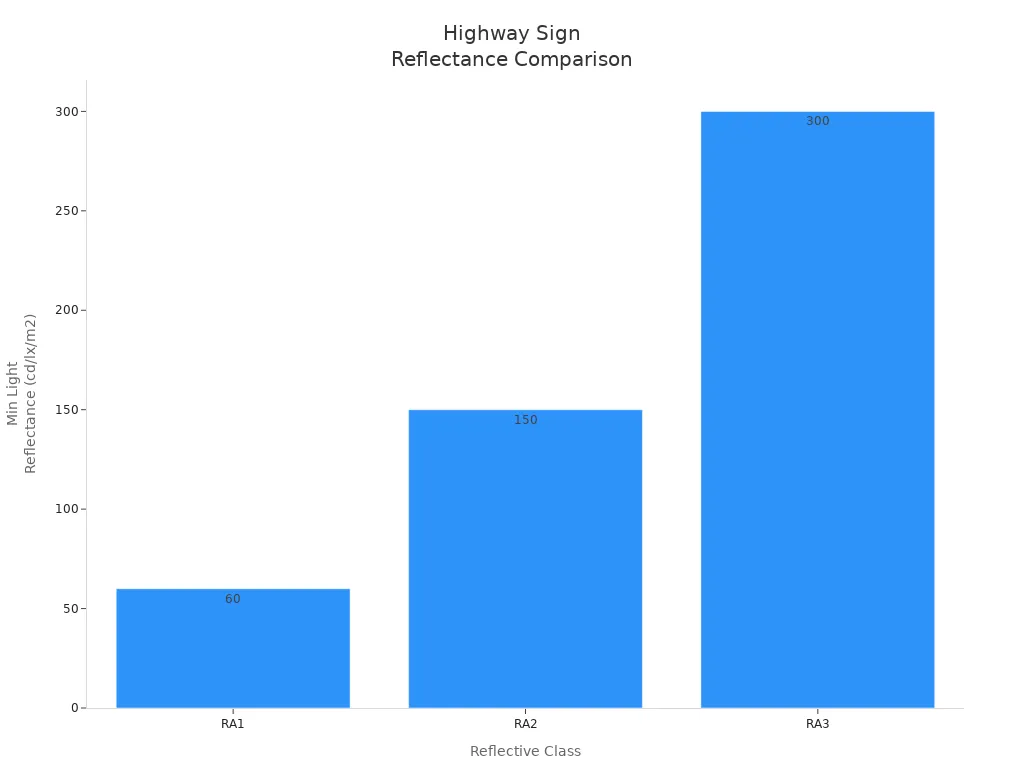
Las láminas RA3 son las mejores para la niebla, lluvia, y nieve. Estas señales ayudan a los conductores a ver en todo tipo de clima. Duran más y no se dañan con el agua o el viento.. En el condado de Mendocino, California, Una mejor señalización hizo que los accidentes disminuyeran. 42%. Lesiones cayeron 42% y las muertes disminuyeron 61% en tres años. Esto demuestra que una mejor visibilidad salva vidas y mantiene las carreteras seguras..
Otras ideas nuevas también ayudan a las personas a ver mejor las señales. Las perlas de vidrio en los revestimientos hacen que las señales sean más brillantes por la noche y con mal tiempo. Los programas informáticos especiales pueden cambiar el brillo y el contraste de inmediato. Algunos filtros reducen el deslumbramiento y resaltan las señales. Estas actualizaciones ayudan a los conductores a ver las señales y actuar rápidamente.
- Una mejor visibilidad nocturna ayuda a los conductores a ver las señales y las líneas de la carretera.
- La buena visibilidad con mal tiempo ayuda a conducir con seguridad.
- Las perlas de vidrio son seguras para el medio ambiente y se pueden reciclar..
Opciones LED y de visibilidad mejorada
Las señales LED son una nueva forma de hacer que las señales sean más fáciles de ver. Estos signos hacen su propia luz.. No necesitan faros ni farolas para ser vistos.. Las señales de tráfico LED pueden parpadear o parpadear para llamar la atención. Esto es útil en la niebla., lluvia, o por la noche. Las señales con luces son más fáciles de ver que las señales normales.. Cuando los conductores ven mejor las señales, las carreteras son más seguras.
- Los letreros LED brillan solos, a diferencia de los signos regulares.
- Pueden parpadear o parpadear, para que los conductores los noten cuando hace mal tiempo.
- Las señales luminosas son más fáciles de ver., que ayuda a mantener a las personas seguras.
- Las señales de tráfico LED consumen menos energía que las luces antiguas. Los LED se dan la vuelta 60% de electricidad en luz. Esto les hace ahorrar energía y dinero..
Los letreros LED cuestan más de colocar, pero ahorran energía después. Los signos regulares duran aproximadamente 20 años. Sus puestos pueden durar hasta 40 años, pero puede que necesite pintura. Las señales LED duran mucho tiempo y ayudan a las personas a ver mejor.
Nota: La tecnología LED mejora cada año. Muchas ciudades ahora utilizan señales de tráfico LED y señales LED para advertencias importantes y zonas escolares.. Estas señales ayudan a los conductores a ver de noche y con mal tiempo, Hacer caminos más seguros para todos.
Elegir materiales para diferentes aplicaciones
Urbano VS. Necesidades de señalización rural
Materiales de señales de carretera Deben encajar donde se usan.. Las ciudades tienen carreteras muy transitadas y muchas señales.. Hay muchos conductores, gente en bicicleta, y gente caminando. Los caminos rurales son largos y enfrentan condiciones climáticas adversas.. La siguiente tabla muestra cómo las necesidades de señalización son diferentes en cada lugar.:
| Factor | Medio ambiente urbano | Medio Rural |
|---|---|---|
| Gestión del flujo de tráfico | Necesita muchas señales porque hay muchos autos y personas.. | Informa a los conductores sobre velocidades seguras, curvas, y animales. |
| Orientación | Necesita señales claras para muchos lugares y puntos de referencia.. | Las señales muestran a qué distancia están las ciudades y los servicios., para que los conductores lo sepan con antelación. |
| Mantenimiento y Visibilidad | Las señales deben abordar la contaminación y las personas que intentan dañarlas.. Hay que revisarlos con frecuencia. | Las señales deben ser brillantes y fuertes en caso de mal tiempo.. Es difícil arreglarlos a menudo.. |
| Diversas necesidades de los usuarios | Las señales deben ayudar a las personas en bicicleta y a los peatones.. | La mayoría de las señales son para automóviles., pero algunos ayudan a las personas que no están en automóviles a mantenerse seguras. |
| Información de emergencia | Las señales ayudan a las personas a encontrar ayuda rápidamente en lugares concurridos. | Las señales muestran dónde conseguir ayuda en lugares lejanos. |
Las señales urbanas utilizan paneles de aluminio o compuestos.. Son fáciles de instalar y difíciles de dañar.. Las láminas reflectantes hacen que las señales de la ciudad sean fáciles de ver por la noche. En el país, Se utilizan señales de aluminio o acero más gruesas.. Estas señales son fuertes contra el viento y la nieve.. Los revestimientos brillantes ayudan a los conductores a ver las señales en la niebla o de noche.
Áreas de trabajo pesado y alto impacto
Algunos lugares necesitan señales muy fuertes.. Las zonas de construcción y las carreteras con camiones grandes necesitan señales que no se doblen ni se rompan. Las señales de acero son buenas aquí porque pueden soportar golpes fuertes.. Los carteles de aluminio con bordes fuertes también funcionan bien. Los compuestos plásticos se doblan pero no se rompen.. En estos lugares, Los ingenieros utilizan paneles más gruesos y revestimientos especiales.. Estas opciones ayudan a que las señales se mantengan claras después de tormentas o accidentes.
Consejo: En lugares donde la gente daña mucho los carteles, Utilice revestimientos antigraffiti y pernos especiales para mantener las señales seguras..
Consideraciones regulatorias y ecológicas
Muchas ciudades y estados quieren señales que sean mejores para el planeta. Aluminio reciclado, Plásticos que se pueden volver a utilizar., y los recubrimientos a base de agua generan menos desperdicio. Pero elegir materiales ecológicos no siempre es fácil. Cada lugar tiene sus propias reglas para las señales de tráfico.. Esto puede dificultar que las empresas sigan todas las reglas.. Los nuevos productos ecológicos pueden tardar mucho en ser aprobados. Las agencias quieren asegurarse de que estén seguros durante mucho tiempo.. Cumplir todas las normas de seguridad puede costar más dinero. Esto es difícil para las pequeñas empresas..
- Diferentes lugares tienen sus propias reglas para las señales de tráfico., que puede costar más.
- Las agencias pueden esperar para aprobar nuevos materiales ecológicos hasta que sepan que son seguros.
- Seguir todas las normas de seguridad puede resultar caro, especialmente para pequeñas empresas.
Elegir el mejor material significa pensar en la seguridad, cuanto dura, y el planeta. Los planificadores deben comprobar las normas locales y elegir materiales que mantengan las carreteras seguras y ayuden al medio ambiente..
escogiendo lo mejor materiales de señales de carretera ayuda a que los signos duren más y se vean mejor. El material que elijas cambia la frecuencia con la que necesitas arreglar los letreros y su costo.. Los buenos materiales hacen que las señales duren mucho tiempo y ayudan a mantener las carreteras seguras para todas las personas..
Los planificadores deben pensar en el clima local, tráfico, y reglas antes de recoger materiales para señales de tráfico.
Preguntas frecuentes
¿Qué material dura más para las señales de carretera??
El aluminio es el material que más dura. No se oxida y resiste las inclemencias del tiempo.. Muchos grupos eligen el aluminio porque es resistente y dura muchos años..
¿Cómo mejoran los revestimientos reflectantes la visibilidad de las señales??
Los revestimientos reflectantes envían la luz de los faros a los conductores. Esto ayuda a las personas a ver mejor las señales por la noche o cuando hay niebla..
¿Están disponibles materiales ecológicos para señales de carretera??
Sí, hay opciones ecologicas. Algunos carteles utilizan aluminio o plástico reciclado.. Ciertos recubrimientos utilizan agua en lugar de productos químicos agresivos.. Estas opciones ayudan a proteger el medio ambiente..
¿Por qué algunas señales usan luces LED??
Las luces LED ayudan a las personas a ver señales en la oscuridad o cuando hay tormenta. Resaltan las advertencias importantes y consumen menos energía que las luces antiguas..