Australische Infrastrukturprojekte stellen einzigartige Herausforderungen für die Sicherheitsausrüstung dar. Die Kombination extremer UV-Indizes, unvorhersehbare Windlasten, und strenge Compliance-Standards erfordern eine spezielle Materialtechnik. Folglich, Generische oder importierte Kunststoffbeschilderungen erfüllen oft nicht die Anforderungen der örtlichen Umgebung.
Minderwertige Materialien verblassen unter der australischen Sonne schnell und verziehen sich unter thermischer Belastung. Kritischer, Sie treffen sich oft nicht ALS 1742.3 Anforderungen, erhebliche Haftungsrisiken bergen. daher, auf die sich die Verkehrsmanagementbranche verlässt Corflute-Schilder speziell für australische Bedingungen entwickelt.
Dieser technische Leitfaden analysiert die Spezifikationen für Temporäre Verkehrsschilder in Australien, Abdeckung Kastenkante Technologie, Mehrnachrichtenzeichen (MMS) Systeme, und reflektierende Compliance-Standards.
👉 Globale Beschaffung? Optraffic erklärt internationale Namenskonventionen und Hardwareunterschiede in unserem Globaler Leitfaden für Beschilderungen aus Wellpappe.
Definieren “Straßentauglich” Corflute-Schilder
Nicht alle gewellten Kunststoffe erfüllen die Standards des Bauingenieurwesens. Beschaffungsbeauftragte müssen zwischen Materialien in Einzelhandelsqualität und straßentauglichen Spezifikationen unterscheiden, um die Sicherheit vor Ort zu gewährleisten.
Der 5-mm-Standard vs. Einzelhandelsqualität
Während 3-mm-Corflute gut für Innenveranstaltungen oder kurzfristige Immobilienanwendungen geeignet ist, es fehlt die erforderliche Strukturmasse für den Einsatz am Straßenrand. Im Gegensatz, 5mm Korflute ist der verbindliche Industriestandard für Temporäres Verkehrsmanagement (TTM). Diese spezifische Dicke sorgt für die erforderliche strukturelle Integrität, um dem durch vorbeifahrende schwere Fahrzeuge erzeugten Windstoß standzuhalten, ohne einzuknicken.
UV-stabilisiertes Polypropylen-Copolymer
Die australische Sonne zersetzt unbehandelte Polymere schnell. UV-Strahlung zerstört die Molekülketten in Standardkunststoff, was dazu führt, dass die Schilder reißen, Kreide, und innerhalb weniger Monate nach dem Einsatz zerbrechen.
Um dem entgegenzuwirken, Optraffic stellt Schilder aus UV-stabilisiertem, schlagfestem Polypropylen her. Diese chemische Behandlung verlängert die Lebensdauer der Beschilderung erheblich, Sicherstellen, dass die fluoreszierende Hintergrundfarbe über die gesamte Dauer des Projekts konform bleibt.
Benötigen Sie spezifische Daten zur Materiallebensdauer? Lesen Sie den ausführlichen Bericht unter Die australische Sonne überleben: UV-Stabilität von Corflute-Schildern
Der Vorteil des Box Edge Signs
Der Box-Edge-Design unterscheidet australische Beschilderungen von US-amerikanischen oder europäischen Äquivalenten, wo flache Laken üblich sind. Für australische Straßenverhältnisse, Flache Laken erweisen sich oft als unzureichend.
Konstruktion der Box Edge
Hersteller erzeugen diese Funktion, indem sie bestimmte Faltlinien in das Produkt einstanzen Corflute-Blatt. Diese Kanten falten sich nach hinten, um eine starre Form zu bilden, 3D “Kasten” Perimeter. Diese Struktur fungiert als Verstärkungsbalken, Die Biegefestigkeit des Paneels wird deutlich erhöht.
Betriebliche Vorteile
Jenseits struktureller Starrheit, Der Box Edge bietet entscheidende betriebliche Vorteile:
- Rahmenkompatibilität: Die Kastenstruktur passt sicher über Standard-Zweibeinbeine. Durch die Reibung bleibt das Schild an Ort und Stelle, Dadurch entfallen Bolzen oder Schrauben, die rosten oder festfressen können.
- OH&S-Konformität: Das Design eliminiert scharfe Kunststoffkanten, Dadurch wird das Verletzungsrisiko für Arbeiter bei schnellen Einsätzen verringert.
Besorgt über starken Wind? Lesen Sie die technische Analyse: Warum das Box-Edge-Design für die Windstabilität entscheidend ist
Optimieren Sie die Verkehrssteuerung mit Multi-Message-Schildern (MMS)
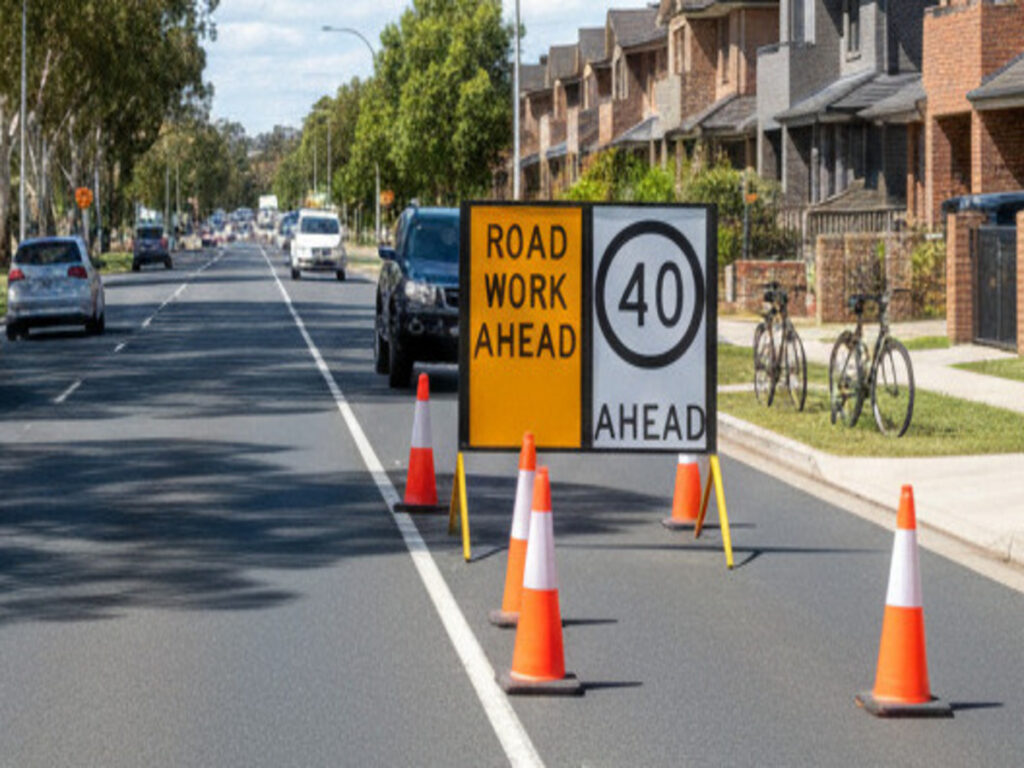
Mehrnachrichtenzeichen (MMS) Rahmen bilden das Rückgrat der Verkehrskontrolle in Queensland, NSW, und Victoria. Mit diesen Systemen kann eine einzelne Station mehrere Gefahrenwarnungen effizient anzeigen.
Das Corflute-Einsatzsystem
MMS-Rahmen nutzen einen modularen Ansatz, bei dem Verkehrsleiter leichtgewichtig eingesetzt werden können Corflute-Einsätze in einem verzinkten Stahlrahmen. Das System unterstützt typischerweise drei Formate:
- 600mm x 600 mm: Für die Hauptbotschaft vorgesehen (Z.B., “Straßenarbeit voraus”).
- 1200mm x 300 mm: Für ergänzende Informationen vorgesehen (Z.B., “Straßenarbeiten beenden”).
- 1200mm x 600 mm: Großformatige Warnungen für Hochgeschwindigkeitszonen.
Kosten- und Logistikeffizienz
Das MMS-System bietet erhebliche wirtschaftliche Vorteile. Auftragnehmer kaufen einmalig haltbare Metallrahmen, während die Corflute-Einsätze bleiben kostengünstig und austauschbar. Diese Flexibilität reduziert das Nutzlastgewicht für Verkehrsleitfahrzeuge erheblich, Verbesserung der Kraftstoffeffizienz und Logistik.
Sie möchten die Betriebskosten Ihrer Flotte senken? Lesen Sie unsere technische Aufschlüsselung weiter Multi-Message-Zeichen (MMS) und leichte Corflute-Einsätze
ALS 1742.3 Einhaltung: Reflexionsvermögen & Farbe
Sicherheitsbeauftragte müssen strikt durchsetzen Australischer Standard 1742.3, da eine nicht konforme Beschilderung zur sofortigen Schließung des Standorts und möglicherweise zu Bußgeldern führt.
Klasse 1W (Klasse 400) Retrorefektivität
Da die Bauarbeiten oft nachts weitergehen, Die Sichtbarkeit bei Tag ist nur die halbe Miete. Die aktuellen Standardmandate Klasse 1W (Weitwinkel) oder Klasse 400 Retroreflektierende Bleche.
Diese Technologie reflektiert Licht von Fahrzeugscheinwerfern zurück zur Quelle, Aufrechterhaltung der Helligkeit auch bei großen Eintrittswinkeln. Optraffic Bringt Folien der Klasse 1W direkt an 5mm Korflute Substrate, um maximale Leuchtdichte und Einhaltung gesetzlicher Vorschriften zu gewährleisten.
Fluoreszierende Chromatizität
Die Hintergrundfarbe vermittelt den Fahrern die konkrete Gefahrenstufe. Fluoreszierorange ist ausschließlich allgemeinen Straßenarbeiten und der Verkehrskontrolle vorbehalten, während Fluoreszenzgelbgrün zielt auf Fußgänger ab, Schulzone, und Warnungen für gefährdete Verkehrsteilnehmer.
Best Practices für die Installation temporärer Verkehrsschilder
Auch hochspezifiziert Corflute-Schilder schlägt fehl, wenn es falsch installiert wird. Windlast bleibt die Hauptversagensursache für temporäre Beschilderungen.
Milderung der “Segeleffekt”
Corflute ist von Natur aus leichtgewichtig; folglich, Eine breite Schildfläche dient bei starkem Wind als Segel. Um dieses Risiko zu mindern, Die Platzierung des Ballasts ist von entscheidender Bedeutung. Sandsäcke müssen verankert werden Rahmenbeine, da das direkte Aufbringen von Ballast auf das Schild den Untergrund beschädigt und die retroreflektierende Fläche verdeckt.
Außerdem, Schilder sollten ungefähr gedreht werden 3-5 Grad von der Fahrbahn entfernt. Diese schräge Platzierung reduziert die Blendung der Scheinwerfer für den Fahrer und mildert den direkten Winddruck auf die Schildfläche.
Nachhaltigkeit im Bauwesen
Im Bausektor wird die Verantwortung für die Umwelt immer stärker in den Vordergrund gerückt. Korflöte (Polypropylen) ist ein Code 5 Plastik, es machen 100% recycelbar. Im Gegensatz zu Verbundaluminium, das eine Schichttrennung erfordert, Corflute-Schilder können am Ende ihres Lebenszyklus vollständig recycelt werden, Ausrichtung auf nachhaltige Standortpraktiken.
Planen Sie ein nachhaltiges Projekt? Lesen Sie den Leitfaden zu Recycling von Corflute auf Baustellen
Abschluss: Beschaffung konformer Corflute-Schilder
Sicherheitskompromisse sind im Verkehrsmanagement nicht akzeptabel. Die Projektkonformität hängt vollständig von der richtigen Materialspezifikation ab.
Australische Straßenarbeiten erfordern 5mm, UV-stabilisiert, Box Edge Corflute das trifft ALS 1742.3 und hält lokalen Umwelteinflüssen stand. Optraffic liefert zertifizierte Verkehrsmanagementlösungen, verteilen Box-Edge-Schilder der Klasse 1W Und MMS-Einfügungen das Sydney, Melbourne, Brisbane, und Perth.
Erfordern Sie gebrandete Site-Panels? Entdecken Sie die Regeln für den industriellen Druck im Umfassender Leitfaden für individuelle Corflute-Schilder.
FAQ
Nicht explizit dafür jeder Zone, Aber “Kastenkante” ist der Industriestandard für Stabilität. Flache Laken bleiben unter Windlast oft nicht sicher in den Beinen des Zweibeins. Die meisten Kommunen und Hauptstraßenbehörden beauftragen Box Edge mit Compliance und Sicherheit.
Klasse 1 ist der alte Standard. Klasse 1W (Weitwinkel), auch als Klasse bekannt 400, ist die aktuelle Anforderung für Straßenbauarbeiten. Es reflektiert Licht aus größeren Winkeln, Dadurch wird sichergestellt, dass das Schild für Fahrer auch dann sichtbar bleibt, wenn das Schild verdreht oder in einer Kurve angebracht ist.
Standardbehandeltes Corflute hält 12 Zu 24 Monate im Freien. Ohne UV-Stabilisierung, Die grelle australische Sonne zersetzt das Plastik in weniger als einem Jahr 6 Monate. Optraffic garantiert UV-Stabilität für langfristige Projektlaufzeiten.
Ja. Wir fertigen Einsätze nach exakten australischen Maßen: 600x600mm, 1200x300mm, und 1200x600mm. Sie passen nahtlos in standardmäßige Multi-Message-Rahmen aus verzinktem Stahl, die in Queensland verwendet werden, NSW, und VIC.