Einführung – Navigieren in der kommerziellen Pollerbudgetierung in 2026
Warum die Preisgestaltung für Verkehrspoller komplexer ist als eine einzelne Nummer
Der Preis für Verkehrspoller passt nicht in eine einzelne Werbebuchung. Ein einfacher Polyurethan-Flexpfosten kostet im Einzelhandel nur $20 pro Einheit. Ein hydraulischer automatischer Poller, der nach den Standards ASTM F2656-M50 zertifiziert ist, kann diese übertreffen $15,000 — vor Kosten für zivile und elektrische Infrastruktur. Diese Spanne spiegelt einen durch die Materialwissenschaft definierten Markt wider, Compliance-Anforderungen, und funktionale Ebenen, die in den meisten allgemeinen Kostenleitfäden nie erläutert werden.
Drei Haupttreiber prägen jedes Zitat: Materialtyp (Stahl, Beton, oder Polyurethan), funktionale Kategorie (behoben, abnehmbar, oder automatisch), und Installationsmethode (kerngebohrt, vor Ort gegossen, oder oberflächenmontiert). Durch das Verständnis dieser Variablen können Beschaffungsexperten Budgetüberschreitungen bei Perimetersicherheits- und Zugangskontrollprojekten vermeiden.
Dieser Leitfaden behandelt 2026 UNS. kommerzielle Markt-Benchmarks, einschließlich der Kosten für gewerbliche Poller pro Einheit, Preisstufen für Großhändler, Crash-bewertete Spezifikationen, und Modellierung der Gesamtinstallationskosten – alles strukturiert für die B2B-Entscheidungsfindung.
Preis für Verkehrspoller nach Materialtyp – Die Grundlage für die Stückkosten
Stahlpoller – Zeitplan 40 vs. Zeitplan 80 und was der Notenunterschied kostet
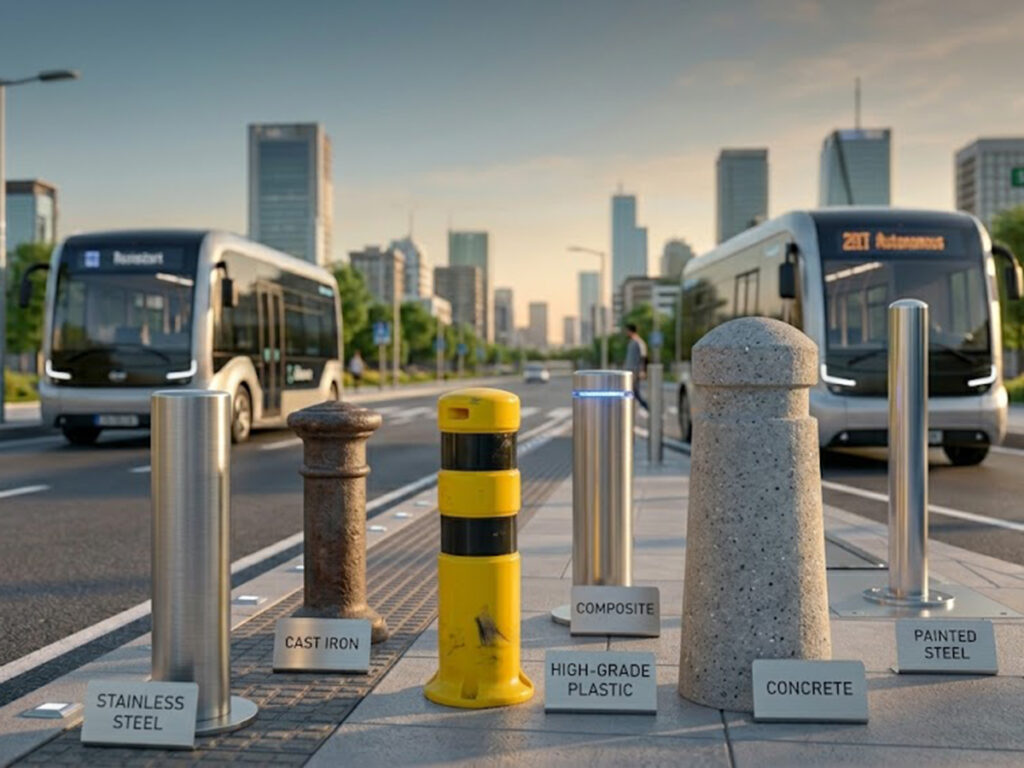
Aus einem Grund dominiert Stahl die Spezifikationen für gewerbliche Poller: konsistente Leistungsdaten. Zeitplan 40 Stahl (4-Zoll Durchmesser, 0.237-Zoll Wand) kostet 80–250 $ pro Einheit. Zeitplan 80 (6-Zoll Durchmesser, 0.337-Zoll Wand) Der Preis beträgt 200–600 US-Dollar pro Einheit – ein Aufpreis, der durch eine höhere Schlagfestigkeit und eine breitere DOT-Akzeptanz an Laderampen und kommunalen Straßengestaltungsverträgen gerechtfertigt ist.
Finish-Optionen verursachen messbare Kosten. Blanker Stahl ist die Basis. Für die Pulverbeschichtung fallen Kosten von 20 bis 40 US-Dollar pro Einheit an. Feuerverzinkung – die Spezifikation der Wahl für Küstenumgebungen – kostet 30 bis 60 US-Dollar pro Einheit, verlängert aber den Wartungszyklus auf 20 bis 30 Jahre, Dies führt zu weitaus geringeren Gesamtbetriebskosten über eine 15-jährige Lebensdauer der Anlage.
Zeitplan 40 Stahl eignet sich für die standardmäßige Perimeter-Zugangskontrolle. Zeitplan 80 ist die richtige Spezifikation, wenn ein Projekt eine hohe Leistung oder eine formelle Planüberprüfung erfordert. Bei der Bewertung Preis für Verkehrspoller für Stahlprodukte, Käufer müssen den Zeitplan schriftlich festlegen – allgemeiner „Stahlpoller“.’ Anführungszeichen verbergen üblicherweise Notenvertretungen.
Betonpoller – vor Ort gegossen vs. Preise für Fertigteileinheiten
Vorgefertigte Betonpoller bieten einen Einstiegspunkt von 60 bis 180 US-Dollar pro Einheit. Ortbetoninstallationen sind mit geringeren Materialkosten, aber deutlich höheren Arbeitskosten verbunden – ein Unterschied, der den Vergleich der Gesamtinstallationskosten nicht trivial macht. Siehe Abschnitt 6 für die vollständige Installationsaufschlüsselung.
ASTM C94-konformer Transportbeton mit 3.000–4.000 PSI ist die Standardspezifikation für Pollerfundamente. Sichtbeton- oder Sichtbetonoberflächen erhöhen die Materialkosten um 20–35 %. Betonpoller sind, von Natur aus, fest und dauerhaft – sie sind nicht für Anwendungen geeignet, die regelmäßigen Zugang oder Spurflexibilität erfordern.
Polyurethan- und flexible Poller – kostengünstige Einstiegspunkte und wo sie versagen
Hochdichtes Polyurethan (HDPE) und flexible Leitpoller kosten zwischen 20 und 90 US-Dollar pro Einheit. UV-stabilisierte Formulierungen selbständig direkt nach Fahrzeugkontakt, Reduzierung der Austauschhäufigkeit in Umgebungen mit niedriger Geschwindigkeit.
Der B2B-Vorbehalt ist absolut: Polyurethan-Poller weisen nach den Standards ASTM F2656 oder DOS K4/K8 keine Crash-Bewertung auf. Ihre Angabe in einer Perimeter-Sicherheitsanwendung führt nicht nur zum Scheitern der Compliance-Prüfung, sondern führt auch zu einem dokumentierten Haftungsrisiko. Geeignete Anwendungen sind beispielsweise die Spurführung auf Parkplätzen, Fußgängerabgrenzung, und Markierung von Lagergängen im Innenbereich. Bei der Bewertung der kommerziellen Pollerkosten pro Einheit für verschiedene Materialtypen, Käufer müssen die Produktstufe an die Leistungsanforderungen anpassen, bevor sie Preise vergleichen können.
Preis der Funktionsstufe – Fest, Abnehmbar, und automatische Poller
Feste/eingebettete Poller – Grundkosten pro Einheit und warum die Installation das Budget vervielfacht
Feststehende Poller aus Stahl stellen die gebräuchlichste kommerzielle Spezifikation dar. Der Einzelpreis liegt je nach Durchmesser zwischen 75 und 400 US-Dollar (4-Zoll vs. 6-Zoll) und Material. Das „fest’ Die Bezeichnung bedeutet kerngebohrte Installation in Beton oder ein Ortbetonfundament – kein Entfernungsmechanismus, keine Empfängerhülse.
Preis für Verkehrspoller für feste Einheiten führt regelmäßig Erstkäufer in die Irre. Die Stückkosten betragen eine Einzelposition. Kernbohrung, Betonhinterfüllung, Oberflächensanierung, und Arbeit sind getrennt. Abschnitt 6 modelliert die kompletten Gesamtinstallationskosten. Bevor Sie ein Projektangebot abgeben, ist es wichtig, das Gesamtbild zu verstehen.
Abnehmbare Poller – Verriegelungsmechanismen, Empfängerhüllen, und der True Price Premium
Abnehmbare Pollersysteme führen zu einer zweiteiligen Kostenstruktur, die den meisten Käufern erst zu spät auffällt. Der Pollerpfosten selbst kostet 150–700 US-Dollar pro Einheit. Die in den Boden eingelassene Empfängerhülse – von den meisten Herstellern separat erhältlich – kostet 40–120 US-Dollar pro Einheit. Ein 4-Zoll-Poller erfordert einen Innendurchmesser von 4,5 Zoll. Ärmel; Ein 6-Zoll-Poller erfordert einen Innendurchmesser von 6,5 Zoll. Ärmel.
Schließmechanismen segmentieren den Markt weiter. Pin-Lock-Systeme befinden sich auf der Einstiegsebene. Schließzylindermechanismen kosten 40 bis 80 US-Dollar pro Einheit. Hochsichere Cam-Lock-Systeme kosten 80 bis 150 US-Dollar pro Einheit – eine übliche Spezifikation bei Projekten von Verkehrsbetrieben und Universitätscampussen, bei denen ein kontrollierter Zugang eine politische Anforderung ist.
Der in jedem Katalog aufgeführte Preis für abnehmbare Poller gilt nur für den Pfosten. Käufer, die eine komplette Empfängerhülle wünschen + Ein Postsystem mit Hochsicherheitsschloss zahlt 60–90 % mehr als die Gesamtstückkosten. Die Budgetierung erfordert die gemeinsame Preisgestaltung beider Komponenten. Die Installation der Empfängerhülse erfordert die gleichen Kernbohrungen und Betonarbeiten wie bei einem permanenten, festen Poller. Für einen vollständigen Arbeitsausfall, Fracht, und laufende Wartungskosten, die sich auf das Gesamtprojektbudget auswirken, Sehen Sie sich unseren Leitfaden an Einflussfaktoren auf die Preise für Verkehrspoller in der Schifffahrt, Installation & Wartung.
Automatische und hydraulische Poller – Hochsicherheits-Preisstufen für kritische Infrastrukturen
Pneumatische und federunterstützte automatische Poller kosten 1.200 bis 4.000 US-Dollar pro Einheit. Hydrauliksysteme mit einem speziellen Schaltschrank belaufen sich auf 5.000–15.000 US-Dollar pro Poller – und diese Zahl schließt zivile und elektrische Infrastruktur aus.
Eine hydraulische Pumpstation und ein Schaltschrank für einen 3- bis 5-Poller-Verlauf kosten in der Regel 8.000 bis 25.000 US-Dollar als separater Posten. Anwendungen sind streng definiert: Regierungsgebäude, Botschaftsgelände, kritische Verkehrsknotenpunkte, und Veranstaltungsorte, an denen Crash-Bewertungen obligatorisch und nicht optional sind. Standardlistenpreise gelten selten – die Beschaffung hydraulischer Poller erfordert fast immer eine Standortbesichtigung und ein individuelles Angebot. Absturzsichere Poller kosten in dieser Kategorie deutlich mehr, aber die Alternative – ein nicht bewertetes Produkt in einer sicherheitskritischen Anwendung – stellt eine inakzeptable Risikoübertragung auf den Projekteigentümer dar.
Preise für Massen- und Großhandelspoller – Kosten pro Einheit bei Volumen
So funktionieren Mengenstaffelungen – Standard-Großhandelspreisstufen
Die Großhandelspreise für Massenpoller orientieren sich bei den meisten gewerblichen Händlern und Fabrikdirektprogrammen an den Standardstrukturen für Mengenstaffelungen. Der Rabatt auf den Einzelhandelsgrundsatz skaliert vorhersehbar:
| 1–9 Einheiten | Grundlinie (0%) | Einzelbestellungspreise für Einzelhändler/Händler |
| 10–49 Einheiten | 10–18 % unter dem Einzelhandel | Standardstufe für kommerzielle Projekte |
| 50–99 Einheiten | 20–28 % unter dem Einzelhandel | Mittlere Lautstärke; löst die Preisgestaltung des Vertriebsprogramms aus |
| 100+ Einheiten | 30–40 %+ unter dem Einzelhandel | Berechtigung zum direkten Fabrikpreis; Es gilt die Mindestbestellmenge |
Quelle: Preisprogramme für kommerzielle Pollerhändler, 2026 Markt-Benchmarks. Genossenschaftliche Einkaufsfahrzeuge (Sourcewell, OMNIA-Partner, GSA-Zeitplan) kann berechtigten kommunalen und staatlichen Käufern vorab ausgehandelte Preise außerhalb der Standardmengenstufen anbieten.
Factory Direct vs. Sourcing von Distributoren – Welcher Kanal bietet im großen Maßstab einen besseren Wert?
Die Fabrik direkt vs. Bei der Händlerentscheidung handelt es sich nicht nur um eine bloße Preiskalkulation. Die Preise direkt ab Werk liefern die niedrigsten Stückkosten – Mindestbestellmengen beginnen jedoch in der Regel bei 50–200 Einheiten, Die Lieferzeiten für die Produktion im Ausland betragen 8–16 Wochen, Es ist kein lokaler technischer Support oder Unterstützung bei der Compliance-Dokumentation enthalten.
Die Händlerpreise sind je Einheit höher. Im Austausch, Käufer erhalten die Lieferung innerhalb von 5–15 Werktagen, einfachere Rückgabegenehmigung, und aktive Unterstützung bei der Erstellung von Compliance-Dokumenten – ein wesentlicher Werttreiber für Regierungs- und Kommunalverträge. Für Projekte unter 50 Einheiten, Die Preise der Händler entsprechen oft den Werksnettopreisen, wenn das Fracht- und Lieferzeitrisiko berücksichtigt wird.
Für die Beschaffung von Fabriken im Ausland ist eine ISO-Verifizierung erforderlich 9001 Zertifizierung, Stahlwerkszertifikate, und Herkunftslanddokumentation zur Einhaltung des Buy America Act. Nicht konforme Ersetzungen bei staatlich finanzierten Projekten führen zu Vertragsbeendigungsbescheiden und einer potenziellen Haftung des Beschaffungsbeauftragten. Um bei Lautstärke eine fundierte Kanalentscheidung zu treffen, Sehen Sie sich den ausführlichen Vergleichsleitfaden an Auswahl des richtigen Poller-Beschaffungskanals zwischen Fabrik und Händler.
OEM- und Private-Label-Beschaffung – Kostenauswirkungen für Distributoren und Wiederverkäufer
Bei qualifizierten Jahresmengen liegen die OEM- und Handelsmarkenpreise in der Regel 40–55 % unter dem UVP 500+ Einheiten. Diese Stufe ist für regionale Distributoren relevant, nationale Facility-Management-Unternehmen, und große Landschaftsbauunternehmen, die eine Markenproduktlinie aufbauen.
OEM-Vereinbarungen erfordern Materialzertifizierungen, Schlagtestberichte Dritter, und kundenspezifische Verpackungsspezifikationen. Das Durchlaufzeit-Risikomanagement auf dieser Ebene erfordert eine gestaffelte Bestellplanung und eine definierte Sicherheitsbestandsstrategie – insbesondere für Produktlinien, die in kommunalen Wartungsverträgen mit pauschalierten Schadensersatzklauseln festgelegt sind.
Crash-Rated Poller-Preise – Was ASTM- und DOS-Konformität tatsächlich kostet
Bewertungsstandards verstehen – ASTM F2656, DOS K4/K8, und M30/M50 erklärt
Absturzsichere Poller kosten mehr, weil sie getestet wurden, zertifizierte Leistungsdaten – keine technischen Schätzungen. In den USA gelten zwei Standards. kommerzieller und staatlicher Markt:
- ASTM F2656-M30 (P1): 15,000 lb Fahrzeug bei 30 mph – maximale Fahrzeugdurchdringung von 3.3 Füße nach dem Aufprall
- ASTM F2656-M50: 15,000 lb Fahrzeug bei 50 mph – die höchste allgemein angegebene kommerzielle Spezifikation
- ZWEI K4: 15,000 lb Fahrzeug bei 40 mph – Standard des Außenministeriums für Botschaften und Regierungsanwendungen
- ZWEI K8: 15,000 lb Fahrzeug bei 50 mph – staatliche Perimeterspezifikation mit höchster Sicherheit
Hierbei handelt es sich nicht um Entwurfsschätzungen. Für jede Bewertung ist ein Crashtestprogramm eines Drittanbieters in einer akkreditierten Einrichtung erforderlich. ASTM F2656-Testkampagnen kosten Hersteller 150.000 bis 300.000 US-Dollar – ein Aufwand, der sich in den Preisen zertifizierter Produkte niederschlägt. Der veröffentlichte Prüfbericht und das Produktdatenblatt sind der Nachweis der Konformität durch Beschaffungsbeauftragte und zuständige Behörden (AHJs) erfordern.
Crash-Rated Poller-Preisprämien – Was Sie für zertifizierten Schutz bezahlen
Der Preisunterschied ist erheblich und beabsichtigt. Ein nicht bewerteter 6-Zoll-Zeitplan 40 Stahlpoller kostet 200–350 US-Dollar pro Einheit. Ein von einem Drittanbieter zertifizierter M30-Poller mit dem gleichen Grundformfaktor kostet 600 bis 2.500 US-Dollar pro Einheit – je nachdem, ob es sich um einen Poller für die Oberflächenmontage handelt (flaches Fundament) oder eingebettetes System.
Aufputz-Poller mit Absturzfestigkeit – konzipiert für Standorte, an denen tiefe Kernbohrungen nicht möglich sind – kosten 1.500 bis 3.500 US-Dollar pro Einheit. Die höheren Kosten sind auf technisch ausgereifte Grundplattensysteme zurückzuführen, Ankerbolzenanordnungen, und den Statikerstempel, den die meisten AHJs vor der Erteilung einer Genehmigung benötigen.
Das Compliance-Dokumentationspaket – Testbericht eines Drittanbieters, Zertifizierungsschreiben des Herstellers, Produktdatenblatt mit geprüften Spezifikationen – entscheidet über die Projektgenehmigung. Ein günstigeres Produkt ohne diese Dokumentation spart kein Geld. Es verzögert das Projekt und verursacht Neuspezifikationskosten.
Die Spezifikation von absturzsicheren Pollern ohne Überprüfung der korrekten Dokumentation ist einer der teuersten Beschaffungsfehler bei der Perimetersicherheit. Bevor Sie eine Bestellung abschließen, sehen Fallstricke bei der Beschaffung von Pollern: So überprüfen Sie Konformitätszertifikate vor der Bestellung– beschreibt, wie ein legitimer Crashtest-Bericht aussieht, wie man nicht konforme Substitutionen erkennt, und die richtigen Lieferantenfragen.
Anti-Ram vs. Dekorative Poller – warum sie so aussehen’ Wird nicht mit „bewertet als“ bewertet’
Ein häufiger Beschaffungsfehler bei Perimetersicherheitsprojekten: Angabe eines dekorativen Gusseisen- oder Zierpollers, der optisch einem Crash-bewerteten Design ähnelt, aber keine getesteten Leistungsdaten trägt. Dekorative Architekturpoller kosten zwischen 300 und 900 US-Dollar pro Einheit. Optisch ähnliche M30-Versionen kosten 1.200 bis 2.500 US-Dollar pro Einheit.
Projektspezifikationen müssen den ASTM F2656-Standard anhand der Nummer angeben – nicht anhand einer visuellen Beschreibung. Architekten und Planer, die den Poller ästhetisch beschreiben, ohne den Leistungsstandard anzugeben, erhalten routinemäßig nicht konforme Ersatzvorschläge im Hinblick auf die Wertentwicklung. Durch die Annahme eines Ersatzes, der später eine AHJ-Inspektion nicht besteht, wird die Haftung direkt auf den zuständigen Projektmanager übertragen. Preisentscheidungen für Verkehrspoller auf dieser Ebene sind in erster Linie Compliance-Entscheidungen und dann Kostenentscheidungen.
Aufschlüsselung der Pollerinstallationskosten – Arbeitsaufwand, Kernbohrung, und Bauarbeiten
Kernbohrungen und Betonentfernung – der versteckte Arbeitsposten
Kernbohrungen stellen den am häufigsten unterschätzten Kostenfaktor in den Budgets für die Installation von Pollern dar. Typische Preise liegen je nach Betontiefe zwischen 75 und 200 US-Dollar pro Loch, Druckfestigkeit, Bewehrungsdichte, und lokale Arbeitsmarktraten.
Standardeinbautiefe für einen festen 4-Zoll-Stahlpoller: 24–36 Zoll. Für 6 Zoll Durchmesser: 36–48 Zoll. Asphaltsägenschneiden, wo erforderlich, fügt 30–80 $ pro Schnitt als separate Position hinzu. Käufer, die einen Kostenvoranschlag für die Installation von Pollern ohne eine Einzelposition für Kernbohrungen erhalten, sehen sich mit einem unvollständigen Angebot konfrontiert – einer Lücke, die die endgültigen Projektkosten regelmäßig um 30–60 % über die anfänglichen Kostenvoranschläge hinaus in die Höhe treibt. (Quelle: Bureau of Labour Statistics, Statistik der beruflichen Beschäftigung von Bauarbeitern.)
Beton für, Einstellung, und Heilung – Schätzungen der zivilen Kosten pro Einheit
Schrumpffreier zementärer Fugenmörtel (ASTM C1107) ist die Standardspezifikation für die Pollereinstellung. Materialkosten: $15–40 $ pro Poller. Standardmäßiger Portlandzementmörtel erfüllt die meisten kommerziellen Spezifikationen; Präzisionskritische Anwendungen (hydraulische Pollerauflagen, Crash-bewertete eingebettete Systeme) erfordern eine schrumpffreie Formulierung, um ein Absetzen nach der Installation zu verhindern.
Die Aushärtezeit beträgt 24–72 Stunden, bevor ein Poller eine Fahrzeuglast aufnehmen kann – eine Auswirkung auf den Zeitplan für aktive Verkehrszonen, die in vorläufigen Projektzeitplänen selten auftaucht. Oberflächensanierung (Asphalt- oder Betonstück bündig mit dem umgebenden Gefälle) Aufpreis von 50–150 US-Dollar pro Poller. Großserieninstallationen – 20 oder mehr Poller in einer einzigen Mobilisierung der Mannschaft – reduzieren Sie die Installationskosten pro Einheit erheblich, indem Sie feste Mobilisierungsgebühren auf mehrere Einheiten verteilen.
Gesamtinstallationskosten pro Poller – realistisch 2026 Projektbudgets nach Typ
In der folgenden Tabelle sind die Stückkosten und die Installationskosten für jeden wichtigen Pollertyp in den Gesamtinstallationskostenbereichen zusammengefasst. Dies sind die Zahlen, die in ein Projektbudget gehören – nicht nur die Stückkosten.
| Bolletyp | Stückkosten | Installationskosten | Gesamtinstallationskosten |
| Fester Stahl (4″ Sch 40) | $80–250 $ | $150–350 $ | $230–600 $ |
| Fester Stahl (6″ Sch 80) | $200–600 $ | $200–450 $ | $400–1.050 $ |
| Abnehmbar + Empfängerhülse | $150–700 $ | $175–400 $ | $325–1.100 $ |
| Fertigbeton | $60–180 $ | $175–375 $ | $235–555 $ |
| Crash-bewerteter M30 (Eingebettet) | $600–2.500 $ | $300–700 $ | $900–3.200 $ |
| Hydraulisch automatisch | $5,000–15.000 $ | $2,500– 8.000 $+ | $7,500–23.000 $+ |
Quelle: 2026 UNS. kommerzielle Markt-Benchmarks. Die Installationskosten spiegeln die Standardarbeitssätze gemäß den OES-Daten von BLS Construction Laborers wider (https://www.bls.gov/oes/current/oes472061.htm). Es gilt eine regionale Arbeitsmarktvarianz von ±25 %.
Gesamtbetriebskosten – über den Stückpreis für Verkehrspoller hinaus
Wartungszyklen und Ersatzkostenprognose nach Pollertyp
Gesamtbetriebskosten (Gesamtbetriebskosten) ist die Metrik, die a ergibt Preis für Verkehrspoller Vergleich in eine Beschaffungsentscheidung einfließen. Die Kosten pro Einheit sind der Ausgangspunkt. Wartungshäufigkeit und Austauschzyklen bestimmen, ob ein preisgünstigeres Produkt über eine Anlagenlebensdauer von 15 bis 20 Jahren tatsächlich Geld spart.
- Pulverbeschichteter Stahl: In Umgebungen mit hoher UV-Strahlung oder in Küstengebieten alle 5–8 Jahre neu beschichten; Vollständiger Ersatz nach 15–20 Jahren
- Feuerverzinkter Stahl: 20–30 Jahre Wartungsintervall; höhere Vorabkosten, nachweislich niedrigere TCO
- Polyurethan/flexibel: Austausch alle 2–5 Jahre in Umgebungen mit hoher Belastung – niedrige Stückkosten, hohe Austauschhäufigkeit
- Hydraulische Automatik: Wartung der Hydraulikflüssigkeit alle 12–24 Monate ($200– 500 $/Serviceanruf); Dichtungsaustausch alle 5–7 Jahre
Die TCO-Modellierung ist das Argument, das höhere Vorabausgaben für verzinkte oder Crash-bewertete Produkte gegenüber Finanzausschüssen und Beschaffungsausschüssen rechtfertigt. A $250 pulverbeschichteter Stahlpoller, der zweimal neu beschichtet werden muss 15 Jahre kosten insgesamt mehr als ein $400 verzinktes Gerät, das im gleichen Zeitraum keine Wartung erfordert.
Fracht, Vorlaufzeit, und Kostenfaktoren der Lieferkette
Frachtkosten-Benchmarks für 2026: eine LTL-Lieferung von 10 Standard-Stahlpoller (ca. 800–1.200 Pfund) kostet je nach Herkunftsort und Lieferzone 250–600 US-Dollar.
Volle LKW-Ladung (FTL) für 100+ Einheiten kosten landesweit 1.200 bis 3.500 US-Dollar – die Frachtkosten pro Einheit sind wesentlich niedriger und oft der Wendepunkt für die Wirtschaftlichkeit von Großbestellungen.
Die Kosten für die Durchlaufzeit sind schwerer zu quantifizieren, aber leichter zu unterschätzen. Ein 12-wöchiger Auftrag für eine Fabrik im Ausland für ein Projekt mit Vertragsstrafenklauseln führt zu einem echten finanziellen Risiko. Bei einer zweiwöchigen Erfüllung durch inländische Vertriebshändler ist dies nicht der Fall. Beschleunigte Fracht – Luftfracht oder Priority-LTL – erhöht die Frachtkosten um 40–120 %, eine Prämie, die durch eine ordnungsgemäße Beschaffungsplanung vollständig entfällt. (Quelle: FreightWaves National Truckload Index und LTL-Benchmark-Daten, 2026.)
Treffen Sie Ihre endgültige Entscheidung über die Beschaffung von Pollern – eine Zusammenfassung des Käufers und die nächsten Schritte
Anpassen Ihres Budgets an die richtige Produktstufe – ein Entscheidungsrahmen
Preis für Verkehrspoller ordnet sich direkt den Leistungsanforderungen zu. Das folgende Framework hilft Käufern, die richtige Stufe zu ermitteln, bevor sie Angebote einholen:
| Gesamtes installiertes Budget | Passende Stufe | Typische Anwendungen |
| Unter 300 $/Einheit | Polyurethan / leichter fester Stahl | Abgrenzung des Parkplatzes, verkehrsarmer Umkreis |
| $300–800 $/Einheit | Standardmäßig fester oder abnehmbarer Stahl (4″–6″) | Kommerzielle Zugangskontrolle, Docks laden, Straßenbild |
| $800–3.500 $/Einheit | Crash-zertifizierte oberflächenmontierte oder eingebettete M30 | Schulen, Transit, Einzelhandelsbereiche mit hohem Risiko, Regierung |
| $7,500+/Einheit | Hydraulisch/automatisch | Kritische Infrastruktur, Perimetersicherheit der Botschaftsklasse |
Quelle: 2026 kommerzielle Poller-Marktebenen. Die Bereiche spiegeln die gesamten Installationskosten wider, einschließlich normaler Arbeits- und Zivilarbeiten.
Der niedrigste Wert pro Einheit Preis für Verkehrspoller Diese Option führt selten zu den niedrigsten Gesamtprojektkosten. Compliance-Fehler, Wartungsüberschreitungen, und unzureichende Leistungsspezifikationen verursachen Kosten, die die Einsparungen pro Einheit zum Zeitpunkt des Kaufs in den Schatten stellen.
Ihre nächsten Schritte – Beschaffungsressourcen, Angebotsanfragen, und Weiterführende Literatur
Preis für Verkehrspoller Entscheidungen in 2026 verlangen von Käufern, dass sie vier Variablen gleichzeitig halten: Material- und Funktionsebene, Compliance-Anforderungen, Gesamtinstallationskosten, und Gesamtbetriebskosten. Der Listenpreis pro Einheit ist die am wenigsten aussagekräftige Zahl bei der Beschaffung von Pollern.
Kommunale und staatliche Käufer sind mit zusätzlicher Komplexität konfrontiert: Arbeitsprämien nach dem Davis-Bacon-Gesetz, Kaufen Sie America Material Compliance, und die Strenge der CSI-Spezifikationen, die privatwirtschaftliche Projekte nicht immer erfordern. Durch die rechtzeitige Festlegung der Spezifikation vor Abgabe des Angebots wird das Substitutionsrisiko eliminiert, das die Projektergebnisse beeinträchtigt.
Für eine umfassende End-to-End-Beschaffungsstrategie – einschließlich Rahmenwerken zur Lieferantenüberprüfung, Vertragsspezifikationsvorlagen, und Compliance-Checklisten – siehe komplette Beschaffung von Verkehrspollern & Beschaffungsleitfaden: Preisgestaltung, Einhaltung & Supply-Chain-Strategie. Es ist die ultimative Ressource für gewerbliche und kommunale Käufer, die die Beschaffung von Pollern in großem Maßstab verwalten.
FAQ – Preise für Verkehrspoller: 5 Antworten auf Fragen mit hoher Absicht
Wie viel kostet die Installation eines Verkehrspollers? 2026?
Die gesamten Installationskosten – Einheit plus Arbeitsaufwand – betragen ab $230 für einen einfachen festen Stahlpoller $23,000+ für ein hydraulisches Automatiksystem. Die drei Installationskostenkomponenten sind Kernbohrungen ($75– 200 $ pro Loch), Beton gießen und verfüllen ($15–40 $ pro Poller), und Oberflächensanierung ($50– 150 $ pro Poller). Die Installationskosten pro Einheit sinken erheblich 20+ Mobilisierungen von Einheiten. Siehe Abschnitt 6 für die vollständige Kostenvoranschlagstabelle für die Installation des Pollers.
Was ist der Preisunterschied zwischen abnehmbaren und festen Pollern??
Feste Poller gibt es ab 75–250 $ (Nur Einheit). Abnehmbare Systeme kosten 150 bis 700 US-Dollar, wenn die Empfängerhülle enthalten ist – eine Komponente, die viele Käufer in ersten Budgetschätzungen vermissen. Beide Arten erfordern die gleiche Kernbohrtiefe; Der Preisaufschlag bei abnehmbaren Systemen liegt im Verschlussmechanismus und der Hülse, nicht die Zivilarbeit. Preisvergleiche für abnehmbare Poller müssen beide Komponenten umfassen, um korrekt zu sein.
Warum kosten Crash-Poller so viel mehr als Standardpoller??
Drei Faktoren bestimmen den Preisaufschlag für Crash-Poller: (1) Zum Erreichen der Nennleistung sind größere Wandstärken und hochentwickelte Ankersysteme erforderlich; (2) Kosten für Crashtest-Programme von Drittanbietern in Höhe von 150.000 bis 300.000 US-Dollar, amortisiert über die Produktpreise; Und (3) Compliance-Dokumentation – Testberichte, Zertifizierungsschreiben, und Produktdatenblätter – die zertifizierte Produkte tragen müssen. Ein unbewerteter Poller bei $200 Wenn eine AHJ-Inspektion nicht besteht, entstehen Neuspezifikations- und Wiederbeschaffungskosten, die die anfänglichen Einsparungen pro Einheit bei weitem übersteigen.
Wie hoch ist der Großhandelspreis für Verkehrspoller beim Kauf in großen Mengen??
Bei 10–49 Einheiten, Käufer erhalten in der Regel 10–18 % unter dem Einzelhandelspreis. Bei 50–99 Einheiten, Es gilt ein Rabatt von 20–28 %. Bei 100+ Einheiten, Es wird ein Rabatt von 30–40 %+ gewährt, mit potenziellem Zugang zu Direktpreisen ab Werk. Kommunale Käufer auf genossenschaftlichen Einkaufsfahrzeugen – Sourcewell, OMNIA-Partner, GSA-Zeitplan – kann ohne formelles Ausschreibungsverfahren auf vorab ausgehandelte Großhandelspreise für Pollerleuchten zugreifen.
Wie schätze ich das Gesamtbudget für einen Poller für ein gewerbliches Standortprojekt ein??
Ein fünfstufiger Schätzrahmen erstellt ein vertretbares Preisbudget für Verkehrspoller: (1) Bestimmen Sie den Pollertyp und die Anzahl anhand des Lageplans; (2) Kosten pro Einheit aus der entsprechenden Material- und Funktionsebene anwenden; (3) Addieren Sie die Installationskosten pro Einheit unter Verwendung lokaler Arbeitssätze aus BLS OES-Daten; (4) Fügen Sie die Frachtkosten basierend auf dem Gesamtgewicht der Sendung und der Lieferzone hinzu; (5) Wenden Sie einen Kontingentzuschlag von 10–15 % für die Standortbedingungen an (Bewehrungskonflikt, Probleme mit dem Untergrund, Genehmigungsgebühren).
Referenzen
- ASTM F2656-23 Standardtestmethode für Fahrzeugunfalltests von Perimeterbarrieren – ASTM International
- Büro für Arbeitsstatistik – Beschäftigungs- und Lohnstatistik für Bauarbeiter (OES 47-2061)
- UNS. Arbeitsministerium – Davis-Bacon und verwandte Gesetzesprogramm
- Allgemeine Diensteverwaltung – Teil der Bundeserwerbsverordnung 25: Auslandsakquise (TAA-Konformität)
- FreightWaves — Nationaler LKW-Ladungsindex und LTL-Benchmark-Daten, 2026
- ASTM C94 Standardspezifikation für Transportbeton – ASTM International
- ASTM C1107 Standardspezifikation für verpacktes Trockenfutter, Hydraulischer Zementmörtel – ASTM International