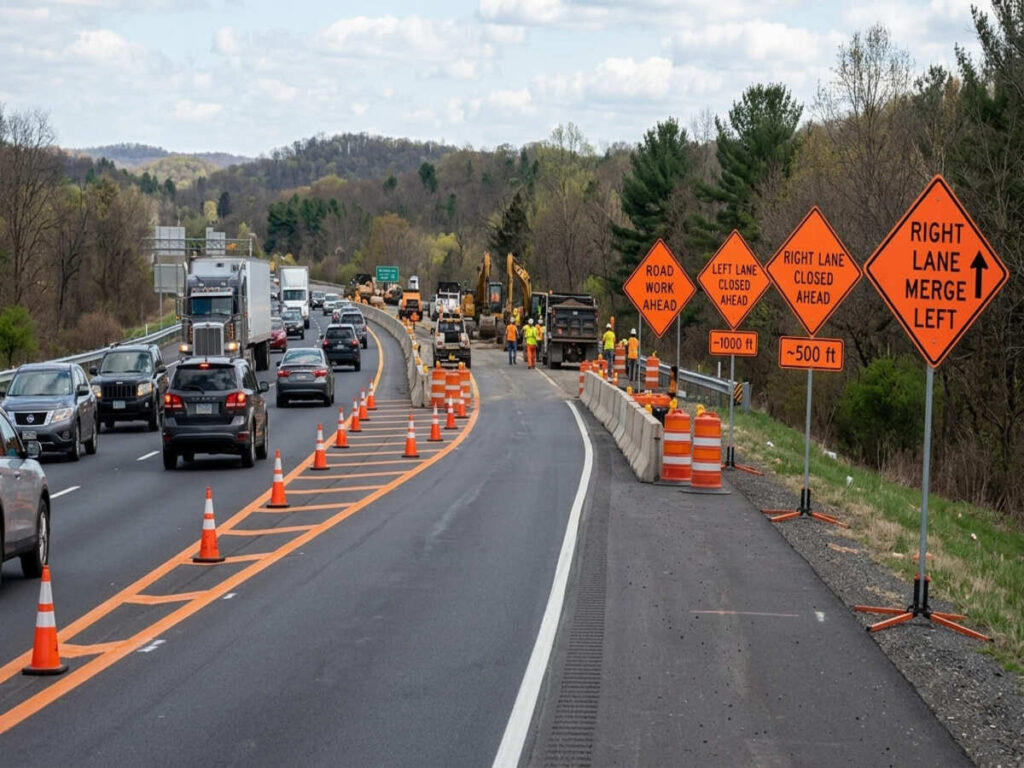
Warum die Einhaltung der MUTCD Chevron-Zeichen eine nicht verhandelbare technische Verpflichtung ist
Jährlich, Unfälle, die von der Straße abgekommen sind, machen etwa 100 % aus 55% aller Verkehrstoten in den Vereinigten Staaten. Die Federal Highway Administration (Fhwa) gemeldet 19,515 Todesopfer bei Verkehrsunfällen in 2022, die aktuellsten verfügbaren Zahlen für das Gesamtjahr – eine deutliche Erinnerung daran, dass die horizontale Kurvendarstellung Leben rettet (Quelle: https://Highways.dot.gov/safety/RwD).
MUTCD-Chevron-Schilder – die W1-8 Chevron Alignment-Zeichen gemäß MUTCD Abschnitt 2C.12 – stellen einen der direktesten technischen Eingriffe gegen kurvenbedingte Unfälle dar. Dennoch kommt es immer noch häufig zu Compliance-Verstößen. Bei Prüfungen des FHWA-Abteilungsbüros werden regelmäßig Abstandsüberschreitungen festgestellt, Mängel der Retroreflexion, und fehlende Haftbefehlsdokumente als wiederkehrende Feststellungen bei Bundeshilfeprojekten.
Dieser Artikel liefert eine technische Analyse auf Compliance-Niveau von MUTCD Abschnitt 2C.12. Es deckt die Mandate der SHALL-Ebene ab, die Haftbefehlslogik, die MUTCD 11. Edition-Updates, und die Dokumentationsstandards, die sowohl die reisende Öffentlichkeit als auch den zuständigen Ingenieur schützen. Größentabellen und Ableitungsformeln für Abstände werden in begleitenden Cluster-Beiträgen behandelt, die gegebenenfalls verlinkt sind.
Die regulatorische Anatomie von MUTCD Abschnitt 2C.12
MUTCD-Abschnitt 2C.12 ist Teil 2C – Platzierung und Anwendung von Warnzeichen – des Handbuchs zu einheitlichen Verkehrskontrollgeräten. Teil 2C ist selbst eine Teilmenge von Teil 2, die alle Autobahnbeschilderungen regelt. Ingenieure, die 2C.12 als eigenständige Regel betrachten, haben den Standard falsch verstanden: Es verweist auf die allgemeinen Bestimmungen von Teil 2A, MUTCD Abschnitt 1A.09 Definitionen, und Tabelle 2A-1 Retroreflexionsanforderungen durchgehend.
Die 11. Ausgabe der MUTCD, im Dezember veröffentlicht 2023 mit einer dreijährigen Compliance-Übergangsfrist, mehrere 2C-Bestimmungen umstrukturiert und Formulierungen verschärft, die in der 10. Ausgabe Ermessensspielraum waren. Ingenieure, die Projekte verwalten, die sich über den Übergangszeitraum erstrecken, müssen ermitteln, welche Edition die Entwurfsphase jedes Projekts regelt.
Das SOLL / SOLLEN / MAI Sprachhierarchie
MUTCD Abschnitt 1A.09 definiert drei operative Begriffe, die im gesamten Handbuch – und insbesondere im gesamten MUTCD-Abschnitt 2C.12 – unterschiedliche rechtliche Bedeutung haben:
- SOLL — Ein verbindlicher Standard. Eine Abweichung stellt eine Nichteinhaltungsfeststellung dar. Ohne ein formelles Ausnahmeverfahren besteht kein technischer Ermessensspielraum.
- SOLLEN – Hinweise, die eine widerlegbare Vermutung begründen. Wenn ein Ingenieur ein W1-8 auf einer Kurve auslässt, die die Schwellenwerte auf SOLLTE-Niveau erfüllt, die Begründung muss im Ingenieurprotokoll dokumentiert sein.
- MAI – Eine freizügige Option. Es gilt das Ermessen des Ingenieurs ohne Dokumentationspflicht.
Die falsche Klassifizierung einer SOLL-Bestimmung als SOLLTE in der Projektdokumentation ist einer der folgenreichsten Fehler, die ein Compliance-Ingenieur machen kann. Sowohl Delikt-Discovery- als auch FHWA-Prüfungsprüfer prüfen diesen Unterschied genau.
Die rechtliche Grundlage des Bundes – 23 CFR Teil 655
Über Projekte des Federal-Aid Highway Program, Die Einhaltung der MUTCD ist Bundesgesetz, keine Empfehlung. Titel 23, Code of Federal Regulations, Teil 655, Unterabschnitt F legt die MUTCD als nationalen Standard für alle Verkehrskontrollgeräte auf Straßen fest, die für den öffentlichen Verkehr geöffnet sind und Bundesmittel erhalten.
Staatliche MUTCD-Ergänzungen müssen eine FHWA-Äquivalenzgenehmigung erhalten und dürfen die bundesstaatlichen Mindestbeträge nicht senken. Ingenieure bei staatlich finanzierten Projekten sollten bestätigen, ob das Projekt auf einer Bundeshilferoute liegt und welche erlassenen Ergänzungskontrollen – die staatliche Ergänzung oder die bundesstaatliche MUTCD – übernommen werden, bevor sie einen Compliance-Standard nennen.
Definition des W1-8 Chevron-Ausrichtungszeichens – Bezeichnung, Varianten, und Anwendbarkeit
Der MUTCD-Chevron-Schilder Die unter Abschnitt 2C.12 fallenden Fahrzeuge tragen die Bezeichnung W1-8. Dies sind Warnzeichen – gelber Hintergrund, schwarze Chevron-Legende – deren einzige Funktion darin besteht, die horizontale Ausrichtung für herannahende Autofahrer darzustellen. Es handelt sich nicht um Hinweisschilder zur Geschwindigkeitsbegrenzung und sie tragen keine Regelungsbefugnis.
Zeichenbezeichnung und Varianten
Unter der Bezeichnung W1-8 existieren zwei Ausrichtungsvarianten:
- W1-8 — Rechtskurvenausrichtung. Der Chevron zeigt nach rechts, zeigt die Straßenkurven nach rechts an.
- W1-8a — Linkskurvenausrichtung (gespiegelt). Die Chevron-Punkte sind übrig. Die Auswahl der falschen Variante ist ein wiederkehrender Befund der FHWA-Prüfung und führt zu einer falschen Fahrerführung in Linkskurven.
Die FHWA-Standard-Straßenschilder und -Markierungen (SHSM) Das Dokument enthält die maßgeblichen Konstruktionszeichnungen für beide Varianten. Ingenieure, die W1-8-Schilder spezifizieren, müssen sich für genaue Proportionen auf SHSM beziehen, Legendengewicht, und Randabmessungen, anstatt sich auf die Katalogblätter der Anbieter zu verlassen.
Retroreflexionsanforderungen – Ein MUSS-Konformitätsschwellenwert
In der MUTCD-Tabelle 2A-1 sind Mindestwerte für die Retroreflexion für gelbe Warnschilder festgelegt. In der 11. Ausgabe wurden die Anforderungen an die Planenklasse für Hochgeschwindigkeitsanlagen erhöht: W1-8-Schilder auf Straßen mit Geschwindigkeitsangaben oder einem 85. Perzentil von 45 Meilen pro Stunde oder mehr müssen mindestens mikroprismatische Folie vom Typ IV verwenden. Auf konventionellen Straßen mit niedrigerer Geschwindigkeit bleibt die Beplankung vom Typ III akzeptabel.
Die Aufrechterhaltung der Retroreflexion – nicht nur die Einhaltung der Erstinstallationskonformität – ist der Standard. FHWAs Vorschrift für das Retroreflexionsmanagement von Schildern (23 CFR 655.603) verlangt von den Behörden, dass sie eine Methode zur Bewertung und Ersetzung von Schildern beibehalten, die unter die Mindest-RA-Werte fallen. Eine Verschlechterung von W1-8 auf einer Hochgeschwindigkeitskurve, die unter den Schwellenwert in Tabelle 2A-1 fällt, ist ein Verstoß auf SOLL-Niveau.
Für komplette W1-8-Panelabmessungen, Substratspezifikationen, und Sheeting-Klassentische, Weitere Informationen finden Sie in unserem ausführlichen Beitrag Abmessungen des Chevron-Zeichens, Größen & Spezifikationen.
Garantieanalyse gemäß MUTCD Abschnitt 2C.12 – Wenn die Installation obligatorisch ist
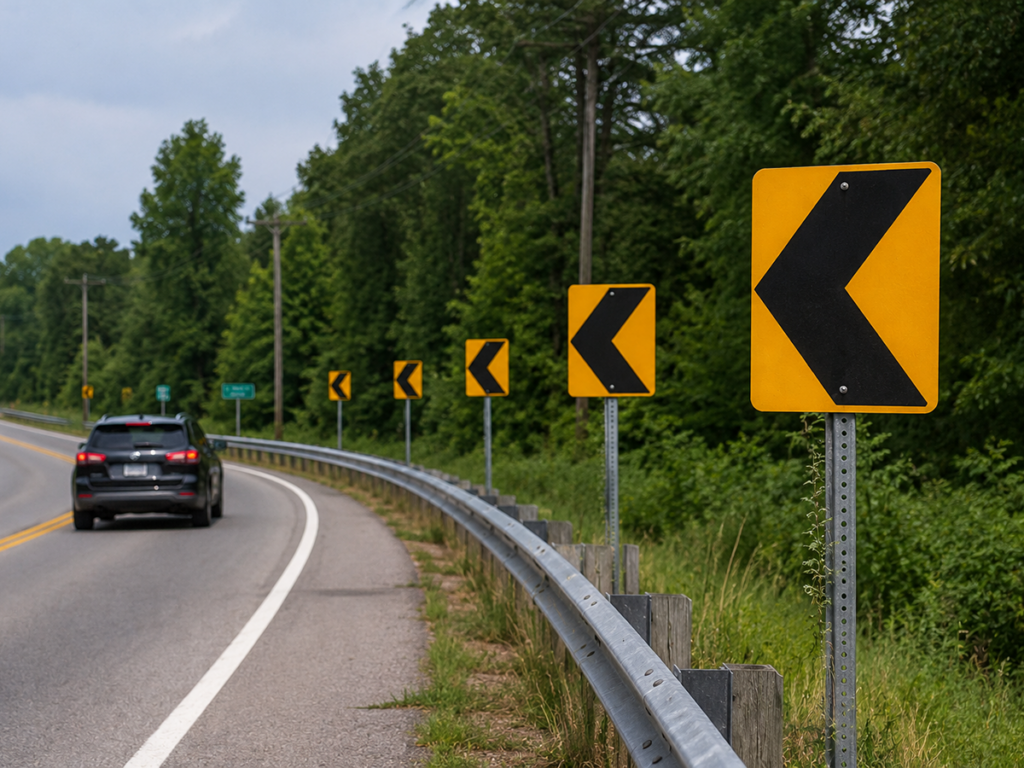
Abschnitt 2C.12 „Gerechtigkeitsanalyse“ ist die erste Compliance-Verpflichtung des Ingenieurs. Vor der Angabe MUTCD-Chevron-Schilder an einem Projekt, Der verantwortliche Ingenieur muss feststellen, ob die Kurvengeometrie und der Betriebskontext eine Installationsanforderung auf SOLL-Ebene auslösen oder unter die Anleitung auf SOLL-Ebene fallen.
Geometrische Schwellenwerte – Die „Ausrichtung ist nicht offensichtlich“.’ Standard
MUTCD Abschnitt 2C.12 schreibt die Installation von W1-8 in horizontalen Kurven vor, „wo die Ausrichtung für den Fahrer nicht offensichtlich ist“.’ Die FHWA hat diesen Schwellenwert anhand ergänzender Leitlinien und staatlicher DOT-Handbücher interpretiert, Typischerweise wird dies durch Ballbank-Indikatorstudien umgesetzt. Ein Ballbankwert, der eine empfohlene Geschwindigkeit von 14–16 Meilen pro Stunde oder mehr unter der angegebenen Geschwindigkeit ergibt, stellt eine starke technische Rechtfertigung für einen W1-8-Genehmigungsbefehl dar.
Die 11. Ausgabe hat diese Formulierung im Vergleich zu der eher diskretionären Formulierung der 10. Ausgabe verschärft, Dadurch wurde die Orientierung für viele Kurventypen effektiv in eine stärkere Compliance-Erwartung umgewandelt. Ingenieure, die vorhandene Schilderbestände überprüfen, sollten zuvor dokumentierte Kurven neu bewerten, da sie gemäß den Kriterien der 10. Ausgabe keine W1-8-Schilder rechtfertigen.
Betriebsgeschwindigkeit und Abgrenzungsdefizite als Mitauslöser
Die Kurvengeometrie allein vervollständigt die Warrant-Analyse nicht. Drei operative Co-Auslöser interagieren mit der Geometrie, um das vollständige Bild des Haftbefehls zu erstellen:
- 85Die Annäherungsgeschwindigkeit des Th-Perzentils überschreitet die Kurvenhinweisgeschwindigkeit um ein Vielfaches
- Keine durchgehende Kantenmarkierung zur Abgrenzung bei Nacht
- Dokumentierter Unfallverlauf mit Verlassen der Fahrbahn in der betreffenden Kurve
Wenn neben der qualifizierenden Geometrie alle drei Co-Auslöser vorhanden sind, Die Anleitung auf SOLLTE-Ebene in Abschnitt 2C.12 fungiert effektiv als MUSS-Verpflichtung gemäß dem dokumentierten technischen Beurteilungsstandard.
Mehrkurvensequenzen – Anforderungen an kontinuierliche Serien
Auf Straßen mit aufeinanderfolgenden Kurven – S-Kurven, Serpentinen, und Gebirgsautobahnkorridore – Abschnitt 2C.12 befasst sich mit der Kontinuität. Das MUTCD erlaubt es Ingenieuren nicht, jede Kurve in einer Sequenz isoliert zu behandeln, wenn die kombinierte Ausrichtung zu einem kontinuierlichen Abgrenzungsmangel führt. Eine kontinuierliche Behandlung des Korridors W1-8 ist erforderlich, wenn der Kurvenabstand nicht ausreicht, um den Fahrern eine Neuorientierung zwischen den abgegrenzten Segmenten zu ermöglichen.
Zusammengesetzte Kurven – zwei unterschiedliche Radien in direkter Folge – erfordern eine technische Beurteilung der Chevron-Ausrichtung am Radiusübergangspunkt. In der 11. Auflage wurden explizite Hinweise zu diesem Fall hinzugefügt, was in der 10. Ausgabe vollständig dem Ermessen des US-Verkehrsministeriums überlassen wurde.
Installationsstandards – Seitliche Platzierung, Montagehöhe, und Sign Support Compliance
Sobald der Haftbefehl die Installationspflicht festlegt MUTCD-Chevron-Schilder, Abschnitt 2C.12 und die darin enthaltenen Bestimmungen regeln, wie jedes Schild angebracht werden muss. Hierbei handelt es sich um Maßanforderungen auf SOLL-Ebene – nicht um Designpräferenzen.
Seitliche Platzierung und Clear-Zone-Interaktion
Gemäß Abschnitt 2C.12 müssen W1-8-Schilder in einem ausreichenden seitlichen Abstand vom Rand des befahrenen Weges angebracht werden, um von der Einfahrtsspur aus freie Sicht auf die Schildfläche zu gewährleisten. Der Standardversatz auf zweispurigen Landstraßen beträgt 6 Zu 12 Fuß vom befahrenen Wegrand entfernt, gemessen bis zur nahen Seite des Schildes.
Diese Platzierungsanforderung interagiert direkt mit den Freiraumstandards des AASHTO Roadside Design Guide. Auf Landstraßen mit hoher Geschwindigkeit, Die freie Zone kann sich über 20–30 Fuß von der befahrenen Wegkante erstrecken, Es sind abreißbare Schilderhalterungen für jedes Schild erforderlich, das innerhalb der freien Zone installiert wird. Starre Pfosten innerhalb der Freizone ohne Abreißsicherung stellen unabhängig davon einen Sicherheitsmangel am Straßenrand dar MUTCD-Chevron-Schilder Compliance-Ermittlung.
Anforderungen an die Montagehöhe
MUTCD Abschnitt 2A.18 regelt die Mindestmontagehöhen für alle Straßenschilder, einschließlich W1-8. Die geltenden Mindestwerte sind:
| Überkopfschilder über dem Bürgersteig | Mindesthöhe (ft) | Mindesthöhe (M) |
| Ländliche Gebiete und Autobahnen | 5.0 ft | 1.5 M |
| Geschäft / Fußgängerzonen | 7.0 ft | 2.1 M |
| Überkopfschilder über dem Bürgersteig | 17.0 ft | 5.2 M |
Quelle: MUTCD Abschnitt 2A.18, Tabelle 2A-2
Die Messung erfolgt von der Höhe der Fahrbahnkante bis zur Unterkante der Schildertafel. Ingenieure müssen sicherstellen, dass die endgültigen Neigungs- und Bankettbedingungen an jedem Installationsort zu konformen Montagehöhen führen – bei Schilderlayouts vor der Planierung wird dies häufig verfehlt.
Unterstützen Sie die Absturzsicherheit – MASH-Konformität ist obligatorisch
Alle Schilderhalterungen für straßenseitige W1-8-Installationen bei Bundeshilfeprojekten müssen dem AASHTO-Handbuch zur Bewertung von Sicherheitshardware entsprechen (MAISCHE) Kriterien für die Unfallsicherheit. Grundsatzschreiben der FHWA vom Januar 2020 hat MASH als erforderlichen Standard für alle neuen Hardwareinstallationen bei Bundeshilfeprojekten etabliert, ersetzt den NCHRP-Bericht 350.
Vorhandene NCHRP 350-kompatible Hardware, die vor dem MASH-Einführungsdatum installiert wurde, kann bis zum Austausch in Betrieb bleiben. Jedoch, Bei jeder Neuinstallation – einschließlich des Austauschs eines beschädigten Pfostens – muss MASH-kompatible Hardware verwendet werden. Dies ist eine der häufigsten FHWA-Prüfungsfeststellungen bei Projekten mit W1-8-Schilderinstallationen.
Abstand und Reihenkonfiguration – Konformitätsschwellenwerte, die Ingenieure kennen müssen
MUTCD Abschnitt 2C.12 legt maximale Abstandsschwellen auf MUSS-Ebene für Installationen der W1-8-Serie fest. Während die vollständige Abstandsableitungsformel den Kurvenradius berücksichtigt, Entwurfsgeschwindigkeit, und Ablenkungswinkel – wird im begleitenden Abstandspfosten behandelt, Ingenieure müssen die Compliance-Grenzen verstehen, die die MUTCD selbst vorschreibt.
Geschwindigkeitsbasierte maximale Abstandsschwellenwerte
Die 11. Ausgabe fügte explizite maximale Abstandswerte als SOLL-Sprache hinzu – eine deutliche Verschärfung gegenüber der 10. Ausgabe, was den maximalen Abstand zur Angabe der DOT-Anleitung ließ. Die folgende Tabelle gibt die Schwellenwerte der MUTCD-Richtlinien der 11. Ausgabe wieder:
| Designgeschwindigkeit (Meilen pro Stunde) | Maximaler Abstand (ft) | Designgeschwindigkeit (Meilen pro Stunde) | Maximaler Abstand (ft) |
| 25 | 40 | 50 | 80 |
| 30 | 50 | 55 | 100 |
| 35 | 60 | 60 | 120 |
| 40 | 70 | 65–70 | 150 |
Quelle: MUTCD 11. Ausgabe Abschnitt 2C.12, Tabelle 2C-X
Das Überschreiten dieser maximalen Abstandswerte auf einer Qualifikationskurve stellt ein MUSS-Niveau dar MUTCD-Chevron-Schilder Verstoß. Ingenieure, die bestehende Installationen anhand der 11. Ausgabe überprüfen, müssen Abstandsüberschreitungen als obligatorische Korrekturmaßnahmen kennzeichnen.
Die vollständige Ableitung kurvenspezifischer Chevron-Intervalle – einschließlich der radiusbereinigten Abstandsformel – finden Sie in unserem Begleitbeitrag: Chevron-Schilderabstand & Platzierungsformel.
Mindestanforderungen an die Serienkonfiguration
Abschnitt 2C.12 legt Mindestserienanforderungen fest, die regeln, wie eine W1-8-Installation relativ zur Kurvengeometrie beginnen und enden muss:
- Das erste Schild der Reihe muss am oder vor dem PC positioniert werden (Krümmungspunkt) der horizontalen Kurve, Bereitstellung einer positiven Führung, bevor der Fahrer in die Kurve eintritt.
- Die Serie muss über den gesamten Kurvenbogen bis mindestens zum PT fortgesetzt werden (Tangentenpunkt).
- Auf zusammengesetzten Kurven, Die Vorzeichenreihe darf nicht am Radiusübergang enden – sie muss sich über die gesamte Ausdehnung der kombinierten Kurve fortsetzen.
- Mindestanzahl der Zeichen: Keine Kurve, die sich für die W1-8-Behandlung qualifiziert, darf in der Serie weniger als drei Zeichen erhalten, unabhängig von der Kurvenlänge.
MUTCD 11. Ausgabe, Aktualisierungen von Abschnitt 2C.12 – Die Änderung, die Delta-Ingenieure kennen müssen
Die MUTCD 11. Ausgabe, Dezember veröffentlicht 16, 2023, hat gezielte Änderungen an Abschnitt 2C.12 vorgenommen, die direkte Auswirkungen auf die Compliance haben. Ingenieure, die keine Bereitstellungs-für-Bereitstellungs-Deltaanalyse gegenüber der 10. Edition durchgeführt haben, arbeiten möglicherweise nach veralteten Standards bei Projekten, die bereits in den Konformitätszeitraum der 11. Edition eingetreten sind.
Wichtige Bestimmungenänderungen in der 11. Ausgabe
Anwendbarkeitserweiterung: Die 11. Ausgabe fügt der Anwendbarkeitserklärung W1-8 ausdrücklich Umsteigerampen und kanalisierte Abbiegespuren hinzu. Die Sprache der 10. Auflage implizierte diese Berichterstattung; Die 11. Ausgabe macht es zu einer expliziten Bestimmung auf SOLL-Ebene.
- Maximaler Abstand als SOLL-Sprache: Wie im Abschnitt erwähnt 5, In der 11. Ausgabe wurden Höchstwerte für Geschwindigkeitsabstände von Leitlinien in verbindliche Standards umgewandelt – eine Materialverschärfung.
- Upgrade der Retroreflexion: Beplankung vom Typ IV ist jetzt das MUSS-Minimum für Hochgeschwindigkeitsfahrzeuge (45 Meilen pro Stunde+) Anwendungen. Typ III reichte in der 10. Edition für alle herkömmlichen Straßenanwendungen aus.
- Verbundkurvenführung: Die 11. Ausgabe fügt spezifische Formulierungen zur Serienkontinuität bei zusammengesetzten Kurvenradiusübergängen hinzu – zuvor eine Lücke in der Norm.
FHWA-Implementierungsfristen und Übergangspflichten
Die FHWA hat im Dezember die 11. Ausgabe im Bundesregister veröffentlicht 16, 2023. Die Compliance-Übergangsstruktur sieht zwei Gleise vor:
- Neue Projekte: Alle neuen Projekte mit Entwurfsbeginnterminen ab Dezember 16, 2023 müssen ab Projektbeginn die Bestimmungen der 11. Edition einhalten.
- Bestehende Installationen: Die rückwirkende Konformität für bestehende W1-8-Installationen richtet sich nach den Zeitplänen der behördlichen Schilderverwaltung. Die Anforderung zur Retroreflexionsverbesserung gilt für Ersetzungen, die am oder nach dem Datum des Inkrafttretens der Edition vorgenommen werden.
Ingenieure bei Projekten, die sich in der Übergangsphase befinden – bei denen die Entwurfsphase unter der 10. Edition begann, sich die Konstruktion jedoch bis in den Compliance-Zeitraum der 11. Edition erstreckt – müssen den Kontrollstandard an jedem Entwurfsentscheidungspunkt dokumentieren. Die Abteilungsbüros der FHWA haben in einigen Bundesstaaten projektspezifische Leitlinien zu diesem Übergang herausgegeben.
Anwendungskontexte mit hohem Risiko – Rampen, Kreisverkehr, und Stadtkurven mit geringem Radius
MUTCD-Optionsscheine mit Chevron-Zeichen gelten für alle horizontalen Kurvenkontexte, Drei geometrische Umgebungen erfordern jedoch besondere technische Aufmerksamkeit, da Standardgenehmigungs- und Installationslogiken nicht offensichtliche oder widersprüchliche Ergebnisse liefern.
Anwendungen für Kreuzungsrampen
Schleifen- und Diagonal-Umsteigerampen gehören zu den W1-8-Anwendungskontexten mit dem höchsten Risiko. NHTSA-Unfalldaten zeigen, dass auf Anschlussrampen ungefähr eine Unfallrate im Gelände auftritt 2.3 Mal höher pro Fahrzeugmeile als auf Hauptautobahnabschnitten.
Durch die explizite Einbeziehung von Umsteigerampen in die 11. Ausgabe wird die Unklarheit beseitigt, die in der 10. Ausgabe bestand. Schleifenrampen mit Radien, die Richtgeschwindigkeiten erzeugen 15 mph oder mehr unter der Annäherungsgeschwindigkeit MÜSSEN eine kontinuierliche W1-8-Behandlung erhalten. Ingenieure müssen auch zwischen W1-8-Zeichen unterscheiden (MUTCD Abschnitt 2C.12) und Chevron-Ausrichtungsschilder in Blutbereichen (MUTCD Abschnitt 2C.62) — Hierbei handelt es sich um separate Bestimmungen, die unterschiedliche geometrische Kontexte regeln.
Kreisverkehranwendungen
Der Kreisverkehr-Designleitfaden der FHWA (FHWA-SA-10-006) befasst sich mit der Abgrenzung W1-8 für Umgehungsstraßen. Die Umlaufbahn eines mehrspurigen Kreisverkehrs – insbesondere auf den Ausfahrtsabschnitten, wo die Überhöhung zu Herausforderungen bei der Abgrenzung führt – löst routinemäßig die Genehmigungskriterien gemäß Abschnitt 2C.12 aus.
Splitter-Insel-Anflugkegel stellen eine eindeutige Frage dar: Die Annäherungsausrichtung, die zur Splitterinsel führt, kann zu der Meldung „Ausrichtung nicht offensichtlich“ führen’ Bedingung, die die Installation von W1-8 auslöst. Ingenieure, die Kreisverkehre entwerfen, müssen eine explizite 2C.12-Genehmigungsanalyse sowohl für die Umfahrungsstraße als auch für jede Zufahrt durchführen.
Stadtkurven mit geringem Radius
Auf Kurven mit Radien unten 100 Fuß – häufig in städtischen Straßennetzen und engen Rampengeometrien – führen Standard-2C.12-Abstandstabellen zu Schilderabständen, die angesichts von Gebäuderückschlägen möglicherweise physikalisch nicht erreichbar sind, Versorgungskonflikte, oder Einschränkungen der Sichtweite.
MUTCD Abschnitt 2C.12 bietet einen technischen Beurteilungsweg für nicht standardmäßige Bedingungen. Wenn der Standardabstand nicht erreichbar ist, Der Ingenieur muss dokumentieren: (1) die geometrische Einschränkung verhindert eine Standardplatzierung, (2) der alternative Abstand oder das ausgewählte Gerät, (3) die technische Analyse, die die Gleichwertigkeit unterstützt, Und (4) Unterschrift und Datum des zuständigen Ingenieurs. Nicht dokumentierte Abweichungen sind sowohl im FHWA-Prüfungs- als auch im Deliktskontext nicht zu rechtfertigen.
Dokumentation, Anforderungen an das Ingenieurstudium, und Compliance-Verteidigungsaufzeichnungen
Eine korrekte W1-8-Installation ist erforderlich, aber nicht ausreichend für eine vollständige Installation MUTCD-Chevron-Schilder Einhaltung. Die technische Aufzeichnung – die dokumentierte Warrant-Analyse, Designentscheidungen, und Verifizierungsdaten – ist das Compliance-Produkt, das die Prüfung und Aufdeckung von Rechtsstreitigkeiten durch die FHWA übersteht.
Was MUTCD 1A.09 Erfordert ein Ingenieurstudium
MUTCD Abschnitt 1A.09 definiert eine „Ingenieurstudie“.’ als formeller oder informeller Prozess der Datenerhebung, Analyse dieser Daten, und dokumentierte Schlussfolgerungen. Für W1-8-Entscheidungen, Zu den Mindeststudienelementen gehören::
- Daten zur horizontalen Kurvengeometrie: Radius, Ablenkwinkel, Länge
- Daten zur Betriebsgeschwindigkeit: Ergebnisse des Ballbank-Indikators oder Geschwindigkeitsmessung im 85. Perzentil
- Vorhandenes Abgrenzungsinventar: Randlinienpräsenz, Zustand des nachträglich montierten Leitpfostens, Beurteilung der Sichtbarkeit bei Nacht
- Absturzdaten: Mindestens dreijährige Historie für die Probandenkurve aus den Absturzaufzeichnungen des staatlichen DOT
- Dokumentierte Schlussfolgerung: Haftbefehl erfüllt oder nicht erfüllt, mit unterstützender Analyse
- Ingenieur für Datensatzidentifikation: Name, amtliches Kennzeichen, Unterschrift, Datum
Prüfer der FHWA erwarten, diese Dokumentation in den Projektunterzeichnungsplandateien zu finden. Ihr Fehlen – nicht die Installationsentscheidung selbst – wird häufig als Mangel angeführt.
Staatliche MUTCD-Ergänzungsinteraktionen
43 Staaten haben ihre eigenen MUTCD-Ergänzungen mit FHWA-Äquivalenzgenehmigung eingeführt. Mehrere davon stellen Anforderungen an MUTCD-Chevron-Schilder die die bundesstaatlichen Mindestwerte überschreiten. Zu den üblichen Ergänzungen auf Landesebene gehören::
- Strengere maximale Abstandswerte (einige Staaten schreiben vor 25% Kürzungen gegenüber den bundesstaatlichen Höchstwerten in Kurven mit jüngster Unfallhistorie)
- Obligatorische Beplankung vom Typ IV bei allen Geschwindigkeiten anstelle der Bundesgeschwindigkeit 45 mph+ Schwelle
- Erweiterte Haftbefehlsauslöser, die Kreuzungsannäherungsgeometrie zum Anwendungsbereich von 2C.12 hinzufügen
Ingenieure, die in mehreren Bundesstaaten an Korridorprojekten arbeiten, Bundeslandverwaltungsstraßen, oder Multi-State-DOT-Verträge – müssen die Kontrollergänzung für jedes Projektsegment bestätigen, bevor sie Zeichenpläne herausgeben. Die Anwendung der bundesstaatlichen MUTCD bei restriktiveren staatlichen Ergänzungskontrollen ist ein ebenso nicht konformes Ergebnis.
Compliance-Checkliste und Integration mit dem vollständigen Chevron Sign Standards Framework
Die Anforderungen an MUTCD-Chevron-Zeichen auf MUTCD-Ebene aus Abschnitt 2C.12, 2A.18, und Tabelle 2A-1 kann zu einer Konformitätscheckliste vor der Einreichung zusammengefasst werden, die Ingenieure auf jeden W1-8-Schilderplan anwenden sollten, bevor sie an die FHWA oder die staatliche DOT-Überprüfung eingereicht werden.
W1-8-Compliance-Checkliste vor der Einreichung
| # | Compliance-Element | SOLL / SOLLEN | Status |
| 1 | Garantiedokumentation: geometrischer Schwellenwert erreicht und dokumentiert | SOLL | ☐ Bestanden ☐ Nicht bestanden |
| 2 | Richtige Variante: S1-8 vs. W1-8a-Ausrichtung bestätigt | SOLL | ☐ Bestanden ☐ Nicht bestanden |
| 3 | Retrorefektivität: min. Typ IV (45 Meilen pro Stunde+) oder Typ III (unter 45 Meilen pro Stunde) angegeben | SOLL | ☐ Bestanden ☐ Nicht bestanden |
| 4 | Seitliche Platzierung: 6–12 Fuß Versatz von der zurückgelegten Wegkante bestätigt | SOLL | ☐ Bestanden ☐ Nicht bestanden |
| 5 | Montagehöhe: min. 5 ft ländlich / 7 ft urban gemäß MUTCD 2A.18 | SOLL | ☐ Bestanden ☐ Nicht bestanden |
| 6 | Zeichenunterstützung: MASH-konforme Breakaway-Hardware spezifiziert | SOLL | ☐ Bestanden ☐ Nicht bestanden |
| 7 | Abstand: innerhalb der maximalen Abstandsschwellenwerte von 2C.12 11. Ausgabe | SOLL | ☐ Bestanden ☐ Nicht bestanden |
| 8 | Serie: Minimum 3 Zeichen, PC-zu-PT-Abdeckung bestätigt | SOLL | ☐ Bestanden ☐ Nicht bestanden |
| 9 | Ingenieuraufzeichnung: Haftbefehlsanalyse mit PE-Unterschrift in den Akten | SOLL | ☐ Bestanden ☐ Nicht bestanden |
| 10 | Ausgabe: 11Anwendbarkeit der 4. Ausgabe für die Projektphase bestätigt | SOLL | ☐ Bestanden ☐ Nicht bestanden |
Fünf häufige FHWA-Auditergebnisse zu W1-8-Installationen
In den Auditberichten des FHWA-Abteilungsbüros und in den Sicherheitsüberprüfungsdokumenten der FHWA werden durchweg fünf wiederkehrende W1-8-Verstöße identifiziert:
- Ausfall der Retroreflexion — Installiert MUTCD-Chevron-Schilder unter den Mindest-RA-Werten ohne dokumentierten Austauschplan 23 CFR 655.603.
- Abstandsüberschreitung — Reihenabstände, die das 2C.12-Maximum überschreiten, MÜSSEN auf Kreuzungsrampen und Verbundkurven zulässig sein.
- Fehlendes Ingenieurstudium – W1-8-Einstufungs- oder Unterlassungsentscheidungen ohne dokumentierte Rechtfertigungsanalyse oder Identifizierung des Technikers.
- Falsche Variante installiert — W1-8 wird dort angegeben, wo W1-8a geometrisch erforderlich ist, Dadurch entsteht in Linkskurven ein fehlgeleitetes Chevron.
- Nicht MASH-konforme Beiträge – NCHRP 350 Hardware für Neu- oder Ersatzinstallationen nach 2020 im Rahmen von Bundeshilfeprojekten.
Die vollständige Ressource für Chevron-Schilderstandards
Dieser Artikel befasst sich mit dem Haftbefehl, gesetzlicher Auftrag, und Compliance-Schwellenwertschicht von MUTCD Abschnitt 2C.12 – die nicht verhandelbaren technischen Verpflichtungen, die jede W1-8-Bereitstellungsentscheidung regeln. Die Einhaltung dieser Vorgaben ist die Grundlage für alle weiteren W1-8-Ingenieurarbeiten.
Verkehrsingenieure, die die vollständige Referenz benötigen – von der MUTCD-Warrant-Analyse bis zur physikalischen Dimensionierung, Abstandsableitung, Retroreflexionsmanagement, staatliche Ergänzungsvarianten, und Kreisverkehranwendungen – finden Sie die vollständigen Standards und Platzierungsrahmen in unserer Säulenressource. Greifen Sie auf den vollständigen Leitfaden zu MUTCD-Chevron-Schilderstandards zu, Platzierungsanforderungen, und technische Spezifikationen für Verkehrssicherheitsexperten – die maßgebliche Referenz für Ingenieure, die Programme zur Einhaltung von Chevron-Schildern in jeder Größenordnung verwalten.
Referenzen
- Bundesstraßenverwaltung. (2023). Handbuch zu einheitlichen Verkehrskontrollgeräten für Straßen und Autobahnen, 11Auflage. UNS. Verkehrsministerium.
- Bundesstraßenverwaltung. (2023). Standard-Autobahnschilder und -markierungen (SHSM). UNS. PUNKT.
- Code of Federal Regulations. Titel 23, Teil 655 - Verkehrskontrollgeräte auf Bundesstraßen und anderen Straßen und Autobahnen.
- Bundesstraßenverwaltung. (2022). Daten des Programms zur Sicherheit bei Abfahrten auf der Straße. Büro für Sicherheit.
- American Association of State Highway und Verkehrsbeamte. (2011). Leitfaden zur Straßengestaltung, 4Auflage. Aashto.