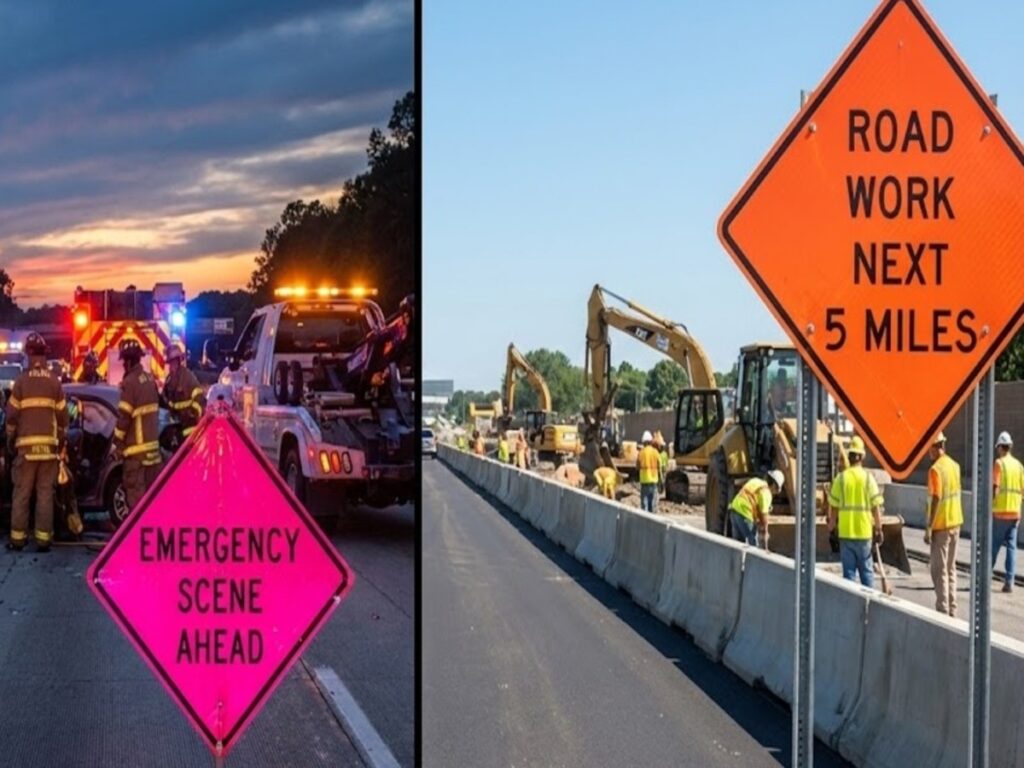
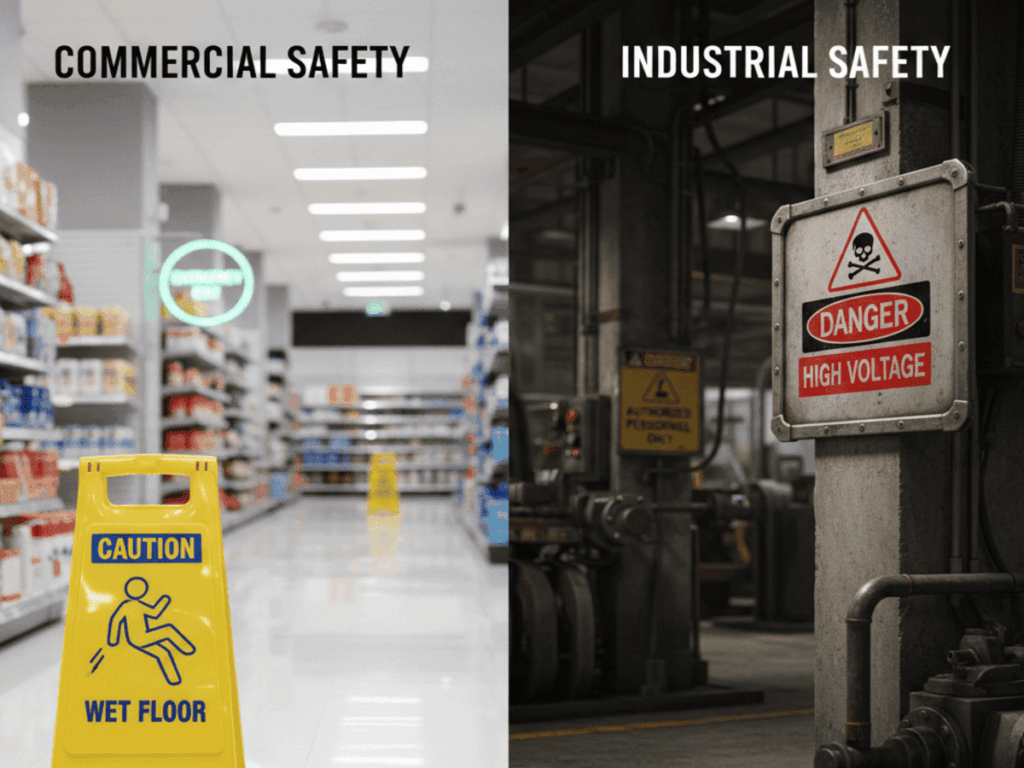
In commercial construction, a faded sign is merely a cosmetic flaw. However, in an oil refinery or a deep-pit mine, the failure of industrial safety signage is a critical risk that can lead to catastrophic accidents. While standard signs are often built for basic regulatory compliance, high-spec industrial safety signage is engineered for “extreme survival.” This guide analyzes why transitioning from commercial to heavy industrial environments requires a fundamental shift in material science, engineering standards, and long-term risk management.
For a deeper understanding of how the right materials play a crucial role in ensuring durability and safety in challenging environments, check out our blog on Construction Sign Materials That Last in Harsh Site Environments.
The Importance of Industrial Safety Signage for Hazardous Environments
Industrial safety signage is not just a tool for compliance; it’s essential for life-saving communication. In high-risk environments like oil rigs, gas fields, and mining sites, safety signs must withstand extreme conditions and provide clear, unambiguous warnings.
Environment 1: Chemical & Corrosion Resistance in Industrial Safety Signage
Common Construction Signage Materials:
Standard construction signage typically withstands exposure to sunlight, rain, and wind, but industrial signage faces far more severe conditions.
Industrial Safety Signage Challenges:
Oil rigs, chemical plants, and mining sites expose signs to sulfur hydrogen (H₂S), salt mist, acidic gases, and various solvents that rapidly degrade ordinary materials.
Industrial Solutions for Corrosion Resistance:
- Sub-Surface Printing: This technique involves printing inks on the backside of polycarbonate materials, making the material itself the protective layer for the ink.
- 316 Grade Stainless Steel: For extremely corrosive environments, stainless steel is a better alternative to ordinary aluminum, ensuring longevity even in salt-heavy areas.
- Sealed Edging Technology: Prevents chemical penetration that can cause layer separation in less durable materials.
Environment 2: Explosive Atmospheres & Anti-Static Industrial Safety Signage
Industrial Hazard:
In explosive environments, such as ATEX zones, the safety signage must not become a source of ignition.
Challenges of Static Electricity in Commercial Safety Signs:
PVC or polystyrene signage commonly used in construction sites can accumulate static charge, which, when friction is applied, may result in sparks, creating a fire hazard in sensitive environments.
Industrial Solutions for Anti-Static Signage:
- Conductive & Anti-Static Materials: These signs incorporate carbon fibers or conductive coatings to prevent static charge buildup.
- Non-Sparking Fasteners: Fasteners used to mount industrial signage are carefully selected to prevent the creation of sparks during installation.
Environment 3: Physical Impact & Abrasion Resistance in Industrial Safety Signage
Challenges in Mining & Drilling Environments:
Mining sites face constant exposure to flying debris, high-pressure water jets, and mechanical vibrations. This “abrasion effect” can quickly damage standard signage materials.
Solutions for Industrial Signage Durability:
- Embossed or Engraved Metal Signs: Metal signs with engraved or embossed lettering remain readable even when the surface wear off the ink.
- Heavy-Duty Polyurethane Coatings: This additional layer of protection ensures that reflective sheeting can resist impacts and abrasion, making it ideal for high-traffic, high-damage environments.
Compliance Standard Comparison: OSHA vs. ATEX/MSHA
Commercial Safety Signage Standards (ANSI/OSHA):
In general commercial environments, the focus is on preventing common injuries such as falls and object strikes, governed by ANSI/OSHA standards. These are designed to provide basic safety but don’t necessarily cover more specialized industrial environments.
Industrial Safety Signage Standards (MSHA/ATEX/GHS):
In industrial settings, especially in hazardous environments, safety signage must meet specific standards, including the handling of dangerous chemicals (GHS), mine evacuation guidance (MSHA), and more stringent color and reflectivity standards.
Compliance Comparison Table
| Standard | Reflectivity | Fire Resistance |
|---|---|---|
| Commercial (ANSI/OSHA) | Moderate | Standard |
| Industrial (MSHA/ATEX) | High (Type IV Reflective) | High (Fire Resistant)** |
Case Study: A Tale of Two “Danger” Signs
To understand the Total Cost of Ownership (TCO), we compared a standard ANSI Danger sign in two different five-year lifecycles:
Scenario A: NYC Skyscraper (Commercial)
- Stressor: Urban humidity and seasonal temperature shifts.
- Material: 0.040″ Aluminum / Economy Vinyl.
- Outcome: 90% legibility after 5 years.
- Total Life-Cycle Cost: $85 USD.
Scenario B: Gulf of Mexico Rig (Offshore)
- Stressor: Constant Salt Spray (ASTM B117), UV Index 12+, and $H_2S$ exposure.
- Material: 316 Stainless Steel / Sub-Surface Polycarbonate.
- Outcome: A “commercial” sign would fail (delaminate) in 6 months. By using industrial specs, the sign lasted 5+ years without replacement.
- Total Life-Cycle Cost: $350 USD (High-spec) vs. $1,200+ USD (Cost of 4 cheap replacements + offshore labor).
The Verdict: In heavy industry, durability is not a luxury; it is a cost-saving strategy.
Technical Performance Comparison Table
| Property | Commercial Grade (PVC/Alum) | Industrial Grade (316SS/PVDF) |
| Service Temp | -10°C to 50°C | -40°C to +95°C |
| Salt Spray (ASTM B117) | < 100 Hours | > 2,000 Hours |
| Static Dissipation | None (Hazardous) | Anti-Static (< $10^9\ \Omega$) |
| Reflectivity Grade | Class 2 (Engineer Grade) | Class 1W (Micro-prismatic) |
| Cleaning Method | Damp Cloth | High-Pressure Chemical Wash |
FAQ: Navigating Heavy Industrial Safety Signage Procurement
“Why did my reflective film turn black after exposure to crude oil?”
This discoloration is caused by a chemical reaction that degrades the reflective layer when it comes into contact with certain hydrocarbons.
“Which colors offer the highest visibility in underground mining environments?”
Fluorescent orange and photoluminescent materials are proven to maximize visibility in low-light and confined spaces.
“What are the installation requirements for safety signage in explosive zones?”
In explosive areas, signs must be installed with grounding mechanisms and non-sparking fasteners, ensuring no part of the signage could contribute to ignition in volatile environments.
Conclusion: Why Investing in Industrial Safety Signage is Critical
In industrial sectors like oil and gas, mining, and chemicals, selecting “industrial-grade” signage isn’t just about opting for a premium product. It’s about ensuring zero accidents in the harshest conditions. The right signage protects workers, ensures compliance with international safety standards, and saves lives.
At OPTRAFFIC, we specialize in providing safety signage solutions that are designed to withstand the toughest environments. Our range of high-quality signs ensures safety and compliance across various industries, from oil rigs to chemical plants. With a focus on durability, visibility, and regulatory adherence, OPTRAFFIC delivers signage that you can rely on.