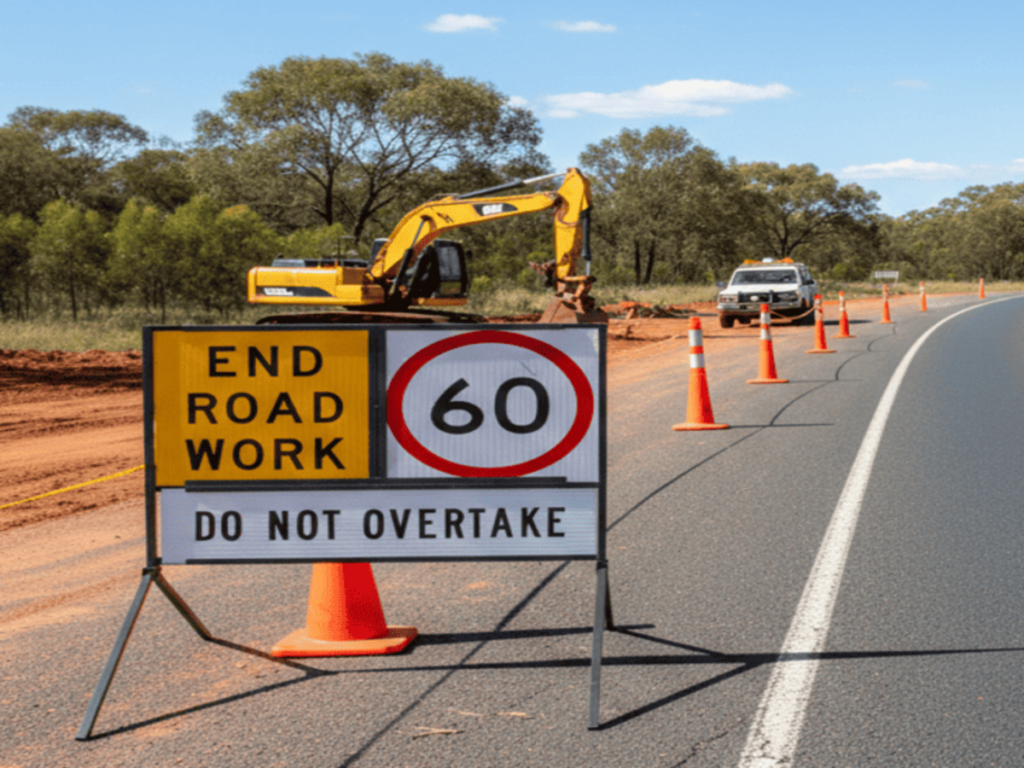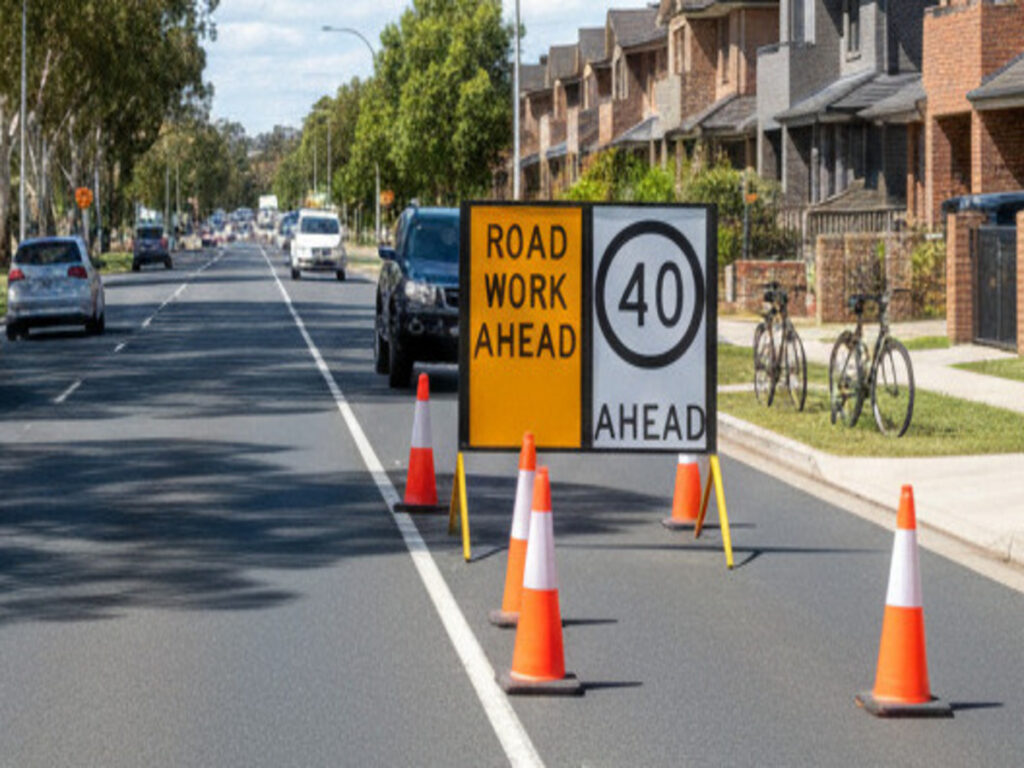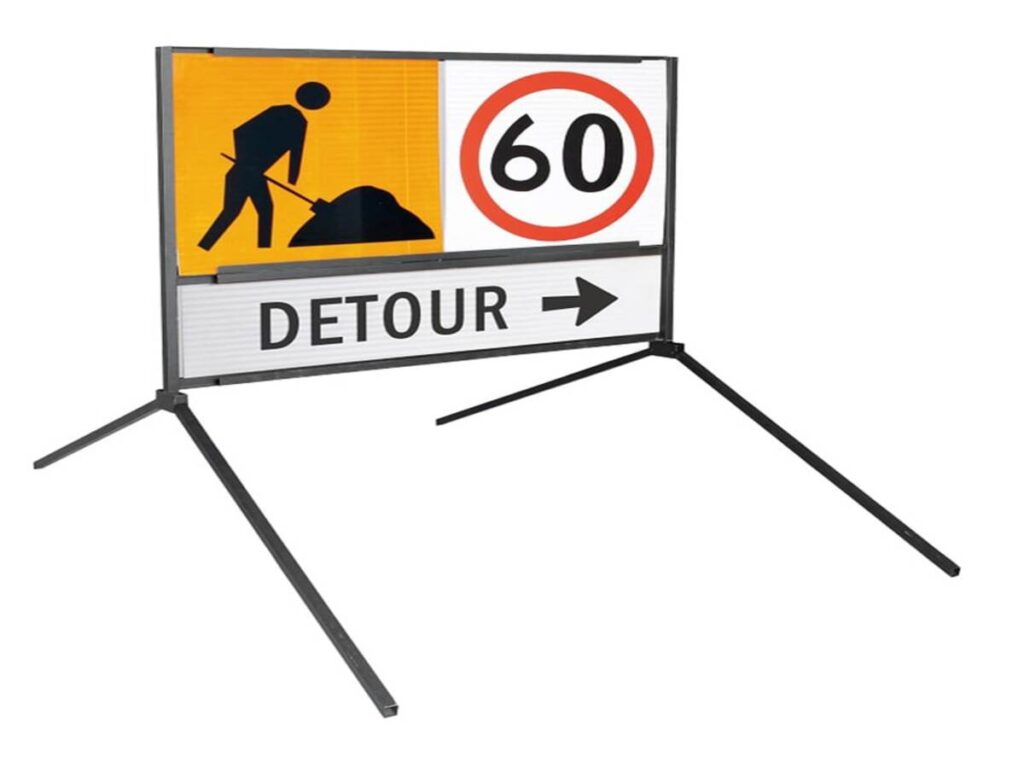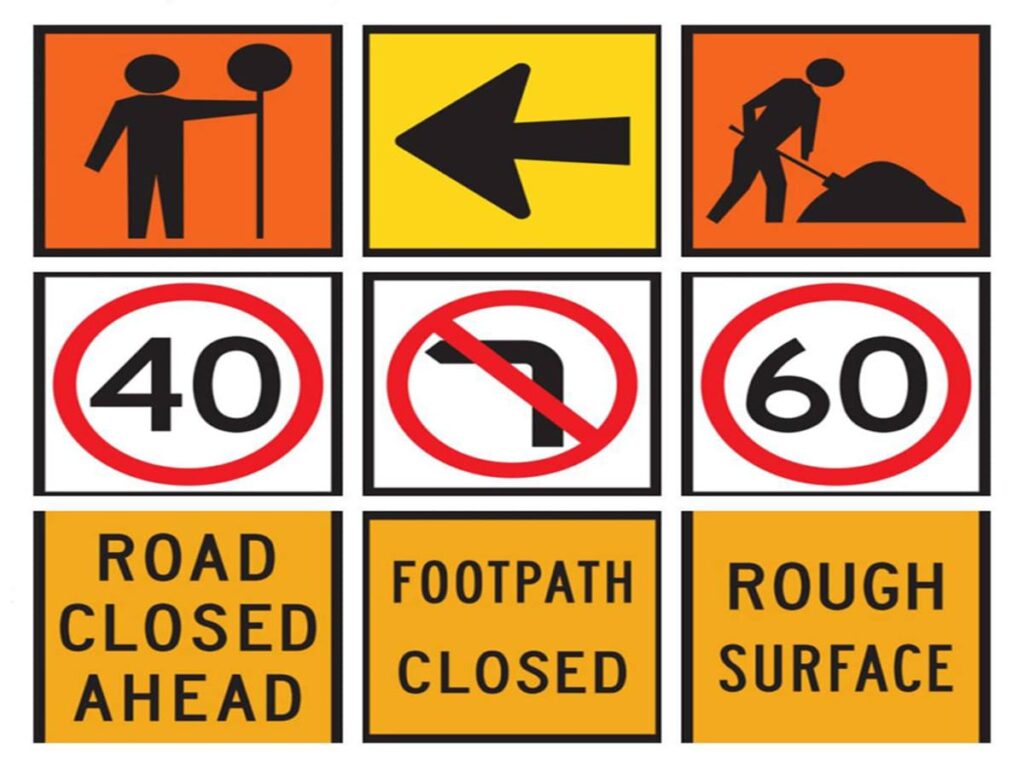
Australian weather conditions demand robust traffic control equipment. High winds frequently dislodge standard temporary signage, creating immediate liability risks for civil contractors. A blown-over sign provides no warning to approaching motorists, potentially leading to catastrophic site accidents.
The industry solution lies in the structural engineering of the signage itself. While flat sheets offer a basic visual barrier, professional contractors utilise Box Edge Signs to maintain stability in adverse conditions.
This technical guide analyzes the physics behind Box Edge Corflute. It explains why this design outperforms flat sheets in high-wind environments and details the engineering principles that keep sites safe.
The Physics of Signage Failure: Why Flat Sheets Bow
To understand the solution, project managers must first understand the failure mode. Standard flat Corflute signs act as sails, capturing wind energy rather than deflecting it.
The Aerodynamics of the “Sail Effect”
When wind strikes a flat 600mm x 600mm surface, it exerts significant pressure (drag force). Without structural reinforcement, standard 5mm polypropylene lacks the stiffness to resist this load perpendicular to its face.
بالتالي, the material bows in the centre. As the wind velocity increases, the deflection angle becomes more acute. هذا “sail effect” transfers excessive kinetic energy into the frame, often causing the entire bi-pod stand to tip over if not adequately ballasted.
Material Deformation and Frame Disengagement
The primary failure mode, لكن, is not the frame tipping, but the sign “popping out.” As a flat sheet bows under wind load, its horizontal width effectively shortens. The edges pull inward, away from the frame legs.
Once the sheet deforms enough, the edges disengage from the metal channels. The sign becomes a projectile, leaving the metal frame standing but the hazard warning absent. Flat sheets rely solely on friction, a force that fails the moment the material deforms.
Engineering the Box Edge Design Solution
ال Box Edge design fundamentally alters the structural properties of the sign, transforming a flexible membrane into a rigid panel.
Increasing Rigidity Through Folded Geometry
Manufacturers create this feature by die-cutting specific score lines into the Corflute sheet. The perimeter folds backward to form a rigid, 3D return.
In engineering terms, this folded edge increases the “Second Moment of Area.” This property defines a shape’s resistance to bending. By adding depth to the perimeter, the sign resists wind load much like a steel I-beam resists vertical load. The face remains flat even under high pressure, preventing the “bowing” effect that leads to failure.
The Friction Fit Mechanism
ال Box Edge creates a specific interface with standard bi-pod legs. The folded return adds thickness and tension within the frame channel.
- Flat Sheet: Sits loosely in the channel; rattles in the wind.
- Box Edge: Wedges tightly into the channel.
This tension creates a mechanical lock. Friction holds the sign vertically in place, preventing it from sliding down the legs or rattling loose during gusts.
Box Edge vs. Flat Corflute: A Structural Comparison
The difference in performance is measurable across several key metrics.
Wind Load Resistance Metrics
Field experience demonstrates a clear hierarchy in stability. Flat sheets often fail in wind speeds as low as 30-40 كم/ساعة. في المقابل, Box Edge signs, when properly ballasted, withstand significantly higher wind loads without deformation. This reliability reduces the maintenance burden on traffic control crews, who otherwise must constantly patrol the site to reinstate fallen signage.
Long-Term Shape Retention
Polypropylene softens in high heat. During the Australian summer, flat sheets often warp permanently due to thermal expansion. ال Box Edge structure acts as a frame, constraining the material and maintaining a flat, وجه عاكس. This ensures the Class 1W reflectivity remains oriented towards the driver, rather than curved towards the sky or ground.
Installation Best Practices for High-Wind Zones
Even the most rigid Box Edge Corflute requires correct installation to function safely.
Correct Ballast (Sandbag) التنسيب
Sandbag placement dictates stability. Crews must place sandbags on the frame legs, never on the sign face itself.
- Incorrect: Placing weight on the bottom bar of the sign damages the Box Edge and obscures the retroreflective information.
- صحيح: Weighting the legs lowers the centre of gravity, preventing the entire assembly from tipping.
Deflection Angles for Aerodynamic Efficiency
Traffic controllers should angle signs approximately 3-5 degrees away from the roadway. This technique serves a dual purpose.
- Glare Reduction: It prevents headlights from reflecting directly back into the driver’s eyes (a blinding hazard).
- Wind Deflection: It reduces the direct wind load on the sign face, allowing gusts from passing trucks to deflect rather than impact fully.
خاتمة: Engineering Safety into Temporary Signage
Safety compromises are unacceptable in traffic management. A sign lying flat on the ground offers no protection to road crews and presents a legal liability to contractors.
Box Edge design provides the necessary structural integrity for Australian roads. It ensures the hazard warning remains visible, رَأسِيّ, ومتوافق, بغض النظر عن الظروف الجوية.
Secure your site against the elements. Explore the full range of heavy-duty Box Edge Signs for your next infrastructure project.
التعليمات
While exact wind ratings depend on the ballast (sandbag) weight used on the frame, Box Edge signs significantly outperform flat sheets. Field observations show flat sheets often disengage or bow in winds as low as 30-40 كم/ساعة. A correctly installed and ballasted Box Edge sign can maintain structural integrity in much higher wind gusts, making them essential for highway and open-road projects.
لا. They are designed to fit standard galvanised bi-pod legs used throughout the Australian traffic control industry. The key difference is the fit: the folded edge creates a tighter “friction fit” inside the leg channel compared to a loose flat sheet, preventing the sign from rattling or sliding down.
Optraffic strongly advises against it. Weather conditions in Australia are unpredictable. A calm morning can turn into a windy afternoon. بالإضافة إلى, the draft created by passing B-double trucks generates immediate, high-velocity wind loads that can suck a flat sign out of its frame. Box Edge is the safest default for all roadside applications.
The weight difference is negligible. A Box Edge sign is still lightweight enough for a traffic controller to carry multiple units safely. The fold adds rigidity without adding the bulk of a metal or timber sign.