International drivers frequently experience confusion on United States highways. They look at the roadside boards and notice missing information. Why do these crucial safety markers lack a unit of measurement? Engineers design these displays with strict intentionality. Traffic safety professionals must understand the psychology and history behind these choices. This article explains the exact reasoning.
The Core Speed Limit Sign Meaning in America
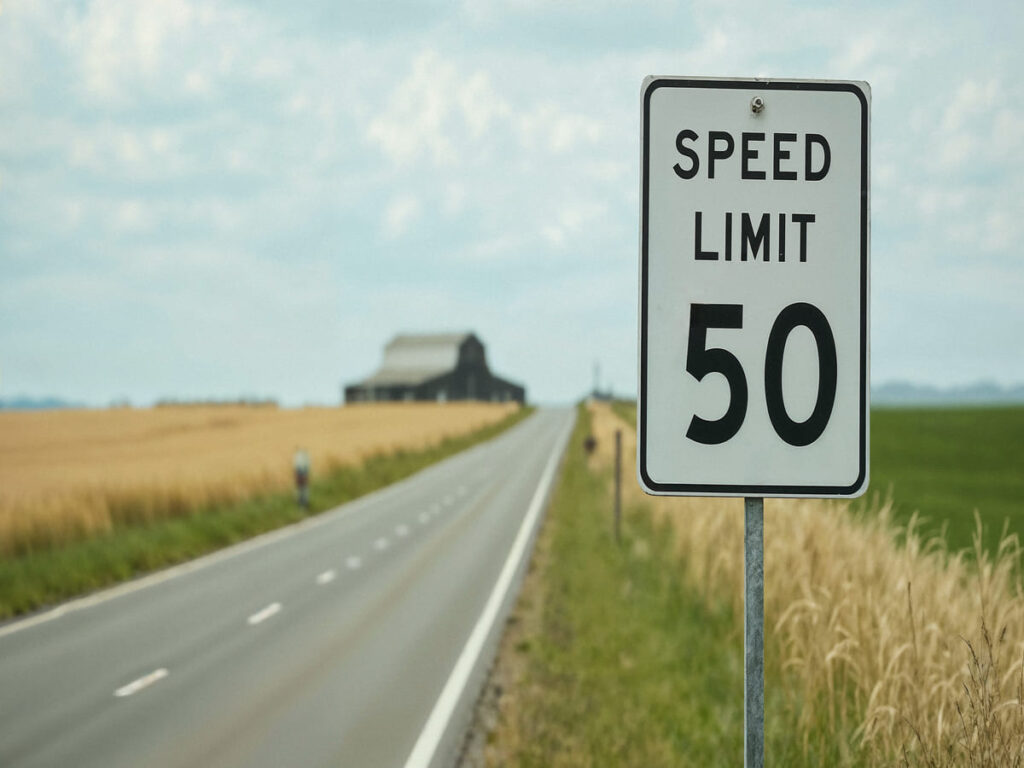
The Federal Highway Administration (FHWA) standardizes all roadway displays across the country. They publish the official Manual on Uniform Traffic Control Devices (MUTCD). Every MUTCD speed limit sign follows exact federal design specifications. The federal law recognizes miles per hour (mph) as the sole legal standard.
Therefore, traffic engineers view the “mph” text as completely redundant. Standardizing this simple numeric format significantly reduces municipal manufacturing and maintenance costs. Procurement managers prefer this standardization because it streamlines the purchasing process.
Maximizing Legibility for High-Speed Drivers
Motorists traveling at highway velocities possess minimal reaction time. Engineers must prioritize instant visual comprehension above all else. When a driver approaches a speed limit traffic sign, they must read it instantly. Removing the measurement unit allows manufacturers to enlarge the numerical digits significantly. Large digits on a speed limit traffic sign drastically increase the legibility distance. Drivers can process a two-digit number in a fraction of a second. Extra text creates unnecessary visual clutter on the board. Clutter distracts the human brain during critical decision-making moments. Clean designs directly reduce accident rates on interstate highways. Site foremen prioritize these highly legible designs to maintain work zone safety.
Professor Regan from the UNSW Research Centre for Integrated Transport Innovation confirms this cognitive danger. “To capture the attention of the driver… the messaging must be crystal clear,” Regan explains. “A sign can be confusing when the messaging is unclear… This takes away from the original purpose of the sign and becomes more of a distraction as drivers try to understand what the sign is telling them to do.”
The 1975 Metric Conversion Act: A Brief History
The United States actually attempted to adopt the metric system previously. Congress passed the Metric Conversion Act in the year 1975. The federal government wanted to align with international trading partners. Highway departments installed new experimental boards displaying both kilometers and miles.
However, the American public fiercely rejected this national transition. Drivers found the dual measurements deeply confusing and highly distracting. The federal government eventually abandoned the mandatory metric push. Roadway authorities quickly reverted to the traditional, unit-less numeric displays. The failed experiment permanently solidified the dominance of the implied “mph” standard.
What is the Only Highway in the US with Metric Road Signs?
You can still find one surviving relic of the 1970s metric experiment. Interstate 19 (I-19) operates as a unique geographical anomaly today. It connects Tucson, Arizona, directly to the Mexican border.
So, What is the only highway in the US with metric road signs? Interstate 19 proudly holds this exclusive national title. The Arizona Department of Transportation (ADOT) maintains distances in kilometers here. However, the actual speed limit signs still mandate miles per hour. This contrast creates a fascinating hybrid system for visiting drivers. Local businesses actively fight any government efforts to replace the metric exit numbers. They rely heavily on the unique kilometer markers for tourism identity.
Legal Uniformity Across States for Any MUTCD Speed Limit Sign
The United States operates under a complex federalist legal system. Each individual state legislature controls its own specific traffic laws. However, the federal government mandates uniform visual communication across all borders.
A driver traveling from New York to California requires strict visual consistency. The unit-less boards provide an absolute regulatory standard everywhere. The simple black-on-white design removes all potential legal ambiguity. When a motorist crosses state lines, the core visual language remains identical. This strict uniformity prevents legal disputes regarding out-of-state speeding tickets.
Regulatory Enforcement Versus Advisory Warnings
Traffic engineers utilize color psychology to communicate different legal boundaries. Site foremen and safety planners must recognize these distinct color codes immediately. Traffic authorities classify these regulations into four types of speed limits to ensure proper site compliance.
White rectangular boards represent strict absolute or fixed regulatory laws. Police officers actively enforce the exact number printed on these surfaces. Conversely, yellow boards indicate advisory limits for specific temporary hazards. Engineers place these yellow markers near sharp curves or hidden intersections. Professionals can master these critical visual distinctions by studying the yellow speed limit signs vs white speed limit signs differences. Understanding these distinct categories guarantees proper legal compliance in construction zones.
Pushing the Limits: Maximum Legal Highway Velocities
Foreign visitors frequently ask about maximum legal velocities in America. They often wonder if unlimited zones exist, similar to the German Autobahn. The United States strictly prohibits unlimited public highways anywhere.
State legislatures set maximum upper boundaries based on local road engineering. A few specific jurisdictions permit vehicles to travel at 85 mph. Texas State Highway 130 currently holds this highest national legal limit. No public road in the country permits a 100 mph limit. You can explore the exact history of these upper limits by reviewing the 100 mph speed limit USA myths and exceptions. Traffic authorities constantly study crash data before adjusting these maximum caps.
The Canadian Approach to Highway Transitions
Canada provides an excellent contrast to the American highway system. Canada successfully transitioned to the metric system during the late 1970s. Their highway departments faced the exact same legibility challenges as American engineers.
Canadian engineers chose a different visual solution to solve the problem. They display the numbers representing kilometers per hour. However, they prominently feature a “km/h” tab at the bottom of the board. This specific text prevents American tourists from driving dangerously fast. Border states in America occasionally use similar bilingual warning displays. Washington State places special warning boards near the British Columbia border.
Global Design Standards for Speed Limit Signs
Most European nations follow the Vienna Convention on Road Signs. This international treaty standardizes visual traffic communication across dozens of borders. European engineers face the unique challenge of multiple spoken languages.
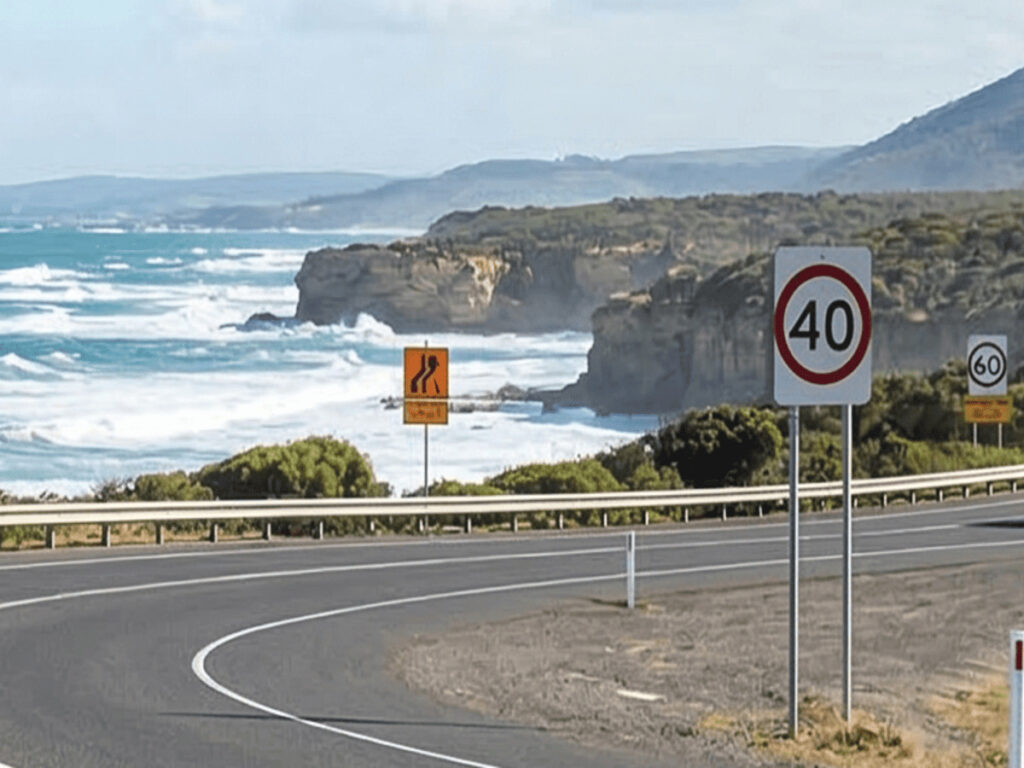
They utilize universal symbols and shapes instead of written text. A red circle signifies a strict prohibition or legal maximum limit. Like the United States, Europe often omits the specific measurement unit. European laws imply kilometers per hour as the universal baseline default. The American system achieves the exact same goal through different historical methods.
Federal Highway Administration (FHWA) Safety Principles
The Federal Highway Administration (FHWA) continuously evaluates the safety impact of road signage. Federal safety evaluations prove that highly legible, standardized signs act as critical crash countermeasures.
The MUTCD explicitly states that uniformity and simplicity are vital for traffic control effectiveness. The human brain processes singular, isolated data points much faster at high speeds. Adding a unit measurement creates unnecessary cognitive friction for the driver. Engineers want drivers watching the road, not reading a paragraph. This minimalist design philosophy provides drivers with maximum reaction time to adjust their speed safely.
Manufacturing a Compliant MUTCD Speed Limit Sign
Producing a legal speed limit traffic sign requires strict engineering precision. Optraffic manufactures these custom traffic/road signs using heavy-duty gauge aluminum. Engineers apply High-Intensity Prismatic (HIP) reflective sheeting to every surface. This specific material guarantees maximum visibility during night operations. The manufacturing team die-cuts the exact MUTCD-approved fonts for the numbers.
Quality control inspectors test every batch for proper retroreflectivity levels. Proper testing prevents the reflective numbers from blinding approaching drivers. Site foremen heavily rely on this rigorous manufacturing data. Bulk orders require consistent quality across thousands of individual boards. Optraffic delivers this proven manufacturing reliability to major infrastructure projects globally.
Proper Equipment Procurement for Compliant Roadways
Safety planners require precise knowledge of these national design standards. Procurement managers must source equipment that meets strict MUTCD federal guidelines. Site foremen need reliable, high-visibility tools to manage dynamic traffic flows.
Deploying standard regulatory displays requires strict adherence to federal font rules. Managers must ensure all custom traffic/road signs meet proper reflectivity requirements. Understanding the “implied mph” rule prevents costly procurement errors during planning. Proper knowledge guarantees that safety teams maintain legally compliant work zones. Managers who understand these engineering principles run much safer project sites.
Optraffic engineers provide premium solutions for these exact regulatory challenges. We manufacture high-visibility custom traffic/road signs for massive infrastructure projects. Optraffic experts guarantee strict compliance with regional and federal standards and support procurement teams with reliable, bulk order fulfillment worldwide. Procurement managers can explore the fully compliant safety signage catalog today.
FAQ
The MUTCD establishes miles per hour as the absolute legal standard. Omitting the text allows manufacturers to print larger numbers. These large digits drastically improve visual legibility distances for drivers.
Interstate 19 in Arizona proudly displays distance markers in kilometers. However, the actual speed limit traffic signs still mandate miles per hour. Local businesses actively fight to keep these unique metric distance markers.
No, they communicate completely different legal boundaries. White boards represent strict regulatory laws that police officers enforce. Yellow boards provide strong advisory suggestions for approaching hazards or sharp curves.
Texas State Highway 130 permits vehicles to reach 85 mph. No public jurisdiction in the country allows a 100 mph limit. State authorities constantly study crash data before setting these maximum caps.
Canada successfully transitioned to the metric system during the 1970s. Canadian boards display numbers representing kilometers per hour. Engineers also include a clear “km/h” tab below the numbers. Professionals can explore these traffic safety signs differences globally to understand international highway standards. The specific Canadian text prevents American tourists from driving dangerously fast.