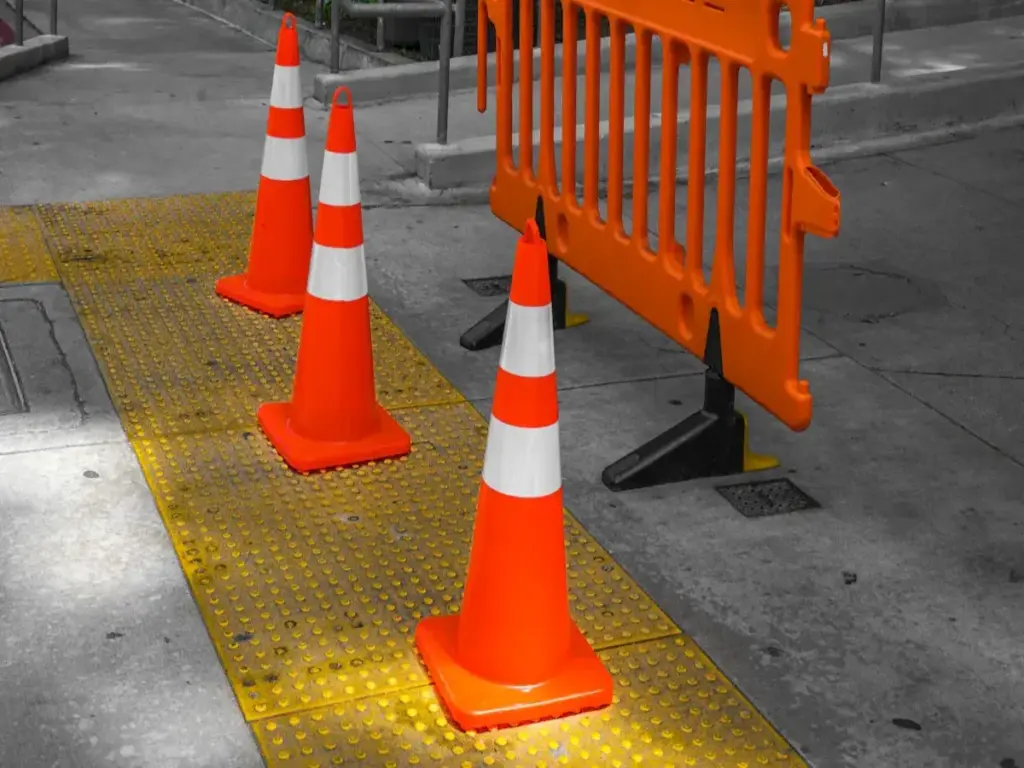
Introduction: Defining the British Road Safety Standard
Procurement managers recognize that UK traffic cones are more than just plastic markers. They represent a sophisticated balance of material science and legal compliance. In the United Kingdom, road authorities demand specific silhouettes to manage high-speed traffic and unpredictable weather. This guide provides an in-depth analysis of why the slim design of roadwork traffic cones remains the mandatory choice for infrastructure projects. We will examine the technical specifications, aerodynamic benefits, and the regulatory framework that defines every motorway traffic cone on British soil.
Technical Specifications of UK Traffic Cones Under BS EN 13422
Every UK traffic cone must adhere to the British Standard BS EN 13422. This regulation ensures that portable road equipment performs reliably under stress. Without this certification, a safety traffic cone cannot legally occupy a public highway in the UK.
Understanding the Weight Requirements for UK Traffic Cones
Weight determines the stability of any roadwork traffic cone. Standard 750mm UK traffic cones typically weigh between 4kg and 5kg. Higher-specification 1000mm motorway traffic cones often exceed 7kg. The standard requires specific weight-to-height ratios to ensure the cone stays upright.
Professional Insight: The construction of these units significantly impacts their performance. While many contractors prefer the heavy-duty stability of two-part models, others opt for the simplicity of single-mold designs. To understand the critical differences in durability and cost, read our detailed comparison on One-piece vs. Two-part Traffic Cones.
Reflective Sleeve Classes for Nighttime Traffic Cones
Visibility is the primary defense for road workers. UK traffic cones utilize retroreflective sleeves to return light to driver headlights.
- Class R1B Sleeves: These provide standard reflectivity for low-speed urban roads.
- Class R2 Sleeves: These offer superior luminance for high-speed motorway traffic cones. B2B buyers must specify the sleeve class during bulk traffic cone orders to meet the “Chapter 8” Traffic Signs Manual requirements.
Why the Slim Design of UK Traffic Cones Enhances Aerodynamic Stability
The most striking feature of UK traffic cones is their slender, “slim” profile compared to international models. This design is a direct response to the unique challenges of the British road network.
Mitigating the Vortex Effect on Motorway Cones
High-speed Heavy Goods Vehicles (HGVs) create massive air displacement. A wide-bodied cone catches this air like a sail, leading to “cone migration.” The slim profile of the skinny cone reduces the lateral surface area. By allowing air to flow more freely around the cone, engineers minimize the wind load. This ensures that roadwork traffic cones stay in their exact placement.
Space Optimization for Roadwork Traffic Cones in Narrow Lanes
British carriageways are notoriously narrow. When contractors set up a lane closure, every centimeter of road space is valuable. UK traffic cones with a smaller footprint allow for wider “running lanes” for public vehicles. This slender design provides clear vertical guidance without encroaching on the limited space available for traffic flow.
Want more professional insights on the stability and space-saving benefits of skinny cones? Explore our full guide here: Why Skinny Cones with Slim Bodies and Black Bases Stand Out.
Material Science: The Durability of Modern UK Traffic Cones
Durability directly impacts the ROI of bulk traffic cone orders. Modern manufacturing uses advanced polymers to ensure these cones survive the harsh British climate.
LDPE vs. PVC in UK Traffic Cone Production
Most high-quality UK traffic cones use Low-Density Polyethylene (LDPE) for the cone body. LDPE offers superior flexibility. It allows the cone to deform upon impact and return to its original shape. Cheaper PVC alternatives often crack in freezing temperatures. Given that road cones must endure multiple winters, UV-stabilized materials are essential for long-term deployments.
While LDPE provides superior cold-weather resilience, PVC remains a critical material for specific urban and private sector applications. Understanding these material trade-offs helps procurement managers balance cost and performance. For a deeper look into these specific benefits, read our guide on What Are PVC Traffic Cones and Why Are They Essential for Traffic Management?
Logistical Advantages of UK Slim Traffic Cones for Bulk Orders
In large-scale infrastructure projects, logistics account for a significant portion of the budget. The physical design of UK traffic cones directly influences transport costs and storage efficiency.
Maximizing Stacking Density for UK Traffic Cones
The slim profile allows for much tighter stacking compared to wider international models. This high stacking density means more units fit onto a single standard UK pallet. For bulk traffic cone orders, this efficiency reduces the total number of delivery vehicles required.
- Space Efficiency: A single pallet can often carry up to 150 units of 750mm traffic cones.
- Transport Costs: Higher density lowers the shipping cost per unit, improving the project’s bottom line.
Manual Handling and Worker Safety with UK Traffic Cones
Safety extends beyond the road to the workers deploying the equipment. The slender top of roadwork traffic cones provides an ergonomic grip for manual handling.
- Rapid Deployment: Workers can carry multiple cones simultaneously safely.
- Weight Distribution: The concentrated weight in the base ensures that once dropped, UK traffic cones land and stay in a stable position, reducing the time workers spend in the live “danger zone.”
Strategic Deployment: How UK Traffic Cones Create Safer Working Zones
Proper placement is as critical as the quality of the hardware. Contractors must follow the “Traffic Signs Manual Chapter 8” when deploying UK traffic cones on public highways.
Creating Effective Tapers with Motorway Traffic Cones
The “taper” is the most dangerous part of any road closure. It guides vehicles from an open lane into a restricted path.
- Spacing Requirements: Regulations dictate specific spacing between motorway traffic cones based on the road’s speed limit.
- Visual Continuity: The slim, tall silhouette creates a “wall” effect that is highly visible from a distance. This gives drivers ample time to react and change lanes safely.
Weather Resistance of Roadwork Traffic Cones in the UK
British weather is notoriously unpredictable. Heavy rain and gales can easily displace inferior equipment.
- Hydrodynamic Design: The gap between the cone body and the base in two-part UK traffic cones allows surface water to flow through.
- Flood Prevention: This feature prevents the cone from acting as a dam during flash floods, ensuring roadwork traffic cones remain stable on saturated asphalt.
Environmental Sustainability and the Life Cycle of UK Traffic Cones
Modern B2B procurement increasingly prioritizes environmental impact. The lifecycle of a UK traffic cone now includes its eventual recycling.
Recycled Content in UK Traffic Cone Bases
Most leading manufacturers now produce the heavy-duty bases of UK traffic cones from 100% recycled PVC or rubber composite.
- Circular Economy: These bases often come from recycled cables or tires.
- Carbon Reduction: Using recycled materials significantly lowers the embodied carbon of bulk traffic cone orders.
End-of-Life Recycling for Safety Cones
At the end of their service life, damaged UK traffic cones do not have to end up in landfills.
- Material Recovery: Companies can granulate the LDPE tops and composite bases.
- Future Production: This granulated material feeds back into the production of new road cones, creating a sustainable loop for local authorities and private contractors.
Final Checklist for Procurement: Purchasing UK Traffic Cones
When finalizing bulk traffic cone orders, buyers must verify several technical factors to ensure long-term value.
Key Verification Points
- Certification: Does the product carry the BS EN 13422 mark?
- Sleeve Quality: Are the reflective sleeves Class R1B or Class R2?
- Material Integrity: Is the cone body UV-stabilized to prevent brittleness?
- Stability: Does the base weight meet the specific requirements for your road speed category?
Optraffic secures these standards by supplying fully certified EN 13422 traffic cones. Our manufacturing team specifically facilitates bulk traffic cone orders for major British infrastructure projects. This alignment with UK national safety regulations ensures that contractors receive durable, compliant equipment for every motorway deployment.
Conclusion: Investing in High-Performance UK Traffic Cones
The slim design of traffic cones is not a matter of aesthetics; it is an engineering necessity. From the aerodynamic stability required on motorways to the logistical benefits of high-density stacking, these units provide the backbone of British road safety. By understanding the technical nuances of BS EN 13422 and the material benefits of advanced polymers, procurement professionals can ensure they choose the right roadwork cones for every project.
Frequently Asked Questions: Expert Insights on UK Traffic Cones
The slim design of UK cones specifically addresses the unique challenges of British motorways. This profile reduces the surface area, which minimizes the “vortex effect” created by high-speed HGVs. By lowering wind resistance, these cones remain stable in their designated positions. Additionally, the slender shape allows for wider running lanes on the UK’s narrower road networks.
Under the BS EN 13422 standard, a 750mm traffic cone typically weighs between 4kg and 5kg. This weight must be concentrated in the base to ensure a low center of gravity. For high-speed environments, road authorities often mandate the heavier 1000mm traffic cones, which provide even greater stability against wind displacement.
Professionals should check the cone body for a permanent mark indicating EN 13422 compliance. Furthermore, verify the reflective sleeve class. For motorway use, the sleeve must meet Class R2 standards for maximum nighttime visibility. Always request a technical data sheet before placing bulk traffic cone orders to confirm these specifications.
While single-mold cones work well for low-speed urban areas, Optraffic recommends two-part UK traffic cones for heavy-duty infrastructure projects. The separation between the flexible LDPE top and the heavy composite base provides superior impact absorption. This expert-led design philosophy ensures the cone survives multiple collisions and extreme weather, providing a higher long-term return on investment for contractors.
Yes. Modern roadwork traffic cones contribute to a circular economy. Most manufacturers produce bases from 100% recycled PVC or rubber to reduce waste. However, Optraffic experts advise against using 100% recycled materials for the cone body itself. Purely recycled polymers often become brittle under the UK’s freezing winter conditions. To ensure maximum impact resistance and UV stability, we recommend a precise blend of virgin and recycled plastics. This expert approach maintains the flexibility of traffic cones, extending their service life and preventing premature cracking.