Railroad crossing safety remains a top priority for site foremen and engineers. This guide explores essential railway crossing signs and driving safety protocols. Effective signage prevents catastrophic accidents at high-risk intersections. Recent data shows Texas and California lead the nation in rail crossing collisions.
| Rank | State | Collisions | Deaths | Injuries |
| 1 | Texas | 283 | 20 | 81 |
| 2 | California | 185 | 49 | 49 |
| 3 | Florida | 125 | 25 | 60 |
Optraffic manufactures high-quality, durable traffic signs for complex railway environments. We design every sign for railway crossing to meet strict international safety standards. Our custom traffic signs ensure clear communication in high-risk zones. Procurement managers rely on Optraffic for reliable railway crossing signage solutions. Contact us today to secure your site with professional mounting kits and boards.
Railroad Crossing Types
Procurement managers categorize railroad crossings into two primary groups. These consist of controlled and uncontrolled intersections. Each environment presents unique safety challenges for drivers and pedestrians. Site safety improves when you select the correct railroad crossing signs.
Controlled Crossings
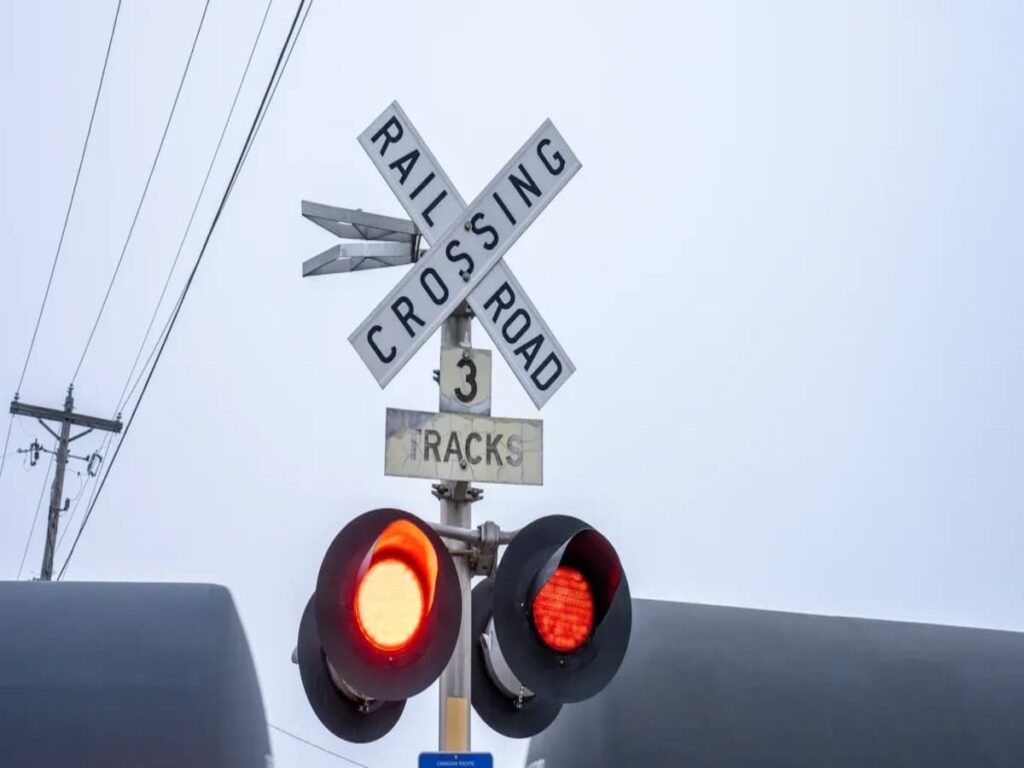
Controlled crossings utilize active warning devices for enhanced site safety. These systems include flashing lights, gates, and audible warning bells. Authorities refer to these as “active controls.” Busy industrial railroad crossings prioritize these high-visibility systems.
Pro Tip: Optraffic engineers durable signage to withstand heavy-duty rail environments.
The table below shows how many collisions happen at each crossing type:
| Crossing Type | Collision Percentage |
| Active Controls | 62% |
| Passive Controls | 28% |
| No Signs | 10% |
Uncontrolled Crossings
Uncontrolled crossings, or passive crossings, lack active electronic warning devices. Instead, these sites rely on passive signs like crossbucks. Drivers must look and listen for trains before crossing the tracks. Rural areas often feature these high-risk passive intersections.
- The US maintains over 130,000 passive crossings nationwide.
- About half of all railroad crossings remain uncontrolled.
- Custom traffic signs increase visibility at these remote locations.
Railroad Crossing Signs
Professional railway crossing signs prevent accidents and save lives. Traffic engineers categorize these into active and passive systems. Each sign for railway crossing provides clear instructions to drivers. Selecting high-grade materials ensures long-term visibility at industrial sites.
Advance Warning Sign for Railway Crossing
The advance warning sign serves as the primary alert for drivers. This round, yellow sign features a black “X” and two “R” letters. It commands drivers to slow down, look, and listen for trains. Site foremen install these signage units well before the actual tracks.
- High Visibility: Optraffic offers LED signs for better night visibility.
- Durability: Our signs withstand harsh weather in high-speed rail zones.
- Integration: Solar-powered LED signs connect to existing rail systems easily.
Crossbuck Sign
The crossbuck sign marks the exact location of the railroad crossing. This white “X” features the words “RAILROAD CROSSING” in bold black text. Modern traffic signs must comply with MUTCD standards for all public crossings. Railroad companies maintain these signage assets to limit legal liability.
- Legal Requirement: All public crossings must display a crossbuck sign.
- Maintenance: Rail authorities manage the upkeep of these signs.
- Driver Rule: Drivers must yield the right-of-way at every crossbuck.
No Train Horn Sign & Low Ground Clearance
Quiet zones require specialized no train horn signs for community safety. Trains do not sound horns in these zones except during emergencies. Drivers must remain extra alert without these audible warnings.
Low ground clearance signs prevent heavy trucks from stalling on tracks. This sign for railway crossing (W10-5) protects trailers and buses.
- Tractor-trailers: High risk of hanging up on uneven tracks.
- Buses: Large vehicles require extra clearance for safe passage.
- Personal Trailers: Low-clearance RVs must check grades before crossing.
Railroad Crossing Signals
Flashing Lights
Flashing lights are a main warning at railroad crossings. These lights turn on when a train is coming. The system checks the train’s speed and location. It turns on the lights to warn drivers and people walking. Bells often ring at the same time as the lights. This helps people who do not see the lights. Both flashing lights and bells help keep everyone safe near the tracks.
Gates and Barriers
Gates and barriers block the road when a train is near. The gate arms go down in order to show cars and people must stop. Many busy crossings use both lights and gates together for more safety. Raised medians and barrier walls stop drivers from going around the gates. Big railroads have added extra gates for cars and walkers to make crossings safer. In the United States, most railroad crossings do not have gates. This makes accidents more likely. Gates help lower crashes and protect people.
Warning Bells
Warning bells ring with the lights and gates at crossings. The bells start when a train is coming. The sound is loud enough for everyone to hear. Bells and sirens help people who do not see the lights. The bells stop after the train goes by and it is safe to cross.
Emergency Notification System (ENS)
The Emergency Notification System gives emergency contact details at every crossing. Each ENS sign shows the railroad’s emergency phone number. It also shows the National Crossing Inventory Number. This number helps emergency workers find the crossing fast. The ENS lets anyone report problems or emergencies quickly. This makes it easier to get help right away.
Railroad Crossing Safety Practices
Approaching the Crossing
Drivers must be careful near a railroad crossing. First, slow down and get ready to stop. Look both ways for a train. Listen for warning whistles or bells. Turn off the radio and open the window to hear better. Do not text or wear headphones. These can make you miss important signals.
- Slow down as you get close to the crossing.
- Only cross at places marked for railroad crossings.
- Watch for flashing lights, bells, or gates.
- Test your brakes to make sure you can stop.
- Go slow enough to stop if a train comes.
Tip: Rail safety education says trains can come faster than they look. Always think a train could be coming at every crossing.
Stopping and Looking
When you reach the crossing, stopping and looking is very important. Stop at least 15 feet from the tracks if you see flashing lights, gates down, or a train coming. Never stop your car on the tracks. If you must stop, make sure your car is not on the rails.
- Get rid of distractions and turn down the radio.
- Look both ways for trains, even if gates are up.
- Wait for gates to go all the way up and lights to stop before you go.
- Never drive around gates or try to beat a train.
- Always check for another train before you cross.
A table below shows how far you must stop:
| Situation | Minimum Stopping Distance |
|---|---|
| Flashing lights or lowered gates | 15 feet |
| Approaching train visible | 15 feet |
| No signals but tracks present | 15 feet |
Alert: Trains are wider than the rails. Always stop before the tracks to stay safe.
Crossing Safely
To cross safely, pay close attention and be patient. Do not change gears while on the tracks. This helps you avoid stalling. Keep space between your car and the one in front. This stops you from getting stuck on the tracks. Always follow traffic signals. Wait for gates to go up and lights to stop before moving.
- Make sure there is enough room to cross before you start.
- Watch for people walking or biking across the tracks.
- Be careful when turning near railroad crossings.
- Watch out for other cars, buses, or trucks that may stop first.
- If you cannot see well, be extra careful and use rail safety education to help you decide.
If your car stalls on the tracks, get out right away. Move away at a 45-degree angle toward the train’s direction. This keeps you safer from flying debris if there is a crash.
After Crossing
After you cross the tracks, keep paying attention. Do not stop or park on or near the tracks. Check your mirrors to make sure your car is clear of the crossing. If the gates start to come down after you begin crossing, keep going. It is safer to break the gate than to stop.
- Stay alert for signals that another train is coming.
- Never back up onto the tracks.
- Share rail safety education with others to help keep everyone safe.
Note: Learning about railroad crossing safety helps stop crashes and saves lives. Every driver helps make the roads safer.
Emergency Safety Procedures
A stalled vehicle on railroad tracks creates a critical hazard. Low ground clearance trailers often get stuck on uneven crossings. Drivers must act fast to prevent a catastrophic collision. The Federal Railroad Administration links many accidents to vehicle hang-ups.
- Evacuate Immediately: Leave the vehicle right away if it stalls.
- Move at an Angle: Run at a 45-degree angle toward the train’s direction.
- Locate the ENS Sign: Find the blue sign for railway crossing nearby.
- Call for Help: Use the emergency number on the ENS sign immediately.
Special Safety Considerations
Trucks and Large Vehicles
Drivers of trucks and big vehicles have special problems at railroad crossings. These vehicles need extra space and time to stop. Drivers should watch for advance warning signs. They must make sure they can see the crossing clearly. Warning signs help drivers get ready early. Signals should give enough time for trucks to stop before a train comes. Hills near the tracks can make crossing harder for big vehicles.
| Safety Consideration | Description |
|---|---|
| Longer Sight Distances | Large vehicles need clear visibility at crossings. |
| Advance Warning Signs | Signs must alert drivers early. |
| Warning Time for Signals | Signals should give enough time to stop safely. |
| Approach and Departure Grades | Grades must allow safe crossing. |
| Storage Area | Space between tracks and intersections prevents vehicles from getting stuck. |
| Hazardous Material Routes | Trucks with hazardous materials should use crossings with extra safety. |
| Driver Education | Training programs improve safety awareness. |
School Buses and Hazmat Vehicles
School buses and trucks with hazardous materials must follow strict rules at railroad crossings. Drivers have to stop at every crossing unless signals say it is safe to go. Each state has its own rules, but most say drivers must open the door and look both ways before crossing.
| Regulation Type | Description |
|---|---|
| School Buses | Must stop at all crossings unless signals show it is safe. |
| Hazmat Vehicles | Must stop at crossings, display placards, and have a CDL with an ‘H’ endorsement. |
- Trucks with hazardous materials need diamond-shaped placards.
- Drivers must have a CDL with an ‘H’ endorsement.
- Drivers must pass a test about hazardous material rules.
Pedestrian Safety
Pedestrians must remain alert near all active and passive tracks. Always cross at public locations with proper signage, lights, or gates. Never walk along the tracks or ignore flashing red signals.
- Look Both Ways: Always assume a train could come at any time.
- Cross Straight: Bicycles and strollers should cross tracks at a 90-degree angle.
- Wait for Clearance: Ensure no second train is coming after the first one passes.
Effective railway crossing signs are essential for site compliance and safety. Procurement managers must prioritize high-quality signage to protect workers and drivers. Optraffic provides professional traffic control solutions for global rail projects.
Explore our How Traffic Safety Signs Help Enforce Quiet Zones blog for more insights. Contact Optraffic today for custom mounting kits and durable signs.
FAQ
What should drivers do if they see a train approaching a crossing?
Drivers must stop at least 15 feet from the tracks. They should wait until the train passes and all signals stop before crossing. Safety comes first at every crossing.
What are the different types of railroad crossings?
There are two main types of railroad crossings: uncontrolled crossings and controlled crossings. Uncontrolled crossings have only basic signage to warn drivers of an approaching train. Controlled crossings, on the other hand, have additional safety measures such as flashing lights, gates, and audible signals to help regulate traffic and ensure safe crossing. The type of crossing depends on the volume of traffic and the speed of trains in the area.
What is the sign for a railroad crossing?
The standard sign for a railroad crossing is a crossbuck sign, which looks like an “X” with the words “RAILROAD CROSSING” written on it. This sign is typically placed near the tracks to warn drivers of the potential for trains. At crossings with higher traffic or in more dangerous locations, additional signs such as flashing lights, gates, and warning lights may be used for extra safety.
What is the difference between the two railroad crossing signs?
The difference between the two railroad crossing signs typically lies in their function. The crossbuck sign serves as a general warning of a crossing, while additional signs such as flashing lights or gates offer more specific, active warnings when a train is approaching. The crossbuck sign is passive, simply informing drivers of the crossing, while the flashing lights and gates are active signs that help control traffic and prevent accidents by stopping vehicles before the train crosses.
When approaching a railroad crossing, you must look for what?
When approaching a railroad crossing, you must look for trains and signals. Always check for any flashing lights, gates, or crossbuck signs, which indicate the presence of an active crossing. Look both ways to ensure that no train is approaching, and be aware of any sounds or signals that might alert you to an incoming train. Always stop if the gates are down or if lights are flashing, and never attempt to cross until it is safe to do so.