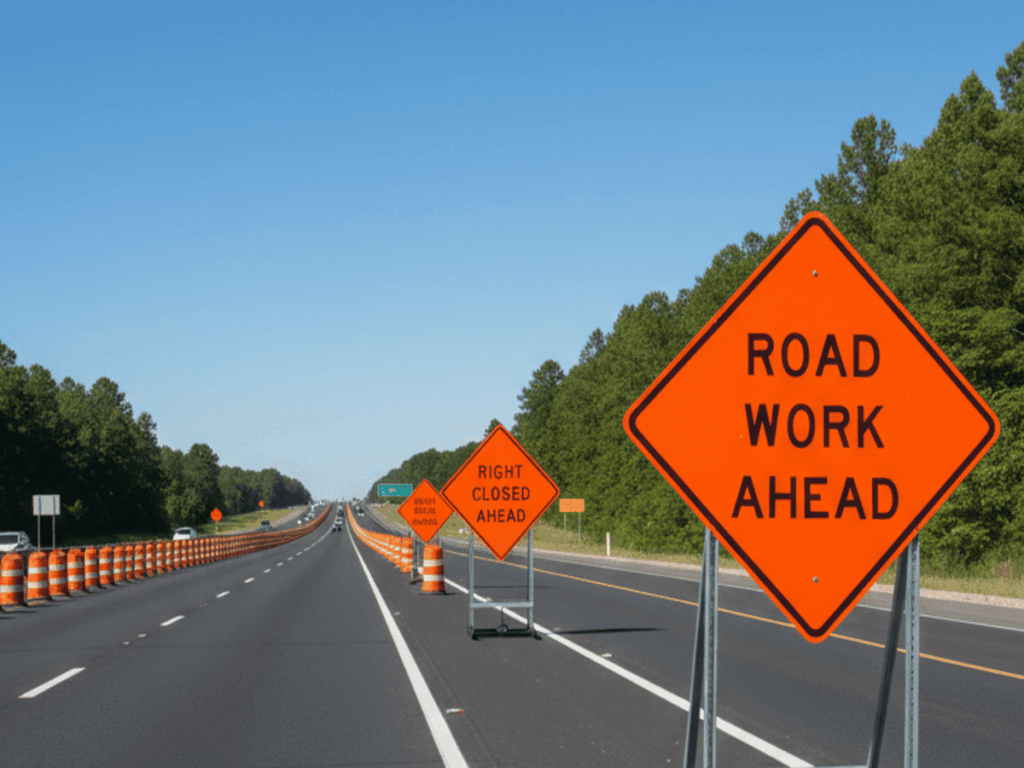
Introdução: A importância dos sinais de fechamento de pista
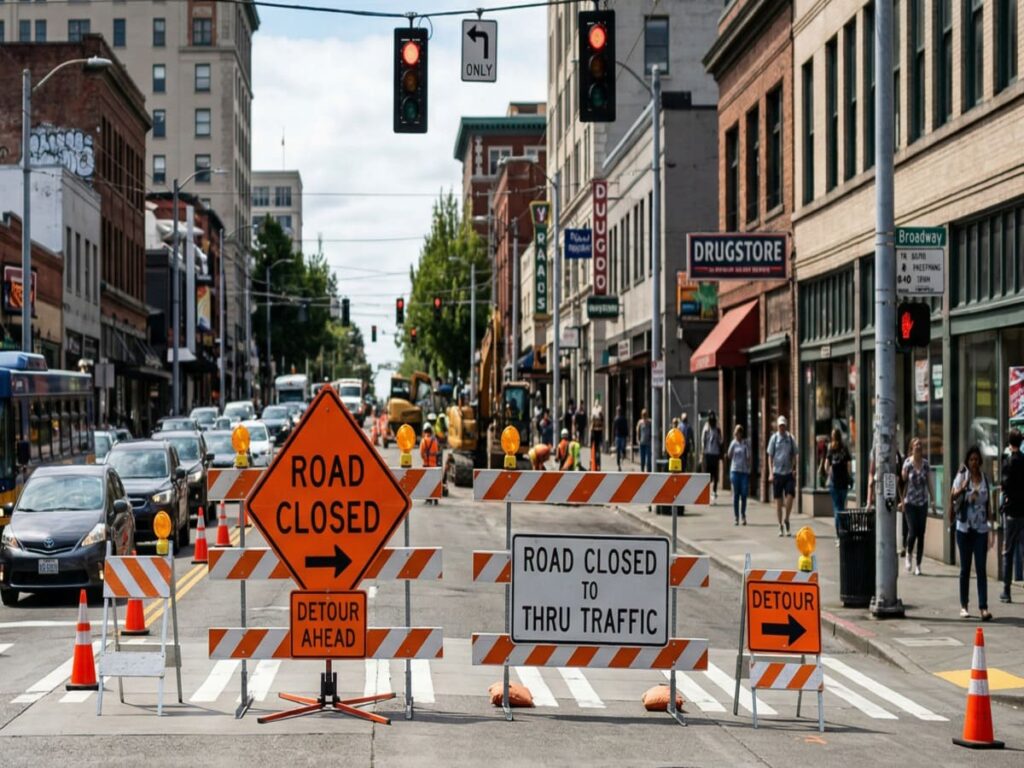
Forçar a fusão do tráfego de alta velocidade é perigoso. Os motoristas geralmente reagem tarde às reduções de faixa. Para evitar o caos, os gerentes do local devem implantar uma sequência precisa de sinais de interdição de faixa. Esses avisos estáticos criam um “funil visual.” Eles orientam os motoristas para fora da faixa fechada muito antes de chegarem aos cones.
Esta configuração depende do padrão “Quatro áreas componentes” de uma zona temporária de controle de tráfego.
Domine o básico: Antes de planejar um fechamento específico, revisar as quatro zonas centrais em nosso Configuração da zona de trabalho 101 Guia.
No entanto, se você precisar bloquear uma faixa de rodagem, você precisa do completo “Área de aviso prévio” configurar. Isto requer pista fechada à frente sinais colocados em intervalos exatos.
Selecionando o sinal correto de faixa fechada à frente
Em um fechamento de faixa única, especificidade salva vidas. Você não pode usar uma mensagem genérica. Você deve informar aos motoristas exatamente qual lado está bloqueado usando o específico sinal de pista fechada à frente.
Colocação do sinal de faixa direita fechada à frente
A maioria dos acidentes de fusão acontece aqui. Os motoristas na faixa da direita devem entrar à esquerda no trânsito mais rápido.
- Sinal: Use o Sinal de faixa da direita fechada à frente (W20-5R).
- Colocação: Coloque este sinal como o “B” aviso em sua sequência de três etapas.
- Ação: Isso força o tráfego a se fundir à esquerda mais cedo. Evita cortes de última hora.
Colocação do sinal de faixa esquerda fechada à frente
O “via rápida” apresenta riscos de alta velocidade. Os motoristas esperam um caminho claro.
- Sinal: Use o Sinal de faixa esquerda fechada à frente (W20-5L).
- Fluxo de tráfego: Isso força o tráfego rápido a se fundir corretamente.
- Visibilidade: Garanta o seu sinais de interdição de faixa são visíveis a uma distância maior. Motoristas de alta velocidade precisam de mais tempo de reação.
Nunca troque esses sinais. UM “Esquerda Fechada” assinar em um “Fechado à direita” projeto causa confusão catastrófica.
Sinais de fechamento da pista & Fórmula Cônica
Você deve posicionar seu sinais de interdição de faixa para apoiar o “Mesclando Cônico.” Esta é a diferença crítica do trabalho de ombro. Você está forçando o tráfego a sair de uma faixa ativa.
- A regra L completa: Use a fórmula L = Largura x Velocidade.
- Exemplo: Em um 60 estrada mph com pistas de 12 pés, a conicidade deve ser 720 pés de comprimento.
- Assinar suporte: Coloque sua final sinal de pista fechada à frente bem antes da redução gradual começar.
Isto cria um longo, caminho gradual. Ele orienta os motoristas para fora da faixa fechada com segurança.
Sinais de fechamento da pista & O “Cheio L” Fórmula Cônica
A colocação do seu sinais de interdição de faixa dita o sucesso da fusão. No entanto, os sinais apenas avisam o motorista. O físico “Mesclando Conicidade” realmente movimenta o tráfego.
Diferença Crucial: Ao contrário de um fecho de ombro que usa apenas um curto “1/3 L” afunilar, um fechamento de pista requer o Comprimento Cônico Total (L).
Precisa do “1/3 L” Regra? Se você está apenas fechando a borda, não use esta fórmula. Leia nosso Guia de configuração de trabalho de ombro em vez de.
Para um fechamento de pista, uma conicidade curta força uma fusão agressiva. Isso causa acidentes de deslizamento lateral. Você deve usar o comprimento total.
Calculando “L” Baseado na velocidade
MUTCD define fórmulas específicas para “L” dependendo do limite de velocidade (S) e largura da pista (C).
- Alta velocidade (45 MPH ou mais): Use a fórmula L = L x S.
- Exemplo: Para uma pista de 12 pés em 60 km/h: 12 x 60 = 720 pés.
- Baixa velocidade (40 mph ou menos): Use a fórmula eu = (L x S²) / 60.
- Exemplo: Para uma pista de 10 pés em 30 km/h: (10 x 900) / 60 = 150 pés.
Alinhando sinais com o cone
Seu pista fechada à frente sinais deve estar alinhado com esta distância calculada.
- Espaço tampão: Não inicie a área de trabalho imediatamente após a conicidade. Deixe um espaço de amortecimento longitudinal.
- Espaçamento de sinal: Garanta o final sinal de pista fechada à frente (Símbolo W4-2) é colocado bem antes do início da conicidade.
Posicionando sinais de fechamento de pista (Área de aviso prévio)
Você deve dar aos motoristas tempo suficiente para ler o sinalização de pista fechada e reagir. O espaçamento depende estritamente do limite de velocidade. A Tabela MUTCD 6C-1 define estes “Aviso prévio” intervalos.
Estradas urbanas de baixa velocidade (UM, B, Espaçamento C)
Nas ruas da cidade (35 mph ou menos), espaçar seus sinais mais próximos. Longas lacunas confundem os motoristas aqui por causa de cruzamentos e calçadas.
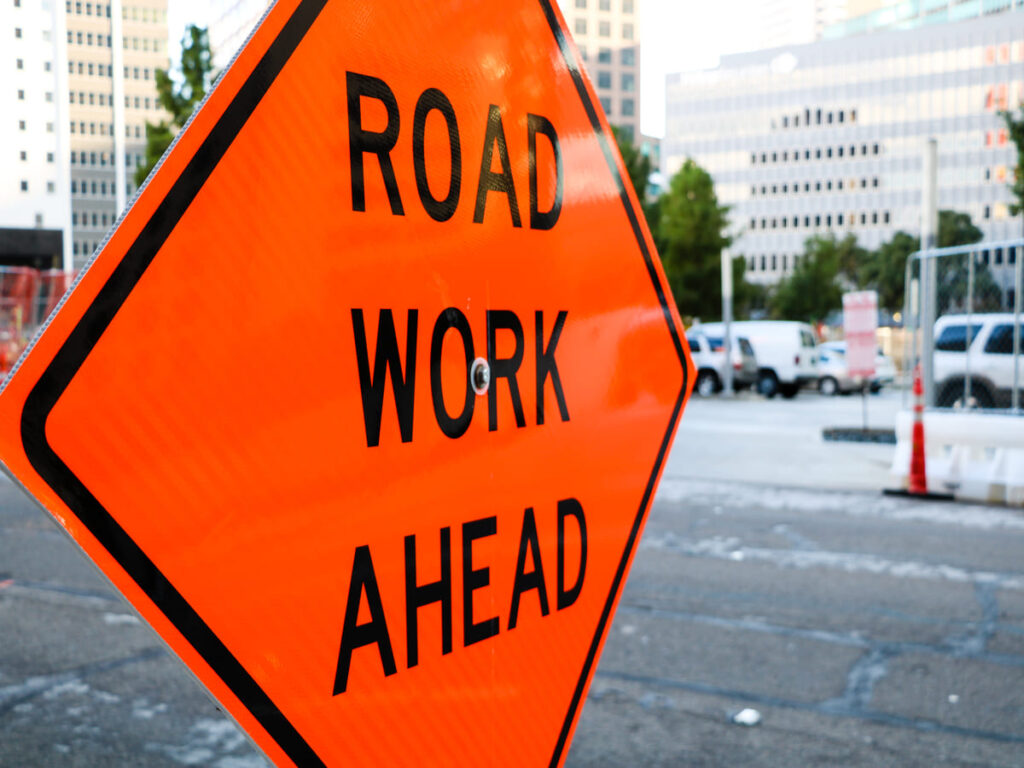
- Primeiro sinal: Coloque o Sinal de trabalho rodoviário adiante 100 pés do próximo sinal.
- Segundo sinal: Coloque o específico Sinal de faixa fechada à frente 100 pés do cone.
- Meta: Mantenha a mensagem imediata e clara.
Autoestrada & Espaçamento entre autoestradas
Altas velocidades exigem intervalos muito maiores. Os motoristas precisam de segundos, não pés, para tomar decisões.
- Espaçamento: Aumente a distância entre cada sinal de interdição de faixa para 1,000 pés, 1,500 pés, ou até 2,640 pés (0.5 milhas) nas rodovias.
- Visibilidade: Certifique-se de que Sinal de faixa esquerda/direita fechada à frente não está bloqueado por caminhões ou vegetação.
- Tempo de reação: Esta zona estendida permite que os motoristas entrem com segurança sem frenagem de pânico.
Espaçamento do Canalizador (O “1-para-1” Regra)
Sinais de interdição de pista fizeram o seu trabalho. Eles alertaram o motorista sobre a próxima fusão. Agora, dispositivos físicos devem assumir. À medida que o motorista passa pela final sinal de pista fechada à frente, eles entram no “Área de Transição.”
Aqui, você deve mudar da informação para a orientação. Você precisa de uma linha contínua de canalizadores (cones ou tambores) para empurrar fisicamente o tráfego para fora da faixa fechada.
Construindo o “Parede visual” (Espaçamento cônico)
No cone, espaçamento é crítico. Se as lacunas forem muito grandes, os motoristas podem pensar que a pista ainda está aberta. Eles podem tentar reduzir. Você deve criar um “Parede visual” isso parece uma barreira sólida à distância.
- A regra: A distância máxima entre dispositivos (em pés) é igual ao limite de velocidade (em mph).
- A Fórmula: Espaçamento = 1.0 x Limite de velocidade.
- Exemplo: Em um 60 rodovia mph, coloque um cone de estrada a cada 60 pés.
- Contexto Urbano: Em um 25 rua mph, espaço-los a cada 25 pés.
Mantendo o limite (Espaçamento Tangente)
Assim que a conicidade terminar, o “Tangente” começa. Esta é a linha reta ao longo da área de trabalho ativa. Motoristas já estão na faixa aberta, para que você possa relaxar o espaçamento.
- A regra: Você pode dobrar a distância de espaçamento aqui.
- A Fórmula: Espaçamento = 2.0 x Limite de velocidade.
- Exemplo: Nesse mesmo 60 rodovia mph, você pode espaçar cones a cada 120 pés além da conicidade.
Para a ponta: Em rodovias de alta velocidade, Cones de trânsito padrão de 28 polegadas muitas vezes não conseguem impor respeito. Use canalizadores ou tambores de 42 polegadas. Seu perfil mais amplo reforça a mensagem do seu sinais de interdição de faixa e protege o espaço de trabalho de forma mais eficaz.
Conclusão: A conformidade começa com sinalização correta
O fechamento de uma única pista é uma operação de alto risco. It demands precise calculation, não é adivinhação. You must calculate the “Cheio L” taper based on speed. Você deve selecionar o específico Right or Left Lane Closed Ahead sign. Finalmente, you must space these warnings correctly to give drivers time to react.
Safety depends on visibility. Using a generic sinal de trabalho na estrada à frente or incorrect spacing creates liability. It puts your crew and the public at risk.
Equipe sua frota com Optraffic
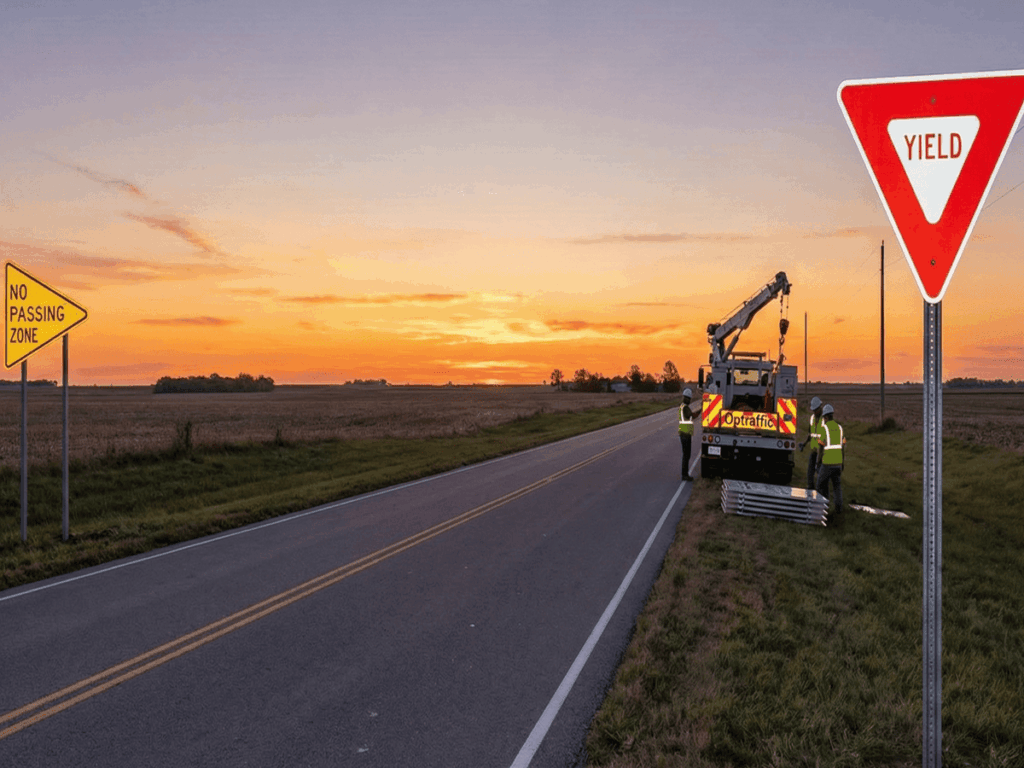
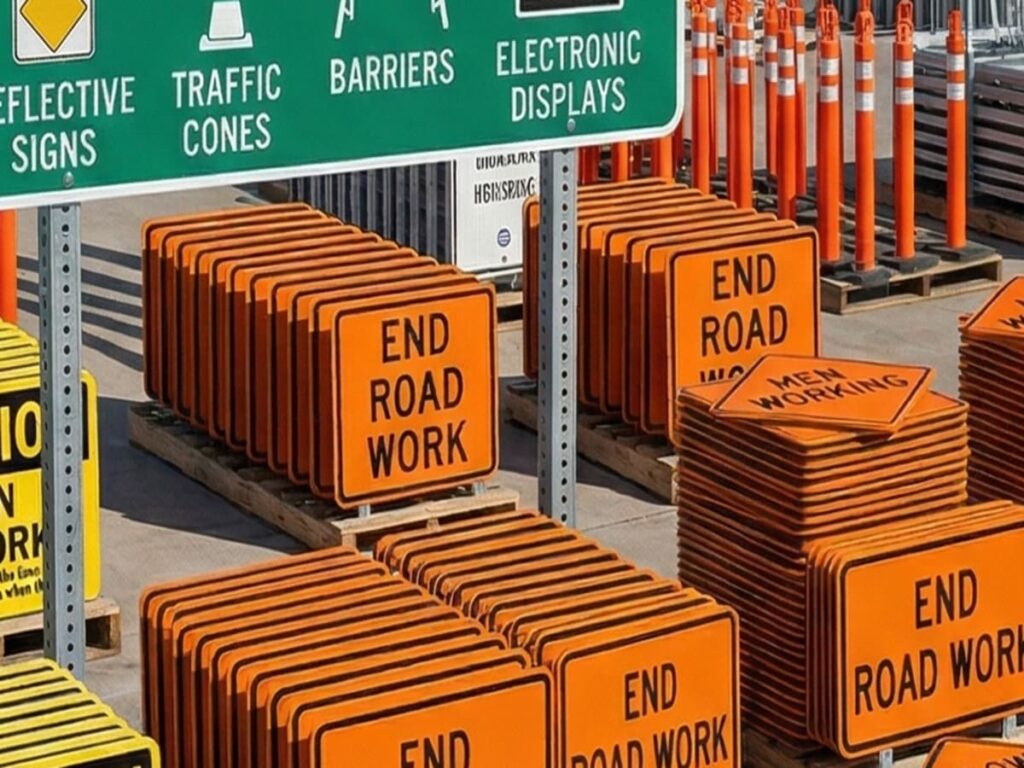
Garanta que sua equipe tenha as ferramentas certas para o trabalho. Tráfego óptico supplies MUTCD-compliant sinais de construção and heavy-duty stands. We design our sinais de interdição de faixa for high-visibility performance in both urban and highway environments.
Entre em contato conosco hoje to secure your bulk order of compliant safety equipment.
Perguntas frequentes: Sinais de fechamento da pista & Configurar
Em estradas de alta velocidade (45+ km/h), you need strictly defined gaps. Place the Road Work Ahead sign 1,000 pés para 1 mile upstream. Place the specific Lane Closed Ahead sign 1,500 feet beyond that. This gives drivers roughly 1 minute of reaction time at highway speeds.
Não. You must be specific. A Left Lane Closed Ahead sign forces traffic right. Using it for a right-lane closure directs traffic into the work zone. This causes immediate accidents. Always match the text (Left/Right) to the actual blockage.
For speeds of 45 mph ou superior, use the formula L = Width x Speed. For a standard 12-foot lane at 60 km/h, your taper must be 720 pés de comprimento. Do not shorten this distance.
Sim. You do not need multiple vendors. Optraffic acts as your one-stop manufacturer for the entire setup. We supply MUTCD-compliant lane closure signs, heavy-duty sign stands, and high-visibility channelizers (drums and cones). This ensures your entire work zone maintains consistent quality and reflectivity levels.