Seu estoque de sinalização está sangrando dinheiro silenciosamente toda vez que um ute volta para o quintal? Um canto rachado, uma flauta quebrada, um sinal muito ruim para ser reimplantado. Nada disso parece uma grande perda por si só. Agitado em uma frota de vários projetos, no entanto, essas pequenas falhas agravam. Eles se transformam em pedidos de substituição, risco de conformidade, e frete desperdiçado. Cada baixa é um custo oculto que seu orçamento nunca considerou.
Este guia resolve esse ponto cego. Ele quebra o Sinal de trabalhador amarelo PVC vs corflute decisão do ponto de vista da logística da frota. Desgaste real em trânsito, manuseio de quintal real, números reais de reutilização — para que os coordenadores de ativos do local possam parar de adivinhar e começar a planejar o estoque com confiança.
Por que esta comparação é importante para gerentes de logística civil
Locais civis funcionam em janelas de resposta apertadas. A sinalização raramente recebe a atenção que merece até ser reprovada em uma auditoria ou desmoronar no meio do trânsito. Escolher entre placas de trabalho amarelas de PVC e corflute parece uma decisão de aquisição menor. Na prática, molda os custos de frete, pegada de armazenamento, e com que frequência um Coordenador de Ativos do Site precisa reordenar o estoque.
Os incidentes relacionados com veículos continuam a ser o principal mecanismo por trás das mortes no local de trabalho na Austrália, contabilidade para 42% de mortes de trabalhadores em 2024. Pelo menos um veículo esteve diretamente envolvido 66% de todas as mortes de trabalhadores registradas naquele ano. Obras rodoviárias e locais adjacentes ao tráfego apresentam exposição desproporcional a esta categoria de risco. Confiável, legível, sinalização estruturalmente sólida não é um detalhe cosmético. Faz parte da camada de controle que mantém os trabalhadores fora dessa estatística. Embora as principais obras rodoviárias exijam estritamente painéis de alumínio permanentes, sinalização temporária do local sob limites de velocidade mais baixos, obras civis residenciais, ou manutenção de curto prazo dependem fortemente de substratos poliméricos compatíveis. Esses são os riscos operacionais por trás do que parece ser um simples Sinal de trabalhador amarelo PVC vs corflute escolha de aquisição dentro do gerenciamento de tráfego temporário autorizado (TTM) esquemas.
Sinal de trabalhador amarelo PVC vs Corflute – A diferença principal do material
Entendendo o Sinal de trabalhador amarelo PVC vs corflute o debate começa com o que realmente está dentro de cada signo, não a superfície impressa. Todo Sinal de trabalhador amarelo PVC vs corflute a comparação vendida apenas pelo preço ignora este detalhe estrutural. Essa omissão é exatamente onde os orçamentos erram.
Corflute: Construção canelada em polipropileno
Corflute consiste em polipropileno canelado de parede dupla. Duas películas planas de polipropileno se unem em torno de uma série de nervuras internas, semelhante em princípio ao papelão. Esta estrutura de canal oferece força genuína ao longo da direção das costelas. O sinal torna-se muito mais fraco quando a força é aplicada através desse grão. Carga compressiva – cintas de catraca, paletes empilhadas, uma bota apoiada em uma pilha na bandeja do ute – esmaga as flautas internas permanentemente. Uma vez esmagado, essa seção nunca recupera a rigidez, mesmo que a pele externa pareça intacta.
PVC: Construção de Matriz Sólida Rígida
Do outro lado do Sinal de trabalhador amarelo PVC vs corflute equação fica em PVC rígido. Muitas vezes, espuma de PVC ou folha de PVC extrudado denso, ele usa um contínuo, matriz não oca. A carga aplicada em qualquer lugar da face é distribuída uniformemente pelo material. Não se concentra em um punhado de costelas internas. Esta densidade uniforme proporciona aos sinais de PVC uma resistência significativamente melhor a amassamentos causados por cargas pontuais e danos por empilhamento. A compensação é direta: uma matriz mais densa significa mais peso por sinal. Isso importa mais tarde, quando os custos de carga útil e frete entram na equação.
Referência rápida: Tabela de comparação estrutural
| Atributo | Corflute (PP canelado) | PVC rígido (Espuma/Sólido) |
| Estrutura central | Oco, canelado (parede dupla) | Sólido, matriz contínua |
| Espessura típica | 2mm - 5mm | 3mm–10mm |
| Aprox. peso (por sinal de 600x600mm) | 0.3kg–0,5kg | 0.8kg–1,5kg |
| Comportamento flexível/rebote | Volta até a flauta esmagar | Rígido, resiste à deformação |
| Resistência de carga pontual | Ruim – amassa e esmaga facilmente | Forte – distribui a carga uniformemente |
| COMO 1743 montagem compatível | Sim, como produtos com sufixo CF | Sim, como produtos de PVC/substrato rígido |
Dica do coordenador de ativos do site: Na entrega, flexione cada sinal suavemente com a mão. Corflute rebate com um suave, elasticidade na direção da flauta. O PVC rígido resiste à flexão quase uniformemente em toda a face. Enquanto flexiona, inspecione visualmente as bordas quanto a qualquer prateamento ou micro-levantamento da película retrorrefletiva - garantindo que a ligação adesiva não tenha sido comprometida antes da implantação em campo.
Diferença de custo entre placas de PVC e Corflute – Preço unitário vs custo da frota
A diferença de custo entre placas de PVC e corflute parece simples na fatura de um fornecedor. Fica mais complicado quando um gestor de frota acompanha o gasto total ao longo de um ciclo de 12 meses.
Comparativos de custo unitário iniciais (Mercado da UA)
Sinais de trabalhador amarelo corflute em tamanhos padrão (600x600mm a 900x600mm) normalmente fica em uma faixa de preço mais baixa do que uma placa de PVC equivalente. A matéria-prima e o processo de fabricação simplesmente custam menos. Sinais de PVC rígido têm um preço unitário mais alto, geralmente 30–60% a mais por sinal, dependendo da espessura e do método de impressão. Somente no custo unitário, corflute vence de imediato. Qualquer feira Sinal de trabalhador amarelo PVC vs corflute a comparação precisa dizer isso claramente.
A variável de custo oculto: Frequência de reposição
O preço unitário conta apenas metade da história. Uma placa mais barata que precisa ser substituída a cada segundo emprego custa mais em um ano do que uma placa mais cara que sobrevive a dez empregos. Considere um modelo simplificado:
| Cenário | Custo Unitário | Rotações antes da aposentadoria | Custo por rotação |
| Sinal de corfluta | 18 | 2–3 rotações | $6.00–$9,00 |
| Sinal de PVC rígido | 32 | 8–10 rotações | $3.20–$4,00 |
É aqui que a diferença de custo entre placas de PVC e corflute começa a se inverter. No entanto, Os gerentes de frota devem levar em consideração a taxa histórica de desgaste de ativos do pátio. Se a taxa de perda ou roubo do seu site exceder 20-30% por ciclo de projeto, o ROI de longevidade a longo prazo do PVC diminui, inclinando o equilíbrio financeiro de volta para corflute descartável de baixo custo.
Frete, Armazenar, e custos de pegada de quintal
O peso é mais importante do que a maioria das planilhas de compras admite. Uma palete de sinais de PVC pesa consideravelmente mais do que uma palete equivalente de corflute. Isso afeta os limites de carga útil e as taxas de frete por quilograma em pedidos de fornecimento de frota a granel. Do lado do armazenamento, o peso mais leve do corflute facilita o deslocamento no quintal. Sua menor rigidez, no entanto, significa que estacas mal empilhadas se deformam sob seu próprio peso ao longo do tempo. O PVC mantém seu formato em prateleiras de armazenamento, mas consome mais profundidade de prateleira por placa devido à sua espessura.
Desgaste do trânsito – Como cada substrato lida com a logística real do local
Esta é a seção que mais importa para qualquer pessoa que gerencia a movimentação de equipamentos entre locais. Danos de trânsito são onde o Sinal de trabalhador amarelo PVC vs corflute decisão é testada no mundo real, não em uma folha de especificações. Coordenadores de frota comparando um Sinal de trabalhador amarelo PVC vs corflute A lista restrita deve tratar esta seção como um teste de resistência prático que a teoria por si só não pode substituir.
Danos em transporte de cama e trailer Ute
Sinais de corflute que se deslocam e flexionam repetidamente durante o trânsito são propensos a vincar e rachar ao longo das linhas da canelura. Isso acontece principalmente nas curvas, onde as correias ou pontos de amarração concentram a pressão. O PVC rígido resiste muito melhor a essa tensão de flexão, mas a sua rigidez torna-se um passivo sob forte impacto. Uma placa de PVC que se move com força contra um trilho de reboque tem maior probabilidade de lascar no canto do que dobrar. As oscilações de temperatura em longas rotas regionais acrescentam outra variável.
O PVC pode se tornar mais frágil durante implantações matinais de inverno com temperaturas abaixo de zero nas rotas regionais do Sul, aumentando o risco de lascar os cantos em impactos bruscos. Por outro lado, as flautas da corflute são mais propensas a deformações relacionadas ao calor sob o sol direto do outback australiano (superior a 40°C) quando firmemente amarrado em uma bandeja ute – uma consideração genuína para rotas de abastecimento de frota interestadual e em locais remotos.
Manuseio inadequado e danos por empilhamento no quintal
Dentes de empilhadeira, empilhamento descuidado de botas, e itens pesados deixados em cima de pilhas de sinalização são realidades cotidianas em pátios movimentados. O núcleo oco do Corflute perfura facilmente sob um dente perdido ou impacto de canto. Uma vez perfurado, a umidade pode entrar nos canais da flauta e acelerar a degradação. O PVC rígido resiste visivelmente melhor a esse tipo de manuseio brusco. Resiste à perfuração e absorve pequenos impactos sem danos estruturais permanentes. Protocolos de manuseio de pátio que funcionam bem para estoque de PVC podem destruir silenciosamente um lote de corflute em semanas.
Fixadores e pontos de tensão de montagem
Amarração repetida de cabos, Montagem em estrutura H, e os ciclos de remontagem apresentam desgaste diferente dependendo do substrato. Corflute tende a rasgar nos buracos do zíper depois de apenas alguns ciclos de montagem e remoção. Este risco aumenta se o buraco ficar próximo a um canal de flauta. O PVC rígido retém os furos dos fixadores por muito mais tempo, mantendo sua forma ao redor da borda do furo através de muitos mais ciclos de montagem. Para frotas que redistribuem os mesmos sinais em vários locais num mês, esta única diferença muitas vezes decide qual substrato sobrevive por mais tempo.
Vida útil dos sinais de segurança temporários — Reutilização em soluções de vários projetos
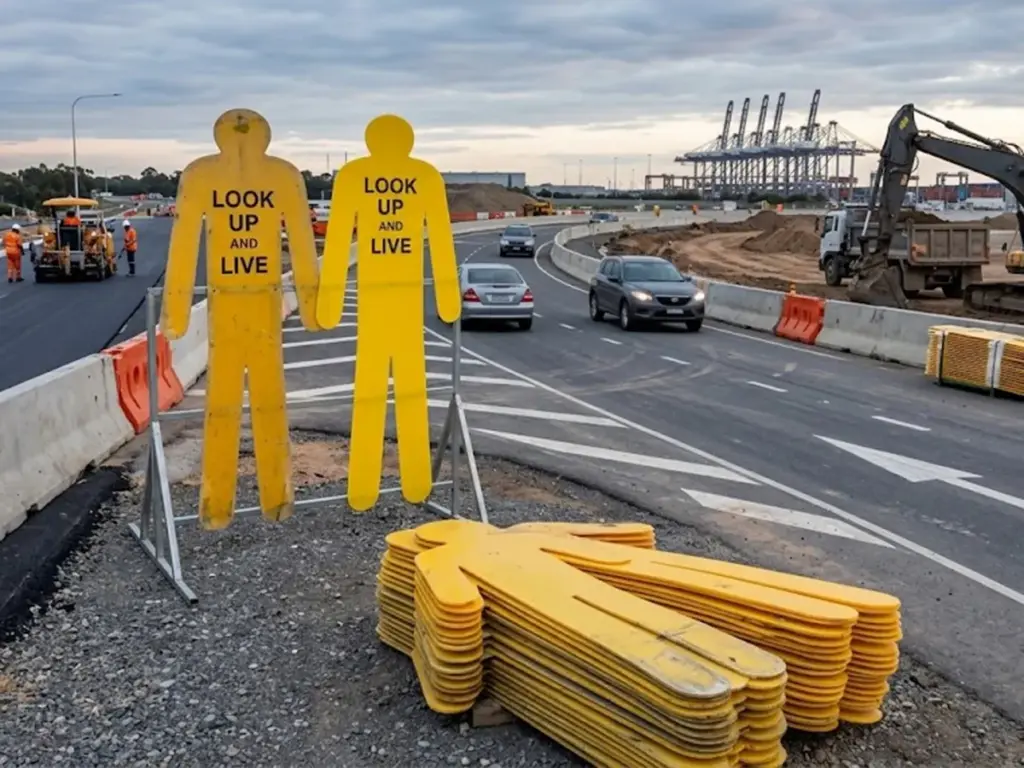
Para qualquer Coordenador de Ativos do Site rastreando o estoque da frota, a vida útil da placa finalizada é o número que realmente impulsiona o orçamento, não o preço da fatura de um único sinal. No mais amplo Sinal de trabalhador amarelo PVC vs corflute conversa, os dados de vida útil separam uma análise de custos genuína de uma suposição.
Integridade de borda em uso repetido
Sob condições padrão de instalações civis australianas, sinais de trabalhador amarelo corflute normalmente duram de 2 a 4 meses de rotação ativa. Falha estrutural ou degradação visível força a aposentadoria. Sinais de PVC rígido, nas mesmas condições, geralmente atingem 12–24 meses de serviço ativo. A lacuna aumenta ainda mais em projetos que envolvem trânsito frequente, uma vez que o estresse de trânsito é o fator de falha dominante para corflute, especificamente.
Integridade da borda cortada em uso repetido
O corte ou roteamento mecânico cria uma borda crua que se torna o ponto mais fraco em qualquer sinalização, independentemente do substrato. Em corfluta, essa borda cortada expõe os canais internos da flauta diretamente. O manuseio repetido causa desgaste e delaminação ao longo dessa linha surpreendentemente rápido. A matriz contínua do PVC sólido significa que a borda cortada permanece selada e consistente durante muito mais ciclos de manuseio. Uma borda desgastada ou delaminada não é apenas cosmética. Uma borda de sinalização comprometida pode afetar as avaliações de legibilidade durante auditorias de segurança no local, transformando um problema de durabilidade em um problema de conformidade.
Scorecard de Reutilização para Planejamento de Rotação de Frota
| Contagem de rotação | Corflute – Condição Esperada | PVC – Condição Esperada | Ponto de aposentadoria recomendado |
| 1–3 | Bom | Excelente | Corflute: bordas do monitor |
| 4–6 | Justo, dano à flauta provável | Bom | Corflute: inspecionar para aposentadoria |
| 7–10 | Pobre, provavelmente aposentado | Razoável para bom | PVC: bordas do monitor |
| 11+ | Aposentado | Bom a justo | PVC: inspecionar para aposentadoria |
Os coordenadores de ativos locais podem adaptar este scorecard diretamente em uma planilha de rastreamento de frota existente. Ele sinaliza sinais que se aproximam do ponto de aposentadoria antes que falhem no local.
Logística de implantação de alto volume – qual substrato se adapta ao seu modelo de site
Escolher entre PVC e corflute não é uma resposta universal. Depende inteiramente de como uma frota realmente move a sinalização entre os locais. O lado direito de um Sinal de trabalhador amarelo PVC vs corflute A decisão geralmente se revela quando o volume de implantação e a duração do ciclo são mapeados em relação aos dados logísticos reais.
Curto prazo, Projetos de alta rotatividade (Caso de uso do Corflute)
Corflute se adapta ao gerenciamento de tráfego de uso único, obras civis de curta duração, e projetos que duram de quatro a seis semanas. Quando um sinal só precisa sobreviver a uma implantação antes de ser descartado, o custo unitário mais baixo do corflute supera sua vida útil mais curta. Há pouco valor em pagar um prêmio de PVC por uma placa que, de qualquer maneira, não terá uma segunda rotação.
Fornecimento de frota em vários locais e reimplantação de ciclo longo (Caso de uso do PVC)
O PVC obtém seu custo unitário mais alto com o estoque de frota rotativa movimentado entre vários locais simultâneos. Contratos civis de longa duração e sinalizações armazenadas entre usos em um ciclo de mais de 12 meses favorecem o PVC. Para frotas que gerenciam logística de implantação de alto volume em vários projetos ativos ao mesmo tempo, A vida útil prolongada do PVC reduz a frequência de novos pedidos. Também reduz as despesas administrativas vinculadas à reposição constante de estoque.
Quadro de decisão: Um filtro de três perguntas
Os gerentes de logística podem aplicar um filtro simples antes de fazer o pedido:
- De quantas realocações este sinal realmente precisa para sobreviver?
- Que distância de trânsito e condições de manuseio ele enfrentará – trajetos locais curtos ou rotas regionais longas?
- Por quanto tempo a placa ficará armazenada entre os usos?
Respostas curtas em todos os três apontam para corflute. Respostas mais longas apontam para o PVC. Este filtro transforma o abstrato Sinal de trabalhador amarelo PVC vs corflute debate sobre uma decisão de compra concreta que corresponda às condições reais do local.
O substrato não é toda a história – onde o filme reflexivo se encaixa
Quer você selecione um plástico canelado ou uma matriz sólida de PVC, ambos os substratos exigem camadas de filme compatíveis para trabalho noturno. Para ver se está atualizando uma base amarela padrão para uma classe 400 filme reflexivo compensa seu orçamento, verifique nosso guia irmão sobre a relação custo-benefício de sinais reflexivos de corflute.
Recomendação final — Adequação do substrato ao ciclo da sua frota
Não há um único vencedor no Sinal de trabalhador amarelo PVC vs corflute comparação, apenas um substrato que se adapta a um padrão de implantação específico. Corflute continua sendo a escolha sensata para baixo custo, ciclo curto, implantação descartável. O PVC ganha seu prêmio em alta frequência, vários sites, reutilização de frota de ciclo longo, onde a frequência de substituição reduzida compensa o preço unitário mais alto dentro de alguns meses.
Esta comparação cobre apenas a física do substrato. A seleção de materiais deve estar dentro de uma estratégia de durabilidade mais ampla que também considere o alumínio de grau permanente para fixações., instalações de longo prazo. Se você está avaliando esta decisão em relação à terceira opção, vale a pena voltar ao nosso guia de materiais para sinalização de trabalhador temporário, que divide todos os três substratos lado a lado para o planejamento de compras em toda a frota.
Antes que o próximo pedido de estoque seja aprovado, vale a pena auditar o inventário de sinalização atual em relação ao scorecard de reutilização acima. Essa passagem rápida muitas vezes revela exatamente quantos sinais já ultrapassaram o ponto de aposentadoria.
Perguntas frequentes
PVC ou corflute são melhores para material de sinalização de trabalho temporário?
Depende do ciclo de implantação. Corflute é adequado para projetos curtos de uso único devido ao menor custo unitário. O PVC é adequado para frotas com vários locais que necessitam de reimplantação repetida, já que sua matriz sólida sobrevive a muito mais rotações antes da falha estrutural.
Quantas vezes uma placa de corflute pode ser reaproveitada no local?
Normalmente de 2 a 4 rotações sob condições padrão de canteiro de obras antes do esmagamento do canal, desgaste da borda, ou danos por punção forçam a aposentadoria. O manuseio cuidadoso do quintal pode estender ligeiramente esse alcance.
O PVC racha em trânsito em clima frio?
O PVC rígido pode tornar-se mais frágil em condições de frio, aumentando o risco de lascas nos cantos em caso de impacto agudo durante um longo trânsito regional. Ele ainda resiste à fissuração por tensão de flexão que afeta o corflute.
Qual a diferença de custo entre placas de PVC e corflute por unidade?
As placas de PVC normalmente custam de 30 a 60% mais por unidade antecipadamente. A diferença de custo entre sinais de PVC e corflute muitas vezes diminui ou inverte quando a frequência de substituição é contabilizada em um orçamento de frota de 12 meses.
As placas de PVC cortadas podem ser reparadas após danos nas bordas?
Pequenas lascas nas bordas do PVC rígido às vezes podem ser aparadas e seladas novamente. Bordas de corflute desgastadas que expõem o canal da canaleta geralmente não podem ser reparadas e sinalizam que o sinal está próximo do limite de vida útil do sinal de segurança cortado.
Referências
- Trabalho Seguro Austrália — Principais estatísticas de saúde e segurança no trabalho da Austrália 2025.
- Padrões Austrália — COMO 1743:2023 Especificações de sinais de trânsito.