Introdução: Controlling One-Lane Traffic
Closing one lane of a two-lane road is complex. You cannot simply merge traffic. You must stop it. This creates a “One-Lane, Two-Way” traffic control zone. Aqui, drivers must obey a human flagger rather than just following cones.
This setup requires specific road construction signs. You cannot rely on general warnings. Safety depends entirely on advance notice. A driver traveling at 55 mph needs time to perceive the Sinal de bandeira à frente and come to a complete halt.
Back to Basics: Review the fundamental zones of traffic control in our Configuração da zona de trabalho 101 Guia.
To protect your crew, you must deploy the strict “Three-Sign Sequence” mandated by the MUTCD.
The Mandatory Sequence for Road Construction Signs
For a flagging operation, o MUTCD (Aplicação típica 10) requires a specific series of warnings. You must place these road construction signs in a strict order.
Etapa 1: General Warning (O “UM” Sinal)
Alerte o motorista que ele está entrando em uma zona de trabalho.
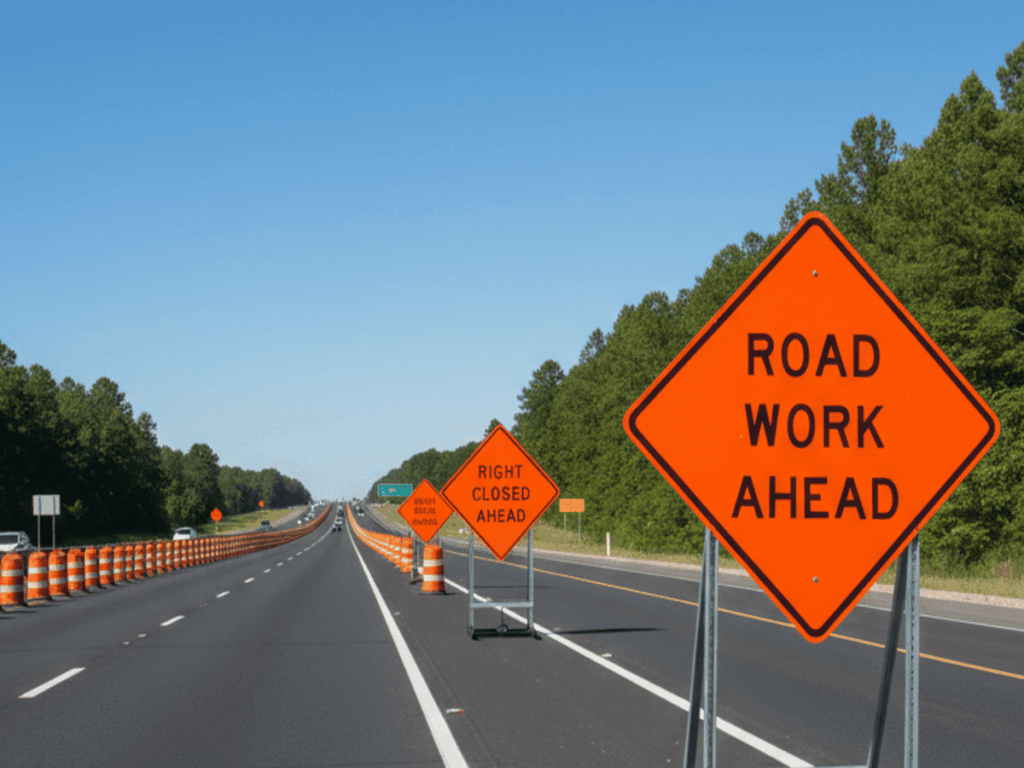
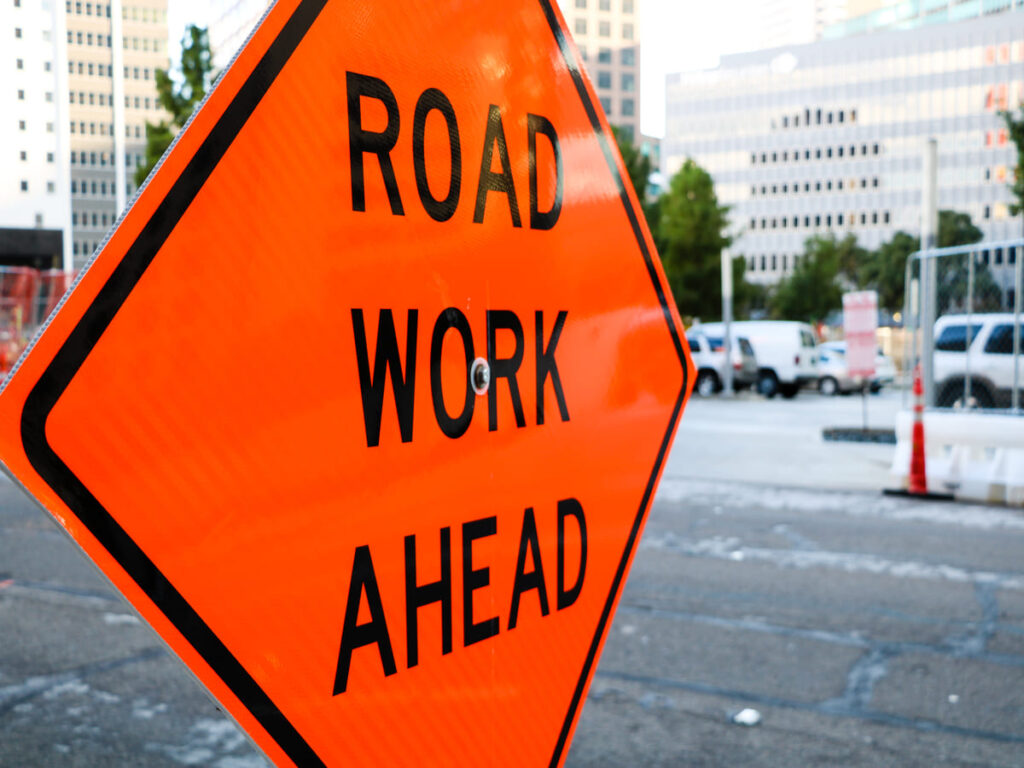
- Sinal: Sinal de trabalho rodoviário adiante (W20-1).
- Ação: Isso chama a atenção. Prepara o motorista para condições alteradas.
Etapa 2: Condição Específica (O “B” Sinal)
Diga ao motorista que a geometria da estrada mudou.
- Sinal: Sinal de uma pista à frente (W20-4).
- Distinção: Não use um “Pista fechada” assine aqui. Isso implica uma fusão. “Estrada de uma pista” implica tráfego bidirecional compartilhando uma única faixa.
Etapa 3: Ação necessária (O “C” Sinal)
Este é o aviso mais crítico. Exige uma parada.
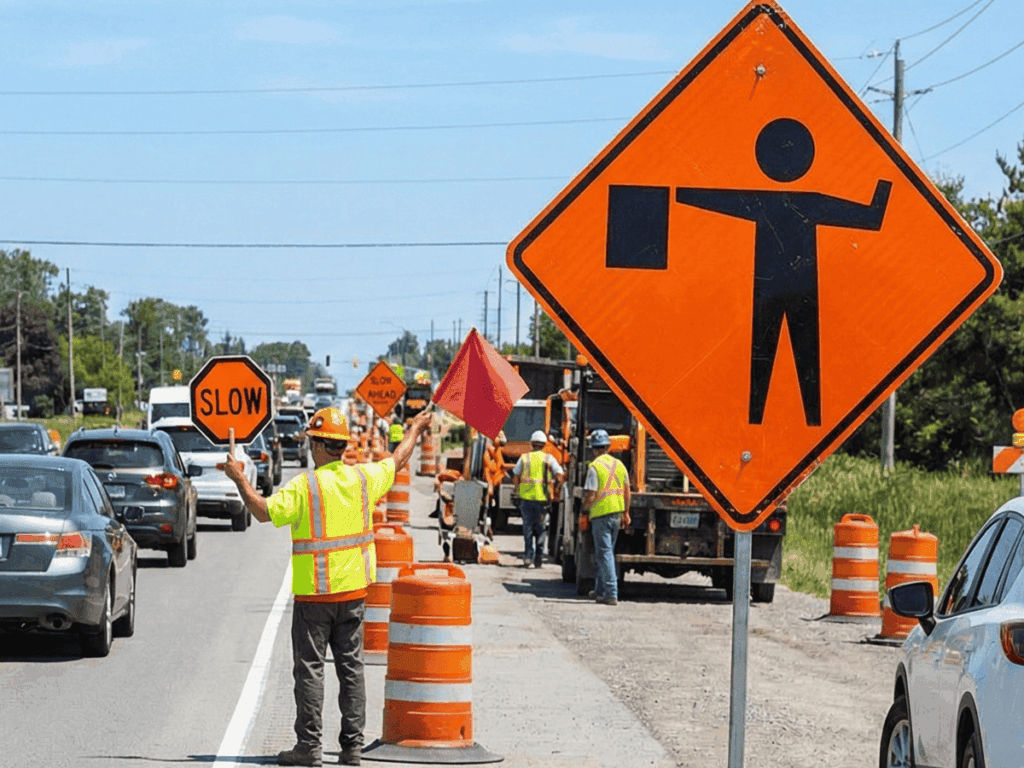
- Sinal: Sinal de bandeira à frente (símbolo W20-7).
- Colocação: Coloque esta placa mais próxima da estação sinalizadora.
- Adição de alta velocidade: Em estradas com velocidades acima 45 km/h, insira um Esteja preparado para parar o sinal (W3-4) entre o “Estrada de uma pista” e “Bandeiras” Sinais. Isso adiciona uma camada crucial de segurança.
Posicionando a Estação Sinalizadora (MUTCD 6E.02)
Seu sinalizador é o ativo mais vulnerável na estrada. De acordo com MUTCD Capítulo 6E, sua posição dita a segurança de toda a zona. Você deve colocar a estação onde os motoristas possam vê-la claramente do “Distância de visão de decisão.”
Visibilidade e sinal de trânsito Flagger Ahead
O motorista deve ver o sinalizador muito antes de chegar à estação. Este contato visual confirma o alerta dado pelo sinalizador à frente sinal de trânsito (W20-7).
- O “Rota de fuga” Regra: O sinalizador deve sempre ter um caminho claro para executar.
- Exemplo: Se um caminhão perder os freios, o sinalizador precisa de uma saída instantânea para um acostamento plano ou vala. Nunca posicionar um sinalizador contra um guarda-corpo ou parede de ponte. Eles não terão para onde ir.
- Fique corretamente: O sinalizador deverá ficar no acostamento ou na pista fechada. Nunca ficar na faixa de tráfego aberta.
- Operações Noturnas: Se trabalhar à noite, a estação sinalizadora deve ser iluminado (MUTCD 6E.05). Equipamento retrorrefletivo por si só não é suficiente. Você precisa de iluminação suspensa.
Erro comum: O “Armadilha de Sombra”
Não posicione seu sinalizador em uma sombra profunda enquanto a estrada que se aproxima estiver sob luz solar intensa.
- O risco: Os olhos do motorista não conseguem se ajustar rápido o suficiente. O sinalizador fica invisível.
- A correção: Mova a estação para a luz solar ou adicione iluminação auxiliar.
O espaço tampão (Tampão Longitudinal)
Placas alertam o motorista, mas o espaço protege a tripulação. Você deve deixar um “Espaço tampão” entre a estação sinalizadora e a área de trabalho real.
Esta zona vazia absorve um veículo descontrolado. Mesmo com alta visibilidade sinalizador de construção à frente sinal, motoristas cometem erros. Se um carro passar pela estação, o buffer dá à tripulação tempo para reagir.
Calculando a distância do buffer
O comprimento do buffer depende estritamente do limite de velocidade.
- A regra: No 55 km/h, você precisa de uma distância de parada de pelo menos 495 pés.
- A lacuna: Mantenha esta área completamente vazia. Não armazene ferramentas ou caminhões aqui.
Mesclando vs.. Parando: Este buffer é um espaço vazio. Se você precisar mesclar o tráfego em vez de interrompê-lo, leia nosso específico Guia de fechamento de pista única.
Comunicação: Prevenindo colisões frontais
Colocando o sinalizador à frente sinal de trânsito é apenas o primeiro passo. Os dois sinalizadores em extremos opostos da zona de trabalho devem coordenar perfeitamente. Se eles falharem, veículos de ambos os sentidos entram na faixa única simultaneamente. Isso garante uma colisão frontal.
Método 1: Contato Visual
Use isto apenas para zonas curtas.
- Doença: O sinalizador A deve ver claramente o sinalizador B.
- Limitação: Pó, névoa, ou caminhões grandes podem quebrar essa linha de visão instantaneamente.
Método 2: Rádios bidirecionais (Obrigatório para pontos cegos)
Se a zona de trabalho incluir uma curva ou colina, sinais visuais falham. Você deve usar rádios.
- Protocolo: O sinalizador A deve confirmar “Retenção de tráfego” com Flagger B antes de liberar sua pista.
- Redundância: Leve sempre baterias sobressalentes. Se o rádio morrer, paradas de trânsito.
Método 3: Carro piloto
Para zonas longas (sobre 1 milha), rádios são arriscados. Os motoristas podem parar ou dar meia-volta na área de trabalho.
- Solução: Use a “Carro piloto” com um “CARRO PILOTO, SIGA-ME” sinal (G20-4).
- Controlar: O carro piloto conduz fisicamente a fila pela zona. Isso evita excesso de velocidade e paradas não autorizadas.
O “Cone Curto” Regra (50 para 100 Pés)
Esta é uma distinção técnica crítica. Não confunda uma operação de sinalização com uma fusão de fechamento de faixa.
Em uma fusão, você quer uma conicidade longa (L) para guiar carros suavemente. Em uma operação de sinalização, você quer que os motoristas diminuam a velocidade e parem. Uma conicidade longa incentiva a velocidade. Você deve usar um “Cone Curto” em vez de.
- O comprimento: O MUTCD requer um comprimento máximo de conicidade de 50 para 100 pés.
- O objetivo: Este curto, ângulo agudo força o motorista a reconhecer o Sinal de uma pista à frente e procure o sinalizador.
- Espaçamento entre dispositivos: Coloque cones a cada 20 pés. Este espaçamento apertado cria uma clara “portão” levando para a pista aberta.
Aviso: Nunca use a alta velocidade “L = L x S” fórmula aqui. É muito longo. Confunde os motoristas fazendo-os pensar que podem manter a velocidade nas rodovias.
Riscos de responsabilidade: Removendo sinais de construção de estradas
Deixar as inscrições da obra após o término do turno de trabalho não é apenas preguiça. É negligente. Isso cria uma armadilha legal para sua empresa.
O “Lobo chorando” Efeito
Se um motorista vê um sinalizador de construção à frente sinal mas não vê nenhum sinalizador, eles perdem a confiança. Eles assumem que o próximo sinal também é uma mentira.
- A consequência: Quando sua tripulação retornar na manhã seguinte, aquele driver insensível não irá desacelerar. Eles vão colidir com sua estação.
- O processo: Se ocorrer um acidente e seus registros mostrarem sinais que foram deixados fora do horário de trabalho, você perde o caso de responsabilidade. Você não conseguiu manter a zona.
Cubra ou remova
O MUTCD é rigoroso aqui. Quando o sinalizador vai para casa, os sinais devem desaparecer.
- Transforme-os: Vire o sinalizador à frente sinal de trânsito longe do trânsito.
- Cubra-os: Use uma capa ou bolsa de sinalização.
- Dobre-os: Use um suporte de sinalização enrolável especializado. Isso permite que você recolha a face do sinal instantaneamente sem remover a base.
Conclusão: Conformidade salva vidas
Uma operação de sinalização é dinâmica. Depende do tempo de reação humana. You must give drivers every possible second to stop. You must use the correct 3-sign sequence, calculate the buffer space, and enforce the “Short Taper.”
Do not cut corners. A missing Be Prepared to Stop sign or a hidden flagger station invites disaster.
Equip Your Flaggers with Optraffic
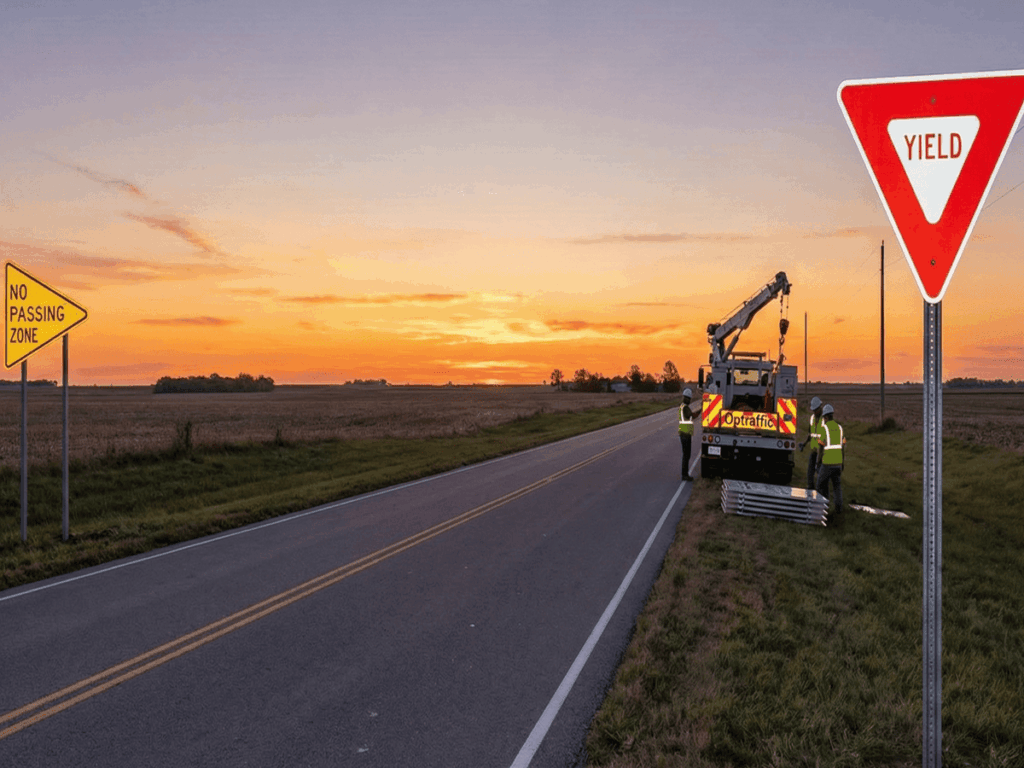
Protect your most valuable asset—your crew. Optraffic manufactures high-visibility sinais de construção de estradas, roll-up stands, and stop/slow paddles. We ensure your setup meets every MUTCD reflectivity standard.
Entre em contato conosco hoje to upgrade your flagging equipment.
Perguntas frequentes: Flagging Operations Setup
Em um 55 MPH Road, place the Flagger Ahead sign at least 500 feet from the flagger station. This gives the driver roughly 6 para 10 seconds to react and stop safely.
You must use a Be Prepared to Stop sign on high-speed roads (45 mph ou superior) ou onde quer que a fila possa se estender além da linha de visão do motorista (Por exemplo, sobre uma colina).
Uma placa de pista fechada diz aos motoristas para se juntarem. Um sinal de One Lane Road Ahead informa aos motoristas que esperam tráfego de mão dupla em uma única faixa. Usar sinal errado causa confusão e colisões frontais.
Sim. As estações de sinalização geralmente ficam em acostamentos ou valas de cascalho. Optraffic fornece serviços pesados, suportes de tripé ajustáveis e suportes com mola projetados para permanecerem estáveis em terrenos irregulares e com ventos fortes.