Traffic signs play a crucial role in ensuring safety and maintaining order on the roads. A well-organized and efficient production process is essential for delivering high-quality signs that meet industry standards. This guide explores the key stages of traffic sign production, from the initial design to the final delivery, with a particular focus on the role of traffic sign suppliers. By the end of this article, readers will gain a clearer understanding of what to expect when collaborating with traffic sign suppliers for upcoming projects.
Understanding Production Capabilities in Traffic Sign Manufacturing
When selecting a traffic sign supplier, it’s essential to assess their production capabilities. This goes beyond just knowing the company’s size. Understanding how they manage resources, handle large orders, and utilize equipment can significantly impact the efficiency and quality of the final product.
Evaluating Road Sign Company Scale
The scale of a road sign supplier’s operation plays a critical role in determining their ability to manage projects of varying sizes. Larger suppliers typically possess the infrastructure to process bulk orders efficiently, supported by well-established workflows and larger teams. For projects that require a high volume of traffic signs, these suppliers can often offer quicker lead times.
However, smaller suppliers should not be overlooked. They tend to excel in offering personalized service and may be more agile in accommodating custom orders or responding to last-minute adjustments. For projects that require specific design features or tailored solutions, smaller suppliers often provide the flexibility needed to meet those unique specifications
Analyzing Past Projects and Experience
A road sign company’s past projects provide valuable insights into their reliability and expertise. By reviewing their portfolio, it’s possible to gauge their experience with similar traffic sign projects. Suppliers with a track record in handling large-scale projects, such as roadwork signs, construction zone signage, or regulatory signs, demonstrate their ability to meet the rigorous standards of the industry.
At OPTRAFFIC, extensive experience in providing traffic signage solutions for high-profile global events, such as the 2014 FIFA World Cup in Brazil and the G20 Summit in Brisbane, showcases our ability to deliver under pressure. These projects not only required the production of high-quality traffic signs but also the capacity to meet strict deadlines and adhere to international standards. The successful execution of these large-scale, high-visibility projects underscores OPTRAFFIC’s competence in delivering timely, reliable solutions.
In addition to project portfolios, it is valuable to review customer feedback and testimonials. Many suppliers share client experiences and project reviews on social media platforms like LinkedIn and YouTube. For instance, OPTRAFFIC’s LinkedIn page features authentic customer testimonial videos, offering real insights into the company’s performance, product quality, and customer service. Exploring a supplier’s social media presence can help provide a deeper understanding of their reputation and customer satisfaction before making a final decision.
Sourcing High-Quality Materials for Traffic Signs
The materials used in traffic signs are crucial to their durability, reflectivity, and overall effectiveness. When sourcing materials, suppliers carefully select options based on performance, environmental adaptability, and cost-efficiency.
- Reflective Sheeting Materials: Quality reflective sheeting is essential for the visibility of traffic signs, especially at night. Leading brands such as 3M and Avery are trusted for their high-performance materials that comply with industry standards.
- Environmental Adaptability: Materials must withstand various weather conditions. Suppliers often use chambers to test materials for UV resistance, corrosion, and extreme temperatures, ensuring long-lasting performance.
- Cost and Sustainability: Cost control is important for keeping production affordable, but sustainability is equally important. Many suppliers use a mix of recycled and virgin materials to balance environmental impact with durability.
The Traffic Sign Manufacturing Process: Step-by-Step
The manufacturing process for traffic signs involves multiple stages, each of which plays a role in ensuring the final product meets specifications.
Step 1: Customer Requirements and Design Stage in Traffic Sign Production
Initial Communication for Traffic Signs
The process begins with understanding the customer’s needs. Sales teams engage with clients to gather essential details, such as the sign’s intended use, installation location, budget, and production timelines. This initial exchange forms the foundation for the entire project.
Confirming Requirements
To ensure the final product aligns with expectations, all information must be confirmed. Clients provide specifics on sign dimensions, color choices, text, symbols, and the type of reflective film required. Additionally, clients must provide details on the quantity, material, thickness, and any special design requests. This step ensures that all requirements are clear and complete, avoiding any ambiguity during production.
For example, some clients may require barcode labels on the back of the sign, while others may request that all corners of the sign be rounded. Additionally, clients may need to specify whether the mounting holes should be drilled horizontally or vertically, depending on their installation requirements.
Customer Feedback and Adjustments
Once the preliminary design is ready, the client reviews it for accuracy and alignment with their needs. Designers make necessary adjustments based on feedback to refine the design. This iterative process continues until the client approves the final design.
Sample Production and Evaluation
After the design is confirmed, a sample sign (or prototype) is produced. The sample allows the client to assess the design, materials, and functionality before mass production. During this phase, the client can evaluate the sign’s color, reflective performance, and overall quality in real-world conditions.
Sample Review and Adjustments
Once the client receives the sample, they review it for accuracy, including dimensions, colors, and reflective qualities. If there are any issues or areas for improvement, feedback is provided. The design and production teams adjust the sample accordingly, ensuring the final product matches the customer’s expectations.
Final Approval and Mass Production
Once the sample is approved and all adjustments are made, the production team proceeds with full-scale manufacturing. The sample phase ensures that all aspects of the sign—design, materials, and functionality—are accurate and ready for mass production without errors.
Step 2: Material Processing in Traffic Sign Production
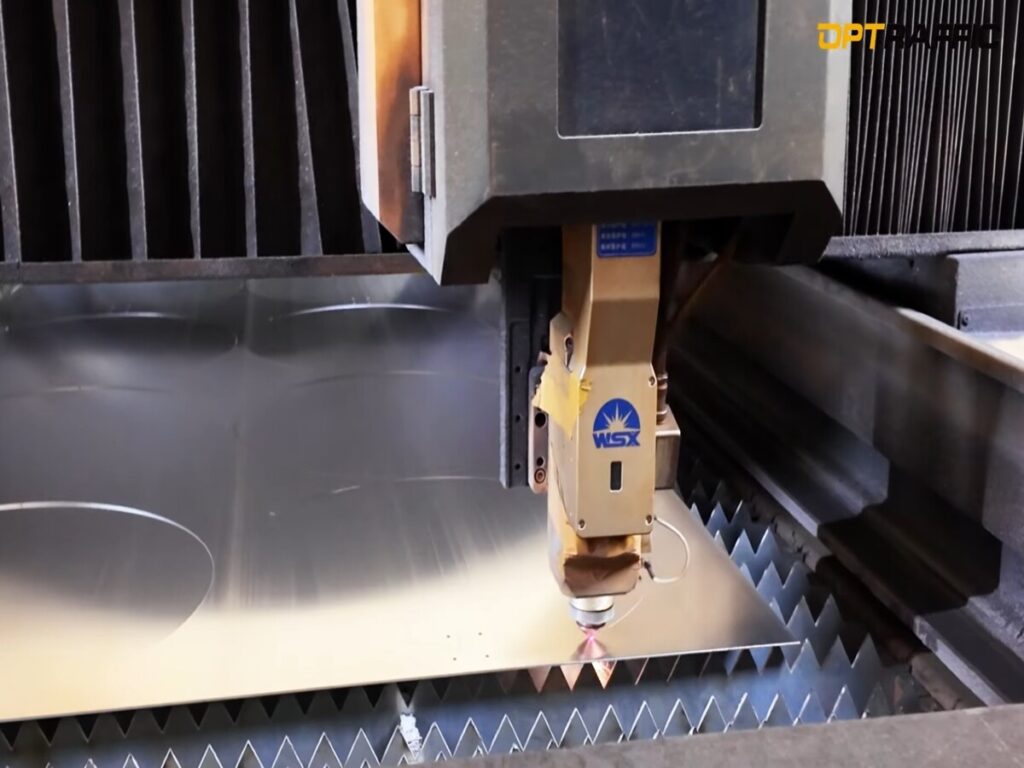
Cutting and Shaping Traffic Sign Materials
Precision cutting tools, such as laser cutters or shears, are used to trim materials for traffic signs according to the design specifications. This step ensures that the traffic signs meet the required dimensions, with attention to accuracy. For intricate designs, additional cutting operations may be necessary, especially for detailed elements or specific hole placements.
Drilling and Slotting for Traffic Sign Installation
Traffic signs often require specific drilling or slotting to accommodate mounting holes and other necessary openings. The correct placement and size of these holes are crucial for the stable installation of traffic signs, ensuring that the signs can be securely mounted and endure various environmental conditions.
Some procurement managers might wonder whether it’s better to laminate first or drill first during the manufacturing process. To explore this question in more detail, read our blog Drilling First vs. Laminating First: Choosing the Best Traffic Sign Manufacturing Method.
Bending and Forming Traffic Signs for Durability
Certain traffic signs require bending, particularly those with curved edges or reinforced borders. This process strengthens the sign, ensuring it can withstand harsh weather and environmental conditions. After bending, the edges are smoothed to avoid sharp corners, ensuring safety during installation.
Step 3: Surface Treatment for Traffic Sign Materials
Surface treatment is a crucial stage in producing durable and high-quality traffic signs. The process starts with cleaning and polishing the materials. This removes dust, oils, and contaminants. It ensures that subsequent coatings or paints adhere properly. Once cleaned, a primer coat is applied. This enhances the durability and corrosion resistance of the sign. The primer ensures that paint and coatings bond effectively, providing a solid foundation for protection.
For outdoor signs, corrosion treatment is essential. This is especially important for metal signs exposed to harsh environmental conditions. Techniques like hot-dip galvanizing or electroplating are used. These protect the signs from rust and ensure long-lasting functionality.
However, treatment requirements can vary by market. In the Australian market, a brushed finish is typically sufficient for corrosion resistance. No additional coating layers are needed. In contrast, North America and the UK often require extra protective layers. These layers are necessary to meet local environmental standards and provide maximum durability in extreme conditions.
Step 4: Printing and Reflective Film Application on Traffic Signs
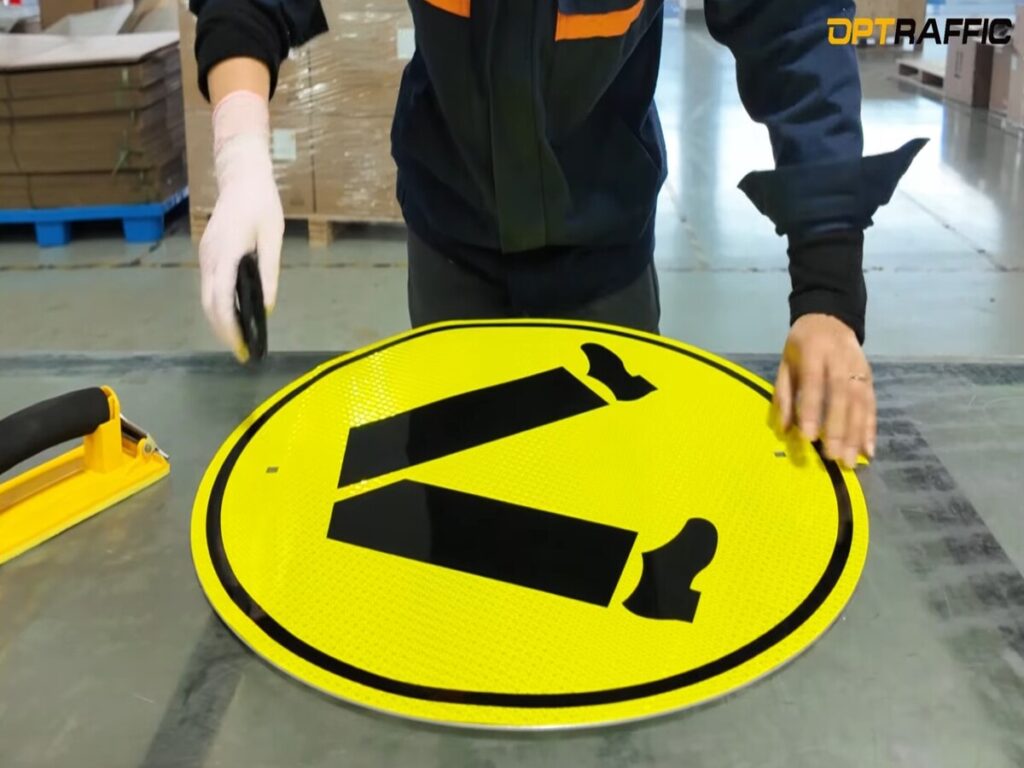
Reflective film is carefully hand-applied to traffic signs to ensure maximum adhesion and visibility, especially in low-light conditions. First, the necessary text and symbols are printed onto the reflective film using screen printing or digital printing. This ensures the text remains clear and legible in various weather conditions. After the printing is complete, the reflective film is carefully applied to the sign’s surface by hand. This process prevents lifting and ensures the film stays securely in place. The edges of the film are then trimmed for long-term durability. The choice of printing technique depends on the complexity of the design and the longevity required for the sign’s graphics and text.
For those interested in understanding which printing method is most suitable for road signs, it’s essential to consider the specific needs of the project. Read our blog to explore the differences between screen printing and digital printing for road signs.
Quality Control and Compliance
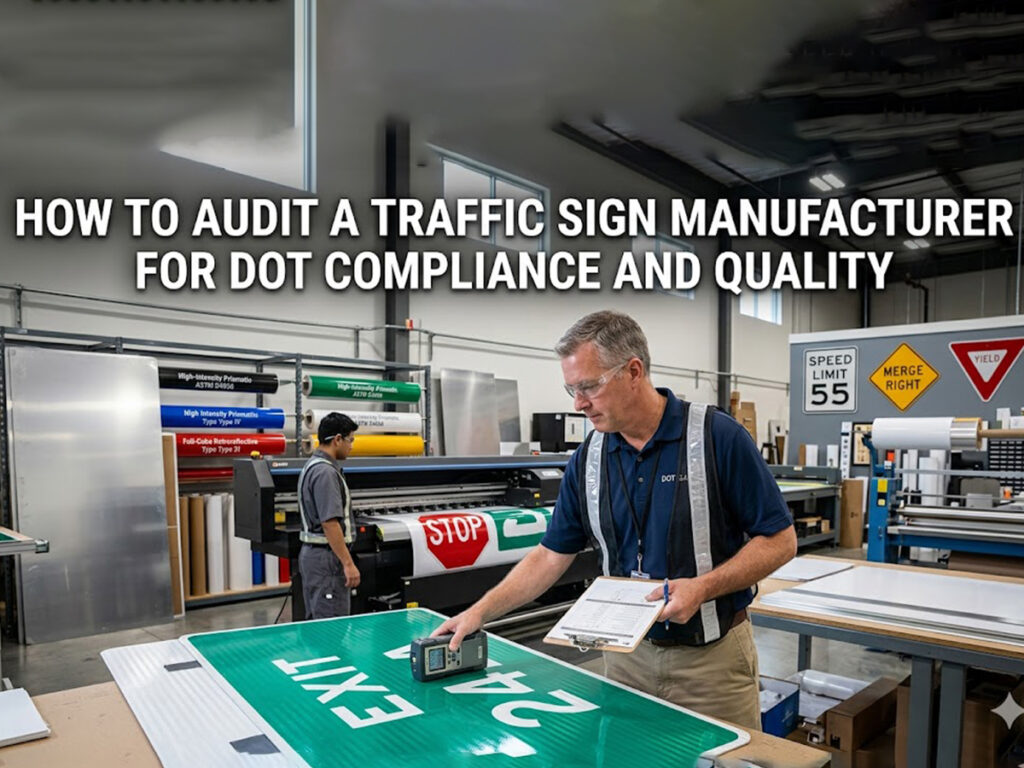
Ensuring that each traffic sign meets industry standards is a top priority throughout the production process. Quality control checks are carried out at every stage to guarantee the final product meets performance standards.
Sign Size and Shape Inspection
Each sign’s dimensions are carefully checked to ensure they match the design specifications. The shape of the sign—whether it’s a right angle, rounded corner, or diagonal—must also meet the required standards. Special attention is given to ensure that holes, slots, and edges are symmetrical and precisely positioned.
For more information on how standard sizes for signs impact safety and compliance, read our blog What Is the Standard Size for Signs and Why Does It Matter.
Printing and Reflective Film Quality Check
The clarity of printed text and graphics is thoroughly inspected. This ensures that no text or symbols are blurry or unclear. Additionally, the application of the reflective film is checked to confirm that the film is smooth, free of air bubbles, cracks, or gaps, ensuring optimal visibility.
Regulatory Compliance Check
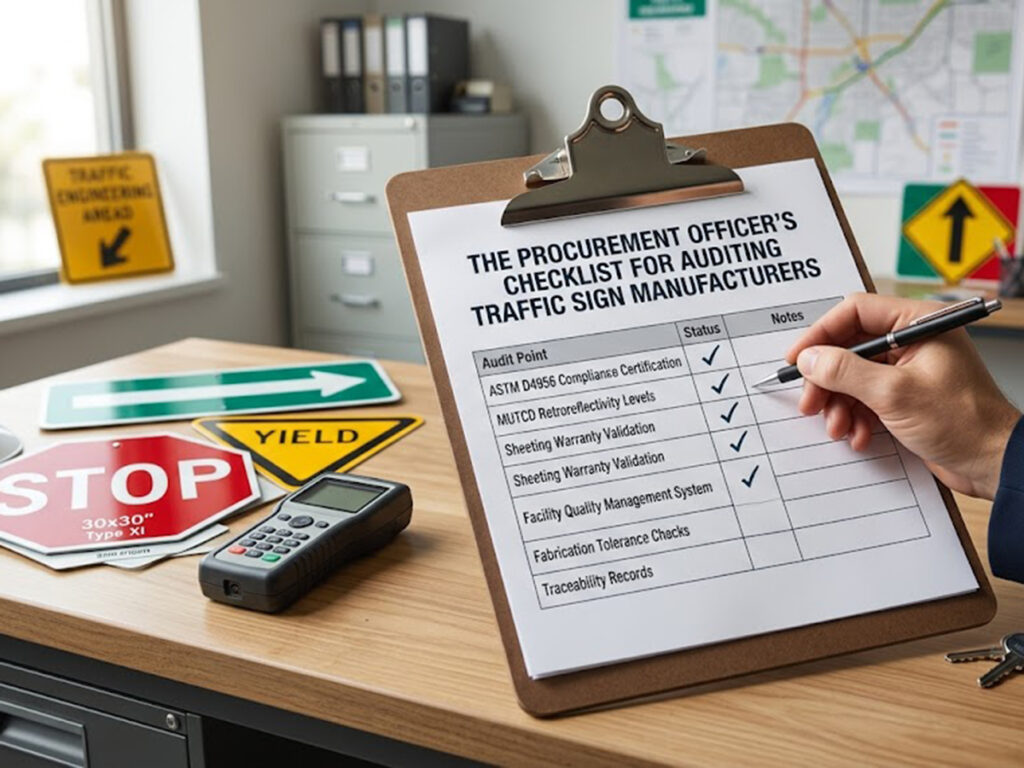
Each sign is verified to ensure it complies with relevant traffic sign regulations and standards, such as the MUTCD. This includes confirming that the sign’s reflectivity, durability, and visibility meet national or regional requirements. For more information on the key certifications that traffic signs must meet, read our blog Key Certifications You Need to Know Before Purchasing Traffic Signs for Your Business.
Packaging and Delivery
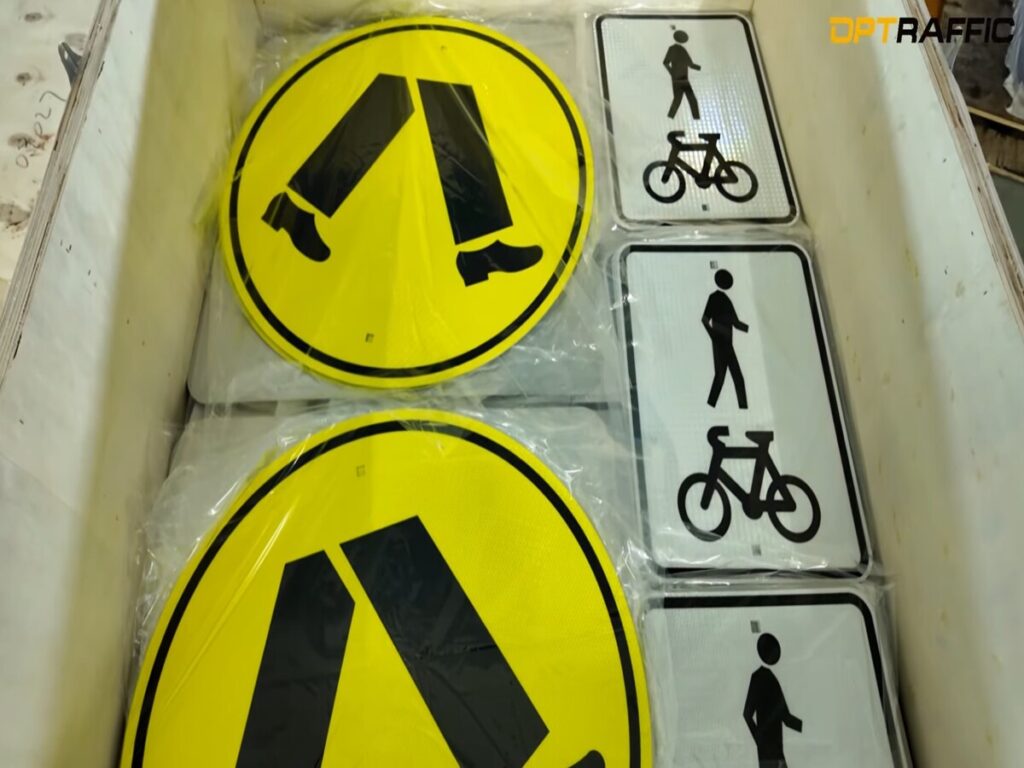
Proper packaging is essential to prevent damage during transit. Suppliers use various protective materials to safeguard the signs, including moisture-resistant packaging to protect from humidity.
- Labeling and Shipping Documents: Clear labeling and accurate shipping documentation are vital for smooth customs clearance and timely delivery.
- Packaging Options: Depending on the order size, suppliers choose between pallet or stack packaging methods, ensuring that the signs are securely delivered to their destination.
To learn more about selecting the best packaging for cross-border transport of traffic signs, check out our blog: Choosing the Right Packaging for Cross-Border Transport of Traffic Signs.
Continuous Improvement and Customer Feedback
A reliable traffic sign supplier values customer feedback as a means of continuous improvement. Rapid response times and adaptability to customer concerns are hallmarks of a supplier committed to providing excellent service.
By maintaining long-term partnerships, suppliers can consistently refine their processes and products, ensuring that every project runs smoothly.
Conclusion
By understanding the traffic sign production process—from material selection to final delivery—it becomes easier to make informed decisions when selecting a supplier for the next traffic sign project. For businesses seeking customized, high-quality traffic signs, partnering with suppliers who understand the intricacies of the production process, emphasize compliance, and are committed to continuous improvement is essential.
After gaining insight into the production process, read our blog The Ultimate Procurement Manager’s Guide to Find a Reliable Traffic Sign Manufacturer to learn how to quickly select a reliable supplier and purchase the ideal traffic signs.
FAQ
What is the typical production process for traffic signs?
The traffic sign production process includes several key stages: design, material selection, cutting and shaping, reflective film application, printing, and quality control. During the design phase, customer requirements are gathered, and the necessary text, symbols, and reflective materials are chosen. In the manufacturing process, precision equipment is used for cutting and shaping, followed by the careful application of reflective films to ensure maximum visibility. After printing and applying the final finishes, the sign undergoes thorough quality control checks to ensure compliance with industry standards like MUTCD.
What is the difference between screen printing and digital printing for traffic signs?
Screen printing works well for large quantities and simple designs, offering great durability. Digital printing provides high precision and suits more intricate designs or smaller batches. We choose the printing method based on design complexity, production volume, and how long the graphics need to last.
What materials are used for traffic signs?
Traffic signs are made from a variety of materials, depending on their intended use and environmental conditions. The most common materials include aluminum, steel, and plastic. Aluminum is widely used due to its lightweight nature and resistance to rust, making it ideal for outdoor signs. Steel is used for heavy-duty signs that need extra durability, while plastic is often used for temporary or less durable signage.
Can I laser engrave my company logo on traffic signs?
Yes, laser engraving can be used to add a company logo to traffic signs. This method ensures precision and durability, making it ideal for custom branding. Laser engraving provides a clean, professional finish that will not fade over time. It’s especially suitable for custom orders where logos or specific identifiers are required.
Why is OPTRAFFIC a trusted road sign manufacturer?
OPTRAFFIC has been a trusted leader in traffic safety equipment since 2008. With a 50,000 square meter facility in China and a skilled team of 100 professionals, we deliver high-quality traffic signs and solutions. We prioritize innovation through our dedicated R&D team and maintain strict quality controls to ensure durability and reliability. Our products have supported major global events like the Beijing and London Olympics. We also serve international markets efficiently, with a network of distributors in countries including Canada, New Zealand, and Australia.
Can traffic signs be made from 100% recyclable materials?
Yes, it is possible to make traffic signs from 100% recyclable materials. However, using only recyclable materials may not always provide the stability and durability required for long-lasting signs. The strength and performance of the materials could be compromised in some cases. OPTRAFFIC recommends contacting our team to discuss your specific needs. We will evaluate the requirements and suggest the most suitable materials to ensure both environmental sustainability and high performance for your traffic signs.