規制上の義務から運用準備まで: PPE 標識が職場の安全を定義する理由
米国. 労働統計局 (BLS) 2月に最新の包括的なレポートを発表 19, 2026, 確認する 5,070 米国全土での死亡労働災害. これは、 4.0% からの減少 5,283 前年に記録された死亡者数, しかしデータは厳粛な現実を浮き彫りにしている: アメリカではいまだに毎年労働者が亡くなっている 104 労働災害から数分. (ソース: https://www.bls.gov/iif/)
さらに, 労働災害及び疾病に関する公式調査によると (SOⅡ) 早い段階で完成した 2026, 民間企業の雇用主が報告 2.5 致命的ではない職場での傷害や疾病は数百万件. これは 3.1% 前期からの減少 - 2003年以来最低の事故率. (ソース: https://www.bls.gov/news.release/osh.nr0.htm)
PPEサイン これらの統計と、それらを削減するために設計された法的枠組みが交差する位置にあります。. OSHAのもとで 29 CFR 1910.145 およびANSI Z535, PPE 必須の標識はオプションのコミュニケーション ツールではありません。連邦政府が義務付けた、準拠した危険情報伝達システムのコンポーネントです。. 正しく投稿された場合, 正確に指定された, 使用可能な状態に維持されています, 文書化された安全プログラムにおける防御の最前線として機能します。. 欠席時, 破損, または非準拠, 引用露出を生み出す, 訴訟責任を増大させる, そして保護するはずだった労働者を失望させてしまう.
このガイドは、安全担当者向けの完全な運用リファレンスを提供します。, 施設管理者, 米国の職場での PPE 標識コンプライアンスを担当する調達専門家. 規制の枠組みを網羅しています, 設計基準, 材料の選択, 配置ルール, 調達戦略, および保守義務を合わせて防御可能なものを定義します。, 監査対応の PPE サイン プログラム.
米国における PPE 必須標識を管理する規制枠組み
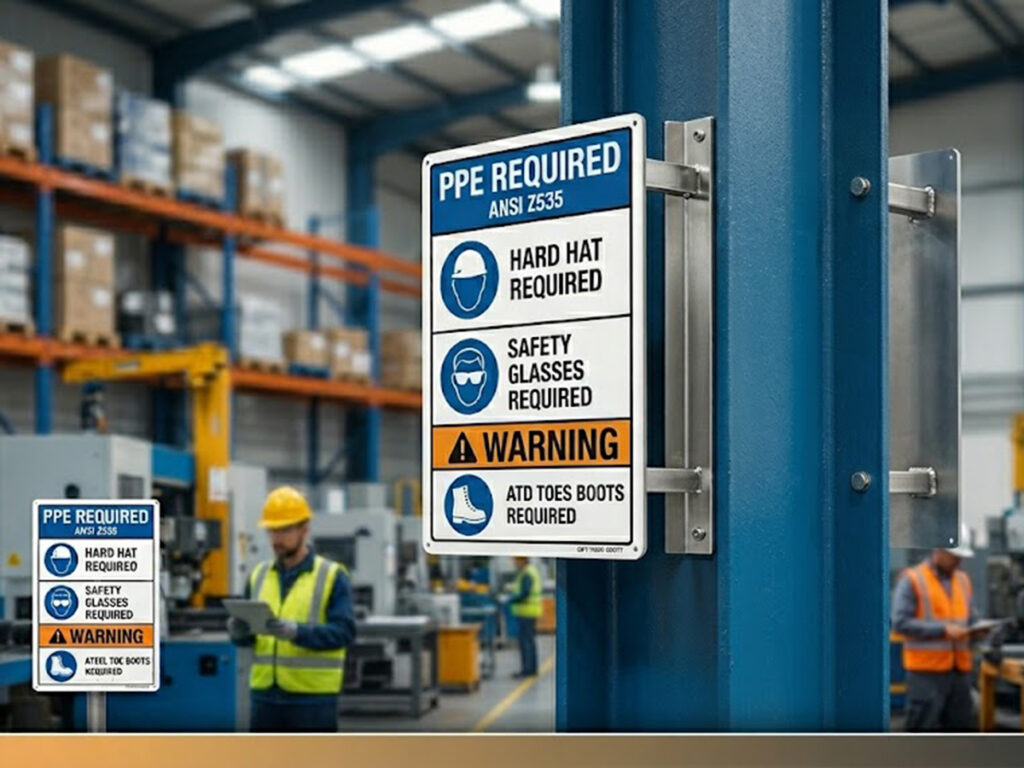
米国における PPE 必須標識は二重基準の枠組み内で運用されています. OSHA 29 CFR 1910.145 連邦法的義務を確立する. ANSI Z535 は、標識を技術的に準拠させるための設計仕様を管理します。. 両方を同時に満たさなければなりません.
コンプライアンス違反は段階的な影響を及ぼします. 1月の時点 15, 2025, OSHA は民事罰体系を上方修正しました。 2.6%. 重大な違反には現在、最高で $16,550 違反ごとに. 故意または繰り返しの違反が適用される場合 $165,514 違反ごとに. (ソース: https://www.osha.gov/news/newsreleases/osha-trade-release/20250114) 直接的な金銭的罰則を超えて, PPE の標識がない、または準拠していない場合は、労働者の過失の証拠書類として機能します。’ 賠償および人身傷害訴訟.
建設現場はOSHAの並行枠組みに該当します 29 CFR 1926. OSHA の 2024 年度違反トップ 10 リスト, 建設中の目と顔の保護 (29 CFR 1926.102) 9位にランクされました, 落下防止は14年連続でリストのトップに輝いた. (ソース: https://www.osha.gov/data/commonstats) これらは抽象的な規制上の懸念ではなく、標識のコンプライアンスへの直接的な影響を伴う積極的な施行の優先事項を表しています。.
OSHA 29 CFR 1910.145 — 規格が実際に要求しているもの
OSHA 1910.145 安全標識に関する 3 つの譲れない運用要件を確立します. 初め, 標識は、伝達する情報を必要とするすべての労働者に見えるようにする必要があります. 2番, 標識は環境の照明条件下でも判読できる必要があります. 三番目, 標識は安全な状態、つまり損傷している状態に維持する必要があります, 色あせた, または隠れた標識は、根本的な危険が他の方法で伝えられているかどうかに関係なく、独立した違反となります。. (ソース: https://www.osha.gov/laws-regs/regulations/standardnumber/1910/1910.145)
この規格は、一般産業の職場で使用されるすべての事故防止標識およびタグに適用されます。. 公道上の標識には適用されません, 高速道路, または鉄道, 純粋に教育目的で使用される掲示板の通知や安全ポスターも禁止されています.
OSHA 1910.145(c)(1) 配置原則を確立します: 標識を使用しなければならない “特定の危険性を示し、定義するためだけに使用する” 作業者が危険エリアに入る前に適切な警告を発するように配置されています。. この原則は、準拠した PPE サイン プログラム全体で行われるすべての配置決定に適用されます。.
ANSI Z535 — 準拠した PPE 標識を定義する設計規格
ANSI Z535 は相互に関連する 5 つの規格で構成されています: Z535.1 (安全色), Z535.2 (環境および施設の安全標識), Z535.3 (安全記号), Z535.4 (製品の安全標識とラベル), およびZ535.5 (事故防止タグ). 施設環境における PPE 標識用, Z535.2 が有効な標準です.
OSHAは次のように明らかにしました。 2013 雇用主はオリジナルの OSHA 準拠設計または ANSI Z535 フォーマットを使用できること. どちらも許容されます. しかし, ANSI Z535 は、より包括的で強制力のある設計フレームワークを提供します, 特にシグナルワード階層に関して, パントンのカラー仕様, およびシンボルの統合要件. (ソース: https://resource.duralabel.com/articles/osha-1910-145-warning-signs-and-tags)
Z535.2 では、信号ワードごとに特定の Pantone 参照のヘッダー色を義務付けています, 文字の高さに対するパネルの最小寸法, シンボル配置プロトコル, 標識の視覚的レイアウト内の情報階層. これらの仕様からの逸脱(標準外の色や未承認の信号文など)は、メッセージをどれだけ明確に伝えているかに関係なく、標識を技術的に不適合とします。.
📖 続きを読む: ANSI Z535.2と安全標識のOSHA要件の理解
ISO 7010 PPE 標識における記号と多言語の考慮事項
ANSI Z535.3 は安全記号の設計を規定します, そしてその現行版は ISO と大幅に一致しています 7010 — 世界中で使用される安全標識の国際規格 160+ 国. 英語を話さない従業員がいる米国の施設向け, ISOを組み込む 7010 絵文字をANSI Z535準拠に変換 PPEサイン すべての従業員に危険を伝えるというOSHAの一般義務条項の要件を満たしています, 語学力に関係なく.
OSHA は名前による二か国語表記を義務付けていません. しかし, 同庁は、一般義務条項に基づき、言語の壁により危険コミュニケーションが明らかに損なわれている雇用主を挙げている。. バイリンガルまたは絵文字強化 PPEサイン 言語的に多様な従業員を抱えるあらゆる施設向けのリスク管理のベストプラクティスを表す.
PPE 安全標識素材 — あらゆる環境に適した基材の選択
PPE 安全標識の材質の選択はコンプライアンスの決定となります. OSHA 1910.145(a)(3) 標識は安全な状態に維持する必要があります。基材が展開環境と互換性がない場合、この基準を長期的に満たすことは不可能です。. 保護された屋内スペースに設置されたアルミニウム製の看板は浪費を表しています. 高紫外線の屋外建設環境では、硬質プラスチックの看板は 18 ~ 24 か月以内に黄変し、ひび割れが発生します, 引用リスクと交換コストの両方が発生し、初期調達の節約ができなくなります。.
5 つの主要な PPE 安全標識素材は、それぞれ異なる環境および耐久性プロファイルを備えています。. 正しい材料を指定するには、UV 暴露を評価する必要があります, 湿気と化学物質との接触, 物理的衝撃のリスク, 温度範囲, 取付方法, 調達開始前に予想される耐用年数.
クイックリファレンス資料選択ガイド:
| 環境 | 推奨資料 |
| 屋外 / 建設現場 | アルミニウム (.040″ または .063″ ゲージ) |
| 屋内で保護されています / 軽工業用 | 硬質HDPEプラスチック |
| 機械または装置の表面 | ビニール系接着剤 |
| 一時的 / 再構成可能なサイト | 波形プラスチック (corflute) |
| 低照度 / 夜間営業 | 再帰反射または光輝性 |
→ 詳しくはこちら: 耐候性構造 PPE 安全標識: アルミニウム対. corflute
職場のコンプライアンスのために PPE 標識を設置する場所 — OSHA および ANSI の設置規則
PPE 標識の設置に関する規制は、どの標識を掲示する必要があるかだけでなく、標識をどこに表示する必要があるかについての正確な空間ロジックも管理します。. 技術的に準拠した標識 - 正しい注意喚起語, 正しい色, 正しい資料 - 間違った場所に投稿された場合は、独立した OSHA 違反となり、インシデント訴訟における法的保護は提供されません。.
OSHA 1910.145(c)(1) 基本的な配置原則を確立します: 労働者が危険区域に入る前に適切な警告を発するように標識を設置しなければなりません. ANSI Z535.2 Annex A は定量的な枠組みを提供します, 視距離と照明条件に基づいて文字の最小高さ要件を設定する.
PPE 標識設置規制に基づくエントリポイント設置ロジック
エントリーポイントルールは、PPE標識設置規制において最も普遍的に適用できる原則です。. 定義されたスペース内に適用されるすべての PPE 要件は、そのスペースへのすべてのアクセス ポイントで伝達される必要があります, 位置決めされた. したがって、, 作業者が危険閾値を超える前に標識に遭遇した.
このルールは 3 つの空間スケールにわたって階層的に適用されます。:
- 施設レベルの入口 - 敷地境界ゲート, 建物の入り口のドア
- ゾーンレベルのエントリ - 個々の作業領域, 化学薬品保管室, 高騒音エンクロージャ
- 機器レベルの近接 — 孤立した危険を生み出す機械上または機械のすぐ隣に配置
主要な入り口にのみ PPE 要件を掲示している施設は、作業員が標識に遭遇することなく危険ゾーンに到達できる二次アクセス ポイントの立ち入りポイント規則を満たしていません。.
PPE標識タイプ別の設置要件
配置ロジックは、伝達される特定の保護具要件によって異なります, 危険境界とアプローチの形状は PPE カテゴリによって異なるため.
| サインタイプ | クリティカル配置ルール |
| ヘルメットが必要です | すべての車両および歩行者の進入ポイント; 開いたゲートや設備によって遮られないこと |
| 聴覚保護具が必要です | で 85 dB音響境界 (29 CFR 1910.95), お部屋の入り口だけでなく |
| 目の保護が必要です | 特定の機械またはプロセスに隣接, 目の高さで |
| 人工呼吸器が必要 | 汚染地帯入口にて; マスクのクラスを指定する必要があります |
| Hi-Vi ベストが必要です | 車両/歩行者のインターフェースポイント - 積み込みドック, 敷地内道路 |
| PPEなしの入場禁止 | PPEゾーンへの不正アクセスが可能なあらゆる場所で |
カスタム PPE 標識 — コンプライアンス要件と仕様基準
カスタム PPE サイン ANSI Z535 フレームワーク内の法的に特定の領域を占有する. 標準はカスタマイズを管理するものであり、それを禁止するものではありません. シグナルワード, ヘッダーの色, カスタム PPE 標識のシンボル要素は、ANSI Z535.2 仕様に正確に準拠する必要があります。. これらの要素は不変です. 補足テキストパネル, 追加の指導コンテンツ, また、施設固有の識別子は、標準で定められたレイアウト制約内でカスタマイズできます。.
カスタムの運用ケース PPEサイン 標準カタログを超える製品は、安全性に関する文献に詳しく文書化されています. ジェネリック “目の保護が必要です” 標識は法的最低基準を満たしています. カスタムのサインリーディング “安全メガネが必要 — 化学飛沫の危険, ANSI Z87.1 定格” 危険の種類を指定します, コンプライアンス違反の結果, と機器の仕様を同時に決定します. その具体性により、作業者の曖昧さが軽減されます, 安全教育を強化します, 訴訟の場面での適切な危険情報伝達の実質的に強力な文書を提供します.
ANSI Z535 準拠の PPE 標識でカスタマイズできるものとできないもの
ANSI Z535 準拠の PPE 標識の交渉不可能な固定要素は次のとおりです。:
- 注意喚起語 — 結果に基づく危険の重大度に基づいて選択
- ヘッダー パネルの色 — 注意喚起語によって決定されます, Pantone リファレンスに指定されています
- 安全記号 - Z535.3 または ISO に準拠する必要があります 7010 仕様
コンプライアンスの境界内でカスタマイズできる要素には次のものがあります。:
- メッセージパネルのテキスト - 危険に特化した言語, 設備仕様, ゾーン識別子
- 補足的な安全上の注意事項 — 主要なメッセージの下にある追加のガイダンス パネル
- 二言語または多言語テキスト - メッセージ パネルの第 2 言語
- サインの寸法 - 文字の高さに対する最小サイズ要件が満たされている場合
企業ブランドの一貫性を保つためにヘッダーの色を変更する組織, または、内部の危険レベルを区別するために非標準のシグナルワードを使用する, 標準カタログ製品には決して含まれないコンプライアンスの露出を生み出す.
準拠した運用上効果的なカスタム PPE 署名テキストの作成
準拠したカスタム PPE 標識テキストは 3 つの基準を同時に満たす必要があります. 一般的なカテゴリの説明ではなく、存在する特定の危険を正確に反映している必要があります。. 機器の選択をガイドするのに十分な詳細を備えて、必要な正確な保護機器を指定する必要があります。. 施設の従業員を代表する識字レベルの従業員にとって明確な言葉を使用する必要があります.
OSHA の危険情報伝達基準 (29 CFR 1910.1200) と一般義務条項を組み合わせることで、すべての労働者が理解できる用語で危険性を伝達する法的義務が生じます。. 保護対象の従業員の大部分がアクセスできない専門用語を使用したカスタム標識は、ANSI Z535 設計に準拠しているかどうかに関係なく、危険情報の伝達が不十分であることを意味します。.
バルク PPE 必須標識の調達 — 戦略, コスト管理 & サプライヤーの資格
大量の PPE が必要な標識の調達に関する決定は、3 つの異なる組織状況にまたがって行われます。. 単一施設での大量調達 - 発注 25 標準化されたタイプの兆候 - 通常、小売価格に対して 20 ~ 50% のユニットあたりのコスト削減を実現します。. 損益分岐点の計算では、年間保守交換プログラムを実行している施設では一貫して一括発注が有利になります。.
複数の拠点または企業での調達では標準化が不可欠です. 同じ組織内の施設間で標識の仕様が一貫していない場合、監査の危険にさらされ、視覚的な一貫性というトレーニング強化の価値が損なわれてしまいます。. 建設または産業設備のプロジェクトベースの調達では、単位コストと並んで主要な変数としてリードタイム管理が必要です。現場へのアクセスや検査の承認を妨げる標識の遅延により、達成された調達の節約を小さく見積もるコストが発生します。.
PPEサインの大量注文のボリュームプライシングベンチマークと損益分岐点分析
バルク PPE 必須標識調達の業界価格ベンチマークは素材によって異なります, 寸法, 印刷方法, および注文数量層. 以下の範囲は、標準 10 の現在の米国市場状況を反映しています。″×14″ 記号のフォーマット:
| 材料 | 小売り (ユニットごと) | 音量 50+ (ユニットごと) |
| 硬質HDPEプラスチック | $5–$15 | $2–$8 |
| アルミニウム (.040″) | $12–$30 | $6–$18 |
| カスタム印刷されたアルミニウム | $20–$80+ | $15–$45+ |
| 反射をretreRoReForive / 蓄光性 | 30–ベース素材よりも 60% プレミアム | 出来高に応じた同等のプレミアム |
カスタム印刷されたアルミニウムには、以下のセットアップ料金がかかります 10 経済的に非効率なユニット. 再帰反射材料と光輝性材料は、同等の量の標準材料よりも永続的なプレミアムをもたらします。これにより、紫外線にさらされた環境や低照度の環境で劣化した標準標識の定期的な交換コストが不要になります。.
📖 続きを読む: PPE が必要な標識の一括調達が会社のコストをどのように節約できるか
PPE 安全標識調達のサプライヤー認定基準
バルク PPE 安全標識調達のサプライヤー認定はコンプライアンス活動です, 単にベンダーを選択するだけではありません. 非準拠製品を納入するサプライヤーは、標識が掲示された瞬間に、準拠の危険性を購買組織に移転します。. 資格書類には次のものが含まれます。, 少なくとも:
- 参照されている特定のエディションに対する ANSI Z535 準拠の書面による声明
- 屋外基材に対するサードパーティまたは社内の UV 安定性テストの結果
- すべての記号要素の Pantone 基準値による色精度保証
- 不適合製品の交換に関する明確なポリシー
- 完全な生産ワークフローをカバーする文書化された品質管理プロセス
これらの基準に照らして条件を満たさず、価格だけで調達を決定すると、統計的に有意な確率で不適合製品が届く可能性があります。. その結果として生じる引用の露出と交換コストは、初期調達の節約額を常に上回っています。.
📖 続きを読む: PPE の安全性は最高品質を保証するサプライヤーの秘密を示しています
業界固有の PPE 標識要件 — 建設, 製造業, および倉庫保管
OSHA 1910.145 および ANSI Z535 は普遍的なフレームワークを確立します. 特定の掲示要件 - どの標識が必須であるか, どこに現れるべきか, およびどの補足基準が適用されるか - 建設ごとに大幅に異なります, 製造, そして倉庫保管. 複数の業種にわたるコンプライアンス プログラムを管理する安全担当者は、調達仕様と現場監査チェックリストの両方でこれらの違いを考慮する必要があります。.
OSHA に基づく建設現場の PPE 必須標識 29 CFR 1926
建設環境では、ほとんどの一般的な産業施設よりも包括的な PPE 標識の導入が必要です. OSHA の 2024 年度の違反行為トップ 10 には、建設における目と顔の保護が含まれます (29 CFR 1926.102) 9 番目の位置, 建設現場における PPE コンプライアンスの積極的な施行を反映.
最も一貫して必要とされる投稿 29 CFR 1926 含む:
- すべての敷地入口ポイントでヘルメット必須の標識 (29 CFR 1926.100)
- すべてのオープンエッジおよび床開口部の周囲に落下危険警告標識を設置
- すべての切断箇所には目の保護が必要な標識が隣接してあります, 研削, および溶接作業
- すべてのアクティブな車両/歩行者インターフェイスゾーンでは、視認性の高いベストの標識が必要です
仮設建設現場では、プロジェクト期間中ずっと看板が判読できるようにする必要があるという追加の材料仕様の考慮事項が導入されています。. この要件により、数か月にわたる建設スケジュールを通じて持続することを目的としたあらゆる掲示物に接着剤と軽量のプラスチック基材が不要になります。. アルミニウムまたは高級硬質プラスチックは、建設現場の環境に適合する選択肢です.
PPE の製造および倉庫におけるコンプライアンス要件への署名
OSHA に基づく製造環境 29 CFR 1910 あらゆる業界カテゴリの中で最も多様な PPE 標識マトリックスを搭載. 複数の異なる危険タイプ - 化学物質への曝露, ノイズ, 機械エネルギー, 熱による危険性, および電気的リスク - 多くの場合、単一の施設の設置面積内に共存します。. 各危険ゾーンには独立したものが必要です, ゾーン固有の PPE 標識. 溶接ベイ間で PPE 要件が異なる場合、単一の施設エントリー投稿ではエントリーポイント ルールが満たされない, 化学物質の保管場所, 高騒音加工セル, そして総会フロア.
倉庫保管および物流業務には、フォークリフトと歩行者のインターフェース特有の課題があります. OSHA の動力付き産業用トラック規格 (29 CFR 1910.178) およびその解釈書簡は歩行者警告標識を扱います, 優先道路標識, 準拠した交通管理プログラムの必須コンポーネントとして、交差点およびドックベイ入口ポイントでの速度制限通知. 2024年度, 動力付き産業用トラック (29 CFR 1910.178) OSHA の最も引用された規格リストのトップ 10 で 6 位にランクされました. 倉庫環境における標識の欠陥は、両方の法律で引用されています。 1910.178 と一般義務条項を同時に適用する.
長期的なコンプライアンスと運用上の回復力を実現するための PPE 標識戦略の最終決定
準拠し、運用上効果的な PPE 標識プログラムは、施設の広範な安全管理システムの継続的に管理されるコンポーネントであり、一度限りの調達ではありません。. OSHA 検査の記録が最も強く、標識関連の賠償責任が最も少ない組織には、3 つのプログラムの特徴があります。.
サイン仕様は、調達が開始される前に、ANSI Z535 および OSHA 規格に基づいて文書化されます。. 配置の決定は、エントリポイント ロジックと ANSI Z535.2 の視聴距離要件に基づいて作成されたプロトコルに従います。. メンテナンス プログラムには定期検査が含まれています, 客観的な交換基準, プロアクティブなコンプライアンス管理の防御可能な記録を作成する同時文書化.
適切に指定された PPE 標識プログラムの財務事例では、全額コストモデルを適用した場合、一貫してプラスの投資収益率が実証されています。. このモデルには、ユニットあたりの調達コストだけでなく、規格外の材料の交換サイクルコストも組み込まれています。, 引用レベルの不遵守のペナルティエクスポージャ値, そして、文書化された準拠標識プログラムがある場合とない場合との間の訴訟責任の違い.
よくある質問 - PPE 標識の遵守, 配置, と調達
PPE サインは OSHA の下で法的に義務付けられていますか?
PPEサイン 適用されるOSHA基準に基づいてPPEの使用が義務付けられている場合はどこでも必須です. 基礎となる PPE 規格から直接フローをポストする義務 — 1910.95 (聴覚保護), 1910.132 (一般的な PPE), そして 1910.133 (目と顔の保護), とりわけ. 各規格では、PPE の使用と、危険にさらされた時点で作業者にその要件を伝達することの両方が求められています。. (ソース: https://www.osha.gov/laws-regs/regulations/standardnumber/1910/1910.145)
OSHA との違いは何ですか 1910.145 PPE 標識用の ANSI Z535 および?
OSHA 1910.145 連邦法上の義務です。標識を掲示する義務を定め、一般的な使用条件を定義します。. ANSI Z535 は設計仕様規格であり、準拠した標識がどのようなものであるべきかを規定しています。, 注意喚起語の選択を含む, ヘッダーの色, シンボルの要件, とレイアウト. OSHA 1910.145 参照 ANSI Z535, 標識が完全に準拠するには両方が満たされる必要があります.
PPE 必須の標識は何色にすべきか?
ヘッダーの色は注意喚起語によって決まります, 危険の重大度に基づいて選択される. 危険は Pantone 186C を使用しています (赤). 警告は Pantone 152C を使用しています (オレンジ). 注意: Pantone 109C を使用しています (黄色). 注意: Pantone 293C を使用しています (青). 標準以外の色を使用すると、明示された理由に関係なく、標識は ANSI Z535.2 に準拠しなくなります。.
PPE 安全標識はどのくらいの高さに取り付ける必要がありますか?
ANSI Z535.2 は、標識のメッセージ ゾーンを約 5 足 6 床からのインチ (平均的な立っている目の高さ)、許容設置範囲 4 足 6 インチから 6 足 8 インチ. 上に設置された標識 7 足が立っている労働者の自然な視界の外にあり、OSHA 検査中に文書化されたコンプライアンスリスクを表します。.
カスタム PPE 標識は ANSI Z535 に準拠できますか?
カスタム PPEサイン 必須の設計要素 (シグナルワード) を備えていれば、完全に準拠できます。, ヘッダーの色, および安全記号 - Z535.2 および Z535.3 仕様に正確に準拠. メッセージパネルのテキスト, 補足説明, バイリンガル コンテンツは、標準で定められたレイアウト制約内でカスタマイズできます。. ブランド化を目的としてヘッダーの色を変更したり、標準以外の注意喚起語を使用したりすると、コンプライアンス違反となります。.
PPE 標識はどのくらいの頻度で検査して交換する必要がありますか?
OSHA 1910.145(a)(3) 標識を安全な状態に維持することを義務付けていますが、特定の検査間隔は規定していません. ベストプラクティスは屋外の四半期検査をサポートします, 高トラフィック, および化学物質にさらされる環境, 保護された屋内環境の半年ごとの検査. 可読性に影響を与える劣化が発生した場合は交換トリガー, ANSI Pantone 仕様に対する色精度, または物理的な完全性 - 設置後の経過時間に関係なく.
OSHA 検査中に PPE サインが欠けている場合はどうなりますか?
PPE が必要な標識が欠落していると、OSHA に基づく引用が生成される 1910.145 重大な違反として, ~の最大の罰則を科す $16,550 1月時点の違反ごと 2025. (ソース: https://www.osha.gov/ペナルティ) 故意または繰り返しの違反が適用される場合 $165,514 違反ごとに. 直接的な金銭的罰則を超えて, 必要な標識がないことは、後続の作業者に対する危険情報の伝達が不十分であることの証拠として機能します。’ 未掲載エリアでの事故に起因する賠償または人身傷害訴訟.
このシリーズの関連記事
調達クラスター:
カスタム PPE 安全標識 vs. 標準既製: 施設に合わせて調達を適切に決定する方法
PPE が必要な標識の一括調達が会社のコストをどのように節約できるか
準拠した印刷可能な PPE サインと比較. 安価な模造品: 調達の並列内訳
物質クラスター:
耐候性構造 PPE 安全標識: アルミニウム vs コルフルート
コンプライアンスクラスター:
PPE サインの交換: OSHA コンプライアンス タイムライン, 検査チェックリスト & 材料寿命データ
参照:
- 私たち. 労働統計局 — 死亡労働災害 2024: https://www.bls.gov/iif/
- 職業上の傷害と疾病に関するBLS調査 2024: https://www.bls.gov/news.release/osh.nr0.htm
- OSHA 2025 ペナルティの調整: https://www.osha.gov/news/newsreleases/osha-trade-release/20250114
- OSHA 2025 民事罰金の額: https://www.osha.gov/penalties
- OSHA 2024 年度トップ 10 最も引用された規格: https://www.osha.gov/data/commonstats
- OSHA 29 CFR 1910.145 標準テキスト全文: https://www.osha.gov/laws-regs/regulations/standardnumber/1910/1910.145
- OSHA 29 CFR 1903.15 罰則規定 (2025): https://www.osha.gov/laws-regs/regulations/standardnumber/1903/1903.15
- DuraLabel — OSHA 1910.145 ガイダンス (行進 2026): https://resources.duralabel.com/articles/osha-1910-145-warning-signs-and-tags
- NSC労働者トップ 10 2025年度違反行為の公表: https://www.nsc.org/newsroom/osha-top-10-safety-violations-show-persistent-risk
- NAHB — 2025 OSHAの罰則が増加: https://www.nahb.org/blog/2025/01/osha-violations-2024