
免責事項: This article provides general guidance on bollard placement for informational purposes only and does not constitute legal or compliance advice. ADA requirements are interpreted and enforced by the US Department of Justice. Consult a licensed accessibility consultant or refer directly to the ADA Standards for Accessible Design before making installation or procurement decisions.
ADA bollard placement must follow guidelines from the 障害のあるアメリカ人法. The ADA Standards for Accessible Design require a minimum clear passage width of 36 inches between bollards to allow safe access for wheelchair users and mobility aid users. Height and maximum spacing figures cited in this article reflect accessibility design guidance and industry practice; they are not all explicitly mandated by ADA statute. These guidelines protect public safety and help create accessible parking spaces and ADA parking spaces. 安全なボラード また、設置により、ADAに準拠した駐車標識が表示されたままになります. コンプライアンスについては、すべての人の安全性を向上させるためにサイトを確認してください.
どのトラフィックセーフティ製品があなたのプロジェクトに最適なのかわからない場合, it’s wise to consult a licensed accessibility consultant or trusted expert. Optrafficは、自信を持って適切な製品を選択するのに役立つ専門的なアドバイスとカスタマイズされたソリューションを提供します.
キーテイクアウト
- The ADA Standards for Accessible Design require a minimum clear width of 36 インチ (3 足) between bollards to allow safe passage for wheelchairs and mobility aids.
- Accessibility design guidance commonly specifies bollard heights in the range of 36 に 48 inches for visibility; consult your local authority for jurisdiction-specific requirements.
- Industry guidance recommends positioning bollards no more than 5 feet apart to prevent vehicle intrusion while maintaining pedestrian access.
- Place bollards approximately 1.5 feet from curbs and keep all accessible routes clear at all times.
- Use durable materials like steel or concrete and add reflective or high-visibility features for safety.
- Inspect and maintain bollards regularly to ensure they remain safe, 見える, and compliant with applicable standards.
ADA Bollard Compliance Basics
What Is ADA Compliance for Bollard Post Installation?
あなたは理解する必要があります ADAコンプライアンス ボラードをインストールする前に. The Americans with Disabilities Act sets guidelines to ensure public spaces remain accessible to everyone. ADAコンプライアンスとは、障害のある人が自由に安全に移動できるように、これらのルールに従うことを意味します.
- The ADA Standards for Accessible Design require that bollards and barriers do not block access for wheelchair users or anyone needing mobility assistance.
- Some manufacturers offer tactile indicators and automatic lowering features as accessibility enhancements; check with your local authority whether these are required for your specific application.
- Regional standards, 国立防火協会のようなもの, また、インストールの選択に影響を与える可能性があります.
- ADAの駐車スペースとアクセス可能なルートは、開いて明確なままでなければなりません, したがって、ボラードの配置を注意深く計画する必要があります.
ADA compliance has evolved over time. 今日, you must consider not only accessibility but also security and site-specific requirements. メーカーは現在、ADAと業界の両方の基準を満たすボラードを設計します, responding to growing demand for accessible public spaces.
Why ADA Compliant Bollard Placement Matters for Public Safety
Ada Bollardsは公共の安全とアクセシビリティに重要な役割を果たします. ADAガイドラインに従うとき, you help everyone — especially those with disabilities — navigate spaces without barriers.
- The ADA Standards for Accessible Design require at least 36 インチ (3 足) of clear passage between bollards so wheelchairs and mobility devices can pass through safely.
- Bollards must be installed on level ground, トリップの危険から解放されます, 事故を防ぐため.
- 反射的または対照的なボラードを使用すると、視覚障害のある人の視界が向上します.
- 業界基準を満たすクラッシュレートのボラードは、アクセシビリティを維持しながら歩行者を保護します.
Regular inspections and maintenance keep your bollards compliant and safe for all users.
You will find accessible bollard installations in parks, ストアフロント, および輸送エリア. これらのインスタレーションは、ADAと業界の基準に従うことがより安全になる方法を示しています, 誰にとってもアクセスしやすい環境.
ADA Bollard Placement and Code Requirements
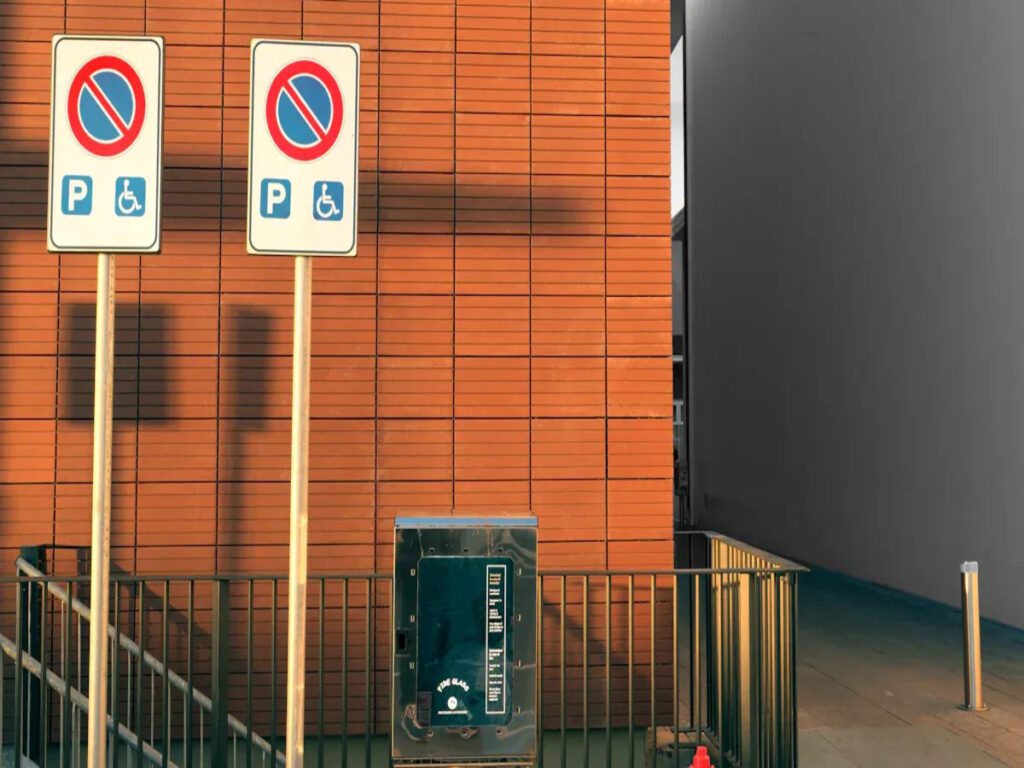
適切なボラード間隔
You must follow bollard placement guidelines to meet ADA requirements and ensure accessibility for all users. The ADA Standards for Accessible Design require a minimum clear width of 36 インチ (3 足) between bollards, measured from the outer edge of one bollard to the outer edge of the next. この最小距離は、歩行者を保証します, including those using wheelchairs and assistive devices, アクセス可能なルートを介して自由に移動できます.
Industry guidance generally recommends spacing bollards no more than 5 feet apart to prevent unauthorized vehicle access while maintaining pedestrian passage. This figure is widely applied in accessibility design practice, though your local authority or project specification may set different requirements. 各ボラードの最も外側の端から常に測定してください, particularly if you use covers or sleeves. For optimal placement near parking areas, positioning bollards approximately 1.5 feet from the curb allows car doors to open fully and keeps access aisles clear.
トラフィックセーフティデバイスの間隔に関するより詳細なガイダンス, ボラードと描写者を含む, 私たちのブログをご覧ください: トラフィックデリネートの適切な間隔を決定する方法.
| 要件 | 測定 | Basis |
|---|---|---|
| Minimum clear spacing | 36 インチ (3 足) | ADA Standards for Accessible Design |
| Recommended maximum spacing | 5 足 | Industry accessibility guidance |
| 縁石からの距離 | 約. 1.5 足 | Accessibility design best practice |
Standard Bollard Height and ADA Clearance Requirements
Correct height and clearance are essential for accessibility and safety. Accessibility design guidance, including PROWAG, commonly specifies bollard heights in the range of 36 に 48 インチ. This range is intended to ensure bollards are detectable by cane users and visible to pedestrians without creating tripping hazards. Jurisdiction-specific requirements may differ; confirm with your local authority before installation.
You must also provide sufficient clearance around each bollard. Under ADA Standards Section 402, accessible routes require a minimum continuous clear width of 36 インチ. This standard is the primary accessibility reference applied to bollard spacing — bollard rows must maintain at least 36 inches of unobstructed passage throughout, as they constitute a continuous obstruction rather than a point restriction. The 32-inch figure that sometimes appears in bollard guidance refers to the ADA’s limited exception for specific point restrictions such as doorways, applicable for a maximum distance of 24 inches only — it does not apply to bollard installations. 公共権利アクセシビリティガイドライン (prowag) provides additional guidance for bollard placement on sidewalks and public rights-of-way.
For guidance on height considerations for traffic safety devices more broadly, 見る: なぜ 4 足は、トラフィックデリネーターに最適な高さです.
Keeping Accessible Routes Clear of ADA Trip Hazards
あなたは常にアクセス可能なルートを開いていて、妨害から解放する必要があります. Ada Bollardの配置は、アクセス通路をブロックしないでください, 経路, または入り口. インストールを計画するとき, ensure that every route remains wide enough for wheelchairs, 歩行者, その他のモビリティエイズ. This approach supports pedestrian access and meets both ADA and applicable industry standards.
Improper bollard placement that blocks accessible routes can constitute a violation of ADA Title II or Title III, potentially resulting in enforcement action or litigation. Always review your site plan against current ADA Standards and consult a qualified accessibility professional where compliance is uncertain.
Safety note: Research indicates that vehicle-into-building incidents cause thousands of injuries annually at commercial properties. Proper bollard placement serves both accessibility and pedestrian safety objectives simultaneously.
ADA Compliant Bollard Installation Steps
Site Assessment for ADA Bollard Post and Spacing Layout
Begin every bollard installation with a thorough site assessment to avoid costly errors and ensure compliance from the outset.
- 地面条件を評価します. Check soil type and surface material — concrete, アスファルト, or bare ground — to determine the appropriate foundation and installation method.
- 地下ユーティリティを確認してください. ユーティリティマップまたはローカルサービスを使用して、水を見つけてマークする, 電気, and gas lines before drilling or digging.
- ボラードの配置を計画します. 各場所を測定してマークします, confirming spacing meets ADA requirements and does not obstruct pedestrian paths or emergency access.
- 現地の規制を理解し、許可を取得します. Research applicable building codes, determine required foundation depth, and secure all necessary permits before beginning work.
- Verify accessibility compliance. Confirm that planned placement provides sufficient clearance for wheelchairs and mobility aids and does not obstruct any accessible route.
A careful site assessment reduces the risk of non-compliance and costly rework.
測定とマーキング
Accurate measuring and marking are essential for a compliant installation.
- Use a measuring tape or laser distance measurer to mark the exact location for each bollard.
- Confirm clear spacing between bollards meets the ADA minimum of 36 inches and does not exceed the recommended maximum of 5 足.
- チョークまたはスプレーペイントで各ボラードの中心点をマークします, aligned with your site plan.
- Verify the distance from the curb and confirm no markings obstruct entrances, 出口, または緊急ルート.
Inaccurate measuring is one of the most common causes of non-compliant installations. Always verify measurements before drilling or digging.
インストールのヒント
- Use appropriate equipment for the surface type. Core drill for concrete or asphalt; dig to required depth with concrete footing for bare ground.
- Install each bollard to a height consistent with your project specification, typically in the range of 36 に 48 inches as specified by accessibility design guidance.
- Align each bollard vertically using a level before securing the base.
- Secure the bollard foundation with concrete or approved anchors and allow full cure before removing supports.
- Inspect each bollard after installation for stability, 正しい高さ, 適切な間隔.
- Clear the area of any debris that could create tripping hazards.
する:
- Follow ADA Standards and applicable local guidelines for spacing and clearance.
- Keep all accessible routes open throughout and after installation.
- Use high-visibility materials or reflective tape for added detectability.
しないでください:
- Skip permit requirements or ignore local building codes.
- アクセス通路をブロックします, ランプ, or building entrances.
- Install bollards at spacings outside the required or recommended range without consulting a qualified professional.
Common ADA Bollard Spacing and Placement Mistakes
間違った間隔
Spacing errors are among the most common and consequential compliance mistakes. Bollards installed too close together block wheelchairs and mobility devices; bollards spaced too far apart fail to prevent vehicle intrusion. The ADA minimum clear spacing is 36 インチ. Industry guidance recommends a maximum of 5 feet to prevent vehicle access, though local requirements may vary. Always measure from the outer edge of one bollard to the outer edge of the next.
妨害された経路
Bollards must never block entrances, 出口, 緊急ルート, or the primary flow of foot traffic. People using mobility aids may not detect an obstruction until it is too late.
- Position bollards outside the main pedestrian flow.
- Avoid placement near ramps or curb cuts.
- Confirm all access aisles remain unobstructed after installation.
不十分なクリアランス
The ADA Standards for Accessible Design require a minimum clear passage width for accessible routes. Insufficient clearance between bollards blocks wheelchairs, creates tripping hazards, and may constitute a direct ADA violation. Always verify clearance measurements against current ADA Standards and your local authority’s requirements before finalizing placement.
| 間違い | インパクト |
|---|---|
| 間違った間隔 | Blocks access or allows vehicle intrusion |
| 妨害された経路 | Hazards for pedestrians and mobility aid users |
| 不十分なクリアランス | Blocks wheelchairs, potential ADA violation |
Ada Bollardsの材料と可視性
材料の選択
Choosing the right material is essential for safety and durability. Crash-rated bollards use steel, コンクリート, ステンレス鋼, or combinations of these materials to provide verified vehicle impact resistance. Select crash-rated bollards for locations requiring vehicle exclusion from pedestrian areas.
| 材料 | クラッシュレート | 耐久性 | メンテナンス |
|---|---|---|---|
| 鋼鉄 | はい | 高い | 低い |
| コンクリート | はい | 高い | 中くらい |
| プラスチック | いいえ | 中くらい | 低い |
| ステンレス鋼 | はい | 高い | 低い |
Always verify whether your site requires crash-rated or standard bollards based on traffic exposure and security risk assessment.
可視機能
High-visibility features make bollards detectable for people with visual impairments and reduce accident risk for all users. Options include:
- 反射テープまたはペイント
- High-contrast color finishes (黄色, 赤, or safety orange)
- 夜間の視認性のためのLED照明
- Tactile surfaces for cane users
Research indicates that pedestrian refuges with fully illuminated bollards experience fewer vehicle incidents. Selecting bollards with appropriate visibility features supports both ADA accessibility objectives and general pedestrian safety.
クラッシュレートのボラードとアダ
クラッシュ評価のボラードを使用するタイミング: Typical Bollard Spacing and Placement
Crash-rated bollards are appropriate for locations with elevated vehicle intrusion risk: ストアフロント, 学校, public plazas, parking lot perimeters, 建物の入り口, and outdoor dining areas. 修理済み, 取り外し可能, 点灯, and automatic crash-rated bollards are available, each providing different levels of protection and operational flexibility.
| 統計 | データ |
|---|---|
| Estimated daily vehicle-into-building crashes (私たち) | 約 100 1日あたり |
| 店頭による年間負傷がクラッシュします | 以上 16,000 |
| 店頭による年次死亡 | まで 2,600 |
| Primary cause | オペレーターエラー (約. 22%) |
Ensuring ADA Compliance with Crash-Rated Bollards
Crash-rated bollards must still meet applicable accessibility requirements. Maintain the ADA-required minimum clear spacing of 36 inches between units and confirm that placement does not obstruct any accessible route, ランプ, or entrance. Height should be consistent with accessibility design guidance for your project type. Visibility features — reflective tape, high-contrast finishes, or LED lighting — support detectability for users with visual impairments.
For guidance on how traffic safety products contribute to accessible environments more broadly, 見る: トラフィックコーンとADAコンプライアンス: すべての人にとって道路をより安全にする.
ADAコンプライアンス検査とメンテナンス
検査チェックリスト
Regular inspection is essential to maintaining ongoing compliance and safety.
| 検査アイテム | 何を確認しますか | 合格 / 失敗 |
|---|---|---|
| 間隔 | 最小 36 inches clear between bollards | |
| 身長 | Within project-specified range (typically 36–48 inches) | |
| 経路クリアランス | No obstructions on accessible routes | |
| 状態 | No damage, 腐食, or loose components | |
| 可視性 | Reflective features intact and effective |
Keep a dated inspection record for each site. Documentation supports compliance demonstration if your installation is audited or challenged.
継続的なメンテナンス
Regular maintenance protects your investment and sustains accessibility compliance year-round.
- Clean each bollard regularly to remove dirt and debris that reduces visibility.
- Reapply reflective tape or paint when deterioration is observed.
- Tighten bolts and inspect foundations for stability.
- Schedule repairs promptly on any damaged unit; replace bollards that cannot be adequately repaired.
- Update your inspection log after every maintenance action or modification.
ADA Bollard Spacing Requirements Quick Reference Checklist
エイダボラードの配置
- 最小 36 インチ (3 足) clear spacing between bollards — ADA Standards for Accessible Design requirement.
- Industry guidance recommends maximum 5 feet spacing to prevent vehicle intrusion.
- Maintain minimum 32 inches clear passage width on accessible routes.
- Position bollards approximately 1.5 feet from curbs where adjacent to parking.
- Never obstruct accessible routes, ランプ, curb cuts, or building entrances.
インストールとメンテナンス
- Verify ground conditions and mark all locations before beginning installation.
- Use high-visibility features: 反射テープ, コントラストの高い色, またはLED照明.
- Inspect bollards at minimum twice annually for damage, spacing drift, および可視性.
- Maintain dated inspection records for each installation.
結論
ADA bollard compliance is not a one-time installation task — it is an ongoing obligation that runs from site assessment through regular inspection and maintenance. The core requirements are straightforward: maintain the ADA-mandated minimum clear spacing, keep accessible routes unobstructed, and ensure bollards are detectable for users with visual impairments.
Where this guide uses figures from accessibility design guidance rather than ADA statute — particularly height ranges and maximum spacing recommendations — those figures represent widely applied professional practice. They are not a substitute for reviewing the current ADA Standards for Accessible Design or consulting a qualified accessibility professional for your specific project.
オプトラフィック 用品 ボラードとデリニエーター for a range of pedestrian safety and access control applications. Contact our team to discuss product specifications or request samples.
情報源
- ADA Standards for Accessible Design — US Department of Justice
- 公共通行権アクセシビリティガイドライン (prowag) — US Access Board
- ADA.gov — Americans with Disabilities Act official resource
- OSHA General Duty Clause — Occupational Safety and Health Administration
よくある質問
ADAボラード間隔の要件は何ですか?
The ADA Standards for Accessible Design (セクション 402) require a minimum continuous clear width of 36 inches for accessible routes. This route width standard is the primary accessibility reference applied to bollard spacing — bollards must be positioned to preserve at least 36 inches of unobstructed passage, measured from the outer edge of one bollard to the outer edge of the next.
ボラードがADAに準拠した駐車サインをブロックしないようにするにはどうすればよいですか?
Check the placement of each bollard before installation. Keep bollards clear of signposts and confirm that ADA-compliant parking signs remain visible from all required approach directions. This ensures drivers and pedestrians can locate accessible parking spaces without obstruction.
OSHAはボラードを必要としますか?
OSHA does not specifically mandate bollard installation, but requires employers to protect employees from workplace hazards including those posed by moving vehicles. Many facilities install bollards as a practical measure to meet OSHA’s general duty clause requirements for a safe working environment. For current OSHA regulations, refer to the OSHA Federal Register.
What is the typical bollard spacing for pedestrian areas?
Typical bollard spacing in pedestrian areas ranges from 3 に 5 足 (approximately 900mm to 1500mm) center-to-center. The ADA Standards for Accessible Design require a minimum clear passage of 36 ボラード間のインチ. Industry guidance recommends keeping maximum spacing to 5 feet to prevent vehicle intrusion. Specific applications — storefronts, transit areas, school zones — may have tighter spacing requirements under local code. Always verify against your jurisdiction’s applicable standards before installation.
How far apart should bollards be placed to prevent vehicle access?
Bollard spacing to prevent vehicle access typically should not exceed 5 足 (1500mm) between units. This spacing is widely applied in security design practice to block standard passenger vehicles while maintaining pedestrian passage. For higher-threat environments requiring verified vehicle exclusion, consult a security engineer — spacing alone does not determine crash rating; bollard foundation depth and anchoring method are equally critical factors.
What are the standard bollard height requirements?
Standard bollard height for pedestrian safety applications is commonly specified in the range of 36 に 48 インチ (900mm to 1200mm). This range is referenced in accessibility design guidance including PROWAG to ensure bollards are detectable by cane users and visible to pedestrians without creating trip hazards. The ADA defines a protruding object as a trip hazard if it projects more than 4 inches into a circulation path between 27 そして 80 地面から数インチ上. Confirm height requirements with your local authority, as jurisdiction-specific codes may differ.
What is the ADA trip hazard height rule for bollards?
Under the ADA Standards for Accessible Design, objects that protrude more than 4 inches into a pedestrian circulation path between 27 inches and 80 inches above the ground must be detectable by cane users — typically through a continuous surface-mounted element or by reducing the clear height below 27 インチ. Bollards that are too narrow at the base, or mounted at heights within this range without adequate width, may create undetectable hazards for visually impaired pedestrians. Bollards should be designed and positioned to be cane-detectable at ground level.