
Diamond-shaped road signs are warning signs that alert drivers to potential hazards, changing road conditions, and unusual situations ahead. Aux États-Unis, these signs are commonly yellow with black symbols or messages. Temporary traffic-control warning signs in work zones are generally orange. Their distinctive shape helps drivers recognize a warning before they reach a potentially hazardous area.
Drivers may encounter diamond-shaped signs before sharp curves, fusion des voies, ponts étroits, slippery road sections, traverses piétonnes, et les zones de construction. Recognizing these signs gives motorists more time to adjust their speed, increase following distance, and prepare for changes in traffic conditions. Understanding the meaning of diamond-shaped road signs is therefore an important part of safe driving.
This guide explains the purpose of diamond-shaped warning signs, common examples, the difference between road signs and pavement markings, and how these signs contribute to traffic safety. It also introduces related warning sign categories and practical considerations for selecting road safety signage.
Table des matières
- Que signifient les panneaux routiers en forme de diamant?
- Common Types of Diamond-Shaped Warning Signs
- What Does a White Diamond on the Road Mean?
- Pourquoi les panneaux routiers en forme de losange sont importants pour la sécurité routière
- How Diamond-Shaped Signs Help Manage Road Hazards
- What Do the Colors of Diamond-Shaped Signs Mean?
- How to Choose Appropriate Warning Signs
- Foire aux questions
- Conclusion
1. Que signifient les panneaux routiers en forme de diamant?
Objectif et signification des panneaux en forme de diamant
Diamond-shaped road signs are primarily used to warn drivers about potential hazards or changes in road conditions. They communicate that motorists may need to slow down, pay closer attention, or prepare to adjust their driving behavior.
Aux États-Unis, the diamond shape is a standard visual feature of warning signs under the Manual on Uniform Traffic Control Devices (Mutcd). These signs commonly use a yellow background with black text, symboles, ou flèches. The message may be communicated through a recognizable symbol, a short written instruction, ou une combinaison des deux.
Common situations indicated by diamond-shaped warning signs include:
- Courbes, routes sinueuses, and changes in roadway alignment.
- Slippery surfaces and other potentially hazardous road conditions.
- Merging traffic, lane reductions, and road narrowing.
- Passages pour piétons, bicycle crossings, and school-related hazards.
- Animal crossings and other locations where unexpected obstacles may appear.
- Construction de routes, entretien, and temporary traffic changes.
Why Is the Diamond Shape Used for Warning Signs?
The diamond shape helps distinguish warning signs from other major road sign categories. Drivers can recognize the general purpose of a sign from its shape before they have enough time to read the complete message or identify every symbol.
Par exemple, an octagonal sign is associated with STOP, while many rectangular signs provide regulatory information or directions. A diamond-shaped sign generally indicates that drivers should pay attention to a potential hazard or change ahead.
The shape provides an initial visual clue, while the sign's color, symbole, and wording communicate the specific warning.
How Diamond-Shaped Signs Differ from Other Road Sign Shapes
Road signs use standardized shapes to help drivers identify their general purpose quickly. Although exact sign designs and requirements vary by jurisdiction, the following examples illustrate common sign categories in the United States.
| Signer la forme | Common Purpose | Exemple |
|---|---|---|
| Diamant | Warns about potential hazards or changes ahead. | Se courber, Route glissante |
| Octogone | Indicates a STOP requirement. | Panneau STOP |
| Triangle inversé | Indicates that drivers must yield. | YIELD sign |
| Cercle | Used for selected regulatory warnings and advance notices. | Railroad crossing advance warning |
| Rectangle | Commonly provides regulatory, guide, or informational messages. | Limitation de vitesse, Route Guide |
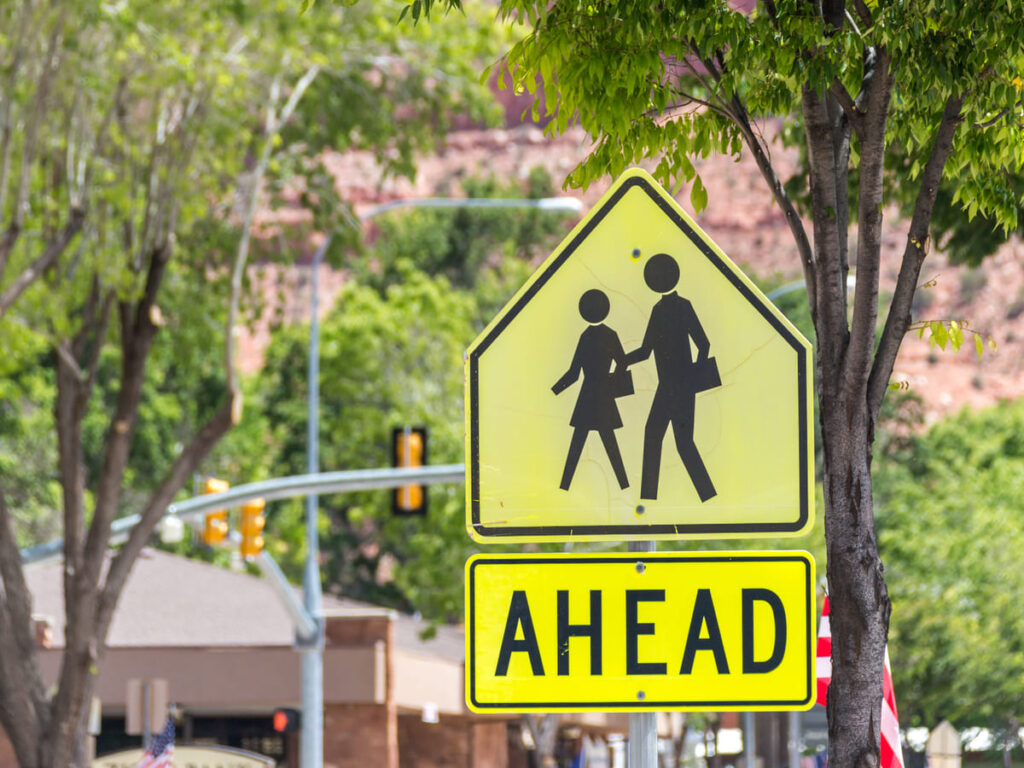
| Pentagone | Used for school-related warning signs. | School crossing or school advance warning |
Understanding the broader sign-shape system can help drivers recognize traffic messages more efficiently. For a more detailed overview, lisez notre guide pour le 8 formes de base des panneaux routiers.
2. Common Types of Diamond-Shaped Warning Signs
Dangers routiers courants indiqués par des panneaux en forme de losange
Diamond-shaped warning signs are used for a wide range of road conditions. The symbol or message on each sign identifies the specific hazard, helping drivers understand what to expect and how to respond.
- Panneau de pont étroit: Warns that the roadway or bridge ahead is narrower than the current approach. Drivers should reduce speed when necessary and watch for vehicles approaching from the opposite direction.
- Slippery When Wet Sign: Indicates that the road surface may become slippery under wet conditions. Drivers should avoid sudden braking, sharp steering, and rapid acceleration.
- Panneau de signalisation bidirectionnel: Warns that traffic ahead travels in both directions, particularly where a divided roadway or one-way section transitions to two-way traffic.
- Panneau de signalisation latérale: Indicates that another road joins the main roadway ahead. Drivers should remain alert for vehicles entering or crossing their path.
- Fusionner le signe: Warns that traffic lanes will come together or that vehicles may enter from another lane. Drivers should be prepared to adjust their speed and position.
- Signe de trempette: Warns of a sudden downward change in the road profile. Drivers should adjust their speed to maintain control and comfort.
- Curve Ahead Sign: Indicates a bend in the roadway. Drivers should follow the posted advisory information where provided and approach the curve at an appropriate speed.
Driving tip: Do not wait until reaching the hazard to react. Read the sign, assess the road conditions, and adjust your driving behavior before entering the affected area.
School Zone and Pedestrian Warning Signs
School-related and pedestrian warning signs help alert drivers to areas where people may be crossing or moving near the roadway. Depending on the sign type and jurisdiction, school warning signs may use a fluorescent yellow-green background, while pedestrian-related warnings may use standard yellow.
These signs are especially important near schools, terrains de jeux, rues résidentielles, and designated pedestrian crossings. Drivers should watch for pedestrians, observe applicable speed restrictions, and yield where required.
For more information about school-area signage, voir notre guide pour Panneaux de zone scolaire conformes au MUTCD.
Construction and Temporary Traffic Warning Signs
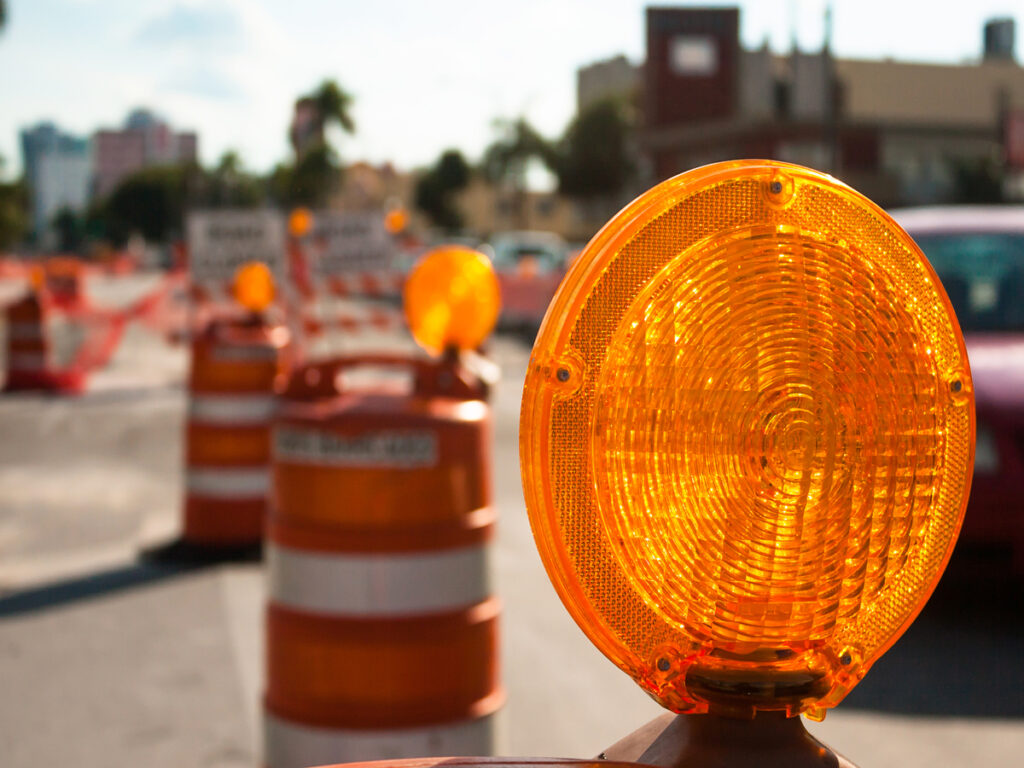
Road construction and maintenance can introduce temporary hazards, including lane closures, workers near traffic, trottoir inégal, détours temporaires, et l'évolution des schémas de circulation. Aux États-Unis, temporary traffic-control warning signs are generally orange with black symbols or messages.
These signs alert drivers to work zones and changing road conditions. Depending on the situation, they may indicate road work ahead, fermetures de voies, flagger operations, détours, or reduced lane widths.
Explore our information about road construction signs and work-zone safety Pour plus de détails.
| Type de panneau d'avertissement | What It Indicates | Réponse du conducteur |
|---|---|---|
| Se courber | A bend or curve in the roadway. | Adjust speed and follow the road alignment. |
| Traversée | Wildlife may cross the road. | Watch the roadside and be prepared to slow down. |
| Fusion du trafic | Vehicles may enter or combine with the current lane. | Monitor surrounding traffic and maintain safe spacing. |
| Slipery lorsqu'il est mouillé | The road surface may have reduced traction in wet conditions. | Avoid sudden braking and steering movements. |
| La route se rétrécit | The available roadway width decreases ahead. | Maintain lane position and watch for nearby vehicles. |
| Travail sur la route à venir | Construction or maintenance activity is approaching. | Follow temporary signs and work-zone instructions. |
3. What Does a White Diamond on the Road Mean?
A white diamond painted on a road surface is different from a diamond-shaped roadside warning sign. Aux États-Unis, a white diamond pavement marking commonly identifies a lane designated for high-occupancy vehicles (VOM), le cas échéant.
HOV lanes are intended for vehicles that meet the occupancy requirements established by the relevant transportation authority. Depending on local regulations, eligible vehicles may include carpools, vanpools, bus, and certain other authorized vehicles.
How to Recognize an HOV Lane
Drivers may see a white diamond marking repeated along a designated lane. Additional signs usually provide the operating rules, including vehicle occupancy requirements, hours of operation, and any exceptions.
| Road Marking or Sign | Typical Meaning |
|---|---|
| White diamond pavement marking | Identifies a designated HOV lane where the marking is used for that purpose. |
| HOV regulatory sign | Explains occupancy requirements and operating restrictions. |
| Diamond-shaped yellow roadside sign | Warns drivers about a potential hazard or road condition ahead. |
Why Drivers Should Understand the Difference
The same general diamond shape can appear in different traffic-control contexts. A yellow diamond-shaped roadside sign communicates a warning, while a white diamond pavement marking commonly identifies an HOV lane in the United States.
Drivers should not assume that every diamond symbol has the same meaning. Always check nearby regulatory signs and follow the lane-use rules applicable to the road.

4. Pourquoi les panneaux routiers en forme de losange sont importants pour la sécurité routière
Providing Early Warnings to Drivers
One of the main purposes of diamond-shaped warning signs is to give drivers advance notice of potential hazards. A sign placed before a curve, réduction de voie, slippery road section, or merging area allows motorists to prepare before reaching the affected location.
Without sufficient warning, drivers may encounter unexpected changes and need to make sudden decisions. Clear warning signs help communicate upcoming conditions and support more predictable driving behavior.
Par exemple, a road-narrowing sign alerts motorists to a change in available road width. A merging-traffic sign indicates that vehicles may enter the current lane. A slippery-road sign reminds drivers to consider surface conditions and adjust their speed.
Influencing Driver Awareness and Behavior
Warning signs help drivers recognize situations that require additional attention. After seeing a diamond-shaped sign, a driver may need to reduce speed, increase following distance, Vérifier les miroirs, or prepare for a change in lane position.
The specific response depends on the sign message and actual road conditions. A curve warning, Par exemple, calls for an appropriate approach speed, while a pedestrian warning calls for increased attention to people near the roadway.
- Se courber: Prepare for a change in road direction.
- Passage pour piétons: Watch for people crossing or approaching the roadway.
- Slipery lorsqu'il est mouillé: Avoid abrupt steering, braking, or acceleration.
- Autoroute divisée: Follow the indicated roadway configuration.
- Traversée: Watch for wildlife near the road, especially in areas with limited visibility.
- Fusion du trafic: Monitor adjacent lanes and maintain safe spacing.
Protéger les piétons et les cyclistes
Warning signs can also help protect vulnerable road users by alerting drivers to areas where pedestrians and cyclists may be present. These locations include school crossings, shared-use paths, bicycle crossings, and busy pedestrian areas.
When drivers receive advance notice, they have more opportunity to look for people near the roadway and adjust their speed or position. Cependant, signs are only one part of a broader safety approach. Proper crossing design, marquage au sol, feux de circulation, éclairage, and driver compliance are also important.
Effective warning signs support safer interactions between vehicles, piétons, and cyclists by making potential conflicts easier to anticipate.
5. How Diamond-Shaped Signs Help Manage Road Hazards
Reducing the Risk of Accidents Through Advance Warnings
Diamond-shaped warning signs help drivers identify hazards before reaching them. By communicating changes in road alignment, surface conditions, circulation, or nearby activity, these signs support earlier and more controlled driving decisions.
Par exemple, a curve warning sign can remind drivers to reduce speed before entering a bend. A narrow bridge sign alerts motorists to a restricted roadway width, while a merging-traffic sign helps them prepare for vehicles entering the same lane.
Warning signs do not eliminate road hazards or guarantee that accidents will be prevented. Their effectiveness depends on appropriate placement, visibilité, lisibilité, entretien, and whether drivers respond to the information.
Effective warning signage works as part of a complete road safety system. Sign placement, road design, marquage au sol, traffic controls, and driver awareness all contribute to safer road conditions.
Improving Safety in Construction Areas
Construction zones are particularly challenging because normal traffic patterns may change temporarily. Drivers may encounter lane closures, ouvriers, Véhicules de construction, barrières temporaires, surfaces inégales, et détours.
Orange temporary traffic-control warning signs help identify these changing conditions. They may be used to communicate road work ahead, fermetures de voies, flagger operations, détours, and other work-zone information.
- Use clear advance warnings before drivers reach the work area.
- Provide consistent information about lane closures and traffic changes.
- Use appropriate temporary sign placement and visibility measures.
- Maintain signs so messages remain readable throughout the project.
- Coordinate warning signs with channelizing devices, marquage au sol, and other traffic-control measures.
For more information about work-zone traffic management, visit our guide to road construction signs and safety applications.
Supporting Safety Near Schools and Intersections
School areas and intersections often involve several types of road users and movements. Drivers may need to watch for turning vehicles, piétons, cyclistes, bus, and children crossing the road.
Appropriate warning signs help communicate potential hazards and alert motorists to changing conditions. Fluorescent yellow-green signs are commonly used for certain school, piéton, and bicycle-related warnings in the United States, subject to the applicable traffic-control standards.
For additional information, read our article about the importance of fluorescent yellow-green signs in traffic management.
Communicating Traffic Risks to Different Road Users
Road warning signs use standardized shapes, couleurs, symboles, and messages to communicate potential risks. This visual system helps drivers recognize hazards without having to read lengthy explanations while moving.
For a warning sign to work effectively, it should be suitable for the road environment, visible from an appropriate distance, and positioned where drivers have enough time to respond. Sign maintenance is also important because faded colors, panneaux endommagés, or obstructed signs can reduce visibility and readability.
Clair, cohérent, and properly maintained warning signs help road users anticipate changing conditions and make safer decisions.
Related Warning Sign Guides
The following resources explain specific warning sign types and their applications:
- Sécurité des zones scolaires: Panneaux de zone scolaire conformes au MUTCD
- Gestion des zones de travaux: Road Construction Signs and Safety
- Alertes de danger pour les infrastructures: Narrow Bridge Signs
- Road Surface and Profile Warnings: Dip Sign Meaning and Road Safety
- Transitions routières: Divided Highway Sign: Ends vs. Begins
- Alertes de réduction de voie: Road Narrows Sign Meaning and Safety Standards
6. What Do the Colors of Diamond-Shaped Signs Mean?
Color is another important part of traffic sign communication. Although the diamond shape indicates a warning category in the United States, the background color helps communicate the type of warning or traffic-control situation.
Yellow Diamond-Shaped Signs
Yellow is the standard background color for many permanent warning signs in the United States. These signs commonly use black symbols, flèches, or text to communicate road conditions and potential hazards.
Examples include curve warnings, slippery-road warnings, merging traffic, road narrowing, and animal crossings.
Orange Diamond-Shaped Signs
Orange is generally used for temporary traffic-control warning signs in work zones. These signs alert drivers to construction, entretien, travaux publics, fermetures de voies, and other temporary conditions.
Because work zones can change as a project progresses, temporary signs should be inspected and updated when traffic patterns or work activities change.
Signes fluorescents jaune-vert
Fluorescent yellow-green is used for selected warning signs associated with school, piéton, and bicycle activity. Its bright appearance helps distinguish these warnings from standard yellow signs in locations where additional attention is needed.
| Couleur du panneau | Utilisation courante | Typical Examples |
|---|---|---|
| Jaune | General warning signs | Se courber, Route glissante, Fusionner |
| Orange | Temporary traffic control and work zones | Travail sur la route à venir, Voie fermée |
| Jaune-vert fluorescent | Selected school, piéton, and bicycle warnings | Traverse, Bicycle Crossing |
Sign color should always be considered together with the shape, symbole, formulation, and applicable local standards. Drivers should follow the actual message displayed rather than relying on color alone.

7. How to Choose Appropriate Warning Signs
Selecting warning signs for a road, parking area, construction project, or private facility requires attention to the actual traffic conditions and applicable regulations. A suitable sign should communicate the hazard clearly and be visible to the intended road users.
7.1 Identify the Hazard or Traffic Condition
Start by identifying the condition that needs to be communicated. Examples include a sharp curve, narrowing roadway, passage pour piétons, temporary lane closure, or slippery surface. The sign message and symbol should match the specific hazard.
7.2 Check Applicable Traffic-Control Standards
For public roads in the United States, traffic signs should be selected and installed according to the applicable MUTCD requirements and relevant state or local regulations. Other countries and regions may use different standards, dimensions du panneau, couleurs, symboles, and installation rules.
7.3 Select Suitable Materials and Reflectivity
Road signs are exposed to sunlight, pluie, vent, changements de température, and other environmental conditions. The sign material, substrat, finition protectrice, and reflective sheeting should be suitable for the intended installation environment.
Reflective sheeting can help improve sign visibility when illuminated by vehicle headlights. The appropriate reflective performance depends on the sign type, road environment, applicable standards, and project requirements.
7.4 Consider Sign Size, Placement, et visibilité
Sign dimensions and placement should allow road users to recognize the message with enough time to respond. Factors include road speed, distance de visualisation, roadside obstructions, volume de trafic, and the position of the hazard.
7.5 Evaluate Durability and Maintenance Needs
Signs should remain legible and structurally sound throughout their intended service life. Regular inspections can identify fading, dommage, corrosion, matériel de montage lâche, or obstructions caused by vegetation and other roadside objects.
Before purchasing warning signs, confirm the sign type, applicable standard, dimensions, matériel, feuille de réflexion, exigences de montage, and installation environment. These details help ensure that the selected signage is appropriate for the intended application.
8. Foire aux questions
Que signifie un panneau routier en forme de losange?
A diamond-shaped road sign generally warns drivers about potential hazards or changes ahead. Aux États-Unis, these signs commonly use a yellow background with black symbols or messages. They may warn about curves, routes glissantes, merging traffic, road narrowing, or other conditions that require additional attention.
Why are diamond-shaped road signs usually yellow?
Yellow is the standard background color for many permanent warning signs in the United States. It provides a recognizable visual signal that alerts drivers to potential hazards. Temporary work-zone warning signs are generally orange, while selected school, piéton, and bicycle warnings may use fluorescent yellow-green.
Are all diamond-shaped road signs warning signs?
Aux États-Unis, the diamond shape is commonly associated with warning signs under the MUTCD. Cependant, traffic sign designs and requirements can differ between countries and jurisdictions. Drivers should interpret signs according to the local traffic-control system.
What does a white diamond painted on the road mean?
A white diamond pavement marking commonly identifies a high-occupancy vehicle (VOM) lane in the United States. It is different from a yellow diamond-shaped roadside warning sign. Drivers should check nearby HOV signs for occupancy requirements, heures d'ouverture, and other restrictions.
What should a driver do when seeing a diamond-shaped warning sign?
Drivers should read the sign, identify the potential hazard, and adjust their driving behavior as needed. This may involve reducing speed, increasing following distance, checking surrounding traffic, or preparing for a change in road conditions.
What is the difference between yellow and orange diamond-shaped signs?
Yellow diamond-shaped signs are commonly used for permanent warning messages, comme les courbes, routes glissantes, and merging traffic. Orange diamond-shaped signs are generally used for temporary traffic-control warnings in construction and maintenance zones.
Can diamond-shaped signs warn about pedestrians and cyclists?
Oui. Warning signs can alert drivers to pedestrian crossings, bicycle crossings, domaines scolaires, and other locations where people may be near the roadway. Some of these signs use fluorescent yellow-green backgrounds, depending on the sign type and applicable standards.
Who is responsible for installing diamond-shaped road signs?
Public road signs are generally installed and maintained by the relevant transportation authority or road agency. Private facilities, aires de stationnement, and construction projects may have different responsibilities, but signage should still follow applicable regulations and safety requirements.
What is the difference between diamond-shaped signs and rectangular signs?
Diamond-shaped signs are commonly used to warn about potential hazards or changing road conditions. Rectangular signs are frequently used for regulatory information, instructions, and other traffic guidance. The exact meaning depends on the sign's design, couleur, formulation, and applicable traffic-control standards.
Are diamond-shaped warning signs used in construction zones?
Oui. Aux États-Unis, orange diamond-shaped signs are commonly used in temporary traffic-control areas. They can warn drivers about road work, fermetures de voies, détours, signaleurs, and other temporary changes. Drivers should follow all posted work-zone instructions.
9. Conclusion
Diamond-shaped road signs are an essential part of traffic warning systems, helping drivers recognize potential hazards and prepare for changing road conditions. Common examples include curve warnings, slippery-road signs, merging traffic signs, panneaux de pont étroits, pedestrian warnings, and temporary construction signs.
Understanding the difference between yellow permanent warning signs, orange work-zone signs, and white diamond HOV pavement markings helps drivers interpret traffic messages correctly. For road authorities, entrepreneurs, and facility managers, selecting appropriate signage also requires attention to applicable standards, signer des matériaux, performance réflexive, dimensions, placement, et maintenance.
SIGNES OPTIQUES provides traffic signs and road safety signage solutions for different traffic-management applications. Explorez le OPTSIGNS website to learn more about available road sign products and traffic safety solutions.
Choosing clear, durable, and standards-compliant warning signs helps communicate road hazards effectively and supports safer conditions for drivers, piétons, et les cyclistes.