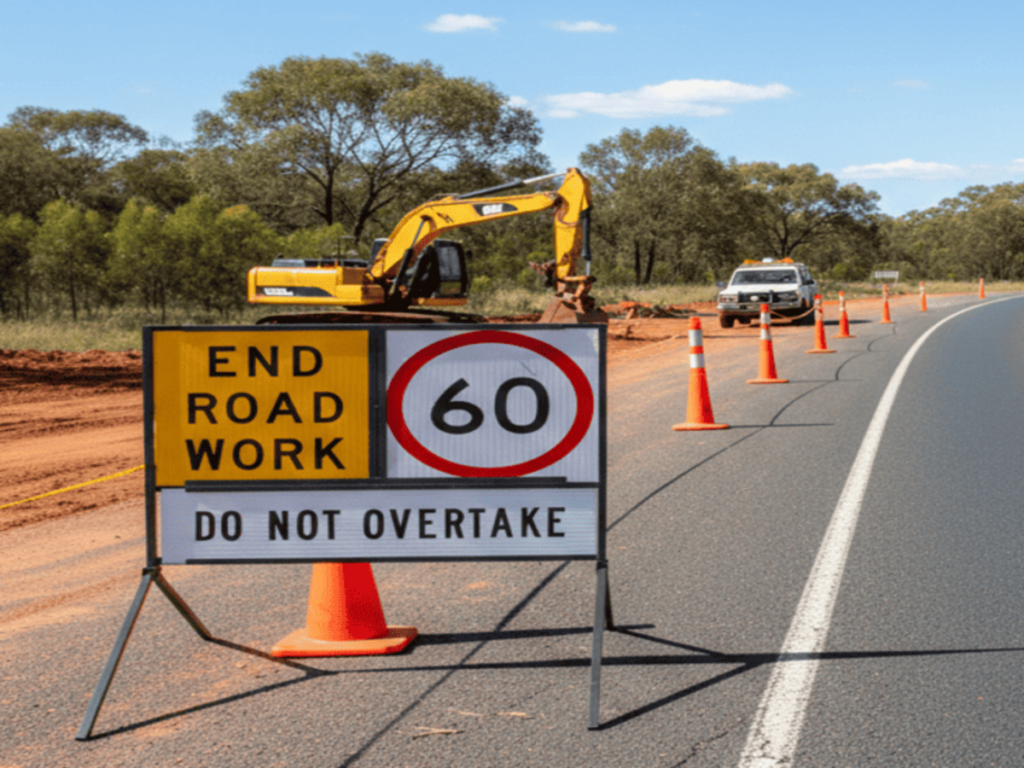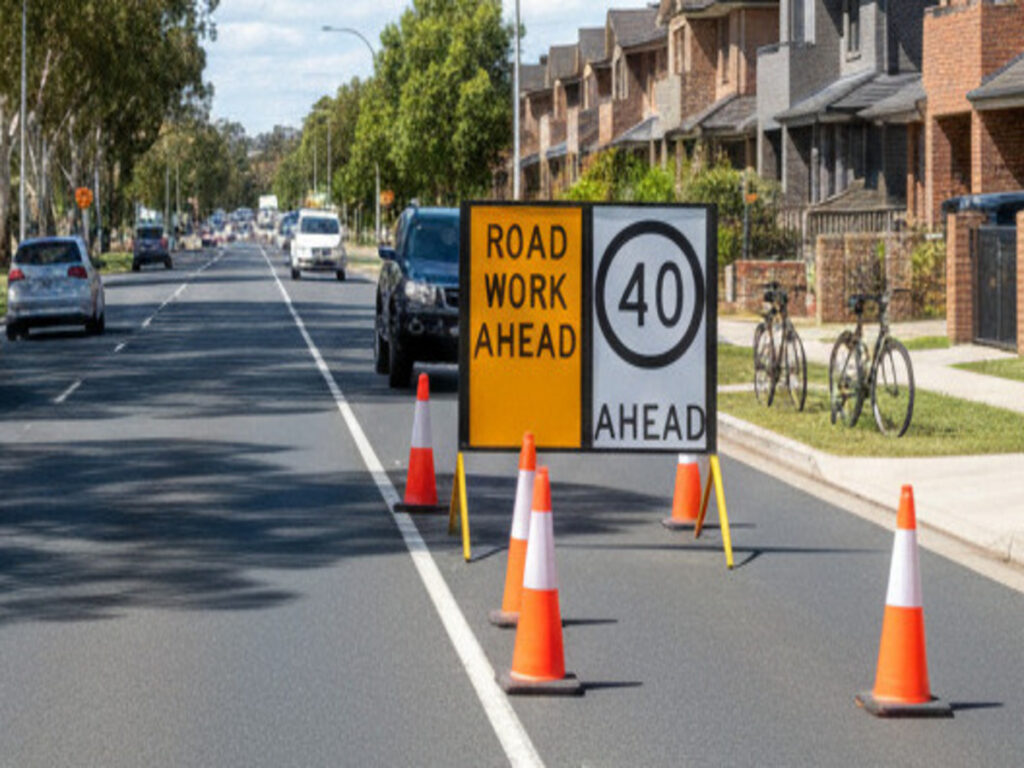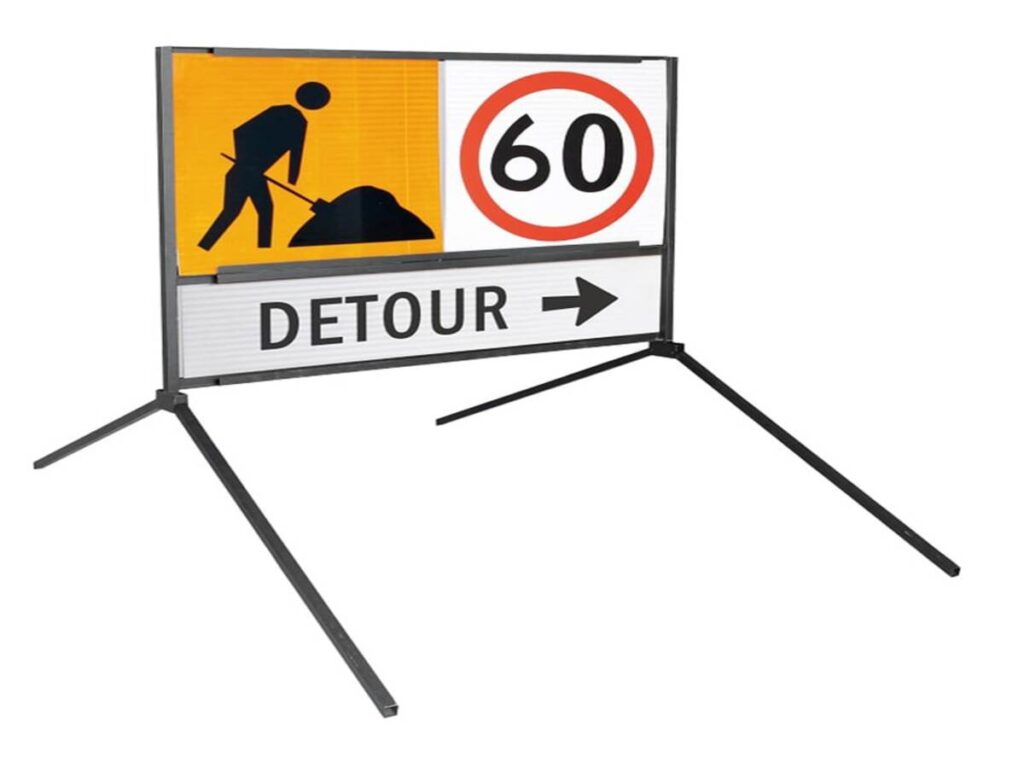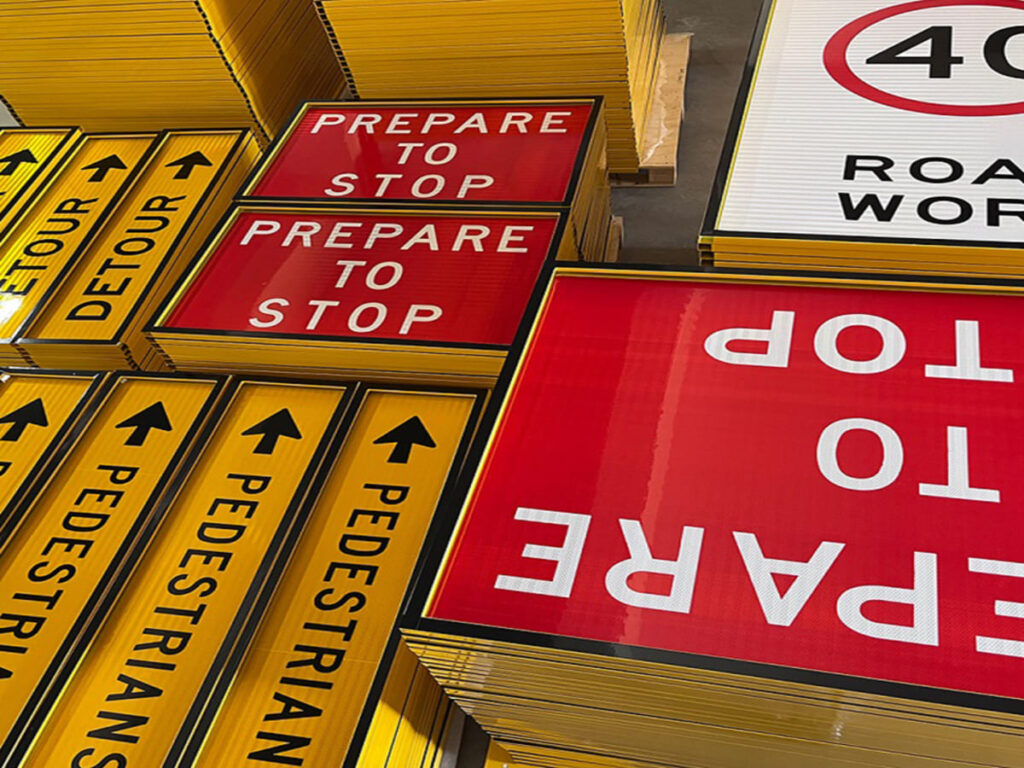
Australia possesses one of the harshest ultraviolet (Uva) environments on the planet. For civil contractors, this presents a unique material challenge. Standard temporary signage that performs adequately in Europe or North America often fails catastrophically within months of deployment in Western Australia or Queensland.
The breakdown of site signage is not merely a cosmetic issue; it is a compliance failure. When a warning sign cracks or fades, the site becomes non-compliant with COMO 1742.3.
Project managers seeking longevity must specify UV Stabilised Corflute Signs. This guide analyses the science of photodegradation and charts the expected lifespan of signage across specific Australian regions.
The Enemy: Photodegradation in Corflute Signs
To understand why UV stabilised Corflute signs son esenciales, one must understand the failure mechanism of standard polypropylene (PÁGINAS).
The Chemistry of Polymer Breakdown
Polypropylene is a hydrocarbon polymer. When exposed to high-energy UV radiation (specifically UV-B), the energy excites the electrons within the polymer chains.
Without chemical stabilisation, this energy breaks the carbon-hydrogen bonds (scission). This process creates free radicals, which react with oxygen to cause a chain reaction of degradation.
- Visual Indicator 1 (Chalking): The surface turns white and powdery. This is the top layer of plastic eroding.
- Visual Indicator 2 (Micro-cracking): The structural integrity fails, leading to brittleness.
- Visual Indicator 3 (Colour Shift): The fluorescent pigment (orange or yellow) bleaches out, reducing daytime visibility.
Por qué “Estándar” Signs Fail in 90 Days
Generic “off-the-shelf” Corflute signs often lack adequate UV inhibitors. In high-UV environments like Pilbara mining sites or Queensland roadworks, untreated PP loses 50% of its mechanical strength within 12 semanas. A sign that was flexible in June may shatter like glass in September.
Regional Analysis: UV Stabilised Signage Requirements
The requirement for weatherproof temporary signage varies significantly across the continent. The Australian Radiation Protection and Nuclear Safety Agency (ARPANSA) measures UV intensity using the UV Index.
Construction projects in northern latitudes face “Extremo” UV levels year-round, necessitating a higher grade of sun-resistant Corflute signs.
Estimated Lifespan by Capital City (Estándar VS. Stabilised)
The following data correlates the average UV Index with the estimated structural lifespan of 5mm Corflute signs.
| Región / Ciudad | Avg. Daily Max UV Index (Summer) | Esperanza de vida: Untreated Sign | Esperanza de vida: UV Stabilised Sign | Nivel de riesgo |
| Darwin (Nuevo Testamento) | 13+ (Extremo) | < 3 Meses | 12 – 18 Meses | Crítico |
| Brisbane (QLD) | 12 (Extremo) | 3 – 4 Meses | 18 – 24 Meses | Alto |
| Perth (De) | 12 (Extremo) | 3 – 5 Meses | 18 – 24 Meses | Alto |
| Sydney (NSW) | 11 (Muy alto) | 4 – 6 Meses | 24+ Meses | Moderado |
| Melbourne (Vic) | 9 – 10 (Muy alto) | 5 – 7 Meses | 24+ Meses | Moderado |
| Hobart (Eso) | 8 (Alto) | 6 – 9 Meses | 24+ Meses | Bajo |
Data Note: Estimates based on continuous outdoor exposure facing North. “Esperanza de vida” is defined as the point before structural brittleness occurs.
What Does “UV Stabilised” Actually Mean?
“UV Stabilised” is not a surface coating. It is a chemical engineering process integrated into the manufacturing of the Corflute sheet itself.
Hindered Amine Light Stabilisers (HALS)
High-quality manufacturers utilise additives known as Hindered Amine Light Stabilisers (HALS).
Think of HALS as “molecular scavengers.” When UV radiation creates destructive free radicals within the plastic, the HALS molecules trap and neutralise them before they can break the polymer chain. This process is regenerative, allowing the stabiliser to protect the outdoor Corflute signs for an extended period.
The Corflute Sign Manufacturing Difference: Co-extrusion
Superior weatherproof temporary signage is often co-extruded. This means the HALS concentration is optimised throughout the core and the outer layers of the 5mm sheet.
- Cheap Imports: Often spray a UV coating on top. Once scratched, the protection is lost.
- Professional Grade: The protection is melted into the plastic resin. Even if the sign is scratched or cut, the material remains UV resistant.
The Economic Case: “Barato” Signs Cost More
Procurement officers frequently prioritize the initial unit price when sourcing señales de tráfico temporales. Sin embargo, this approach often creates a false economy. When calculating the Total Cost of Ownership (TCO) for a 12-month infrastructure project, non-stabilised signage becomes significantly more expensive.
Replacement Frequency Analysis
Standard polypropylene sheets degrade rapidly under Australian UV exposure, often requiring replacement every 3 a 4 meses. Como consecuencia, a project manager must purchase three to four sets of generic signs to cover the same duration as a single set of Optraffic Customizable Corflute Signs.
Además, the material cost is only one component. The labour cost associated with removing faded signage and reinstalling new panels often exceeds the price of the signs themselves. Al invertir en weatherproof temporary signage engineered for longevity, contractors reduce both material waste and maintenance labour hours.
Riesgos de responsabilidad: The Cost of Faded Warnings
Beyond the financial implications, using non-stabilised materials introduces significant legal risks. Estándar australiano 1742.3 mandates specific chromaticity (colour saturation) and retroreflectivity levels for all road warnings.
Chromaticity Failure
As UV radiation breaks down the fluorescent pigments in a Corflute sign, the background colour shifts from “Naranja fluorescente” to a pale, washed-out white. Por lo tanto, the sign loses its visual hierarchy and fails to alert drivers effectively.
If an accident occurs in a work zone where signage has faded below compliant levels, the site supervisor may be held liable for negligence. tráfico opt mitigates this risk by ensuring its Corflute road signs retain their compliant colour intensity throughout their operational life, ensuring the hazard warning remains legally valid.
Conclusión: Invest in Verified Longevity
The Australian climate is unforgiving to subpar materials. A sign that cracks, se desvanece, or shatters is not just a piece of plastic; it is a safety failure.
Project managers must specify materials that match the environment. tráfico opt supplies 5mm Corflute signs that are specifically engineered to withstand high UV indices and extreme weather events. Al elegir duradero, sun-resistant road signs, contractors ensure site compliance, reduce long-term costs, and maintain the highest safety standards.
Don’t let the sun destroy your site safety. Equip your project with proven Letreros de Corflute hoy.
Frequently Asked Questions about Signage Durability
Based on our manufacturing specifications, Optraffic Customizable Corflute Signs are designed for extended outdoor use. While exact lifespan depends on the specific UV index of the location (P.EJ., Darwin vs. Hobart), our 5mm signs significantly outlast standard retail-grade plastic, which typically fails within 3 a 6 meses.
generally, No. The UV inhibitors (HALS) are microscopic additives blended into the resin during the co-extrusion process. This is why it is critical to purchase from a reputable sign supplier that explicitly certifies their Corflute signage as UV stabilised for Australian conditions.
No. The UV stabilisation protects the polypropylene substrate (the plastic board). The Class 1W reflective sheeting applied to the face has its own separate UV protection layers. Optraffic ensures both the board and the reflective sheeting are compatible and weather-resistant.
This phenomenon is called “chalking.” It occurs when UV radiation breaks the molecular bonds on the surface of non-stabilised plastic, causing the top layer to erode into dust. If your signs are chalking, they have lost their structural integrity and must be replaced immediately to prevent cracking.