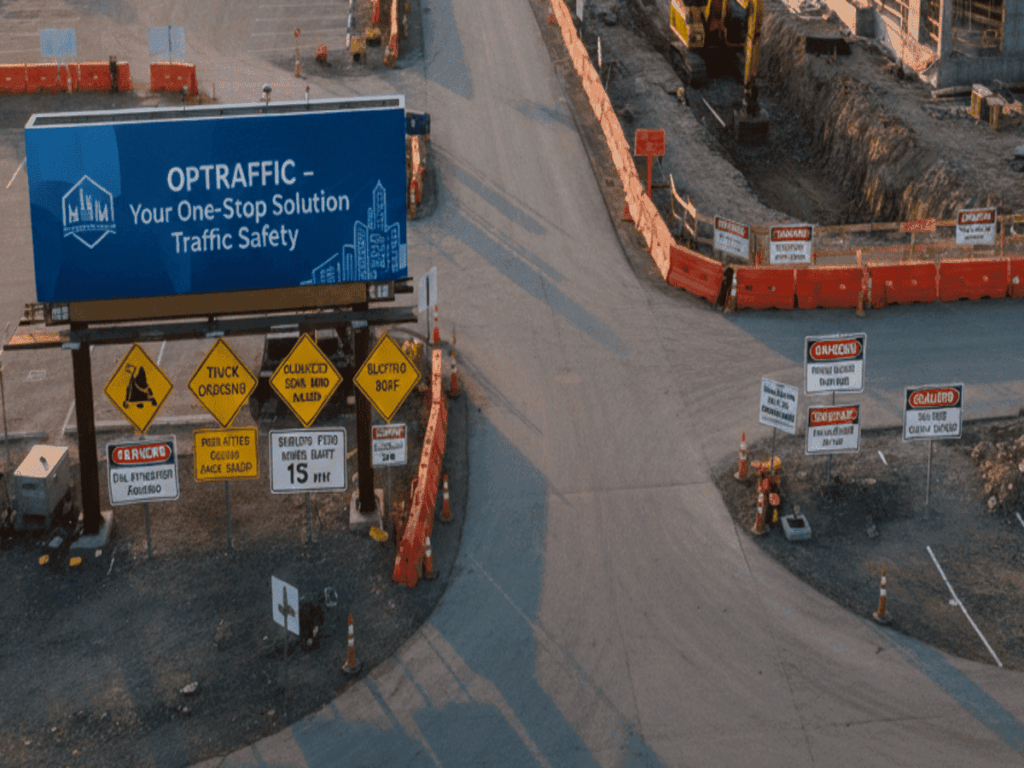
Los programas de señalización de construcción dan forma a las decisiones diarias en sitios activos., por lo tanto Aplicaciones de letreros de construcción merecen un “mapa de casos de uso” completo que las tripulaciones puedan seguir. Los equipos de construcción utilizan carteles para demostrar el cumplimiento, entregas de guía, controlar tráfico, proteger a los peatones, marketing de apoyo, y ejecutar operaciones más limpias. Para una base completa sobre la estrategia de señalización en la construcción, que abarque la seguridad, eficiencia, y cumplimiento—leer La guía completa de señalización para la construcción.
OPTRAFICO admite estas aplicaciones de letreros de construcción con duradero, alta visibilidad letreros de construcción construido para condiciones reales del lugar de trabajo, Ayudar a los contratistas a mantener mensajes consistentes desde la entrada a la zona de trabajo..
Usos normativos y de cumplimiento para señales de construcción
La señalización de cumplimiento protege el proyecto durante las inspecciones., reclamos, y auditorías. También reduce roces con vecinos y autoridades..
Señales de permiso de construcción y tableros de permisos en la entrada.
Una junta de permisos traduce “permiso para construir” en un mensaje visible, aviso verificable. Por lo general, se encuentra cerca de la entrada pública., donde los inspectores y el público puedan verlo.
Funciones prácticas:
- Confirma que el proyecto cuenta con permisos y aprobaciones válidos..
- Publica responsables y rutas de contacto.
- Reduce los retrasos en la inspección causados por la falta de información del sitio.
Bloques de contenido comunes:
- Identificadores de permisos y autoridad emisora.
- Información del contratista u operador.
- Detalles de contacto de emergencia y contactos fuera de horario.
- Descripción del proyecto y resumen del alcance aprobado..
Publicaciones obligatorias en el sitio para derechos de los trabajadores y avisos de EEO
Los requisitos de publicación en el lugar de trabajo no terminan en la oficina. Muchos empleadores deben exhibir los avisos laborales y de derechos requeridos en un lugar visible., donde los trabajadores puedan verlos.
Una zona de publicación de alto funcionamiento incluye:
- Un único tablero de “publicaciones obligatorias en el sitio” en el área de descanso o en la oficina del sitio.
- Un diseño limpio con secciones etiquetadas para cada aviso..
- Actualizaciones controladas, para que los carteles caducados no se queden en la pared.
Para EE.UU.. contextos, los EE. UU.. El Departamento de Trabajo proporciona orientación y copias electrónicas gratuitas de los carteles requeridos., y dirige a los empleadores al Poster Advisor para confirmar qué avisos se aplican.
Tablones de anuncios de OSHA y el cartel de OSHA “Es la ley”
OSHA espera que los empleadores cubiertos muestren el documento "Seguridad y salud en el trabajo".: Es la Ley” cartel en un lugar visible.
Un enfoque práctico:
- Coloque el tablón de anuncios de OSHA cerca del tráfico peatonal diario..
- Mantenlo legible, ordenado, y protegido del clima.
- Alinear el tablero con el inicio de sesión de la charla de caja de herramientas y las comunicaciones de seguridad.
Alineación de publicaciones de EEO “Conozca sus derechos”
Los avisos de igualdad de oportunidades de empleo a menudo se presentan en la misma junta de cumplimiento.. La iniciativa “Conozca sus derechos” de la EEOC: El cartel "La discriminación en el lugar de trabajo es ilegal" resume las protecciones clave y las vías de queja.
Los equipos reducen el riesgo cuando:
- Publicar solo versiones actuales.
- Proporcionar acceso al idioma donde sea necesario.
- Evite el desorden "varios" en el mismo tablero.
Publicaciones ambientales y señales de cobertura de permisos de aguas pluviales
El cumplimiento ambiental a menudo requiere más que un plan. Algunos permisos también requieren un aviso visible en el sitio..
Por ejemplo, un permiso de construcción para aguas pluviales puede requerir un letrero cerca de la entrada del proyecto. Puede requerir legibilidad pública desde el derecho de vía.. También puede requerir identificadores de permisos e información de contacto para solicitudes o preguntas del SWPPP..
Casos de uso de señales ambientales de alto impacto:
- Recordatorios de control de polvo cerca de caminos de acarreo y áreas de corte.
- Señalización de respuesta a derrames cerca del abastecimiento de combustible y del almacenamiento de productos químicos.
- Advertencias de áreas protegidas cercanas a humedales, desagües, y emisarios.
Prueba de publicación lista para auditoría
Un letrero de cumplimiento solo ayuda cuando se mantiene actualizado. Los equipos sólidos tratan las publicaciones como documentos controlados.
Métodos de prueba simples:
- Registro fotográfico semanal de la junta de cumplimiento.
- Etiquetas de fecha de revisión en cada aviso publicado.
- Un único propietario para publicar actualizaciones y eliminaciones.
Logística en el lugar de trabajo y usos de señalización
La señalización de orientación reduce la falta de comunicación. También reduce la congestión.. Protege la disciplina del cronograma cuando las condiciones cambian..
Señalización de entrada al sitio para flujos de tráfico segregados.
La señalización de entrada al sitio reduce los puntos de conflicto al separar:
- Entrada de visitantes
- Entrada de trabajadores
- Entrada de equipo pesado
Soporte de señales de entrada claras:
- Registro más rápido.
- Control de seguridad más limpio.
- Menos giros equivocados cerca de equipos activos.
Ajuste de palabras clave: La señalización de entrada al sitio sigue siendo más efectiva cuando aparece antes del primer punto de decisión..
Señales de entrega de obras para entregas precisas
Las entregas incorrectas consumen tiempo. También crean marcha atrás y reposicionamiento peligrosos.. Por lo tanto, Las señales de entrega en la construcción deben guiar a los camiones a través de una ruta paso a paso..
Una ruta de señalización de entrega robusta utiliza:
- Un cartel de confirmación de "Entrada de entrega".
- Una señal de flecha de ruta en cada bifurcación..
- Una “puesta en escena / Espere aquí” antes de la zona de descarga..
- Un letrero de "No entrar" para pasillos restringidos.
Orientación del lugar de trabajo hacia las instalaciones temporales
En sitios activos, La gente busca tres cosas rápidamente.:
- Oficina del sitio
- Primeros auxilios
- Punto de reunión
Las señales de orientación en el lugar de trabajo reducen las instrucciones verbales y las interrupciones repetidas.. También ayudan a los nuevos trabajadores y visitantes a mantenerse seguros..
Conjunto mínimo de orientación:
- “Oficina del sitio →”
- “Primeros auxilios →”
- “Punto de reunión →”
- “Baños →”
Orientación para condiciones cambiantes
Los sitios cambian a diario. Por lo tanto, La orientación debe actualizarse rápidamente..
Tácticas efectivas:
- Utilice las señales de “Ruta de acceso de hoy” durante los turnos importantes.
- Agregue señales de "Ruta cerrada" donde los caminos antiguos permanezcan visibles.
- Agregue mapas "Usted está aquí" en sitios grandes con múltiples puertas.
evidencia de apoyo: La investigación sobre la productividad de la construcción a menudo destaca la comunicación y la claridad de las tareas como principales impulsores., y una estructura deficiente puede contribuir a la pérdida de productividad.
Usos temporales del control de tráfico e interfaz vial
La señalización de TTC muestra la capacidad profesional en el espacio público. También protege a los trabajadores y conductores durante las transiciones..
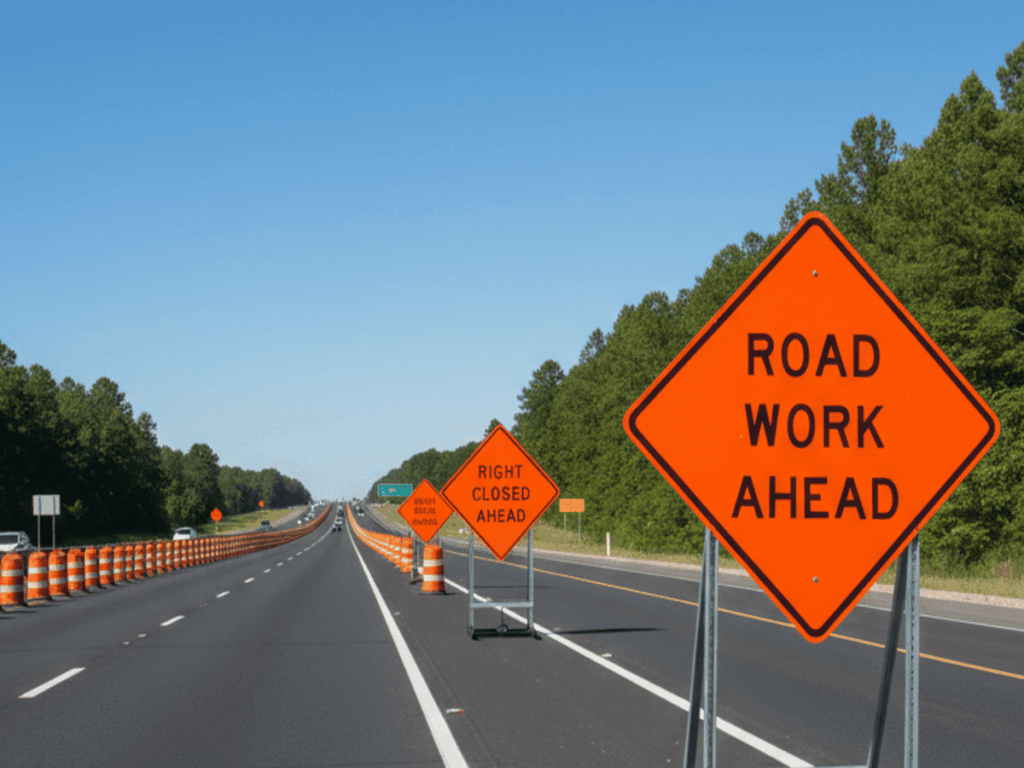
Señales de obras viales para alerta previa
Las señales de advertencia anticipadas reducen la sorpresa. Establecen las expectativas de los conductores desde el principio. Como resultado, Reducen las frenadas bruscas y las fusiones tardías..
Los equipos suelen desplegar:
- “Trabajos en el camino por delante”
- "Prepárese para parar"
- “Abanderado por delante” cuando corresponda
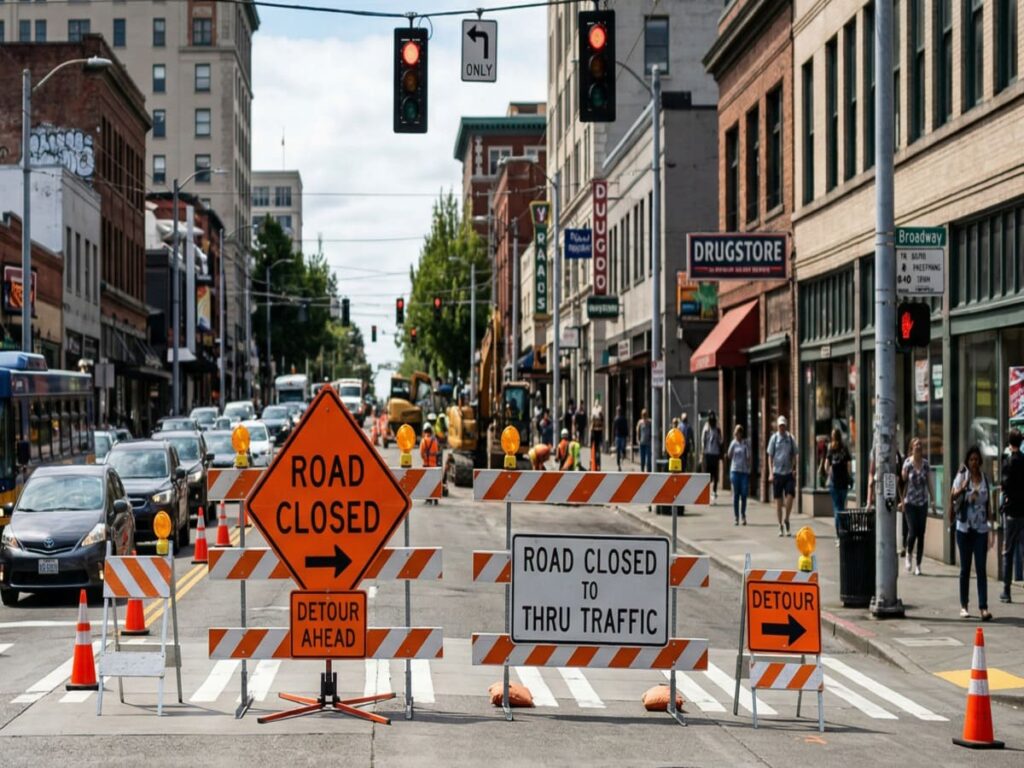
Señales compatibles con MUTCD para cambios de carril y desvíos
La alineación del MUTCD es importante en las carreteras abiertas al público. La FHWA identifica el MUTCD actual como la undécima edición. (con fecha de diciembre 2023).
También toma nota de la adopción de la Norma Final y de la decisión de enero 18, 2024 fecha de vigencia.
Los sistemas de señales de desvío funcionan mejor cuando incluyen:
- Una señal de decisión de desvío antes del giro..
- Una señal de tranquilidad después del giro..
- Una señal de “Fin del desvío” cuando regresa la ruta.
Los desvíos fallan cuando los mensajes cambian a mitad de la ruta o las cuadrillas dejan carteles viejos en su lugar. Para un control de campo paso a paso, cubriendo puntos de decisión, señales de tranquilidad, y disciplina de eliminación de señales—ver Una guía para la gestión efectiva de signos de desvío en los sitios de construcción.
Control de tráfico temporal (TTC) señales en el límite del lugar de trabajo
El límite entre la vía pública y el acceso al lugar de trabajo crea la mayor fricción. Por lo tanto, Las señales de TTC deben controlar la velocidad, fusionando, y prioridad.
Controles de límites comunes:
- Señales temporales de límite de velocidad.
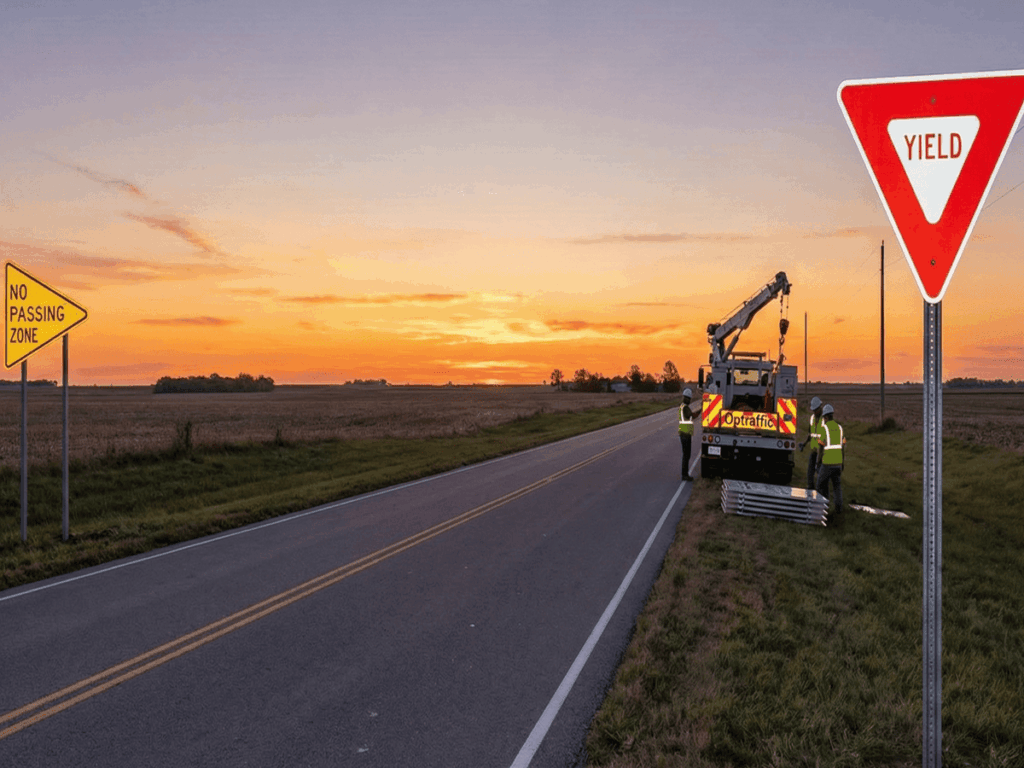
- Control de detenerse o ceder el paso en las salidas de los caminos de acarreo.
- “Camiones que entran / Salir de advertencias.
Los equipos que quieran pasar del cumplimiento básico a ganancias de eficiencia mensurables pueden continuar con Cómo mejorar la eficiencia de gestión del tráfico en zonas de construcción con letreros de trabajo de construcción y delineadores.
Señales de control de peatones para pasarelas temporales
Las rutas peatonales necesitan continuidad. También necesita claridad.
Los juegos de señales para peatones de alto rendimiento incluyen:
- “Acera cerrada más adelante”
- “Peatones →” con flechas
- “Usar el otro lado”
- “Cruce Temporal”
Por qué la señalización TTC es importante ahora
La seguridad en las zonas de trabajo sigue siendo un tema público vivo. FHWA informó 899 muertes en accidentes en zonas de trabajo 2023.
La FHWA también rastrea las tendencias y publica datos y estadísticas de la zona de trabajo para referencia continua..
Por lo tanto, Las señales claras de obras viales y los mensajes TTC consistentes respaldan los resultados de seguridad y la confianza pública..
Usos de comunicación de peligros y seguridad para señales de construcción
La colocación de letreros de construcción centrados en la seguridad funciona cuando apunta al momento exacto en que un trabajador o visitante enfrenta un riesgo.. Los mensajes de seguridad claros reducen las dudas, evita la entrada incorrecta, y admite una respuesta más rápida a incidentes en áreas activas.
Señales de requisitos de EPI en puntos de acceso de alto riesgo
Las señales de EPP controlan el comportamiento en el punto de entrada, antes de que comience la exposición. Funcionan mejor en las puertas., torres de escaleras, acceso en ascensor, enfoques de andamio, y transiciones a áreas de trabajo activas.
Los mensajes de señalización de PPE de alto impacto incluyen:
- Se requiere casco
- Se requieren gafas de seguridad
- Se requiere ropa de alta visibilidad
- Se requiere protección auditiva
- Se requieren guantes resistentes a cortes
Esta sección también respalda las expectativas de cumplimiento.. OSHA destaca las responsabilidades de los empleadores en torno al equipo de protección personal en sus normas y guías de PPE.
Señales de advertencia de peligro para trabajos en caliente, Eléctrico, y espacios confinados
Las señales de peligro reducen la exposición advirtiendo tempranamente y definiendo límites. Deben aparecer antes de la zona de peligro., no dentro de él. Las cuadrillas confían en estas señales cuando hay ruido., poca luz, o la presión del tiempo reduce la comunicación verbal.
Aplicaciones comunes de señales de peligro:
- Área de trabajo caliente: Soldadura, corte, zonas de molienda
- Alto voltaje: poder temporal, paneles, y puntos de distribución
- Trabajo aéreo: Zonas de riesgo de caída de objetos
- Espacio Confinado: Áreas de entrada que requieren permiso, reglas de entrada restringidas
OSHA proporciona marcos regulatorios específicos para la comunicación de peligros, seguridad electrica, y espacios confinados, lo que hace consistente, señalización de peligro legible un control práctico en el sitio.
Señales de área restringida para evitar la entrada no autorizada
La señalización de zonas restringidas protege a los trabajadores, visitantes, y el público. También reduce el riesgo de robo y vandalismo al aclarar los límites.. Estas señales funcionan mejor cuando aparecen en cada punto de entrada natural., incluyendo huecos en las vallas, pasillos de servicio, y vías de acceso temporales.
Mensajes típicos de señales de área restringida:
- Sólo personal autorizado
- Prohibida la entrada no autorizada
- Peligro: Área de construcción
- Excluir
- No entrar
Señales de respuesta de emergencia para primeros auxilios, Colirio, y puntos de reunión
Las señales de emergencia deben ser simples y específicas para cada lugar. en un incidente, la gente sigue la señal visible más rápida. Por lo tanto, la señalización de emergencia debe guiar a los socorristas y a los transeúntes sin necesidad de llamadas por radio.
Ubicaciones principales de señales de emergencia:
- Ubicación de las estaciones de primeros auxilios y kits de traumatología
- Puntos lavaojos y ducha de seguridad
- Ubicaciones de DEA, donde se aplica
- Rutas de salida de emergencia dentro de zonas de trabajo cerradas
- Ubicaciones de puntos de reunión para la responsabilidad de la evacuación
La guía del plan de acción de emergencia de OSHA enfatiza procedimientos claros y comunicación para emergencias, y una señalización sólida respalda esa comunicación en el campo.
Las señales de seguridad dan resultados solo cuando los equipos las colocan correctamente y mantienen mensajes consistentes en todo el sitio.. Para una más profunda, enfoque listo para el campo para el cumplimiento, estrategia de colocación, y comportamiento del sitio, leer Guía de señales de seguridad en la construcción: Cumplimiento, Estrategia, y cultura del sitio.
Usos de la marca y el marketing de proyectos para la señalización en la construcción
La señalización de marketing convierte el espacio perimetral en mensajes controlados. También reduce las quejas basadas en rumores al compartir información clara..
Creación de gráficos de acaparamiento para la historia del proyecto.
Los gráficos de acaparamiento a menudo cumplen dos tareas:
- Mostrar imágenes del estado futuro y la identidad del proyecto..
- Comunicar el cronograma y los beneficios comunitarios..
Patrones de mejor uso:
- Coloque la representación del héroe donde se concentra el tráfico peatonal..
- Mantenga el texto breve y escaneable.
- Agregue un contacto simple o una ruta de información para inquietudes.
Envolturas de cercas de construcción para mensajes perimetrales de alta visibilidad
Las envolturas de cercas de construcción pueden unificar un perímetro desordenado. También pueden reducir el desorden visual cuando varias operaciones publican carteles ad hoc..
Los fuertes sistemas de envoltura de cercas incluyen:
- Repetir bloques de marca con espaciado constante.
- Borrar señales de “entrada al sitio” en las puertas.
- Un pequeño conjunto de reglas., como “Prohibido el paso” y “Se requiere EPP”.
Letreros de marketing de proyectos y letreros de arrendamiento "Próximamente"
Los carteles de arrendamiento y preventa convierten la atención en clientes potenciales.
Elementos de signos de alta conversión:
- Un llamado a la acción principal.
- Un número de teléfono legible.
- Un código QR que se carga rápido.
- Una simple promesa de "Próximamente" sin especificar demasiado.
El marketing también se cruza con la seguridad. El robo en el lugar de trabajo genera grandes pérdidas. ENR citó una estimación de $400 millones a $1 miles de millones en pérdidas anuales por robo en obras de construcción. Por lo tanto, La mensajería perimetral puede contribuir a la disuasión y la concientización..
Usos de organización interna y gestión del sitio
Las señales internas reducen el desperdicio y el tiempo de inactividad. También protegen los activos y mantienen a las cuadrillas alineadas..
Señales de zonas específicas para el comercio para el control del flujo de trabajo
Los signos de zona crean orden donde se superponen múltiples operaciones. Reducen los conflictos. También reducen el “tiempo de búsqueda” de materiales.
Etiquetas de zonas útiles:
- “Puesta en escena eléctrica”
- “Materiales eurodiputados”
- “Herramientas de carpintería”
- “Área de trabajo caliente”
Señalización de residuos y reciclaje para evitar la contaminación
La contaminación del flujo de residuos aumenta los costos de transporte y el riesgo de cumplimiento. Unas señales claras evitan una eliminación incorrecta.
Un práctico set incluye:
- “Residuos generales”
- "Reciclaje"
- "Desechos peligrosos"
- "Concreto / Sólo mampostería” cuando sea necesario
Señales de identificación de activos para seguimiento y disuasión de robos
Soportes de señalización de identificación de activos:
- controles de inventario
- Conciliación de alquiler
- Prevención de pérdidas
Los equipos suelen utilizar:
- Grande, números de equipo visibles.
- Códigos QR vinculados a registros de activos.
- “Propiedad del sitio / Identificación del “contratista”.
Tableros de gestión visuales para claridad operativa diaria
Un panel visual actúa como una “única fuente de verdad” en el sitio. Es compatible:
- Cambios diarios de ruta de acceso
- Alertas de seguridad
- Instrucciones específicas de la ubicación
Fallos comunes en la aplicación de letreros de construcción y soluciones de campo
Falla: junta de cumplimiento obsoleta
Arreglar:
- Asignar un propietario de póster.
- Agregar fechas de revisión.
- Eliminar avisos vencidos semanalmente.
Falla: la señalización de entrega comienza demasiado tarde
Arreglar:
- Comience a colocar señales antes de la puerta..
- Agregar confirmaciones después de cada turno..
- Añadir un cartel de preparación antes de la zona de descarga..
Falla: conflicto de mensajes de desvío
Arreglar:
- Utilice solo un nombre de desvío.
- Repítelo constantemente.
- Elimine los carteles antiguos inmediatamente.
Falla: El marketing perimetral reduce la legibilidad.
Arreglar:
- Mantenga texto grande para los mensajes principales.
- Mover texto detallado a una página de destino QR.
- Separe los mensajes de seguridad de los gráficos promocionales.
Tabla de mapeo rápido
| Área de uso | Lo que controlan los signos | Familias de signos típicas |
|---|---|---|
| Cumplimiento | Prueba, aviso, preparación para la auditoría | Señales de permiso de construcción, publicaciones obligatorias en el sitio, Tablones de anuncios de OSHA |
| Logística | Enrutamiento, Llegadas, acceso a las instalaciones | Orientación del lugar de trabajo, señales de entrega de construcción, señalización de entrada al sitio |
| Interfaz de carretera | Comportamiento del conductor, transiciones, seguridad peatonal | Control de tráfico temporal (TTC) letreros, señales de trabajo en la carretera, Señales compatibles con MUTCD |
| Marketing | Narrativa pública, conversión de arrendamiento | Envolturas para cercas de construcción, gráficos de acaparamiento de edificios, carteles de marketing de proyectos |
| Operaciones internas | Zonas, corrientes de residuos, activos | Etiquetas de zona, signos de reciclaje, etiquetas de identificación de activos |
Siguiente paso para los administradores del sitio: Comprender dónde van las señales es sólo la mitad de la batalla. Para garantizar la eficiencia y el control de costes a largo plazo, es esencial planificar cuándo implementarlos. Lea nuestra inmersión profunda en el Aplicación por fases de señalización en la construcción. para construir una estrategia de señalización basada en una línea de tiempo.
Preguntas frecuentes
¿Qué hace que la señalización TTC sea “compatible con MUTCD” en la práctica??
Los equipos alinean el tipo de signo, mensaje, intención de colocación, y coherencia con el MUTCD y las normas de adopción locales.. La 11ª edición (Diciembre 2023) se sitúa como el referente nacional actual.
¿Dónde funcionan mejor las señales y los paneles de permisos de construcción??
Funcionan mejor cerca de la entrada pública., donde los inspectores y el público puedan verlos. También necesitan un montaje estable y un diseño legible..
Qué avisos pertenecen a los tablones de anuncios de OSHA y a las publicaciones obligatorias en el sitio?
Los empleadores cubiertos generalmente necesitan que el cartel de OSHA “Es la ley” esté en un lugar destacado, y otros avisos dependen del empleador y la fuerza laboral. El DOL proporciona un asesor de carteles y recursos gratuitos para carteles para confirmar los requisitos..
¿Cómo reducen las señales de entrega de obras de construcción la pérdida de programación??
Reducen las caídas equivocadas, reducir la marcha atrás, y reducir las correcciones en la radio. También mantienen a los camiones fuera de las zonas peatonales.
¿Cuándo las publicaciones medioambientales requieren carteles orientados al público??
Las condiciones del permiso pueden requerir un aviso publicado cerca de la entrada del sitio con identificadores del permiso e información de contacto.. Un ejemplo aparece en el lenguaje del permiso de construcción para aguas pluviales..