Introducción: Orientación positiva con señales de desvío en la construcción
Bloquear una carretera es sencillo. Dirigir el tráfico a su alrededor de forma segura es difícil. Cuando cierras completamente una carretera, interrumpes toda la red local. No puedes simplemente poner una barrera y marcharte. Debes proporcionar “Orientación positiva.”
Esto significa que cada cierre requiere un conjunto específico de señales de desvío de construcción. Si no proporcionas un camino claro, los conductores entrarán en pánico. Harán giros en U ilegales o atravesarán propiedad privada para escapar del callejón sin salida..
Domina las zonas: Antes de planificar un desvío específico, revisar las cuatro áreas componentes de nuestro Configuración de la zona de trabajo 101 Guía.
Para la configuración física del punto de cierre, debes seguir una secuencia estricta. Necesitas advertencias anticipadas, un bloqueo físico, y un rastro continuo de marcadores de ruta.
Advertencia anticipada: La secuencia de señales de carretera cerrada por delante
No se puede sorprender a un conductor con un callejón sin salida.. El “Área de advertencia anticipada” es crítico. Debes filtrar el tráfico mucho antes de que llegue a la barricada física utilizando el Señal de carretera cerrada por delante (W20-3).
Espaciado para señales de desvío en la construcción (Urbano VS. Rural)
No adivines la distancia. Usa el estándar “A, B, do” espaciado definido por MUTCD Tabla 6C-1.
- Calles urbanas (Baja velocidad): Espacia tu señales de desvío de construcción 100 pies separados.
- Firma A: Carretera cerrada más adelante (300 pies desde el cierre).
- Signo B: Desviar por delante (200 pies desde el cierre).
- Signo C: Fin del desvío / Instrucción específica (100 pie).
- Carreteras rurales/de alta velocidad: Aumentar el espacio para 500 pies por señal.
- Necesitas un completo 1,500-pie zona de advertencia.
- Conductores en 55 mph necesitan esta distancia para desacelerar con seguridad.
Colocación de la señal de desvío (W20-2)
A mitad de la zona de advertencia, debes plantar el señal de desvío (W20-2).
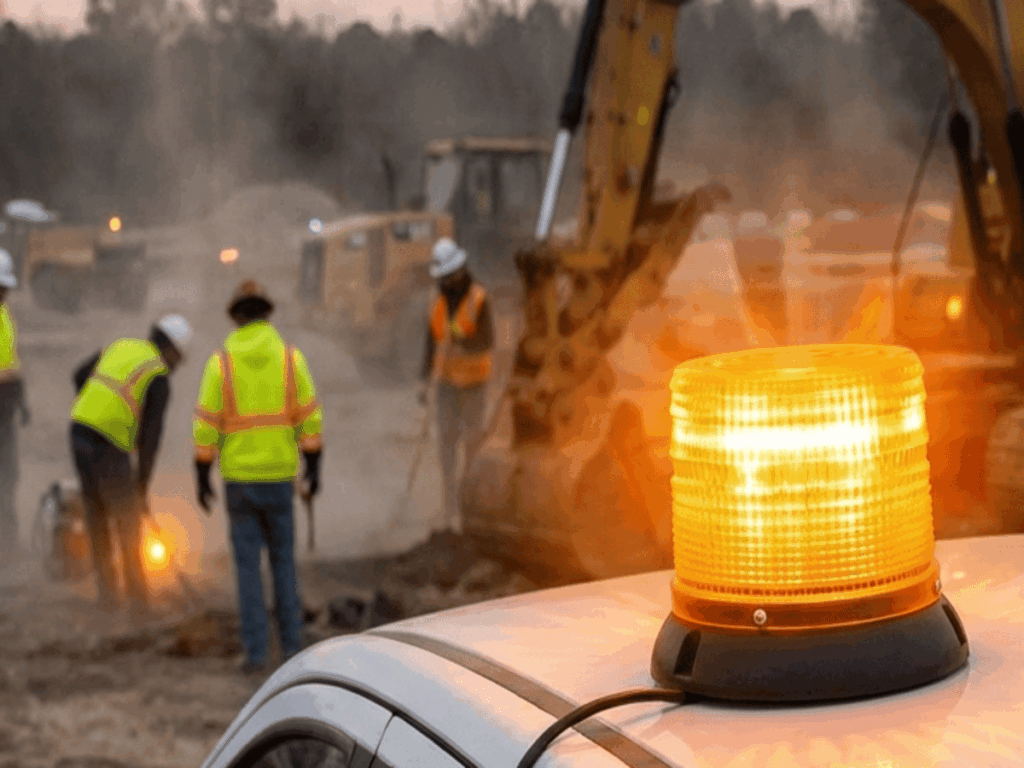
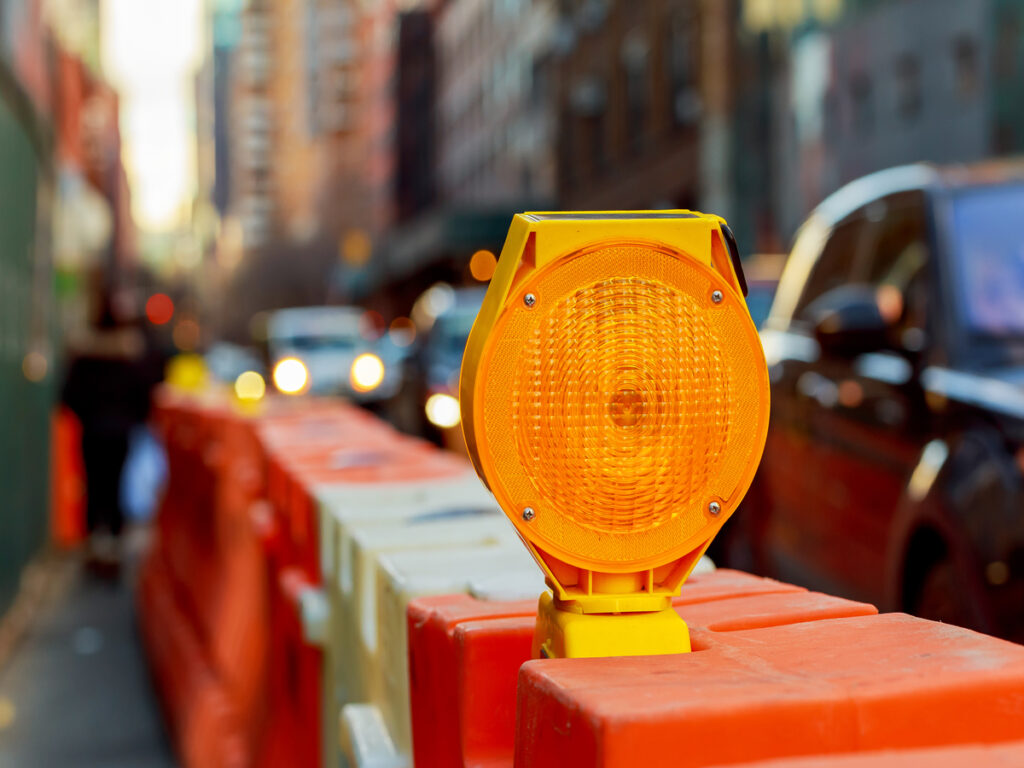
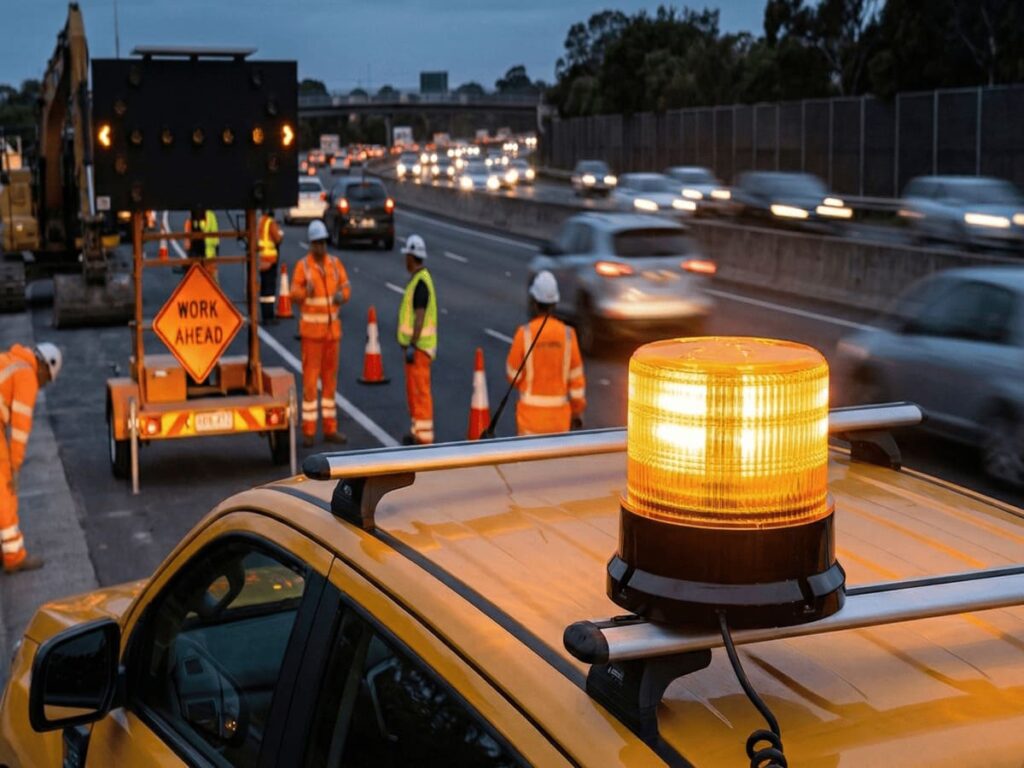
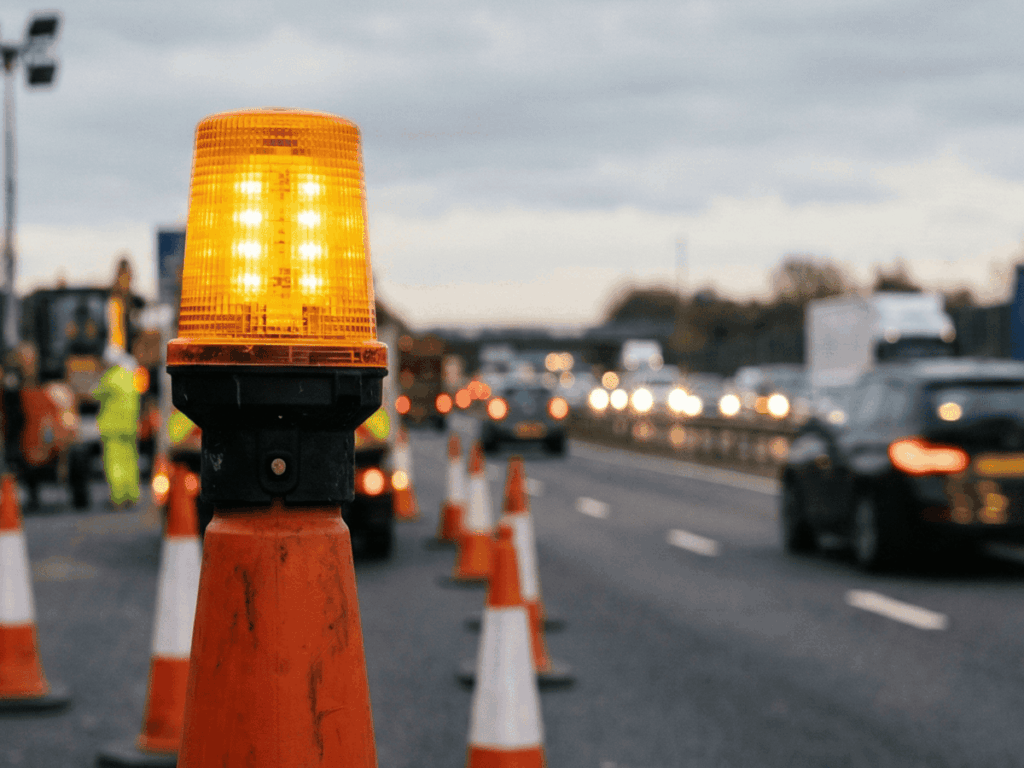
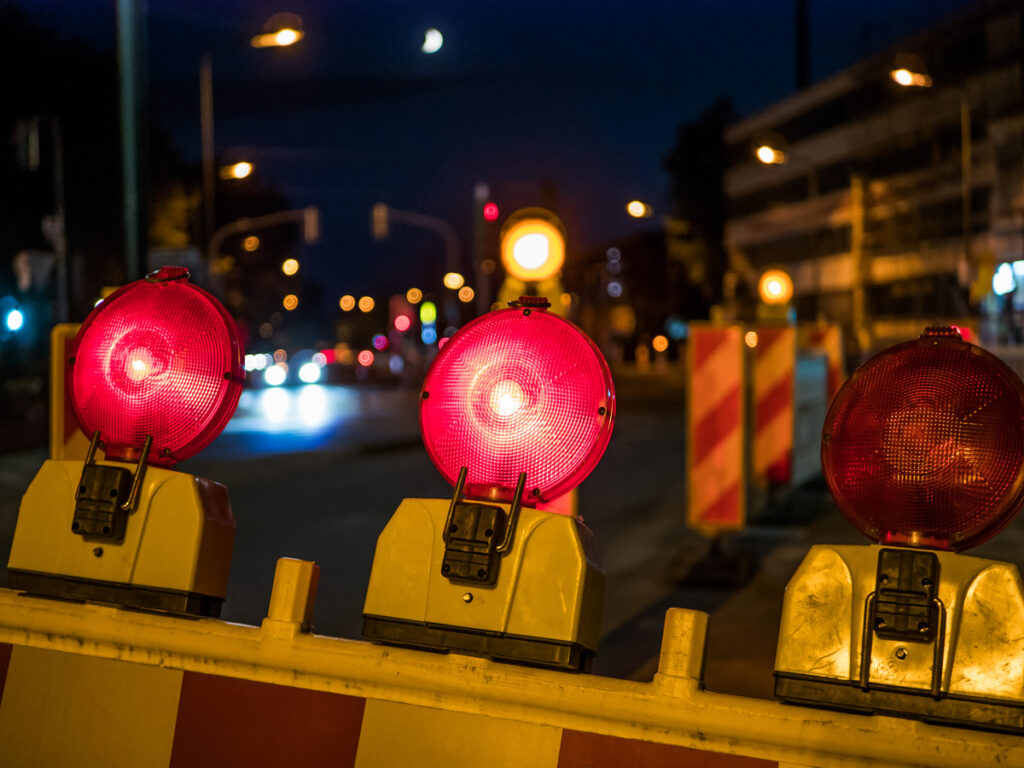
- Refuerzo visual: Combine este letrero con un Luz intermitente de alta intensidad tipo B. Esto llama la atención en condiciones de baja visibilidad..
- Contexto de gestión: Colocar señales es solo la ejecución.. El estrategia de dónde desviar el tráfico es un desafío aparte.
Planificando la ruta: Para obtener una guía más amplia sobre cómo gestionar el flujo de tráfico y reducir la congestión durante los desvíos, lee nuestro Guía para una gestión eficaz de las señales de desvío.
Distinción crítica: Señal de carretera cerrada adelante vs. Carretera de signo cerrado
Los ingenieros suelen confundir estos dos.
- La advertencia (Naranja): Señal de carretera cerrada por delante (W20-3). Coloca esto solo en la zona de aviso previo. Indica a los conductores que la carretera está actualmente abierto pero cerrará pronto.
- El Regulador (Blanco): Señal de carretera cerrada (R11-2). Coloca esto solo en la barricada real. Nunca coloque una señal reglamentaria blanca en la zona de advertencia.. Hace que los conductores se detengan en la carretera..
El cierre duro: Barricadas tipo III & Señales de carretera cerrada
El “Área de advertencia anticipada” advierte al conductor. El “Área de actividad” los detiene fisicamente. En el punto donde la carretera está completamente cortada., debes construir un muro físico. Aquí los conos y los tambores no son suficientes; necesitas barricadas tipo III.
Por qué utilizar barricadas tipo III?
Por un cierre total de la carretera, Muescato requiere un dispositivo que parece un callejón sin salida.
- Diseño: A Tipo III Barricada tiene tres rieles reflectantes horizontales. es mas alto (5 pies min) y más ancho que cualquier otro canalizador.
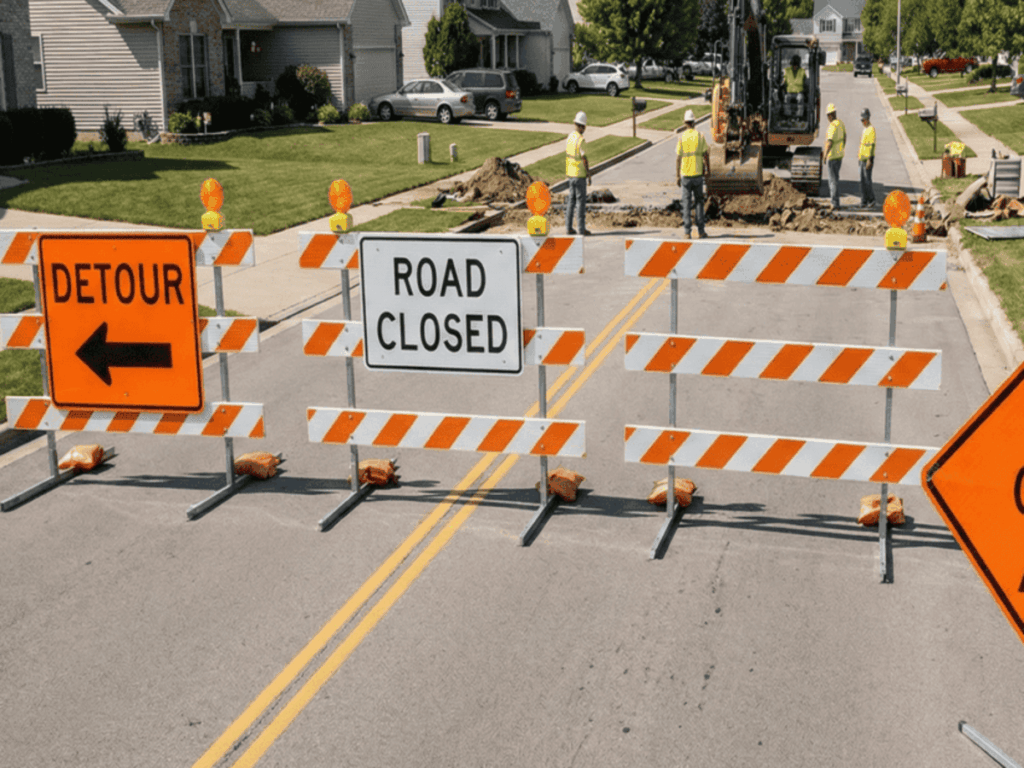
- Función: Grita visualmente “Detener.” Crea una puerta física que cubre todo el carril de circulación..
- Selección: No utilice barricadas tipo I o II aquí.. Son demasiado pequeños para los cierres de carreteras de alta velocidad..
Elegir la barrera adecuada: No todas las barricadas están clasificadas para uso en carreteras.. Para entender las diferencias entre el Tipo I, II, y III, lee nuestro especifico Guía de barricadas de tráfico para cierres de carreteras.
Montaje de la señal de carretera cerrada (R11-2)
Tu cartel reglamentario pertenece en la barricada, no antes.
- El signo: montar el blanco Señal de carretera cerrada (R11-2) directamente en el centro de la barricada tipo III.
- la ley: Este letrero blanco hace que sea legalmente ejecutable que la policía multe a los conductores que salten la barrera..
- Visibilidad: Asegúrese de que el letrero esté montado lo suficientemente alto (al menos 1 pie desde lo alto de la barricada) por lo que refleja los faros al instante.
La ruta del desvío: Continuidad & Señales de la serie M4
Bloquear la carretera es sólo la mitad del trabajo. Debes guiar el tráfico desviado por toda la ruta alternativa hasta regresar a su camino original..
un solo desaparecido señal de desvío provoca una ruptura en “Continuidad de ruta.” Si un conductor pierde un giro, se pierden en un vecindario desconocido. Esto genera quejas, congestión, y accidentes. Debes utilizar la secuencia completa de la Serie M4.
1. El turno: Avance & Asambleas de intersección (M4-9)
No puedes colocar una sola flecha en la esquina.. Las configuraciones profesionales utilizan un “Golpe uno-dos.”
- Turno Avanzado: Coloque un Señal de desvío por delante con una flecha de giro (M4-9) 200 pies antes la intersección. Esto permite al conductor cambiar de carril de forma segura..
- Flecha direccional: Coloque el real señal de desvío (M4-9) en la intersección misma.
- Altura de montaje (MUTCD 6F.03): En zonas urbanas con coches aparcados o peatones, montar estos signos 7 pies alto. En las zonas rurales, 5 pies es suficiente.
2. La tranquilidad: Confirmando el camino (M4-10)
Después de que un conductor hace un giro estresante hacia una nueva calle, entran en pánico. “¿Estoy todavía en el desvío??”
- La solución: Coloque un Asamblea de tranquilidad de desvío (M4-10) 500 pies después cada giro importante.
- Frecuencia: En largos desvíos, Repita este signo cada 1 milla (rural) o cada pocas cuadras (urbano). Esto confirma al conductor que todavía está bajo su guía..
3. La terminación: Fin del desvío (M4-8)
Debes liberar oficialmente al conductor..
- El signo: Coloque un Señal de fin de desvío (M4-8a) en el punto donde el tráfico se reincorpora a la ruta original.
- Por que importa: Sin esto, Los conductores pueden seguir buscando señales naranjas y perder su salida normal..
Fallos comunes en la configuración de desvíos
Incluso las tripulaciones experimentadas cometen estos errores específicos.. Evítelos para limitar su responsabilidad..
Falla 1: El “Fantasma” Señal de desvío
dejando un Señal de desvío de construcción Una vez finalizado el proyecto, es una infracción grave..
- El riesgo: Los lugareños aprenden a ignorar tus señales. Cuando tengas un cierre real el próximo mes, Ellos atravesarán tu barricada..
- La solución: Doblar, cubrir, o eliminar todas las señales de la serie M4 inmediatamente cuando la carretera se vuelva a abrir.
Falla 2: Señales guía contradictorias
¿Cubriste las señales de tráfico verdes existentes??
- El conflicto: si tu señal de desvío puntos a la izquierda, pero el verde permanente “A la autopista 101” Señalar puntos a la derecha., el conductor dudará.
- La solución: Debes cubrir temporalmente cualquier señal guía permanente que contradiga tu plan de desvío..
Conclusión: Complete el circuito con señales de desvío de construcción
Un cierre de carretera no es sólo una barrera; es una promesa de un camino alternativo. Debes cumplir esta promesa con una secuencia perfecta de señales de desvío de construcción.
desde la inicial Señal de carretera cerrada por delante hasta el último marcador de desvío final, cada componente debe trabajar en conjunto. Si se pierde un eslabón de la cadena, como una señal tranquilizadora de M4-10, los conductores entrarán en pánico e infringirán las leyes de tránsito..
El cumplimiento protege su licencia. La orientación eficaz protege a su comunidad.
Equipe su desvío con Optraffic
No mezcle ni combine carteles descoloridos de diferentes alquileres. Optraffic proporciona el ecosistema completo de señales de construcción de carreteras.
- Advertencia: Alta intensidad Señales de carretera cerrada por delante.
- Guía: Serie M4 completa Letreros de desvío.
- Cierre: Compatible con mutcd Barricadas tipo III para el punto de cierre duro.
Contáctenos hoy para asegurar su pedido al por mayor de equipos de gestión de desvíos.
Preguntas frecuentes: Configuración de señales de desvío de construcción
Depende del signo específico.. La señal de desvío adelante (W20-2) es una señal de advertencia en forma de diamante colocada en el área de advertencia anticipada. Sin embargo, la flecha de desvío (M4-9) es técnicamente una señal de guía temporal (rectangular) utilizado para dirigir el tráfico en el giro real. Necesitas ambos para una configuración compatible.
El espaciado depende de la velocidad. En áreas urbanas (baja velocidad), colocar señales 100 pies aparte para tener en cuenta las intersecciones frecuentes. En carreteras rurales (alta velocidad), aumentar el espacio para 500 pies por señal para dar a los conductores el tiempo de reacción adecuado.
El color y la ubicación son clave.
Carretera cerrada más adelante (Naranja): Esta es una señal de advertencia (W20-3). colócalo antes el cierre para alertar a los conductores.
Carretera Cerrada (Blanco): Esta es una señal regulatoria. (R11-2). colócalo en la barricada en el punto exacto de cierre para prohibir legalmente la entrada.
Por un cierre total de vías en la vía pública, a Tipo III Barricada es obligatorio. Las barricadas de tipo I y II son demasiado pequeñas.. Sólo un tipo III (con 3 rieles y ancho mínimo de 5 pies) Proporciona la densidad visual requerida por MUTCD para bloquear físicamente una carretera..
Sí. Fabricamos toda la serie M4, incluido el desvío por delante (M4-9), Flechas direccionales de desvío, y finalizar el desvío (M4-8) letreros. Los imprimimos en láminas prismáticas de alta intensidad para garantizar la visibilidad durante las operaciones nocturnas..