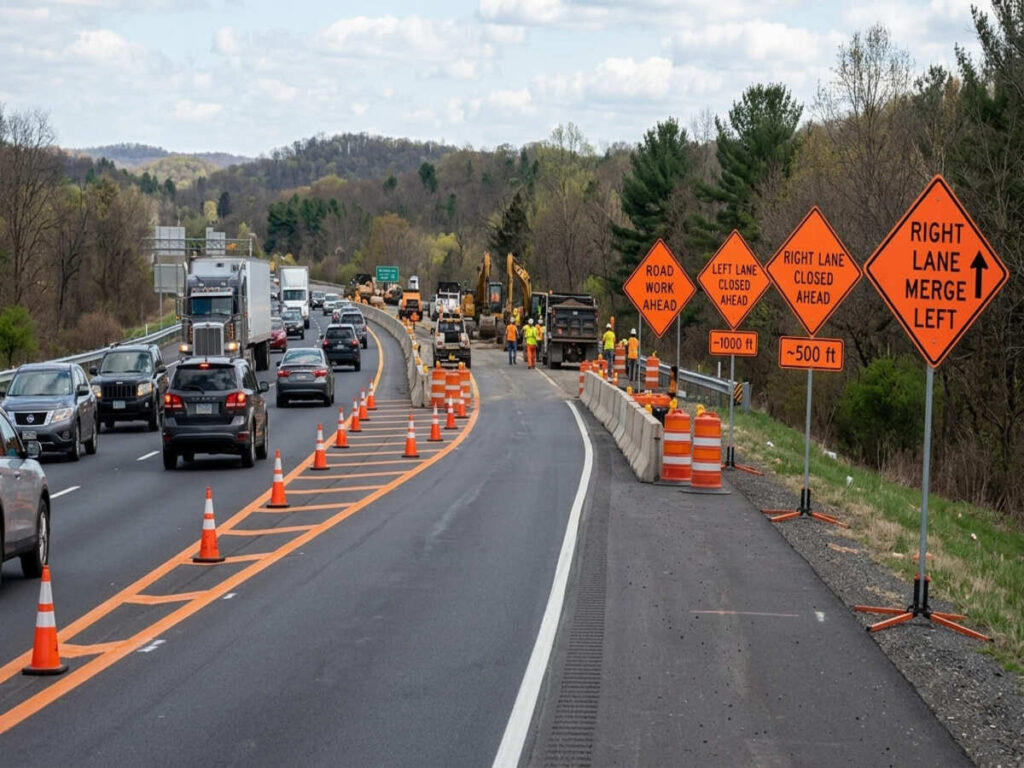
Australische Zivilstandorte verlieren jedes Jahr Arbeiter durch Fahrzeugstreiks. Im Mittelpunkt vieler dieser Vorfälle steht eine unzureichende Beschilderung. Safe Work Australia aufgezeichnet 188 traumatische Todesfälle am Arbeitsplatz in 2024. Fahrzeugunfälle verursacht 42 Prozent dieser Todesfälle (Quelle: https://www.safeworkaustralia.gov.au/media-centre/news/key-work-health-and-safety-statistics-australia-2025-now-available). Zu den sechs verantwortlichen Branchen gehörte auch das Baugewerbe 80 Prozent der nationalen Maut. Maschinenbediener und Fahrer hatten die höchste Todesrate aller Berufsgruppen. Diese Rate wurde erreicht 6.7 Todesfälle per 100,000 Arbeiter, mehr als das Fünffache des Landesdurchschnitts. Vor diesem Hintergrund, Gelbe Mann-Sicherheitsschilder sind kein Design-Schnörkel. Sie bilden eine berechnete, gesetzliche Kontrollmaßnahme. WHS-Offiziere, Berater für Standortsicherheit, und HSEQ-Manager tragen die direkte Verantwortung dafür, dass sie ihre Platzierung richtig machen.
In diesem Leitfaden wird der regulatorische Rahmen dargelegt Gelbe Mann-Sicherheitsschilder. Es behandelt die visuelle Wissenschaft und die sie bestimmenden Platzierungsformeln. Dichtesätze aus AS 1742.3 und Handbücher staatlicher Straßenbehörden werden hier in prüfungsfähige Leitlinien übersetzt.
Compliance herstellen: Der WHS-Rechtsrahmen für Gelbmann-Sicherheitsschilder
Das Muster-WHS-Gesetz 2011 überträgt der PCBU gemäß Abschnitt die primäre Sorgfaltspflicht 19. NSW, Qld, An, Das, AKT, Nt, und das Commonwealth haben das Modell jeweils mit geringfügigen Abweichungen übernommen. Victoria und WA betreiben parallele Rahmenwerke im Rahmen des OHS Act 2004 und das WHS-Gesetz 2020. Das zugrunde liegende Prinzip bleibt in allen Gerichtsbarkeiten einheitlich. Ein Unternehmen muss Risiken beseitigen oder minimieren, soweit dies vernünftigerweise möglich ist. Diese Verpflichtung erstreckt sich uneingeschränkt auf Gelbe Mann-Sicherheitsschilder und jedes andere Verkehrskontrollgerät in einer aktiven Arbeitszone.
Die nicht delegierbare Sorgfaltspflicht der PCBU in Live-Arbeitszonen
Eine PCBU kann ihre Haftung nicht durch die Vergabe von Unteraufträgen für das Verkehrsmanagement auslagern. Gerichte behandeln die Pflicht gemäß Abschnitt 19 als nicht delegierbar. Ein Hauptauftragnehmer bleibt selbst dann gefährdet, wenn ein spezialisierter Subunternehmer die Beschilderung installiert. Prüfer sollten die Erklärungen zur sicheren Arbeitsmethode überprüfen (SWMS) Nennen Sie konkrete Platzierungsabstände für Gelbe Mann-Sicherheitsschilder. Vage Dokumentation, wie zum Beispiel “Beschilderung nach Bedarf,” schwächt die Verteidigung der PCBU während einer Vorfalluntersuchung.
Strafen und Präzedenzfälle für die strafrechtliche Verfolgung wegen unzureichender Beschilderung von Arbeitnehmern
Das finanzielle Risiko im Rahmen des WHS Act ist durch die CPI-Indexierung stark gestiegen. Wie bei 1 Juli 2025, eine Kategorie 1 Für ein Vergehen gibt es eine Höchststrafe von $11,839,000 für eine Körperschaft. Beamte oder PCBUs stellen sich dem $2,368,000, und Einzelpersonen stellen sich ihnen $1,183,000 (Quelle: https://www.bluesafeonline.com.au/resources/compliance-guides/whs-penalties-fines-australia). Aus 1 Juli 2026, Die Mustervorschrift wegen gewerbsmäßiger Tötung hebt die Körperschaftshöchstgrenze auf $21,274,000. Ein verantwortungsbewusster Mensch stellt sich nun der Aufgabe 20 Jahre’ Haft (Quelle: https://www.safeworkaustralia.gov.au/law-and-regulation/legislation/maximum-monetary-penalties-under-whs-laws). NSW ist noch weiter gegangen. Es handelt sich um eine Straftat wegen industrieller Tötung nach dem Strafgesetzbuch 1900 bringt Strafen mit sich $20 Million. Dieses Vergehen dauert auch an 25 Jahre’ Freiheitsstrafe, wenn grobe Fahrlässigkeit zum Tod eines Arbeitnehmers führt. Die aktuelle NSW-Strafeinheit sitzt bei $123.31 für das Geschäftsjahr 2025–26 (Quelle: https://fairworkplacesolutions.com.au/whs-penalties-nsw/). Diese Zahl liegt jeder Kategorie zugrunde 2 und Kategorie 3 feine Rechnung. Unkenntlich gemachte oder falsch angebrachte Arbeitnehmerbeschilderungen sind nach wie vor ein häufiger Klagegrund bei diesen Strafverfolgungen. Der Platzierungsabstand verdient die gleiche Strenge wie der Absturzschutz oder die Pflanzenisolierung.
SWMS-Integration – Dokumentation der Beschilderung als Kontrollmaßnahme
Verkehrskontrollen auf Straßen gelten gemäß Anhang als Bauarbeiten mit hohem Risiko 2 der WHS-Verordnung. Dies löst ein obligatorisches SWMS aus. In diesem Dokument sollten der Schildtyp und der berechnete Platzierungsabstand aufgeführt sein. Es sollte auch den Überprüfungsauslöser für Sichtlinienänderungen aufzeichnen. Durch die Überprüfung dieser Aufzeichnungen bei jeder Inspektion vor Ort wird sichergestellt, dass die Platzierung gewährleistet ist Gelbe Mann-Sicherheitsschilder erfüllt kontinuierlich den vorgeschriebenen Standard.
Dekodierung von AS 1742.3: Der nationale Standard für die Platzierung von Yellow-Man-Sicherheitsschildern
ALS 1742.3-2019 (speziell Abschnitt 3 und Anhang D) legt den grundlegenden nationalen Standard für temporäre Verkehrskontrollgeräte fest. Dazu gehört auch die symbolische Beschilderung des Arbeitnehmers, allgemein genannt Gelbe Mann-Sicherheitsschilder. Die Straßenbaubehörden der Bundesstaaten ergänzen diese Grundlinie mit ihren eigenen Ergänzungen. Der Transport für NSW wird durch die Verkehrskontrolle am Arbeitsplatz geregelt (TCAWS) Handbuch, derzeit in der Version 6.1. Vicroads, jetzt unter der Abteilung für Verkehr und Planung, wendet sein Arbeitssicherheitshandbuch an. Main Roads WA gibt den Verhaltenskodex für Verkehrsmanagement für Arbeiten an Straßen heraus. TMR in Queensland arbeitet nach dem Manual of Uniform Traffic Control Devices, Teil 3.
Die Prüfer müssen sich mit den Abweichungen zwischen den einzelnen Bundesstaaten auseinandersetzen
TCAWS v6.1 führte eine bemerkenswerte Verbesserung ein. Eine vorübergehende Geschwindigkeitszone von 30 km/h darf nur in Ausnahmefällen gelten. Wer zu Fuß geht, muss drinnen sitzen 1.5 Meter Live-Verkehr ohne physische Barriere. Diese Zone darf niemals länger dauern als 100 Zu 200 Meter. Während der Nachsorgezeit kann es nicht an Ort und Stelle bleiben. Die TfNSW-Richtlinien erlauben an anderer Stelle vor Ort einen anderen Schwellenwert. Wo Arbeiter dazwischen sitzen 3 Und 6 Meter von einer Fahrspur ohne Schranke entfernt, Die Geschwindigkeitszone kann auf 80 km/h gesenkt werden. Das gesamte andere temporäre Verkehrsmanagement muss auf eine Geschwindigkeit von 40 km/h ausgelegt sein. Eine statische Besatzung muss jederzeit einen Mindestabstand von 1,5 Metern zum Verkehr einhalten. Wirtschaftsprüfer, die Portfolios aus mehreren Bundesstaaten verwalten, müssen diese Schwellenwerte mit VicRoads abgleichen, MRWA, und TMR-Äquivalente.
Fluoreszierendes Gelbgrün im Vergleich zu Standardgelb – Farbkonformität gemäß AS/NZS 1906.1
Farbleistung für Gelbe Mann-Sicherheitsschilder wird durch AS/NZS geregelt 1906.1. Diese Norm klassifiziert retroreflektierende Folien nach dem Leuchtdichtefaktor, Chromatizität, und Haltbarkeit unter australischen Bedingungen. Für einen detaillierten Vergleich der retroreflektierenden Klassifizierungen und der Materialbeständigkeit zwischen geriffeltem Kunststoff und starrem Metall, Sehen Sie sich unseren Leitfaden zur Auswahl der richtigen Materialien für temporäre Schilder an.
Symbolische vs. formulierte Arbeiterzeichen – wann beides vorgeschrieben ist
TCAWS v6.1 hat die ältere Nacht-spezifische Arbeiterzeichenserie offiziell eingestellt. Dazu gehörte T1-223, T1-200-2, und T1-200-3. Standard-T1-1 (Arbeiter voraus), T1-5 (Symbolischer Arbeiter), und T1-34-Schilder decken jetzt sowohl die Nutzung am Tag als auch in der Nacht ab. Symbolische Silhouettenbeschilderungen bleiben das bevorzugte Format bei multikulturellen zivilen Megaprojekten. Es beseitigt jegliche Abhängigkeit der Autofahrer von Englischkenntnissen.
Die visuelle Wissenschaft hinter der Erkennung von Yellow-Man-Sicherheitsschildern
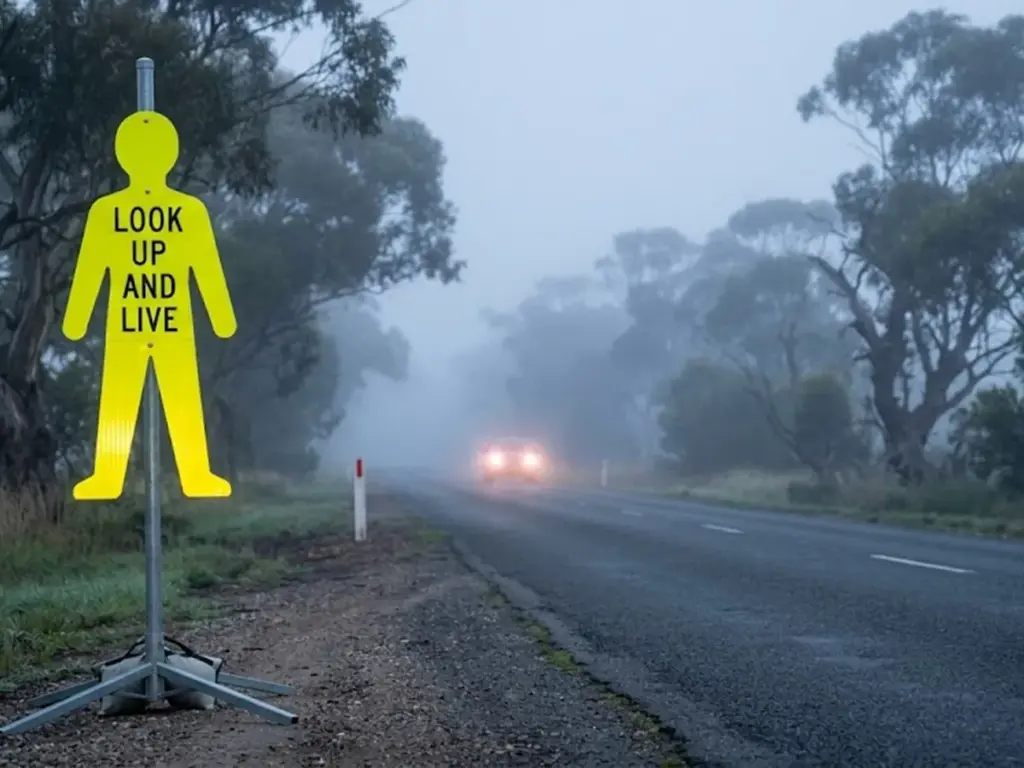
Platzierungstabellen in AS 1742.3 ist nicht willkürlich entstanden. Sie beruhen auf messbaren menschlichen Wahrnehmungsgrenzen. Wenn man versteht, dass die Wissenschaft es einem Prüfer ermöglicht, zu erklären, warum ein Zeichen dort sitzt, wo es ist.
Wahrnehmungs-Reaktionszeit und ihre Rolle in Formeln für die Platzierung von Zeichen
Beim Straßenbau weltweit gilt eine Wahrnehmungs-Reaktionszeit (PRT) von fast 2.5 Sekunden. Diese Zahl deckt die Berechnung der Bremssichtweite ab und übersteigt das 90. Perzentil der Fahrerreaktion. Es berücksichtigt auch unerwartete Gefahrendarstellungen. Austroads-Leitfäden, die die australische Praxis informieren, stützen sich auf dieselbe zugrunde liegende Forschung. Während dieses 2,5-Sekunden-Fensters, Ein Fahrzeug fährt mit voller Annäherungsgeschwindigkeit weiter. Der Fahrer hat noch nicht einmal mit dem Bremsen begonnen. Genau deshalb ist der Platzierungsabstand für Gelbe Mann-Sicherheitsschilder muss direkt mit der Geschwindigkeit skalieren.
Erkennungsraten menschlicher Silhouetten vor komplexen Hintergründen
Die standardisierte schwarze Silhouette auf einem fluoreszierenden gelbgrünen Feld nutzt den Figur-Grund-Kontrast. Dieses Prinzip der visuellen Psychologie erklärt die schnelle Ablösung einer Form vom Hintergrund. Der Kontrast muss maximiert werden, nicht nur vorhanden, damit dieser Effekt anhält. Gegen Vegetation oder städtische Unordnung, Ein beschriftetes Zeichen konkurriert mit umgebendem Text und Farbrauschen. Ein kontrastreiches Yellow-Man-Sicherheitsschild, im Vergleich, wird fast sofort als eigenständiges Objekt registriert. Diese Unterscheidung ist im Bruchteil einer Sekunde, bevor die Reaktionszeit überhaupt beginnt, am wichtigsten.
Kognitive Überlastung – Warum Schilderunordnung die Compliance-Ergebnisse verringert
Jedes zusätzliche Gerät, das um die Aufmerksamkeit des Fahrers konkurriert, verringert die Wirksamkeit aller Geräte. Genau aus diesem Grund gibt es die Abstandsrichtlinien der AS 1742.3. Es hindert einen herannahenden Autofahrer daran, fünf Schilder in der dafür vorgesehenen Zeit zu verarbeiten. Prüfer sollten eine übermäßige Beschilderungsdichte als echte Gefahr betrachten, kein Beweis für Gründlichkeit.
Präzise Platzierung: Berechnung der Sichtweite mithilfe von Annäherungsgeschwindigkeitsformeln
Mindestsichtweite für Gelbe Mann-Sicherheitsschilder folgt der Logik, die Sichtweite zu stoppen. Es entspricht der Reaktionsdistanz plus einem sicheren Entscheidungsspielraum, auf Annäherungsgeschwindigkeit skaliert. Tfnsw, Vicroads, MRWA, und TMR veröffentlichen jeweils ihre eigenen Tabellen, die auf diesem Prinzip basieren. Prüfer sollten stets aktuelle Zahlen anhand des geltenden Handbuchs bestätigen. Zwischen den Gerichtsbarkeiten bestehen geringfügige Unterschiede, Daher ist das Gedächtnis allein keine verlässliche Referenz.
| Annäherungsgeschwindigkeitsband | Mindestsicht-/Platzierungsentfernung (M) | Leitprinzip | Referenz |
| 40km/h (Boden in der Stadt-/Wohnarbeitszone) | 15m – 30m | Das gesamte vorübergehende Verkehrsmanagement muss auf eine vorübergehende Geschwindigkeitsbegrenzung von mindestens 40 km/h ausgelegt sein, es sei denn, es gilt eine dokumentierte 30-km/h-Zone im Umkreis von 1,5 m um den Verkehr | TfNSW TCAWS v6.1 |
| 60-80 km/h (arteriell) | 45m – 80m | Die Geschwindigkeitszone kann auf 80 km/h reduziert werden, wenn Arbeiter zu Fuß 3–6 m von einer befahrenen Fahrspur ohne Barriere entfernt sitzen; Die Sichtweite steigt mit der Annäherungsgeschwindigkeit | Tfnsw / TCAWS-Zusammenfassung |
| ≥90 km/h (Land/Autobahn) | 120m+ | Gemäß Austroads Guide to Road Design Part sind erweiterte Vorwarnsequenzen und eine Beurteilung der Sichtlinienbehinderung erforderlich 3 | Austroads-angepasste Bremssichtentfernungsgrundsätze |
Quelle: Transport für NSW-Verkehrskontrolle auf Baustellen (TCAWS) v6.1 und referenzierte Austroads-Methode zum Stoppen der Sichtweite.
Der 40 km/h-Stadt- und Live-Work-Zone-Boden
Städtische Bau- und Versorgungsbauarbeiten liegen am engsten Ende des Vermittlungsspektrums. Sie weisen auch die höchste Fußgängerdichte auf. Prüfer sollten 40 km/h als Untergrenze betrachten, keine automatische Mindestpunktzahl. CBD-Korridore mit starkem Fußgängerverkehr erfordern häufig einen zusätzlichen Puffer, der über das gesetzliche Minimum hinausgeht.
Der Arterienkorridor mit 60–80 km/h
Ausfallstraßen erfordern eine größere Sichtweite als städtische Korridore. Höhere kinetische Energie führt zu schlechteren Ergebnissen, wenn ein Fahrer nicht rechtzeitig reagiert. Es hilft, zusätzliche Warnschilder vor dem primären „Yellow Man“-Sicherheitsschild anzubringen. Es gibt Autofahrern eine zweite und dritte Chance, die Gefahr zu registrieren.
Hochgeschwindigkeitszonen auf dem Land und auf Autobahnen
Regionale Bauunternehmer, die für MRWA oder TMR arbeiten, haben im Rahmen des Rahmenwerks die längsten berechneten Sichtentfernungen. Vertikale und horizontale Kurven erschweren die Herausforderung zusätzlich. Eine Kuppe oder Biegung kann still und leise Meter der theoretischen Sichtweite vernichten. Bis zur Überprüfung des Vorfalls bemerkt niemand die Lücke.
Weitere Informationen finden Sie in unserem Artikel Wie weit entfernt sind Corflute-Arbeiterschilder?.
Berechnungstabellen für das menschliche Auge – Umrechnung von Messgeräten in Vor-Ort-Verifizierung
Lesbarkeit und Erkennung sind zwei verschiedene Probleme, und beides zählt hier. Ein Schild kann im korrekt berechneten Abstand stehen und trotzdem versagen. Dies geschieht immer dann, wenn die Symbolgröße die Erkennung in diesem Bereich nicht unterstützt.
Lesbarkeitsindex – Korrelation der Schildgröße mit dem effektiven Leseabstand
Die Lesbarkeit der Schilder wird anhand der Symbolhöhe skaliert. Eine größere Silhouette unterstützt die Erkennung in einer proportional größeren Entfernung. Deshalb AS 1742.3 bindet die minimalen Schilderabmessungen an die Geschwindigkeitsumgebung. Eine Silhouette wird in der Regel schneller erkannt als Text in gleicher Größe. In der visuellen Verarbeitungssequenz geht die Formerkennung dem Leseverstehen voraus.
Feldverifizierungsmethode – Eine Schritt-für-Schritt-Anleitung für Prüfer
- Bestätigen Sie die angegebene oder Betriebsgeschwindigkeit an der Grenze des Arbeitsbereichs.
- Messen Sie den Platzierungsabstand von der Gefahr oder dem Haltepunkt des Fahrzeugs, nicht der physische Standort des Schildes, mit einem Entfernungsrad oder einem Laser-Entfernungsmesser.
- Gehen Sie den Zufahrtsweg entlang und prüfen Sie, ob Sichthindernisse vorhanden sind: Vegetation, geparkte Pflanzen, Beschilderungsunordnung, oder Kurvengeometrie.
- Überprüfen Sie die Montagehöhe anhand des geltenden Landeshandbuchs.
- Vergleichen Sie den Befund mit dem vom SWMS aufgezeichneten Platzierungsabstand und protokollieren Sie etwaige Abweichungen.
Häufige Messfehler, die zu Nichteinhaltungsbefunden führen
Prüfer messen häufig vom falschen Bezugspunkt aus. Sie verwechseln die Vorderseite des Schildes mit der tatsächlichen Gefahrenstelle. Gefälle- und kurvenreduzierte Sichtlinien werden fast ebenso häufig übersehen. Saisonales Vegetationswachstum kann im Laufe der Projektlaufzeit eine konforme Sichtlinie stillschweigend untergraben.
Standortspezifische Risikofaktoren, die Standardplatzierungstabellen außer Kraft setzen
Standardplatzierungstische gehen davon aus, dass sie flach sind, freie Geometrie. Echte Zivilstandorte bieten diesen Luxus selten.
Anpassung an horizontale und vertikale Kurvenhindernisse
Eine Kurve oder Kuppe kann die verfügbare Sichtlinie unter das berechnete Minimum reduzieren. Der Platzierungsabstand für Gelbe Mann-Sicherheitsschilder muss dann proportional verlängert werden. Dies folgt der Sichtlinienbewertungsmethode im Austroads Guide to Road Design Part 3.
Nachtarbeitsbereiche und Arbeitsbereiche mit wenig Licht – Leistungsschwellen für retroreflektierende Systeme
Für die temporäre Beschilderung von Bau- und Straßenarbeiten ist in der Regel AS/NZS erforderlich 1906.1 Klasse 1 Prismafolie mit hoher Intensität als Basis. Für dauerhafte Installationen ist stattdessen Material der Klasse 1W Diamond Grade erforderlich. Diese Note ergibt ungefähr einen Wert 550 Zu 1,000+ Candela pro Lux pro Quadratmeter. Der Film in technischer Qualität kehrt gerade zurück 70 Zu 100 im Vergleich. Für einen detaillierten Vergleich der retroreflektierenden Klassifizierungen und der Materialbeständigkeit zwischen geriffeltem Kunststoff und starrem Metall, Sehen Sie sich unseren Leitfaden zur Auswahl der richtigen Materialien für temporäre Schilder an.
Wetter, Blendung, und saisonale Auswirkungen des Sonnenwinkels auf die Auffälligkeit von Schildern
Die tiefstehende Sonne in der Morgen- und Abenddämmerung kann sogar ordnungsgemäß bewertete Leuchtstofffolien auswaschen. Nasses Wetter verschlechtert die Retroreflexionsleistung noch weiter. HSEQ-Teams sollten während dieser Saisonfenster die Inspektionshäufigkeit erhöhen. Ein fester Jahresplan allein wird diese Lücken nicht schließen.
Auditierung auf Compliance: Eine praktische Checkliste für WHS-Beauftragte und HSEQ-Manager
Die Umwandlung der oben genannten Regulierungskette in eine wiederholbare Prüfungsgewohnheit schützt sowohl die Arbeitnehmer als auch die Rechtsposition der PCBU.
Tägliche Checkliste vor dem Start:
- Der Platzierungsabstand entspricht der angegebenen oder Betriebsgeschwindigkeit
- Schilderoberfläche und Folie sind frei von Beschädigungen, Fading, oder Hindernis
- Montage stabil und in der richtigen Höhe
- Keine neue Sichtbehinderung seit der letzten Schicht
Checkliste für regelmäßige HSEQ-Audits:
- Platzierungsentfernung mit SWMS und Verkehrsmanagementplan abgeglichen
- Klassifizierung von retroreflektierenden Folien gemäß AS/NZS bestätigt 1906.1
- Nichtkonformitäten werden mit Korrekturmaßnahmen und Abschlussdatum protokolliert
- Geschwindigkeitszone und Sichtlinien für Kurven/Bergkuppen werden nach jeder Änderung der Straßengeometrie neu bewertet
Aufsichtsbehörden fordern in der Regel nach einem Vorfall Aufzeichnungen über die Platzierung von Fotos an. Sie fordern auch die SWMS, Wartungsprotokolle unterzeichnen, und Retroreflexionstestaufzeichnungen. Diese in Echtzeit zu pflegen, erspart erheblichen Druck bei einer Untersuchung.
Es zusammenbringen: Stärkung der standortweiten Beschilderungs-Governance
Die Einhaltung der Beschilderungsvorschriften funktioniert am besten als kontinuierliche Governance-Funktion, keine einmalige Installationsaufgabe. Die Platzierungsüberprüfung gehört in jedes SWMS-Update, jede TMP-Revision, und jeden saisonalen Inspektionszyklus. Diese Angewohnheit sorgt dafür, dass eine Website der behördlichen Kontrolle immer einen Schritt voraus ist. Dadurch bleibt ein Standort auch dem zugrunde liegenden Sicherheitsrisiko voraus, das durch die Verordnung gemanagt werden soll. Für einen vollständigen Überblick über die Auswahl, Design, und Best Practices für die Bereitstellung dieser kritischen Geräte, beziehen Sie sich auf unsere Umfassender Leitfaden zum Ausschneiden von Sicherheitsschildern für Arbeiter.
Häufig gestellte Fragen
In welcher Entfernung sollten Corflute-Arbeiterschilder auf einer australischen Baustelle sichtbar sein??
Die Sichtweite skaliert mit der angezeigten oder operativen Annäherungsgeschwindigkeit. Zonen mit höherer Geschwindigkeit erfordern gemäß TfNSWs TCAWS v6.1 und entsprechenden staatlichen Handbüchern proportional größere Sichtweiten. Prüfer sollten die aktuelle Platzierungstabelle anhand der tatsächlichen Betriebsgeschwindigkeit überprüfen, nicht nur die nominelle Zonenklassifizierung.
Was ist der gesetzliche Mindestabstand für die Anbringung temporärer Sicherheitsschilder für Arbeitnehmer in einer Zone mit 60–80 km/h??
Die Platzierungsabstände erhöhen sich, wenn die Annäherungsgeschwindigkeit über die 40-km/h-Grenze steigt. Die TfNSW-Richtlinien erlauben unter bestimmten Bedingungen eine 80-km/h-Zone. Das gilt dort, wo Fußarbeiter sitzen 3 Zu 6 Meter von einer befahrenen Fahrspur ohne Schranke entfernt. Überprüfen Sie immer den genauen Wert anhand des aktuellen Zustandshandbuchs.
Wer ist rechtlich dafür verantwortlich, sicherzustellen, dass auf einem zivilen Gelände WHS-konforme „Yellow Man“-Sicherheitsschilder angebracht werden??
Die PCBU hält eine Vorwahl ab, nicht übertragbare Sorgfaltspflicht gemäß Abschnitt 19 des WHS-Gesetzes. Diese Pflicht gilt auch dann, wenn ein spezialisierter Subunternehmer die Beschilderung installiert hat. Kategorie 1 Strafen für rücksichtsloses Verhalten können drohen $11,839,000 für eine Körperschaft. Aus diesem Grund sind dokumentierte SWMS-Platzierungsabstände so wichtig.
Beeinflusst fluoreszierende gelbgrüne Folie die erforderliche Sichtweite für „Yellow Man“-Sicherheitsschilder??
Ja. Farbleistung unter AS/NZS 1906.1 wirkt sich direkt auf die Auffälligkeit am Tag aus. Eine beschädigte oder nicht konforme Folie kann dazu führen, dass die Erkennungsreichweite in der Praxis unter den gesetzlichen Mindestwert sinkt [10]. Dies gilt auch dann, wenn das Schild auf der technisch korrekten Metermarke steht.
Wie oft sollten WHS-Beamte die Platzierung der „Yellow Man“-Sicherheitsschilder auf aktiven Baustellen überprüfen??
Best Practice kombiniert eine tägliche Prüfung vor dem Start mit einem regelmäßigen formellen HSEQ-Audit. Die tägliche Prüfung umfasst die Platzierung, Zustand, und Sichtlinienänderungen. Bei der regelmäßigen Prüfung erfolgt eine Gegenprüfung mit dem SWMS und dem Verkehrsmanagementplan. Erhöhen Sie die Häufigkeit nach jeder Änderung der angegebenen Geschwindigkeit, Geometrie, Vegetation, oder Beleuchtung.
Referenzen
- Sichere Arbeit Australien, Wichtige Arbeitsgesundheits- und Sicherheitsstatistiken Australien 2025 jetzt verfügbar, Oktober 2025.
- Sichere Arbeit Australien, Hinter den Zahlen: was am Arbeitsplatz Schaden anrichtet, Dezember 2025.
- BlueSafe Online, WHS-Strafen und Bußgelder in Australien – Kategorie 1, 2 Und 3 Straftaten erklärt, rezensiert im März 2026.
- Sichere Arbeit Australien, Höchste Geldstrafen gemäß den WHS-Gesetzen (wirksam 1 Juli 2026)
- Faire Arbeitsplatzlösungen, WHS-Strafen NSW: Was jeder Unternehmer im Zeitraum 2025–26 wissen muss, Februar 2026.