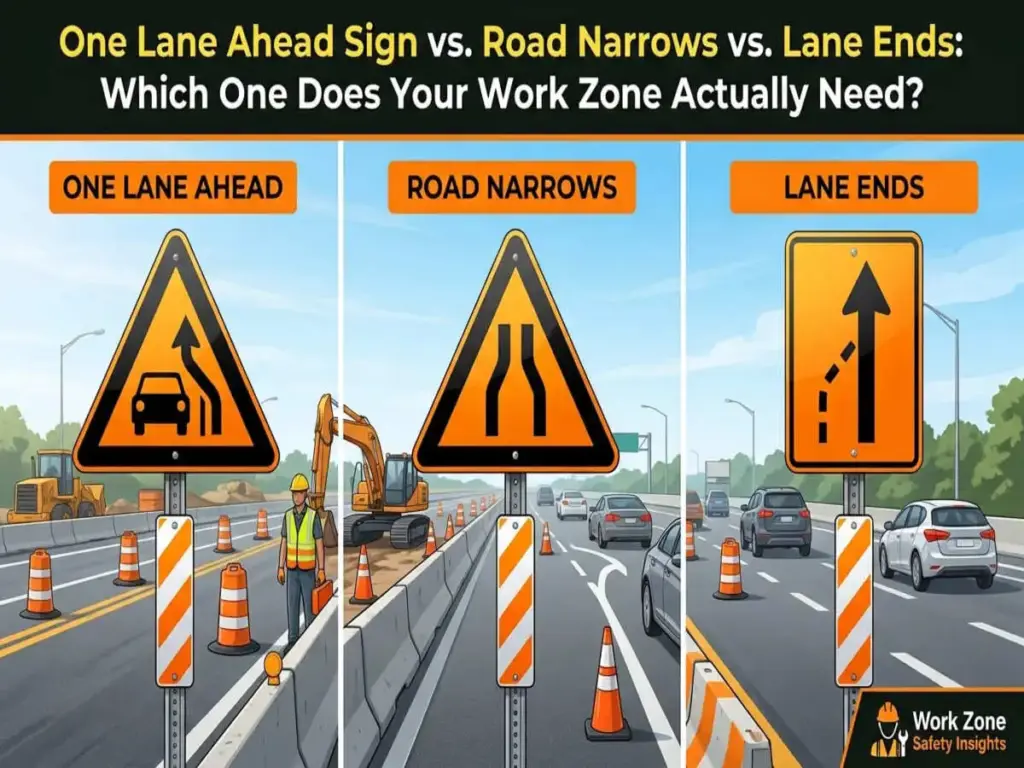
Wartungsteams wissen, dass die tatsächlichen Kosten eines defekten Schildes selten bei der Tafel selbst liegen. Jede Minute, die Sie mit der Arbeit auf einer befahrenen Fahrbahn verbringen, vervielfacht die Belastung durch vorbeifahrenden Verkehr. HSE-Zahlen bestätigen, was auf dem Spiel steht. In 2024/25, 35 In Großbritannien starben Bauarbeiter, Und 14 Bei diesen Todesfällen handelte es sich um einen Unfall, bei dem der Arbeiter von einem fahrenden Fahrzeug angefahren wurde (HSE, 2025).
Langsam, Vollständige Vorzeichenvertauschungen ziehen das Belichtungsfenster in die Länge. Gleichzeitig erhöhen sie die Kosten für das Verkehrsmanagement. Auftragnehmer benötigen einen schnelleren Weg zur Compliance. Eine Verzögerung des Wechsels erhöht nur das Risiko für alle verbleibenden defekten Assets im Netzwerk. In diesem Leitfaden wird genau beschrieben, wie Austausch der Vorderseite eines Verkehrsschildes komprimiert die Installation von Stunden auf Minuten. Es hält die Besatzungen innerhalb des Kapitels 8 Es entspricht den Parametern des Verkehrsmanagements und verringert das Risiko am Straßenrand, das bei herkömmlichen Änderungen der vollständigen Beschilderung entsteht.
Kapitel 8 Compliance, bevor Sie mobilisieren
Austausch der Verkehrsschildfront befreit eine Besatzung nicht vom Kapitel 8 des Verkehrszeichenhandbuchs des Verkehrsministeriums. Selbst eine zehnminütige Fehlerbehebung erfordert die vollständige statische Signatursequenz, die in Kapitel beschrieben wird 8, Teil 1, Abschnitt D3: ein „Der Weg geht voran.“’ Zeichen zum Diagramm 7001, 275–400 m vor den Arbeiten auf einer einzigen Fahrbahn angebracht, auf der die nationale Geschwindigkeitsbegrenzung gilt (oder bis zu 2 Meilen auf zweispurigen Straßen, reduziert auf 1 Meile, wo mit Warteschlangen zu rechnen ist), gefolgt von einer konischen Verjüngung mit 750 mm Kegel bei 1.2 m-Abstand auf Straßen mit geringerer Geschwindigkeit, oder 1 m-Kegel auf Autobahnen und Schnellstraßen mit der nationalen Geschwindigkeitsbegrenzung. Dabei handelt es sich um die gleiche statische Anordnung – nicht um eine verkleinerte Version davon –, die eine vollständige Fahrbahnsperrung regelt (DfT, Kapitel des Handbuchs zu Verkehrszeichen 8, Teil 1, Absätze D3.7 und D3.9).”
Verstehen wo Austausch der Vorderseite eines Verkehrsschildes innerhalb dieses Rahmens liegt, ist der erste Schritt zu wirklich schneller, sicherere Arbeitsplätze. Es sollte jedes RAMS-Dokument prägen, das ein Terminwartungsunternehmer erstellt.
Autobahnen’ Programme zur Wartung von Gesundheits- und Sicherheitsschildern, die diese Planungsphase überspringen, sind oft standardmäßig langsamer, Vollständige Vorzeichenänderungen. Niemand hat einen konformen Kurzzeitpfad für die schnellere Methode kartiert, so siegen standardmäßig alte Gewohnheiten.
Passende TM-Kategorie zur Jobdauer
Kapitel 8, Teil 1 definiert eine „kurzfristige Situation“.’ da man erwartet hatte, dass es weniger als hält 24 Std., kombiniert mit guter Sicht – das bedeutet, dass Sichtlinien die im TD festgelegte volle Bremssichtweite verlängern 9, Tisch 3 des Entwurfshandbuchs für Straßen und Brücken – und geringer Verkehrsfluss, Dies bedeutet, dass die Nachfrage unter der reduzierten Kapazität der freigelassenen Fahrspuren bleibt (DfT, Kapitel des Handbuchs zu Verkehrszeichen 8, Teil 1, Absatz D3.1, 'Entspannung’ Schemata). Ein Auftrag zum Austausch von Verkehrsschildern, der alle drei Bedingungen erfüllt, kann nach einem Lockerungsplan statt nach einem vollständigen Standardwerkslayout geplant werden, Vorgesetzte müssen jedoch jede Bedingung einzeln im RAMS dokumentieren – die Erfüllung einer oder zweier Bedingungen reicht nicht aus.”
Eine Statik, Mehrstündige Schließungen werden überflüssig. Diese Verschiebung hängt ausschließlich vom Nachweis ab, wiederholbare Installationszeiten. Schnell Austausch der Vorderseite eines Verkehrsschildes Techniken liefern genau das.
Sichere Arbeitsabstände und Rückmeldung
Auf Straßen mit einer dauerhaften Geschwindigkeitsbegrenzung von 50 mph oder höher, Kapitel 8 erfordert einen seitlichen Mindestsicherheitsabstand von 1.2 m zwischen dem Rand des Arbeitsraums und der befahrenen Fahrspur (DfT, Kapitel des Handbuchs zu Verkehrszeichen 8, Teil 1, Absatz D3.7.11). Wo 1.2 m kann nicht erreicht werden – üblich auf schmaleren Bundesstraßen beim Ortsbrustaustausch an Randpfosten – der Abstand kann auf ein absolutes Minimum sinken 0.5 M, aber nur, wenn eine vorübergehende verbindliche Geschwindigkeitsbegrenzung von 40 mph oder 30 mph wird durch physikalische Maßnahmen wie Schikanen oder temporäre Geschwindigkeitsrampen durchgesetzt; ein ausgeschriebenes Limit allein wird ausdrücklich nicht als ausreichend angesehen (Absatz D3.7.12). Wo sogar 0.5 m kann nicht erreicht werden, Der Fallback ist vorübergehend obligatorisch 10 mph-Grenze bei Konvoibetrieb (Abschnitt D7).
PS, Zertifizierung, und Methodenanweisungen
Mitarbeiter benötigen Warnschutzkleidung gemäß BS EN ISO 20471, Klasse 2 für langsamere Straßen oder Klasse 3 für Autobahn- und andere Straßenfrontarbeiten mit hoher Geschwindigkeit, im Einklang mit dem PSA-Querverweis in Kapitel 8 auf den Safety at Street Works und Road Works Code of Practice. Teams, die statisches Signieren und Coning einrichten, halten normalerweise Sektorplan 12D ab (Temporäres Verkehrsmanagement) oder eine gleichwertige NRSWA Street Works Qualification Register-Zertifizierung, und die Person, die für die Gestaltung des Layouts verantwortlich ist, sollte gemäß Sektorplan 12D/02 gesondert zuständig sein, wenn ein Plan von einem Standardkapitel abweicht 8 planen.
Ein aufgabenspezifisches RAMS-Dokument sollte die verkürzte Verweildauer explizit widerspiegeln Austausch der Vorderseite eines Verkehrsschildes ermöglicht. Die Risikokontrollen stimmen dann mit der tatsächlichen Arbeit vor Ort überein, anstelle einer generischen vollständigen Ersatzvorlage.
Sie benötigen Overlay-Kits, die genau auf Ihren vorhandenen Schilderbestand abgestimmt sind? Unsere präzisionsgeschnittenen Flächen werden nach Ihren Anlagenspezifikationen für die Drop-In-Montage hergestellt, Vermutungen vor Ort entfallen vollständig.
Methoden zum Ersetzen der Vorderseite von genieteten und selbstklebenden Schildern
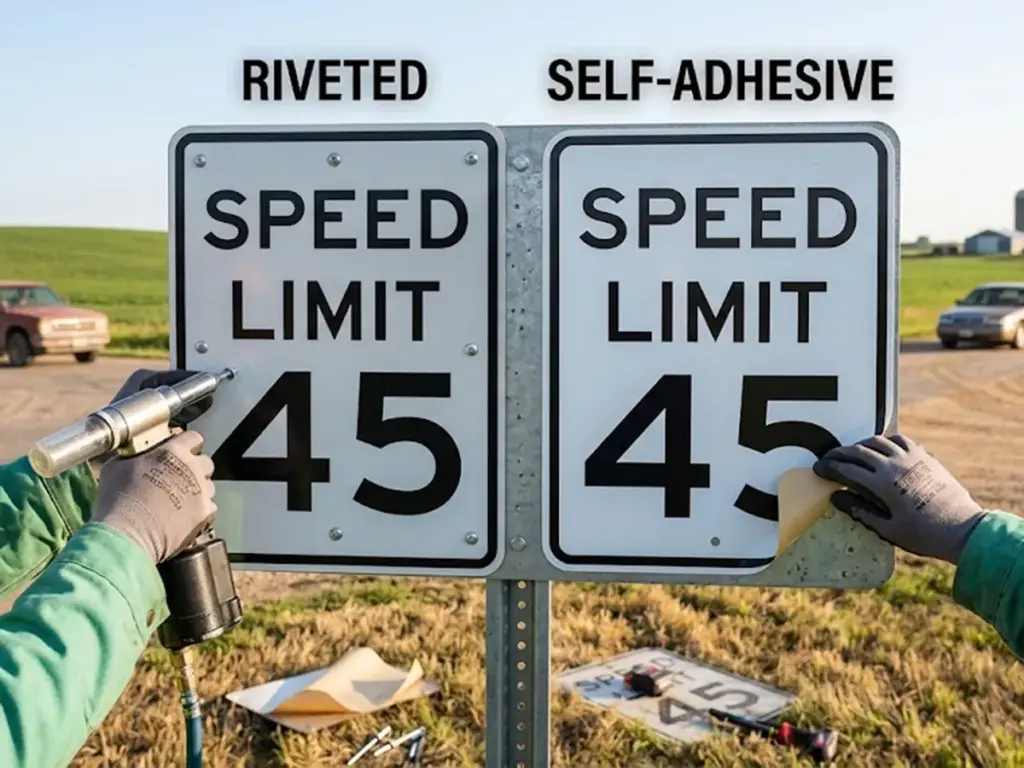
Die Wahl zwischen dem Austausch genieteter Schilderoberflächen und einer selbstklebenden Auflage hängt von der Beschaffenheit des Untergrunds und der verfügbaren Montagezeit ab, keine langfristige Budgetplanung. Beide Ansätze liefern Kapitel 8 konforme Verkehrsmanagementergebnisse bei korrekter Ausführung. Beide gelten als legitim Austausch der Vorderseite eines Verkehrsschildes Methoden, vorausgesetzt, dass das Substrat zuerst die Prüfung besteht.
Austausch der genieteten Schilderfront
Ein kompetentes Zwei-Personen-Team entfernt die alten Nieten und reinigt den Untergrund. Sie richten die neue Fläche aus und nieten sie mit passender Stärke und passendem Abstand neu. Diese Methode eignet sich für Platten, bei denen das Aluminiumsubstrat stabil bleibt. Die vorhandenen Befestigungen müssen lediglich an der Vorderseite selbst ausgetauscht werden.
Retroreflektierende Schilder-Overlay-Anwendung
Selbstklebende Verkehrsschilder lassen sich schneller anbringen. Das Team entfettet und trocknet den Untergrund, Passen Sie dann die Platte zur Ausrichtung trocken an. Das Overlay wird mithilfe einer Rakeltechnik aufgetragen, die eingeschlossene Luft entfernt, bevor Sie die Kanten versiegeln. Dieser Ansatz zur Überlagerung der retroreflektierenden Schilderoberfläche ist in der Regel die am schnellsten einsetzbare Option für Schilder in Standardgröße, sobald ein Team geübt ist. Das tut es, Jedoch, eine Wohnung benötigen, korrosionsfreies Substrat für eine einwandfreie Verklebung.
| Verfahren | Am besten geeignet für | Typische Besatzungsgröße | Untergrundbedarf |
| Ersatz der genieteten Schilderoberfläche | Paneele benötigen neue Befestigungen | 2 Mitarbeiter | Solides Aluminium, Nietpunkte intakt |
| Selbstklebende Auflage | Schnelle Nachrüstung, Standardplatten | 1–2 Mitarbeiter | Wohnung, sauber, nicht korrodierte Oberfläche |
Tisch: Betriebsvergleich basierend auf der Standardinstallationspraxis; siehe Kapitel 8, Teil 1 (DfT) für den Designkontext.
Vor Ort die richtige Methode wählen
Durch eine schnelle Prüfung vor der Montage erfahren die Mitarbeiter, welche Methode für die vor ihnen liegende Anlage geeignet ist. Es deckt den Untergrundzustand ab, Plattenmaterial, Befestigungsart, und das Wetterfenster verfügbar. Für den umfassenderen technischen Entscheidungsbaum darüber, wann eine Sanierung nicht mehr machbar ist, Unser Leitfaden auf Sie haben die Wahl zwischen einer Ersatzfront und einer kompletten Schilderüberholung behandelt diese Beurteilung im Detail.
Schritt-für-Schritt-Bereitstellung vor Ort
Eine schnelle Nachrüstung von Verkehrszeichen hängt von einer disziplinierten Reihenfolge ab, nicht nur eine schnelle Anpasstechnik. Eine gut gebohrte Austausch der Vorderseite eines Verkehrsschildes Die Crew durchläuft ohne zu zögern vier Etappen. Jede zusätzliche Minute des Zögerns am Rande ist eine Minute vermeidbarer Enthüllung.
Kontrollen vor der Mobilisierung
Bestätigen Sie die Überlagerungsmaße anhand der Bestandsaufnahme, bevor Sie den Hof verlassen. Überprüfen Sie die Kompatibilität der Nietstärke oder der Klebstoffcharge, und Materialien zur Substratvorbereitung verpacken. Durch die stapelweise Zuordnung jedes Gesichts zu seiner spezifischen Schild-ID werden Montageverzögerungen vermieden, sobald das Team am Straßenrand ist.
Einrichten eines konformen Arbeitsbereichs
Platzieren Sie Vorwarnschilder und Kegelkegel gemäß dem entsprechenden Kapitel 8 Diagramm, Dann informieren Sie das Team. Richten Sie dort einen Aussichtspunkt ein, wo die Nähe zum Verkehr dies erfordert. Standardisiert, Einstudierte TM-Layouts mit kurzer Dauer sparen Einrichtungsminuten. Diese Minuten summieren sich über einen Batch-Lauf an mehreren Standorten.
Das neue Gesicht anpassen
Entfernen Sie das alte Gesicht, Reinigen und prüfen Sie den Untergrund, dann trocken fit. Vervollständigen Sie die Befestigung durch Nieten mit dem richtigen Drehmoment und Abstand. Alternativ, Rollen Sie die Klebeschicht herunter und prüfen Sie, ob sich die Kanten abheben. Eine visuelle Ausrichtungsprüfung schließt die körperliche Arbeit ab, bevor mit dem Stillstand begonnen wird.
Stand-Down- und Standortfreigabe
Kehren Sie die TM-Einrichtung methodisch um. Stellen Sie sicher, dass die neue Fläche die richtige Höhe und Ausrichtung hat, Anschließend fotografieren Sie den fertigen Auftrag für den Arbeitsauftrag. Das Überstürzen dieser Endphase ist eine häufige Ursache für Zwischenfälle. Behandeln Sie das Herunterfahren mit der gleichen Sorgfalt wie die Ersteinrichtung.
Minimierung der Fahrbahnsperrungen und des Verkehrsmanagementaufwands
National Highways schätzt, dass Verzögerungen im strategischen Straßennetz die britische Wirtschaft jährlich etwa 3 Milliarden Pfund kosten, mit Straßenarbeiten, die für ungefähr verantwortlich sind 15% dieser Störung (Quelle: https://nationalhighways.co.uk/media/nixpb1ed/managing-delay-on-the-strategic-road-network.pdf). Eine schnellere physische Installation ist der Hebel, der hält Austausch der Vorderseite eines Verkehrsschildes Jobs außerhalb dieser Kategorie. Aus diesem Grund sollte die Minimierung von Fahrbahnsperrungen im Mittelpunkt jedes Mobilisierungsplans für die Instandhaltung stehen.
Freischalten von kurzfristigen TM-Vorräten
Wenn eine Anpassungsmethode innerhalb kurzer Zeitschwellen zuverlässig abgeschlossen wird, Vorgesetzte können nach leichteren TM-Bestimmungen planen. Längere Standsperrungen oder rollende Straßensperren werden überflüssig. Weniger Minuten mit eingesetzten Leitkegeln und Schildern bedeuten auch weniger Fahrzeuginteraktionen mit dem TM-Layout selbst. Dies ist ein anerkanntes sekundäres Risiko auf befahrenen Fahrbahnen.
Stapelplanung mehrerer Gesichter in einer Mobilisierung
Mehrere in der Nähe gruppieren Austausch der Vorderseite eines Verkehrsschildes Jobs in einer einzigen TM-Mobilisierung verteilt Einrichtungskosten und Risiken. Dieses Risiko wird auf mehrere fertiggestellte Vermögenswerte verteilt und nicht nur auf einen. Durch die Sequenzierung von Standorten nach Route oder Stationierung werden wiederholte Fahrzeugbewegungen und wiederholte TM-Einrichtungen weiter reduziert.
Reduzierung der Arbeitszeiten am Straßenrand, ohne die Sicherheit zu beeinträchtigen
Die Reduzierung der Arbeitszeit am Straßenrand ist ein klares Sicherheitsziel neben der Minimierung von Sperrungen. Es verdient besondere Aufmerksamkeit als jedes darauf aufbauende Terminwartungsprogramm Austausch der Vorderseite eines Verkehrsschildes als seine Kernzustellungsmethode.
Zeitaufwand und Unfallrisiko
Jede zusätzliche Minute, die ein Mitarbeiter innerhalb der Arbeitsbreite verbringt, erhöht die Gefährdung durch vorbeifahrenden Verkehr. Austausch der Verkehrsschildfront Methoden verkleinern dieses Zeitfenster erheblich im Vergleich zu einem vollständigen Sign-and-Post-Swap. Ein vollständiger Austausch erfordert normalerweise Aushubarbeiten, Post-Entfernung, und Wiedereinsetzung.
Besatzungsrollen und Wetter-Go/No-Go-Entscheidungen
Dedizierte Rollen – fitter, Bankier, TM-Mitarbeiter – Konzentrieren Sie die Person, die die physische Reparatur durchführt, ausschließlich auf diese Aufgabe. Auch Wetterschwellenwerte spielen eine Rolle. Für die Aushärtung des Klebstoffs ist eine Mindestoberflächentemperatur erforderlich, und starker Wind kann sowohl die Stabilität des Kegels als auch die Handhabung des Panels beeinträchtigen. An einem Grenztag darf die Geschwindigkeit niemals eine legitime Go/No-Go-Entscheidung außer Kraft setzen.
Qualitätssicherung und Compliance-Abnahme
Eine kurze Qualitätssicherungsroutine vor Ort bestätigt die Fertigstellung Austausch der Vorderseite eines Verkehrsschildes trifft Kapitel 8 und Vermögensstandards. Es passiert, bevor die Crew abreist.
Sicht- und Ausrichtungsprüfungen
Montagehöhe prüfen, Gesichtsausrichtung, und Legendenrichtigkeit gegenüber der Werksordnung. Vergewissern Sie sich, dass sich die Kanten nicht abheben oder Luft auf den Klebeüberzügen eingeschlossen ist, und keine losen Befestigungen an genieteten Flächen.
Fotoaufnahmen und Übergabe
Mit Geotags versehene Vorher-Nachher-Fotos sind zunehmend Teil der KPIs für Laufzeitverträge. Sie unterstützen eine schnellere Freigabe und Prüfungsbereitschaft. Aktualisieren Sie den Asset-Datensatz mit der Schild-ID, Ersatztermin, und verwendete Methode. Benachrichtigen Sie dann die auftraggebende Behörde gemäß der vertraglichen SLA.
Schneller bauen, Programm zum sichereren Austausch von Verkehrsschildern
Durch die Standardisierung von Methodenanweisungen für regionale Besatzungen werden Unterschiede sowohl bei der TM-Einrichtungszeit als auch bei der Sicherheitspraxis verringert. Jeder Mitarbeiter folgt dann dem gleichen einstudierten Spielbuch, unabhängig davon, mit welchem Patch sie arbeiten. Koordination mit einem Hersteller, der Präzisionsschnitte liefern kann, Asset-angepasste Overlay-Kits in Losgrößen helfen ebenfalls. Dadurch wird die Zeit für die Vorbereitung auf den Hof verkürzt, bevor die Mannschaften überhaupt mobilisieren. Diese Vor-Ort-Effizienzeffekte funktionieren am besten, wenn sie in einem größeren Gebäude untergebracht werden, Strukturierter Ansatz zur Verwaltung von Beschilderungsanlagen. Dieser Ansatz erstreckt sich von der Installation bis zum Ende der Lebensdauer. Genau das ist unser Anliegen Komplettes Framework für die Planung und Bereitstellung konformer Schildersanierung in einem Netzwerk vollständig heraus.
Häufig gestellte Fragen
Welche Wetterbedingungen beeinflussen die Installation der selbstklebenden Schilderoberfläche??
Klebeschichten benötigen eine Mindestoberflächen- und Umgebungstemperatur, um richtig zu haften. Die Anwendung sollte bei Regen oder hoher Luftfeuchtigkeit vermieden werden, Auch starker Wind beeinträchtigt die sichere Handhabung größerer Paneele bei der Montage.
Kann ein selbstklebendes Overlay über vorhandene Nietköpfe angebracht werden??
Überstehende Nietköpfe müssen in der Regel zunächst versenkt oder verspachtelt werden, denn für die vollflächige Haftung kommt es auf eine Bündigkeit an, sauberen Untergrund. Eine unebene Oberfläche birgt die Gefahr eines vorzeitigen Kantenabhebens.
Wie lange dauert der typische Austausch eines Verkehrsschildes vor Ort??
Sobald das Verkehrsmanagement bereits vorhanden ist, Ein geübtes Team kann einen genieteten Austausch in deutlich weniger als einer Stunde durchführen. Eine selbstklebende Auflage auf einer Standardplatte dauert oft nur wenige Minuten.
Erfordern kurzfristige Gesichtsersatzarbeiten immer noch ein vollständiges Kapitel? 8 Unterzeichnung?
Ja. Kapitel 8 Die Einhaltung gilt unabhängig von der Beschäftigungsdauer, Allerdings können das spezifische TM-Diagramm und die verwendete Kategorie bei Werken mit kurzer Dauer abweichen (DfT, Kapitel des Handbuchs zu Verkehrszeichen 8, Teil 1).
Was ist die sichere Mindestbesatzungsgröße für einen schnellen Face-Fit-Einsatz auf einer befahrenen Fahrbahn??
Die Zusammensetzung der Besatzung hängt vom Straßentyp und der Geschwindigkeitsbegrenzung ab. Für die meisten Jobs sind mindestens ein Monteur und ein engagierter Ausguck oder TM-Mitarbeiter erforderlich, Befolgen Sie die im Roten Buch dargelegten sicheren Arbeitspraktiken (DfT, Sicherheit bei Straßenarbeiten und Straßenarbeiten: Ein Verhaltenskodex).
Referenzen
Executive für Gesundheits- und Sicherheit (2025). Neueste jährliche arbeitsbedingte Todesfälle veröffentlicht.
Abteilung für Transport. Verkehrszeichenhandbuch, Kapitel 8, Teil 1: Design.
Abteilung für Transport. Verkehrszeichenhandbuch, Kapitel 8, Teil 2: Operationen.
Abteilung für Transport. Sicherheit bei Straßenarbeiten und Straßenarbeiten: Ein Verhaltenskodex.
Thermische Straßenreparaturen (2024). Die Kosten von Straßensperrungen – warum Geschwindigkeit wichtig ist