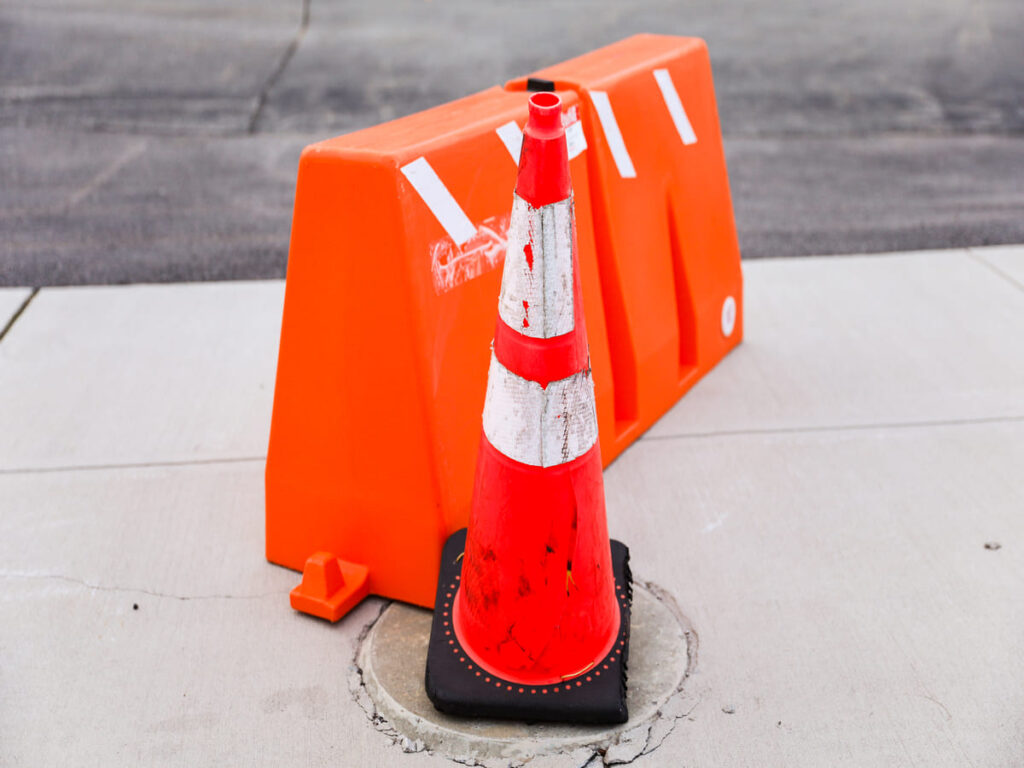
Site foremen must deploy the right traffic control devices to manage vehicle flow effectively. Construction Cones and Barriers serve as essential physical guides for every work zone. These tools dictate vehicle movement and protect workers from oncoming traffic. This guide helps procurement managers choose between these devices based on project duration and impact risk.
If the site needs warnings, speed control, detour guidance, and compliance messaging in addition to cones and barriers, see The Comprehensive Guide to Construction Signage: Enhancing Safety, Efficiency, and Compliance on Job Sites.
Distinguishing Between Construction Cones and Barriers
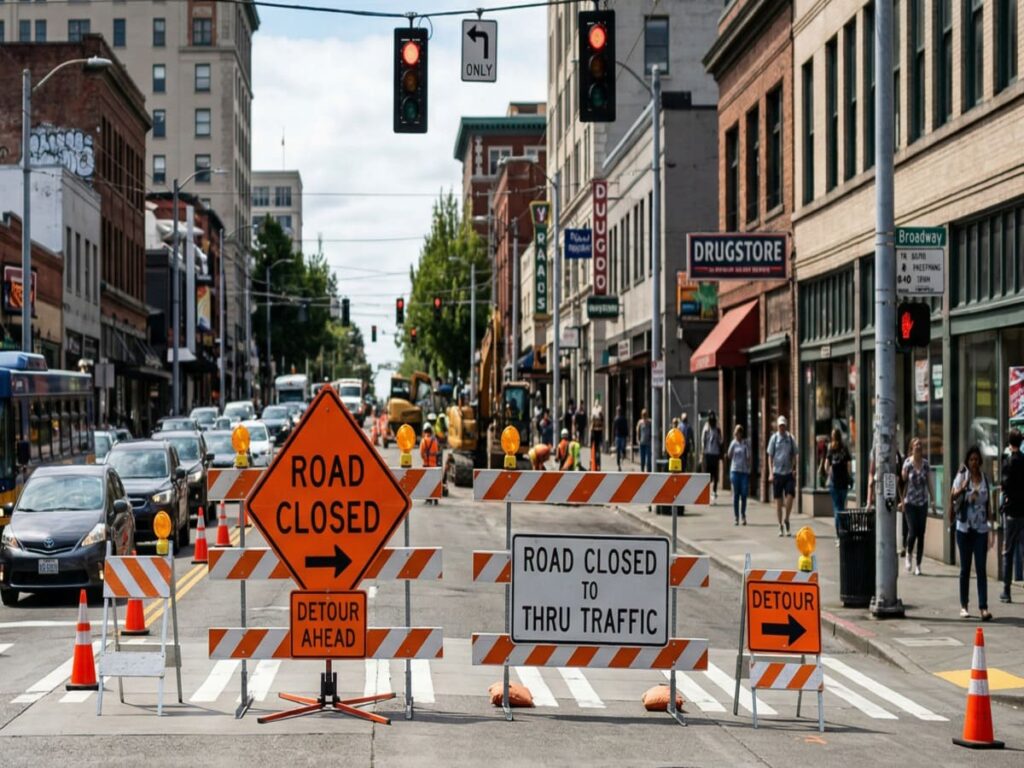
Safety professionals categorize Construction Cones and Barriers by their portability and structural integrity. Cones offer rapid deployment for short-term delineations. In contrast, barriers provide a continuous physical boundary for high-risk zones.
The selection depends on the required “Level of Containment” and the speed of the adjacent traffic. Cones typically provide visual guidance in low-speed environments. Barriers offer physical redirection to prevent vehicle intrusion in high-speed areas. Optraffic builds these devices using high-density polyethylene (HDPE) for maximum durability. Understanding these technical differences prevents costly procurement errors and improves site safety ratings.
To choose the right cone setup for real work zones—based on speed, visibility, and handling—read How to Buy Construction Cones: A Complete Guide for Contractors and Site Managers.
When to Deploy Construction Cones for Temporary Delineation
Crew members place cones for tasks requiring high mobility. These devices provide immediate visual paths for fast-moving utility repairs or paint stripping. Their lightweight design allows a single worker to deploy a full taper in minutes.
Best Scenarios for Cones:
- Utility repairs lasting less than one work shift.
- Moving work zones where the hazard shifts along the road.
- Low-speed urban environments under 40 mph.
Procurement managers should prioritize a bulk order of Construction Cones and Barriers for high-frequency tasks. High-quality cones feature reflective sleeves that meet international visibility standards for night work. These units nest tightly to save valuable truck bed space during transport. Correct weighting ensures they remain upright against wind gusts from passing vehicles.
Utilizing A-Frame Barriers for Enhanced Perimeter Control
A-Frame Construction Cones and Barriers bridge the gap between simple cones and heavy-duty walls. These safety barriers create a continuous visual and physical line that pedestrians cannot easily step over. They offer a higher “psychological barrier” than individual cones.
Best Scenarios for A-Frame Barriers:
- Closing sidewalks to protect pedestrians from heavy machinery.
- Restricting access to hazardous open excavation sites.
- Creating secure perimeters for loading zones and equipment storage.
These units support the use of Custom Boards to communicate specific site rules. You can mount these boards across the A-frame rails to provide clear instructions to the public. This setup keeps the site organized and reduces the risk of unauthorized entry.
High-Speed Protection with Water-Filled Safety Barriers
Water-filled Construction Cones and Barriers serve as the primary defense on high-speed roads. Unlike lightweight cones, these barriers provide physical containment and energy displacement. Their massive weight prevents vehicle penetration into the buffer space where crews work.
Technical Application & Standards:
- Energy Absorption: These barriers must redirect vehicles according to MASH TL-2 or TL-3 standards.
- Highway Use: Use these for projects where speed limits exceed 45 mph.
- Interlocking Design: A connected chain ensures impacts do not create gaps in the perimeter.
Procurement managers specify these barriers for long-term projects lasting several weeks. Optraffic builds these with UV-stabilized polyethylene to prevent sun damage. This material choice ensures the barriers remain reliable during extended outdoor deployments.
Selection Matrix: Construction Cones and Barriers
This matrix follows standard safety guidelines for selecting devices based on risk level.
| Project Type | Recommended Device | Primary Technical Benefit |
| Emergency Utilities | Construction Cones | Immediate deployment and easy storage. |
| Urban Pedestrian Work | A-Frame Barriers | Continuous boundary to prevent sidewalk jumping. |
| High-Speed Roadwork | Water-Filled Barriers | Kinetic energy absorption and MASH compliance. |
Integrating Custom Boards for Site-Specific Directives
Physical blocks work best when combined with clear information. You can attach Custom Boards directly to these barriers. This prevents sign clutter by using the barrier as a mounting base.
Specialized Mounting Kits secure these boards to the barrier body. These kits use heavy-duty hardware to prevent boards from detaching during high winds. Using a compatible kit from the manufacturer ensures the sign remains stable without damaging the barrier’s structural integrity.
Conclusion: Secure Your Work Zone with Optraffic
Site safety relies on the precise selection of Construction Cones and Barriers. Using the wrong device increases liability and risks worker lives. Whether you need portable cones or impact-rated barriers, selecting engineered solutions is vital for every environment.
Explore the range of Construction Cones and Barriers at Optraffic to equip your next project for success.
FAQ
What is the difference between a traffic cone and a safety barrier?
Construction Cones and Barriers differ in function and physical presence. Cones act as visual indicators for temporary hazards and are easily moved. Barriers provide a continuous physical perimeter that prevents pedestrians or vehicles from entering a restricted area.
When should I use water-filled barriers instead of cones?
Choose water-filled Construction Cones and Barriers for high-speed zones or long-term projects. These devices provide the mass necessary to absorb vehicle impacts. Cones are better suited for low-speed urban areas or short-duration utility repairs.
How do I ensure my traffic control devices meet safety standards?
Check for compliance with MUTCD (Manual on Uniform Traffic Control Devices) and MASH (Manual for Assessing Safety Hardware) ratings. High-quality devices use UV-stabilized HDPE and feature retroreflective sheeting to maintain visibility and structural integrity.
Can I attach signage to these barriers?
Yes. You can mount Custom Boards directly onto A-frame or water-filled barriers. Using dedicated Mounting Kits ensures the boards stay secure during high winds or heavy traffic flow. This integration provides both physical protection and clear instructions to the public.
What are the storage requirements for large fleets of cones?
Look for “nesting” designs when ordering Construction Cones and Barriers in bulk. Professional-grade cones stack tightly to minimize the footprint in storage yards or on truck beds. This feature lowers logistics costs and speeds up deployment times.