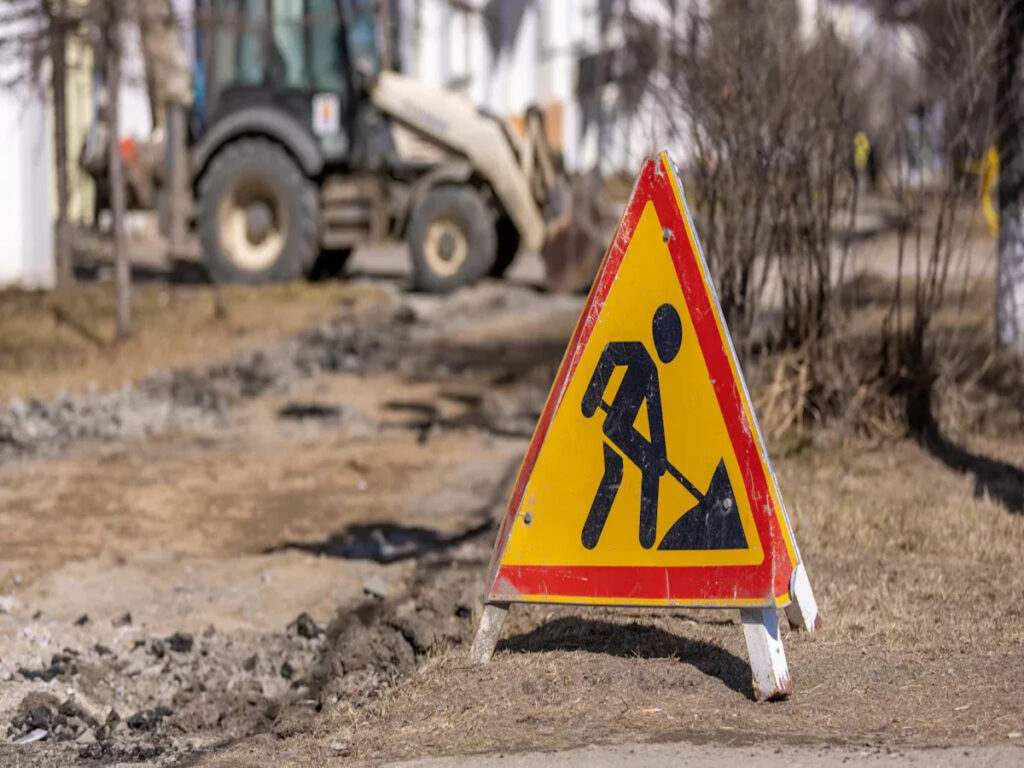
Construction signage is a vital element in ensuring safety and compliance on job sites worldwide. However, different regions have different standards and approaches to construction safety signage. This blog compares two major systems: the Australian Standard AS 1319 and the British Standard ISO 7010. Understanding these key differences can help procurement managers, contractors, and site safety officers navigate regulatory requirements effectively.
While Australia and the UK share some similarities, the United States follows a distinct set of hazard communication protocols. For a complete global perspective, you can also explore our detailed breakdown of U.S. Construction Signage Compliance and Safety Regulations.
The “Multi-Sign” vs. “Modular” Philosophy in Construction Safety Signage
One of the first things to note when comparing construction safety signage in Australia and the UK is the different approaches to how signs are presented and structured on-site. Australia and the UK have contrasting philosophies that guide how safety signage is organized.
Why Australian Construction Safety Signage Favors Consolidated Site Boards
In Australia, construction signage often takes the form of consolidated site boards. According to AS 1319, these multi-sign boards display various safety instructions, hazard warnings, and regulations on a single unit, often placed at the entrance to a construction site. This approach is designed to provide workers with all essential information at a glance.
The rationale behind this is to streamline communication and ensure that workers are immediately aware of all safety requirements and hazards. Consolidated signage boards simplify the communication process, reducing the risk of confusion and ensuring compliance with Australian construction safety standards.
For more information on AS 1319 and workplace safety signage in Australia, explore our blog on AS 1319: Workplace Safety Signage Standard Guide for Australia.
The Modular Logic of UK Construction Safety Signage: A Focus on ISO 7010
In contrast, the UK’s approach to construction signage follows the ISO 7010 standard, which emphasizes modular signage. Instead of consolidating multiple messages on one board, the UK approach involves using individual, modular signs for specific hazards or instructions.
This modular system allows for flexibility, as different zones within the construction site can use different safety signs based on the specific risks present. The Safety Signs and Signals Regulations 1996 provide clear guidelines for placing signs, which are often reliant on pictograms to ensure clarity across a diverse workforce.
This system is particularly useful in the UK’s multicultural environment, where workers may speak different languages, as the use of universally recognized symbols helps reduce communication barriers.
Distinct Visual Identity: The Construction Safety Signage “Red Oval” Header
Visual identity plays a significant role in ensuring that safety messages are understood quickly and clearly. The visual language used in Australian and UK signage is distinct, with unique design elements that reflect each country’s safety regulations.
In Australia, danger signs are identified by a red oval header with white text, a feature specified by AS 1319. This unique header helps to differentiate hazard-related signage from other types of warnings. The red oval provides a visual cue that signals the immediate need for caution or action.
On the other hand, the UK’s ISO 7010 standard follows a different approach. Prohibition signs feature a red circle, while warning signs use a yellow triangle. These visual differences can cause confusion, especially in cross-border projects or multinational environments. Recognizing these distinctions is crucial to prevent compliance issues and ensure the correct actions are taken when hazards arise.
Quick Reference: AS 1319 vs. ISO 7010 Comparison
| Feature | Australia (AS 1319) | UK & International (ISO 7010) |
| Philosophy | Consolidated: Multi-message site boards. | Modular: Individual signs for specific risks. |
| Danger Signs | Red Oval Header with white “DANGER” text. | Yellow Triangle with black hazard symbol. |
| Prohibition | Red circle with slash + Black text below. | Universal pictogram within a red slash circle. |
| Mandatory | Blue circle + Large text descriptor. | Blue circle with white graphic symbol. |
| Language | Heavy reliance on English text. | Designed for multilingual via pictograms. |
| Common Material | UV-Stabilized ACM (for heat/sun). | Fire-Retardant Foamex (for urban/moisture). |
Material Selection for Regional Construction Safety Signage Compliance
Construction safety signage is subject to a variety of environmental factors that affect its durability and functionality. Climate plays a major role in determining the materials used for signage in both Australia and the UK.
UV-Stabilized ACM for the Extreme Australian Outback
In regions like the Pilbara or Central Queensland, the UV index frequently peaks at $11+$, turning standard PVC signs brittle and causing ink sublimation (fading) in record time.
- The Durability Gap: While standard vinyl might last 6 months, UV-stabilized ACM is engineered for a 5-to-7-year service life, making it the most cost-effective choice for multi-year infrastructure projects.
- The Technical Solution: Aluminum Composite Material (ACM) consists of two thin sheets of aluminum bonded to a polyethylene core. When paired with UV-inhibited thermal-fused inks, the sign becomes a heat shield.
- Why it Matters for Compliance: Under Australian Standard AS 1319-1994, safety signs must remain “legible at all times.” If a “Danger: High Voltage” sign fades to white due to UV exposure, the site is legally non-compliant, exposing the contractor to massive liability in the event of an accident.
Fire-Retardant and Weatherproof Signs for UK High-Density Projects
In the UK, the challenge isn’t heat—it’s moisture-driven delamination and stringent fire codes (such as BS 476 or EN 13501-1) dictated by the High-Rise Residential Buildings (HRRB) safety acts.
- Weatherproofing beyond “Waterproof”: High-density urban projects in the UK experience constant humidity and wind-driven rain. For short-term use, materials like Correx (fluted polypropylene) are popular. However, for high-traffic sites, Foamex (PVC foam board) is preferred because it resists swelling and moisture absorption, unlike traditional timber-backed signs.
- The Fire Safety Mandate: Post-Grenfell, fire retardancy is non-negotiable. Using Class 0 or Class 1 fire-rated materials for signage in confined spaces or scaffolding is a critical compliance step. These materials are self-extinguishing, ensuring that signage does not contribute to the “fire load” of a building during construction.
- The Strategic Benefit: By using fire-retardant Foamex, contractors satisfy both the Health and Safety Executive (HSE) visibility requirements and local fire marshal inspections simultaneously.
Summary Comparison: Regional Material Logic
| Feature | Australian Outback (e.g., Pilbara) | UK Urban (e.g., London/Manchester) |
| Primary Stressor | Extreme UV & Thermal Expansion | Humidity, Wind, & Fire Spread |
| Top Material | UV-Stabilized ACM | Fire-Rated Foamex / Correx |
| Critical Standard | AS 1319-1994 | BS EN ISO 7010 / BS 476 |
| Failure Mode | Cracking & Ink Fading | Delamination & Mold Growth |
Choosing the right substrate is only half the battle; understanding how these materials interact with specific chemicals and temperatures is vital. Explore our guide on Construction Sign Materials That Last in Harsh Site Environments.
Conclusion: Ensuring Compliance Across the Commonwealth
In summary, both Australia and the UK have unique approaches to construction safety signage, guided by different regulatory frameworks: AS 1319 in Australia and ISO 7010 in the UK. Understanding these differences is crucial for compliance, particularly for multinational projects or contractors working across borders.
By adhering to the correct signage standards for each region, procurement managers can ensure safety on job sites, improve efficiency, and avoid costly compliance errors. This is where a global leader like OPTRAFFIC becomes your strategic partner. With an extensive manufacturing footprint and a deep understanding of both Australian and British safety mandates, OPTRAFFIC delivers construction signage solutions that aren’t just durable—they are precision-engineered for regional compliance. Whether you are navigating the UV-heavy demands of the Outback or the fire-safety protocols of London, OPTRAFFIC provides the high-capacity production and material expertise needed to keep your global projects safe and compliant.”
FAQ
While ISO 7010 is globally recognized, Australian sites must primarily adhere to AS 1319-1994. The main difference is the “Danger” sign format; Australia requires the specific Red Oval header. Using only ISO symbols without the AS-approved headers may lead to non-compliance during a safety audit. For multinational projects, a “hybrid” layout that incorporates ISO pictograms within an AS 1319 framework is often the safest approach.
Under both HSE (UK) and Safe Work Australia guidelines, signage must be legible to be considered “compliant.” If a sign is unreadable due to UV fading or moisture damage, it is legally treated as if the sign does not exist. This can lead to heavy fines, stop-work orders, and significantly increased liability for the contractor in the event of an on-site accident.
Following the BS 476 and EN 13501-1 standards, signage used in enclosed spaces, scaffolding, or high-rise residential buildings (HRRB) must not contribute to the “fire load.” Standard plastic signs can act as fuel or release toxic smoke; Fire-rated Foamex or Correx is engineered to be self-extinguishing, ensuring the site meets strict UK fire safety building regulations.
The Return on Investment (ROI) is found in the replacement cycle. In high-UV regions like the Australian Outback, standard PVC often becomes brittle and unreadable within 6 months. UV-stabilized ACM (Aluminum Composite Material) is rated for 5–7 years. Although the upfront cost is higher, you save approximately 300% to 500% in labor and replacement costs over the duration of a long-term infrastructure project.
Under ISO 7010 (UK/Europe), using a pictogram is mandatory to overcome language barriers. In Australia, AS 1319 allows text-only signs, but it highly encourages “symbolic signs.” Using high-quality pictograms is a global best practice. It ensures that diverse, multilingual workforces can instantly identify hazards without needing to read specific languages.