Highway signage has changed a lot over time. It started with signs that did not move. Now, there are advanced digital signs. Signs are very important for travel. They help people know where to go. They also help keep roads safe. Studies show sign design and how much information is on them can change how drivers act. This can affect safety. Moving to digital signs gives new ways to guide drivers. It also helps make roads safer. As more people travel, digital signs help drivers react to new road changes.
Key Takeaways
- Highway signage changed from regular signs to digital screens. This helps drivers stay safe and makes traffic easier to manage.
- Digital signs show updates right away. They help drivers know about accidents or roadwork fast.
- Cities can save money by using digital signs. These signs need less fixing and use less energy.
- Old signs use shiny materials to help people see them. Digital signs can show different messages for better communication.
- Adding smart technology to signs can make roads safer. It also helps traffic move better.
Highway Signage Evolution Overview
Historical Roots of Traffic Signs
Road signs started a long time ago, even before highways. In ancient Rome, people used stone markers to help travelers. These markers showed how far places were and which way to go. This was the beginning of traffic sign history. In the 1700s, Europe had turnpike trusts. These groups put up signs for tolls, directions, and dangers. This was an important time for road signs and highway signage.
As more people traveled, clear road signs became needed. In the early 1900s, the United Kingdom made the first modern road signs. These signs told drivers to “Stop” or “Slow.” Over time, countries saw that rules for signs were important. In 1926, the Geneva Convention on Road Traffic made rules for sign shapes, colors, and symbols. This helped make road signs look the same in many countries. It was a big moment in traffic sign history.
Note: Road signs have changed as society, technology, and travel needs changed. Each time period added new ideas to traffic sign history. This shaped the signs we see today.
Milestones in Signage Design
There are many important moments in the story of road signs. The table below shows some big events in traffic sign history:
| Time Period | Milestone Description |
|---|---|
| Ancient Rome | Early signposts helped organize road communication. |
| 18th Century | Turnpike trusts in Europe put up signs for tolls, directions, and dangers. |
| Early 20th Century | The UK made the first modern road signs with simple instructions. |
| 1926 | The Geneva Convention made rules for sign shapes, colors, and symbols. |
| Mid-20th Century | Reflective paint and glass beads made signs easier to see at night. |
| Digital Era | Digital traffic signs now give real-time information to help keep drivers safe. |
Road signs also changed in what they are made of and how easy they are to see. Some big improvements are:
- Reflective sheeting helps drivers see signs at night by bouncing light back.
- Retroreflectivity makes signs stand out, so drivers can see them better.
- Metal substrates like aluminum make signs strong and easy to recycle.
Signage is still changing today. Digital signs now give updates right away. This shows how road signs keep getting better for traffic management. The long history of traffic signs shows that every new idea helps make roads safer and work better.
Traditional Highway Signage Design
Static Signs and Materials
Traditional highway signage is very important for road safety. These signs use strong materials and simple words to help drivers. Most static signs have aluminum bases with reflective sheeting on top. This helps drivers see the signs during the day and at night. The reflective part sends car headlights back to drivers. This makes the sign easy to see, even when it is dark.
The table below lists common materials and how long they last:
| Material Type | Lifespan (Years) |
|---|---|
| Reflective vinyl sheeting | 7 to 12 |
| Engineering grade reflective sheeting | 7 to 10 |
| High intensity reflective sheeting | 7 to 10 |
| Diamond grade reflective sheeting | 7 to 12 |
Speed limit signs, exit signs, and regulatory signs are seen a lot. These signs use shapes and colors that drivers know. This helps people spot them fast. Modern road signs are made to be clear and last a long time. This means drivers can read them easily for many years.
Reliability and Maintenance
Traditional signs work well, but they need care often. Weather, sunlight, and crashes can hurt or fade the signs. Maintenance teams check and fix signs to keep roads safe. Problems like graffiti, car hits, and old age happen a lot.
| Type of Sign | Common Maintenance Issues | Repair Timeline |
|---|---|---|
| Regulatory | Missing or broken signs (like STOP or YIELD) must be fixed fast. | Within hours of notification |
| Warning | Broken signs (like speed or curve warnings) should be fixed in three days. | Within three calendar days |
| Guide | Replacing these signs depends on how confused drivers get; usually done in two weeks. | Generally within two weeks |
| General Issues | Graffiti, car crashes, weather, and old age are common problems. | Varies based on the issue |
Traditional signs can cost more to take care of over time. Big signs get hit by bad weather more, so they need more repairs. These signs do not cost much at first, but fixing them adds up. Checking and fixing signs helps them work well and keeps drivers safe.
Digital Signage and Smart Technologies
Variable Message Signs (VMS)
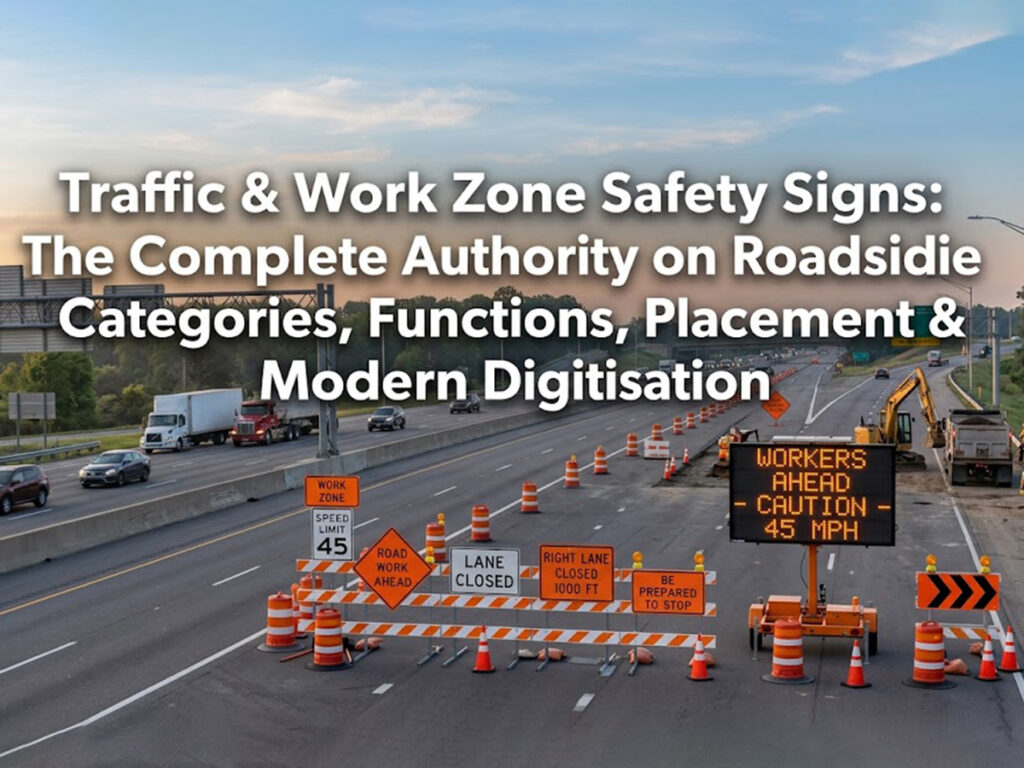
Variable message signs have changed highway signs a lot. These digital signs use screens to show drivers new information right away. VMS can switch messages fast to help with traffic or emergencies. You see them near exits or busy roads, and they can be moved or stay in one place. VMS boards tell about crashes, closed roads, and bad weather. The design is simple so people can read messages quickly.
| Feature/Function | Description |
|---|---|
| Provide Information | VMS tells if parking lots are full or ramps are closed. |
| Alert People | VMS warns about accidents or when road conditions change. |
| Give Notice | VMS lets people know about detours, which helps during big events. |
| Issue Help | VMS gives tips, like which roads to avoid after a crash. |
| Simplistic by Design | VMS uses short messages so drivers understand fast. |
| Changed for Different Events | VMS can change words quickly, so they are better than signs that never change. |
Real-Time Communication
Digital traffic signs use new technology to give updates right away. Intelligent Transportation Systems use LED screens, sensors, and GPS to watch traffic and road conditions. These signs get data from sensors and government networks. Workers can change digital signs from far away, so drivers always get the newest news. Digital signs can show messages in different languages, so everyone can stay safe and know what is happening.
- Digital screens change when there are crashes or bad weather.
- Good traffic data means signs can update right away, making roads safer.
- People can change messages from far away for any situation.
Energy Efficiency and Cost
Digital signs save a lot of energy compared to old signs. LED digital signs use less power, which can cut costs by 80%. For example, a 20-foot LED sign only needs 300 watts, but a fluorescent sign needs 1,200 watts. This saves a lot of energy every year. Digital signs cost more at first, but they save money later because you can update them from far away and fix them less. Cities that use digital signs spend less on repairs and use tax money better. Electronic signs are a smart choice for highways because they make roads safer, are easy to see, and save money and energy.
Traffic Sign Evolution: Digital vs. Traditional
Enhancing Traffic Flow
Traffic signs have changed how cities handle busy roads. Old signs give clear rules, but they cannot change fast. Digital signs like Variable Message Signs give updates right away. These signs warn drivers about traffic jams, crashes, or roadwork. Drivers can pick new routes, which helps save time and gas.
A study by the National Highway Traffic Safety Administration looked at highways with LED Variable Message Signs and highways with only old signs. The study showed digital signs helped lower accidents and made drivers react faster. City data also showed fewer traffic jams after LED VMS were put in. Real-time updates from these signs made traffic move better and kept people safer.
Digital highway signs can change when roads get busy. When there is a lot of traffic, these signs send drivers to roads with fewer cars. This makes trips faster and less stressful for everyone.
Incident and Accident Management
Incident management is very important for safe highways. Old signs cannot warn drivers about sudden dangers or emergencies. Digital signs can show urgent messages when there are crashes or closed roads. This helps drivers stay away from danger and keeps traffic moving.
TrafficVision TMC is a digital system that helps respond to incidents fast. The Federal Highway Administration says every minute spent clearing a crash makes more crashes likely by 2.8%. By acting faster, digital systems like TrafficVision stop many extra crashes each year.
Electronic Highway Message Boards give updates about traffic, crashes, or closed roads. In emergencies, these boards show safety tips to help drivers stay safe. Quick information helps drivers feel less worried and makes driving better.
Studies show digital billboards do not cause more crashes. The Federal Highway Administration found drivers do not look at these signs for long, so they still watch the road. Data from Virginia and New York, and a Cleveland study, found no link between digital billboards and more accidents.
| Source | Findings |
|---|---|
| Virginia DOT | No accidents happened near digital signs. |
| New York DOT | No proof digital signs cause more accidents. |
| Cleveland, OH Study | No link between digital billboards and accidents. |
Note: Digital signs help drivers see better and stay safe by giving quick, helpful information.
Cost Implications
Switching from old signs to digital signs saves money over time. Old signs need to be fixed, replaced, and changed by hand a lot. Digital signs can be updated from one place, which saves time and work. Cities do not need to print new signs or send workers to change them.
Moving to digital signs saves money in the long run. These systems can grow and change as new technology comes out. This makes digital signs a smart and lasting choice for highways.
- Digital signs mean less printing is needed.
- Updates are fast and done from far away, so fixing costs less.
- Systems can get bigger and better with new technology, so money is not wasted.
Digital signs cost more at first, but they save money and make roads safer in the end.
Integrating Digital Signage with Intelligent Systems
Intelligent Traffic Systems (ITS)
Intelligent traffic systems help cities control roads better. These systems use digital signs to give drivers real-time updates. Sensors and data connect to the signs, so messages can change fast. This helps keep roads safe and traffic moving.
The table below shows how ITS uses digital signs to help drivers:
| Application | Display Feature | Driver Benefit |
|---|---|---|
| Congestion Alerts | Real-time notifications for accidents, delays | Enables route changes and faster response |
| Speed Control | Variable speed limit signs, enforcement messages | Enhances compliance, reduces collisions |
| Weather Warnings | Instant alerts for fog, rain, snow | Informs driver behavior under conditions |
| Lane Management | Guidance for open/closed lanes | Prevents confusion, improves efficiency |
| System Integration | Connected to central traffic management platforms | Seamless city-wide coordination |
Many cities now use digital signs to show air quality, pollution, temperature, and humidity. These updates help people make smart choices about travel. At busy intersections and transit hubs, digital signs give real-time traffic and transit news. Signs can change their messages if there are more cars or people nearby. This helps drivers find new ways to go or avoid waiting. Buses and trains also show up-to-the-minute updates on these signs, making travel easier for everyone. By sharing important news, digital signs keep people informed and involved.
IoT and Connected Infrastructure
The Internet of Things, or IoT, links digital signs to many devices and sensors. This network lets roads and cars share information. Drivers get the newest updates about traffic, speed limits, lane closures, or new routes. When weather changes, signs can warn drivers about fog, rain, or snow right away.
IoT systems use vehicle-to-vehicle and vehicle-to-infrastructure communication. These systems can even work with drones and traffic services. This teamwork helps cities control traffic better and keep roads safe.
- IoT lets roads send real-time updates to cars.
- Road signs can change messages for speed limits or lane closures.
- Signs can warn about bad weather as soon as it happens.
- IoT systems use data from sensors and cameras.
- These systems can work with drones to watch traffic from above.
IoT has many good points, but it also brings problems. Devices can have security issues that hackers might use. Mixing new technology with old systems can be tough. Cities need strong cybersecurity to protect digital signs from tampering. Sometimes, sensors do not work well in bad weather. Data safety and network speed are also important. Experts say strong encryption and better networks, like 5G, will help fix these problems.
AI and Autonomous Vehicles
Artificial intelligence, or AI, is changing how digital signs work with cars. AI uses data to make risk profiles and helps cars talk to road signs and other systems. This makes driving safer and more efficient.
AI technology, with the right data, helps make very accurate risk profiles. This lets cars and road systems talk to each other, which makes driving safer and more organized.
AI can spot problems before they happen. Workers can use this information to stop crashes and control traffic better.
AI technology will find possible future problems, so workers can act early to stop them. This helps manage traffic and make smart choices before trouble starts.
Autonomous vehicles use AI to guess threats and make quick choices. This helps avoid crashes and keeps traffic moving well.
Autonomous vehicles can guess threats and make fast choices to stop crashes, using advanced AI to see what is happening.
Highway signs now use smart systems that work with AI and connected cars. These new ideas help cities build safer, better roads for everyone.
The Future of Highway Signage Design
Next-Gen Digital Signs
Highway signs are changing as new technology comes out. New digital signs use bright screens and interactive tools to help drivers stay safe. Many signs now have LED screens that show live updates about traffic, weather, and emergencies. Some systems use augmented reality to put information on car windshields, so drivers see dangers faster. Touch screens let people get details about road conditions or detours. The table below shows important new features in digital signs:
| Feature/Application | Description |
|---|---|
| Real-Time Information Sharing | Digital signs give live updates about traffic and weather. |
| Enhanced Visibility | LED screens are easy to see in any light. |
| Customizable Messaging | Messages change for construction or detours. |
| Predictive Traffic Management | AI guesses traffic jams and suggests new routes. |
| Hazard Detection | AI finds accidents and warns drivers with digital signs. |
| Dynamic Speed Limits | AI changes speed limits for traffic or weather. |
| Vehicle-to-Infrastructure (V2I) | Signs talk to cars for better directions. |
Smart Highways and Infrastructure
Smart highways use digital signs that change with traffic. These roads have sensors and cameras to watch cars and weather. Bright signs can quickly change messages to guide drivers during crashes or slow traffic. Smart highways also change speed limits and send cars on new paths to keep everyone safe. Cars can connect with these signs for smoother trips and fewer mistakes. Key features include:
- Sensors and cameras watch traffic and weather.
- Digital signs change messages fast using live data.
- LED signs guide drivers during crashes or roadwork.
- Speed limits change by themselves to fit the road.
- Cars get updates from road signs to help with directions.
Challenges and Considerations
Digital signs in the future have some problems to solve. Keeping data private and safe is very important. Many systems collect things like where cars go and their locations. If data is not protected, it can be attacked or used wrong. Strong security, like encryption and backups, helps keep public signs safe. Connection problems can make it hard for cars to get updates. Building new signs and making sure all signs look the same everywhere costs money and takes work. Fixing these problems will help digital signs keep roads safe for everyone.
Highway signage used to be just metal signs that did not change. Now, there are digital systems that help drivers more. These new signs make roads safer and help traffic move better.
- LED message boards can stop up to 25% of crashes in work zones.
- Digital signs help people remember messages and follow rules 50% more.
- Drivers see LED boards and react faster, so there are fewer crashes.
| Technology | Description |
|---|---|
| Vehicle-to-Everything | Links cars and roads for safer, smarter trips. |
| Real-time traffic analytics | Lets cities find problems and fix roads to keep people safe. |
| Smart infrastructure | Uses sensors and signs that change to help traffic move better. |
Experts should make sure messages are easy to read, change them often, and make signs work for everyone when using digital signage.
FAQ
What is a Variable Message Sign (VMS)?
A Variable Message Sign, or VMS, uses screens to show new information. Traffic managers use VMS to warn drivers about crashes, roadwork, or bad weather. These signs help keep roads safe and make traffic move better.
How do digital highway signs save energy?
Digital highway signs use LED lights. LEDs use much less power than old lights. Many cities say LED signs save up to 80% energy. This makes digital signs cheaper to run and better for the environment.
Can digital signs reduce traffic accidents?
Studies show digital signs can help lower crash numbers. These signs give drivers quick news about dangers or changes. Fast updates help drivers act sooner, which keeps busy roads safer.
How do digital signs connect with smart traffic systems?
Digital signs connect to sensors, cameras, and traffic centers. These links let signs change messages right away. Smart systems use this data to control traffic and keep drivers updated.
What challenges do digital highway signs face?
Digital signs have problems like hacking risks and high setup costs. Cities must keep data safe and protect the systems. Making sure all signs use the same technology is also important for the future.