Regulatory standards for road sign printing have strict rules. These rules help make signs clear, easy to see, and long-lasting. The standards keep drivers and people walking safe from confusion or harm. Studies show that 40% of car accidents happen because signs are not good enough. Also, unclear or missing signs cause 30% of wrong-way crashes.
| Type of Accident | Percentage |
|---|---|
| Car accidents due to inadequate signage | 40% |
| Wrong-way crashes due to unclear/missing signs | 30% |
| Car crashes linked to bad signs in the 1970s | 40% |
Following rules like MUTCD, ISO, and local laws is important. These rules make sure every sign is safe and legal. Regulatory signs must be easy to see and simple to understand in any weather.
OPTRAFFIC’s road sign printing services are fully compliant with these standards, ensuring that all our signs meet the necessary legal and safety requirements. We use high-quality materials and advanced printing techniques to deliver clear, durable, and regulation-compliant signage for all your traffic control needs.
Regulatory Bodies and Key Documents
Road sign printing must follow rules from different groups. These groups make standards so signs are safe and easy to read. The main groups and documents change by region. But all of them want roads to be safer.
| Region | Organization |
|---|---|
| United States | Federal Highway Administration (FHWA) |
| Europe | European Conference of Ministers of Transport (ECMT) |
| Australia | Standards Australia |
MUTCD and U.S. Standards
In the United States, the Federal Highway Administration makes the Manual on Uniform Traffic Control Devices. This document is called the MUTCD. It gives rules for every sign on public roads. The MUTCD rules say how signs should look and where they go. Signs must use certain colors, shapes, and fonts. Red means stop or something is not allowed. Yellow warns about danger. Green helps with directions. The MUTCD says how big letters and symbols must be. This helps drivers read signs fast. Retroreflectivity helps signs shine at night. The MUTCD also says signs need dot-approved materials to last and stay safe.
| Document Name | Description |
|---|---|
| Manual on Uniform Traffic Control Devices (MUTCD) | Started in 1935, it gives rules for how traffic signs look and work in the U.S. |
| Vienna Convention on Road Signs and Signals | Started in 1968, it helps countries use similar road signs so everyone can understand them. |
ISO and International Guidelines
The International Organization for Standardization makes rules for signs around the world. ISO 7010 is about symbols and pictures. It helps signs look the same everywhere. ISO 9001 is about making sure signs are good quality. The Vienna Convention on Road Signs and Signals helps countries use signs that look alike. ISO rules also say what colors, shapes, and fonts to use. Triangles warn about danger. Circles show rules. Rectangles give information. Clear fonts and sizes help people read signs easily.
ASTM and Material Requirements
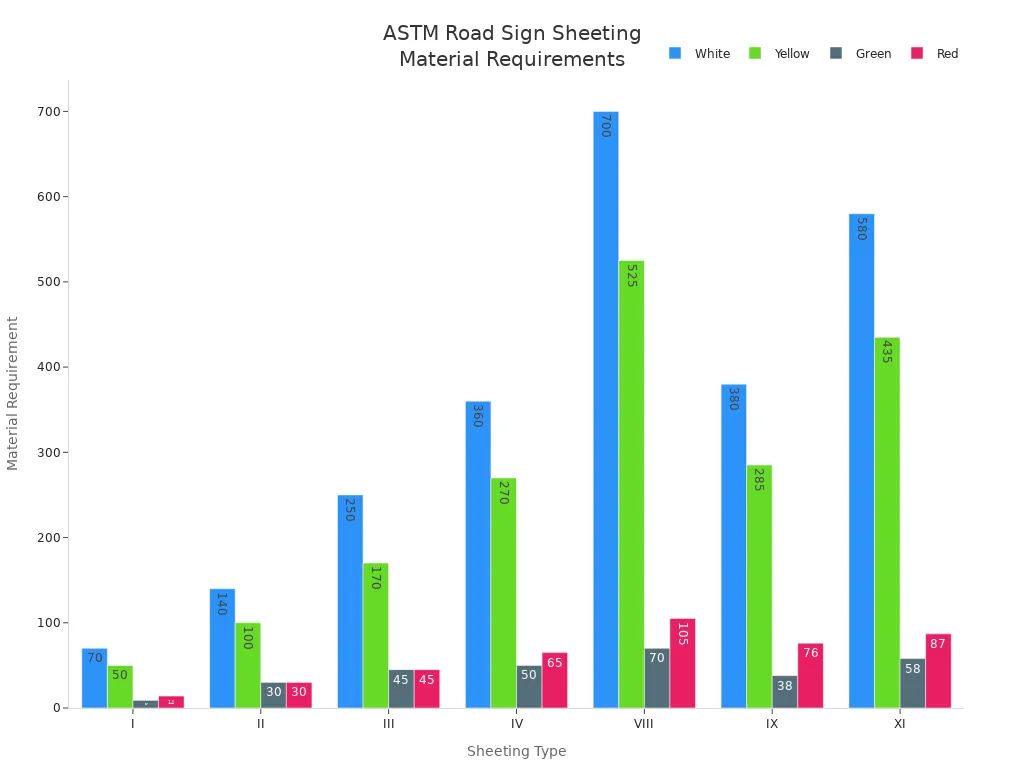
The American Society for Testing and Materials makes rules for sign materials. ASTM standards list what sheeting and backing to use. Most signs use aluminum because it lasts long and can be recycled. Some signs use plywood or fiberglass-reinforced plastic. But aluminum is best for most signs. ASTM also says how bright and shiny signs should be. This keeps signs easy to see.
All these groups and documents work together. They make sure every sign is safe and easy to understand.
Road Sign Printing Standards
Road sign printing has many rules to keep roads safe. These rules say what materials, colors, and shapes to use. They also say how signs should reflect light. Each rule helps people understand signs fast.
Materials and Durability
The material of a sign helps it last longer. Most signs are made from aluminum. Aluminum signs can last 7 to 10 years. Sun, rain, and snow can make signs fade. Some signs use reflective sheeting for better night vision. Metal signs can last a long time if cared for. Reflective sheeting comes in different grades. These are engineering, high intensity, and diamond grade. These materials help signs stay bright and strong for years.
- Common materials for road sign printing:
- Aluminum substrates
- Reflective sheeting (engineering, high intensity, diamond grade)
- Average lifespan: 7 to 10 years under normal conditions
Note: Good materials mean signs last longer and keep people safe.
Colors, Shapes, and Fonts
Colors and shapes help people know what a sign means. MUTCD and ISO rules say what colors and shapes to use. Red means stop or do not enter. Yellow warns about danger. Green gives directions. The shape of a sign also gives a message. Octagons mean stop. Triangles warn of hazards. Circles show rules. Rectangles give information. This helps drivers react fast, even from far away.
The font on a sign is important too. MUTCD says to use Series E(M) font. This font is easy to read, even at night. The rules for color and font are in 23 CFR 655. These rules make sure all signs look the same everywhere.
- Color and shape standards:
- Red octagon: STOP
- Yellow diamond: Warning
- White rectangle: Regulation
- Font standards:
- Series E(M) for letters and numerals
- Clearview font was used before 2016
This system helps everyone, even people with color vision problems. Custom road signs must follow these rules to be legal.
Reflectivity and Visibility
Reflectivity is very important for road signs. Signs must be easy to see at night and in bad weather. MUTCD sets the lowest reflectivity for all signs. These rules have not changed since 2009. Some states have even higher rules. Reflective sheeting makes signs shine in headlights. This helps drivers see signs in the dark.
| Evidence Type | Description |
|---|---|
| Nighttime Fatalities | About 50% of traffic deaths happen at night, though only 25% of travel does. |
| Crash Rate Reduction | Retroreflective signs lower crash risks by improving visibility. |
| Fatality Rate Comparison | Nighttime fatality rates are three times higher than daytime rates. |
Retroreflective materials help lower crash rates. They are very helpful at intersections and curves. The Federal Highway Administration says better reflectivity saves lives. Every sign must meet these rules to keep roads safe.
- Reflective traffic signs:
- Improve visibility in low light
- Lower accident rates at night
- Meet federal and state requirements
Road sign printing standards work together. They make sure every sign is easy to see and understand.
Regulatory Signs: Role and Requirements
Legal Compliance and Safety
Regulatory signs are important for safe and legal roads. These signs tell drivers what they can or cannot do. Some examples are stop signs, yield signs, and speed limit signs. Every sign must follow strict rules to be allowed. The table below lists the main rules for these signs in big regions:
| Requirement | Description |
|---|---|
| Design | Regulatory signs must be rectangular unless specified otherwise. |
| Visibility | Signs must be designed for adequate visibility and legibility to ensure compliance. |
| Installation | Signs should be placed at or near where the regulations apply. |
| Retroreflectivity | Signs must be retroreflective or illuminated for visibility at night. |
Regulatory signs stop confusion and accidents. Studies say most driving information comes from what we see. Bigger and brighter signs help drivers notice rules faster. For example, a school speed limit sign must be easy to see so drivers slow down. A railroad crossing sign tells drivers to stop and look for trains. When signs follow the rules, everyone stays safer.
Standardization for Recognition
Standardization helps people know regulatory signs right away. Drivers see the same shapes, colors, and fonts everywhere. This helps them react fast, even in new places. For example, a speed limit sign always looks the same, so drivers know to check their speed. Common regulatory signs like stop and yield signs use red and white colors and clear letters.
Research shows adding words to signs helps people understand them and react faster. When drivers know where to look for a sign, they respond more quickly. Practicing with signs on real roads also helps drivers learn what each sign means. The table below shows how standardization makes roads safer:
| Evidence Description | Key Findings |
|---|---|
| Correctness improved with text | Adding text to signs enhances comprehension and reduces response time, especially for unfamiliar signs. |
| Location as a cue | Preknowledge of sign location improves accuracy and reaction times for drivers. |
| Visual processing in driving | Reducing time for visual information extraction can lead to hazardous outcomes. |
Standardized regulatory signs, like the speed limit sign, help drivers of all ages. Younger drivers react faster, but clear signs help everyone. Common regulatory signs like stop, yield, and speed limit signs make roads safer for all.
International and Regional Standards
UN/ECE R104 and European Guidelines
European countries have strong rules for road sign printing. UN/ECE R104 is the main set of rules. These rules make sure signs are easy to see and last long. Every sign must use retro-reflective materials. The main colors are white, yellow, and red. The size and shape of a sign depend on the road and vehicle. Photometric requirements make sure signs reflect enough light. This helps drivers see signs from far away.
| Requirement Type | Details |
|---|---|
| Material and Colour | Must use durable, retro-reflective materials in white, yellow, or red. |
| Size and Shape | Minimum width of markings is 50 mm; length varies by vehicle dimensions. |
| Photometric Requirements | Standards for light reflection to ensure visibility from a distance. |
These rules help signs work in rain, fog, or darkness. Drivers in Europe trust these rules to keep roads safe.
AS/NZS 1906 for Australia and New Zealand
Australia and New Zealand have their own rules for signs. AS/NZS 1906 matches ISO rules for quality and safety. AS 1742 matches MUTCD rules for design and layout. These rules make sure signs are easy to read and last long.
| Standard | Alignment |
|---|---|
| AS/NZS 1906 | Matches ISO |
| AS 1742 | Matches MUTCD |
Signs in these countries use strong materials and clear symbols. Reflective sheeting helps signs shine at night. The rules also say how big and bright signs should be.
Regional Variations and Local Needs
Different places make special signs for their needs. In Australia, kangaroo crossing signs warn about animals. The United Kingdom uses Pegasus crossing signs for horses. Peru has signs with llamas. Finland uses humorous zombie warning signs from local stories.
- Kangaroo crossing signs in Australia
- Pegasus crossing signs in the United Kingdom
- Llama signs in Peru
- Finnish zombie warning signs
Some places use signs for weather and road conditions. Foggy areas have signs for low visibility. Coastal places use signs for high winds or floods. Snowy places warn about icy roads and avalanches.
- Signs warning of reduced visibility in fog-prone areas
- Coastal regions use signs for high winds or flooding
- Snowy regions caution about icy roads or avalanches
Some places use pictures to help drivers who speak different languages. The United States mostly uses English words on signs. The Middle East has camel crossing signs for local traffic.
- Pictograms for diverse languages
- English text signs in the U.S.
- Camel crossing signs in the Middle East
Every sign shows what the region needs. These differences help drivers stay safe and know what is ahead.
Custom Road Signs and Compliance
Design and Approval Process
Custom road signs must meet regulations for appearance, size, font, color, and reflectivity. Buyers, designers, and engineers collaborate to ensure compliance. The process involves idea discussions, adherence to guidelines like AS 1742 and AS 1319, selecting an ISO 9001-certified manufacturer approved by local authorities, obtaining local council approval, and regular inspections to maintain functionality and compliance. This ensures the signs are safe and legal.
Common Challenges
Custom road signs can have problems. The table below shows some problems and what they cause:
| Challenge | Description |
|---|---|
| Reflectivity Issues | Non-reflective materials can cause safety problems, especially at night. |
| Imitation of Official Signs | Signs that look like official ones may confuse drivers and break regulations. |
| Legal Enforcement of Custom Signs | Unauthorized signs can lead to legal trouble if they do not follow local rules. |
| Maintenance of Signage | Old or damaged signs may not meet visibility standards and can become a liability. |
Custom road signs need to avoid these problems to keep everyone safe.
Ensuring Standards in Custom Signs
There are good ways to make sure custom road signs follow the rules. Teams should put up signs the right way. Signs must be put up strong so they do not fall or move. People need to check signs often for fading or damage. Every three to five years, they check how well the sign reflects light. The design must follow MUTCD rules for colors, fonts, and sizes. For example, a speed limit sign needs big, clear letters and the right color. Custom road signs that follow these steps help drivers know the rules and stay safe.
Tip: Checking signs often and following the rules helps signs last longer and work better.
Custom road signs are important for road safety. Every sign must follow rules for design, color, and reflectivity. A speed limit sign that follows the rules helps drivers make safe choices. Teams that use good steps keep all signs working and legal.
Legal Impact and Consequences
Risks of Non-Compliance
Not following road sign printing rules can cause big problems. If a sign does not follow the rules, drivers might get confused. This can cause accidents and mix-ups on the road. Regulatory signs have to follow strict rules to keep people safe. If a sign is missing or hard to see, people might not follow warnings or instructions.
Insurance claims get harder when a crash involves a bad sign. It takes longer to figure out who is at fault. Victims have to show the sign did not meet the rules. They use photos, witness stories, and repair records to prove this. Sometimes, more than one group is blamed. Government offices and contractors can both get in trouble for the sign. If repairs were late or people knew about the problem, the risk goes up.
- Bad signs make it harder to know who caused a crash.
- Victims must show the sign was wrong to get money.
- Many groups, like government or contractors, can be blamed.
- People need proof like photos or witness stories for claims.
- Waiting too long to fix a sign makes legal trouble worse.
Liability and Penalties
Places have rules and punishments for not following sign standards. Regulatory signs that break the rules can cause lawsuits and money loss. States can lose federal money if they do not fix signs on time. Courts can blame agencies for crashes caused by bad or missing signs. Tort liability means people can sue if a sign causes harm.
| Penalty Type | Description |
|---|---|
| Withdrawal of Federal-aid funds | Not fixing signs by the deadline can make states lose federal money. |
| Tort liability | States can get sued for crashes caused by bad or missing signs. |
Agencies must keep signs in good shape to avoid trouble. Checking signs often and fixing them fast helps lower risks. Following the rules for regulatory signs keeps people safe and stops legal problems.
Best Practices for Compliance
Certified Suppliers and Quality Control
Picking certified suppliers helps keep signs good quality. Suppliers must follow tough rules to meet the standards. The table below shows what to look for when picking a supplier:
| Criteria | Details |
|---|---|
| Tactile & Braille Standards | Automated enforcement of character height and spacing, precision Braille dots, stroke width maintenance. |
| Visual & Contrast Standards | Minimum contrast requirements, non-glare finishes, font compliance with ADA standards. |
| Compliance Software Integration | Integration with compliance software, template libraries, real-time validation, update management. |
| Material Options & Durability | Various substrate options with lifespan and durability considerations for different environments. |
| Implementation & Workflow | Planning for space, staffing, and production workflow to ensure efficient operations. |
Quality checks make sure signs are clear and last long. Teams look at materials, colors, and fonts before printing. They also test how well signs shine to meet safety rules.
Audits and Inspections
Regular audits and checks help keep signs following the rules. Teams look for signs that are faded or broken. They also check if anything blocks the sign. Teams make sure the sign’s information is up to date. Finding problems early helps stop accidents and keeps roads safe.
- Audits make sure safety signs are easy to see and follow the rules.
- Inspections find faded signs, blocked views, or old information.
- Teams fix problems fast to keep signs legal and drivers safe.
A checklist helps teams remember what to do. The table below lists things to check for:
| Checklist Item | Description |
|---|---|
| MUTCD Size, Retro-Reflectivity & Font | Use standard Series E Modified lettering; Aluminum panels sized per MUTCD. |
| Placement & Height Standards | Edge of sign 6–12 ft from road edge; Urban mounting height 7 ft; rural 5 ft. |
| Inspection, Cleaning & Replacement | Nighttime retro check annually; wash quarterly to remove grime. |
| Penalties for Non-Compliance | OSHA citations up to $14,000; insurers may deny claims. |
Tip: Teams should clean and check signs often to keep roads safe and avoid fines.
Staying Updated with Standards
Keeping up with new rules helps teams make sure signs follow the law. New rules can change colors, how signs shine, and what they are made of. The table below shows important rules and ways to stay updated:
| Standard | Description |
|---|---|
| ASTM D4956 | Defines color and retroreflectivity requirements for traffic signs. |
| EN 12899 | Provides guidelines for the performance of road signs in Europe. |
| Digital Printing | Offers flexibility to meet the above standards while allowing for custom colors and durability. |
Teams go to training and read news from rule groups. They use special software to track changes and update signs. Learning new things and doing audits helps teams keep signs safe and legal for everyone.
Following the rules for road sign printing keeps roads safe. It also helps people trust the signs they see. Regulatory signs like stop, yield, and speed limit signs must follow strict rules. These rules make signs easy to see and understand. When all speed limit and regulatory signs look the same, drivers know what to do. Good signs help people trust the roads and feel safer.
| Evidence Type | Description |
|---|---|
| Public Trust | Good traffic safety signs help people trust the roads because they always work well. |
| Public Perception | Signs that are always clear make people feel better about road safety. |
| Road Safety | A study by the NHTSA showed that roads with LED VMS had fewer crashes than roads with regular signs. |
Agencies can use digital printing and strong materials to make sure signs follow the rules. Teams should check signs often and use the best tools. Keeping up with new rules helps every sign stay safe and legal.
FAQ
What makes a road sign official?
A road sign becomes official when it follows rules from groups like MUTCD or ISO. The sign must use the right colors, shapes, and materials. Local agencies approve the sign before it goes on the road.
How often should teams inspect a road sign?
Teams should check each sign at least once a year. They look for fading, damage, or blocked views. Regular checks help keep every sign clear and safe for drivers and walkers.
Can a business create its own road sign?
A business can design a sign, but it must follow all rules. The sign needs approval from local authorities. If the sign does not meet standards, it cannot go on public roads.
Why does a sign need to be reflective?
A sign needs to shine at night or in bad weather. Reflective materials help drivers see the sign from far away. This feature lowers crash risks and keeps everyone safe.
What happens if a sign does not meet standards?
If a sign does not follow the rules, it can cause confusion or accidents. Agencies may face fines or lawsuits. The sign must be fixed or replaced to meet all safety standards.