A segurança na travessia de pedestres é um aspecto crítico da infraestrutura pública que garante a segurança e o bem-estar de todos os pedestres, especialmente em zonas escolares e áreas públicas com grande tráfego de pedestres. Para abordar as preocupações constantes relacionadas com a segurança dos peões, é imperativo que os municípios e as autoridades de transporte instalem, visível, e sinais de trânsito de travessia de pedestres compatíveis. Este blog descreve o topo 10 sinalização rodoviária para travessias de pedestres, incluindo sinais de aviso prévio, sinais de cruzamento escolar, e sinais LED piscando, entre outros. Aderindo às diretrizes do MUTCD para sinalização de passagem de pedestres aumenta a segurança rodoviária e facilita a conformidade legal.
Para municípios e autoridades de transporte que buscam soluções de segurança de pedestres duráveis e compatíveis, OPTRÁFEGO oferece uma ampla seleção de compatíveis com MUTCD sinalização de passagem de pedestres. Como um fabricante confiável de sinalização, A OPTRAFFIC é especializada na produção de sinais de aviso prévio de alta qualidade, sinais de cruzamento escolar, e sinais de travessia de pedestres projetados para máxima visibilidade e durabilidade. Esses sinais, ideal para zonas escolares e áreas de alto tráfego de pedestres, ajudar a garantir a segurança dos pedestres, mantendo total conformidade regulatória. O compromisso da OPTRAFFIC em fornecer sinalização de trânsito confiável e eficaz faz dela um parceiro ideal para governos locais e departamentos de transporte focados em melhorar a segurança dos pedestres.
Takeaways -chave
- Empregar sinalização rodoviária de alta visibilidade, como a sinalização de passagem de pedestres (W11-2) ajuda a fornecer comunicação clara aos motoristas e promove a segurança dos pedestres.
- Colocação e manutenção adequadas desses sinais, especialmente em zonas escolares e espaços públicos, pode reduzir significativamente os acidentes.
- A inspeção regular e a adesão aos padrões de conformidade MUTCD garantem funcionalidade e visibilidade ideais dos sinais de travessia de pedestres.
Sinal de cruzamento de pedestres (W11-2)
Design e símbolo de sinalização
O sinal de passagem para pedestres (W11-2) mostra uma imagem simples. Diz às pessoas onde elas podem atravessar a rua. A placa tem a forma preta de uma pessoa andando. O fundo é um diamante amarelo. Esta cor e formato ajudam os motoristas a ver a placa rapidamente. Os motoristas sabem o que isso significa imediatamente. A imagem amarela brilhante e em negrito facilita a localização. As pessoas podem ver isso de longe. A placa é fácil de notar em locais movimentados. É muito importante perto de escolas e locais públicos. Esses sinais ajudam a manter as pessoas seguras. Para obter mais informações sobre como a sinalização de segurança para pedestres pode ser integrada ao planejamento urbano para proteger usuários vulneráveis, leia nosso último blog em Como os sinais de segurança de pedestres podem melhorar a segurança rodoviária para usuários vulneráveis.
| Código MUTCD | Propósito |
|---|---|
| W11-2 | Alerta os usuários da via sobre locais onde há probabilidade de pedestres entrarem na via ou onde há previsão de atividade de pedestres. |
Colocação e visibilidade
A colocação estratégica destes sinais perto de faixas de pedestres e cruzamentos é essencial para proporcionar aos motoristas tempo suficiente para reduzir a velocidade. Recomenda-se que a sinalização seja instalada na altura dos olhos e em áreas livres de obstruções, como árvores ou postes.. Em cidades como São Francisco, a instalação de sinais de travessia de pedestres bem posicionados levou a uma redução notável nos acidentes relacionados a pedestres, demonstrando a eficácia da colocação adequada de sinalização.
Padrões de conformidade
O sinal W11-2 segue MUTCD padrões, garantindo uniformidade e reconhecimento entre jurisdições. Essa conformidade garante que os motoristas encontrem sinalização de trânsito consistente, reduzir a confusão e melhorar a segurança rodoviária.
Sinal de passagem escolar (S1-1)
Aparência e Significado
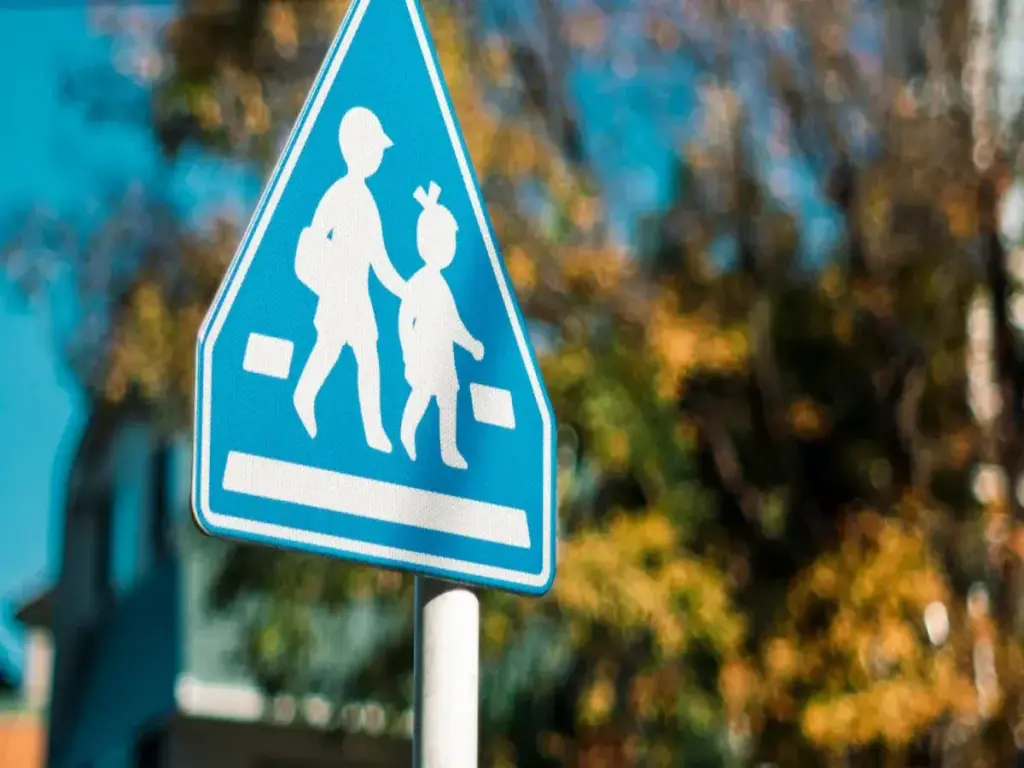
O sinal de passagem escolar (S1-1) é um sinal de controle de trânsito altamente visível que alerta os motoristas sobre travessias de pedestres perto de zonas escolares. Isso é fundo verde-amarelo fluorescente e a representação de duas figuras caminhando têm como objetivo alertar os motoristas para reduzirem a velocidade ao se aproximarem de áreas escolares. A placa apresenta materiais retrorrefletivos, garantindo que seja visível durante o dia e à noite.
| Descrição padrão | Detalhes |
|---|---|
| Cor de fundo | Verde-amarelo fluorescente |
| Legenda e Fronteira | Preto |
| Retrorrefletorização | Obrigatório para visibilidade |
| Instalação | No cruzamento da escola com uma placa de seta apontando para baixo |
Onde usar
Cidades colocam placa de passagem escolar (S1-1) perto de escolas e parques. Eles também o usam em ruas movimentadas onde as crianças atravessam. Estas placas mostram aos motoristas onde estão as faixas de pedestres e faixas de pedestres. As placas ajudam a manter alunos e famílias seguros durante horários de pico. Estudos dizem que sinais de pedestres nas ruas e meios-fios para acalmar o trânsito retardam os carros 0.94 km/h. Carros mais lentos perto das faixas de pedestres tornam mais seguro para as crianças irem para a escola.
Dicas de instalação
- Coloque a placa bem onde fica a passagem da escola.
- Adicione um sinal de seta diagonal para apontar para o cruzamento.
- Use placas que brilhem ou acendam para que os motoristas possam vê-las.Dica: Procure árvores ou carros que bloqueiem a placa. Certifique -se de que os motoristas possam ver o sinal de longe.
Sinal de trânsito na rua para passagem de pedestres (R1-6)
Recursos e eficácia
Os sinais de alerta para pedestres nas ruas (R1-6) têm recursos especiais. Esses sinais ajudam os motoristas a ver as faixas de pedestres e os lembram de parar para ver as pessoas. As cidades colocam estes sinais em esquinas movimentadas e perto de escolas. A tabela abaixo lista características importantes que tornam os sinais fáceis de ver e seguros:
| Recurso | Descrição |
|---|---|
| Colocação em ilhas pedonais | Posicionado na ponta das ilhas de pedestres para lembrar aos usuários das estradas as leis de direito de passagem. |
| Conformidade com os requisitos de separação | Adere às diretrizes da AASHTO para garantir a segurança em caso de impacto. |
| Opção de uso sazonal | Pode ser usado sazonalmente para evitar danos causados pelas operações de aragem no inverno. |
| Uso de braços de mastro | A sinalização é elevada acima das faixas de rodagem para melhor visibilidade. |
| Passadeiras de alta visibilidade | Incorpora faixas de pedestres projetadas para serem mais visíveis aos motoristas. |
| Faróis de alerta ativos | Inclui faróis que alertam ativamente os motoristas sobre a presença de pedestres. |
Pesquisa mostra que esses sinais de faixa de pedestres ajudam mais motoristas a parar.
- Sem sinais R1-6, apenas 7% dos motoristas pararam.
- Com sinais de gateway R1-6, 79% dos motoristas pararam.
- Quando as cidades tiraram os sinais, apenas 52% dos motoristas pararam.
- Linha central com sinais de borda feitos apenas 36% dos motoristas param.
- O gateway R1-6 é uma maneira barata de fazer com que mais motoristas parem para as pessoas.
Diretrizes de colocação
Cidades colocam sinalização para travessia de pedestres no meio da rua ou ao lado das faixas de pedestres. Os trabalhadores colocam essas placas onde muitas pessoas andam. Os sinais não devem bloquear o que os motoristas ou as pessoas veem. Colocá-los na frente das ilhas de pedestres ajuda os motoristas a se lembrarem das regras de direito de passagem. Algumas cidades usam braços de mastro para levantar as placas bem alto, para que os motoristas possam vê-las melhor. Usar os sinais apenas em algumas estações os mantém protegidos dos limpa-neves.
Dica: Certifique-se sempre de que nada bloqueie a visão antes de colocar sinais de faixa de pedestres. Os motoristas devem ver os sinais de longe.
Manutenção
Os trabalhadores verificam frequentemente os sinais de alerta para pedestres nas ruas para mantê-los funcionando bem. Eles procuram danos após tempestades ou muito trânsito. As cidades mudam rapidamente as placas antigas ou quebradas. Retirar as placas no inverno os mantém protegidos dos limpa-neves. Limpar os sinais e verificar os faróis de alerta ajuda as pessoas a vê-los. Bons cuidados garantem que cada faixa de pedestres permaneça segura para todos.
Sinal de alerta de avanço escolar
Design e cor
Sinais de aviso prévio escolar usam cores brilhantes. A placa tem fundo verde-amarelo. Tem uma borda preta grossa e letras pretas. Esta cor é fácil de ver à luz do sol e à noite. A placa é feita de alumínio resistente. Não enferruja nem quebra. Os gráficos usam tintas especiais, vinil, ou filme. Isso torna a mensagem fácil de ler. O sinal pode ter Folha reflexiva. Alguns tipos duram 10 anos. Outros duram 12 anos. Esses recursos ajudam os motoristas a ver a placa ao longe. Os motoristas podem reagir rapidamente quando veem isso.
| Tipo de especificação | Detalhes |
|---|---|
| Material | .080 alumínio |
| Opções de folhas refletivas | Reflexivo Prismático Amarelo de Alta Intensidade (10 garantia do ano), Verde Amarelo Fluorescente (12 garantia do ano) |
| Gráficos de sinalização | Tintas translúcidas, vinil, ou filme translúcido |
| Resistência ao tempo | Alumínio de grau de tráfego resistente às intempéries que não enferruja nem racha |
| Montagem | Pré-perfurado 3/8″ furos para montagem no poste, parede, ou cerca |
| Conformidade | Atende às especificações MUTCD para uso em rodovias federais |
Colocação perto de escolas
As cidades colocam sinais de alerta de avanço escolar antes das zonas escolares. Eles também os colocam perto das faixas de pedestres. A placa diz aos motoristas para diminuir a velocidade. Isso os avisa para ficarem atentos às crianças. Trabalhadores colocam placa onde os estudantes caminham ou atravessam ruas movimentadas. Todos os sinais de pedestres em uma zona usam a mesma cor. Isso ajuda os motoristas a saberem que estão perto de uma escola. Os sinais podem ter placas extras. Dizem “AHEAD” ou “XXX FEET”. Uma boa colocação mantém todos seguros perto das escolas.
Dica: Coloque a placa onde os motoristas podem reduzir a velocidade antes das faixas de pedestres.
Conformidade
Os sinais de aviso prévio escolar seguem as regras do MUTCD. As placas atendem aos padrões federais de tamanho e cor. Eles também atendem às regras de refletividade. As cidades usam furos pré-perfurados para montar sinais facilmente. Os sinais duram muitos anos. Eles não quebram com mau tempo. Usar a mesma cor para todos os sinais de zona escolar ajuda os motoristas a conhecer a área. Seguir as regras mantém cada travessia segura e fácil de ver.
Parada para pedestres na faixa de pedestres (R1-6a)
Finalidade do sinal
A parada para pedestres na faixa de pedestres (R1-6a) placa diz aos motoristas para parar para as pessoas na faixa de pedestres. As palavras na placa são claras e fáceis de ler. O design é ousado, Então se destaca. As cidades usam esses sinais para lembrar os motoristas sobre a lei. Os sinais ajudam a manter as pessoas seguras quando caminham. Essas placas funcionam bem em locais movimentados, como escolas e parques. Quando as cidades colocam as placas em uma configuração de gateway, mais motoristas diminuem a velocidade e param. Estudos mostram que essa configuração faz com que mais motoristas parem. Também faz os carros subirem 10 mph mais lento em algumas faixas de pedestres. A configuração do gateway funciona tão bem quanto sistemas caros. Não faz os carros pararem repentinamente.
Requisitos legais
Cidades só poderão colocar parada para pedestres na faixa de pedestres (R1-6a) sinais em zonas escolares se a lei estadual determinar que os motoristas devem parar para as pessoas nas faixas de pedestres.
Cada estado tem suas próprias regras para esses sinais compatíveis com mutcd. As cidades precisam verificar a lei antes de colocar as placas. Alguns estados dizem que os motoristas devem parar para as pessoas nas faixas de pedestres. Outros estados apenas pedem aos motoristas que cedam. Conhecer a lei ajuda as cidades a escolher a sinalização certa para suas zonas escolares.
Instalação
Trabalhadores colocam a placa R1-6a na beira ou no meio das faixas de pedestres. Eles usam postes ou bases fortes que dobram se forem atingidos. A placa deve ficar voltada para o trânsito para que os motoristas possam vê-la de longe. As cidades colocam essas placas em esquinas movimentadas ou perto de escolas. Bons locais ajudam os motoristas a ver a placa com antecedência e parar com segurança. Os trabalhadores verificam os sinais frequentemente para mantê-los limpos e fáceis de ver. As cidades consertam ou substituem placas quebradas rapidamente para manter todos seguros.
| Etapa de instalação | Detalhes |
|---|---|
| Localização | Borda ou centro das faixas de pedestres |
| Montagem | Poste robusto ou base flexível |
| Visibilidade | Enfrente o trânsito em sentido contrário |
| Manutenção | Limpeza e verificações regulares |
Renda-se aqui ao sinal de pedestres (R1-5)
Função de sinal
O sinal de rendimento aqui para pedestres (R1-5) ajuda os motoristas a saber quando ceder às pessoas nas faixas de pedestres. Este sinal desempenha um papel fundamental para manter todos seguros. O manual em dispositivos uniformes de controle de tráfego (MUTCD) explica que esta placa indica aos veículos que cedam às pessoas que utilizam a travessia. As cidades usam este sinal em estradas e áreas de estacionamento. A placa deixa as regras claras para os motoristas e ajuda a prevenir acidentes. Quando os motoristas veem a placa, eles sabem diminuir a velocidade e observar as pessoas andando.
Colocação
Cidades colocam sinal de rendimento aqui para pedestres (R1-5) antes das faixas de pedestres. Isso dá aos motoristas tempo suficiente para ver a placa e reagir. A sinalização funciona bem em áreas públicas movimentadas e perto de escolas. Colocar a placa com antecedência ajuda os motoristas a render mais cedo. Estudos mostram que as marcações antecipadas de rendimento incentivam os motoristas a parar mais cedo e com mais frequência. A tabela abaixo mostra como esses sinais melhoram a segurança em diferentes situações:
| Referência do estudo | Descobertas |
|---|---|
| Huybers e Van Houten, 2004 | As marcações antecipadas de rendimento incentivam os motoristas a ceder mais cedo e com mais frequência nas faixas de pedestres no meio do quarteirão. |
| Van Houten et al., 2001 | Motoristas’ o comportamento melhora com marcações antecipadas de rendimento em cenários com visão limitada. |
| Garay-Vega et al., 2008 | Aumento da probabilidade de rendimento observado com marcações de rendimento antecipadas em comparação com marcações padrão. |
Dica: Coloque a placa onde os motoristas possam vê-la antes de chegar à faixa de pedestres. Isso os ajuda a parar com segurança.
Conformidade
O sinal de rendimento aqui para pedestres (R1-5) atende a todos os padrões de sinalização compatíveis com mutcd. As cidades devem seguir estas regras para garantir que todas as placas tenham a mesma aparência. Isso ajuda os motoristas a entender o que fazer, Não importa para onde eles dirigem. A placa também funciona bem com outras placas de pedestres e faixas de pedestres. Verificações regulares mantêm a sinalização limpa e fácil de ver. Uma boa manutenção ajuda a manter as faixas de pedestres seguras para todos.
Proibido estacionar/parar perto da faixa de pedestres
Significado para a segurança
Sinais de proibição de estacionar/parar perto da faixa de pedestres ajudam a manter as pessoas seguras. Estas placas impedem que os carros estacionem perto das faixas de pedestres. Quando os carros ficam longe, motoristas e caminhantes podem se ver. Se os carros estacionarem muito perto, é difícil ver. Isso pode ser perigoso para crianças e adultos. As pessoas podem sair na rua sem serem vistas. Os motoristas podem não ter tempo suficiente para parar. As cidades usam esses sinais para diminuir a chance de acidentes. Espaço livre ao redor das faixas de pedestres faz com que todos se sintam mais seguros. Estudos mostram que menos acidentes acontecem quando os carros ficam para trás.
Observação: Manter os carros longe das faixas de pedestres ajuda os motoristas a ver as pessoas atravessando.
Regras de colocação
As cidades têm regras sobre onde colocar sinais de proibição de estacionar/parar perto da faixa de pedestres. Os trabalhadores colocam esses sinais pelo menos 20 pés das faixas de pedestres. Isso dá aos motoristas uma visão clara da rua. As placas devem enfrentar os carros vindo em sua direção. Eles devem estar no nível dos olhos para que os motoristas possam vê-los. Trabalhadores verificam se há árvores ou postes que possam bloquear a sinalização. As placas vão dos dois lados da rua. Por aqui, os motoristas os veem de todas as direções. As cidades usam esses sinais perto das escolas, Parques, e lugares movimentados.
| Regra de posicionamento | Descrição |
|---|---|
| Distância Mínima | 20 pés das faixas de pedestres |
| Visibilidade | Sem obstruções; instalação ao nível dos olhos |
| Direção | Enfrente o trânsito em sentido contrário |
| Localização | Ambos os lados da rua perto de sinais de pedestres |
Personalização
As cidades podem alterar os sinais de proibição de estacionamento/parada perto da faixa de pedestres para atender às suas necessidades. Algumas placas têm palavras extras como “Zona de reboque” ou “Apenas dias letivos”. Os trabalhadores podem adicionar setas ou símbolos para mostrar onde o estacionamento não é permitido. As placas podem usar materiais brilhantes para que as pessoas as vejam à noite. As cidades escolhem placas maiores para estradas movimentadas e placas menores para ruas tranquilas. Placas personalizadas ajudam os motoristas a conhecer as regras. Isso mantém as faixas de pedestres livres para todos.
Dica: Placas personalizadas com palavras e imagens claras ajudam os motoristas a seguir as regras e a manter as pessoas seguras nas faixas de pedestres.
Marcações e linhas de faixa de pedestres
Tipos de marcações
As cidades usam padrões para ajudar as pessoas a ver as faixas de pedestres. As melhores marcações são pares de barras, continental, e projetos de escadas. Esses padrões ajudam motoristas e caminhantes a perceber cruzamentos de longe. As faixas de pedestres continentais têm faixas largas que acompanham o meio-fio. As faixas de pedestres em escadas têm faixas laterais e degraus largos. As faixas de pedestres Zebra usam listras inclinadas, mas não são tão fáceis de ver como os continentais. A tabela abaixo mostra cada tipo:
| Tipo de marcação de faixa de pedestres | Descrição |
|---|---|
| Padrão Continental | Listras largas correm ao lado do meio-fio durante toda a travessia, tornando mais fácil ver. |
| Faixa de pedestres em escada | Listras laterais com degraus largos, não tão bom quanto continental. |
| Faixa de pedestres Zebra | Listras inclinadas, não é tão fácil de ver como continental. |
As cidades colocam essas marcações em cruzamentos no meio dos quarteirões e em locais sem sinalização de parada. Adicionar materiais brilhantes, como fita especial, torna as linhas mais brilhantes à noite.
Visibilidade e manutenção
Boa visibilidade ajuda a manter as faixas de pedestres seguras. Cidades usam luzes, sinais de faixa de pedestres, e luzes piscando na estrada para ajudar os motoristas a ver. Trabalhadores verificam as faixas de pedestres todos os anos antes do início das aulas. A nova pintura mantém as linhas brilhantes. A tabela abaixo lista maneiras de cuidar das marcações:
| Estratégia de Manutenção | Descrição |
|---|---|
| Uso de Termoplástico | Dura mais tempo, custa mais no começo. |
| Marcações de recesso | Mantém-se protegido contra limpa-neves, mas custa mais. |
| Localização das Marcações | Eliminar pontos de viragem ajuda-os a durar. |
| Manutenção de superfície | Precisa de cuidados extras com a segurança das pessoas. |
Dica: As cidades devem repintar as faixas de pedestres quando as linhas ficarem difíceis de ver, para que as travessias permaneçam seguras.
Conformidade
As cidades devem seguir as regras do MUTCD para marcações de faixa de pedestres. Estas regras garantem que todas as travessias tenham a mesma aparência e sejam seguras. O uso de materiais e padrões aprovados ajuda os motoristas a saber onde as pessoas atravessam. Verificações regulares e linhas de fixação mantêm as faixas de pedestres seguras para todos.
Sinal LED intermitente para passagem de pedestres
Tecnologia e Eficácia
Sinais LED piscantes de travessia de pedestres usam nova tecnologia para ajudar os motoristas a ver as pessoas nas faixas de pedestres. Beacons retangulares rápidos e rápidos, ou RRFBs, tem duas luzes amarelas com matrizes de LED. Essas luzes piscam rapidamente e chamam a atenção dos motoristas rapidamente. Os RRFBs são mais brilhantes que os faróis normais e usam padrões de flash especiais. Os faróis só acendem quando alguém está prestes a atravessar. Isso faz com que funcionem melhor. Os motoristas percebem as luzes e diminuem a velocidade. Isso ajuda a manter todos em segurança. RRFBs ajudam motoristas a prestar mais atenção e evitar acidentes em faixas de pedestres movimentadas.
- Os RRFBs facilitam a visibilidade das pessoas nas faixas de pedestres.
- O padrão intermitente ajuda os motoristas a perceberem o sinal imediatamente.
- Os faróis só ligam quando alguém está lá, então eles funcionam melhor.
Estudos mostram que sistemas de sinalização para pedestres reduzem acidentes e fazem mais motoristas pararem. A tabela abaixo mostra como funcionam os diferentes sinais e quando funcionam melhor:
| Tipo de tratamento | Eficácia | Condições |
|---|---|---|
| Farol híbrido para pedestres (PHB) | Funciona bem dia e noite | Nenhuma grande mudança na parada do motorista entre o dia e a noite |
| Farol intermitente rápido retangular (RRFB) | Funciona melhor à noite | Mais motoristas param à noite |
| Sinal de passagem embutido em LED (LED-Em) | Funciona melhor durante o dia | Mais motoristas param em áreas de baixa velocidade com determinados tamanhos de faixa |
Opções de posicionamento e energia
Cidades colocam sinalização LED para pedestres perto de escolas, Parques, e lugares movimentados. Os trabalhadores instalam estes sinais em ambas as extremidades das faixas de pedestres. Por aqui, motoristas vindo de ambos os lados podem vê-los. Painéis solares geralmente alimentam os faróis, então eles trabalham onde não há eletricidade. Algumas placas usam baterias ou se conectam à energia da cidade. Sinais movidos a energia solar funcionam melhor em locais ensolarados. As cidades escolhem o melhor tipo de energia para cada local e clima.
Dica: Coloque sinais de LED piscantes onde os motoristas possam vê-los mais cedo. Isso dá aos motoristas mais tempo para desacelerar e parar.
Conformidade com mutcd
Os sinais LED intermitentes de travessia de pedestres devem seguir as regras do MUTCD. Estas regras dizem quão grande o sinal deve ser, que cor é, e como as luzes piscam. As cidades seguem estas regras para que todos os sinais tenham a mesma aparência e funcionem. As regras do MUTCD ajudam os motoristas a saber o que fazer nas faixas de pedestres. As cidades verificam os sinais frequentemente para se certificarem de que funcionam e são fáceis de ver. Trabalhadores consertam luzes quebradas e limpam muito as placas. Seguir essas regras mantém as faixas de pedestres seguras para todos.
Sinal de passagem de pedestres à frente
Finalidade do aviso prévio
A placa de passagem de pedestres à frente informa aos motoristas que uma faixa de pedestres estará chegando em breve. Este sinal avisa os motoristas com antecedência, para que eles possam ficar atentos às pessoas que atravessam. Os motoristas veem esses sinais em locais onde as faixas de pedestres são difíceis de perceber ou onde as pessoas podem atravessar quando os motoristas não esperam.. A placa ajuda os motoristas a prestar mais atenção e diminuir a velocidade. Isso mantém todos seguros, especialmente perto de escolas ou locais movimentados.
Colocação
As cidades colocam sinais de passagem de pedestres em muitos pontos para manter as pessoas seguras. Os trabalhadores colocam essas placas onde muitas pessoas caminham e atravessam a rua. Alguns lugares comuns são:
- Faixas de pedestres no meio de quadras sem semáforos, como no centro da cidade ou áreas comerciais
- Zonas movimentadas para caminhadas perto de lojas, restaurantes, ou lugares para se divertir
- Paradas de ônibus ou estações de trem onde as pessoas atravessam a rua com frequência
- Áreas hospitalares onde pacientes e visitantes atravessam muito a rua
- Parques onde as famílias vão aos parques infantis, campos esportivos, ou trilhas
- Lares para idosos onde os idosos podem atravessar a rua lentamente
Esses sinais funcionam bem com outros sinais de faixa de pedestres e pedestres. Colocá-los em bons lugares ajuda os motoristas a ver a placa antes de chegarem ao cruzamento.
Visibilidade
É importante que todos os sinais de passagem para pedestres sejam fáceis de ver. As cidades usam cores vivas e materiais brilhantes para que os motoristas possam ver a placa durante o dia e à noite. Trabalhadores garantem que nada bloqueie a placa, como árvores, pólos, ou carros estacionados. Os sinais devem estar ao nível dos olhos e fáceis de detectar à distância. Sinais claros ajudam os motoristas a reduzir a velocidade e a manter as faixas de pedestres seguras para todos.
Tabela de comparação de topo 10 Sinais
Visão geral dos principais recursos
A tabela abaixo lista as principais características do top 10 sinalização de passagem de pedestres. Cada signo tem seu próprio código, uso principal, informações de conformidade, e recursos de visibilidade. Isso torna mais fácil para os leitores compararem os sinais rapidamente.
| Nome do sinal | Código | Uso principal | Conformidade com mutcd | Recursos de visibilidade |
|---|---|---|---|---|
| Sinal de cruzamento de pedestres | W11-2 | Áreas públicas, escolas | Sim | Amarelo brilhante, símbolo em negrito |
| Sinal de passagem escolar | S1-1 | Zonas escolares | Sim | Cor fluorescente, reflexivo |
| Sinal de passagem de pedestres na rua | R1-6 | Faixas de pedestres ocupadas | Sim | Colocação central, base separatista |
| Sinal de alerta de avanço escolar | S1-1a | Perto das escolas | Sim | Fluorescente, letras grandes |
| Parada para pedestres na faixa de pedestres | R1-6a | Escola/áreas públicas | Sim | Texto em negrito, montagem flexível |
| Renda-se aqui ao sinal de pedestres | R1-5 | Áreas públicas | Sim | Colocação avançada, redação clara |
| Proibido estacionar/parar perto da faixa de pedestres | N / D | Todas as faixas de pedestres | Sim | Texto personalizado, reflexivo |
| Marcações e linhas de faixa de pedestres | N / D | Todas as faixas de pedestres | Sim | Listras largas, termoplástico |
| Sinal LED intermitente para passagem de pedestres | N / D | Zonas de alto tráfego | Sim | Luzes LED, energia solar |
| Sinal de passagem de pedestres à frente | W11-2a | Aviso antecipado | Sim | Cor brilhante, reflexivo |
Referência rápida
- Placas com cores vivas e materiais brilhantes são melhores perto de escolas.
- Placas nas ruas e placas de LED piscantes ajudam mais em locais movimentados.
- Luzes extras e luzes na estrada fazem com que os acidentes aconteçam menos e os motoristas diminuam mais a velocidade.
- Linhas de travessia e “Proibido Estacionar” sinais ajudam a manter as pessoas seguras em locais públicos.
Dica: As cidades devem usar sinais e luzes LED piscantes nas estradas em locais movimentados. Esses recursos podem fazer os carros andarem 25% mais lento e fazer com que mais motoristas parem para as pessoas, de 30% para 62%. Sinais especiais para pedestres e melhores luzes também fazem com que os acidentes noturnos aconteçam pela metade.
As cidades podem escolher sinais com base nas necessidades de cada área. As zonas escolares precisam de sinais claros e brilhantes. Ruas movimentadas funcionam melhor com luzes de alerta e linhas claras. Locais públicos ficam mais seguros com sinalização fácil de ver e faixas de pedestres abertas.
Escolha e instalação de sinalização rodoviária para travessia de pedestres
Avaliando necessidades
Os projetistas avaliam vários fatores ao determinar a necessidade de travessias de pedestres. Eles examinam o tráfego de pedestres atual e projetado para antecipar a demanda futura. Adicionalmente, o tipo de edifícios e parques próximos desempenha um papel significativo em influenciar a localização das travessias. Também é importante considerar a frequência com que os pedestres utilizam as travessias existentes.. Se os veículos na área estiverem viajando em alta velocidade, medidas de segurança aumentadas tornam-se necessárias para mitigar riscos potenciais. Os dados históricos de acidentes são outro fator crítico, pois destaca áreas com maior incidência de acidentes, alertando para a necessidade de sinalização melhorada. Além disso, avaliar a eficácia das medidas de segurança atuais ajuda a determinar se é necessária sinalização adicional. Um estudo que comparou regulamentações de diferentes cidades enfatizou que as faixas de pedestres deveriam ser projetadas para acomodar todos os indivíduos, independentemente de suas necessidades ou habilidades.
A tabela abaixo descreve os principais fatores que os projetistas consideram ao planejar travessias de pedestres:
| Critérios | Descrição |
|---|---|
| Demanda Existente e Projetada | Os projetistas consideram a demanda atual e prevista de travessias de pedestres. |
| Usos da Terra | O tipo de uso do solo na área influencia a necessidade de travessias de pedestres. |
| Conformidade de pedestres | Compreender com que frequência os pedestres utilizam as travessias existentes é crucial para a avaliação. |
| Velocidade | A velocidade dos veículos na área afeta a segurança e a necessidade de travessias. |
| Medidas de segurança | As medidas de segurança existentes devem ser avaliadas para determinar se é necessária sinalização adicional. |
| Histórico de falhas | Dados históricos sobre acidentes podem informar a necessidade de melhorar a sinalização de travessia de pedestres. |
Exemplo de histórico de falhas que afeta o planejamento de sinalização:
Em 2021, mortes de pedestres foram responsáveis por quase 48% de mortes no trânsito em São Francisco. Um exemplo trágico é a morte de um pedestre de 78 anos nas ruas Sixth e Howard em agosto 2025. Este cruzamento faz parte da cidade “Rede de alta lesão,” que vê 68% de acidentes graves, apesar de abranger apenas 12% das ruas. Seguindo isso, a cidade priorizou sinalização aprimorada de travessia de pedestres, incluindo sinais LED piscantes, para melhorar a segurança e reduzir futuras fatalidades.
Atendendo aos padrões
As cidades devem seguir as regras do MUTCD ao escolherem as placas. Cada sinal deve ter a forma e a cor corretas. Os sinais devem ir no lugar certo. As placas usam materiais brilhantes para que os motoristas possam vê-las de longe. Os motoristas devem ver a placa pelo menos 200 pés de distância. Isto é extremamente importante em ruas movimentadas. Designers escolhem placas que dobram se atingidas e voltam a aparecer. Isso os impede de quebrar para sempre. A sinalização nunca deve bloquear o local onde as pessoas andam.
Melhores práticas de instalação
Uma boa instalação ajuda a manter as pessoas seguras nas travessias. Os trabalhadores colocam sinais não mais altos do que 4 pés. As placas devem enfrentar os carros vindo em sua direção. Eles não devem bloquear calçadas ou caminhos. As cidades precisam verificar e limpar a sinalização com frequência. Pesquisa mostra que sinais de alerta e luzes na estrada ajudam a impedir acidentes. Essas ferramentas fazem com que os motoristas prestem mais atenção, mesmo quando é difícil ver.
| Tipo de evidência | Descrição |
|---|---|
| Sinais de aviso | Sinais de alerta reduzem a velocidade dos veículos e os conflitos entre pedestres e motoristas. |
| Luzes de advertência na estrada | Essas luzes melhoram a segurança e modificam o comportamento do motorista, especialmente sob pouca visibilidade. |
As cidades devem repintar faixas de pedestres e consertar luzes quebradas rapidamente. Verificações regulares mantêm as travessias seguras para todos.
Quando as cidades usam sinais de travessia de pedestres compatíveis com MUTCD, segurança fica melhor. Os motoristas percebem mais esses sinais e prestam mais atenção. Bons sinais e sistemas de alerta ajudam todos na comunidade.
- Sempre pergunte aos especialistas locais onde colocar e como cuidar das placas.
- Confira programas como Rotas Seguras para a Escola e Ruas Completas para mais maneiras de tornar as travessias mais seguras.
| Dica de colocação | Requisito Padrão |
|---|---|
| Altura do Sinal | 7 pés nas cidades, 5 pés em áreas rurais |
| Visibilidade | Pelo menos 200 pés de distância |
Perguntas frequentes
O que significa MUTCD para sinais de travessia de pedestres?
MUTCD significa Manual em dispositivos uniformes de controle de tráfego. Estabelece as regras para sinais de trânsito. As cidades usam essas regras para manter a sinalização clara e segura.
Com que frequência as cidades devem verificar os sinais de travessia de pedestres?
As cidades devem verificar a sinalização pelo menos uma vez por ano. Eles procuram danos, desvanecimento, ou vistas bloqueadas. Reparos rápidos ajudam a manter todos seguros.
As cidades podem personalizar a sinalização de passagem de pedestres?
Sim, as cidades podem adicionar mensagens ou símbolos personalizados. Eles devem seguir as regras do MUTCD para cores, tamanho, e posicionamento para manter a sinalização eficaz.