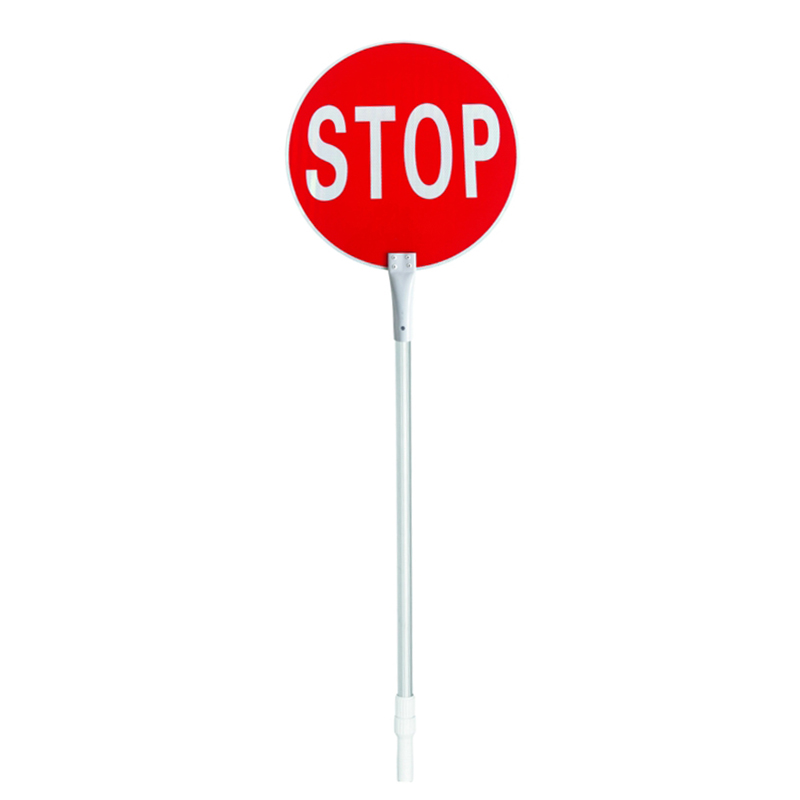
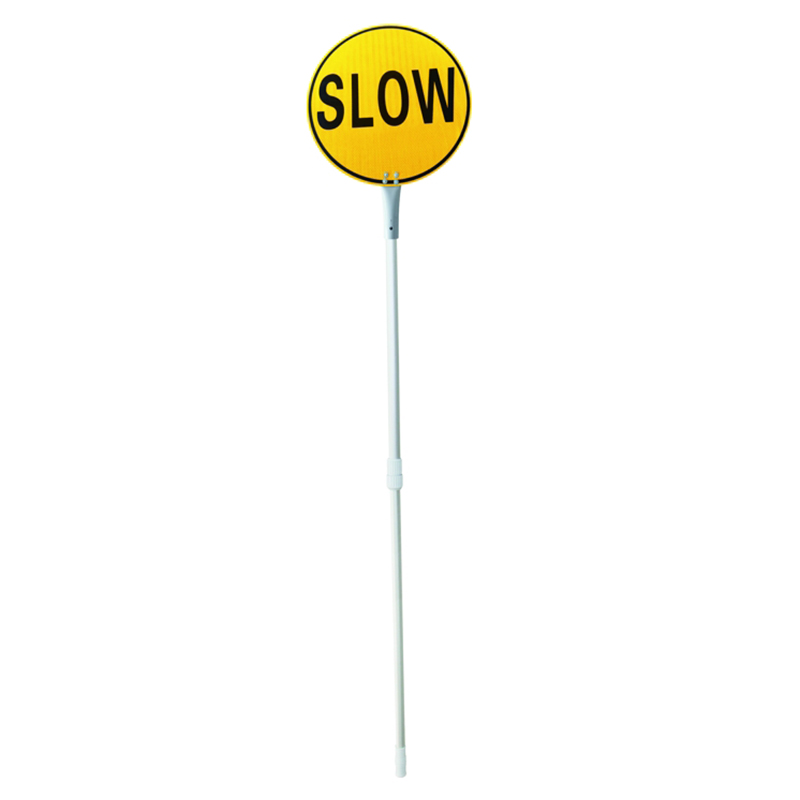
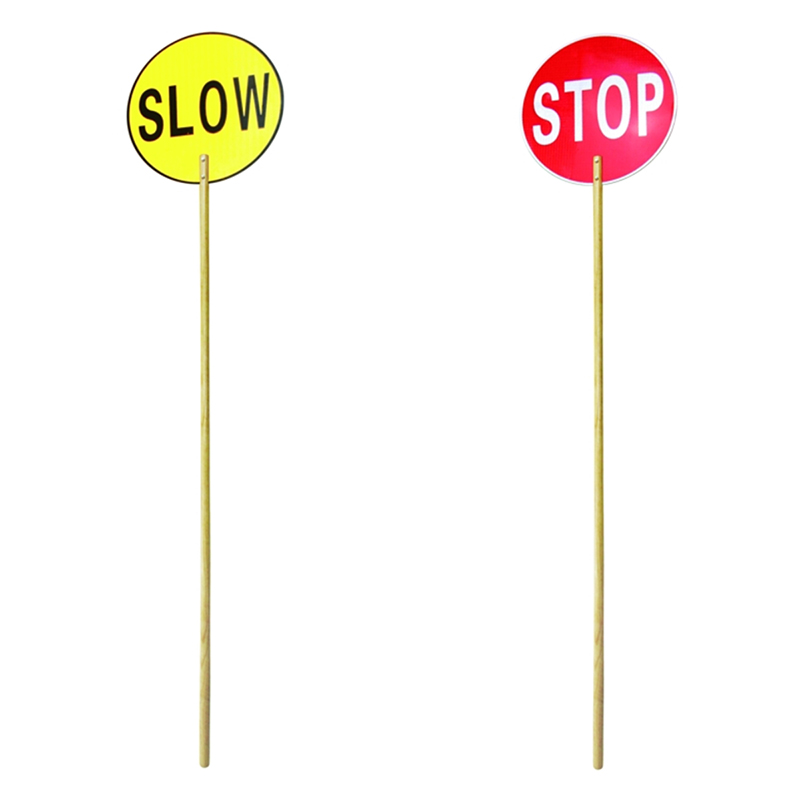
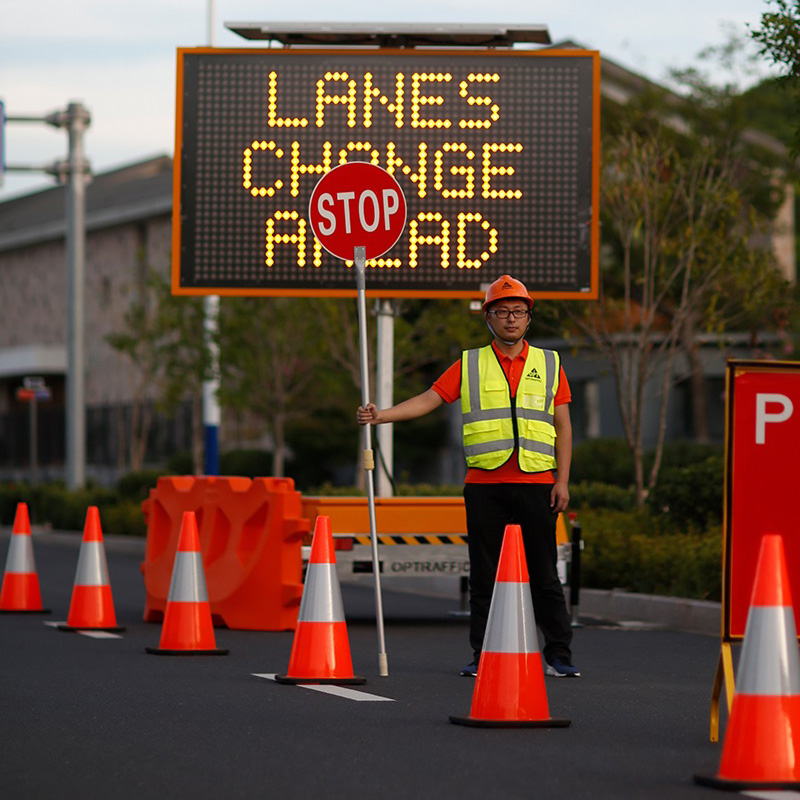
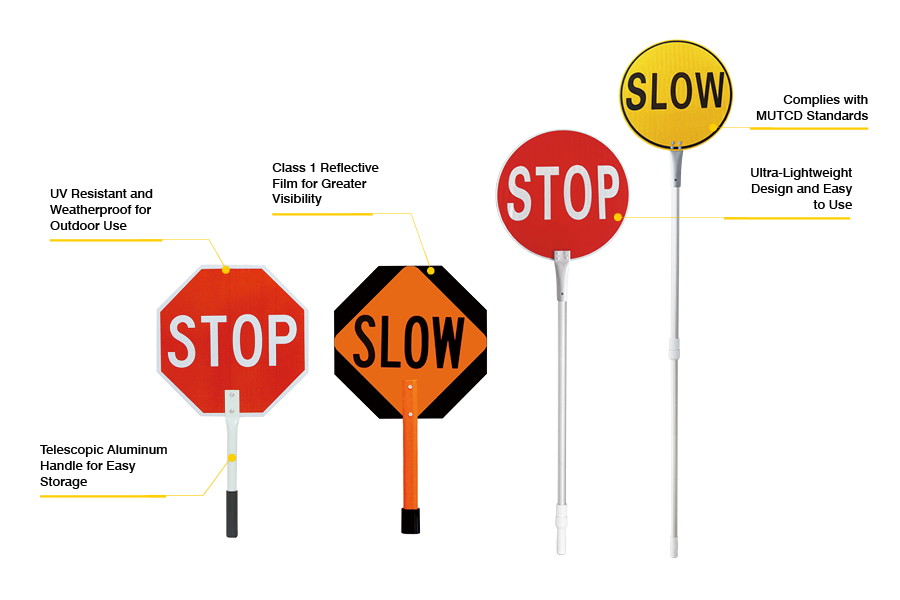
Optsigns Stop Slow Sign is a vital tool for traffic management, designed for use by traffic controllers at temporary work zones, construction sites, and other roadway obstructions. Featuring a durable telescopic aluminum or wooden handle, this Stop Slow Sign is lightweight yet sturdy, making it easy to maneuver. The Stop Slow Sign itself is made from Class 1 reflective material, ensuring high visibility in various lighting conditions. Whether you need to halt traffic or direct vehicles to proceed with caution, the Stop Slow Sign effectively communicates important messages to drivers, enhancing safety in active work areas.
*We respect your confidentiality and all information are protected.
| Size | 450mm Dia., 600mm Dia. |
|---|---|
| Handle | 1800mm Wooden Handle or 1130-1920mm Telescopic Aluminum Handle |
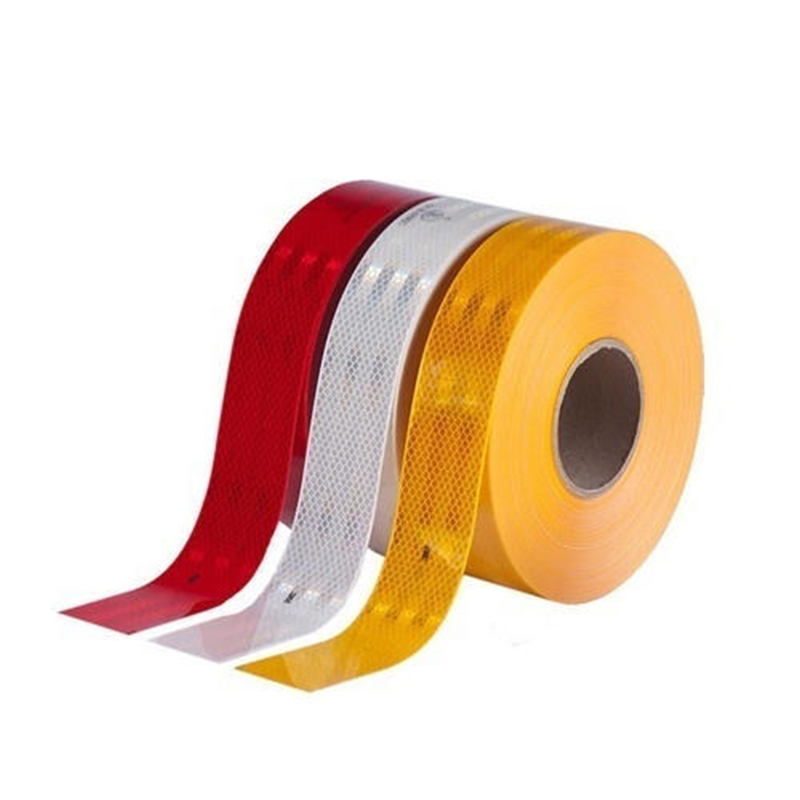
| Reflective Film | Avery/3M Class 1, Diamond Grade |
| Double-Sided Printing | |
| Customize | Custom Logo and Marking |
Using the Optsigns stop and slow sign is straightforward and efficient. Begin by extending the telescopic handle to your desired height for optimal visibility. Hold the stop and slow sign high to ensure it can be seen clearly by approaching drivers. When traffic needs to stop, display the “STOP” side of the stop and slow sign prominently. When it’s safe for vehicles to proceed, switch to the “SLOW” side to guide them carefully through the area. Regularly check the stop and slow sign for any dirt or damage to maintain its reflective properties and visibility.
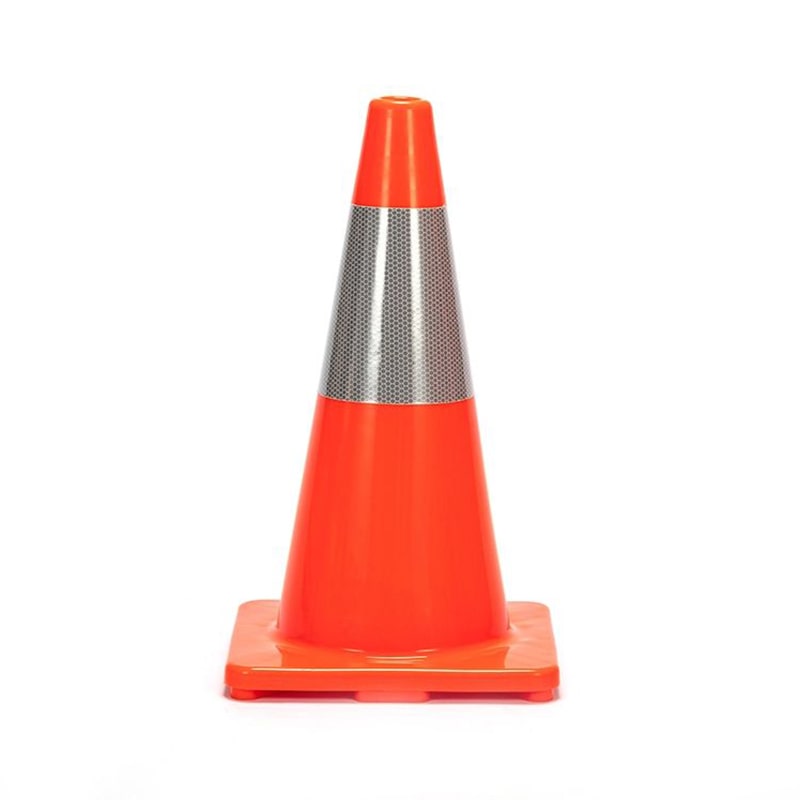
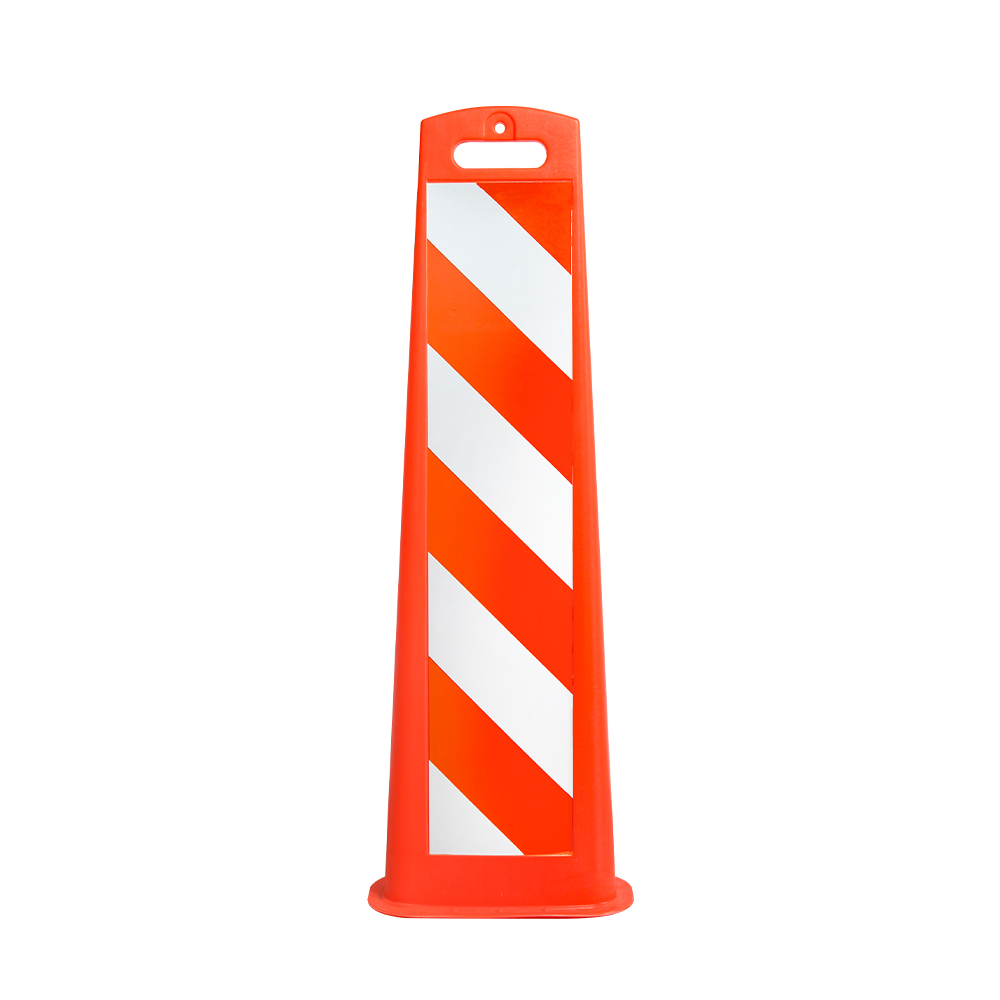
A delineator cone is a flexible, upright marker used to guide and control traffic. Often brightly colored, these delineator cones improve visibility and can be used in various settings, including construction sites, roadwork, or event management, to effectively delineate boundaries and paths.
A channelizer cone with base is designed to provide clear visual guidance and enhance safety in traffic control. Its heavy-duty base ensures stability, making it suitable for directing vehicles and delineating roadways or work zones. This design helps prevent accidents by clearly marking boundaries and guiding drivers through temporary conditions.
The main difference lies in their usage: channelizer cones are typically used to direct traffic flow, while delineator cones are focused on marking boundaries. Channelizers often have a wider base for stability and are designed for more extensive traffic control applications, whereas delineators can be used for general guidance.
They are called delineators because they delineate, or mark, specific areas or paths to guide traffic safely. By providing visual cues, these delineator traffic cones help prevent confusion and enhance safety in various environments.
To place traffic delineator cones, start by assessing the area to determine where guidance is needed. Position the delineator traffic cones at regular intervals along the designated path, ensuring they are visible from a distance. Use additional cones to create barriers or direct traffic effectively, particularly in work zones or detours.