Road sign visibility is critical for the safety of all drivers. しかし, truck drivers face unique challenges due to the height difference between their vehicles and smaller cars. This height difference influences how they view road signs, particularly those mounted at higher elevations. このブログで, we’ll explore how サインの高さ affects visibility and why truck drivers struggle more than car drivers in reading road signs. We will also discuss practical solutions, such as tilted sign designs, to improve visibility for all drivers.
For traffic management companies, government departments, and freight transportation companies, ensuring optimal road sign visibility is key to improving road safety. オプトラフィック, as a sign manufacturing company, 高品質を提供します, custom road signs that are designed to meet the needs of diverse traffic conditions. We specialize in durable, clear signage solutions that can be tailored to improve visibility, even for truck drivers on high-speed routes.
Sign Height and the Impact on Visibility for Truck Drivers
The Role of Sign Height in Driver Perspective
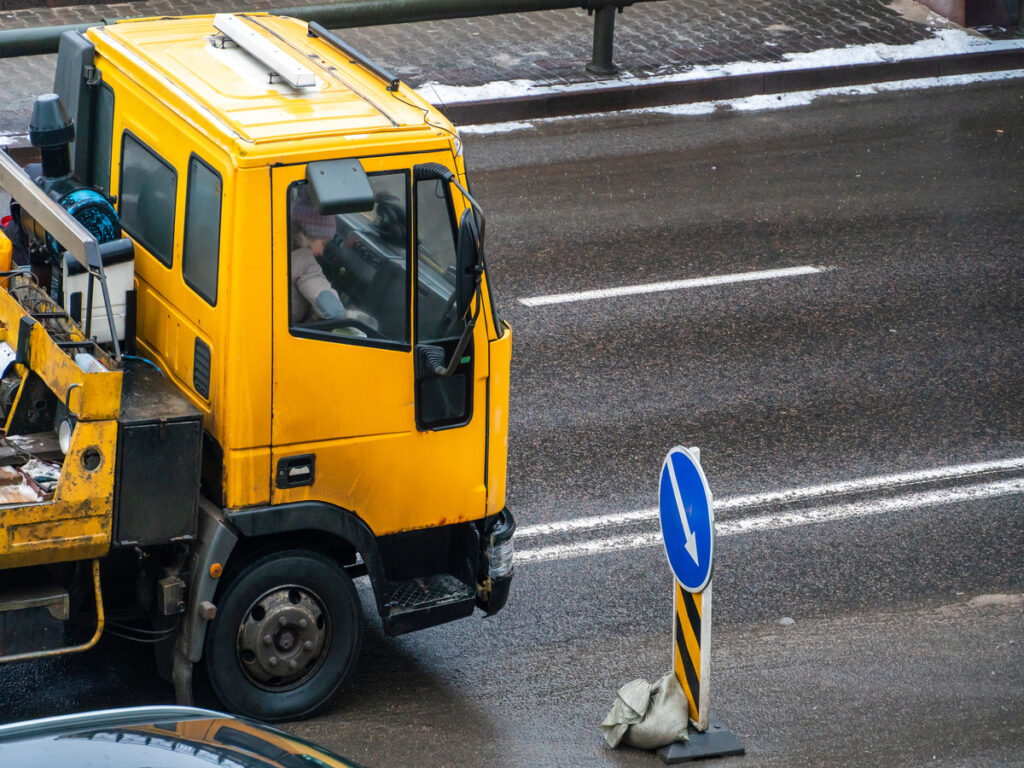
Sign height is crucial for determining how well drivers can see road signs. Car drivers typically have a lower eye level, which aligns better with the height of standard road signs. This makes it easier for them to see signs clearly. 対照的に, truck drivers sit much higher, which affects their ability to spot signs. The higher the driver’s seating position, the more difficult it becomes to spot road signs that are placed at a standard height. This is particularly problematic when signs are mounted higher on poles, as they may fall outside the driver’s direct line of sight.
Why Truck Drivers Have a Different Perspective
Truck drivers face unique visibility challenges due to their elevated seating position. The higher their seat, the steeper the viewing angle. This angle makes it more difficult for them to see signs, especially when those signs are positioned at greater heights, such as on highways or expressways. Scientific studies show that the viewing angle for truck drivers can differ by as much as 20-30 degrees compared to car drivers, making it significantly harder for them to detect road signs in time. これらの兆候, often placed on taller poles for visibility to a wider range of vehicles, may exceed the natural line of sight for truck drivers. 結果として, they may fail to notice crucial directional or warning signs, which can lead to delayed reactions and increased risks on the road.
Challenges of Road Sign Visibility in Low Light and Night Conditions
Sign Height and Reflection Angles at Night
夜に, 道 サインの高さ affects how light from headlights reflects off road signs. For truck drivers, whose headlights are higher, the angle at which light reflects off the sign may cause it to be less visible. This is especially noticeable with larger or higher-mounted signs, which may not reflect light directly toward truck drivers’ eyes.
Environmental Conditions and Sign Visibility
In poor weather conditions, like rain or fog, 道 サインの高さ becomes a bigger challenge. The higher the sign, the more likely it is to be hidden by environmental factors. This makes it even harder for truck drivers to spot the sign.
Tilted Road Sign Design: How Adjusting Sign Height Improves Visibility
The Effectiveness of Tilted Signs for Truck Drivers
A practical solution is to adjust the tilt of the road sign. Tilting the sign downward changes the angle of reflection. This makes the sign more visible to truck drivers. Their higher viewpoint often makes signs harder to read.
Optimizing Sign Height for All Drivers
Tilted signs help accommodate the higher line of sight of truck drivers. By adjusting the サインの高さ と角度, road signs become more visible, ensuring better safety for all types of vehicles, especially trucks.
Best Practices for Implementing Tilted Road Signs and Adjusting Sign Height
Determining the Ideal Tilt Angle
Traffic management companies should consider the サインの高さ when implementing tilted signs. The tilt angle should be adjusted based on the height of the sign and the type of traffic in the area. A slight downward tilt usually works best to improve visibility for truck drivers without affecting car drivers.
Positioning Road Signs at the Correct Height
In addition to tilting, the correct サインの高さ should be maintained. Signs should be placed at a height that ensures visibility from all vehicles, including trucks. 例えば, signs along highways should be adjusted based on traffic conditions and the specific needs of truck drivers.
ケーススタディ: Successful Tilted Sign Implementations
In regions where tilted road signs have been tested, such as on high-speed highways, truck drivers have reported improved visibility. The combination of optimal road サインの高さ and tilt has resulted in fewer near-miss accidents and better sign recognition.
Other Strategies for Improving Road Sign Visibility
- Using Reflective Materials
High-quality reflective materials can enhance visibility by improving the light return from the sign. By combining these materials with proper sign height and tilt, the sign becomes easier to see from a greater distance, 低光でも. - Lighting Solutions for High-Mounted Signs
For signs placed at higher elevations, adding additional lighting can further improve visibility. This is especially important for larger road signs or those in areas with heavy truck traffic. - Integrated Approach to Road Sign Visibility
Traffic management companies should consider an integrated approach that combines proper sign height, 反射材, そして照明. This ensures that signs are visible from a variety of angles, catering to both truck and car drivers.
ケーススタディ: Successful Implementations of Tilted Signs and Adjusted Sign Height
States That Have Improved Visibility
States like California and Texas have pioneered the use of tilted road signs to enhance visibility for truck drivers, particularly on high-speed highways and expressways. 例えば, カリフォルニアで, road signs along the I-5 corridor, a major trucking route, were adjusted by slightly tilting them downward to align better with truck drivers’ line of sight. 同様に, Texas implemented tilted signs along US Route 287, a key highway for freight transportation. These signs were installed at optimal heights, considering the increased visibility requirements for large trucks.
The results have been overwhelmingly positive. Texas reported a noticeable improvement in truck driver visibility, particularly during nighttime driving when sign readability is crucial. The state’s traffic management department saw a 20% reduction in incidents involving misread road signs, directly attributed to the improved sign design. Truck drivers in both states have praised the clarity of signs, especially when navigating busy interchanges or during low-light conditions.
Real Results: Feedback from Truck Drivers
Feedback collected from truck drivers in California and Texas has been consistently positive. 例えば, a survey conducted by the California Department of Transportation (カルトランス) found that 85% of truck drivers along the I-5 reported improved visibility of road signs, particularly at night. Drivers noted that the downward tilt of the signs allowed them to spot crucial signs, such as lane change warnings and exit signs, much earlier, reducing the likelihood of late reactions.
テキサスで, a similar study by the Texas Department of Transportation (送信ドット) found that truck drivers along US Route 287 were able to respond more quickly to directional signs, particularly those for complex interchanges and turn-offs. According to the feedback, the improved sign height and tilt reduced the number of near-miss accidents and increased overall driver confidence. Trucking companies operating in these areas also reported fewer delays and smoother traffic flow, attributing this to clearer road signs.
結論
Sign height is critical for truck drivers’ 可視性. Understanding the challenges from different driver heights is key. Adjusting road sign placement and tilt can improve safety for all drivers. Tilted signs, with optimal height and reflective materials, provide a practical solution. This ensures road signs are clear and visible, especially for truck drivers.