Construction warning signs are vital tools for ensuring both worker and driver safety on construction sites. These signs serve to alert drivers and pedestrians about potential hazards, allowing them to adjust their speed or actions to avoid accidents. Construction site warning signs are a key component of traffic management in work zones, ensuring the safety of everyone involved. このブログで, we will explore the various types of construction warning signs, their uses, and the best practices for implementing them effectively in construction zones.
で オプトラフィック, we understand the importance of bulk purchasing for large construction projects. Whether you need a complete set of construction warning signs or specific traffic control devices, we offer competitive pricing and fast delivery to meet the demands of contractors. Our high-quality signs are available in bulk, 長期使用のために設計されています, and comply with all necessary safety regulations. By purchasing in bulk or as a complete set, you ensure consistency across your project and maintain the highest standards of safety throughout the work zone.
What Are Construction Warning Signs and Why Are They Important?
The Role of Construction Warning Signs in Traffic Control and Worker Safety
Construction warning signs are designed to provide clear and immediate information to drivers about potential hazards ahead. Their role is to communicate important changes in road conditions, 車線閉鎖など, 迂回, or reduced speeds, giving drivers enough time to react appropriately. This proactive communication helps avoid accidents, ensuring both workers and drivers can safely navigate through construction zones.
For construction companies and contractors, placing the right construction warning signs at the right locations is not just a regulatory requirement—it’s a critical component of the safety plan for any project. Signs like “road work ahead” or “detour” prevent confusion and reduce the risk of accidents, while signs such as “speed limit reduced” or “workers ahead” help protect workers on-site by alerting drivers to slow down or exercise caution.
Why Proper Placement and Visibility Matter for Construction Site Warning Signs
The effectiveness of construction signs hinges on their placement and visibility. Proper placement allows drivers to see the sign in time to react, whether it’s adjusting their speed or merging into a different lane. 例えば, a “lane closed ahead” sign should be placed far enough in advance to give drivers ample time to change lanes or take alternate routes.
The visibility of construction site signs 同様に重要です. A sign may be well-placed, but if it isn’t easily visible due to poor lighting, bad weather conditions, or sign damage, it fails to fulfill its purpose. This is why retroreflective sheeting and illuminated signs are essential, especially for nighttime work zones or locations with frequent rain or fog.
Types of Construction Warning Signs You’ll Encounter
「道路工事はこれからです」: Preparing Drivers for Construction Zones
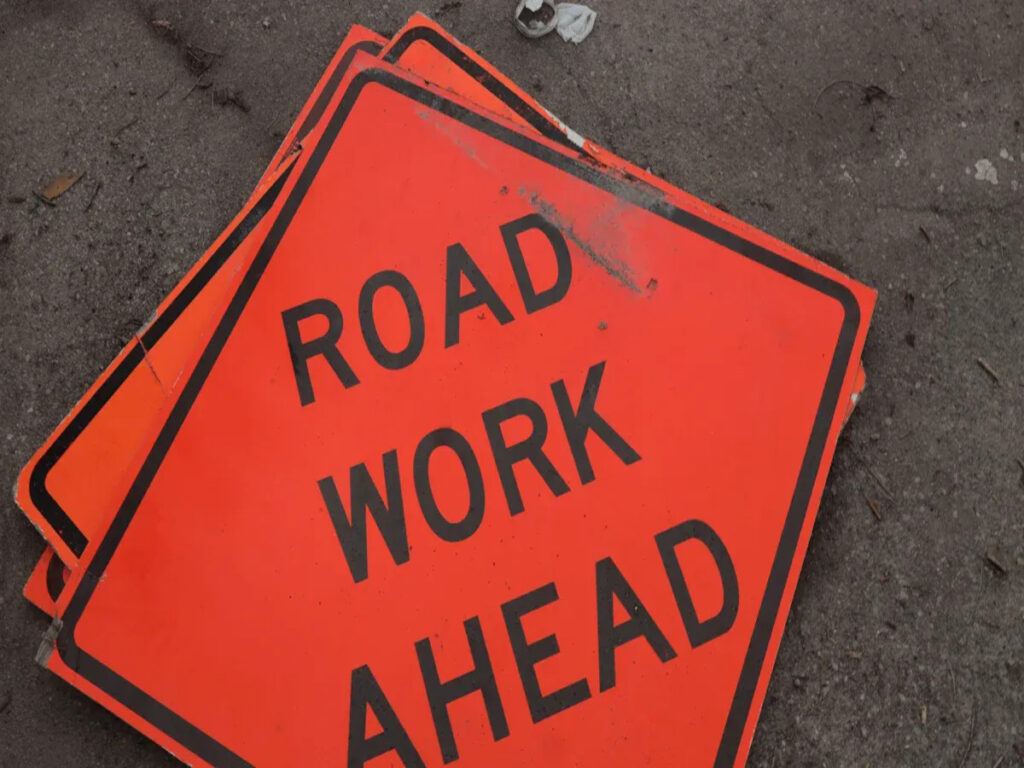
One of the most common warning signs, the “road work ahead” sign, serves as an early alert for drivers. It warns them that construction is near, so they can prepare for lane closures, reduced speeds, or other potential disruptions. This sign should be placed several hundred feet in advance of the construction zone, depending on the traffic speed and road type. Proper placement gives drivers enough time to safely adjust their speed or position on the road.
The “road work ahead” sign is usually accompanied by other signs that provide more specific details about the roadwork, such as “lane closed” or “speed limit reduced”.
“Lane Closed Ahead”: Managing Traffic Flow and Preventing Congestion
When a lane is closed for construction, the “lane closed ahead” sign helps drivers prepare for the upcoming change. This sign is crucial in preventing traffic jams and ensuring a smooth flow of vehicles through the construction zone. By informing drivers in advance, it minimizes the risk of sudden lane changes or abrupt stopping, which could lead to accidents.
This sign should be placed well ahead of the closed lane to allow for smooth lane merging. The mutcd (均一な交通制御装置のマニュアル) suggests using this sign when a lane is completely closed to traffic and requires drivers to merge into another lane.
“Detour” and “Detour Route” Signs: Directing Traffic Around Construction Zones
When construction forces drivers to take an alternative route, 迂回標識 are used to guide them around the work zone. These signs are crucial for maintaining traffic flow and preventing delays. Clear and well-marked detour routes help drivers avoid the construction area safely.
迂回標識 should be clearly marked and easy to follow to ensure that drivers can navigate around the construction site without confusion. Detours should be as direct as possible to avoid unnecessary delays.
“Speed Limit Reduced”: Ensuring Safe Driving Speeds in Construction Zones
Construction zones often reduce speed limits to protect workers and minimize accidents. Place the “speed limit reduced” sign ahead of the work zone to warn drivers of the change. This sign is crucial for keeping traffic speeds within safe limits.
Accompany this sign with other construction warning signs that guide drivers through the work zone. また, place it far enough in advance to allow drivers to adjust their speed before entering the construction zone.
“Flagger Ahead”: Alerting Drivers About Manual Traffic Control
場合によっては, traffic may need to be directed by a flagger. The “flagger ahead” sign warns drivers that a flagger will be controlling traffic in the construction zone. This sign is important for managing traffic in situations where automated signals are not used.
Flaggers play a crucial role in directing traffic safely through construction work zones. The “flagger ahead” sign ensures that drivers are prepared for manual traffic control, which can help avoid confusion and prevent accidents.
“Workers Ahead”: Keeping Drivers and Workers Safe
The “workers ahead” sign warns drivers that construction workers may be working near or on the road. This sign helps ensure that drivers slow down and remain cautious as they approach the construction area. It is critical for protecting workers from moving traffic.
The “workers ahead” sign is usually used in conjunction with other construction site warning signs to enhance safety in the work zone.
Construction Site Warning Signs and Their Regulatory Standards
MUTCD Guidelines for Construction Warning Signs
The mutcd (均一な交通制御装置のマニュアル) provides regulations for the use of construction site warning signs. These guidelines specify the size, 配置, and reflective qualities of traffic signs to ensure they meet safety standards. Following MUTCD guidelines helps maintain consistency and compliance in work zones, ensuring that all traffic control devices are effective and reliable.
The Importance of Reflectivity in Construction Site Warning Signs
Reflective sheeting is essential for ensuring that construction site warning signs are visible at night or in low-light conditions. The MUTCD requires that most roadwork signs must be retroreflective to maintain legibility at night. Proper reflectivity ensures that drivers can see the signs from a sufficient distance, even in adverse weather conditions like rain or fog. To learn more about selecting the right reflective grade for various conditions, ブログをチェックしてください 夜間の建設現場の標識にはどのような反射グレードを使用する必要がありますか, 雨, と霧?
Common Mistakes to Avoid When Using Construction Site Warning Signs
Placing Signs Too Close to the Construction Zone
配置 construction site warning signs too close to the actual work zone is a common mistake. This reduces the time drivers have to react. Place signs far enough in advance to give drivers time to adjust their speed and change lanes if necessary.
Failure to Use Appropriate Reflective Sheeting
Using low-quality or insufficient reflective materials can make construction site warning signs 読みにくい, 特に夜間や悪天候の場合. It’s essential to choose the correct level of retroreflectivity based on the expected visibility conditions in the work zone. High-quality reflective sheeting ensures that signs remain visible under all conditions.
Neglecting to Update Signage During Different Phases of the Project
As construction projects progress, traffic flow and required warnings change. It’s essential to update construction signs as the project moves through different phases. Failing to do so can cause confusion and lead to accidents.
Best Practices for Effective Construction Site Warning Signs
Use Simple, クリアメッセージ
The most effective construction site warning signs are simple and easy to understand. Avoid using excessive text or complicated symbols that can confuse drivers. クリア, concise messaging ensures that drivers can quickly grasp the warning and adjust their driving accordingly.
Ensure Proper Placement and Height
Proper placement and height are crucial for making construction site warning signs 見える. Signs should be placed at eye level and far enough in advance to give drivers ample time to react. Placing signs at the right height ensures they are visible to drivers of all vehicles, including trucks and buses.
結論
権利を選択します construction warning signs for your work zone is essential for ensuring safety and maintaining traffic flow. From road work ahead to speed limit reductions, each sign plays a key role in communicating hazards and guiding drivers through the construction site. MUTCD ガイドラインに従うことにより, using the right reflective materials, and ensuring proper sign placement, contractors can minimize accidents and keep workers and drivers safe throughout the duration of the project.
よくある質問
What are the most common types of construction warning signs?
The most common types include “road work ahead”, “lane closed ahead”, “detour”, and “speed limit reduced” signs. These signs alert drivers to changes in road conditions and help manage traffic flow safely.
How can I ensure that my construction site warning signs are effective?
Place signs early enough to give drivers time to react, use the appropriate reflective sheeting for visibility in low-light or poor weather, and update signs regularly as the project progresses.
Are there any regulations for construction site warning signs?
はい, the MUTCD sets forth strict regulations for construction site warning signs, including their placement, サイズ, and reflective quality. Ensuring compliance with these guidelines is crucial for safety and legal requirements.