>

ブログ

>

交通標識のコーナー半径ガイド: 一括調達のエンジニアリング適合基準

交通標識のコーナー半径ガイド: 一括調達のエンジニアリング適合基準

OPTSIGNS | Traffic Sign Corner Radius Guide: Engineering Compliance Standards for Bulk Procurement

Procurement teams make sure to follow rules by stating the Traffic Sign Corner Radius in each order. They check every batch with exact measurements. This helps keep workers safe, makes signs last longer, and follows the law. Teams who look at every part from design to delivery stop expensive mistakes. Always checking the radius helps make roads safer and signs more dependable.

Traffic Sign Corner Radius and Sign Lifespan

Defining Corner Radius in Traffic Sign Engineering

In professional sign fabrication, the corner radius is not a decorative choice but a critical structural specification. Engineering standards for アルミサインブランク rely on the principle of stress distribution. During the blanking process, high-tonnage hydraulic presses utilize precision-machined dies to create a uniform arc.

This specific geometry prevents shearing stress—a phenomenon where the internal grain structure of the metal is compromised by sharp 90-degree cuts. Professional manufacturing audits show that signs with a compliant radius reduce micro-fractures along the edge by up to 30%. This technical precision ensures that the substrate remains stable even under the extreme vibratory loads common in highway environments.

Impact on Durability and Wind Load: Aerodynamic Principles

The relationship between 交通標識のコーナー半径 and wind load is governed by fluid dynamics. A square-edged sign creates a high-pressure zone and a massivewakeof turbulent air behind the substrate. This turbulence results in vortex shedding, which causes the sign to oscillate violently.

  • Vibration Mitigation: Rounded corners allow forflow reattachment,” where air moves more smoothly around the edge. This significantly lowers the drag coefficient of the sign.
  • Structural Fatigue: By reducing turbulence, rounded corners minimize the mechanical fatigue on mounting brackets and bolts.
  • Case Evidence: Engineering field tests indicate that signs with a standard 1.5-inch to 3.0-inch radius (サイズに応じて) can withstand wind gusts 15-20% higher than square-edged alternatives before reaching thepoint of permanent deformation.

Engineering Note: モダンな カスタムトラフィックサイン designed for high-speed corridors utilize these radii to meet strict AASHTO (American Association of State Highway and Transportation Officials) 要件. Failing to adhere to these specifications often leads toedge-tearing,” where the metal begins to split at the corners due to repeated wind-induced stress cycles.

Addressing Misconceptions: TheVisual-OnlyFallacy

A common misconception among junior procurement staff is that rounded corners are solely for the aesthetic “仕上げる” の カスタム道路標識. On the contrary, structural engineers prioritize the radius for its role in Reflective Sheeting Protection.

Sharp corners are the primary failure point for adhesive-backed films. Environmental thermal expansion causes the metal and the film to expand at different rates. Without a rounded corner to dissipate this tension, the reflective film will begin to “層間剥離する” or peel at the vertex. Utilizing a standardized radius ensures that your bulk traffic signs maintain their retroreflectivity and physical integrity for their full 10-to-12-year warrantied lifespan.

Safety Benefits of Rounded Corners

Reducing Handling Injuries

Sharp edges on traffic signs can hurt people. Workers move and put up many signs each day. If a sign has a sharp corner, it can scratch hands or arms. These cuts can slow down work and might need a doctor. Rounded corners help keep workers’ fingers and hands safe. The Traffic Sign Corner Radius makes the edge smooth and safe to touch. This design lowers the chance of accidents when lifting, 運ぶ, or putting up signs.

ヒント: Always check for smooth, rounded corners before you move or put up any sign. Doing this simple thing can stop many common injuries at work.

Site Safety Compliance for Contractors

Contractors must follow safety rules at every job site. Many safety managers want signs with rounded corners before they use them. Standard corner radii make work zones safer. They lower the risk of cuts and make signs easier to handle in small spaces. 都市で, these corners also help make intersections safer for workers and drivers. Using signs with the right edges shows contractors care about their team’s safety and follow the rules. Picking the right corner radius is a smart way to stay safe and follow the law.

International Compliance Standards: A Brief Overview

Cross-border procurement requires strict adherence to regional engineering regulations. Different countries mandate exact numeric values for corner radii based on sign dimensions.

  • US Market: The FHWA dictates precise radii in the MUTCD sign standards.
  • European Market: BS 1 12899 compliance governs European manufacturing tolerances.
  • Australian Market: として 1319 sets specific edge requirements for workplace safety.

Dive Deeper into the Data: Do you need the exact numerical parameters for your specific market? Read our detailed guide on 世界の交通標識のコーナー半径基準: mutcd, BS 1 12899, そしてとして 1319 Compared to find the precise stamping measurements for your next bulk order.

Traffic Sign Corner Radius and Reflective Sheeting Protection

Preventing Edge Damage and Peeling

Sharp corners easily bend upon physical impact. This bending forces reflective sheeting to peel or lift. Water and debris then destroy the adhesive. Smooth radii disperse external impacts. This prevents edge damage and ensures the sheeting remains securely attached.

Role of Precision Stamping

Factories utilize high-precision stamping equipment. This ensures every sign in a bulk order maintains identical edge geometry. Consistent radii guarantee strong reflective sheeting protection. Procurement managers must verify these stamping capabilities before placing orders.

Best Practices for Procurement Teams: Verifying Corner Radius Compliance

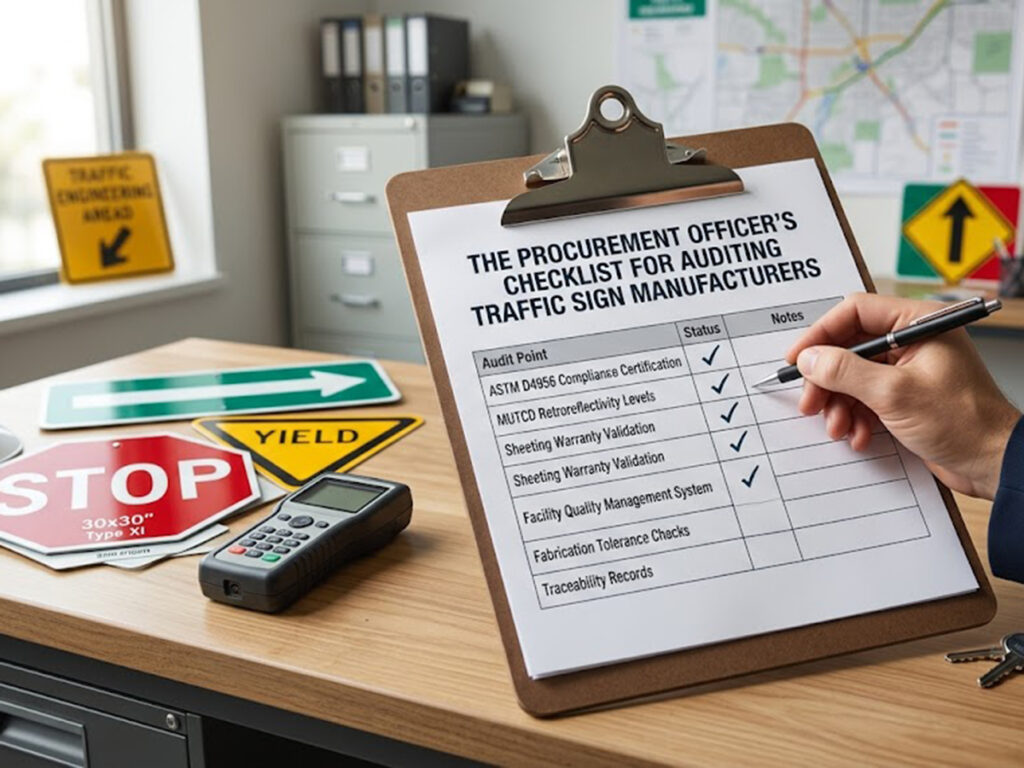
Procurement managers must measure specific corner radii against project blueprints before approving bulk orders. Verifying a precise 1.5-inch or 3-inch radius ensures immediate compliance with MUTCD or regional standards. Teams should inspect sample edges for stamping burrs that could compromise reflective sheeting adhesion. Catching rough cuts early prevents massive rejection rates during final site safety inspections.

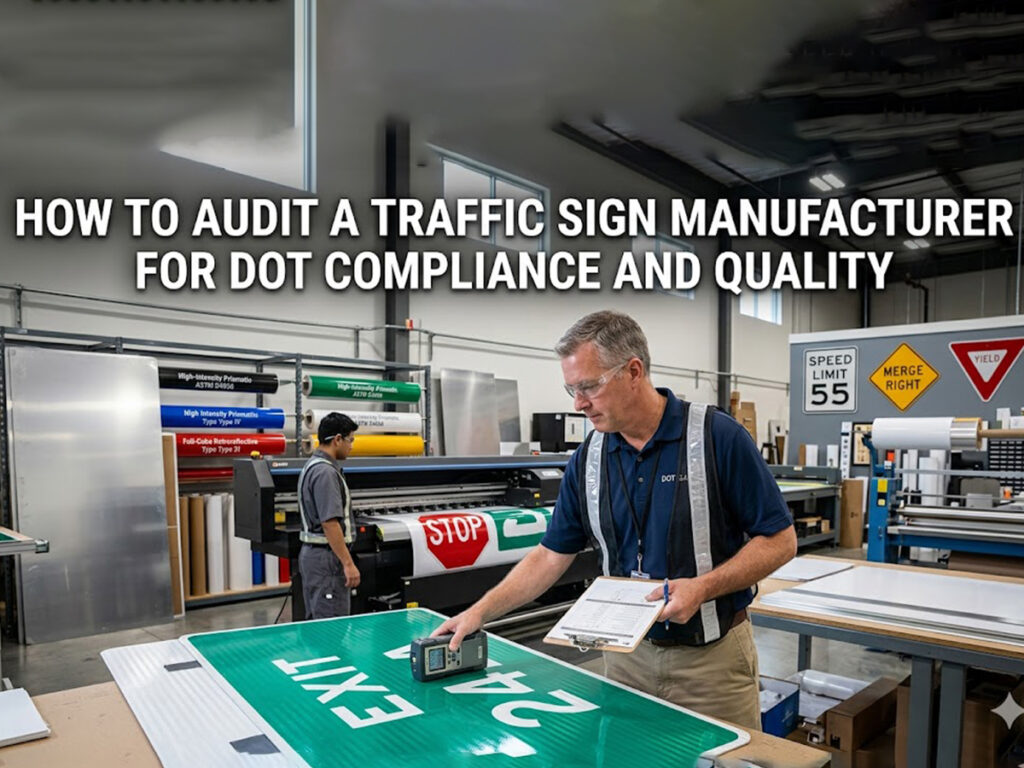
Securing compliant custom road signs demands strict evaluation beyond just edge geometry. Master the complete supplier evaluation process by reading our technical Traffic Sign Procurement Guide.

結論

Procurement managers require strict verification processes for bulk orders. Evaluating the exact Traffic Sign Corner Radius guarantees immediate engineering compliance. Teams must demand verifiable material certifications before approving large-scale production runs. The following evaluation matrix ensures superior manufacturing outcomes:

Selection FactorRecommended StandardCommon Defect to AvoidProcurement Best Practice
規制のコンプライアンスmutcd, BS 1 12899, として 1319Non-compliant sharp edgesDemand factory compliance certifications.
基板の耐久性0.080″ structural aluminumBending or cracked cornersVerify substrate thickness and edge finish.
Reflective AdhesionASTM D4956標準Sheeting edge delaminationInspect precision stamping quality.

Consistent quality control directly maintains high retroreflectivity and extends product lifespans. The オプトラフィック engineering team strictly enforces these exact manufacturing tolerances. We utilize precision stamping equipment to eliminate sharp edges entirely. Secure durable and compliant カスタムトラフィックサイン for your next major highway project.

よくある質問

What is the Traffic Sign Corner Radius?

The Traffic Sign Corner Radius is the rounded edge on Custom Traffic Signs. Engineers add this feature to follow MUTCD sign standards and BS EN 12899 コンプライアンス. Rounded corners help signs last longer and keep workers safe.

Why do aluminum sign blanks need rounded corners?

Rounded corners on aluminum sign blanks stop injuries and lower wind damage. This design also helps with reflective sheeting protection. It makes sure Custom Road Signs meet safety rules. Cities and contractors pick rounded corners for bulk traffic signs.

How does corner radius affect reflective sheeting protection?

スムーズ, rounded corners keep reflective sheeting from peeling or getting damaged. Precision stamping helps the sheeting stay tight. Signs with a good corner radius stay bright and easy to read for many years.

Which standards cover corner radius requirements?

MUTCD sign standards in the United States and BS EN 12899 compliance in Europe set the rules for corner radius. オーストラリアは AS を使用しています 1319. These standards help Custom Traffic Signs stay safe and last longer.

How can procurement teams check for compliance?

Teams look at sign drawings, check samples, and ask for proof. They make sure bulk traffic signs have the right Traffic Sign Corner Radius and reflective sheeting protection. Regular checks help keep quality and safety high.

目次

共有: