導入: 歩行者を妨害する責任
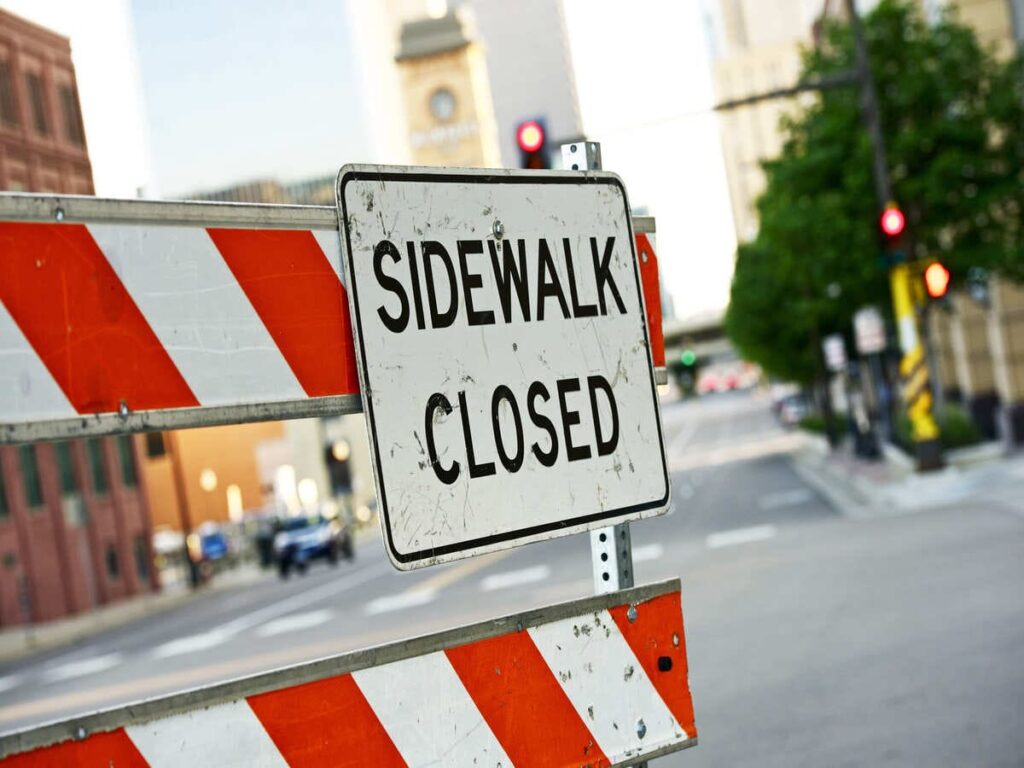
歩道を閉鎖することは、道路を閉鎖するよりも法的に危険です. 車両を阻止するとき, 運転手はただブレーキを踏むだけ. 歩行者、特に視覚障害や運動障害のある歩行者を妨げると、直ちに訴訟のリスクが生じます。.
黄色の注意テープをただ巻くだけではダメ. 障害者法 (エイダ) 特定のセットを義務付ける 建設用交通標識 のために設計された “アクセシビリティ。” 金庫を用意する必要があります, 誰もが検出できるパス.
これは、すべてのことを意味します 歩道通行止めの標識 可聴および触覚バリアと組み合わせる必要があります. 視覚障害者の杖がバリケードを検出できない場合, あなたのセットアップは準拠していません.
車両対. 歩行者の間隔: 歩行者ゾーンには短い距離が必要です, 即時間隔. しかし, プロジェクトが隣接する道路にも影響を与える場合, より厳格な車両間隔規則に従わなければなりません. レビューしてください 建設用道路標識の設置に関する重要なガイド & MUTCD 間隔 両方のゾーンを調整する.
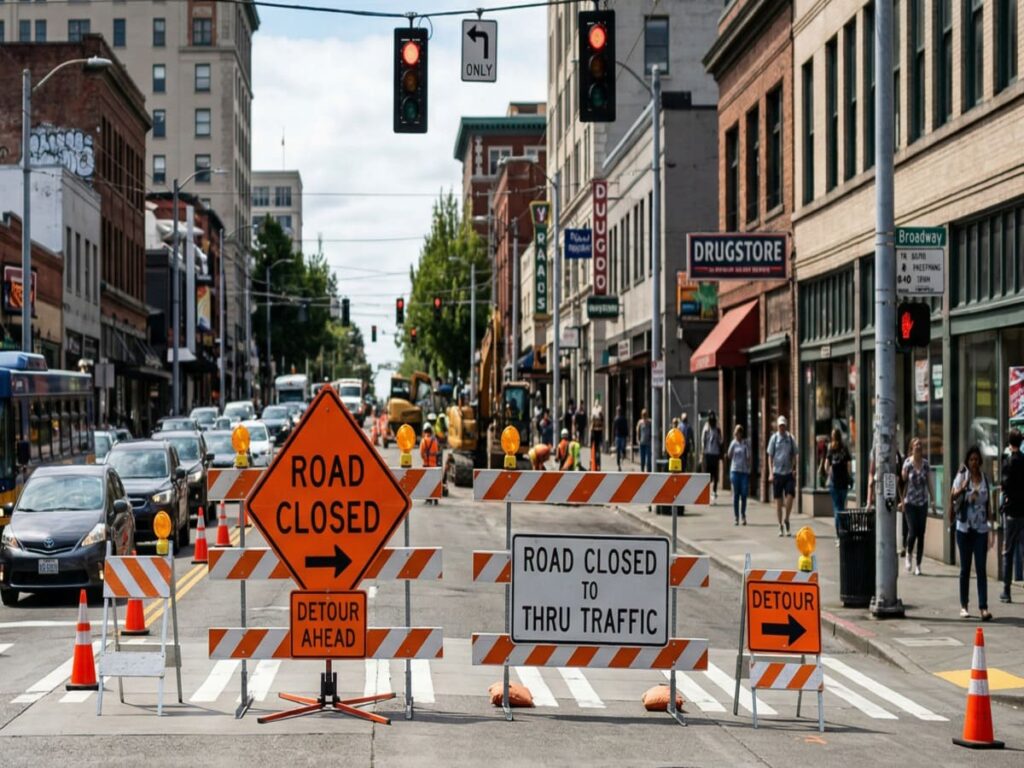
事前警告: 歩道通行止めの標識
歩行者は後戻りを嫌う. 車椅子の人が旅行する場合 300 ブロックを降りてすぐに見つけたのは、 “行き止まり,” 道路を迂回するために通行中の道路に入らざるを得なくなる場合がある. これは致命的な安全上の欠陥です.
を配置する必要があります。 歩道通行止め標識 (W21-5シリーズ) で 最も近い安全な交差点, 終了点だけでなく.
交差ロジック (横断歩道閉鎖標識)
歩行者がブロックに進入する前に方向を変えなければなりません.
- 決定点: を置きます 歩道通行止め標識 隅で 前に 歩行者が通りを横断する.
- アクション: これを 横断歩道通行止めの標識 (R9-3a) 交差点自体が封鎖されている場合.
- 目標: 歩行者に道路の安全な側に強制的に渡らせる 早い, まだ保護された横断歩道があるうちに.
標識設置高さ
高速道路と違って 建設用交通標識, 歩行者用標識は目の高さで動作します.
- 取り付け: 標識を取り付ける 7 足 地面から看板の下まで.
- 安全性: この高さにより、標識が注意力散漫な歩行者や視覚障害者にとって頭部損傷の危険にならないようにします。.
ハードクロージャ: ADA準拠のバリケード & サイン
コーンや黄色の注意テープで単に歩道を塞ぐことはできません. によると 障害のあるアメリカ人法 (エイダ), クロージャは必ず “検出可能” 視覚障害のある方が白杖を使って.
目の見えない歩行者の杖が道路の柵を突き抜けたら (道路のコーンやテープのように), 彼らは危険な場所に直接足を踏み入れるでしょう. これは連邦法違反です.
The “連続した下端” ルール (MUTCD 6F.63)
歩道を完全に閉鎖するには, を使用する必要があります ADA準拠のバリケード. MUTCD セクション 6F.63 では、杖を確実に検出するために特定の形状を義務付けています:
- ボトムレール: バリケードはしっかりとしたものでなければなりません, 連続底レール. その下端は次のとおりである必要があります。 以下の 2 インチ 地面の上. こうすることで杖が確実に壁に当たります, 空気ではない.
- トップレール: 上面は少なくとも 32 インチ 手引きガイドとして機能する高さ.
- 安定性: 壁は人が寄りかかっても倒れない程度に十分な硬さでなければなりません.
ここでは正しいハードウェアを選択することが重要です. 機器クラスの詳細な比較については、, に関するガイドを確認してください 販売のための交通バリケード: 通行止めに最適なタイプはどれですか. タイプ I および II バリケードは高速道路の車線閉鎖には標準であることに注意してください。, ほとんどは特定の「杖の検出可能性」を満たしていません’ 歩道閉鎖に必要な基準.
歩道通行止め標識の設置 (R9-9)
物理的な交通障壁が身体を止める; サインは心に知らせる.
- ザ・サイン: をマウントします。 歩道通行止めの標識 (R9-9) バリケードの上に直接, 歩行者の流れに面している.
- 指示: 迂回路で道路を横断する必要がある場合, 特定のものを使用する 歩道通行止 その他の側標識 (R9-10) または ここを渡ってくださいの標識 (R9-11).
- 可視性: 高速道路と違って 建設用交通標識, これらは再帰反射性でなければなりません そして ハイコントラスト (白地に黒の規制スタイル) 即時遵守を命令する.
警告: 絶対に使用しないでください “注意テープ” 一人で. テープはバリケードではありません. 物理的保護はゼロで、白杖では見えません。.
迂回路: 安全な通路を作る (prowag)
歩道を塞いだら, 代替ルートを提供する必要があります. これ “歩行者の迂回” ~の厳しい基準を満たさなければなりません prowag (公共通行権アクセシビリティガイドライン).
車椅子利用者を芝生の上に強制的に移動させることはできません, 砂利, または泥だらけの肩.
表面要件
迂回経路は次のとおりである必要があります。:
- 固い: 車椅子の重みでも変形しません.
- 安定した: 滑らない、動かない.
- 滑り止め: 濡れた状態でもトラクションを発揮します.
最小幅 (48 インチ)
迂回路の連続空き幅は少なくとも 48 インチ (4 足).
- ターニングスペース: 迂回路にUターンや急コーナーが必要な場合, を提供する必要があります 60-インチ×60インチ すれ違いスペース.
- 学年: 横断勾配 (傾き) 一時パスの最大値を超えることはできません 2%. これより急な場合は、車椅子にとって転倒の危険が生じます.
ルート案内: 歩行者迂回標識 (M4-9a)
乗り物と同じように, 歩行者には安心感が必要だ.
- サイン: を使用します 歩行者迂回標識 (M4-9a) あらゆる場面で.
- 連続: ごとに確認標識を設置します 100 足 迂回路が長い場合や複雑な場合. 歩行者が迷った場合, 彼らは本能的に自分の方向を見つけるために道に出て行きます.
乗り物と同じように, 歩行者には安心感が必要だ. 「ポジティブ・ガイダンス」の原則’ ここで詳しく説明されているものと同じです 通行止めのご案内: 工事用迂回標識 & バリケードのセットアップ. しかし, 間隔をあけて大きな標識を使用する高速道路の迂回とは異なります。 500 足が離れています, 歩行者専用道路では、混乱を防ぐために数ヤードごとに小さな標識を設置する必要があります.
標識を超えて: 可聴デバイス & 仮設スロープ
視覚標識は視覚障害のある歩行者にとって役に立たない. の下で MUTCD 第 11 版 (2023), 視覚のみの標識は、複雑な閉店にはもはや不十分です.
可聴情報機器 (援助)
- 使命 (MUTCD 6P-29): を使用するときは、 “ここの歩道は通行止めです” サイン (R9-11a), 連邦基準はあなたにこう述べています するだろう 可聴情報装置を含める.
- なぜ? 目の見えない歩行者には、道路の反対側を指す矢印が見えません. 音声メッセージなし, 道が開いていると思い込んだり、縁石に閉じ込められたりする可能性があります。.
- ザ・テクノロジー: これらは、バリケードに取り付けられたモーション起動スピーカーで、カスタム メッセージをブロードキャストします。: “歩道は閉じた. 迂回のためここを渡ります。”
仮設縁石スロープ (The 1:12 ルール)
迂回により歩行者が縁石から道路に出ざるを得なくなった場合 (流用), 車椅子ユーザーに期待することはできません “ジャンプ” 縁石.
- ハードウェア: をインストールする必要があります 仮設縁石スロープ.
- ザ・スロープ: ランプの傾斜率は次のとおりです。 1:12 (1 ごとにインチの上昇 12 走行距離インチ).
- エッジ: 側面が盛り上がっているはずです (エッジ保護) 車椅子の車輪の脱落防止に.
結論: コンプライアンスは最善の保険です
都市建設において, 歩道通行止めの標識は単なる交通手段ではありません; それは法的な盾です. ADA は受け入れません “私たちは知りませんでした” 防御として. バリケードに下部レールがなかったため、視覚障害のある歩行者が負傷した場合, 責任はあなたのサイト管理者にあります.
オプトラフィック ~の全範囲を製造します MUTCD準拠の歩行者規制標識s. 非準拠の機器でプロジェクトのスケジュールを危険にさらさないでください.
よくある質問: 歩道閉鎖ルール
場所が鍵です.
歩道は閉じた (R9-9): 配置されました 歩道で 歩行者がブロックを歩くのを止めるために.
横断歩道閉鎖 (R9-3a): 配置されました 縁石で 歩行者が特定の交差点に進入するのを阻止する.
はい, 特定の場合に. MUTCD 第 11 版に基づく, 歩行者が道路を横断する必要がある設定の場合 (Aを使用します “ここを渡ってください” サイン), 可聴情報装置 (援助) 必須です (“するものとします”) 視覚障害のあるユーザーを案内するため.
7 足. 標識に進入する可能性のある歩行者の怪我を防ぐため, 標識の下端は少なくとも 7 足が歩行面の上にある.