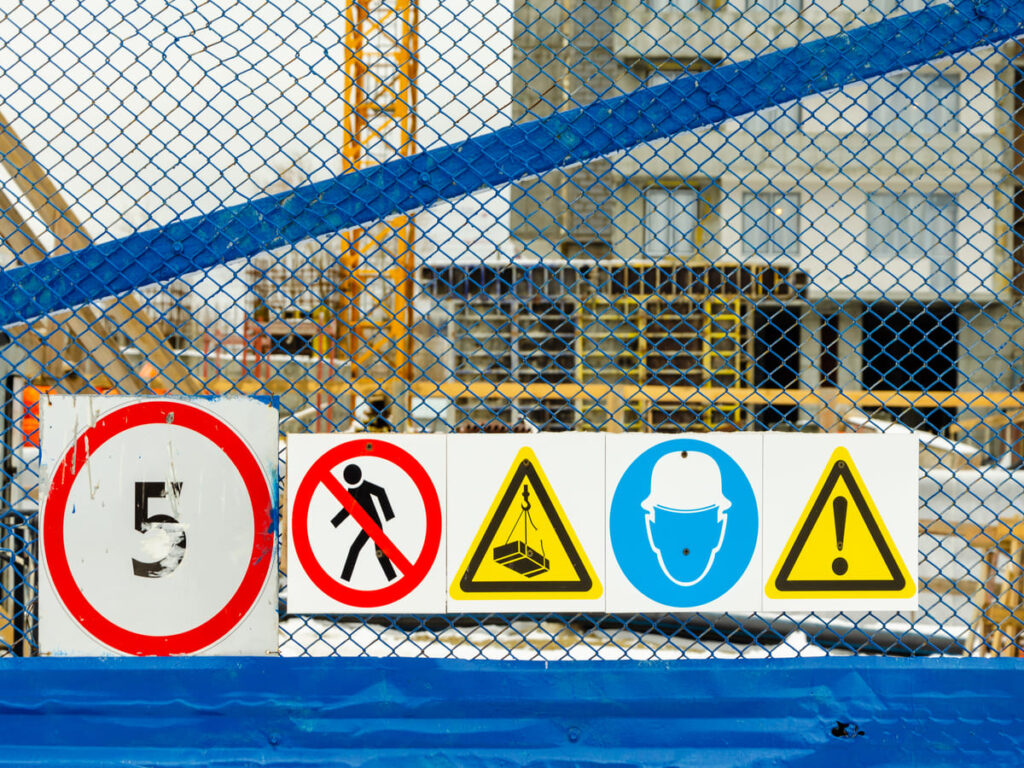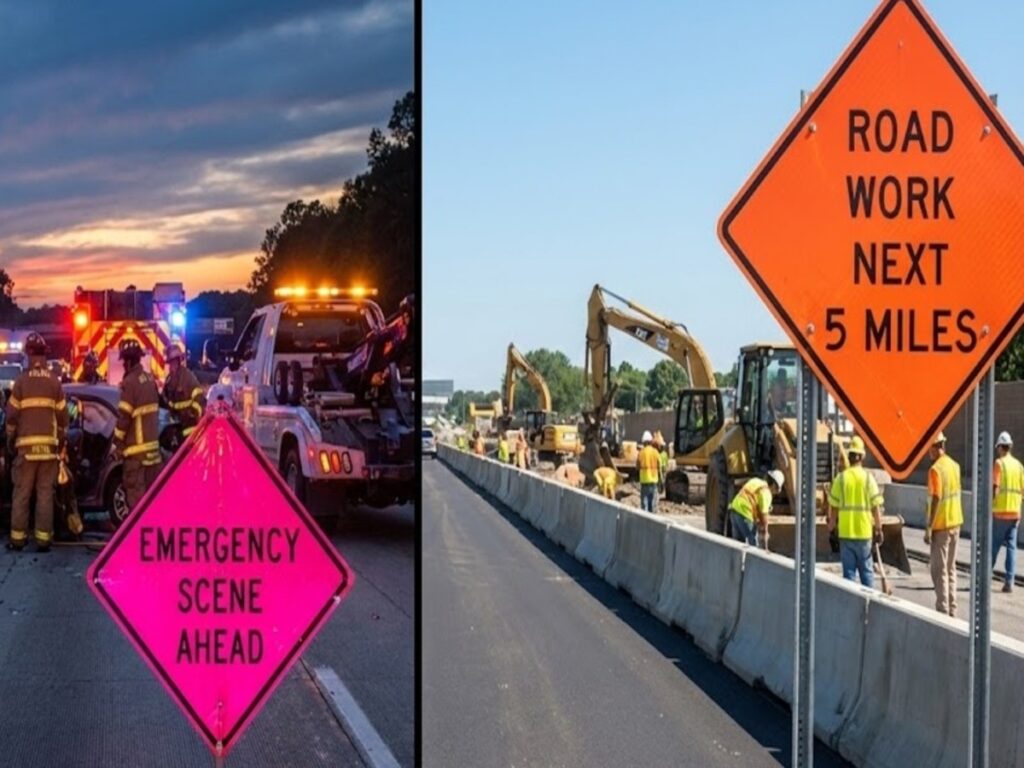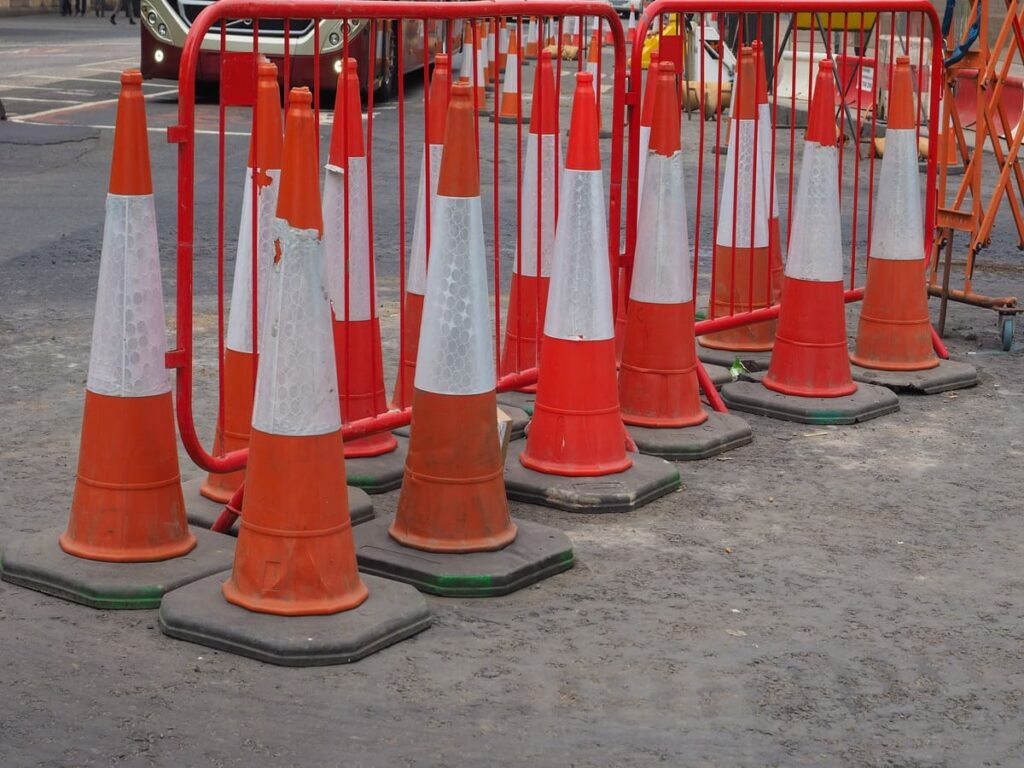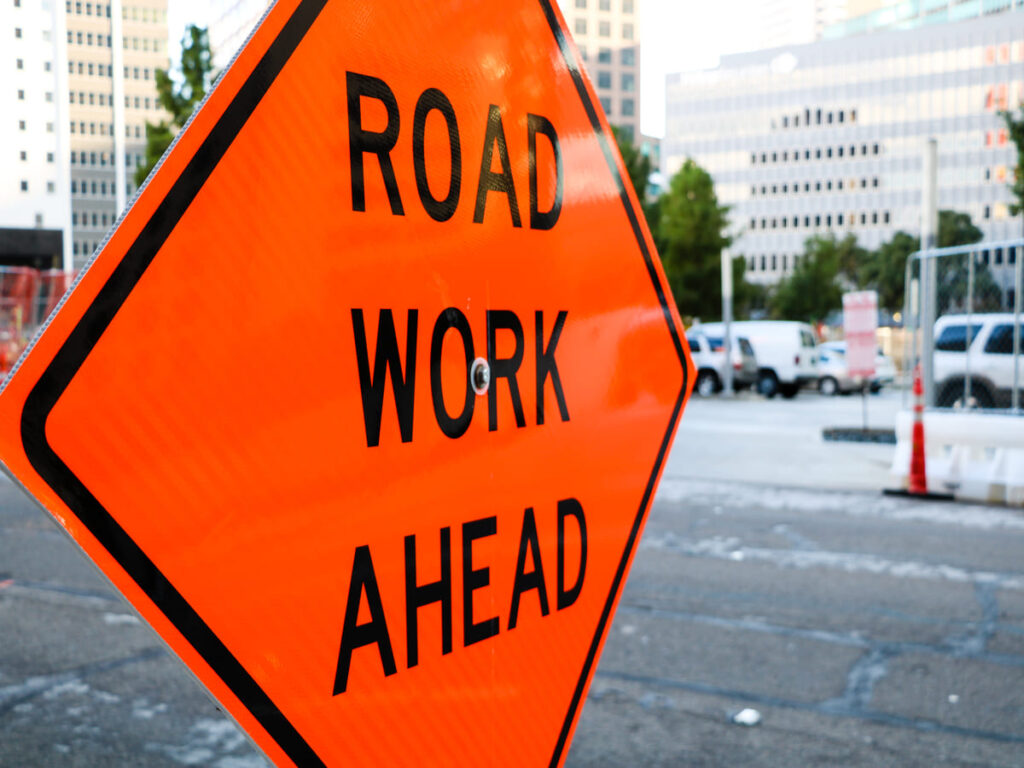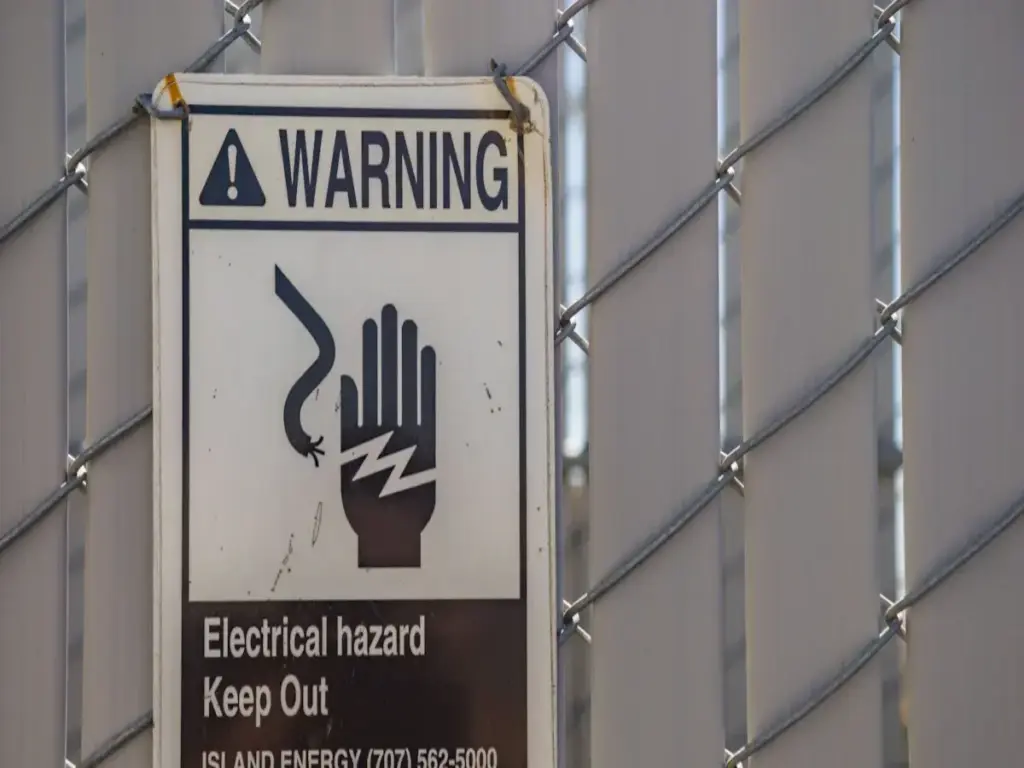
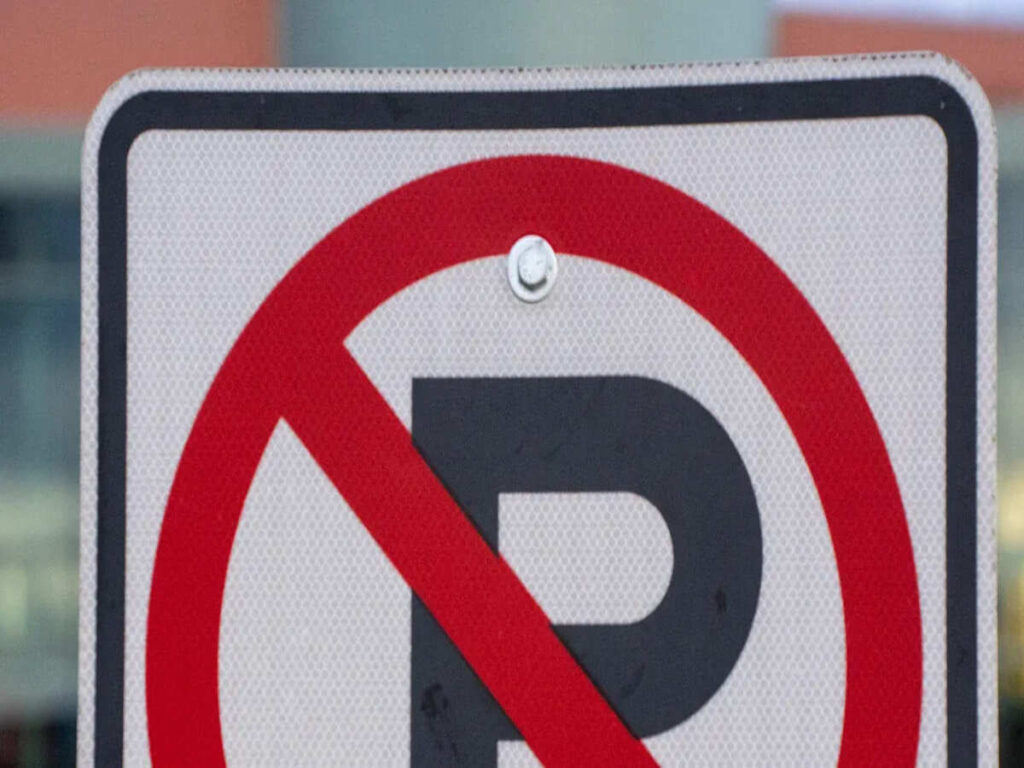
construction no parking signs protect the curb space that crews rely on for access, staging, and safe equipment movement. In dense corridors, one blocked curb cut can stop a pour, delay a delivery, and force unsafe backing maneuvers. したがって, parking control becomes a logistics system, not a courtesy request.
Unauthorized parking often creates the worst choke point on a jobsite perimeter. It blocks pump trucks, delivery flatbeds, vacuum excavators, および緊急アクセス. It also pushes workers into live lanes when they try to “work around” a parked car.
This article explains a field-ready approach. It focuses on exclusion zones, device layering, and enforceable notice. It also ties each step to real work zone risk and recognized traffic control standards.
For the complete system view—how to combine regulatory messaging, 配置ロジック, 反射性能, and standardized sign programs across every phase of a project—read 工事看板総合ガイド: 安全性の向上, 効率, 現場でのコンプライアンスと.
The Hidden Risks That Construction No Parking Signs Prevent in Work Zones
perational delays start at the curb
Work zones run on timed windows. A pump truck does not wait while a foreman hunts for the vehicle owner. A crew also cannot “make space” when the street gridlocks.
Consider a 6:00 AM concrete pour. The pump truck arrives on schedule. A private car blocks the only usable entry. The driver cannot set outriggers safely. The pour slips. Then downstream trades lose the morning.
This scenario sounds small. しかし, work zone stakes stay high. a 2024 survey by the Associated General Contractors of America (AGC) reveals that 64% of highway contractors experienced a crash in their work zones within the past year alone. With intrusion risks this frequent, every avoidable conflict matters.
Safety hazards compound fast
Parked vehicles create blind spots at exactly the wrong locations. They hide pedestrians near gate openings. They also block an operator’s sightline when equipment turns off the haul route.
The risk increases at night. Drivers often travel faster when lanes feel open and congestion drops. FHWA notes that speed factored into a large share of fatal work zone crashes in recent national data.
Integrated setup reduces improvisation
A strong system starts with clear legal notice and a clear physical boundary.
- 使用 construction no parking signs to claim the curb space and set the rule.
- 使用 建設コーン to mark the exact start of the restriction.
- 使用 no parking cones (cones fitted with sleeves, コーンサイン, or cone-top messages) to repeat the message at driver eye level without adding more posts.
- 追加 建設用障壁 where the curb line needs real containment.
MUTCD frames this as “temporary traffic control” discipline. It requires traffic control devices used for construction and maintenance to comply with the Manual’s applicable provisions.
Beyond Signage: Creating a Multi-Layered Exclusion Zone
Why one sign fails in real streets
A single sign competes with clutter. Drivers scan for openings, not for edge cases. They also miss signs when they approach from the “wrong” direction.
So crews should not rely on one device. They should build redundancy. A layered system stays visible even when one element fails.
The three-layer model
A reliable exclusion zone uses three layers. Each layer solves a different failure mode.
- 視覚的な警告
- Place parking restriction signs at consistent intervals.
- Keep the legend readable in real curbside conditions.
- Use cone-top messaging in high turnover areas.
- Physical denial
- Add A-frames, バリケード, または 建設用障壁 where drivers try to “squeeze in.”
- Protect tapers, gate openings, and equipment swing zones.
- Ground guidance
- Deploy a line of 建設コーン to shift moving traffic away from the curb lane.
- 使用 no parking cones inside the restricted curb segment to stop “one-car gaps.”
MUTCD also defines channelizing devices (including cones and barricades) as tools that warn and guide road users through work activity changes.
A practical layout that crews can repeat
Crews need repeatable geometry. They do not need complex math.
- Start the restriction before the access point, not at the access point.
- Create a “clear door” area at the gate or curb cut.
- Extend the restriction past the access point to cover turning and staging.
A simple field rule works well:
- Upstream buffer: protects the approach and turning path.
- Access window: stays clear at all times.
- Downstream buffer: protects truck tail swing and exit alignment.
Reference table for the exclusion zone
Use the table below as a field template. It matches how crews actually deploy devices.
| Layer | Primary device | Secondary device | 目的 | Common failure it prevents |
|---|---|---|---|---|
| Legal notice | construction no parking signs | cone-top messages | establishes the rule | “I didn’t know” claims |
| Visual repetition | no parking cones | curb markings (where allowed) | keeps the message in view | sign occlusion by parked vans |
| Channelization | 建設コーン | ドラム / 垂直パネル | shifts moving traffic away | side-swipe conflicts |
| Physical denial | 建設用障壁 | Aフレーム / バリケード | blocks curb entry | “squeeze-in” parking |
Ensuring Legal Enforcement With Construction No Parking Signs
Make the message match recognized standards
Enforcement depends on clarity. A tow operator and an officer need a clean basis to act.
MUTCD requires regulatory signs to be designed for visibility and legibility, and it requires them to be installed at or near where the regulation applies.
It also requires regulatory signs to be retroreflective or illuminated, which directly affects night enforceability.
For parking control specifically, MUTCD states that parking prohibition signs generally use a red legend and border on a white background.
Use readable legend sizing, not “tiny print”
Parking control signs face a special challenge. Drivers read them close to the curb. しかし, drivers still need fast comprehension.
MUTCD gives a practical baseline: for urbanized applications, the principal legend letter height on parking signs should be at least 2 インチ.
Crews can treat that as a minimum. Dense streets often need more repetition rather than smaller text.
もっと詳しく見る: For a compliance-first breakdown of letter-height, viewing distance, and real curbside readability, 読む コンプライアンスのために適切な駐車サインサイズを選択する方法.
Keep signs upright with mounting discipline
Enforcement fails when the sign lies face-down. 風, vibration, and public interference cause most “mystery invalidation” events.
A professional mounting approach reduces those failures:
- Use rigid posts or stable stands.
- Lock the sign height and angle so glare does not wash out the legend.
- Avoid “swinging” setups that rotate away from traffic.
- Add redundancy at corners and mid-block.
This is not cosmetic. It protects enforceability and safety.
Document the restriction like an operator, not like a marketer
Many jurisdictions require permits, 日付, and defined hours for temporary curb restrictions. Rules vary, so the safest approach uses a documentation packet that supports enforcement.
A strong field packet includes:
- Exact limits (address range, side of street, 矢印).
- Start and end times, with clear day notation.
- Permit or job number, where required.
- Photos of installed signs with timestamps.
- A quick map that matches the field layout.
This also reduces disputes. It speeds tow authorization. It protects the contractor when the public challenges the restriction.
The Logistics of Professional Site Setup
Advance notice reduces friction and increases compliance
Advance notice changes behavior. It also gives residents time to move before the restriction starts.
Many cities publish minimum posting windows. 例えば, San Francisco’s SFMTA states that temporary “No Parking” signs must be posted at least 72 hours before enforcement in unmetered areas, and at least 24 hours before enforcement in metered spaces.
Santa Monica also ties enforceability to timing. It notes that inspections conducted with less than 24 hours until the reservation start time will not be enforceable.
These examples show the pattern: crews should post early, then verify. Early posting reduces towing volume, conflict, and crew distraction.
Build the restriction around real vehicle paths
A “No Parking” zone should protect movement, not just the curb.
Field teams should start with these questions:
- Where does the largest vehicle turn in?
- Where does it stage without blocking live lanes?
- Where does it exit without backing blind?
- Where do pedestrians naturally cross near the gate?
Then the crew should place 建設コーン そして 建設用障壁 to shape that path. Signs alone do not control geometry.
Durability matters because streets destroy weak hardware
Retail-grade signs and light stands fail fast. Streets generate dust, vibration, そしてインパクト.
A professional setup uses:
- Rigid substrates that resist bending.
- Retroreflective faces that stay legible in headlight glare.
- Stands and posts that hold position across shifts.
MUTCD’s retroreflectivity requirement for regulatory signs supports this durability-first choice, especially for night operations.
Optraffic’s role in large-scale setups
For contractors running high-volume corridors and multi-access sites, Optraffic supports durable work zone signage and hardware systems that align with recognized regulatory sign practices and demanding field conditions.
Choosing Between Temporary and Permanent Solutions
Short-term work needs mobility and fast resets
Daily utility work changes every shift. したがって, crews need speed.
A short-term package usually includes:
- Portable sign stands.
- 建設コーン for quick tapers.
- no parking cones for message repetition near the curb face.
- Light barricades for micro-exclusion around driveways and hydrants.
The goal is fast deployment and fast removal. It also reduces the “device clutter” that confuses drivers.
Long-term projects need perimeter integrity
Month-long projects face a different enemy: drift. Devices migrate. Signs disappear. Crews rotate. The perimeter slowly degrades.
Long-term sites should upgrade to:
- Fixed posts or bolted kits for consistent sign placement.
- Reinforced 建設用障壁 where vehicles repeatedly challenge the edge.
- A documented inspection routine, tied to shift changes.
- Replacement triggers for damaged or missing devices.
MUTCD also emphasizes removing or covering devices when they no longer apply. That matters for long projects, because outdated restrictions create compliance fatigue.
Custom boards improve community relations when used correctly
Custom messages help when they reduce uncertainty, not when they add noise.
Effective custom boards answer only three questions:
- What restriction applies?
- When does it start and end?
- Who can the public contact for clarification?
This approach lowers complaints and improves voluntary compliance. It also reduces the burden on enforcement.
結論: Efficiency Starts with a Clear Perimeter
A clear curb line protects the schedule and the crew
A well-managed work zone acts as a controlled interface. This discipline keeps equipment moving and minimizes blind-spot conflicts. Precise boundaries also remove the incentive for risky improvisation.
Multi-layered systems succeed because they anticipate failure. A driver might miss a sign, or a cone might get kicked. Despite these individual errors, the perimeter remains secure.
The stakes are high. National data continues to record hundreds of work zone fatalities annually in the U.S. Given these risks, crews must eliminate every preventable conflict within their control.
Next step: audit the access edge, not just the lane taper
A site team can start today with a fast perimeter audit:
- Does the curb restriction start early enough to protect turning paths?
- Do signs stay upright and readable from both approach directions?
- する 建設コーン clearly show where parking ends and taper begins?
- する 建設用障壁 block the “squeeze-in” spaces that trigger repeat violations?
- Does the team have photo documentation that supports enforcement?
大量のニーズに対応, Optraffic supplies durable sign-and-hardware kits that help site foremen maintain a consistent, professional perimeter.
注記: Parking enforcement and towing requirements vary by jurisdiction. Crews should verify local rules for posting lead time, permit details, and authorized sign formats before enforcement.
よくある質問
They prevent unauthorized vehicles from blocking essential access points for pump trucks, delivery flatbeds, 緊急対応者. A clear exclusion zone reduces operational delays and prevents the creation of dangerous blind spots that endanger workers and pedestrians.
It is a redundancy system to ensure compliance. It combines Visual Warning (Construction No Parking Signs for legal notice), Physical Denial (Safety Barriers or A-frames to block entry), そして Ground Guidance (Construction Cones to shift moving traffic away from the curb).
Requirements vary by city, but best practices involve posting signs 24 に 72 数時間前に. 例えば, some regulations require 72 hours for unmetered areas and 24 hours for metered spaces. Posting early reduces friction with residents and ensures legal enforceability.
Professional mounting kits ensure signs remain upright and legible against wind, vibration, and public interference. A sign that has fallen face-down offers no legal warning, making enforcement impossible and increasing liability risks.
To support enforcement, site managers should maintain a field packet containing the permit number, exact limits of the restriction (address/arrows), start/end times, and timestamped photos of the installed Construction No Parking Signs.